DD
MM
YYYY

PAGES

DD
MM
YYYY

spot_img

PAGES

Home Blog Page 4715

Digital Skills Gap in Africa

0

According to a report by the International Finance Corporation (IFC), it revealed that some 230 million jobs in Sub-Saharan Africa will require some level of digital skills by 2030.

Forbes also predicts that 85% of jobs that will be available in 2030 haven’t yet been invented, as the work humans do will continually shift due to the fact that most jobs will become obsolete due to the emergence of new ones.

Looking at the technological advancements emerging in the world today and how rapidly the world is evolving, there is a need for all youths globally to possess the relevant digital skills to be able to take up future jobs.

In order to keep up with the rapidly evolving world, most countries in Europe have begun the process of empowering their citizens, especially the youths with relevant digital skills.

Unfortunately, in all of this, the African continent lags behind the rest of the world in nearly every digital-related skill. African countries are benefiting less from new technology and innovations because only a very small percentage of the population has relevant digital skills.

Digital transformation is sweeping across continents, but the African continent is yet to feel much of the impact. The continent faces a huge digital skills gap, which is limiting economic opportunities as well as retarding the growth of the continent.

Sub-Saharan Africa has been reported to have the lowest literacy rate in the world as the continent faces a huge digital skills gap, which is diluting economic opportunities and impeding development. Current statistics show that 90 percent of children in Africa leave school without learning any basic digital skills which limits much of what they can do in today’s world.

Africa has been reported to have the largest and youngest workforce in the world, yet many companies on the continent have only few Africans working for them because of the digital skills gap on the continent.

Lack of relevant skills in this digital age can limit opportunities for African countries to make the most of Digital technologies as they will continue to play catch up with the rest of the world if the gap is not bridged.

In Sudan and Zimbabwe, it is however shocking that only 4% of adults in these countries are able to copy and paste files. This is why countries in Africa need to re-orient Primary, Secondary and tertiary institutions towards STEM Education, coupled with the inclusion of basic ICT skills.

Experts have continued to raise concerns over the growing shortage of digital skills on the African continent which has been occasioned by massive brain drain. The few skilled individuals in Africa have been migrating to other countries in droves which has led to a huge skills gap on the continent.

Emerging technologies will inevitably change the nature of jobs in the future, which is why youths in the African continent need to develop themselves with digital skills to unlock a lot of opportunities for themselves, and also develop the African continent with their innovative ideas.

Considering the fact that Africa has one of the youngest populations in the world, it is essential that adequate investments in education and digital skills are made to equip the new generation of African youths joining the workforce with the relevant future skills.

Although formal education is not easily accessible to every youth on the African continent majorly due to lack of finance. However quality online learning platforms like GetBundi, an Edtech platform that offers STEM skills, is currently on a mission to enable youths in Africa to acquire relevant future skills.

The platform makes on hand learning possible by offering STEM education irrespective of anywhere in Africa the individual is.

Therefore, there is a strong need for governments in the African continent to normalize non-conventional learning pathways. Also, another strategic way to bridge the digital skills gaps in Africa is by the creation of tech hubs where these youths can access world-class hardware and learn new skills.

These hubs can then transition them into formal employment, think-tanks and accelerators where they can create innovative ideas and technologies that will contribute the the region’s digital economy.

In this era, having a degree is not just enough anymore, as relevant digital skills have become a large criteria for most jobs available.

The government of Africa can take a cue from the United Arab Emirates (UAE), following the  government’s collaboration with the Dubai future foundation, the smart city university, which is a blockchain powered decentralized learning platform to support the development of digital skills in the country.

Implementing this method will no doubt increase the percentage of digital skills talents among the youths in the African region. If a large percentage of the African population have the necessary digital skills, some problems ravaging the continent will be eradicated due to the emergence of new technologies and innovations.

Also, governments across Africa must invest in technologies that will drive digital transformation, by also investing in the people to enable them to be digitally skilled to use emerging technologies. Through digital transformation, the citizens will be able to use technology to address the problems in the continent.

Conclusion

To bridge the digital skill gap in Africa, governments and private stakeholders must be focused on equipping the people with digital skills. There is no disputing the fact that technology has become a key component in driving economic growth.

One amazing thing about digital skills is that with it, youths will not only have the opportunity to work in Africa, but will also have the opportunity to work anywhere in the world and be paid in foreign currency.

The huge population of youths in Africa is a blessing for Africa, hence the need to equip them with relevant digital skills which will open them to so many opportunities and also transform the African economy.

The Ministry of Labour and Employment Responds: ASUU Members Were Paid Pro-rata, Not Half Salaries

0

The Federal Ministry of Labour and Employment has described media reports, alleging bias in the payment of salaries of members of the Academic Staff Union of Nigeria (ASUU) as untrue. The ministry also dismissed ASUU claims that their members were paid half their salary for the month of October.

According to the Vanguard, in a press statement issued by Olajide Oshundun, Head of Press and Public Relations, the Labour Ministry on Saturday has said that both reports are grossly inaccurate, misleading and barefaced distortions of facts.

The labour ministry explained that members of ASUU were paid their October salary pro-rata, and not half salary as the media widely reported. According to the ministry, pro-rata was done because they cannot be paid for work not done.

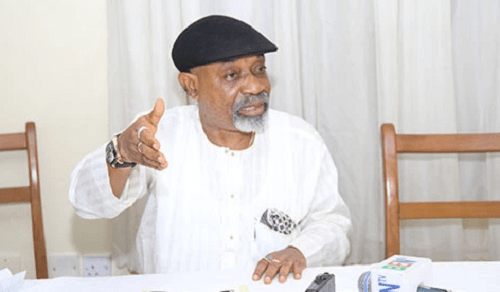
Furthermore, contrary to the initial account by the members of ASUU that the Accountant general of the federation had acted under the instruction of the Minister of Labour and Employment, Senator Chris Ngige, the ministry stated that the minister of labour never directed the Accountant General of the Federation to pay the university lecturers half-salary. The statement continues as follows:

“Following the ruling of the Court of Appeal, which upheld the order of the National Industrial Court of Nigeria (NICN), asking ASUU to go back to work, the leadership of the union wrote to the Minister, informing him that they have suspended the strike. The Federal Ministry of Education wrote to him in a similar vein and our labour inspectors in various states also confirmed that they have resumed work.

“So, the Minister wrote to the Federal Ministry of Finance, Budget and Planning, directing that their salaries should be restored. They were paid in pro rata to the number of days that they worked in October, counting from the day that they suspended their industrial action. Pro-rata was done because you cannot pay them for work not done. Everybody’s hands are tied.”

The ministry equally faulted a statement by the Chairperson of ASUU, Usman Danfodiyo University Sokoto (UDUS) branch, Muhammad N. Al-Mustapha, accusing the Honourable Minister of Labour and Employment, Sen. Chris Ngige, of biased payment of salaries to selected professional members of the union.

“Those obviously being referred to by the UDUS ASUU chairperson were members of the Medical and Dental Consultants Association (MDCAN) who abstained from the eight-month strike of ASUU because they abhorred the incessant strikes by the union and its grave effects on medical education in Nigeria and production of more medical doctors.

“Accusing the Minister of Labour and Employment, Sen. Chris Ngige, of biased payment of salaries to selected professional members of ASUU, is a barefaced distortion of facts. Mustapha said he received information that a segment of the staff in the College of Health Sciences (CHS) has been paid seven months of their withheld salaries from March to September, due to a letter written to the Minister of Finance, instructing the exemption of the under-listed staff on the application of ‘No Work, No Pay’ rule

“To set the records straight, the medical lecturers who are being referred to by the Chairperson of the ASUU UDUS branch, abstained from the eight-month strike of ASUU. This has been corroborated in a press statement by the Chairman, MDCAN UdUS, Dr B. Jubrin and Secretary, Dr I. G Ango, on Friday, November 4, 2022.”

Consequently, the ministry dismissed the accusation of selective treatment in the payment of salaries to ASUU members, urging the media to cross-check their facts to avoid feeding the public with the wrong information.

Nigeria 2023 Presidential Election: Experts say candidates, parties are reinventing 44-year-old campaign strategy, ambiguous for current’s challenges

0

Experts have reaffirmed that the majority of campaign messages communicated since September 28, 2022 are not different from what the politicians told Nigerians during the Second Republic. The Second Republic of Nigeria, the most populous nation in Africa, began in 1979. Prior to the year, politicians ran ferocious campaigns across the country, promising to improve people’s lives through strong and enduring socioeconomic policies.

Professor Joseph Ayodele and Dr. Kayode Lambe, at the first monthly discussion of the results of ongoing monitoring of campaign activities by the Centre for Research on Development of African Media, Governance and Society and the Positive Agenda Nigeria ahead of the 2023 presidential election, note that the Republic politicians only made promises without providing the citizens with concrete results. They noted that the majority of political parties and candidates merely stated their positions without necessarily outlining the precise and detailed plans they intended to use to carry out their manifestos.

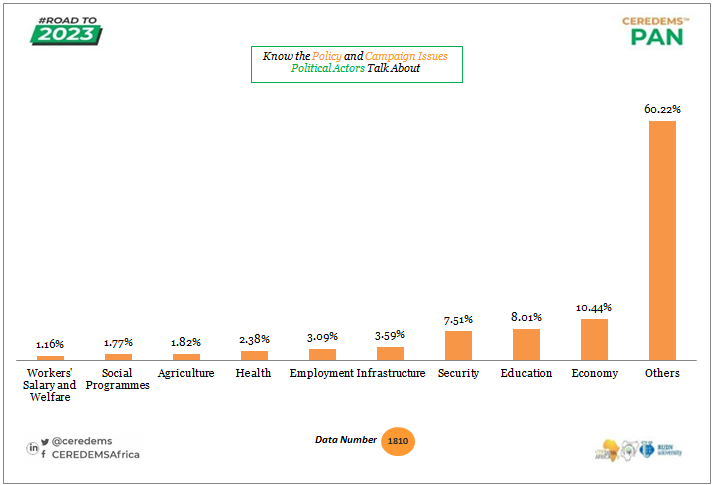
CEREDEMS-Africa and PAN found that both the actors and supporters rarely addressed the germane issues and needs of the citizens. Irrelevant issues outside the key policy and campaign issues dominated the campaign sphere.

Dissecting the report, the two academics from the Kaduna State University and the University of Ilorin noted that the ways political parties, candidates, and their supporters present and communicate campaign promises ahead of the 2023 presidential election are synonymous with the approaches of the Second Republic. According to them, the promises are only mentioned without providing core strategies for addressing emerging issues and needs of national importance.

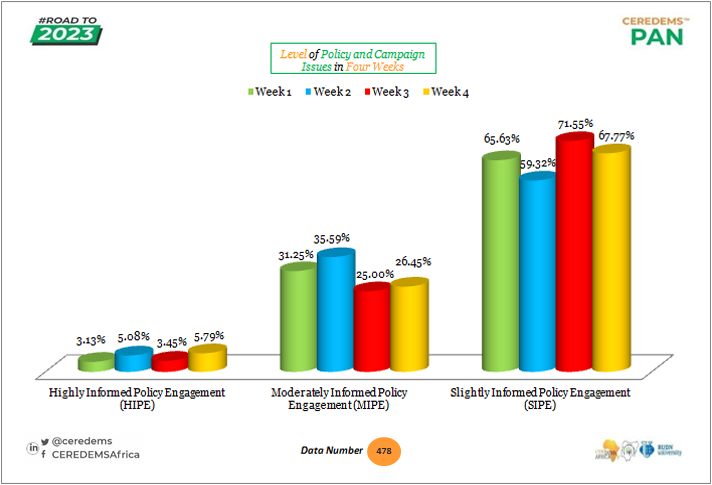
This position resonates with the second part of the outcomes of the report, where CEREDEMS-Africa and PAN point out that the identified issues were not discussed thoroughly. “Our expectation is that both actors and supporters would give details about the policies or programmes that have been implemented and state how they have impacted people and improved Nigeria’s status in all ramifications. We equally expect discussion of alternative ways to formulating the policies or programmes as well as executing them. However, based on our categories of informed policy engagement, analysis reveals that the deployment of slightly informed policy engagement was high.”

The two academics emphasized that political parties and candidates are unsure of how they will address the country’s numerous challenges. At the same time, the majority of voters do not have a clear understanding of what they should prioritize when selecting between available parties and candidates.

They did, however, make it clear that the upcoming elections cannot be won on social media platforms, through news articles, or by assuming that voters are watching broadcast content with the intention of making an informed decision. The majority of voters, according to experts, live in rural areas, and politicians are skilled at motivating them to cast as many ballots as possible.

The EFCC Investigating 3 Nigerian Governors for Hoarding Billions of Naira Cash

0

Following the announcement of the Central Bank of Nigeria (CBN) that it has redesigned the naira, the Economic and Financial Crimes Commission (EFCC), has said it has commenced tracing billions of illicit funds linked to politicians.

The anti-graft agency said the fund is being hoarded in different houses by at least three governors, who are now working to take it to the banks before the Jan. 31 deadline given by the CBN.

The central bank governor Godwin Emefiele announced late last month the redesign of N200, N500 and N1,000 notes – a decision sanctioned by President Muhammadu Buhari that is believed will help curtail the amount of money outside the banks.

The redesigned naira notes, which will begin circulation from December 2022, has created chaos and panic in Nigeria’s money market – resulting in the crashing of the naira to more than N800/$1. In addition, it is forcing those hoarding money to device means of spending it before the deadline.

The EFCC Chairman, Abdulrasheed Bawa, told Daily Trust in an interview that the governors are planning to launder the stashed cash by using it to pay salaries. The commission has started raiding Bureau De Change operators as part of efforts to mop up the amount of cash outside the banks’ vaults. Bawa said the agency plans to keep the momentum and in addition, keep an eye out for cash deposits above N5 million, which it described as a crime.

“Already, some state governors that have some of this cash stashed in various houses and the rest are now trying to pay salaries in cash in their states.

“I don’t know how they want to achieve that but we have to stop them from doing that. Well, we are working, they have not paid the salaries in cash yet but it is a very serious thing,” he said.

The EFCC Chairman said the governors under its radar are attempting to contravene Section 2 of the Money Laundering Prohibition Act by their plan to use the stashed cash to pay salaries.

A report by Sahara Reporters said the EFCC has been investigating a serving state governor who has withdrawn more than N60 billion in cash since 2015. Though the identities of the governors involved were not revealed, Bawa said in the latest edition of the agency’s in-house magazine called “EFCC Alert”, that Nigerians would soon hear more about the matter.

“Very soon, Nigerians are going to see some of the things that we are doing. I can tell you for free that the new Department of Intelligence that we have created is working wonders. They have come up with a lot of intelligence.

“In one of them, a governor in a North-Central state within the last six years (one individual) has withdrawn over N60 billion in cash.

“We are looking at all of that, and I assure you that at the end of all of our investigations, Nigerians are going to be briefed of what we are doing behind the scene on cybercrime, politically-exposed persons, as well as engaging government agencies to ensure that we have better processes and procedures on how to do government business.

“We are not setting out to be engaging with people on the pages of newspapers or press conferences. We are working hard trying to see what we can do behind the scenes [to eradicate corruption],” Bawa had said.

As we move closer to January 2023, it is becoming clear that corrupt individuals hoarding illicit cash are scrambling to spend it. The CBN said N2.73 trillion out of the N3.23 trillion currency in circulation, is outside the vaults of commercial banks across the country. With the hoarders scheming to outsmart the authorities, the naira redesign may greatly fail to achieve its aim.

Network yourself into a productive system!

0

How many productive people have you connected with in the last 10 months of this year? Understand that to rise to the next level, you must deepen your capacity to connect with people closer to decision centers. Politicians keep recycling the usuals because those are the ones who are always around. Yes, only the visible get rewarded most of the time.

In the corporate world, it is the same thing: you need to be visible for someone to mention you in your absence! In other words, your job performance cannot recommend you because jobs/performance do not talk. Only humans recommend people.

Check carefully, from UBA to Zenith Bank to Dangote Cement, and beyond, most of the senior jobs have not been advertised in any newspaper in Nigeria. But weekly and monthly, those positions are being filled. How? A networked system where the visible are tabulated, and seasonally checked, to see if they are open for opportunities.

Network yourself into a productive system. Indeed, you cannot be too busy not to network into things which keep you busy!

Comment on Feed

Comment 1: Right on the mark. Network and ‘Showork’.
Amidst the layoffs, some hiring is still going on even by very same companies. It’s totally normal. Some roles ars still lacking and need filing.

The guy who knows how to read and doesn’t, is no better than the guy who doesn’t know how to read. If you can build a gasless car and no one knows, you like the rest of the people who don’t know how to.

Show up.

Comment 2: Very true Prof. One needs qualitative network sometimes than quantitative networks. Jesus Christ had 12 disciples while the Holy Prophet Muhammad (S.A.W) had just 4 great disciples. These were the men that spread the gospel of their ministry across the globe , promoted and defended them in the absence

Comment 3: That is true boss. Networking and positive relationship is one of the keys to success and career growth. Positive Human networking summarise it all. May God connect us to the right destiny helpers that will uplift us careerwise and financially.

My response: “a good product ‘job performance’ would sell itself” – I do not believe that. I believe that after doing a great job, you need to find a creative/respectful way to make people know you do great jobs. Ndubuisi Ekekwe will send Lessons Learned to company internal magazines, explaining how I executed a great project.