DD
MM
YYYY

PAGES

DD
MM
YYYY

spot_img

PAGES

Home Blog Page 4730

Ex turpi Causa Non Oritur Actio

0

I was listening to some law students engage in academic arguments in their moot court trials the other day and all of them were quoting a Latin legal maxim “Ex turpi  Causa Non Oritur Actio” and it occurred to me by the way they were busy quoting it even where the principle is not applicable that most of these law students and even lawyers who quote these legal maxims do not know their meanings, they just use it to bully the person on the other side into submission.

So let me use this medium to educate our readers on the meaning of this popular Latin law maxim; Ex turpi causa non oritur actio; how it became one of the most famous legal principles and the old English case it was first applied.

Ex turpi causa non oritur actio is a Latin phrase that literally means “from a dishonorable cause an action does not arise”.

It is a legal doctrine that tends to postulate that a claimant will not be allowed to pursue legal remedies or seek redress in court if the action arises in connection with him engaging in an illegal or dishonorable act.

By the effect of this legal principle, a person who is fully aware that the deal or contract he is involved in is illegal cannot run to court when a party to the contract defaults, seeking the court to award him damages or force the other party to carry out his own part of the bargain.

This legal principle, “ex turpi causa non oritur actio”, can as well be used as a defense which is known as the illegality defense. It is a defense available to a defendant who may plead it, stating that “even though he broke a contract or conducted himself negligently nevertheless a claimant by being part of the illegality cannot enforce damages against him”.

In the case of National Coal Board v England (1954), AC 403, Lord Asquith while applying this legal principle of Ex turpi Causa Non Oritur Actio to the case, he painted a scenario to further explain this maxim. He stated thus; “If two burglars, A, and B, agree to open a safe by means of explosives, and A so negligently handles the explosive charge as to injure B, B might find some difficulty in maintaining an action for negligence against A”. 

This Latin maxim of Ex turpi  Causa Non Oritur Actio first gained its prominence as a legal principle in 1775 when Lord Mansfield applied it in the old case of Holman v Johnson (1775) 1 Cowp 341, since then, it has been applied in plethora cases and in numerous jurisdictions around the world as an outstanding and significant legal principle.

In the above case, the claimant sold an item to the defendant with the knowledge that the defendant intends to smuggle that item to another city where it is contraband. The defendant subsequently failed to pay the claimant and the claimant brought an action in court against the defendant praying the court to mandate the defendant to pay for the item.

The defendant raised this Latin maxim defense of “Ex turpi  Causa Non Oritur Actio”, as a legal defense stating that the transaction between him and the claimant was dishonorable and criminal, hence the defendant can not bring up an action in court to enforce the performance of a dishonorable act.

Although the court held in the favour of the claimant, stating that the principle does not apply to the case due to the circumstances and the facts of the case, since then, the Latin maxim Ex turpi  Causa Non Oritur Actio, has been a prominent legal principle in English jurisprudence.

 

As Jumia co-CEOs step down, Jumia Must Activate A Double Play Strategy

2

The co-CEOs of Jumia have stepped down: “African e-commerce giant Jumia has made a change in management as co-founders Jeremy Hodara and Sacha Poignonnec step down effective today as co-CEOs”. You may wonder why it took that long. My position remains that what Jumia is trying to do is hopeless. There is no human who can run a B2C ecommerce business in sub-Saharan Africa and make money in the way Jumia is operating. I made that point in the Harvard Business Review many years ago and it remains so. 

From Kalahari to Mocality, OLX to old Konga and Jumia, the result will be the same: B2C ecommerce is a waste of time. The challenge is marginal cost paralysis which destroys value as you scale the business. In other words, you cannot compound and leverage anything because your unit economics does not improve as you expand.

The viable path to B2C ecommerce in Africa is the type Copia runs in Kenya. Where you cannot do that, go for B2B as TradeDepot, Mintyn and other companies do. But the traditional B2C ecommerce will burn your money.

Jumia remains a great company with many latent opportunities. I challenge the new CEO to adopt the double play strategy around its ecommerce’s one oasis. There are many great pieces in that company. But it has to restructure to unlock great moments out of the firm.

If Jumia can invite me to its Board, I will invest $100,000 tomorrow morning in the company. One area I will focus on is how it can overcome the marginal cost issue, and unlock profitability via a double play strategy. Hope they take me up! Jumia, let’s do it. I buy (to have skin in the game) and join your Board. We will fix this company.

The Double Play Strategy

from Yahoo Finance here

The two founders, who until today shared the chief executive role, have been at the helm of Africa’s only publicly traded company on the NYSE for over a decade, overseeing Jumia’s pan-African expansion across 11 countries as well as its product journey that now includes a marketplace, JumiaPay, its payment arm and a logistics platform.

Francis Dufay, who previously held the CEO role at one of Jumia’s fledging markets, Ivory Coast, will now replace both co-founders as acting CEO, the company’s Supervisory Board said in the statement. Dufay has been with Jumia since 2014, holding multiple senior leadership roles, more recently executive VP, Africa, responsible for the group’s e-commerce business across the continent.

According to the Supervisory Board, Dufay and Antoine Maillet-Mezeray — previously Jumia’s Group chief financial officer — have been appointed members of the company’s Management Board. Maillet-Mezeray, having stayed with Jumia for over six years and driving the company’s finance function and “further developing it in a public market context,” has earned a promotion too: executive vice president, Finance & Operations.

“We thank Jeremy and Sacha for their leadership over the last decade to envision and build a company that became the leading pan-African e-commerce player,” Jonathan Klein, chairman of the Supervisory Board, said of the announcement. “As we look ahead to the next chapter of Jumia’s journey, we want to bring more focus to the core e-commerce business as part of a more simplified and efficient organization with stronger fundamentals and a clearer path to profitability. We look forward to working closely with Francis, Antoine and the leadership team to execute on these objectives and continue on our mission of offering a compelling e-commerce platform to consumers, sellers and the broader Jumia ecosystem in Africa.”

NBC Executes Court Orders, Directs Multichoice to Sublicense Channels to Metro TV

0
MutiChoice

National Broadcasting Commission (NBC) has directed pay television giant, Multichoice to sublicense some of its channels to Metro Digital Limited (Metro TV) in compliance with the current Broadcast Code and a recent appeal court judgement.

According to the Vanguard, the NBC gave the directive to the South African satellite TV network in a letter dated 25 October 2022, addressed to the Chief Executive Officer of Multichoice and signed by Chief George Obi, Head of Legal of NBC on behalf of the Director General of the commission.

The directive read in part, “You are hereby directed to comply with the 6th edition of the NBC Code as amended pursuant to Metro Digital’s request for channels sublicensing as ordered by the Federal Court of Appeal.”

Managing Director of Metro TV, Dr Ifeanyi Nwafor, MD, who has been on a three year legal battle with NBC and Multichoice to do the needful, told Vanguard on Monday in Port Harcourt, Rivers state, that the development will end Pay TV monopoly, restore several jobs loss and benefit Pay TV consumers in better service at affordable rates.

Nwafor said, “The growth of the broadcast industry in Nigeria has been limited due to monopolistic practices of the dominant player in the industry. AIl indigenous companies licensed in the last twenty years did not succeed because of these practices which includes content exclusivity, warehousing etc.

“Federal Government (FG) of Nigeria realizing the inherent danger outlawed foreign and domestic acquisition of contents on the basis of exclusivity, through amendment to the Broadcast Code. Furthermore, licensees and broadcasters are obligated to sublicense channels to other licensees or broadcasters for commercially agreeable fees.

“In tune with the foregoing, the appeal court sitting in Port Harcourt, Rivers state in an appeal filed by Metro Digital, ordered the regulatory body, NBC to execute its statutory functions in accordance with the provisions of the code.

“We are glad NBC has complied with the order of the court. The end of monopoly in Nigeria broadcasting industry will enhance competition, innovation and quality of service delivery. The industry will experience rapid growth, consumers will benefit from the competitive pricing that follows.

“We commend the role played by the FG, the Minister for Information and Culture, Alhaji Lai Mohammed and NBC towards the repositioning of the industry and end the monopolistic practices that have held the industry down for a long time.”

Nwafor who said Metro Digital would restore operations in coming disclosed that his organisation has applied to Multichoice requesting to be sublet Metro TV over 50 channels including views delight, the English Premier League on Supersports.

Musk Fires More Than 10% of India’s Twitter Staff

0

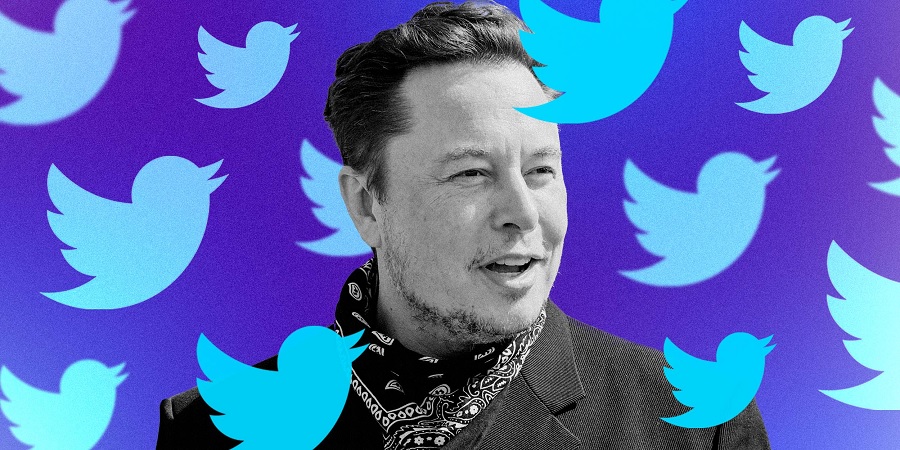
Twitter has continued on its firing spree days after laying off 3,700 employees globally, following the acquisition of the company by Tesla CEO Elon Musk.

The focus has now been shifted to India where more than 90% of its staff has been reportedly fired over the weekend, according to a report by Bloomberg.

The report, which cited people familiar with the matter, said the cuts have left just about a dozen staff out of more than the 200 Twitter has in India. Musk said he is trimming Twitter’s workforce because of cost. He said the social media “company is losing over $4M/day,” leaving him with no choice than to downsize.

Following the completion of Twitter acquisition by Musk, India – a huge internet market that has recently become key to growth for American tech giants, said last month it expects Twitter to comply with the country’s new IT rules and local laws.

“Our rules and laws for intermediaries remain the same regardless of who owns the platforms,” said Rajeev Chandrasekhar, India’s minister of state for electronics and information technology. “So, the expectation of compliance with Indian laws and rules remains.”

India has been in a faceoff with Twitter over compliance with the country’s regulatory policies deemed stringent. The jobs cut spell uncertainty in India-Twitter relationship.

The report said about 70% of the jobs cut in India were from the product and engineering team which worked on a global mandate. Positions were also slashed across functions including marketing, public policy and corporate communications, according to the people with the knowledge of the matter.

Twitter’s office in Accra, Ghana, is another place where employees’ layoff has taken place. The office, which was set up in April 2021 as Twitter headquarters in Africa, has about 20 workers. About 10 of them are believed to have been impacted by the change.

https://twitter.com/mistameister/status/1588440735527112705?s=20&t=u9zN54ltKPui6-YQCweExQ

However, Musk is calling some of the fired employees back to help in developing new features of the app. It’s not clear if that will be the case with Twitter staff laid off outside San Francisco.

Twitter’s India offices are located in New Delhi, the financial capital of Mumbai and the southern tech hub of Bengaluru. Leaving only about 10 workers in the country – which is said to have the most febrile political conversations on Twitter – with competing parties regularly pointing fingers and accusing each other of spreading misinformation, opens a new content moderation challenge for Twitter and India.

With about 25 million users who spoke more than 100 different languages, leaving both engineering and content moderation jobs in the care of 10 employees, Twitter has picked a fresh fight in one of its biggest markets.

Can Rocketize Become as Successful as High-Cap Coins like Decentraland and Synthetix?

0

Rocketize (JATO) is a new entrant in the cryptocurrency market, aiming to make it to the top. It is gearing up to become as successful as Decentraland (MANA) and Synthetix (SNX). However, can Rocketize (JATO) achieve this big dream with all the cryptocurrencies in the market right now?

Let’s find out.

What is Rocketize Bringing to the Market?

Rocketize (JATO) is a new meme coin that aims to build a massive community of enthusiasts and reward them for participating in the platform’s activities. In addition, it aims to “Rocketize” users into space and allow them to access non-traditional incentive structures.

The platform will offer DeFi and NFT services. Users will be able to stake cryptocurrencies to earn passive income. Users can also swap tokens with minimal fees on the platform’s peer-to-peer decentralized exchange (DEX).

Furthermore, Rocketize (JATO) will feature special minting events where holders of the platform’s native JATO token can use it to mint NFTs. The JATO token also supports every other platform activity and DAO governance.

The project is currently running a pre-sale where you can buy the token and get an extra 8% to 15% as pre-sale bonuses depending on the cryptocurrency you deposit. You can also get an additional 8%, 7%, and 4% if you join in the 1st, 2nd, or 3rd presale stages, respectively.

How Decentraland Is Keeping Its Top Spot

Decentraland (MANA) is a popular metaverse platform running on the Ethereum blockchain. The cryptocurrency market learned of this project when the metaverse concept became popular following Facebook’s change of name to Meta. Decentraland (MANA) has since grown in relevance, with more room for growth.

The Decentraland (MANA) platform allows users to buy digital real estate, build on it, and monetize their creations. They can also create other collectibles and offer them for sale on the platform.

Decentraland’s (MANA) shared metaverse has remained relevant due to the project’s immersive outlook. Users escape to the metaverse to take a break from reality. Also, since users can develop their own NFT LANDs, build unique projects, and organize events, they can monetize their creations by opening them to other users in the metaverse.

Its native token, MANA which supports transactions on the platform, can also be held for future gains. For example, users who held MANA before the last bull cycle saw massive gains. Thus, it could also rally more gains in the next bull cycle as the metaverse attracts users.

Synthetix and the Derivatives Market

Synthetix (SNX) is a network for synthetic assets. The platform tracks other assets like silver, gold, fiat currencies, or cryptocurrencies and allows users to trade them without holding the actual assets.

Synthetix (SNX) tokenizes the assets it tracks using Ethereum’s ERC-20 smart contracts. They simply serve as the blockchain’s version of traditional derivatives, called synthetic assets or synths. However, users must stake the platform’s utility token, SNX, to create Synths.

Synthetix’s (SNX) relevance depends on its ability to allow users access to a wide range of commodities and assets without holding such commodities. The service also leads to a more mature financial market.

Final Thoughts

Decentraland (MANA) and Synthetix (SNX) offer users exclusive features and markets. Decentraland (MANA) users can own virtual properties and monetize them. Synthetix (SNX) users can access and trade assets without having to hold them. Their coin value and market capitalization rise as users identify their usefulness and interact with them.

Rocketize (JATO), on the other hand, can become as popular as these projects, as it leverages the meme coin concept while offering other features that crypto traders will find useful. If it delivers on its promises, it can get enough market capitalization to push it to the top cryptocurrencies list.


Presale: https://rocketize.io/buy

Website: http://rocketize.io

Telegram: https://t.me/RocketizeTokenOfficial