DD
MM
YYYY

PAGES

DD
MM
YYYY

spot_img

PAGES

Home Blog Page 4730

Sacked Twitter Employees File Class Action Lawsuit Against The Company

1

Twitter employees facing mass layoff have filed a class action lawsuit against the company with the US federal court in San Francisco, alleging that they were not given enough notice as stipulated under federal law that they would be laid off.

On Thursday evening, Twitter employees were informed via a company-wide memo that they will receive a notice by 12 p.m. ET Friday that informs them of their employment status.

“If your employment is not impacted, you will receive a notification via your Twitter email. If your employment is impacted, you will receive a notification with next steps via your personal email,” a copy of the memo said.

Though the staff have been in anticipation of mass layoff as soon as Musk’s Twitter acquisition bid got close to reality, their concern hangs on the timeframe of the notice, as Musk had denied earlier reports that he plans to cut 75% of the company’s workforce. Some of the employees said they’d discovered that have been let go on Thursday when they couldn’t access their work accounts.

While the layoff is aimed at half of Twitter’s staff – saving about 25% of the employees who were reportedly on the sack-list earlier, the abrupt notice is believed to have broken a federal law. The federal Worker Adjustment and Retraining Notification Act requires 60 days’ notice for mass sackings at large employers.

Musk’s layoff plan impacts half of Twitter’s 7,000 employees. Dozens of the affected employees have been noted posting on Twitter that they have been fired.

So far, the class action lawsuit is being pushed by about five Twitter employees who were fired before the notice came on Thursday. One said he was fired on November 1, while three said they were not informed at the time of filing but had been locked out of their email accounts.

As noted by the Guardian, Musk is known for using a similar layoff pattern at Tesla, where the company sought to obtain full release from its obligations under the Warn Act by offering severance of one or two weeks’ pay instead.

“Plaintiffs here are reasonably concerned that, absent court intervention, Twitter will engage in similar behavior and seek releases from laid-off employees without informing them of their rights or the pendency of this case,” the court filing stated

Musk’s move to cut Twitter’s workforce is tied to his efforts to cut the company’s running cost. He started by firing chief executive, Parag Agrawal, the finance chief, Ned Segal, and the legal affairs and policy chief, Vijaya Gadde.

He has also introduced $8 per month pay for the verification blue tick as a means of generating more revenue for Twitter. Musk’s $44 billion acquisition of Twitter is believed to be overpriced and he is working to replenish it as soon as possible. Musk has also directed Twitter’s teams to save as much as $1bn in annual infrastructure cost by slashing funding for cloud services and servers.

There is also a report that Musk has found a way to avoid paying sacked Twitter executives their severance packages. That also is expected to lead to another lawsuit which Musk has tried to avoid.

The world’s richest man completed the Twitter deal last Friday to stop the case, which was already taken to court by the company, from going to trial.


 

Twitter Loses Over a Million Users After Elon Musk Takeover

0

Bot Sentinel, a data and information tracking firm, has uncovered a significant reduction in the number of users of Twitter since the social media giant company was acquired by the world richest man, Elon musk, after he sealed a $44billion deal with the blue bird previous owners.

Bot Sentinel tracks inauthentic Twitter behavior by analyzing over 3.1 million accounts and their daily activity. The data firm reported that Twitter may have lost over a million users in two weeks. It also reported that some users have been suspended by the company and others may have deactivated their account out of protest.

According to the report, approximately 877,000 accounts were deactivated and another 497,000 were suspended between October 27 and November 1. “That is more than double the usual number”, the Daily mail stated.

“Twitter currently has around 237 million ‘monetizable daily active users” Bot sentinel stated, adding that around 0.59 percent of the users they monitor had suspended or deactivated their account, which indicated a 208 percent increase in account losses compared to the days before Musk purchased the company.

Christopher Bouzy, founder of Bot Sentinel proposed that the upsurge in people deactivating their accounts and also Twitter suspending users’ accounts could be due to many users’ disagreement with the new Twitter boss and an attempt to test what hate speech is now permissible under the platform’s new leadership. According to him:

”We believe the uptick in deactivations is a result of people upset with Elon Musk purchasing Twitter and deciding to deactivate their accounts in protest.

”We also believe the increase in suspensions is from Twitter taking action on accounts purposely violating Twitter’s rules to see if they can push the limits of free speech”.

Bouzy worries that the great flight of users of Twitter does not bode well for the platform, and it may end up being used less and less. According to him;

”I believe if users continue to deactivate their accounts en masse, it will become a significant problem for the platform.

”If left-leaning and marginalized people leave the platform, Twitter will not differ from Parler or Truth Social” .

Paystack Parent Company Stripe to Reduce Workforce by 14 Percent

0

Financial services company Stripe has announced its plan to cut off 14% of its workforce.

This means that the company which has a total of 8,000 workers will see about 1,120 workers laid off.

According to the company, its recent move to lay off workers was necessitated due to the economic downturn and other macroeconomic challenges.

In a memo published by the company’s CEO Patrick Collison, he disclosed some of the major setbacks that have affected the company.

He said a major hiring spree spurred by the world’s pandemic-driven surge toward e-commerce, a significant growth period, an economic downturn ridden with inflation, energy shocks, Investment Budgets, Shrinking startup funding, higher interest rates, and other macroeconomic challenges all hindered the company’s growth.

He further disclosed that the company is repositioning itself for the changing macroeconomic situation in developed markets such as the United States.

In his words, “We overhired for the world we’re in, and it pains us to be unable to deliver the experience that we hoped that those impacted would have at Stripe. Doing right by our users and our shareholders (including you) means embracing reality as it is. Today, that means building differently for leaner times.

“We have always taken pride in being a capital-efficient business and we think this attribute is important to preserve. To adapt ourselves appropriately for the world we’re headed into, we need to reduce our costs”.

“In making these changes, you might reasonably wonder whether Stripe’s leadership made some errors of judgment. We’d go further than that. In our view, we made two very consequential mistakes, and we want to highlight them here since they’re important

“We were much too optimistic about the internet economy’s near-term growth in 2022 and 2023 and underestimated both the likelihood and impact of a broader slowdown. We grew operating costs too quickly. Buoyed by the success we’re seeing in some of our new product areas, we allowed coordination costs to grow and operational inefficiencies to seep in”.

The CEO further stated that in terms of severance, all those affected by the lay off, will be paid at least 14 weeks’ worth of pay, although it will depend on the time they served at the company. Also, the company will pay the full 2022 annual bonus, though it will be prorated if any member of the laid workforce joined this year.

Lately, due to the current global Inflation which has led to a serious economic downturn in so many nations across the globe, it has also taken a toll on so many firms which have led to massive layoffs, with Stripe recently joining the pack.

Just this week, there were layoffs at different tech companies such as Dapper Labs, Chime, Message Bird, Gem, Lyft, CloudKitchens, OpenDoor, MessageBird, and Kry. Also, American multinational technology company Apple has announced its plans to freeze hiring until the middle of next year.

Payment system Stripe is preparing for “leaner times” and letting go of more than 1,000 employees, CEO Patrick Collison announced Thursday in a public note to staff. Although the e-commerce checkout platform is “one of the world’s most valuable startups,” Collison admits that the company was “much too optimistic about the internet economy’s near-term growth in 2022 and 2023” and “overhired.” The staff cuts, which account for 14% of its workforce, bring Stripe’s headcount down to roughly the 7,000 employees it had in February. (LinkedIn News)

We Accept Bitcoin (BTC) for Tekedia Institute Payments

0

We do not speculate on Bitcoin and cousins, but we do receive payments via cryptos. And when we receive the payments, we convert some immediately to fiat (US dollars). Through cryptos, we serve 41 countries in Tekedia Institute, providing business education to many around the world.

Go beyond speculation and expand the channels to receive payments. You can convert to settle in fiat removing the risk of the gravitational pull on the neo-currency. Uwa bu ahia [the world is a market], the Igbo Nation posits; do not be limited to your village alone because of payment. In Africa, consider Tekedia Capital portfolio firm Bitmama or one of the pioneers in the domain, Boundlesspay for your integration.

We invite you to register for Tekedia Mini-MBA, Tekedia Practice, Tekedia Industries, Tekedia Startup Masterclass, and other programs in Africa’s largest business school, with your USD, Euro, GBP, BTC, Naira – and everything in between. Go here .

(Use credible exchanges. In the US, we use Coinbase. That protects from illegal players. In Africa, Bitmama and BoundlessPay have protocols with government data to ensure you operate safely).

Remember: I am against speculation and hodling. But I am BULL and LONG on using to receive payments for your services.

The Regulatory Framework Governing The Mining Industry in Nigeria

0

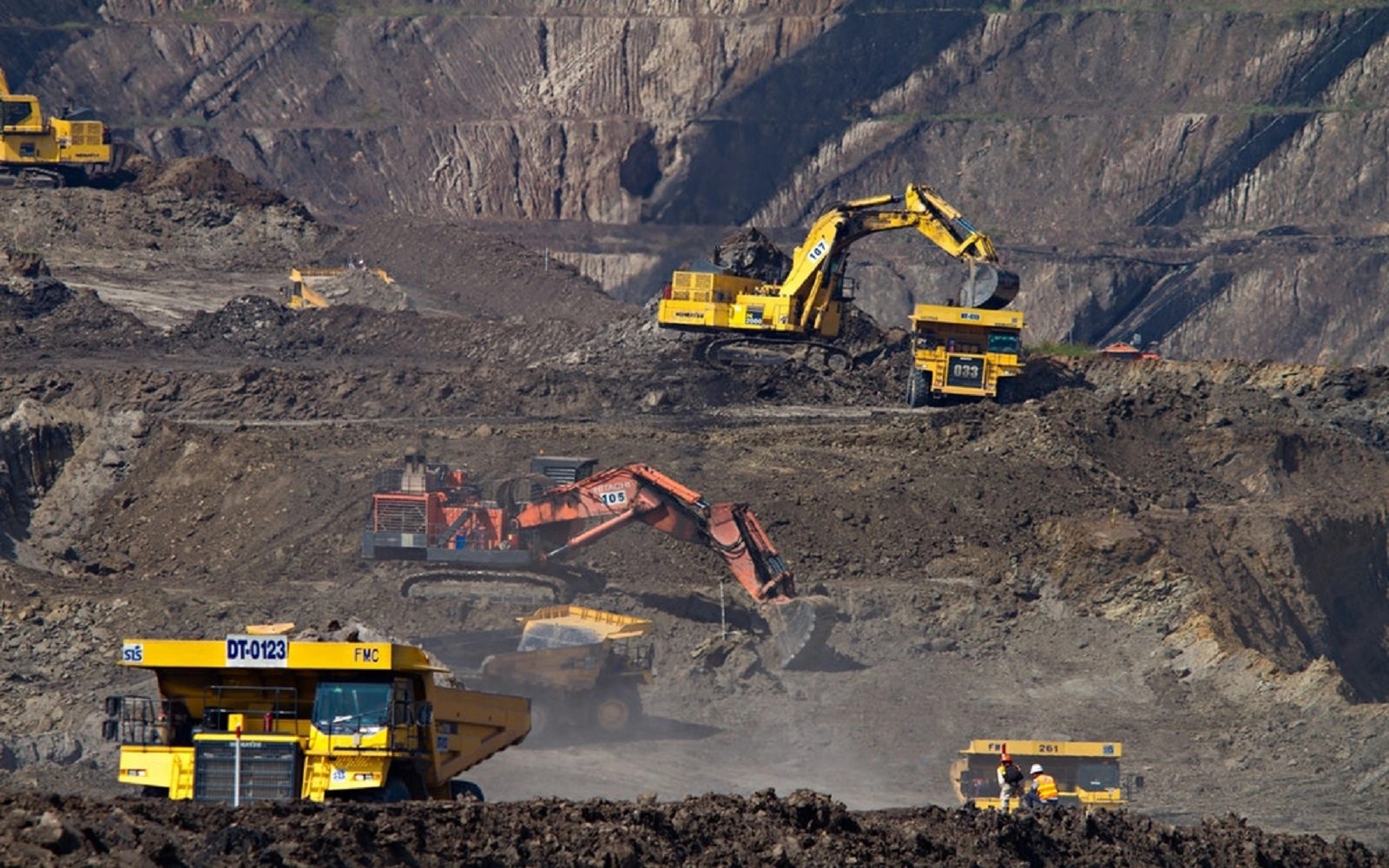
The Mining Industry in Nigeria, though not operating optimally due to the over-dependence on Crude oil, is definitely a haven of immense benefits to Investors and the country alike by serving as a huge source of foreign exchange as well as immense job creation for Nigeria’s manpower pool.

This article will be focusing on the Regulatory Framework governing the Mining Industry in Nigeria with a focus on :-

– The legislations and regulations guiding the Mining Industry in Nigeria.

– Which level of government has actual Regulatory jurisdiction over Mineral rights and Mining in Nigeria.

– The Business licenses and permits available in Nigeria’s Mining Industry

What are the major laws and regulations governing Nigeria’s Mining Industry?

The Mining Industry in Nigeria is governed by the following laws :-

– The Constitution of the Federal Republic of Nigeria 1999(as amended).

– The Nigerian Minerals and Mining Act(NMMA) 2007 and the Nigerian Mineral and Mining Regulations 2011.

– The National Environmental Standards & Regulations Enforcement (Establishment) Act 2007.

– The Environmental Impact Assessment Act.

– The Mines and Quarries Act.

– The Explosives Act. 

– The Foreign Exchange (Monitoring & Miscellaneous Provisions) Act .

Under the NMMA,the unauthorized exploration of minerals is prohibited.

Does the NMMA provide incentives for investors in Nigeria’s Mining Industry?

Yes it does. Some of these incentives include :-

– Tax relief periods of up to 5 years.

– The free access to the use of foreign exchange & the unhindered mobility of foreign exchange (meaning that Foreign exchange invested/earned by Mining Industry investors can be transferred easily).

– A Customs duty exemption.

Which tier of government/agency actually has apex regulatory control over the mining industry in Nigeria?

The Federal Government of Nigeria through the Ministry of Mines and Steel Development has apex jurisdiction and ownership rights(on behalf of the state) on all rights and resources in Nigeria by virtue of the Constitution which places mining under Item 39 of the exclusive legislative list. The rights of the Federal Government are transferrable.

This applies even though state governors have primary ownership of all lands in a state by virtue of the Land Use Act 1978.

What are the available Business licenses in the Nigerian Mining Industry by virtue of the NMMA?

Some of the business licenses granted in Nigeria’s Mining Industry include :-

  1. Exploration Licenses :- This is a license for the exploration of all minerals in a land area not exceeding 200sqkms for a 3-year duration and which is biannually renewable. This license also allows for bulk sampling, the exporting if samples and the selling of resources within stated limits.
  1. Reconnaissance Permits :- These are annually renewable non-exclusive permits for the purpose of entering any land in Nigeria in order to procure and remove surface samples in search of mineral resources.
  1. Small Scale Mining Leases :- These are mining leases for small scale mines covering areas not exceeding 3 sqkm and which are valid for 5 years (and renewable for another 5 years).
  1. Mining Leases :- These are exclusive permits lasting 25 years (& renewable for another 24 years) for areas under a 50sqkm limit.
  1. Mineral Buying Centre License (MBCL) :- This is a license for the trading & storage of mineral resources.
  1. Quarrying Leases :- These are 5-year permits for minerals like slate, china clay, gypsum, mica, sand, stone, gravel, and limestone regarding an area of land not exceeding 5 hectares.
  1. Export Permits :- These are permits for the export of mineral resources.
  1. Possess or Purchase Licenses :- These are licenses for the right to directly engage in the trade & export of mineral resources.
  1. Water Use Permits :- These are rights to procure & use water for licensed mining operation purposes and permits of this nature have validity period that last as long as the primary mining license they are attached to.