DD
MM
YYYY

PAGES

DD
MM
YYYY

spot_img

PAGES

Home Blog Page 4752

Why are you in a Hurry?

0

There has been serial fuel scarcity in Abuja which started late last year caused by different factors and not all fuel stations have been dispensing fuel in Abuja, so you will always meet a large queue of cars in any of the fuel stations that have fuel to dispense, some times, some cars will queue up at the fuel station overnight.

I noticed that when there is orderliness and all cars queue up and wait for their turn, the line moves faster but when everybody is struggling to enter the filling station at once and buy their own fuel first, disorganizing the queue and causing disorderliness, things always go on a standstill.

Whenever I watch from afar and witness this I always ask myself why are people always in a haste or lack the patience to wait for their turn?. The usual answer will be that the person is in a hurry or rushing over to catch up on something or running late on something and wants to quickly get his thing done and move away.

But the truth is when you rush or hurry to save time you may end up wasting more time than you were trying to save.

Back to my filling station scenario; I was watching two men the other day struggling head to head who to enter the filling station first and get fuel with the reason that they are both in a hurry, they ended up ramming their cars into each other , that resulted in them to come down from their cars and engage in a fist fight. Unfortunately, they ended up wasting more time than they were trying to save because we that patiently queued up and waited for our turn purchased our fuel and left them there, hours later as I was driving back, I still saw their cars parked there.

This is exactly what happens in big cities where there is huge traffic. You will find out that most of the traffic gridlock is caused by people who claim to be in a hurry, hence refusing to wait or give chance to other vehicles that have the right of way.  When you do not wait and you block the road thereby causing a traffic jam, you will spend more time in traffic and waste extra time than the time you are trying to save.

Most of the fatal accidents that happen on highways are caused by over-speeding. When you ask those who engage in over-speeding their reason, the primary reason they give is that they are in a hurry and want to catch up with time but they forget that they are risking their lives in the quest to save time. If you have an accident due to over speeding you will waste extra time trying to sort out the accident, that is if you even survive the accident.

Some people also drive against traffic lights and break traffic rules just because they are in a hurry and want to catch up with time, but the funny thing is if you are caught by traffic wardens you will be delayed and made to pay a fine for the offense and that time you were rushing to save will be wasted.

Anytime you want to engage in an irrational behavior just because you are in a hurry, ask yourself if it is worth it, pause and think of what might possibly go wrong in the quest of you trying to save time then you will notice that it is not worth it.

One of the key ways to not always be in a hurry is to plan your day properly and fix your schedules. Leave your house earlier and then you won’t be driving like a thief being chased by police risking your life and risking the lives of other road users just because you want to catch up with time.
Find a way to #win something

0

If you look at the 2000-year plot of the gross world product (aggregate of all GDPs), you will see a big  acceleration around 1790. There was a reason that happened. In a piece in Harvard, I called it the inflection point when some parts of the world moved from invention society to innovation society.

Breaking the components, one thing was super-evident: Samuel Hopkins had been awarded the first US patent in 1790, opening a new age to own intellectual properties just like lands. That changed America because merchants, among the richest people in the era, could now give inventors money to commercialize ideas because that investment is now protected. Yes, the risk had been reduced through the exclusivity window.

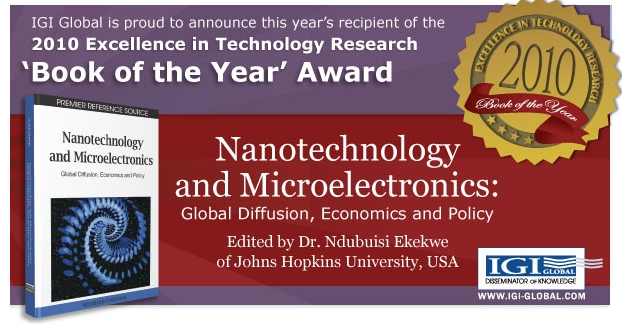
From my work which was published in my book which received the IGI Global “Book of the Year” award (see here  ), I noted that until nations transmute into that new era, through improved legal ordinances and systems, advancement will stall. 

Nigeria is working on that path – here are the major tech regulations for the year 2022.

It was in 2010, I woke up and my professors were congratulating me that a book I wrote had won the IGI Global “Book of the Year” award. This announcement changed many things. Find a way to #win something

Prof Ndubuisi Ekekwe’s book received the prestigious IGI Global “Book of the Year” Award in 2010

The Most Important Developments in the Regulation of Technology in Nigeria For the Year 2022

0

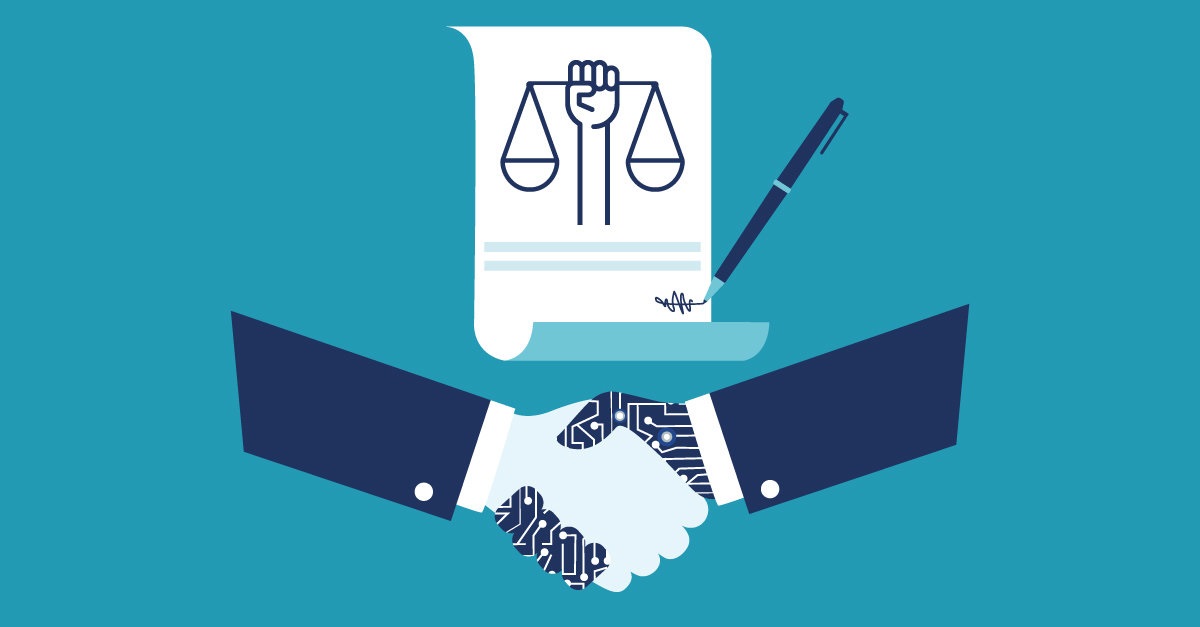
As the year 2022 enters its last quarter, it is important to take stock of the several developments that have occurred so far towards the regulation of Technology in Nigeria in the absence of a dedicated piece of legislation. Largely, regulatory technology is very catalytic and important as technology continues to reshape markets and economies.

This article will focus on highlighting the most important pieces of legislation and Regulatory Framework development that has so far taken place this year in Nigeria. 

These developments are as follows:-

  1. The passing into law of the Nigerian Start-up Bill:- This has led to the introduction of the Nigerian Start-up Act that has finally constituted the first piece of legislation focused on the registration and operation of Start-ups in Nigeria, followed by the introduction of many incentives for techpreneurs across the country.
  1. The introduction of the Central Bank of Nigeria CBN Guidelines on Cyber-security for Other Financial Institutions (OFIs) in Nigeria:- The CBN is responsible for the first piece of legislation focused on the issue of Cyber-security for Other Financial Institutions in the light of a rather very high incidence of cyber-financial crimes across all levels of the Fintech sector in Nigeria. 

One major introduction of these guidelines is the Regulatory requirement for all OFIs to have appointed Chief Information Security Officers (CISOs) .

  1. The introduction of digital companies based outside Nigeria now being subject to Income Tax obligations :- This is pursuant to the provisions of the new Finance Act 2022 which empowers the Federal Inland Revenue Service FIRS to tax such companies on a deemed profit basis.
  2. The creation of the Nigerian Data Protection Bureau (NDPB) :- The NDPB now exists as the replacement for the defunct National Information Technology Development Agency (NITDA) by virtue of its establishment in the first quarter of 2022.

What this now means is that the NDPB now has overall Regulatory jurisdiction over everything related to Data Protection Compliance in Nigeria.

  1. The introduction by the Central Bank of Nigeria CBN of the Guidelines on Open Banking in Nigeria :- Open Banking is a service concept that emphasizes the excuses of a borderless and free-flowing river of end-user data that is based on the concepts of End-user consent to the access this end-user data pool as well as the use of Application Programming Interface (API) agreements.

The guidelines also provide for the creation of a CBN Open Banking Registry (OBR) for the purpose of more focused Regulatory monitoring by regulators.

  1. The introduction of the jurisdiction of the Securities and Exchange Commission (SEC) over digital asset platforms from licensing to post licensing operation :- This has led to the provision of new Cryptocurrency service business licenses that are :-

a). Digital Asset Exchanges(DAX)

b). Digital Asset Offerings Providers (DAOP)

c). Digital Asset Custodians (DACs)

d). Virtual Asset Service Providers (VASPs)

  1. The full subjection of Insurtech service providers, particularly Insurance Web Aggregators, under the Regulatory jurisdiction of the National Insurance Commission (NAICOM).
  1. The provision for online protection of copyrights :- This is by virtue of a soon-to-be-passed Copyright Bill, giving the Nigerian Copyright Commission (NCC) to restrict pubic access to Digital platforms suspected of Copyright infringement.
  1. The blocking of Mobile Payment & Telecommunications access to Digital Lending firms in Nigeria :- This was carried out by the Federal Government through the Federal Competition and Consumer Protection Commission FCCPC which, as a result of several Data Protection violations by Digital lenders, decided effective from the 19th of August,2022  to carry out certain Regulatory measures.

The most notable of such measures was the development by the inter-agency Joint Regulatory & Enforcement Task Force of a Limited Interim Regulatory/Registration Framework & Guidelines For Digital Lending 2022 .

As a result of this, Telecommunications companies &  Payment Service Providers (PSPs) among others have been warned to cease  & desist server/hosting or other main services to lenders that are the focus of investigations related to sharp business practices.

Investment Options and Models for Early, Mid and Late Careers – Tekedia Mini-MBA

0

Join us at Tekedia Live as we co-learn on how to build and model our investment options based on the stages of our careers. At that early stage of your career, what are the investment options? In mine, I packed as many degrees and professional certifications as available in the world. In the first week of my job in the bank, I developed a formula on how to allocate my salary.  I will share that formula for academic purposes.

In the mid-stage of a career, what is the best playbook? And at the late stage, what could you do? As a school, we discuss these playbooks within the constructs of learning. We do believe that Personal Economy is a critical part of a career.

Yes, traditional schools teach us how to manage resources of companies but hardly teach us how to manage our personal economy. Tekedia Mini-MBA does educate on how to thrive in the personal economy even as  we make companies better. Join us at the best school – Tekedia Institute here. 

Nigeria’s Food Inflation Hits 23.34% in September

0

Nigeria’s food inflation has risen further to 23.34 percent in September from the 23.12 percent recorded in August, according to the latest data published by the National Bureau of Statistics (NBS) on Friday in Abuja.

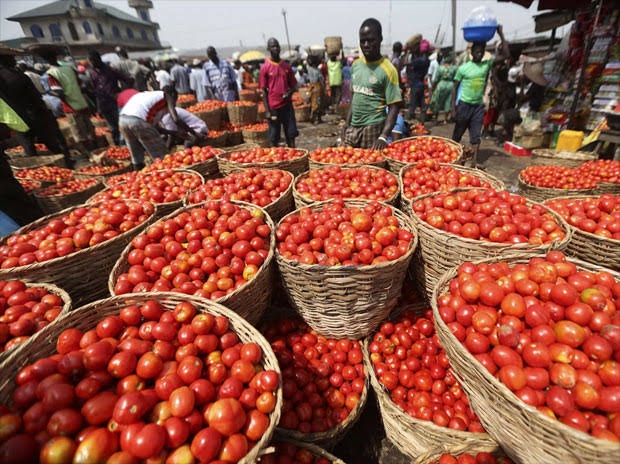
The agency reported an increase in the price of some selected food items, which stoked the food inflation. The report said that the average price of 1kg of Tomato on a year-on-year basis, increased by 30.06 per cent, from N342.25 recorded in September 2021 to N445.12 in September 2022.

“While on a month-on-month basis, 1kg of tomato increased to N445.12 in September 2022 from N430.93 recorded in August 2022, indicating a 3.29 percent increase,” it said.

The report showed that the average price of 1kg of rice (local, sold loose) increased on a year-on-year basis by 14.98 per cent from N410.01 recorded in September 2021 to N471.42 in September 2022.

It said on a month-on-month basis, the average price of this item increased by 3.82 per cent in September 2022.

The average price of 1kg of beans (brown, sold loose) increased on a year-on-year basis by 13.14 per cent from N492.13 recorded in September 2021 to N556.81 in September 2022.

Also, the report showed that on a month-on-month basis, 1kg of beans (brown. sold loose) increased by 2.05 per cent from N545.61 in August 2022.

It said the average price of 1kg of beef (boneless) increased by 24.39 per cent on a year-on-year basis from N1,768.14 recorded in September 2021 to N2,199.37 in September 2022.

Also, the report showed that the average price of Palm oil (1 bottle) increased by 30.70 per cent from N709.50 in September 2021 to N927.34 in September 2022. It also grew by 3.42 per cent on a month-on-month basis, the NBS said.

Per the report, the average price of Vegetable oil (1 bottle) stood at N1, 075.89 in September 2022, showing an increase of 32.35 per cent from N812.94 recorded in September 2021. It said on a month-on-month basis; it rose by 2.52 per cent from N1049.49 in August 2022.

Comparing states across the country, the NBS noted varying prices for same food items, with some states having nearly double the price of others.

At the state level, the highest average price of rice (local, sold loose) was recorded in Rivers at N621.61, while the lowest price was recorded in Jigawa at N371.

The report said that Ebonyi recorded the highest average price of beans (brown, sold loose) at N857.02, while the lowest price was reported in Benue at N368.21.

It said Abia recorded the highest price of Vegetable oil (1 bottle) at N1,464.44, while Benue recorded the lowest price at N643.64.

The report’s analysis by zone showed that the average price of 1kg of tomato was higher in the South-South and South-East at N711.32 and N643.25, respectively, while the lowest price was recorded in the North-East at N209.22.

“South-South recorded the highest average price of 1kg of rice (local, sold loose) at N519.22, followed by the South-West with N514.37, while the lowest price of was recorded in the North-West at N417.00,” the report said.

Also, the report showed that the South-East recorded the highest average price of Beans (brown, sold loose) at N789.74, followed by the South-South at N673.16, while the North-East recorded the least price at N397.04.

The latest food inflation rate doesn’t come as a surprise due to many factors headed by the forex crisis. As on Saturday, the naira has fallen to N780 to dollar in the parallel market. Besides this, the cost of transportation, which has been on the rise since the pandemic, has resulted in an increase in the prices of food products. Other factors impacting the cost of food across the country are insecurity and  insufficient food production.

Unfortunately, the current flood problems which have ravaged farmlands across Nigeria, are expected to further stoke the inflation in coming months.