DD
MM
YYYY

PAGES

DD
MM
YYYY

spot_img

PAGES

Home Blog Page 4790

Can Feed3 be the next Decentraland or Internet Computer?

0

Web3 products are released daily without receiving users’ reviews of their experiences with these decentralized applications (dApps) and games. Thus, the Feed3 (FD3) protocol introduces an improved method of feedback collection that will shorten the software development cycle of popular dApps and games.

Keep reading to discover how the Feed3 (FD3) token ranks among popular cryptocurrency tokens and why it has the potential to be the next cryptocurrency to explode in 2022.

Earn Income with Feed3’s Feedback-to-Earn Mechanism

Feed3 (FD3) is the latest Metaverse platform adding significant value to the blockchain crypto market. It provides the general ecosystem with a feedback model for collecting user opinions about Web3 products.

Feed3’s (FD3) feedback-to-earn (FB2E) model benefits both users and developers by creating a mutually beneficial system where users can earn from their reviews. Blockchain developers can also implement the best product fixes as decided by their communities.

Users’ audio feedback will be gathered and sorted through an artificial intelligence bot network aided by machine learning algorithms. This algorithm rewards users based on the ranking of their reviews, with more detailed reviews earning higher incentives.

Feed3 (FD3) is offering a 4% bonus during its second pre-sale stage, which is due to end soon. In addition, there is an 18% bonus for buying Feed3 (FD3) tokens worth $5,000 and above during the ongoing presale.

Moreover, the presale referral bonus adds an extra $25 to investors’ portfolios, provided they spend up to $75 on their Feed3 (FD3) token purchase. The bonuses can be combined, resulting in a large investment return for presale participants.

Decentraland: The Future of Digital Interaction

Decentraland (MANA) is a 3D interactive universe built to eliminate the barriers of digital interaction in the current social network era.

Internet users crave more realistic online experiences that enhance real-world events. To that effect, the Decentraland (MANA) platform enables users of the Ethereum blockchain to build custom virtual content and applications and monetize them for profit.

The Decentraland (MANA) token is an ERC-20 utility token used for procuring digital goods and services in the platform’s marketplace. It is also used as payment for buying more land in the Decentraland (MANA) universe.

After purchasing virtual lands, players can populate them with unique objects and interactive games and share them with other players for a fee. This way, a self-sustaining metaverse is created, where the quality of experiences is limited only by the users’ imaginations.

Unsurprisingly, Decentraland’s (MANA) enticing products have placed it among the top five Metaverse tokens, according to CoinMarketCap. The token’s position is expected to soar as more users are onboarded to the future of online social interaction.

Building the Metaverse with Internet Computer

Internet Computer’s (ICP) decentralized cloud computing powers a network of nodes that form a world computer capable of hosting Web3 games, NFTs, decentralized applications (dApps), decentralized finance (DeFi) products, and the open metaverse.

Furthermore, Internet Computer (ICP) is the only other blockchain apart from the Bitcoin blockchain that runs a 100% sovereign infrastructure with no centralized cloud nodes. Thus, Internet Computer (ICP) is not at risk of degradation or censorship by cloud providers.

Lastly, the Internet Computer (ICP) platform requires blockchain developers to pay a fee to execute their code on the network, shifting the cost of interaction with Web3 apps from users to developers.

Due to the Internet Computer’s (ICP) incredible speed, security, and anonymity, the ICP token has soared in price and attained an important place in the blockchain industry. It is a crucial product signifying the move from dependence on Web2 technology to fully decentralized protocols.

The cryptocurrency market rewards innovation, and the Feed3 (FD3) token’s feedback-to-earn (FB2E) model is a unique entry among the many Web3 products and services. The ongoing Feed3 (FD3) presale is an excellent opportunity to own what many crypto analysts have termed an excellent long-term cryptocurrency investment.

So, why not buy into a good crypto project with the vast potential to earn you a massive profit leading into the next crypto cycle?

To learn more about the Feed3 (FD3) token, follow the links below:

Presale: https://feed3.io/buy#buy-area  

Website: https://feed3.io

Telegram: https://t.me/Feed3Official
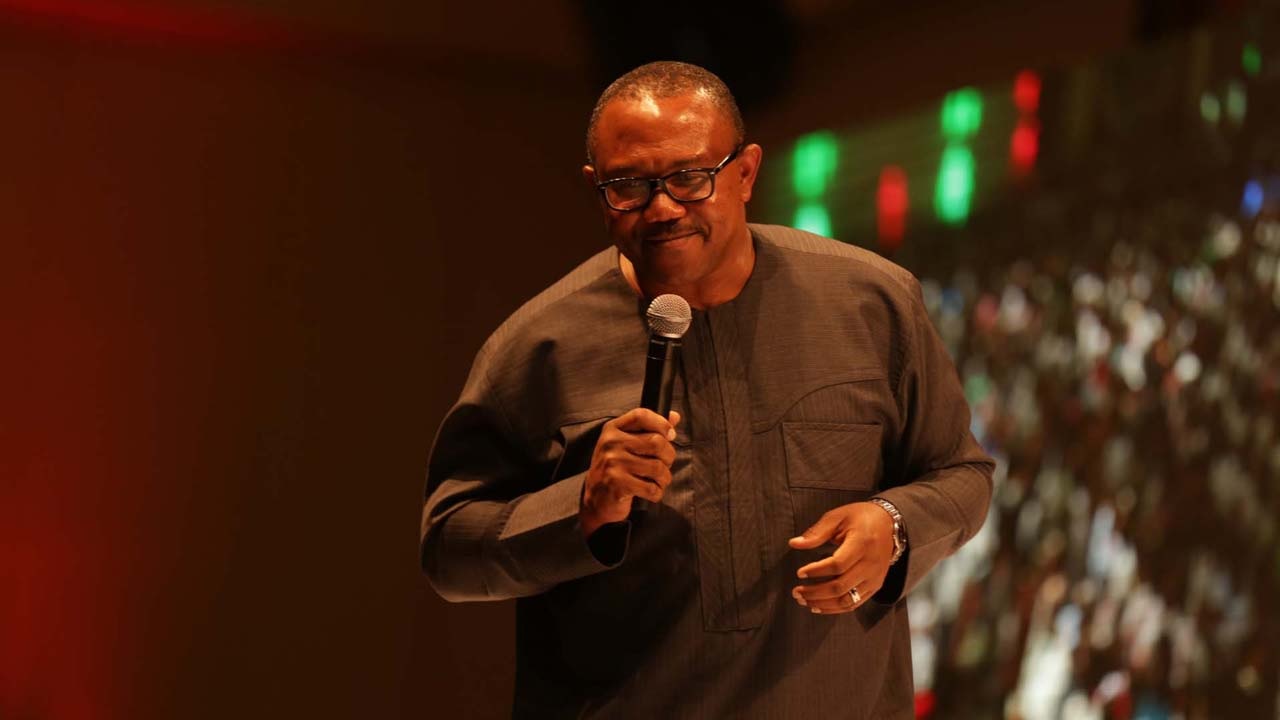
Peter Obi’s Speech in Arewa Joint Committee Interactive Session, Kaduna [video]

0

PETER OBI’S SPEECH IN KADUNA

It is an honour to return to the City of Kaduna and to participate in the Arewa Joint Committee Interactive Session, and rub minds on some fundamental issues germane to the future of Nigeria.

I thank the leadership and stakeholders of the Sir Ahmadu Bello Memorial Foundation for their gracious invitation.

I wish to preface my remarks by setting out our mission and vision. We are all Nigerians. I am a Nigerian running for the Nigerian Presidency to serve every Nigerian. I continue to insist on a show of respect for every candidate, ethnicity, religion and person.

The mission and vision of the incoming Obi-Datti Administration is to give full expression to our democracy by moving our country from consumption to production; we shall achieve this by giving primacy to implementing the 17 Sustainable Development Goals (SDGs).

Our dear country today has become a shadow of itself. Indeed, there is evidence that Nigeria exhibits two known indices of a failed state; parlous economy and loss of territory and emergence of ungoverned spaces.

The purpose of politics and governance is to generate economic and social progress for the citizens in larger freedom. But the status quo is the reverse. This is more so here in the North, where poverty, unemployment and insecurity are the new normal.

The North has the highest number of out-of-school children in the world. It has highest number of school kidnappings in the world. The North also has the highest number of internally displaced persons (IDPs) in Nigeria.

The vast agricultural lands of the north – the so-called food basket of the nation stand desolate and abandoned. This situation is painful and needs to be fixed. Great nations are built through visionary policies, programmes and projects, anchored on the people.

This was always the hope and wishes for Nigeria by our founding fathers. Sadly, things changed. Our leaders became selfish, myopic and stopped listening and caring for the common man. Bad leadership, divisive rhetoric, and impunity became the norm.

Nigerians have suffered; they have lost jobs, and lost their farms and herds and their trust in our leaders. That narrative must change.

The Nigerian people want solutions to the many problems confronting them. After all economic prosperity for all is an all important aspect of a successful leadership, there is hope. We know this for sure. A new Nigeria is Possible.

But we must return to dreams of our founding fathers to create an egalitarian society. The Nigeria we seek will be a United and Secure Nigeria that symbolizes the spirit, letters, and exhorting ethos of our national anthem – “one nation bound in freedom, peace and unity” where “peace and justice shall reign.” As we seek to come to power in May 2023, we are aware of the daunting array of domestic and external challenges confronting our dear nation, and we are fully prepared to lead from the front.

We are cognizant of the domestic policy challenges that have accumulated over time; and that the lack of adequate public policy responses has made them worse, with a devastating impact on national unity, social cohesion, public trust in government, and economic performance.

We have a grasp of prevailing challenges.

Nigeria’s needs and unmet needs are very huge. Yet hunger, insecurity, poverty and deprivation know no tribe, religion or gender.

With all sense of urgency, we will, pursue aggressively policies programmes and projects to enhance the productivity and competitiveness of all the sectors of the Nigerian economy.

For the North we will do the following:

  • a) We will offer immediate and decisive long-lasting and permanent-effect resolution of all security challenges in the North;

-b) Ensure that farmers return to all farmlands for the 2023 farming Season. We will make Nigeria’s arable land in the North her new oil and gold;

-c) As part of our Marshall Plan for Education, we will foster Federal intervention in education at all levels in the North and partnership with State Governments and international organizations in order to improve access to affordable and quality education at all levels;

-d) Ensure very adequate representation in government, equitable appointments especially in the Security and Economic Sectors;

-e) Incentivize the resuscitation of the moribund cotton and textile industries; and full exploration of the cattle economy value chain, notably the $75b global hide and skin economy. Nigeria’s share of the global industry is envisaged to generate over $1bn by 2025;

and finally,

-f) We will ensure very generous deployment and allocation of economic and social projects and infrastructure in the North – with keen attention to Roads, Energy, Power, and Dams- and Solar energy from Sunlight.

In closing, let me say this on record. I have come in peace to develop, to secure, and to unite, and I will do so with every commitment to the growth of Nigeria, as one great and united country.

We shall pay as much attention to the development of the North as to the development of all other parts of the country; but with much greater emphasis on the development of the Agricultural resources.

The North remains where the biggest ad sustainable wealth of this great Nation lies.

If elected President, I shall govern with the fear of God and with all good conscience and intent. The Constitution and the rule of law will always prevail.

I thank you for your kind attention.
May Almighty God bless you all and bless Nigeria.

#PeterObi ??

https://www.youtube.com/watch?v=IiofuSGjm6Q

ASUU Explains Why It Suspended The 8-Month Strike in Nigeria

0

The Academic Staff Union of Universities (ASUU) has disclosed that it called off its 8-month strike action to obey the order of the industrial court which mandated its workers’ return to the classroom.

The union further disclosed that they had to heed the demands of the court, noting that they are law-abiding and would not want to do anything contrary to what the law demands.

Recall that following the suspension of its strike, ASUU disclosed that some issues were still unresolved, however, striking lectures will still return to the classroom.

This was made known by the Union’s chairman Prof. Emmanuel Osodeke during an interview with one of Nigeria’s media stations, Channels Television.

See What he said, “As you have seen from our press release – although they were interventions by the Speaker (Femi Gbajabiamila) and others – the major reason we are resuming is that we are obeying the industrial court’s judgment. The issues have not been fully resolved and no agreements signed.

“We are resuming because we are a law-abiding organization and we don’t want to break the law. We are also hoping that the intervention of the Speaker as promised by him will resolve this problem within a very short time. So, the issues have not been resolved but we would resume because of that court injunction.”

Prof. Osodeke further went on to condemn the action of the Minister of Labour and Employment Dr. Chris Ngige, stating that he was wrong for taking the matter to court, as he argued that the best way to tackle trade disputes involving academics is through negotiation.

He said, “But one of the ministers, the Minister of Labour, believes that the best way is to force them to class. But because of the interest of the Nigerian people the students, their parents, and the Speaker who is intervening our members will teach.’’

It would be recalled that ASUU embarked on its industrial strike action on February 14, 2022, which lasted for a period of 8-months after it was suspended in the month of October.

The union had disclosed that one of its major reasons for embarking on the strike was due to the 2009 revitalization fund owed by the federal government which they failed to pay.

After much agitation from the union, their demands however fell on the deaf ears of the government as they were reluctant to pay the union the fund owed. After some intervention from President Muhammadu Buhari and the Speaker of the house of reps Hon. Femi Gbajabiamila, the union decided to suspend its strike action.

However, a lot of Nigerians are worried that the union might still embark on a strike action in the future, after it stated that it called off the strike action, although all issues weren’t fully resolved. 

The Railway System Struggle Shows The Challenge Ahead for Nigeria

1

This is the destination: “Following the revenue losses, corruption and underperformance that have characterized the Nigerian Railway Corporation (NRC), the federal government is exploring privatization as a means of making rail transport service in Nigeria efficient.” And you can add federal universities to that list depending on how the 2023 election turns out. The public sector is fading fast. Yet, privatizing public assets like the national grid,  railways, airlines, etc will not save Nigeria.

Until the rule of law works, the path to ascension will not happen. There are many untouchables, and when you privatize, you hand over those assets to them. They will mismanage them knowing that you would be frustrated. Then, you come back and bail them out (NEPA/Disco)

Rule of law must be applied with the “blindness of law and justice” urgently in Nigeria. Today, Nigeria is not doing that and that is why nothing is working. Unfortunately, before his anointing with a second cap as president, many would have expected Buhari to deal with the demons.

But here we are: A few years ago, I took a train from Abuja to deliver a lecture in  the Nigerian Defence Academy (NDA) Kaduna. Right there, people were cheating the government. Some people had bought all the available tickets in the train and were reselling at mark-ups. My question was this:  why can’t these fellows be arrested? Cheat sheet: they are agents for someone!

“The private sector is the engine of growth. Let someone else operate your lines efficiently,” Sambo said. “We cannot have an agency that is owner, regulator and operator at the same time.”

Nigerian railway service has been bedeviled by factors ranging from inefficient service to corruption under the NRC, and the government has appeared helpless in the face of it all. In 2020, shortly after the launch of Abuja-Kaduna rail line, Nigerian investigative journalist, Fisayo Soyombo, uncovered high level ticket racketeering and other forms of malfeasance perpetrated by the officials of the NRC.

Though following the investigation, the government has moved to curtail corruption in the system by contracting a private firm as a concessionaire in a 10-year deal to digitize and manage train tickets, most of the challenges have remained.

Nigerian Government Explores Privatizing Its Railway Service

Nigerian Government Explores Privatizing Its Railway Service

2

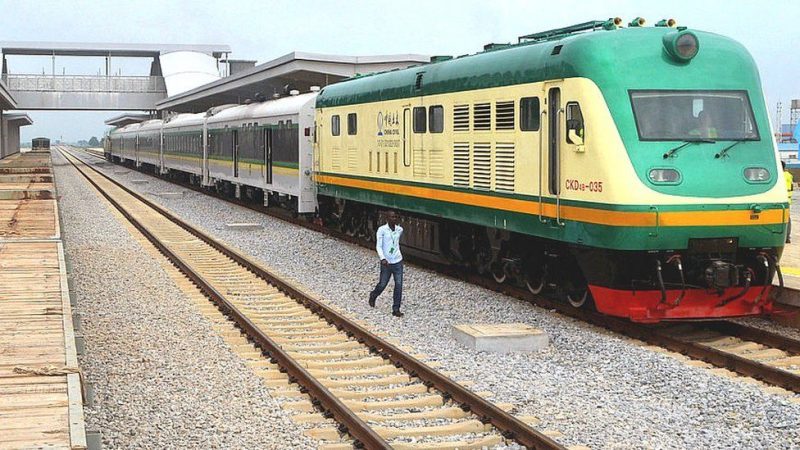
Following the revenue losses, corruption and underperformance that have characterized the Nigerian Railway Corporation (NRC), the federal government is exploring privatization as a means of making rail transport service in Nigeria efficient.

The move was announced by the Minister of Transportation, Mu’azu Jaji Sambo in Abuja on Friday, during a courtesy visit by members of the NRC Governing Board. The minister stated that the government’s move to unbundle Nigerian rail transport service stems from the principle that the NRC cannot be the regulator and at the same time the operator.

“The private sector is the engine of growth. Let someone else operate your lines efficiently,” Sambo said. “We cannot have an agency that is owner, regulator and operator at the same time.”

Nigerian railway service has been bedeviled by factors ranging from inefficient service to corruption under the NRC, and the government has appeared helpless in the face of it all. In 2020, shortly after the launch of Abuja-Kaduna rail line, Nigerian investigative journalist, Fisayo Soyombo, uncovered high level ticket racketeering and other forms of malfeasance perpetrated by the officials of the NRC.

Though following the investigation, the government has moved to curtail corruption in the system by contracting a private firm as a concessionaire in a 10-year deal to digitize and manage train tickets, most of the challenges have remained.

Recently, the NRC was forced to shut down train services due to insecurity and the high cost of diesel. The Chairman of the NRC Board, Engr. Ibrahim Alhassan Musa, had told the minister that they’re running at loss due to the high cost of diesel pushing the running cost of the trains so high.

The latest challenges are yet to be addressed by the government, scuttling Nigeria’s chance of repaying the loan taken from the Chinese Exim-bank to finance the railway project.

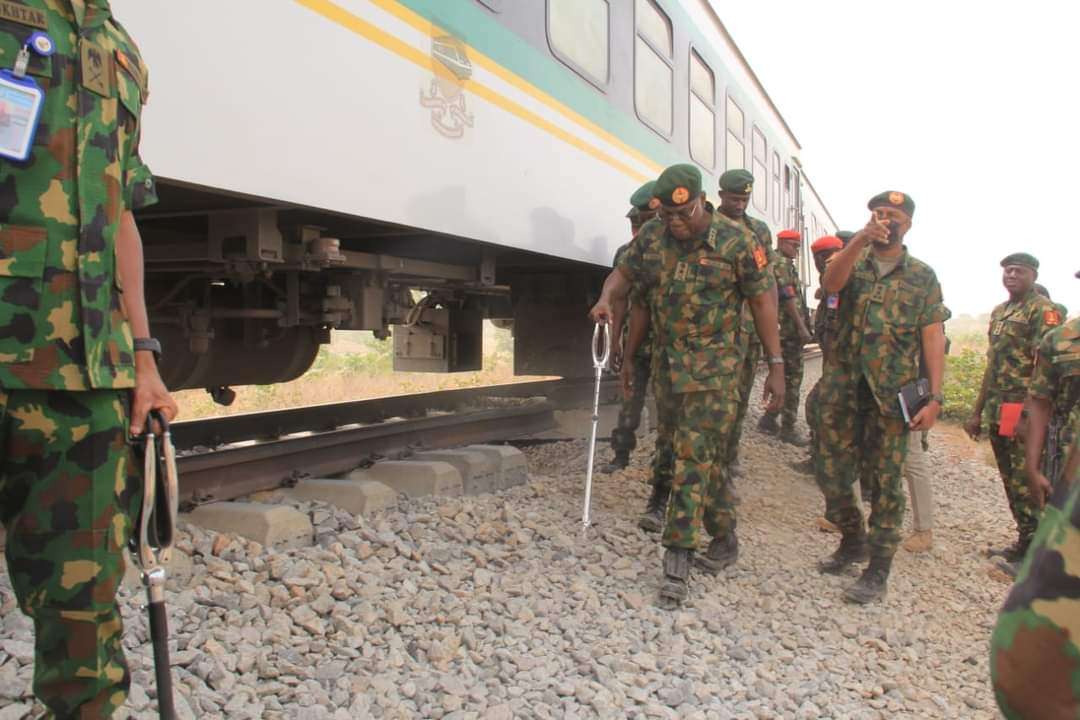
Sambo told the Board that the government is working to ensure the resumption of rail services. He explained that commercial train operations will resume after security measures were installed to prevent further terrorist attack on the rail infrastructure and train passengers.

“We are looking at how the rail lines can be safe by putting 24 hours surveillance and immediate response apparatus.

“The security measures will include short and long term plans, with the short term plans taking effect from November,” he said.

In March, scores of train passengers were killed and abducted on the Abuja-Kaduna route, sparking apathy for train trips across the country. Sambo said that in addition to the security measures that the government is putting in place, he had told Nigerians that rail services will resume operation only when those kidnapped in the Abuja-Kaduna train service have regained their freedom and are reunited with their families.

“I have told Nigerians that I will not run the services until every captive is released. We are lucky today, they are all released and reunited with their families. We are also lucky that all of them are back alive and were all given proper medical care,” he said.

As part of the government’s plan to unbundle train transport service, Sambo said that a National Transportation Policy that will articulate a seamless transportation system for the country will soon be launched. The minister said the Board should be ready for it by looking for alternative sources of cheaper and cleaner energy for the transport sector.

Taking train services off the hands of the Ngerian Railway Corporation has long been touted as key to sanitizing the system and creating revenue growth. But it is not clear when the government intends to make it happen.