DD
MM
YYYY

PAGES

DD
MM
YYYY

spot_img

PAGES

Home Blog Page 4807

Weitin dey happen? ‘I dey sha … 10k contacts reach, ah see one lizard like dat fuh road… dey rain small small… normal!

0

Well.. I just hit what some people consider a landmark on the way to scaling LinkedIn Network.. 10,000 1st degree contacts.

This is the contact that has landed the superfluous honour of becoming my 10,000th connection –

So what does it really mean to me?

Well, not a lot. Let me ramble on a bit. I’m on LinkedIn since 14 April 2011. (I actually first started some point in 2010, but I lost my login details… and the web based email provider [another.com] shut down, so I couldn’t recover the account and so, I started again).

10k contacts is an old target. It represented the upper limit for 1st degree contacts. It was increased to 30,000 later. I think around 2018. Discounting the period under the original account, reaching 10k now works out at 833 new contacts a year – hardly impressive!

How my contacts built:

I first added colleagues at work, and widened it out to contacts I knew through work that had external roles … subcontractors, suppliers, solution partners, clients and so on.

By 2011 my career was already mature as I had secured senior positions relatively early in adulthood. This meant that earlier peers were often a generation my age seniors, and to them, the technophobic inertia of joining LinkedIn must have been much the same as the psychological momentum some people feel when thinking about getting a Web 3 domain today.

In my search for contacts from previous career, I didn’t have that much success.

I did, however, start getting invitations from people who worked in the same companies as external contacts, and when contacts moved, I found out where they went in addition to who replaced them in the position, I knew them. This grew new sub networks.

In about nine months, my network grew to 1000 without being hugely active about it.

As a professional ‘selling’ myself into senior expatriate positions, I was always more interested in the quality of my feed (focusing on keeping technical and commercial knowledge current – telling me if new businesses started in my market, new innovations, mergers, raw material supply and demand info, – in other words ‘industry speak’ around the sectors relevant to me, and pertaining to West Africa, particularly Nigeria).

I was far more interested in pruning feed content, through restricting contact influence, rather than improving reach (raising the visibility of my profile among people I don’t yet know).

So I was always uninterested in contact numbers rising quickly just for its own sake.

With a fairly passive approach to ‘the numbers game’, when I left Netcom and was more often in a stand-alone consultant role, with no employment matrix to drive contact adoption, the rate of new contacts dropped drastically.

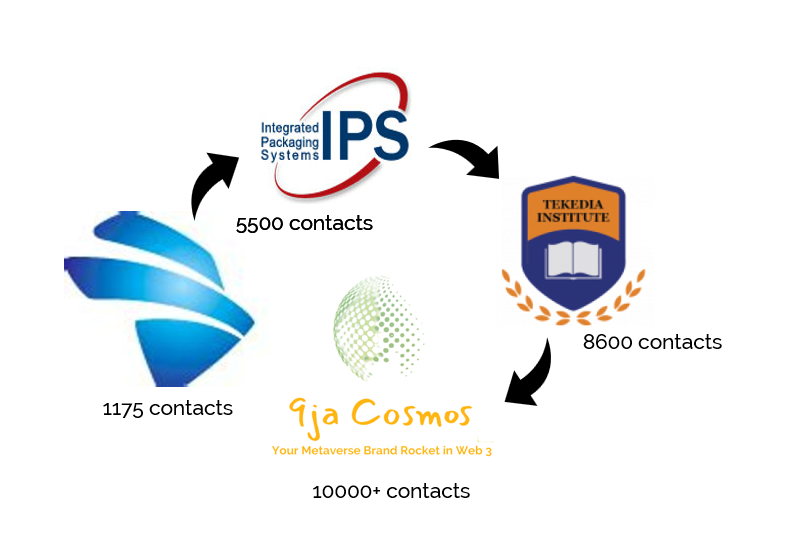
A year later, I became Country Manager, Nigeria for IPS. The local team was small, so not a lot of direct staff there, but I was meeting leaders of top Nigerian FMCG manufacturing companies, several a day – Dairy, Food Processing, Biscuits and Bakery, Drinks, Millers, Brewers, Distillers, Pharmaceuticals, Packaging Companies, I was there.

I had occasional visits to Ghana as well. I frequently visited machinery and engineering solution suppliers in Europe, held strategic meetings with peers in Dubai, and dealt with ingredients and materials suppliers in South Asia, ASEAN and China.

Being proactive with securing them to LinkedIn and growth through their extended networks, my first degree connections ran to 5k in a few years, but it was all organic growth.
 

Next came re-establishing myself as a consultant focusing on West African markets. It seemed logical since the telecoms/internet/data transport/datacentre networks spectrum together with the Edible FMCG manufacturing spectrum made a large target, and with legacy leadership in construction infrastructure and built environment.

But this often means working alone, and client exposure was often through single points of contact, so not a huge amount of opportunity to plug into any matrix which can yield connections.

There were a few on-ground deployments to West Africa, but when the COVID years hit, this became zero, and even remote opportunities became thin. It took for COVID restrictions to lift… to March this year, before the next on-ground opportunity in Nigeria came.

But with COVID also came the advent of ‘The Tekedia Phenomenon’. Through involvement with the Tekedia Institute and other brands in the stable, and through creating articles for the content library, I became exposed to a large throughput of students, investors, faculty, staff writers and other interested parties.

This created a new organic accelerant to my connection profile.

The last chapter in the saga is the launch last month of the first country Web 3 domain system in the world. .9jacom was launched on 13 September 2022, and Nigeria now claims that crown through my brand, 9ja Cosmos.

Though short, this is the final stimulus that got my connections to 10k as blockchain enthusiasts pile in to send me invitations. Because there is now a greater focus on stimulating adoption on 9ja Cosmos domains, I have had to pivot somewhat away from feed quality and towards network building.
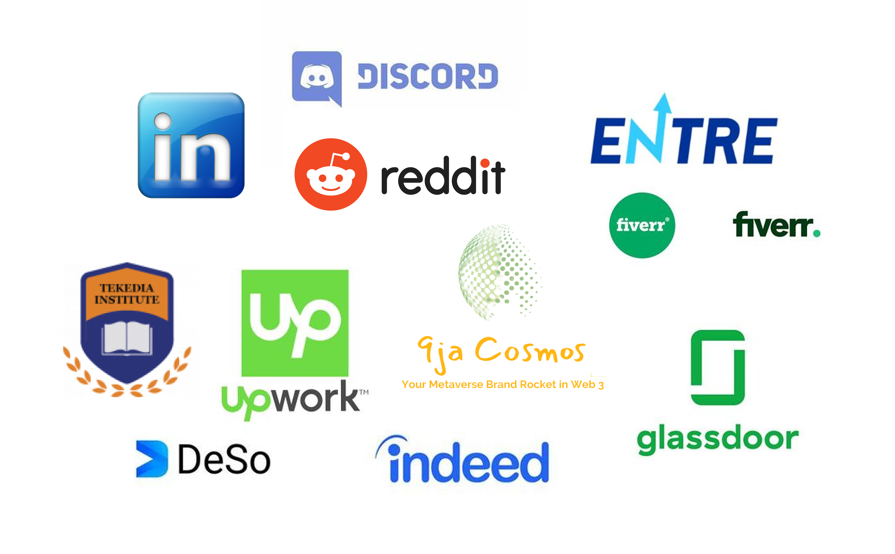
My Online Participation Ecosystem


My final analysis:

Do numbers matter? Not really. I think there is an inflection point and once a network is beyond that, larger changes in contact numbers bring smaller dividends (if any).

Quality over quantity: The first 30k links (was 10k when I joined LI) are important because they offer full interaction benefits to those on subscription free use (which is most members).  Being organic at least early on, leads to relationships that function in a real sense rather than individuals who are just a number. It gets harder to cut out ‘dead wood’ later on.

Don’t expect LinkedIn to be a Holy Grail: At some point we were all not in LinkedIn. We had to do things to progress ourselves. With LinkedIn, these things continue to be important. LinkedIn doesn’t replace them.

Does ‘following’ matter? Not unless you really. really like the content the member brings to your feed, AND it is something that helps you on your journey AND is aligned with what you need to get done there.

Resonance that is not part of your progression path is worthless. Don’t allow ‘interesting’ but not particularly helpful content distract you from your path. I prune the ‘following’ list that have not accepted my invitation by the time it is three weeks old.

Last word:  A small but significant rise in profile impact between 1k and 5k and again between 5k and 10k contacts, but not enough to get obsessed with chasing numbers. Building networks organically is more important for most LinkedIn members.


Secure your own Nigerian Web 3 Domains  ($2) at:

https://www.encirca.com/handshake-9jacom/

https://www.encirca.com/handshake-9javerse/
 

What is one thing you do well? Improve on that to thrive

0

Great achievers focus on improving things they already do well. Others spend more time trying to improve things they hardly do well. Until you discover what you do well and focus to be better on it, you will struggle to rise. Yes, win your world by compounding on areas you can rule.

Amalinze, the village wrestler, rules the village square. Daily, he learns the best way to wrestle. He keeps improving, fixing inefficiencies in his wrestling moves. He enjoys hunting, music, etc but he never forgets that he needs to deliver during the village wrestling contest. So, he works hard to be the best wrestler. (In the corporate world, Toyota calls it Kaizen, a construct of continuous improvement. )

What is one thing you do well? How can you be better at that in 3 months, 6 months, etc. If you keep improving, your impact will compound and before you know it, more and more people will pay you for that service. The fact is this, you have everything you need to achieve your goals because everyone has a skill. The difference comes down to: has the skill blossomed or still latent (hidden). #discover yourself

Abundance in Future – Today’s Finest Banks in Nigeria Were Born During An Economic Miry Clay

2

Young People, there is abundance in the future. The possibilities of the future are only limited by the finite knowledge of today. Fill your mind with optimism, and a great energy to achieve will come.

A mind chained in hopelessness is lost, seeing darkness even in the brightest rays of the sun. I challenge you to a game of LIFE. And for that to happen, find a way to LIVE your Life, not your friend’s, classmate’s or anyone. Yes, a purpose-driven life, not tossed around like a feather in a river.

Many of you may be young. Ask your parents about the late 1980s when cassava mosaic disease destroyed a core agro product in most parts of Nigeria. I was a teenager in a village – and it was largely a famine with no garri and all the by-products of cassava. As that was happening, the SAP programme was unleashed, punting any hope. Yet, in the deepest of that miry clay, green pastures emerged.

Do you know that Zenith Bank, GTBank, Access Bank(Diamond Bank), UBA (STB), etc were all started at one of the lowest moments in Nigeria’s economic history? Finance Houses were collapsing here and there, but out of those rubbles, men rose and built the pillars of today’s Nigerian banking. I learnt about that history as I was graduating from FUTO in 1998 as I researched my final year seminar – Human-Implantable Biochip Card Systems for Payments.

Yes, even as far back then, we discussed things which the current fintech world has not gotten to. My supervisor, Prof ENC Okafor, at the end of the seminar asked “Do you believe what you just presented?”. People, the Biblical “666” and how humans would be implanted with chips stole the day after the presentation.

See a world ahead. Blossom! The future is full of abundance because more greener pastures remain. #believe

Some Basic Facts about Copyright You Should Know

0

Copyright protection lasts for the life of the author/ holder plus an additional 70 years.

Marriage is for life and does end at death but copyright outlives the holder. It goes for extra 50-70 years after the death of the copyright holder. This means it is for the whole of the lifetime of the copyright holder plus extra 70 years after he/she has died.

Copyright protects an expression and not an idea, conception, or imagination. It must have been expressed or manifested by the creative before it gains the protection of copyright law.

The requirement used in determining if a thing or an expression is copyrightable is called “Modicum of creativity”. 

The “modicum of creativity” requirement sets a low bar for copyright-ability and this standard of requirement was established in the case Feist Publications, Inc., v. Rural Telephone Service Co., (499 U.S. 340)

In the above case of Feist Publications, Inc., v. Rural Telephone Service Co., (499 U.S. 340), the Supreme Court of the United States held that “the requisite level of creativity is extremely low; even a slight amount will suffice, this means that anything is copyrightable in as much as it has been expressed and has an ounce of creativity expressed in it.

The copyright act of 2004 is the extant law governing copyright and other related matters in Nigeria. 

The Nigerian copyright law (Cap 28, Laws of the Federation of Nigeria) permits the holder of copyrighted works to reproduce the work in any material form, publish and republish the work, perform the work in public, produce and reproduce any translation of the work, make any adaptation of the work and this right can be transferred or given to another person.

When another person reproduces or performs a copyrighted work without the authorization or consent of the original author of the work, that person will be said to have infringed on the copyright of another and will be made to pay damages. 

Summary of the United case of Feist Publications, Inc., v. Rural Telephone Service Co., (499 U.S. 340) which established the modicum of creativity test that shows if an expression is copyrightable or not; 

In that case, the defendant had copied information from the plaintiff’s telephone listing to include it in its own. The plaintiff, therefore, sued them for copyright infringement to have copied their listings. The Court held that information contained in the plaintiff’s phone directory was not copyrightable as there was no ounce of expression of creativity in it and that therefore the act of the defendant copying the telephone listing has not infringed on anyone’s copyright.

This decision established that information alone without a minimum of original creativity cannot be protected by copyright.

UK Considers Tougher Visa Rules For Nigerian Migrants Due to High Influx of Relatives

0

The United Kingdom is considering tightening its rules on how many relatives migrants can be allowed to bring into the country.

According to the U.K authority, it disclosed that out of all the migrants in the country, Nigerian migrants bring in the most relatives.

A report disclosed that Nigeria and India have so far emerged as the countries with the highest number of students bringing their relatives to the United Kingdom.

This is coming after Home Office immigration figures showed a startling inconsistency across different nationalities coming to the UK to work and study.

The report shows that Nigerians accounted for 40% of all dependants who accompanied foreign students in the 12 months to June despite Nigerian students making up just 7% of all foreign students during the period.

Some 34,000 Nigerians were given study visas in the UK, bringing with them a total of 31,898 dependants. A similar ratio was recorded for work visas, with 8,972 Nigerians issued with one in the 12 months to June bringing with them 8,576 dependants.

By comparison, the figures show that 93,049 Indian students who came to the UK last year brought with them 24,916 dependants, while 114,837 Chinese students came to Britain with 401 dependants.

British statistics show that in 2019  the year before Covid struck, about 14,000 UK study and work visas were issued to Nigerian nationals. That number, which includes dependents, almost quadrupled in 2021.

“There were 117,965 grants to Indian nationals in the year ending June 2022, an increase of 80,569 (+215%) compared to 2019. Chinese nationals were the second most common nationality granted Sponsored study visas in the year ending June 2022, with 115,056 visas granted, 4% lower than the number seen in 2019 (119,825).”

“In the other top 5 nationalities, Nigerian nationals saw the largest relative increase in Sponsored Study grants compared with 2019, increasing by 57,545 (+686%) to a record high of 65,929, making them the third largest nationality group in the latest year,” the U.K Home office said.

The Home Office disclosed that this is the highest on record in their time series, with the substantial increase representing both recovery from lower numbers during the Covid-19 pandemic but also an increase in the pre-pandemic period.

According to the UN’s Department of Economic and Social Affairs, the number of international migrants from Nigeria in 2020, was 1.7 million up from 990,000 a decade earlier.

Nigeria accounting for the highest number of dependants in the U.K doesn’t come as a surprise at all, as Nigerian citizens continue to migrate out of the country in droves.

Nigeria is currently witnessing a massive brain drain, as most of its skilled workers and experts in different sectors have migrated to Europe in search of greener pastures.

This increase in migration has been attributed to the myriad of problems ravaging the country, with problems such as Insecurity, Unemployment, Devaluation of currency, poor infrastructure, etc all of which have forced its citizens to ‘Japa’.