DD
MM
YYYY

PAGES

DD
MM
YYYY

spot_img

PAGES

Home Blog Page 4824

Cardano Price Prediction 2022 – 2025

0

Cardano (ADA) builds on much of Ethereum’s achievements and aims to take them one step further. But what is Cardano worth in 2022 and beyond? When will Cardano explode? We’ll list those in this guide and our ADA price predictions.

According to the latest Cardano price prediction, the price of Cardano will reach $2.57 by the end of 2022, rising to $4.14 by the end of 2023 and $10.15 by the end of 2025. Cardano will then rise to $19.42 in 2027, and $39.49 in 2030.

>>>Buy Cardano Now<<<

Virtual currencies are highly volatile. Your capital is at risk.

Cardano Price Prediction – Overview

  • End of 2022 – The ADA coin price could then consolidate and range between the $0.4 support level and $1 level – now a resistance level – until the end of 2022. If all ADA new upgrades are successfully implemented it might reclaim and flip the $1 resistance level to support in early next year, printing macro higher lows – confirming a new bullish market structure
  • End of 2023 – The Cardano price would face little resistance above if it can close a monthly candle back above the $2 level by the end of 2023
  • End of 2025 – Entering the Voltaire era in 2025 will see Cardano shoot to an impressive high of $5.90.
  • End of 2030 – At the end of the decade, Cardano is predicted to hit an all-time high of $12.45 as its tech becomes ingrained into our society.

>>>Buy Cardano Now<<<

Virtual currencies are highly volatile. Your capital is at risk.

Cardano Price History

Historical Cardano (ADA) Price Movements

If you’re going to invest in any cryptocurrency, no matter how hyped it may be, you must always devote some of your research time to analyzing its past performance. Let’s take a look at some of Cardano’s key historical price movements.

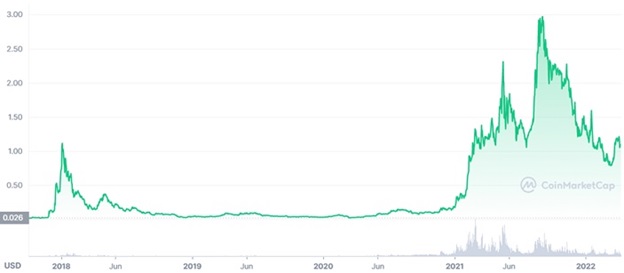
What was Cardano’s starting price?: 1 ADA = $0.0024 in December 2016 during its ICO. CoinMarketCap first started tracking the price of Cardano on the 10th of February 2017 trading at $0.026.

What is Cardano’s highest price?: Cardano’s all-time high is $3.10, which it reached on the 2nd of September 2021.

What is Cardano’s lowest price?: Cardano’s all-time low is $0.01735, which it hit on the 1st of October 2017.

In 2021, Cardano began the year at $0.1753 and ended the year at $1.3102 — a 647% increase for the year. ADA has a 52-week low of $0.7528.

Cardano ADA/USD Chart
Cardano Price Predictions Long Term Outlook

Long-term Cardano price predictions indicate that ADA will perform exceptionally well. According to our forecast, the value of the Cardano crypto can rise to $2.50 by the end of 2022, $4.60 in 2023, and achieve a mean price of $10.15 by 2025. That’s an increase of over 600%.

On top of having a fluid understanding of ADA’s historical price, we also need to have a good grasp of what factors may influence its price in the future. Armed with this knowledge, you can calculate your own Cardano ADA price predictions and answer for yourself — ‘should I invest in Cardano?’

Two of the biggest factors to consider for Cardano price predictions are supply and demand and the Bitcoin price. As demand grows for ADA, its limited supply will lead to an increase in Cardano’s value. This will be further compounded by increased interest in Bitcoin over the coming years. Meanwhile, the growth of the Cardano platform, its user base and increased partnerships will likely increase demand for ADA.

Another major issue that Cardano needs to confront is the speed at which it develops. It cannot just wait for competitors to fail. Its open-source nature has allowed many rivals to catch up with Cardano and now many of its revolutionary ideas are no longer new (for example, blockchains with multiple layers). On top of that, before September 2021 many skeptics felt that Cardano was only hype because of how long it took them to release its smart contracts functionality.

That said, big upgrades are coming, such as the implementation of Hydra — a layer 2 protocol that will make Cardano considerably faster by processing transactions off-chain and securing them on the settlement layer. This improvement will supposedly mean that Cardano will be able to process a million transactions per second. This would make Cardano the fastest cryptocurrency by a substantial margin.

All in all, it is much harder to come across bad news about Cardano than good news. Cautious investors can profit from investing in Cardano either as a short-term investment (one year) or long-term investment (five to 10 years). Here are the latest Cardano price forecasts for 2022 to 2030.

>>>Buy Cardano Now<<<

Virtual currencies are highly volatile. Your capital is at risk.

Cardano Price Prediction 2022

The introduction of Hydra could make Cardano the fastest and most efficient blockchain in the world in 2022 — it could be massive news for investors.

The Cardano upgrades could increase investor confidence in ADA. Cardano will need to get back above $1 as soon as possible and rally to test the $2 – $3 level – that’s possible based on the chart even as part of a short squeeze and putting in a lower high before further downside – shorts rarely get a free ride all the way down.

>>>Buy Cardano Now<<<

Virtual currencies are highly volatile. Your capital is at risk.

Cardano (ADA) Price Prediction 2023

As Cardano speeds up development in 2023, we may see the first examples of side chains in the Basho phase. Starting 2023 at $1.62, bullish sentiment will carry Cardano to $2.14 by the end of the year. Our short-term 2023 Cardano prediction also estimates a max price of $2.63 and a min price of $1.23. ADA will have an average price of $2.82 in 2023.

 >>>Buy Cardano Now<<<

Virtual currencies are highly volatile. Your capital is at risk.

Cardano (ADA) Price Prediction 2024

By 2024, we could reach the end of the Basho era and start the Voltaire era and Cardano will become more self-sustainable. In 2024, bulls will push ADA to a maximum of $4.12 while the bears will not be able to push any lower than $2.55. If the crypto market does well, Cardano will have an average price of $5.48 at the end of 2024, as per our ADA price prediction.

So, should I invest in Cardano? Well, our short-term ADA Cardano predictions suggest short-term investing could pay off handsomely. Between 2022 and 2024, ADA could be worth between a low of $0.67 and a high of $5.50. But could Cardano perform better in the long term? Let’s look at our Cardano predictions for 2025 and beyond. 

Cardano Price Predictions 2025 & Beyond

By 2025, Cardano will release many updates that will further democratize the platform and attract more investors. Further gains in 2025 will see Cardano reach a top target of $10, a low price of $6.88 and secure an average of $10.30 by the end of the year.

Attaining the average price would mean a 653% increase since the beginning of the current year, according to the latest long-term Cardano price forecast.

2027 will see Cardano buzz with services and new tokens as Cardano’s ecosystem continues to grow. Surpassing $20.00 early on in 2027, our five-year Cardano price prediction expects an all-time high of $26.44. For the rest of 2027, Cardano will build a strong level of support around a low of $10.10 and gradually increase to an average of $19.42 by the end of the year.

Cardano has likely forged many more partnerships with governments across the globe by 2028 and could be in use by some large government institutions, particularly in regards to identification and record-keeping. The 2028 predicted high is $33.13 and the low is $18.13, based on our ADA price prediction forecast. Expect an average price of $26.30 and a closing price of $24.74 for 2028.

2029 could be the year Cardano topples Ethereum price or becomes a serious competitor to its dominance in the crypto market. 2029 will start with Cardano at $25.57 and see it rally to a yearly high of $38.71, potentially hitting a low of $23.94 in between. Continuing its upwards trajectory, our 2029 Cardano price prediction places ADA/USD at an average of $36.90 by the end of December 2029.

>>>Buy Cardano Now<<<

Virtual currencies are highly volatile. Your capital is at risk.

Cardano Price Predictions 2030

Cardano crypto could be running whole countries and the lifeblood of many multinational corporations by 2030. Beating its current all-time high by 1,200% in 2030, Cardano will hit a legendary high of $40 in 2030 and hold strong with an estimated low of $34.18. Spending much of 2030 above $36.00, ADA will end the year with an average price of $39.69 per coin, as per the long-term Cardano price prediction.

Cardano Price Predictions – Conclusion

Cardano is one of the most popular cryptocurrencies in the market today. Cardano price predictions in the double and triple digits are not out of the question. Those high price targets may take time to play out however as Cardano is already a top 10 crypto by market cap. Alongside Dogecoin and XRP it is one of two cheap cryptos to buy under $1 in price, although the total supply and circulating supply are important metrics to understanding token prices and making Cardano price predictions – ADA has a total supply of 45 billion coins, of which 33.6 billion are currently in circulation.

If you’ve been looking for Cardano price predictions for 2022-2025, we hope you’ve found this article helpful. Cryptocurrency investing is notoriously risky and it’s vital to have a robust risk management strategy in place if you’re considering adding Cardano to your portfolio — however, trending cryptocurrency suggests the value of Cardano will ultimately rise by around 660% by the year 2025.

According to these predictions, it seems that it’s best to invest in Cardano if you’re prepared to play the long game. We may be unlikely to see a dramatic price increase, but the charts suggest it could be a smart investment for those who are happy to take long-term positions.

>>>Buy Cardano Now<<<

Virtual currencies are highly volatile. Your capital is at risk.

Can Cardano Reach $25?

Cardano will reach $25 by 2028 and will then proceed to rocket past it to $26.44, according to our Cardano price prediction.

Can Cardano Reach $100?

Cardano will not reach $100 in the foreseeable future. The current Cardano price prediction estimates it will reach $38 at the highest by 2030.

Will ADA Ever Reach $1,000?

ADA will not $1,000 any time soon. So far, no Cardano price predictions have been brave enough to suggest such a humongous increase.

Is Cardano A Good Investment?

Cardano has already proven itself to be a great investment. So far the leading crypto has been a profitable investment, attaining an ROI of 4,931.81% since its launch.

Cardano is arguably one of the best cryptocurrencies to own. It has the most reputable background of any crypto project so far. If Charles Hoskinson’s vision is realized, we could be running entire countries with Cardano in the future.

>>>Buy Cardano Now<<<

Virtual currencies are highly volatile. Your capital is at risk.

Is It Too Late To Buy Cardano?

It is far too late to buy Cardano. Though the value of ADA has appreciated massively over the past few years, given the wide scope of Cardano and its potential, it could increase significantly more.

>>>Buy Cardano Now<<<

Virtual currencies are highly volatile. Your capital is at risk.

How To Buy Cardano?

Digital assets such as Cardano’s ADA are best bought from crypto exchanges. Before creating an account and buying Cardano, you’ll want to do some thorough research to see if they suit your needs (and to avoid scams!). Once you have bought ADA, you’ll want to store it in a Cardano wallet.

What Will Cardano Be Worth In Five Years?

Our five-year Cardano ADA price prediction anticipates a 2,325% increase to an astounding high of $26.44 by 2027.

What Will Cardano Be Worth In Ten Years?

In ten years, you can expect to see Cardano work its way to $50 or even $60 per coin based on the trajectory of our long-term Cardano price prediction.

Will Cardano (ADA) Go Up?

Yes, Cardano will go up in both the short and long term based on our 2022 to 2030 Cardano price prediction. Price predictions are highly subjective, Cardano price prediction suggests that ADA will increase. Historical data also backs up this possibility. However, never assume that an asset will go up forever.

>>>Buy Cardano Now<<<

Virtual currencies are highly volatile. Your capital is at risk.
Central Bank of Nigeria Continues to Debit Banks on CRR – And Why Banks Do Not Care

1

A new debit: “The Central Bank of Nigeria has debited the sum of N838.32 billion from 15 banks for not meeting the minimum cash reserve ratio (CRR). The CRR is the percentage of customers’ deposits that must be kept with the central bank. At its current rate of 32.5%, commercial banks must deposit N325 for every N1,000 deposited by their customers.”  Yes, it looks crazy for the apex bank to be debiting commercial banks. Hold on – ask to see the books, and you will understand while this happens all the time in Nigeria.

Assume you have N1 billion customer deposits, and you are required to keep N325m with the central bank, where the money makes nothing of value. But instead of doing that, you send only N125m and lend N200m at 27% interest rate to your customers. 

If CBN comes later to debit you on that N200m say 1% or whatever, you will be fine. So, this is a pure cost of doing business when the risk is determined, and not nothing serious and devastating. The banks understand that and this debit has been happening. Simply, they are fine with the debits provided it stops with the debits; They make better money from the customers.

If any person has a better explanation, let me know. Why? In a bank’s general ledger, any operation boss can see his/her CRR at the end of day (IT does that in the night and the data sent to Heads of Operations the next day). 

So, if there is a variance with CBN ratio, and the bank does not rectify it the next day, it means a threat of debit is not an issue for the bank! Why keep it with CBN for nothing when you can lend it at 27%, knowing that if caught, the fine is at 1%?

Update: Note this changes if the CBN debits that N200m with fine on it. In that case, the bank loses. Yet, it comes down to how long it takes for CBN to debit and fine.

Comment on LinkedIn Feed

Comment: Prof, trying to understand the maths you provided but here’s the playbook; CRR is a statutory requirement and currently it’s 32.5% of total deposits (which varies as transactions are done) which you must keep with CBN. So you don’t have access to that cash for lending. However, there’s also another ratio the Loan to Deposit Ratio- LDR (which now is christened Loan-to-Funding) which is 65%. Literally means you should loan 65% of your funding to spur growth. So whether you lend the 200m in your case study or decide to keep it, once the CRR ratio is computed and it’s short, you get debited.

The CBN May then decide to lend the CRR at single digits through banks to boost economic activities in the country when the need arises.

On your question about why banks may prefer to get extra CBN debits than lend is quite simple. In an economy where global yield curves seem inverted (recession likely to come) cash is king and risk taking should be lower. So you rather at peace keeping your cash with CBN at 0% than creating bad loans that will affect your institution.

Maybe you can throw more light on what you meant as it wasn’t really quite clear.

My ResponseI must have written this poorly. Apologies for that. Your comment means what I had in mind was not the way it came. Here is what I am trying to say. The CRR is 32.5% by regulation. You have a customer deposit of N1 billion. If you follow the regulation, you would be expected to keep N325m with the apex bank. That money yields nothing for you as a commercial bank. But you can also decide to “violate” that and instead of sending N325m to CBN, you send only N125m. The remaining N200m stays with you and you lend it to your customers at 27%.

Later, CBN will come after you for not meeting the CRR. It sees you are off by N200m and fines you 1% on that N200m. My point is this: banks prefer that fine because they have made 26% after the fine. And that is why this continues to happen for years.

Comment 1b: Prof, I think you are misunderstanding the flow. Okay, first, fines doesn’t not exonerate you from meeting the regulatory requirement. So it’s more like a punishment. Irrespective of whether you are fined or not, you will still get debited the 200m. But in reality, what happens is the CBN without recourse to you passes the debit to your account with them so it’s not a case of choice. That way no rooms for fines. If you lend the 200m and still get d debit of CRR from 200m, you are basically contributing to your LDR. I hope this is a bit clearer.

Comment 1c: Thank you Odinaka for more clarity . I think banks attract some punitive measure, possibly a fine , for not keeping the L/D ratio. A bank would prefer to abide by all regulator ‘s requirements
than fall into their bad books and be known as not a good player in the financial market.

My Response: Check well – I may have a point. If the debit is done in October, even though CBN can take that N200m with a fine, I had used it for a really long time. So, this does not change my thesis. Why? The point has not explained why every Oct/Nov, CBN debits at least 10 banks for CRR violations.  Yes, we can trade with this money and in Oct, we are fined a small fee and CBN debits the money but we have made money over 10 months.

May I add that I find it hard to believe that extremely smart people like bankers in Nigeria will allow themselves to be fined yearly if they are not making up those fines via another way. This fine is “constant” as CBN does it yearly and the fine has not stopped the violations. For me, this is a strategic violation as every bank after EOD (end of day) knows its CRR and could have complied since banks like to make money and fines do not help. So, there is something here..

Comment 2: These economist and their economic thinking, at the expense of real philosophy of growth and development, is really fascinating to me sometimes. Is it not the CBN that recently increased the LDR (loan deposit ratio) from 60% to 65% to encourage DMB’s lending to the real sector to spur the country’s economic growth and job creation? In the past, some banks have been penalized for not lending up to the 65% threshold. Around June or so, only five banks were even able to meet it. Among these five, some lended up to 89% of their deposits or so.

None among the big 5 banks we know made the cut. But in the same breadth, the apex bank is now using the new CRR policy (from 27.5 to 32.5%) to squeeze that same liquidity/money supply out the real sector. My question is, do these strategies/policies really get to be effective at dealing with the economic growth and stability problem we have as a country, not to talk of the inflation problem which is but a part of the larger (low productivity) problem we have? I get confused of the effectiveness of these two-sided policies and wish that someone can truly explain to me their effectiveness in actual terms.

My Response: Good observation. You want lending to rise and you also want them to send you more cash to keep.

Nigeria’s CBN Debits N838.32 Billion From 15 Banks

Nigeria’s CBN Debits N838.32 Billion From 15 Banks

0

The Central Bank of Nigeria has debited the sum of N838.32 billion from 15 banks for not meeting the minimum cash reserve ratio (CRR).

The CRR is the percentage of customers’ deposits that must be kept with the central bank. At its current rate of 32.5%, commercial banks must deposit N325 for every N1,000 deposited by their customers.

The Central Bank of Nigeria (CBN) announced in September that it was increasing the CRR to 32.5% as part of its efforts to mop up liquidity and also curb inflation and currency depreciation in the country.

Some of the affected banks include Zenith Bank (N270 billion), Access Bank (N205 billion), United Bank for Africa (N134 billion), FCMB (N90 billion), First Bank (N33 billion), Union Bank (N29 billion), Keystone Bank (N14 billion), Titan Bank (N11.6 billion), Polaris Bank (N10 billion), Nova (N5.5 billion), Unity Bank (N1 billion), Heritage Bank (N470 million), FBN Microfinance Bank (N460 million), and Suntrust Bank (N92 million). 

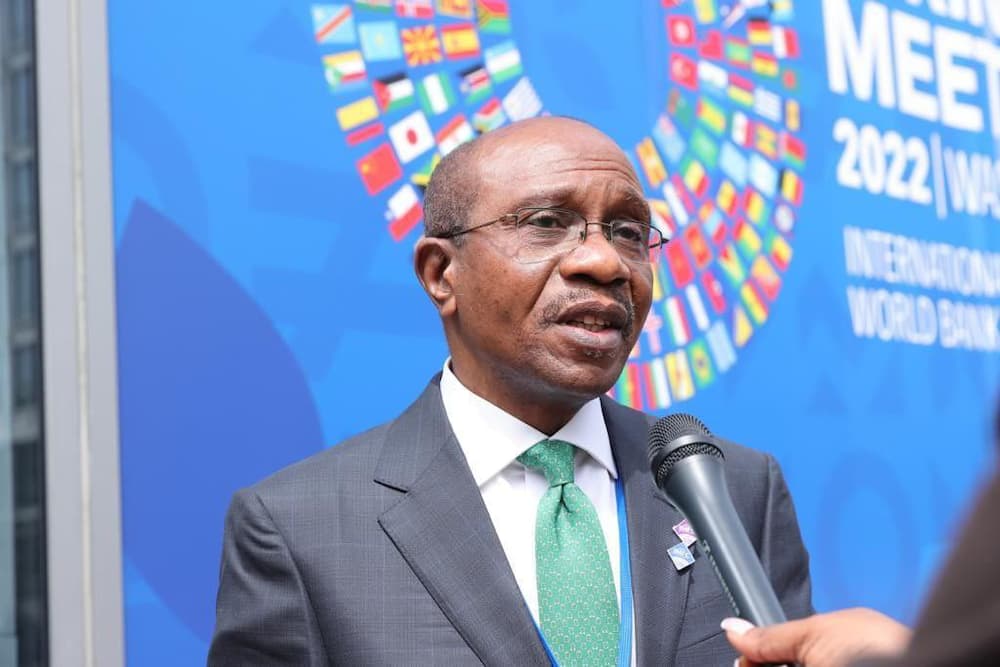
The Central Bank Governor Godwin Emefiele, stated that banks that failed to meet the new requirements would be barred from the foreign exchange market until they have complied.

He also said that increased liquidity in the economy was one of the reasons for the rising inflation rate and currency depreciation.

After the MPC meeting, Mr. Emefiele stated that the banks will be implementing aggressive cash reserve requirement measures by mopping up liquidity from commercial banks.

The Central Bank of Nigeria raised the benchmark interest rate in its 287th Monetary Policy Committee meeting to a two-decade high of 15.5 percent, retaining the asymmetric corridor of +100/-700 basis points around the MPR.

Inflation seems to be the buzzword in Nigeria lately, as it has ravaged the country’s economy and also affected the disposable income of the citizens.

It comes as no surprise, given the near-unprecedented rise in the prices of goods and services in the country in recent times. July 2022’s inflation rate – the highest in the country since 2005 – stood at 19.64 percent, up from 15.60 percent in January 2022, according to the National Bureau of Statistics (NBS).

The CBN has introduced some measures aimed at maintaining price stability in line with its mandate. These measures have received the approval of some analysts who have expressed confidence in the CBN’s sustained intervention programs, and like Fasua believe that “inflation is expected to abate as food supply improves and the fiscal authority sustain its efforts to tame the legacy structural challenges which put upward pressure on domestic price levels.”

The CBN has rolled out several intervention measures in various sectors of the economy designed to curb inflation in line with its development functions to stimulate the economy and stabilize prices. Some of these intervention programs are; Disbursement of over N1.7trn to farmers, Disbursement of over N2.183trn for real sector projects, etc.

The World Needs A Leader As Cracks Have Become Evident

1

The postulation has been that acculturation will deepen friendliness and harmony among human societies. Yes, if in your professional journey, you have lived in Kenya for some years, there is a high chance that working in Mexico, and decisions about Ghana come up, the exposure to the Kenyan society will shape your calls. And with the internet making societies local and global at the same time, one would not have expected the level of paralysis that we’re witnessing around the world. Ukraine and Russia. Ethiopia and itself. Yemen and itself. Serbia and Kosovo. North Korea and South Korea. Taiwan and China. Nigeria and itself. Etc. Etc. This is not a video game; the world is sick!

What is going on? No one knows because the world order is cracking.  Everyone to his or her tribe and that commanderies that engineered the defeat of covid-19 is gone. When the village cooks for you, you have no chance to finish the food, but the village can handle anything you bring. G7 which has run the world order for years may be struggling to eat all that the world is cooking. It may need help because everything seems to be cracking. 

I call on the United Nations Secretary General to do more to put common sense in this world. The web was expected to make us understand one another, for peaceful co-existence,  but the outcome is that the world is becoming more tense!

Comment on Feed

Comment 1:I see only three men in the conversation table. The other man might just facilitate the meeting. Somehow, the UN has been reduced to a mere facilitator especially when these three men are talking. Sad. Unfortunately, the world is sick because no one is able to talk sense into these guys. When Putin is constantly demonized by western media, I can not help but laugh. Some of us still laugh when we remember Cuba, Iraq and Afghanistan. And I think Putin and Xi also laugh.

Micron Announces $100bn for A ‘megafab’ Chip Factory in New York

0

The Biden administration’s efforts to boost local chip production as tech rivalry between the US and China intensifies, is accelerating. Chip companies are announcing plans to build factories in different states in the US, thanks to the bipartisan CHIPS legislation aimed at promoting chip production on US soil.

On Tuesday, Micron said it would invest up to $100 billion over the next two decades to build a massive semiconductor factory in upstate New York. The move is one of the biggest underscores of increasing interest of semiconductor companies in expanding production on American soil.

Micron, based in Idaho, is the only American-based semiconductor firm. It said the factory, dubbed megafab, will be the “largest semiconductor fabrication facility in the history of the United States.” The proposed factory, which will be situated about 15 miles from Syracuse, is expected to create nearly 50,000 New York jobs over the next two decades, including approximately 9,000 high paying jobs.

“Micron’s New York megafab is part of its strategy to gradually increase American-made leading-edge DRAM production to 40% of the company’s global output over the next decade,” the company said in a statement. “Site preparation work will start in 2023, construction will begin in 2024 and production output will ramp in the latter half of the decade, gradually increasing in line with industry demand trends. Locating Micron’s industry-leading DRAM production in the U.S. brings tremendous benefits for its customers, enabling them to build their innovative products and solutions using a more resilient, secure and geographically diverse supply chain.”

Besides the tech rivalry between the US and China, the US’ push for more semiconductor production was bolstered by the global chip shortage, which came in the wake of covid-19, stymieing production across tech industry.

In August, President Joe Biden signed into law the CHIPS and Science Act. The aim is to boost American chip manufacturing with a more than $200 billion investment over the next five years. It is part of Washington’s push to make America a clear leader of the tech world as China moves closer to usurp American leadership.

The Chips and Science Act comes with a package that includes some $52 billion for chip manufacturing and research, aimed at providing companies incentives to build, expand and modernize US facilities and equipment – and especially to build chip factories on American soil.

This will minimize a US dependency on offshore chip production from Asia. The US manufacturers have been dependent on supplies from chipmakers such as the Taiwan Semiconductor Manufacturing Company (TSMC) and Samsung – all Asia-based firms.

Micron President and CEO Sanjay Mehrotra expressed his gratitude for the swift bipartisan passage of the CHIPS and Science Act.

“I am grateful to President Biden and his Administration for making the CHIPS and Science Act a priority, to Senator Schumer and a bipartisan coalition in Congress for passing the legislation, and to Governor Hochul and County Executive McMahon for the local and state partnerships that made this investment possible.

“Micron will leverage the diverse, highly educated and skilled talent in New York as we look to build our workforce in the Empire State. This historic leading-edge memory megafab in Central New York will deliver benefits beyond the semiconductor industry by strengthening U.S. technology leadership as well as economic and national security, driving American innovation and competitiveness for decades to come,” he said.

Shares for Micron jumped nearly 5% Tuesday following the news.

Before the CHIPS and Science Act, other semiconductor companies such as TSMC and Intel had announced plans to build chip plants in the United States. The TSMC announced that it’s committing about $12 billion to build a semiconductor fabrication plant in Arizona, which is expected to begin production in 2024.

Also, Intel, counting on the CHIPS Act, announced plan to build a $20 billion semiconductor manufacturing plant in Ohio early in the year. The new plant, which its groundbreaking event was graced by Biden, kicked off in September.

Micron said it chose New York for the megafab because of its multiple advantages, including leading higher education institutions, access to talent traditionally underrepresented in technology jobs and a significant military population aligned with the company’s commitment to veteran hiring.

The Empire State has a long history of semiconductor development and manufacturing, which provides promising opportunities to collaborate on R&D initiatives with organizations like the Albany NanoTech Complex and the U.S. Air Force Research Laboratory.

In addition to megafab, Micron and the state of New York also announced a historic $500 million investment in community and workforce development with a focus on disadvantaged populations over the duration of the project. The firm said it will “invest $250 million over the next 20-plus years as part of the company’s commitment to the Green CHIPS Community Investment Fund.” It added that an additional $250 million is expected to be invested, with $100 million from New York and $150 million from local, other state and national partners.

Excited by Micron’s decision to make New York the host of the megafab, Governor Kathy Hochul said: “Micron’s $100 billion investment in New York marks the start of something transformative in scale and possibility for our state’s economic future. I promised that we would jump start the economy by being the most business-friendly and worker-friendly state in the nation, and thanks to our State Green CHIPS legislation, the federal CHIPS and Science Act, and extraordinary partnerships with business, labor, and local and federal leaders, this project will do exactly that.

“Together, we are leveraging this investment – the largest private-sector investment in state history – to secure our economic future, solidify New York’s standing as a global manufacturing hub, and usher the state into another Industrial Revolution.”