DD
MM
YYYY

PAGES

DD
MM
YYYY

spot_img

PAGES

Home Blog Page 4842

In Liz We Truss – and the Power of Social Media on Policy Making

1

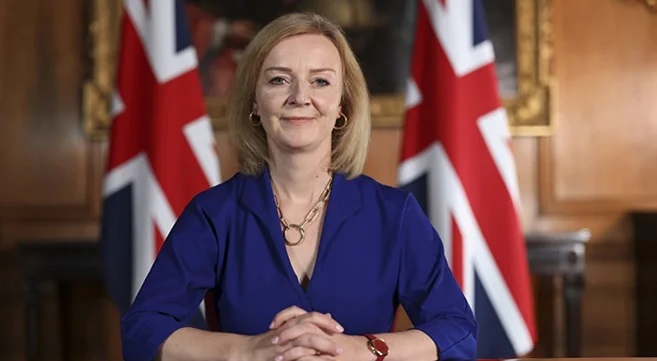
Britain may be looking for another prime minister if the decision is made based on personal rating. Yes, Liz Truss has touched the lows of  both Theresa May and Boris Johnson at the end of their tenures, just weeks into her ascension: “This is the worst poll result we have shown for a Conservative prime minister since the 2010 general election,” James Crouch, the head of policy and public affairs at Opinium, told The Guardian.

She has a really tough job just like any other national leader. There are limited variables one can play right now to ignite Keynesian growth and accelerate national productivity with inflation ravaging economies.

Before the social media era, Ms Truss would have managed the backlash of cutting tax cuts for rich people when some British citizens cannot pay for their electricity bills. But with Facebook and Twitter, the reactions are now instantaneous. While a typical conservative playbook, cutting taxes for rich people is looking like a stale idea in a world where the government is expected to do more as people struggle.

Yes, I get the idea: allow the rich to keep more of their money so that they can invest and create jobs. Unfortunately, the correlation between tax cuts and more investments is not strong! And most citizens seem to agree these days. Do not begin a government by promising to help the 1%; the 99% will not celebrate that policy no matter your intentions.

Following the backlash and economic turmoil unleashed by part of British Prime Minister Liz Truss’ “growth plan”, which has seen the pound sterling decline to its lowest in decades, the government has announced it will not be continuing with the plan to cut income tax rate.

The plan, which was a major part of Truss’ campaign promises, involves cutting the highest income tax rate in Britain – and was quickly announced by finance minister Kwasi Kwarteng.

But in a statement shared online Monday, Kwarteng said the plan “had become a massive distraction on what was a strong package”.

Indeed, Liz has reversed that own-goal policy! Now, she can go and score for England; she can do it.
Meta CEO Mark Zuckerberg Drops Off The List of Top 10 Richest People in US

0

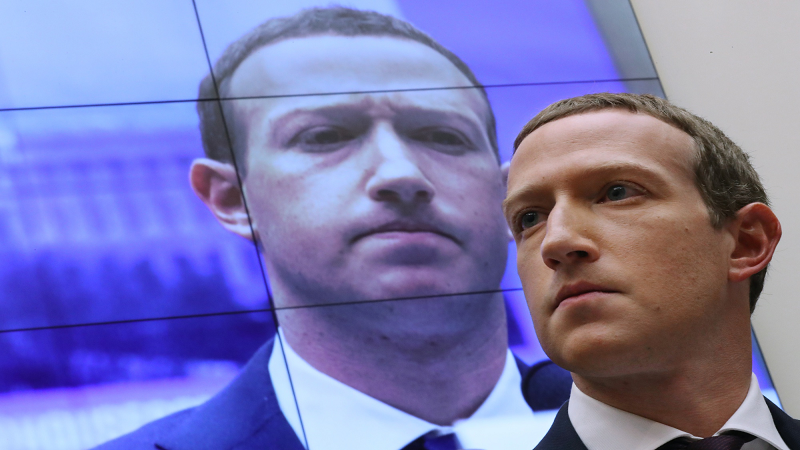
For the first time in 7 years, Meta CEO and Facebook founder Mark Zuckerberg fail to make the list of the top 10 richest people in America.

His omission from the list comes after his company witnessed an astonishing stock price drop in the past year.

The 38-year-old Facebook founder has so far lost a staggering $76.8 billion since September 2021, dropping him from the number 3 position on the Forbes 400 list of the U.S.’ wealthiest people to the 11th rank.

He currently has a net worth of $57.7 billion on this year’s list, and the fortune calculation has been done based on the stock prices from September 2nd, 2022, according to Forbes.

Over the past year, no one in America has lost as much money as Mark Zuckerberg. Forbes states that the billionaire has the cratering stock price of Meta (formerly Facebook) to thank for his exit from the top 10 richest list.

The company’s shares have plunged 57% since last year’s Forbes 400 list’s revelation, which used stock prices from September 3, 2021, for its calculation.

Even in general, tech stocks are in a slump with the market downturn, but Meta’s fall outpaces both the Nasdaq (-9.8%) and the S&P 500 (-13.5%), as well as Microsoft’s 14% decline, Google-parent Alphabet‘s 25% drop, and Amazon’s 27% dive, the report mentioned.

As far as revenue is concerned, Meta reported its first-ever quarterly revenue decline in July 2022, a 1% drop to $28.8 billion.

The newly published Forbes list sees, Tesla CEO Elon Musk occupying the first position with a net worth of ($251 Billion), followed by Jeff Bezos ($151 Billion), Bill Gates ($106 Billion), Larry Ellison ($101 Billion), and Warren Buffett ($97 Billion) as the richest Americans, rank-wise sitting in the top five spots.

Mark Zuckerberg reportedly became a billionaire in 2008 for the first time, which was just four years after he founded Facebook. He was the youngest self-made billionaire at the time, debuting at 321 on the Forbes 400 list with a net worth of $1.5 billion at the age of 23.

By the year 2011, Zuckerberg’s net worth had increased nearly 12-fold to $17.5 billion, and this recent slump that pushed him out of the top 10 this year isn’t the first time Zuckerberg’s net worth has taken a dive.

After Facebook’s famously disappointing IPO in 2012, Zuckerberg fell from 14th rank to 36th rank in The Forbes 400, the Forbes report mentioned. But the following year, he bounced back, and up until now, his fortune has continued to climb.

A privacy policy tweak from Apple last year that made it more difficult for tech companies to monitor users across applications had an effect on Meta’s ad sales which alarmed investors. With a 1% reduction to $28.8 billion, Meta disclosed its first-ever quarterly sales fall in July. 

According to an analyst at research and investment banking firm Benchmark, he disclosed that Facebook makes most of its money from advertising, and now it just doesn’t have that data anymore. All those data signals went away, which basically means that advertisers are having trouble telling whether a campaign was successful or not.

UK Govt Makes U-turn on Tax Cut Plan Amid Backlash and Economic Turmoil

0

Following the backlash and economic turmoil unleashed by part of British Prime Minister Liz Truss’ “growth plan”, which has seen the pound sterling decline to its lowest in decades, the government has announced it will not be continuing with the plan to cut income tax rate.

The plan, which was a major part of Truss’ campaign promises, involves cutting the highest income tax rate in Britain – and was quickly announced by finance minister Kwasi Kwarteng.

But in a statement shared online Monday, Kwarteng said the plan “had become a massive distraction on what was a strong package”.

“We just talked to people, we listened to people, I get it,” he added.

The tax policy, which included slashing the income tax rate from 45% to 40%, became the biggest test of Truss’ Conservative government due to the economic turmoil it inspired.

The tax policy came with cuts of £45 billion that would have been the biggest in 50 years if not that it came with devastating impacts that has forced the government to make a U-turn.

It pushed the pound to a historic decline against the US dollar, sparking the burden of increased borrowing for the government as the UK market went into chaos. As a result, mortgage rates soared, and some pension funds struggled to remain solvent.

Kwarteng told the BBC Breakfast the proposal was “drowning out a strong package”, including support for energy bills, and cuts to the basic rate of income tax and corporation tax.

The most controversial aspect of the plan is the decision to grant a big tax cut to high earners while millions of others are battling to pay increasing energy and food bills.

The plan to scrap the top rate of tax had remarkably been opposed by the markets, other parties and a growing number of Tory MPs. The inside criticism from Conservative Party members defied the warning of party chairman Jake Berry, that Tory MPs who voted against the prime minister’s tax measures would lose the whip – being kicked out of the parliamentary party.

Senior Tory Michael Gove hinted on Sunday he would not vote for the plan when it came to Parliament. He said, “I don’t believe it’s right”. The former cabinet minister added that the PM’s decision was “a display of the wrong values”.

The pressure intensified on Truss and Kwarteng over the weekend after their former ministerial colleagues criticized the plan, signaling a potential escalation of the revolt within the Conservative party.

The U-turn was likely forced by the growing criticism, a sign that Truss and Kwarteng will face a high hurdle getting the plan approved in the parliament.

The pound moved up on the news that the abolition of the top rate of income tax was being reversed, briefly climbing more than a cent against the dollar to $1.1263.

But as CNN noted, it will likely only reduce the overall size of the tax-cutting package by £2 billion, leaving the government yet to reassure markets that it has a solid plan to fund the rest.

While the U-turn has marked an early mortifying downclimbing for Truss’ government, Gove said it’s welcomed.

“It’s better to act, it’s better to reverse ferret on something that’s causing a problem like this, and it sends a very important signal to the public and also to the markets that we are serious about sound money,” he told the BBC.

Tekedia Mini-MBA Congratulates Stanley Jacob As Chief Executive, Stanbic IBTC Financial Services

0

Tekedia Institute congratulates Stanley Jacob for his new role as the Chief Executive, Stanbic IBTC Financial Services. He had served in Mastercard, Ecobank and Standard Chartered Bank at top leadership levels. We thank Stanley for developing our course titled “Building Fintechs and Strong Ecosystems” in Tekedia Mini-MBA. We wish him an amazing moment as he leads Stanbic IBTC Financial Services. Win more markets and business territories.

Tekedia Institute >> more business executives teach here.

Dangers Everywhere – Pay Attention Because Risks Are Rising Daily

5

It looks very frightening. And as I have written here, we are going into a very dangerous trajectory – and I am very concerned. What we do in Africa, Europe or North America may not really matter for the markets. What will matter is this: how Russia will react as Ukraine through NATO support pushes deeper on its counter-offensive. If Russia responds with tactical nuclear weapons (not even strategic ones), we have a 3rd world war. And if that becomes so, many stock markets will crash. 

More so, if NATO gives Ukraine jet fighters which I think would be the next level of action, Russia may decide to attack a NATO territory where those assets are kept. With that, NATO has to defend the hypothetical every “inch” of its territory.

As I have noted, run away from holding European currencies. Yes; the Euro and British Pounds in the short term are imperiled;  the US dollar remains in a better position if you must trade currencies. And on stocks,  sentiments will play major roles. It may take a step forward but within a week, it will take 5 steps backward until the Ukraine conflict is resolved. 

The farming season is going on without fertilizers from Russia (a significant producer) and the implications will be huge on inflation in 2023 as prices of food items will continue to rise globally. The world is at war, not in the typical sense of it. But the indicators show that 2023 will unleash massive job losses as nations battle slow growth, inflation, etc.

Here are the questions: has a nuclear-armed nation ever lost a war in the world? How do we understand Russia’s future? Pay attention to these if you invest in equities because what those companies do may not matter. The signals are now on Ukraine/Russia.