DD
MM
YYYY

PAGES

DD
MM
YYYY

spot_img

PAGES

Home Blog Page 4852

Last Date to Join the Current Tekedia Mini-MBA is Saturday, Oct 8

0

Tekedia Mini-MBA has since started. If you plan to join us in this current edition, Saturday, Oct 8th is the last day to register. After that day, we will close the registration. Tekedia Mini-MBA is the 2021 winner of Mhagic Velocity $60,000 Prize for “innovation on professional and continuing business education”. We have close to 300 faculty members and learners come from 41 countries. Begin your registration here 

Tekedia Institute offers Tekedia Mini-MBA, an innovation management 12-week program, optimized for business execution and growth, with digital operational overlay. It runs 100% online. The theme is Innovation, Growth & Digital Execution – Techniques for Building Category-King Companies. All contents are self-paced, recorded and archived which means participants do not have to be at any scheduled time to consume contents. Besides, programs are designed for ALL sectors, from fintech to construction, healthcare to manufacturing, agriculture to real estate, etc.

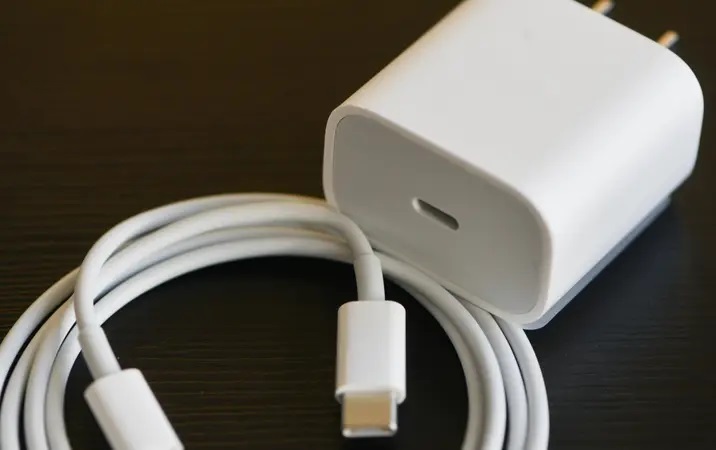
Apple to Switch to USB-C Charger As EU Parliament Agrees to Implement Reform

0

The European Parliament on Tuesday voted to confirm the agreement the European Union had earlier, mandating the use of USB-C chargers for devices, including phones, tablets and cameras by 2024.

The reform was passed by an overwhelming majority in the European Parliament, with 602 votes in favor and only 13 against. It marks the first of such attempts anywhere in the world, spotlighting the EU as a pacesetter in tech industry reforms.

This means that many mobile device makers, including Apple, will have to shift to the USB-C port. The iPhone maker had warned earlier that the EU’s reform will stifle innovation and result in so much waste, while the bloc said it’s essential to implement the reform now to curb growing tech waste.

Apple, Samsung and Huawei will have to change their mobile device charging ports to USB-C before 2024 in Europe to comply with the rules.

Apple will be the hardest hit by the change. The American tech giant has for years built customized brands of devices that don’t share accessories with non-Apple devices.

Ben Wood, chief analyst at CCS Insight, said the vote made it “inevitable” that the iPhone 15, expected in 2023, will have a USB-C port.

“This is a victory for common sense. Although Apple has a huge installed base of lightning cable-powered devices, the ubiquity of USB-C across all consumer electronics products means that harmonizing on USB-C makes perfect sense,” he said.

Device manufacturers are likely going to implement the USB-C for their global supply, as delivering the single port only for Europe will mean making double ports for a single device model.

“Irrespective of whether the UK government mandates the move to USB-C or not, UK consumers will get the technology by default. It will make no sense for consumer electronics manufacturers to offer devices with anything else,” Wood said.

The new rules also apply to laptops from 2026, which gives manufacturers more time to adapt, although many already use USB-C.

Alex Agius Saliba, the EU lawmaker who pioneered the reform through the EU assembly, said under the reform, mobile devices sold after autumn 2024 will have to be compatible with the single charger. He explained that old chargers will not be outlawed so that customers can continue to use older models.

In total, 13 categories of electronic devices are expected to adapt to the reform by 2024.

The reform is expected to lead to a gradual phase-out of older products. Saliba told a news conference that outlawing old chargers would have had a disproportionate impact on consumers.

The reform, which had been discussed for years, was prompted by complaints from iPhone and Android users about having to switch to different chargers for their devices.

In addition to the waste it generates, the EU Commission said multiple ports cost consumers a fortune. The Commission has estimated that a single charger would save about €250m ($247.3 million) for consumers.

Some of the device makers are already working to meet the reform deadline. Bloomberg reported in May that Apple is working on an iPhone with a USB-C charging port that could debut next year.

Following the vote on Tuesday, shares in European semiconductor manufacturers, including those of Apple suppliers STMicro and Infineon, jumped.

Bienvenue! Time for Logistics in Business Operations at Tekedia Institute

0

Salutations. Je suis Ndubuisi. Je suis un homme d’affaire. Faisons des affaires.  Yes, I am learning French. I see it as an important language for pan-African business in Africa. I am using Duolingo which is super-amazing.

Tomorrow (Thursday) at Tekedia Mini-MBA, we will learn why language can provide competitive advantages. Favour Chisimdi Nwobodo of Empress Linguistics Services which offers translation services will lead the session.

During NYSC, I learnt enough Hausa to help me get discounts in the market. Yes, I made sure the sellers knew I was just trying. As they smiled and laughed, discounts came. It was a very magical experience that “Ina kwana. Ina so in sayi zobo. Nawa ne shi din?” could most times give you free zobo as the seller smiled that Ajuwaya was trying. (NYSC members: memorize the NYSC handbook, speak the native language and you can get free taxis, meals, etc most times from the natives.)

Come to Tekedia Institute – and let’s discuss the power of linguistics in business. Bienvenue!

Alternative Commercial Dispute Resolution Methods In Nigeria

0

In the fast-paced world of business, disputes do arise.  These disputes can be generic trade disputes, labour disputes, vendor disputes, or a contractual breaches.

What is thus needed is an efficient Dispute Resolution & Determination system aimed at disposing of disputes and having its decisions enforced in a timely manner. Also, due to a number of reasons, the traditional Courtroom/Litigation system might not always be an option for parties to a commercial dispute.

As a result, there has been a steady geometric rise in the use of Alternative Dispute Resolution methods in Nigeria. This article will thus be focused on the subtopics of :

– The definition of Alternative Dispute Resolution (or “ADR”).

– The types of ADR methods available in Nigeria currently.

– The advantages and disadvantages of ADR in Nigeria.

What is ADR?

Alternative Dispute Resolution simply involves the use of procedures other than traditional Courtroom litigation in the settlement & disposal of  disputes.

What is the Legal Framework governing ADR in Nigeria?

ADR in Nigeria is mainly governed by the Arbitration and Conciliation Act of Nigeria and Section 19 of the Constitution of the Federal Republic of Nigeria as well the Arbitration and Conciliation Laws of various states and in places like Lagos State,The Lagos Court of Arbitration as well as the Lagos Multidoor Courthouse (LMDC).

What are the available types of ADR methods in Nigeria?

The ADR methods currently available in Nigeria are :

Negotiation :- This is an ADR process that involves parties attempting to reach a joint resolution of the conflict (usually through their legal representatives though this can be done personally) without 3rd parties. This also involves the stages of :-

a). Opening

b). Bargaining

c). Closing

d). Execution

Mediation :- This ADR process, usually commenced by the disputing parties voluntarily or the order of a court, involves the use of a neutral and objective 3rd party usually skilled in a particular profession most competent to deal with the dispute subject matter known as the mediator (also appointed by the parties or the court) .

The parties to a dispute are usually under no obligation to accept the conclusions or reports of the mediator and can apply to a court to have the results of a mediation process set aside.

It should however be noted that once parties agree to a mediation report, the next step is to make a Court application to have the mediation report to be upheld as a consent judgment. Consent judgments cannot be appealed against.

Conciliation :- This is an ADR process governed by the Arbitration and Conciliation Act that also involves a neutral and objective 3rd party known as a conciliator who usually disposes or resolves a dispute by means of a decision called a settlement after trying to bring both disputing parties to a voluntary and conciliatory agreement.

Arbitration :- This is the most commonly used ADR method for Commercial disputes in Nigeria and it is governed by the Arbitration and Conciliation Act.

It is a process that involves the agreement of both parties (usually by means of a pre-signed arbitration clause) or the order of a court subjecting them to the jurisdiction of an impartial 3rd party known as an Arbitrator or Board of Arbitrators (sometimes referred to in some quarters as “boardroom litigation”), the decisions emanation from an Arbitration being referred to as an award and which are binding and enforceable on disputing parties and can’t be set aside by a court except in a very limited set of cases.

What are the advantages and disadvantages of ADR in Nigeria?

Advantages

– ADR methods tend to be much quicker in lifespan than courtroom litigation (usually months).

– ADR is usually more informal and relaxed with an emphasis on amicable dispute settlement and business relationship preservation.

– ADR is cheaper than courtroom litigation in the long-run.

– ADR is suitable for where disputing parties require privacy compared to courtroom litigation where every matter becomes public record and any member of the public can walk into the court during the hearing of a case as an interested onlooker.

– ADR methods like Arbitration usually involve the use of highly qualified experts as Arbitrators (some of them tend to be retired Supreme Court judges).

– ADR methods like Arbitration are still as equally enforceable as courtroom judgments.

Disadvantages

– ADR methods cannot be applied to certain types of disputes (eg. Criminal, Matrimonial causes, or Election Petition matters). 

– ADR methods still require a lot of input from lawyers and still require their decisions to be enforced by courts via courtroom applications.

– ADR methods like Arbitration, although binding, enforceable and very speedy, can be very expensive in the short-term

– There still remains the possibility of a sole arbitrator having an interest or bias in a matter brought before him.

– ADR still cannot be used to procure urgent legal mechanisms like ex-parte orders .

Are Arbitral awards gotten in other countries enforceable in Nigeria?

Yes, International Arbitral awards are enforceable in Nigeria regardless of their countries of origin in line with Section 51 of the Arbitration and Conciliation Act.

Conclusion :- ADR methods, especially Arbitration, remain the go-to option for the timely and less confrontational settlement of business disputes as evidently seen in the frequent insertion of Arbitral clauses in many contracts and should be seriously considered. 

The Lessons for ASUU/Nigeria from Rwanda

1

A few hours ago, I’d suggested merging some federal universities in Nigeria to reduce administrative cost on the construct that Nigeria does not have the financial capacity to inject more funds beyond what it currently offers. In my thesis, the Big Merge is a way out unless we want to ask students to pay. Unfortunately, I still vote for  education subsidy  as that is the only thing the poor citizens get from the nation. If you remove subsidies, economic mobility will dry up as not many families can afford to send their kids to universities.

So if the public schools cannot increase tuition, what can we do? Follow the University of California system as I have noted. I visited Rwanda from Carnegie Mellon University. I met the minister of education. Rwanda was setting up University of Rwanda (UR) which was a university after the country merged about seven universities/institutes including the National University of Rwanda. Prof Ogwu was the rector of Kigali Institute of Science and Technology (KIST); I met Prof Ogwu when he was a professor in University of Paisley (Scotland); Ifeoma, my wife, studied in his school. Today, another Nigerian Prof Egiebor is the vice chancellor of UR; he was in my master’s degree committee at Tuskegee University. Most of the players around this are Nigerians!

Where am I going? Rwanda has tapped some Nigerians to fix its educational system. Yes, the strategic execution has many Nigerian elements. And the results are amazing even at the pre-university level. In Rwanda today, many private schools are struggling as parents pull their kids out of expensive private primary and secondary schools since the public ones are just as good. If that is the case, why waste money?

ASUU and the Nigerian government know what to do. But they are playing games. We can increase enrollment by 20% while cutting administrative costs by close to 37%. Of course, how do you expect professors to go LEAN when the national assembly/presidency remains FAT?  That is the reason you cannot merge some federal universities to reduce administrative costs!

In Southeast, FUTO can be the engineering campus for UNN with no Vice Chancellor, pro chancellor, etc but just a Dean or provost. The Fed Agriculture Umudike becomes the Agric School of UNN. Like in the California system which Rwanda copied, you end up having just two vice chancellors who will run all the federal universities in SE. You save costs on cars, housing, etc and those will go into real learning. Interestingly, like in the California system, you increase enrollment. Think about it, if Amazon has one CFO (chief financial officer) to serve more than 1 million workers, why should each university have a bursar when 1-2 can handle per geopolitical region?

Beyond Replacing ASUU with CONUA, Fixing Nigeria’s University System Must Follow This Path