DD
MM
YYYY

PAGES

DD
MM
YYYY

spot_img

PAGES

Home Blog Page 4872

The Lesson from Europe on Nord Stream “Gas Leakage”

0

Good People, can anyone explain why an “ordinary gas” leak is making European leaders unsettled? I mean in Nigeria, that happens all the time and the press does not even report it. In other words, it is not news!

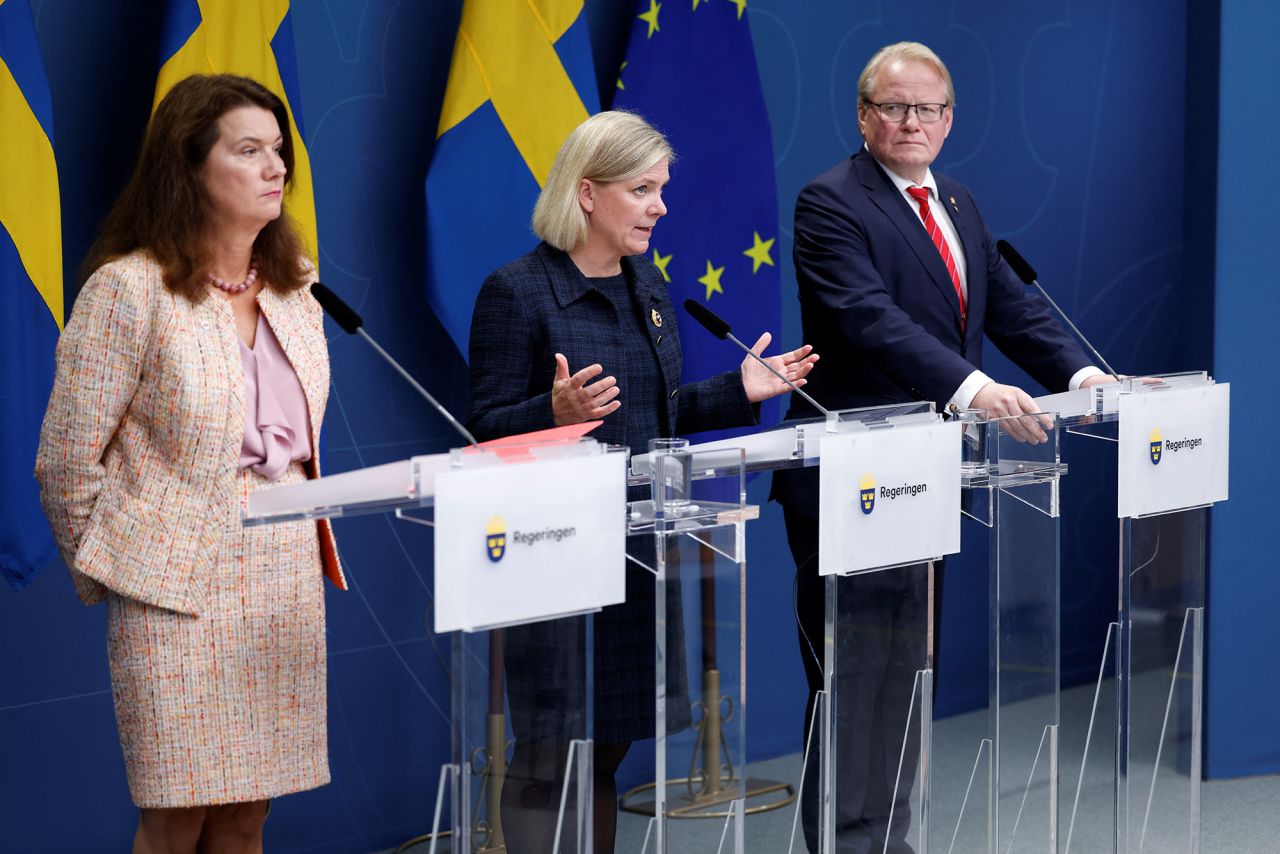
In Sweden, the Defense Minister Peter Hultqvist was speaking in big grammar as though something big had happened. Indeed, it is a big deal when you understand that civilization is built on energy. If you lose energy security, you lose your future.

The European Commission President Ursula von der Leyen was blunt: “Any deliberate disruption of active European energy infrastructure is unacceptable and will lead to the strongest possible response.” That is how critical energy is. And they are mobilizing everything to make sure it does not repeat again.

Fellow Nigerians, everyone will know when Nigeria will move to the next level. And that will happen when we have a secure energy future. The urgency to get there is something we must look at in the current election season. Our office in Owerri uses the national grid as the second backup! In Sweden, the governor of the state would have called press conferences as though the world is failing. Respect good #leadership.

The European Union is “deeply concerned” about damage to the Nord Stream 1 and 2 pipelines that has resulted in leaks in the international waters of the Baltic Sea, calling it a “deliberate act.”

“All available information indicates those leaks are the result of a deliberate act,” the bloc’s foreign policy chief Josep Borrell said Wednesday, while promising to increase energy security efforts.

The bloc “will support any investigation aimed at getting full clarity on what happened and why and will take further steps to increase our resilience in energy security,” he said.

(This leak is assumed to be a sabotage)

Comment on Feed

Comment: This isn’t just a gas leak, it’s a suspected act of sabotage. It’s worth all the big Grammar and calls for investigation and action.

We all know what’s going on in Europe and everyone is wary. If this was indeed a deliberate act from an hostile country, why won’t they panic and work towards ensuring it doesn’t happen again ?

If Russia can silently blow up an undersea pipeline under Sweden’s nose, it can definitely do the same to Norway’s gas pipeline.

My Response: I pity the small Russia for blowing its own pipelines just as it is bombing nuclear power plant it controls. If sabotage is the standard, the whole force of Nigeria military would be in the creeks. More than 90% of leaks are due to “sabotages”. So, why are we not mad as the Europeans?

Building Agile Workforce in Companies – Tekedia Mini-MBA

0

Companies exist to fix frictions in markets. To do that, they must mobilize factors of production to create products and services. When you examine the whole constellation of that translation of organizing, combining and recombining those factors to make products, you see three things: people, processes and tools. The People are the heart of every firm. They are the central nervous system of any operating entity, making it possible for the neurons and synapses of markets to operate effectively. The wealth of firms is in the People of the firms.

Tomorrow, one of the finest minds in this industry of discovering, nurturing, and uplifting the human capital to execute business missions will be at Tekedia Mini-MBA. Ijeoma Anunibe, PHRi, SHRM-SCP, ACIPM is the Head of People at Shuttlers, an innovative transportation startup.

IJ will teach on  “Building Agile Workforce in Companies”. It would be an academic excursion from an industry leader with certifications in the critical domains of human resources management and administration.

Tekedia Institute >> the best teaches here.

SouthSweep, South Africa’s Home Service Startup, Raises $11m in Funding

0

The African tech economy is gradually expanding, shifting focus from fintech to non-financial services sectors, with edtech, logistics etc. gaining prominence recently.

The expansion has propelled an uptick in fundraising among non-financial services startups. From mobility to digital bookkeeping to agriculture to home services, investors are finding new markets through startup ideas.

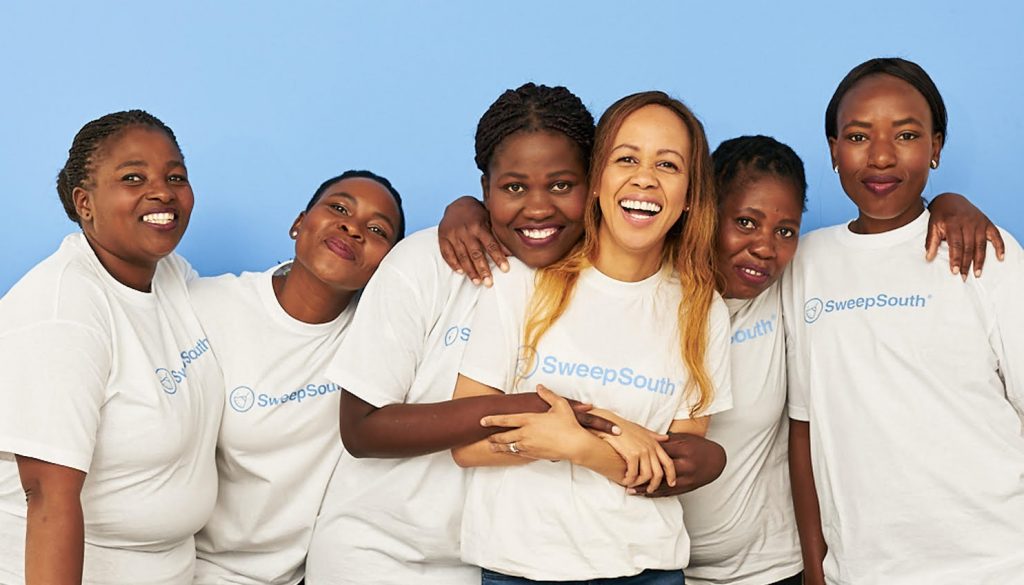
Thus, SweepSouth, South Africa’s online home services platform, has secured $11 million in a funding round led by Alitheia IDF with participation from current investors like Naspers Foundry, The Michael and Susan Dell Foundation, and Futuregrowth Asset Management. New investors like Endeavor Catalyst, Endeavor’s Harvest Fund II, Caruso Ventures and E4E Africa also participated in the round.

The eight-year old startup, which provides on-demand home services, said it will use the new funding to drive its expansion and grow its infrastructure.

SweepSouth was co-founded in 2014 by Aisha Pandor and Alen Ribic, and has since then found footing in cities across South Africa, Nigeria, Kenya and Egypt.

“This new funding round is an important one for our team as we continue to scale in South Africa, and further grow our operations in Kenya, Nigeria, and Egypt. We’re excited to continue SweepSouth’s work in connecting customers with home service providers across the continent, building a platform that empowers domestic workers and local tradespeople,” Pandor said.

Alitheia IDF is a pioneering private equity fund that identifies, invests in and grows SMEs led by gender-diverse teams to achieve high financial returns and social impact for communities in Africa. Alitheia IDF was driven to invest in SweepSouth by its growth potential.

“We are proud to support SweepSouth’s growth as it expands its platform that substantially improves the financial and social outcomes for domestic workers across Africa, most of which are women,” Polo Leteka, principal partner at Alitheia IDF said.

Home service, with this inflow of funds into SweepSouth, is tipped to become another sector to watch as the African tech economy burgeons.

Alen Ribic, the co-founder of SweepSouth, said investing in SweepSouth is a way of boosting tech-based home service delivery that offers convenience.

“We’re excited about bringing new shareholders on board in our mission to build technology that aids in providing meaningful connections – giving customers access to safe, convenient services, and home service providers access to decent work opportunities under dignified conditions,” he said.

Agritech Startup Farmerline Secures $1.5 Million Equity Funding From Social Impact Investor Oikocredit

0

Farmerline, a Ghanaian agritech startup, has announced an additional $1.5 million in funding to bring its total pre-Series A round to $14.4 million.

The new fund raised comes at a time when Farmerline, which has operations across Ghana, is setting up facilities in Ivory Coast as it continues its expansion across West Africa.

According to the startup, the new round of funds raised will be used to strengthen its supply chain in agribusiness and further develop the startup’s infrastructure.

Farmerline witnessed the real-time impacts of the hike in fertilizer prices resulting from the Russia and Ukraine war. Last month, it launched the Support a Farmer initiative, a public crowdfunding campaign to raise GH¢1 million ($ 100,000) with the aim of providing 250,000 bags of discounted fertilizer to 25,000 farmers across Ghana.

Co-founder and CEO of Farmerline Alloysius Attah said, “Because of the Russia-Ukraine war fertilizer prices have skyrocketed almost three times what it was last year. We realized as a company we needed to reason with the agribusinesses and the farmers that we work with and do something that will help them acquire the fertilizers.

“In a recent Farmerline survey, we found that more than half of the Ghanaian farmers we spoke to hadn’t applied any fertilizer to their crops just weeks before the end of planting season. An additional 33% said they’ve only partially applied the fertilizer they need.

“It’s simply too expensive, and therefore imperative for us to not only do something to soften that burden but also provide an opportunity for everyday Ghanaians to stand in solidarity with the farming community during this turbulent time”.

Founded in 2013, Farmerline has been aiding and transforming rural smallholder farmers into successful entrepreneurs by delivering data and services that improve productivity, decisions, practices, crop outputs, income, and livelihoods, leading to employment opportunities and increased income.

The startup was reported to have started with an $800 grant by the founder Alloysius Attah and Emmanuel and co-founder Owusu Addai in 2013. At that time, Farmerline was delivering timely agronomic voice messages to 800 farmers across Ghana through its technology platform Mergdata. 

Mergdata, the startup’s own globally-licensed platform, was on Time’s list of the top 100 innovations of 2019. Farmerline has leased Mergdata to over 60 partners mainly in Africa and others in Asia and Latin America, which facilitates farmer profiling, traceability, messaging and digital payments.

It now seeks to evolve the Mergdata platform, making it more AI-powered to deliver intelligence such as crop yield prediction, fertilizer demand forecasting and product traceability needed in the industry. It claims to have reached over 1.5 million farmers in 35 countries via the platform.

The agritech startup also offers input financing to farmers through organized groups, climate-smart farming education, logistics services, access to high-quality fertilizer and seeds, and other digital tools while connecting them to agribusinesses in international markets.

It claims to have financed around $18 million worth of inputs and crops through franchise shop alliances with agribusinesses and input dealers.  In Ghana, Farmerline engaged with over 77,000 farmers last year, directly selling products to them and buying their crops. The team at the startup has projected that this number could go up to 140,000.

Tope Awotona’s Calendly Expands to Hiring; Expect Fintechnolization in 2023

0

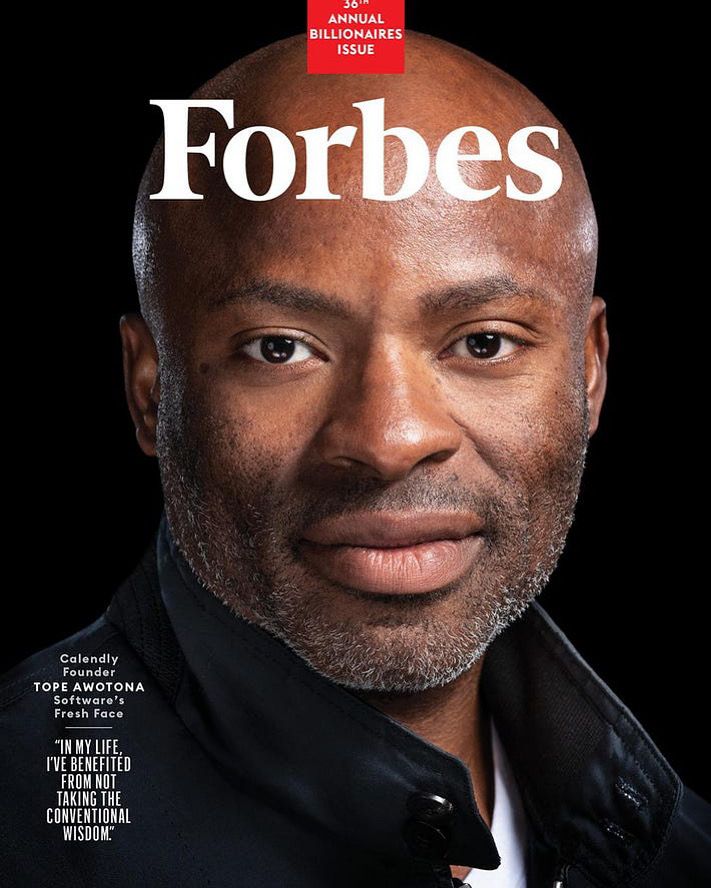
It is just about time: “Calendly, a scheduling automation platform that eliminates the hassle of back-and-forth emails for finding the perfect time, has recently acquired Prelude, a technology company that offers a better hiring process.” There is a reason for that: Calendly is on the path to IPO and needs to ramp up revenue from other verticals besides scheduling. Founded by Nigeria-born Tope Awotona, Calendly is the world’s largest scheduling ecosystem with a market cap of at least $3 billion. 

Speaking on the company’s latest acquisition which happens to be the first acquisition ever, CEO of calendly Tope Awotona said “As the market leader in scheduling automation, Calendly already sees millions of interviews and recruiting-related meetings scheduled via Calendly every month. Together, Calendly and Prelude will enable organizations of all sizes to streamline the coordination of every interview scenario.

More comprehensive recruiting scheduling is just one piece of the puzzle that Calendly solves. We’ll commonly see a few individuals in an organization begin to use Calendly for specific and sometimes more complex use cases (such as shortening time to hire), then much more usage of the product begins to spread throughout the organization as various teams recognize the value of automated scheduling.

Organizations that implement Calendly throughout multiple departments within the organization — e.g., sales, customer success, marketing, and recruiting — realize the greatest value, since they can scale quicker by benefitting from a single scheduling platform with the ability to standardize it across teams,”

Watch out – there is a major disintermediation here: why use Calendly to schedule a meeting for Indeed, Zoom, etc when those things can happen in Calendly? By next year, I expect Calendly to add a fintech solution. Why? “Fintechnolization which I posited that “every digital platform must have a maturity state of offering a fintech solution”. Yes, it is a prediction and it will happen. Congrats to Tope.

Looking at Chinese digital platforms (Tencent, Alibaba) and US counterparts (Google, Facebook), my conclusion is this: every platform will become a fintech company at the end. So, I do want to see how Tekedia would become an investment club, a lending ecosystem, etc, at the lowest marginal cost, to members and readers in the ecosystem.  This construct tracks the recent trajectories of Facebook and Google. Alibaba and Tencent have validated my thesis as I have studied their evolutions and revolutions in the markets.