DD
MM
YYYY

PAGES

DD
MM
YYYY

spot_img

PAGES

Home Blog Page 4882

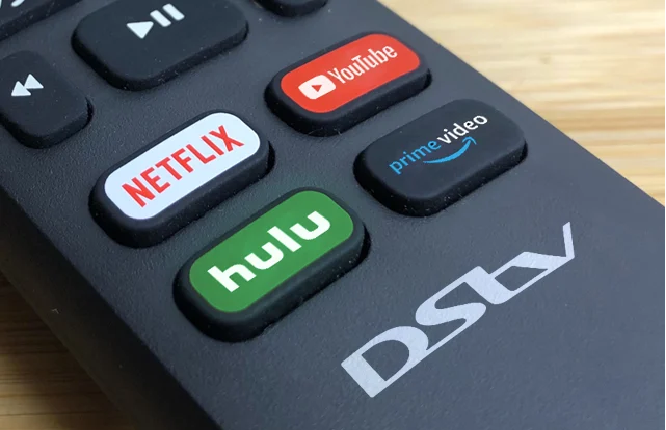
MultiChoice (DStv, GOtv), Stakeholders Reject Pay-Per-View Proposed By Nigerian Lawmakers

1

MultiChoice Nigeria, a pioneer pay TV service provider, as well as other stakeholders in the broadcast communication sector, have rejected a proposed pay-per-view for pay TV proposed by lawmakers.

The cable TV which runs on a monthly subscription model disclosed to lawmakers that their  proposed plan was not feasible.

The company made this known during a one-day public hearing, organized by the Senate Ad-Hoc Committee investigating “Pay-Tv hikes and demand for the pay-per-view subscription model in Nigeria” in Abuja.

Different stakeholders who spoke before the panel disclosed that the pay-per-view model being proposed by the lawmakers was not feasible, considering the current harsh environment which firms were operating under in Nigeria, which has however made it possible for firms to reduce their prices.

Chief Executive Officer, MultiChoice Nigeria, John Ugbe said that the several legal and legislative moves made to compel the firm to operate the pay-per-view model did not work because it was not feasible.

In his words, “Whilst it may appear to be a noble intention for this Committee to be concerned over the rising cost of subscription services; however, the Pay-Per-View (PPV) model being canvassed by this Committee will not work either to the benefit of the consumer or the industry.”

“It would appear that this problem is because of some confusion in understanding the basic definitions and distinctions between some of the existing operational business models in telecommunications and pay-tv broadcasting.

“The desire by this Committee to adopt PPV is further challenged by the non-existence of any technology that can detect and or determine the viewers are tuned in per time.

“Once it is impossible to have this knowledge, billings based on ‘per view’ become difficult if not almost impossible.

“It is, therefore, my humble submission, therefore, the distinguished committee that due to the nature of content acquisition and technological limitations that PAYG model is not practical for broadcasting and thus is not practiced and basically cannot be implemented anywhere in the world.”

It would be recalled that the Nigerian Senate earlier this year had demanded that the Federal Government direct all Pay TV operators in the country to introduce a pay-per-view subscription model.

The matter was brought to the house by Senator Abba Moro who represents the Benue South Zone, who stated that Nigerians were outraged by the recent hike in subscriptions introduced by Multichoice owners of DSTV and GOTV.

Sen. Moro said, “MultiChoice Nigeria willfully and perpetually increases the cost of its bundles because there is no regulation whatsoever.

“Without recourse to the economic situation of the country, MultiChoice has again raised the cost of DStv Nigeria and GOtv Nigeria bundles.”

Some other senators stated that it doesn’t make sense for one to pay exorbitant prices for so many channels only to watch a few of them. They complained that Nigerians don’t get quality services to commensurate with the money they paid for subscription hence the need for a Pay-Per-View payment model.

After much deliberations, the Senate resolved to “Urge the Federal Ministry of Communications and Digital Economy, and the Nigerian Communications Commission to direct all pay-tv providers to introduce a pay-per-view model of subscription against the month-to-month prepaid model presently in place.
The Man Who Lost $71 Billion And His Village Thinks He Has Not Lost Enough

2

God, can you make me as “poor” as Mark Zuckerberg. If that happens, that would be like leaving the solid bounds of earth to touch the face of heaven in a celestial moment. People, this dude has so much money that he lost $71 billion in 10 months. And now that he is pain free having been normalized by activists who have produced so much high voltage searchlights on his businesses, would he be left alone? Of all the leading technology companies we have, Facebook and its cousins (Instagram, WhatsApp) are the most vulnerable.

Yes, Apple defines the rules of engagement on tracking because it controls iOS. Google owns the front yard of the internet and has a massive sign post with Android on. Microsoft has its world, controlling a platform for enterprise customers. 

But Facebook (yes, Meta) is different. Yes, with no operating system to anchor, Facebook is vulnerable there.

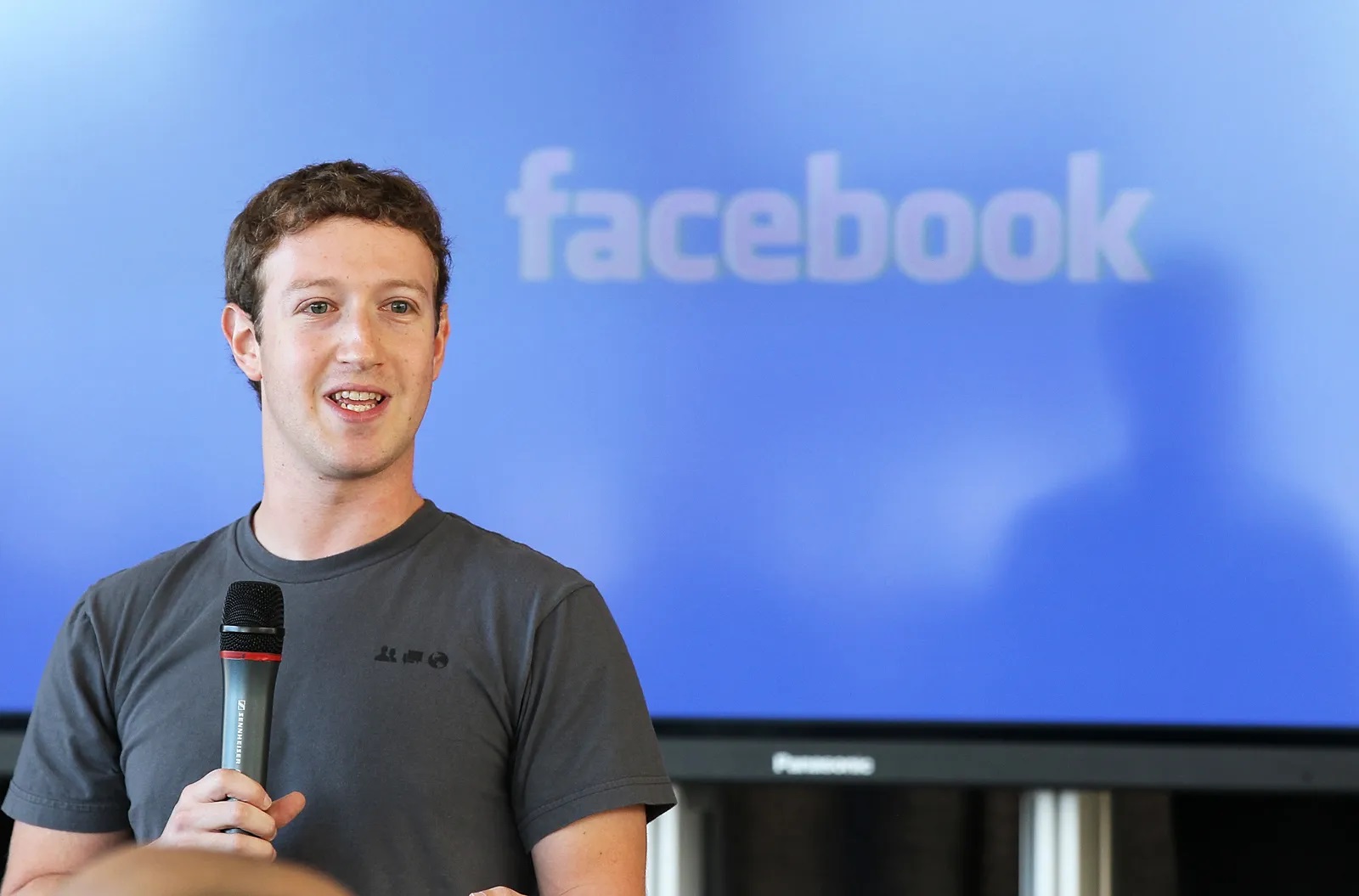
Meta Platforms CEO Mark Zuckerberg has seen his wealth cut by $71 billion this year, according to Bloomberg, which adds, “even in a rough year for just about every US tech titan, the wealth erased from [Zuckerberg] stands out.” The billionaire, whose wealth exploded to $142 billion in September 2021 when the company’s shares hit $382, has since dropped 14 spots in Bloomberg’s Billionaire Index. While the entire tech industry was hit hard by the economic downturn, Facebook, which rebranded as Meta in 2021, is down approximately 57% this year, compared to peers such as Apple or Alphabet (down 14% and 29%, respectively). {LinkedIn News}

The regulators need to give this young man space; his company is not dominant even though it has many users! Why? The positioning is the weakest in big tech. But Mark is brilliant: he wants Facebook to become a platform for the future of the web; he hopes. That is why he is investing in metaverse and AR/VR so that he will own an operating system and be in charge of the digital evolutionary destiny. 

Meta officials are straining awfully hard to spin the company’s recent doldrums in their favor. As Axios reported Wednesday, the Instagram and Facebook parent has argued on multiple occasions that its falling market cap—about $389 billion, down from roughly $1 trillion this time last year—illustrates that the company isn’t a monopoly deserving of an antitrust crackdown. Meta currently faces investigations or lawsuits filed by the Federal Trade Commission, state attorneys general, and European Union regulators, each of whom is alleging some form of anti-competitive behavior by company officials. (Fortune)

H1 2022: Agricultural Sector Topped Exports for Nigeria

0

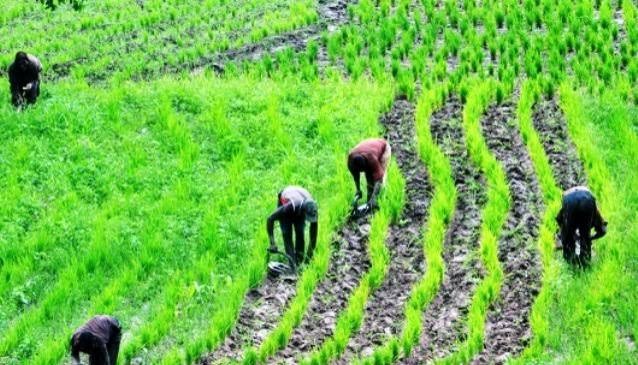
In the first half (H1) of 2022, Nigeria exported agro-food items worth N343.4 billion, an increase of 17.3% from N292.8 billion recorded in the corresponding period of 2021.

It however witnessed a rise of 61.9% compared to N212.1 billion recorded in the second half of 2021.

According to data from the National Bureau Of Statistics (NBS), Nigeria’s agricultural sector accounted for 4.96 percent of Nigeria’s total foreign trade in H1 2022.

On the other hand, Nigeria imported agricultural products worth N907.8 billion in H1 2022. This represents an increase of 11% when compared to the N817.52 billion recorded in the corresponding period of 2021, while it declined by 21% from N1.15 trillion recorded in the second half of 2021.

On the list of top Nigeria’s Agricultural exports for H1 2022, Cocoa beans, Sesame seeds, and cashew nuts topped the list, earning Nigeria an aggregate sum of N262.99 billion.

Check out the list of the top Nigerian agro exports in the first half (H1) of 2022

Cocoa – N114.1 billion

Nigeria exported cocoa worth N114.1 billion in the first half of the year, accounting for 0.8% of the total exports recorded.

It is interesting to note that Nigeria exports about 340,000 tonnes of cocoa yearly, with production estimated at 340,000 tonnes.

Due to the high production rate, the federal government of Nigeria has forecasted cocoa production to rise to 500,000 tonnes annually by 2024.

According to analysts, Nigeria’s cocoa exports appear set to contribute more to the country’s non-oil revenues, as stability in the global market continued to support the growth of its exports.

Sesame seeds – N81.5 billion

Nigeria’s exportation of Sesame seeds in the first half of the year stood at N81.49 billion.

The country has been one of the highest sesame seed-producing countries over the years, making the seed an important component of Nigeria’s agricultural export.

Last year, Nigeria’s Sesame oil and fractions exports improved marginally to $13,877,000, experiencing an increase when compared to previous years.

It is interesting to note that China remains the biggest importer of sesame seeds from Nigeria.

Cashew nuts – N67.39 billion

Nigeria earned a sum of N67.39 billion from the exportation of cashew nuts between January and June in 2022. It accounted for 0.5% of the total export recorded.

According to the National Cashew Association of Nigeria, it stated that the country earned about N14bn from the export of cashew in the last one year and is in the process of doubling the annual production of the commodity to one million metric tonnes per annum.

Desiccated Coconuts – N13.86 Billion

Nigerians exported desiccated coconuts worth N13.86 billion in 2022, which is 0.1% of the total export value recorded in the same period.

With the global coconut market size valued at $13.230 billion last year, there are efforts to explore the space predicted to reach $22 billion in 2028.

Ginger – N12.63 Billion

Ginger recorded an export value of N12.63 in the review period, which accounted for 0.1% of 14.51 trillion Recorded.

According to FAO and quoted by the Nigerian Export Promotion Council (NEPC), Nigeria accounts for 40% of the global ginger production, producing almost 523,000 metric tonnes annually.

From N942 million worth of ginger exports in the first three months of 2018, the value was N8.03 billion in the first three months of this year, growing more than sevenfold within five years.

A report from the National Bureau of Statistics, reveals that ginger is one of Nigeria’s main agricultural export products, and it has ranked steadily as the fourth- or fifth-highest.

Ginger is a highly sought-after commodity in Europe, Asia, and America, which is widely used in food seasonings. The root crop has continued to witness an increase in local and global demands.

As Protest Breaks Out in Russia, Putin Has More Than Ukraine to Fight

0

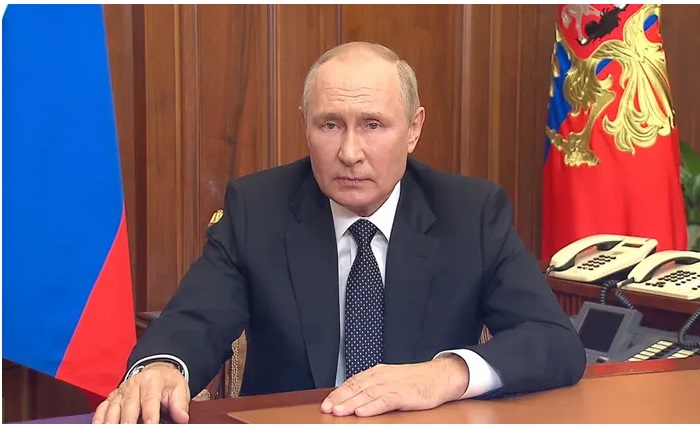
In Moscow, there is currently a growing defiance of the ‘no protest’ political sentiment, signaling a shift from the perceived docility of the people under Vladimir Putin’s rule.

When Russia invaded Ukraine in February, Russians were loudly silent even though it was understood that the majority of them opposed the idea of war. Russia’s invasion of Ukraine is believed to be the greatest undoing of Putin in recent times and may severely mar his leadership. .

In the Kremlin, many of Putin’s allies, who have without choice, supported the war, are gradually finding the mettle to criticize the outcome as the consequences rocket and the war lingers longer than expected. Ukraine has surprised the world by resisting Russia for more than seven months now, an outcome widely considered as a slap on the face of Russian military and a bruise on Putin’s Slavic ego.

Putin’s camp was reportedly pushed into disarray days ago when Ukrainian forces liberated more than 150,000 people and 3,100 square miles of territory in the country’s Kharkiv region from Russian occupation.

“It is pretty embarrassing because his main brand, and the one that he’s been building for the past 20 years, is that he knows what he’s doing. He always gets the job done,” Washington Post Russia reporter Mary Ilyushina tells Today, Explained in an interview. “In this case, we see even people who are extremely pro-Kremlin, extremely pro- this invasion, saying that they don’t like the way Russia has gone about this. We’ve heard from people like the leader of the Russian Communist Party saying that Russia is not really fighting anymore in a “special operation” and this is an actual war.”

The recent victory scored by Ukrainian forces marks a significant shift in the war, which Putin has dubbed “special operation”, and has forced the Kremlin to announce partial mobilization that has not been well-received by the Russian people.

Nationwide protest has broken out as Russians troop out in thousands to kick against the mobilization. Thousands of people are also fleeing Russia to neighboring countries that nearly every flight is fully booked. “I don’t want to go to the war,” Dmitri who flew to Armenia told AFP. “I don’t want to die in this senseless war. This is a fratricidal war.”

Defense Minister Sergei Shoigu said a total of 300,000 Russian reservists are expected to be called up for military service through the draft exercise.

In videos shared on social media, protesters could be seen chanting “No war!” “Send Putin to the trenches!” and “Let our children live!” The demonstration has persisted despite heavy police clampdown. So far, about 1,400 people have been arrested across different cities in Russia, but others have marched on nevertheless.

Moscow Times reported that many of those arrested are being forcefully drafted into the army irrespective of their experience, a direct contrast to what Putin said at the United Nations General Assembly (UNGA).

“Military service will apply only to citizens who are currently in the reserve, especially those who have served in the armed forces, have certain military professions and relevant experience,” he said.

Ilyushina said that apart from shadow mobilization (using mercenaries), the Kremlin has been conscripting prisoners, those convicted for murder and violent crimes, promising them freedom if they fight for six months.

The partial mobilization is seen as an indication that the Russian military is decapacitated and that the Kremlin is desperately seeking to avoid further embarrassment in Ukraine. The desperation is also said to be notable in Putin’s further speech at the UNGA that has drawn condemnation from Western leaders.

“To those who allow themselves such statements regarding Russia, I want to remind you that our country also has various means of destruction, and for separate components and more modern than those of Nato countries and when the territorial integrity of our country is threatened, to protect Russia and our people, we will certainly use all the means at our disposal,” Putin said, adding that “It’s not a bluff.”

Putin’s statement hints at the possibility that he may resort to the use of nuclear weapons to achieve his aim in Ukraine. Part of his aim is to annex some separatist regions in Eastern Ukraine and protect the territories from Kyiv.

The US President Joe Biden, in line with the West’s decision to stand by Ukraine, said Putin’s statement amounts to “irresponsible nuclear threats. He added that the “war is about extinguishing Ukraine’s right to exist as a state” and that “a nuclear war cannot be won, and must never be fought.”

The West has doled out series of sanctions to Russia in response to its invasion of Ukraine, including barring Russians from visiting their countries. Moscow has also retaliated by cutting off gas supply to Europe. The standoff is gradually impacting the lives of Russians as Russia increasingly becomes a pariah state.

The Kremlin has managed to find ways to defy the sanctions, narrowing its bilateral ties to countries outside the West. This and Putin’s speech at the UNGA indicate that the Kremlin is not yet ready to bow to Western pressure and call the war in Ukraine off.

But the current protest across Russia is perhaps a development that Moscow did not put into account. The mobilization is in breach of what Putin has always promised his people; “As long as you stay out of politics, you can have your house, your job, you can, you know, live a normal life.” Russians have clung to this promise for long and only want to lead a normal a life. Thus, forcing them to enlist in the military is believed to be a battle that will not only determine Russia’s fate in Ukraine but also Putin’s fate as a leader.

Entrepreneurs, Let’s Build With You!

0

Tekedia Capital makes friends with innovators. If you become one of our portfolio companies, you will have access to more support systems, beyond just money. First, we provide access to $25,000 Amazon AWS credit. I want you to consider Tekedia Capital before any other fund as you begin your mission.

Also, if you come along, your leadership team will attend Tekedia Mini-MBA free. We have more than 250 faculty members. These men and women are executives and business leaders in the most amazing companies in the world. Check some of them.

Tekedia Capital invests in technology-anchored early stage startups and companies. At Tekedia Capital, we fund the foundations of the NEXT African economy. Click here and learn what we do, even as we hope we will have the opportunity to discuss your funding needs.