DD
MM
YYYY

PAGES

DD
MM
YYYY

spot_img

PAGES

Home Blog Page 491

US Federal Reserve 25-Basis-Point Signals Shift Toward A More Accommodative Monetary Policy

0

A 25 basis point (0.25%) interest rate cut by the Federal Reserve generally signals a shift toward a more accommodative monetary policy, aimed at stimulating economic activity by making borrowing cheaper and increasing liquidity.

Lower interest rates reduce the appeal of traditional safe assets like bonds, which offer lower yields, pushing investors toward riskier assets like cryptocurrencies. This can lead to increased capital inflows into Bitcoin, Ethereum, and altcoins as investors seek higher returns.

Markets often price in expected rate cuts, so a 25-basis-point cut may not trigger an immediate price spike if already anticipated (e.g., a 95.4% likelihood was noted for a December 2024 cut). Instead, short-term volatility could occur as traders react to the Fed’s broader economic projections or comments from Chair Jerome Powell.

Bitcoin is often viewed as a hedge against fiat currency depreciation, especially in a low-rate environment where increased liquidity could weaken the U.S. dollar. A 25-basis-point cut may enhance Bitcoin’s appeal as a store of value, particularly with its fixed supply of 21 million coins.

However, if the cut signals deeper economic concerns (e.g., recession fears), Bitcoin could face near-term selling pressure alongside other risk assets. Altcoins and decentralized finance (DeFi) protocols may see amplified effects due to their higher risk profiles. Lower rates could spur investment in DeFi projects, as cheaper borrowing encourages speculative ventures.

However, volatility risks remain high, and rapid price swings could follow. Stablecoins, pegged to the dollar, may see increased usage in a low-rate environment, as their issuers earn less on reserves, but demand could grow for trading volatile tokens.

The crypto market’s response may be tempered by external factors, such as incoming U.S. policies under President Donald Trump (e.g., tariffs, tax cuts), which could drive inflation and limit further rate cuts in 2025. This uncertainty may dampen bullish sentiment.

Regulatory developments, like enhanced SEC oversight or pro-crypto legislation (e.g., the CLARITY Act), could also influence market dynamics, potentially overshadowing the rate cut’s impact. The Fed’s forward guidance, including projections for 2025 rate cuts (currently estimated at two more), will heavily influence crypto markets. Unexpected hawkish signals could trigger sell-offs.

Job reports, inflation data (e.g., CPI at 2.7% in November 2024), and GDP growth will shape the Fed’s future moves, indirectly affecting crypto sentiment. Posts on X suggest optimism for Q4 2025, with expectations of new all-time highs for crypto if liquidity increases. However, these are speculative and not definitive.

A modest 25-basis-point cut may have a muted impact compared to larger cuts (e.g., 50 basis points in September 2024), as markets often anticipate smaller moves. Crypto’s high volatility means price movements may not solely reflect Fed policy. Factors like institutional adoption (e.g., Bitcoin ETFs) or regulatory shifts can dominate.

Economic uncertainties, such as Trump’s policies or global growth concerns, could counteract liquidity-driven gains. A 25-basis-point rate cut is likely to support crypto prices by increasing liquidity and risk appetite, potentially driving short-term gains in Bitcoin and altcoins.

However, the effect may be limited if already priced in, with volatility possible based on Fed guidance and broader economic signals. Investors should monitor FOMC projections, regulatory developments, and macro trends while avoiding emotional trading driven by market hype.


Cronos Trades At $0.23, Toncoin Holds $3.18 While BullZilla’s Best New Crypto Presale Now Raises Over 500k

0

Every market cycle creates a new set of winners, but only a few tokens make it into the spotlight as the best new crypto presales now. Investors, students of finance, and blockchain builders are looking for projects that balance hype with structured tokenomics. BullZilla, Cronos, and Toncoin are three names currently dominating conversations. Each represents a different opportunity, but one, BullZilla, has already raised over $500,000, cementing its role in the conversation about the best new crypto presales now.

BullZilla: The Front-Runner In Best New Crypto Presales Now

BullZilla ($BZIL) has quickly risen as a frontrunner among the best new crypto presales now. Stage 3, Phase 3B is already underway, with over $500K raised and more than 1,700 token holders onboard. At its presale price of $0.00006574, it gives early investors a rare asymmetric risk-reward profile.

BullZilla Tokenomics: Zilla DNA

The Zilla DNA design is one reason analysts include BullZilla in discussions about the best new crypto presales now. Its tokenomics split across presale allocation, staking rewards, a treasury, and a burn pool. The presale alone accounts for 80B tokens, or half the supply, with a progressive pricing engine that increases the cost of entry every time $100K is raised or 48 hours pass.

Mutation Mechanism: Presale That Never Sleeps

The Mutation Mechanism is what truly makes BullZilla stand apart from other projects branded as the best new crypto presales now. Automatic price increases ensure urgency, rewarding early participants and continuously driving momentum. Investors recognize this as a sustainable growth strategy, not just short-term hype.

Side Panel: $10,000 Investment Scenario

Entry Investment Presale Price Potential Price At $0.01 Portfolio Value
$10,000 $0.00006574 $0.01 ~$1,523,000

This illustrates why many investors rank BullZilla among the best new crypto presales now: small entries can lead to life-changing upside if targets are met.

How To Buy BullZilla Coins

Buying BullZilla is simple, another reason it ranks as one of the best new crypto presales now. Set up a Web3 wallet like MetaMask, buy Ethereum, connect to the official presale portal, and swap ETH for $BZIL. Tokens are claimable at the end of presale, locking in allocations immediately.

Cronos: Market Speculation Adds To The Best New Crypto Presales Now Buzz

Cronos (CRO) trades around $0.23, but speculation over a Robinhood listing has thrust it into comparisons with the best new crypto presales now. A $105M deal with Crypto.com, involving 684.4M CRO, has reignited excitement, similar to Coinbase’s 2021 catalyst that drove CRO toward $1.

Support sits at $0.218, with resistance near $0.281. Analysts see potential upside toward $0.26–$0.281 if momentum sustains. Its ability to capture headlines and new investors places it adjacent to conversations about the best new crypto presales now, even though it’s technically a post-launch token.

Toncoin: Utility Meets The Best New Crypto Presales Now Narrative

Toncoin trades near $3.18–$3.19, consolidating around support at $3.10. Resistance at $3.75 remains the next major hurdle, but a breakout could target $8. This setup has pushed Toncoin into broader discussions of the best new crypto presales now, even though it is already live.

Toncoin’s unique strength is its integration with Telegram’s massive user base. While inconsistent trading volume raises caution, its long-term adoption potential is undeniable. Investors who seek exposure beyond meme coins often combine Toncoin with allocations in the best new crypto presales now, giving their portfolio a blend of stability and explosive growth.

Conclusion: The Crown Of Best New Crypto Presales Now

Cronos offers speculation-driven upside. Toncoin delivers utility-backed growth potential. But BullZilla leads the list of the best new crypto presales now. With nearly half a million dollars raised, 1,700+ holders, and features like the Mutation Mechanism and Zilla DNA, it provides both viral momentum and structured tokenomics.

For those scouting the best new crypto presales now, BullZilla’s potential ROI dwarfs its competitors. Cronos and Toncoin will likely perform, but BullZilla’s presale structure, designed to reward loyalty and early conviction, makes it stand tallest among the best new crypto presales now available today.

For More Information:

BZIL Official Website

Join BZIL Telegram Channel

Follow BZIL on X  (Formerly Twitter)

Frequently Asked Questions about Best New Crypto Presales Now

Why is BullZilla ranked among the best new crypto presales now?

Because of its $500K raised, progressive pricing model, and strong staking system.

How high could Cronos go?

If Robinhood listing rumors hold true, CRO could revisit $0.26–$0.28 and beyond.

What’s Toncoin’s growth driver?

Its integration with Telegram, supporting a possible breakout to $8.

Is investing in the best new crypto presales now risky?

Yes. High returns come with high volatility, liquidity issues, and regulatory risks.

How do BullZilla’s tokenomics add value?

Through structured allocations, the Roar Burn, and high-yield staking.

Glossary

  • APY: Annual Percentage Yield from staking rewards.
  • Burn Mechanism: Reducing token supply to drive scarcity.
  • Mutation Mechanism: BullZilla’s progressive presale pricing system.
  • Presale: Early-stage token sale before official launch.
  • Zilla DNA: BullZilla’s tokenomics structure.

ALT TEXT

best new crypto presales now, BullZilla Presale, BullZilla next 1000x, best crypto to buy today, BullZilla vs Bitcoin, BullZilla vs Litecoin, meme coin presales September, Cronos Robinhood listing, Toncoin Telegram integration, BullZilla staking

Disclaimer

This article explores three tokens shaping market momentum. BullZilla dominates the best new crypto presales now conversation, raising $500K in Stage 3 at $0.00006574 with 1,700+ holders. Cronos gains traction through Robinhood listing speculation, trading near $0.23 with upside to $0.26–$0.281. Toncoin consolidates at $3.18 but could surge toward $8 thanks to Telegram integration. Together, they illustrate the breadth of opportunity in crypto, but BullZilla leads the pack as the ultimate play in the best new crypto presales now.

Bitcoin Eyes $124K as Fed Rate Cut Sparks Fresh Momentum and Institutional Accumulation

0

Bitcoin has seen a steady uptick over the past week, climbing above $117,742 on Thursday, showing signs of renewed bullish momentum.

The crypto asset is now positioning for a potential run toward its $124,000 all-time high (ATH) after the U.S. Federal Reserve slashed interest rates by 25 basis points and signaled the possibility of more cuts later this year. This move has boosted investor confidence, setting the stage for further market rallies in the coming weeks.

Throughout September, Bitcoin’s price action has remained resilient, with 18 consecutive days of mostly green candles. This strength has been largely driven by institutional accumulation, even as retail traders take profits by offloading their holdings.

Recent Santiment data revealed that addresses holding between 0.1 and 100 BTC have been actively selling to secure gains. However, these coins are being absorbed by larger institutional players, indicating a structural transfer of Bitcoin from weaker retail hands to long-term holders, a historically bullish signal for BTC.

Crypto analyst Ali Martinez highlighted $115,440 as the most critical support level in the current market structure. According to Martinez, Holding Above $115,440 could build momentum toward $137,300, reinforcing bullish sentiment.

He further noted that dropping below $115,440 risks triggering a sharper correction with $93,600emerging as the next significant support zone. Bitcoin is currently testing resistance between $116,000 and $117,000, a zone that has repeatedly capped upward price movement. A clean breakout above this level could open the door to $123,288, while failure to break through may lead to a pullback toward $114,700 or even $111,900.

Analyst Ted also identified $117,200 as a key pivot point. He noted that if BTC successfully reclaims this level, it could quickly rally toward $120,000. Failure to do so might see prices dip to around $113,000.

On-Chain Signals Point to Bullish Continuation

According to Swissblock, the recent short-term volatility in Bitcoin reflects normal market repricing rather than a breakdown. The firm believes this could be the final downside move before a significant rally, supported by two major bullish factors:

1. Rising Liquidity – More capital flowing into the market.

2. Strong Network Growth – Increasing Bitcoin adoption and usage.

Historical data shows that these conditions often precede sharp upward moves, suggesting BTC could be preparing for a breakout.

Fed Cuts Provide Fuel for Q4 Rally

The Federal Reserve’s recent rate cut has injected fresh optimism into risk markets like Bitcoin. With two additional cuts hinted at before year-end, liquidity conditions could become even more favorable for BTC.

Historically, September has been a challenging month for Bitcoin, but this year seems different. The crypto asset climbed 3% last week, and a Bitfinex Alpha report highlighted signs of a stable base forming, backed by strong on-chain buy pressure and Cost Basis Distribution (CBD) metrics.

Technical Outlook: Path Toward $130K

Bitcoin’s daily chart shows a solid bounce from the $107,000 demand zone and a move back above the 100-day moving average, currently around $113,000. The RSI has crossed above the 50% mark, signaling a clear bullish momentum shift.

If Bitcoin maintains this trajectory, Near-Term Targets: $124,000 (previous ATH) and $130,000. Some analysts are even eyeing $150,000 if macroeconomic conditions align.

Future Outlook

Bitcoin’s current price action suggests a growing battle between retail sellers taking profits and institutional buyers accumulating aggressively. With the Federal Reserve providing tailwinds through rate cuts, the stage is set for BTC to potentially reclaim its $124K all-time high and push toward $130K and beyond.

However, the $115,440 support level remains crucial. A breakdown below this threshold could flip the narrative bearish, exposing Bitcoin to deeper corrections as low as $93,600.

Microsoft Supercharges Teams with AI Agents Across Its Productivity Suite

0

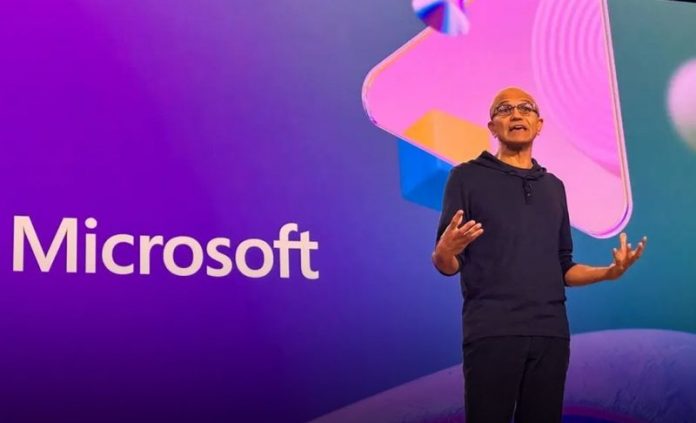
Microsoft is deepening its artificial intelligence push inside its workplace tools, unveiling a sweeping rollout of Copilot-powered agents across Teams, SharePoint, and Viva Engage.

The move, announced on Thursday, marks one of the company’s biggest expansions of AI into Microsoft 365, underscoring its bid to dominate enterprise productivity with intelligent assistants.

At the center of the rollout are new Facilitator agents that will sit in on Teams meetings. These Copilot assistants can generate agendas, take notes, and answer participant questions in real time. They go a step further by managing time allotments for agenda items, alerting teams if they are running behind, and even producing documents and follow-up tasks.

A mobile version of the Facilitator agent is designed for spontaneous moments — what Microsoft calls “hallway chats” or impromptu syncs — ensuring that informal conversations are captured with the same level of context as scheduled meetings.

Beyond meetings, Microsoft is adding Channel agents that will comb through past conversations and meetings in a channel to provide answers, generate project status reports, and summarize key updates.

Inside Viva Engage, the company’s enterprise social platform, Community agents will assist administrators by answering routine questions and organizing user engagement. And in SharePoint, Knowledge agents will quietly tag, organize, and summarize files behind the scenes, streamlining knowledge management.

Facilitator agents are available starting Thursday, though the ability to automatically create documents and tasks remains in public preview. The other new agents — Channel, Community, and Knowledge — are also launching in preview alongside a redesigned Workflows tool for AI-driven task automation and a new feature that generates audio recaps from meeting notes.

Microsoft’s AI Productivity Play

The expansion signals Microsoft’s intent to keep Teams as the central hub of workplace collaboration, integrating AI agents that not only streamline repetitive tasks but also actively participate in work. Analysts say the strategy could prove sticky for enterprise customers, locking them deeper into the Microsoft 365 ecosystem.

By embedding AI into the core of daily workflows, Microsoft is believed to be trying to make Copilot indispensable. The idea is: If your meetings, your project tracking, and your knowledge base are all being managed by AI inside Teams, you’re less likely to switch to a competitor.

The move comes as rivals are also racing to redefine the future of work with AI. Google is pushing its Duet AI across Workspace, while startups like Notion and Slack are embedding generative AI for summaries and task creation. But Microsoft’s scale, combined with its enterprise reach, gives it a significant head start.

For businesses, the biggest questions will revolve around cost and trust. Microsoft 365 Copilot already comes at a premium, and companies will want reassurance that sensitive meeting data or internal communications are handled securely as AI agents become more autonomous.

This rollout is also a test of whether employees will embrace AI as an ever-present coworker. While automation of note-taking and file organization is widely seen as a productivity boost, the idea of AI “sitting in” on meetings and hallway chats may take cultural adjustment.

If successful, Microsoft’s bet could usher in a new workplace norm: meetings that are always documented, projects that are continuously summarized, and knowledge bases that self-organize — with AI agents acting as invisible colleagues.

Google Turns Chrome Into an AI Powerhouse With New Features, Agents, and Gemini Integration

0

For years, Google leveraged its Chrome browser as a powerful vehicle to grow and cement its dominance in search. Now, the company is preparing to do the same in artificial intelligence.

On Thursday, Google announced it is supercharging Chrome with a suite of AI features designed to make browsing more interactive, automated, and personal. The overhaul marks the beginning of a new era for one of Google’s most important products, as the company shifts its business around AI-driven search and productivity.

AI Mode in the Omnibox

Among the most immediate updates, Google is embedding AI Mode — its conversational alternative to traditional search — directly into Chrome’s “omnibox,” the address bar where users type web queries. This change allows users to launch AI-powered searches without leaving the webpage they are on.

The move is part of a broader transformation of Google Search into an AI-first product. Parisa Tabriz, Google Chrome’s vice president, described the changes as “fundamentally changing the nature of browsing,” in a blog post announcing the upgrades.

Gemini Comes to Chrome

Google will also integrate its Gemini AI assistant directly into the browser. The tool, previously available only to paying subscribers, will now be free for all Chrome users. Gemini can “see” everything on the current webpage, access content across multiple open tabs, and answer questions in real time.

Crucially, Gemini will also remember past pages visited and connect with other Google services such as YouTube and Google Calendar — a sign of Google’s strategy to create a seamless AI ecosystem across its products.

The Antitrust Backdrop

Chrome’s role in Google’s empire cannot be overstated. Since its launch in 2008, the browser has grown to capture roughly 70% of global market share, according to Statcounter. It remains Google’s largest entry point for Search, feeding the company valuable user data that powers its algorithms.

Chrome was a focal point in the Justice Department’s recent antitrust case against Google, which argued the company should be forced to divest its browser business to weaken its search dominance. The judge ultimately rejected that proposal, leaving Chrome in Google’s hands. Now, with AI features woven into the browser, Chrome could become the launchpad for a new era of dominance — this time in artificial intelligence.

AI Agents Arrive

Perhaps the most striking update is the introduction of AI agents inside Chrome — autonomous systems designed to perform complex tasks on behalf of users. Google’s agent, previewed last year under the codename “Project Mariner,” has been upgraded significantly.

The agent can complete tasks such as filling an Amazon shopping basket, drafting an email, or copying and pasting information from one webpage into a document. It runs in the background, letting users multitask while it works, but it will prompt for clarifications when necessary.

For example, if tasked with ordering apples, the agent may pause to ask whether you prefer Braeburn or Pink Lady. It also stops short of taking irreversible steps, such as finalizing a checkout or sending an email, without explicit user approval.

“The nice part about it happening locally is that we are able to ask clarifying questions and hand it over seamlessly to the user, too,” said Charmaine D’Silva, Google Chrome’s product director, at a press roundtable.

Competition With OpenAI

Google’s rollout comes just months after OpenAI launched its own “ChatGPT Agent,” an autonomous assistant capable of carrying out tasks. But OpenAI’s agent is still in its early stages, hampered by reliability issues and frequent glitches.

Mike Torres, Google Chrome’s VP of Product, said the company is determined to learn from those shortcomings.

“Our hope, by the time this gets to users, is that we’ve done away with many of those potential snafus,” he said.

The Future of Chrome as an AI Hub

Analysts see Chrome’s transformation as a turning point for both the browser market and AI adoption, with the optimism that Chrome could become the go-to hub for AI interactions worldwide, with users relying on Gemini and Chrome’s AI agent for everyday tasks. If widely adopted, this is expected to create a new “flywheel effect,” where Chrome collects user interaction data that feeds back into Google’s AI models, strengthening their accuracy and appeal. In this future, Chrome could solidify Google’s edge over rivals like OpenAI, Anthropic, and Microsoft.

However, there are concerns over privacy, data collection, and AI reliability, which could lead to regulatory crackdowns and consumer hesitancy. If agents make costly mistakes — such as placing incorrect orders or mishandling sensitive emails — user trust could erode. Chrome risks being seen as bloated or intrusive, potentially driving users to leaner alternatives like Safari or Firefox.

Against these backdrops, Chrome’s challenge now seems largely to prove that these tools will work seamlessly at scale, and that users, already wary of AI mishaps, are ready to hand off more of their digital lives to Google’s machines.