DD
MM
YYYY

PAGES

DD
MM
YYYY

spot_img

PAGES

Home Blog Page 4924

Building Workable Decentralized Solutions with Algorand, The Sandbox, and Stakenomics

0

The cornerstone of Blockchain solutions is decentralization. This has been observed in how decentralized systems improve the ease of financial transactions, keep transactions safe, transparent, and secure, eliminate central authorities and censorships, improve turnaround time, and reduce operational costs. Decentralization drives cryptocurrency, and it is worthy of note to see crypto projects imbibing more decentralized features to compete in a highly competitive and cutthroat financial market. Decentralization effectively removes the proprietorship and control of a project from one central authority or team and confers governance and control to the community members.

It is interesting to see how community participation drives Blockchain systems, as the community members have a personal relationship with the protocol interface and know the important improvements and additions to include to make the protocol run better and serve them more effectively.

Algorand (ALGO), The Sandbox (SAND), and Stakenomics (STAK) are three important crypto projects championing and prioritizing decentralization above all else in the crypto industry.

Algorand (ALGO)

It’s hard to talk about truly decentralized protocols without considering Algorand (ALGO). The platform is a fully decentralized and open-source Blockchain ecosystem developed primarily to solve Blockchain issues on speed, security, scalability, and decentralization.

Algorand (ALGO) was created in 2017 by a team led by computer scientist Silvio Micali, an accomplished MIT professor in cryptography.

The throughput of the Algorand protocol is truly impressive as it offers near-instant transaction completion, high security, low transaction fees, and high transaction speeds, with the ability to process 1000 transactions per second (TPS).

What does the Algorand (ALGO) Ecosystem have to Offer? 

Algorand runs on a special variant of the proof-of-stake consensus mechanism called the pure proof-of-stake. Proof-of-stake has been established as a more favored method of achieving consensus over the proof-of-work module due to its lower operational costs, near efficiency, low energy consumption, and more nodes to achieve higher throughput and increase the number of transactions the network can process.

In the pure Proof-of-Stake (PoS) system, all Algorand (ALGO) holders share in the validation rewards, as a fraction of the transaction is distributed to all wallets holding ALGO. Staking is not required to participate in this consensus module, and holders can earn a 4-6% APY simply by holding on to their ALGO coins.

Algorand (ALGO) facilitates the building of smart contract-powered decentralized applications (dApps) and decentralized finance (DeFi) tools. It offers a framework where developers can easily fill in their tools or applications and build a smart contract around them.

Algorand (ALGO) issues a standard for all tokens built within its ecosystem. Much like Ethereum’s ERC, Algorand deploys the use of the ASA (Algorand Standard Asset), which verifies all assets written on the Algorand Blockchain to improve security within the ecosystem.

The 2 layer structure of Algorand can also be credited for the high level of scalability on the network, with Layer 1 (Base layer) handling token creation, smart contracts, NFTs, and transactions, while Layer 2 deals with more tasking transactions and processes that may take up more space and processing power.

Algorand also has two organizations governing it; the Algorand Foundation (Non-profit), and the Algorand Incorporated. The foundation deals with governance and protocol improvement while providing certified crypto courses and education programs in schools like UC Berkeley and MIT. Algorand Foundation has also hosted hackathons and Blockchain events for community growth and to improve Blockchain adoption.

Algorand Incorporated is primarily concerned with operational activities, and they are responsible for developing and improving the base layer of the protocol to make it more efficient.

Algorand prides itself on being carbon negative, as it operates on the proof-of-stake module and works closely with Climate Trade. This company is concerned with environmental protection and carbon-neutral solutions.

The ALGO Token 

ALGO is the native token that powers the Algorand ecosystem. Apart from the utility with transaction fees and trading, the token also offers governance, as holders can contribute to the operation of the network by committing their ALGO coins to the protocol for a 90 day voting period. The ALGO coin is inflationary, with a 10 billion total supply and about 7 billion coins in circulation.

The Sandbox (SAND)

A huge downside to the gaming industry is that users do not truly own their in-game assets and are not adequately rewarded for peak gameplay and in-game activities. The Sandbox (SAND) aims to change that with a very innovative solution; the Metaverse.

The Sandbox (SAND) is an open-source blockchain-based digital gaming ecosystem that facilitates the creation, trading, development, and monetization of virtual property called LAND.

Pixowl launched the Sandbox in 2012 as a virtual gamescape to rival Minecraft. The project caught on, as Sandbox enjoyed gameplay and adoption worldwide. In 2018, however, after observing the success of similar projects like crypto kitties and Axie infinity, Arthur Madrid and Sebastien Borget explored the possibility of a virtual gaming environment or metaverse built within the Blockchain. This led to the Sandbox launch in 2020 on the Ethereum network. Since its launch, it has remained one of the fastest-growing crypto games.

Virtual Realtors and Land Owners 

Sandbox users (SAND) can build, host events, rent, and trade their lands for money. The Sandbox provides 3D editing software for creating in-game items and wearables that can be traded as NFTs on the marketplace. SAND, the native and utility token within the Sandbox metaverse, can be used to purchase gaming items, virtual land, and NFTs. Rewards can be earned by interacting with the Sandbox environment, trading, and staking SAND tokens.

Governance within the Sandbox metaverse is also achieved by staking SAND tokens to become a validator within the protocol. Validators have a say in the project’s key roadmap features and decision-making processes within the ecosystem. SAND holders who are not interested in being validators can also delegate their tokens to validators of their choosing to share a percentage of their rewards.

Collaborations within The Sandbox (SAND) 

Since its launch in 2020, and especially because of the good year that NFTs enjoyed, the Sandbox has seen a lot of notable community members. Snoop Dogg has built his SnoopVerse within the Sandbox, and as a valuable piece of virtual real estate, it, in turn, increases the value of the land around that area. GREENPARK, an NFT development company, has also joined in the migration into the metaverse through Sandbox. The Sandbox features an NFT museum, virtual theme parks, and impressive virtual builds.
Stakenomics (STAK)

Stakenomics (STAK) is a decentralized and open-source blockchain project that effectively solves the problems of censorship, centralization, scalability, and security within the crypto industry by fostering groundbreaking long-term solutions to these problems.

In the area of censorship, Stakenomics (STAK) maintains the highly anonymous Proof-of-Stake consensus mechanism. This helps to clamp down on mining activity which could be noticed by countries with strict crypto policies. The proof-of-stake system is also highly transparent and decentralized, effectively solving the problems of security and centralization.

Due to the high transaction throughput enabled by the proof-of-stake consensus model, Stakenomics (STAK) is highly scalable, built on the Binance Smart Chain (BSC), a highly scalable, secure, and decentralizedBlockchain.

Stakenomics (STAK) offers low, stable, and predictable fees while fostering truly decentralized solutions through its decentralized exchange platform (DEX), incorporating features like yield farming, staking, lending, and borrowing protocols. It also drives Blockchain adoption through its Learn and Earn program, rewarding users for consuming informational content on Blockchain technology and cryptocurrency.

The Stakenomics Tokenomics

Stakenomics Token (STAK) is the native token of the Stakenomics protocol. It offers access to the Stakenomics DEX and provides wealth and value throughout the project. It is a BEP-20 token with a 10 million max supply and a dynamic distribution plan that goes thus:

  • 10% STAK— Staking
  • 15% STAK— Team
  • 10% STAK— Advisors
  • 15% STAK— Liquidity
  • 20% STAK— Public Sale
  • 25% STAK— Private Sale
  • 5% STAK— Community

Stakenomics chiefly utilizes staking and burning to drive its ecosystem. By staking STAK, users can gain passive rewards, provide liquidity for the protocol, and earn governance privileges and voting rights. Burning involves sending STAK tokens to an inaccessible wallet disconnected from the Blockchain. This process would reduce the number of STAK in circulating supply, increase demand, and improve the market performance of the STAK tokens.

The Stakenomics (STAK) Roadmap 

The Stakenomics (STAK) project’s roadmap features workable, remarkable, and dynamic activities that would foster Blockchain adoption, STAK market dominance, financial growth within the protocol, and community support. The Stakenomics (STAK) roadmap features activities that include:

  • Stakenomics Website creation
  • Seed funding to launch the project
  • STAK private sale
  • STAK public sale
  • STAK listing on CEX and DEX platforms
  • Staking and Liquidity provision protocols within Stakenomics DEX

Observing the Stakenomics project, it is easy to notice the team’s dedication and commitment toward true decentralization. As the crypto industry evolves, Stakenomics would leave a lasting imprint on the Crypto market as a potentially valuable digital asset. 

Presale: https://register.stakenomics.io

Website: http://stakenomics.io/ 

Telegram: https://t.me/StakenomicsOfficial
New Rave in Crypto — Ethereum, Cardano, and New Boy: Adirize DAO To Give Over x200 in Profits As Ethereum 2.0 Launch is in A Few Weeks!

0

New Rave in Crypto — Ethereum, Cardano, and New Boy: Adirize DAO To Give Over x200 in Profits As Ethereum 2.0 Launch is in A Few Weeks!

The cryptocurrency space evolves with innovations and coins very often— we have seen a lot of crypto innovations ever since the first shot at digital currency in Bitcoin(BTC). With these new coins come great money-making opportunities, and Adirize DAO (ADI) is here with another opportunity for you to make money from crypto. Let’s check out the ADI, ETH, and ADA tokens, as they could give you over x200 in profits.

Ethereum (ETH): “The Merge” Could Break Barriers!

Ethereum (ETH) is the second largest cryptocurrency in the market, and its money-making prowess is under no doubt. Since its launch in 2015, Ethereum has made staggering price movements, reaching an all-time high of $4,811 last year. Ethereum (ETH) is set to improve on what made it famous with a major upgrade of its ecosystem— “The Merge.”

“The Merge” is set to upgrade Ethereum(ETH) from a proof-of-work blockchain to a proof-of-stake consensus. This will shoot up the scalability of the Ethereum(ETH) blockchain as it will be faster, less costly to host decentralized applications(dApps), have high interoperability, and also be more developer-friendly. With the Merge,” you can expect Ethereum’s (ETH) price to soar higher as even more decentralized projects are set to launch on Ethereum (ETH).

Cardano (ADA): A Fast-Growing DAO

Cardano (ADA) is one of the top decentralized autonomous organization (DAO) coins today, and its performance over the years has earned it a mainstay place in the crypto market. The Cardano (ADA) protocol, ADADAO, is making waves by creating fully collateralized stablecoins leveraging native Cardano(ADA) assets.

Many crypto traders have accepted the Cardano (ADA) network for its interest-free borrowing policy. Cardano (ADA) also has numerous staking and yield farming that can help double your portfolio.

Adirize DAO (ADI): Milk The Innovative Fusion of DAO and DeFi

Adirize DAO (ADI) is bringing something different to the crypto world. With its unique fusion of DAO and DEFI functionalities, the ADI token aims to be less volatile compared to other cryptocurrencies, which would make it very usable in day-to-day transactions. Brilliant!

Adirize DAO (ADI) is working progressively to make its native ADI token a stable currency that we all can use as a primary means of payment without relying on a treasury of assets or pegs to fiat currencies like the U.S. Dollar (USD). A pool of assets will back a free-floating reserve currency to retain the value of the ADI token. The ADI token could soon experience a gigantic price surge with massive adoption.

If you buy Adirize DAO(ADI) using USDT ERC-20 deposits, you get a 17% bonus. If your referral buys worth $100, you both receive $30 each. And if you purchase within 25 minutes of signing up, you get a 45% bonus.

Conclusion

Another opportunity is here, milk it and make money. These coins are well set up to give you over x200 in profits. The choice is yours to make money or not.

For more info on ADI, click on the links below:

Presale: http://join.adirize.com/

Website: http://adirize.com/

Telegram: https://t.me/AdirizeDAO_Official

Read here for more on Adirize DAO(ADI).

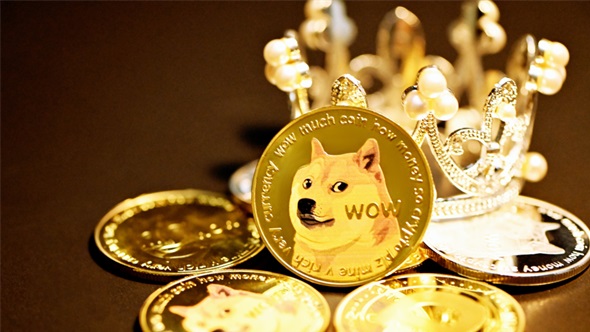
Dogecoin, Shiba Inu, and Kitsoonay: 3 Meme Coins Taking Over

0

Meme coins are a roaring sector within the crypto market. Initially, meme coins were seen as a joke, but gradually over time, this sector is now taken more seriously, whilst allowing users to enjoy themselves. Dogecoin (DOGE) and Shiba Inu (SHIB) are two of the biggest meme coins in the market, but one that is set to launch soon is Kitsoonay (KITS), and it seems as if it can match the same level of success as DOGE and SHIB.

How Did Dogecoin Come To Be?

Dogecoin officially launched in 2013 as the first-ever meme coin. Created as a joke, it had no intention of providing users with any utility or purpose. As it was launched at a time when cryptocurrency was frowned upon, and society did not understand the basics of crypto or its potential, the creators of Dogecoin were making a joke out of the crypto market as a whole. However, over the years, it began to see big success as Elon Musk, the richest man in the world, even publicly shared that he held DOGE tokens. When this news was tweeted by Elon Musk himself, this resulted in a surge for Dogecoin. Ever since Dogecoin has been doing well and is currently ranked 10th by market capitalisation at the time of writing.

Shiba Inu Followed Dogecoin’s Footsteps

Shiba Inu is the second-largest meme coin in the market and was launched with the intention of following the success of Dogecoin. There are many similarities between the two coins, including being dog coins as their logos are of Shiba Inu dogs. Another similarity they share is the reason for their popularity being credited to Elon Musk. When Musk bought a new pet, a Shiba Inu, he used Twitter to share this information, which led to an increase in Shiba Inu’s popularity, even though Musk is not known to own any SHIB tokens himself. However, this proves the influence Musk has over the crypto community.

Ever since, Shiba Inu has maintained its success and is currently ranked 12th by market capitalisation at the time of writing.

Is Kitsoonay On The Same Path?

Kitsoonay is a new meme coin to enter the market and is currently in presale. Whilst it may be aiming for the same levels of success as Dogecoin and Shiba Inu, it is very different from these meme coins. Dogecoin and Shiba Inu do not have a purpose as meme coin, however, Kitsoonay acts as an approachable platform with a friendly community to help bring users into the world of DeFi. For quite some time in the crypto space, users have had the idea that DeFi can be quite difficult to master; however, Kitsoonay aims to change this. This will be made possible with Kitsoonay’s user-friendly features as it will become easier for users to trade, lend, borrow, and more. Offering more than DOGE and SHIB INU by targeting DeFi within the meme coin sector, Kitsoonay seems to have a lot of potential for success.

Learn more about Kitsoonay (KITS) here:

Presale: https://soon.kitsoonay.io/register

Website: https://kitsoonay.io

Telegram: https://t.me/KitsoonayOfficial

3 Revolutionary Cryptocurrencies For Game Developers: FEED3, Avalanche, Enjin Coin

0

Several revolutionary projects in the online VR gaming sector are helping crypto game developers to realize more potential and benefits of the sector. These projects include Avalanche (AVAX) and Enjin Coin (ENJ). Another is FEED3 (FD3), a revolutionary new cryptocurrency to advance a next-generation feedback mechanism in VR gaming.

These projects center around DeFi and GameFi, two key ecosystems within the crypto space that are blowing hot at the time of writing. The article will discuss how they’re helping game developers advance online VR gaming to realize their full potential and benefits, starting with Avalanche (AVAX). 

Avalanche is Built for Decentralized Apps

Though not a gaming cryptocurrency, Avalanche (AVAX) creates a world of possibilities for game developers. Avalanche (AVAX) is the fuel powering Avalanche, a blockchain network comprising three sub-chains: Echange Chain (E-Chain), Platform Chain (C-Chain), and Contract Chain (C-Chain).

The Avalanche (AVA) network enables a space for NFTs and P2E games to thrive. At the beginning of 2022, the Avalanche (AVAX) platform had a modest amount of games. However, many homes currently run on the platform, including Avaxtars and Crabada,

Avalanche (AVA) allows game developers to build on the Avalanche (AVA) platform, enabling them to create powerful, reliable, and secure games easily. In addition, because of Avalanche’s (AVAX) cheap transaction fee structure on the dedicated C-Chain, Avalanche (AVAX) is appealing for P2E gaming, making it a one-stop shop for game developers.

Also, Avalanche (VAX) allows developers to host multiple side projects to help curate, market, sell, and resell NFT games and items in the cryptocurrency market.

Enjin Coin is the Complete Tech Stack for NFTs

Enjin Coin (ENJ) is the native cryptocurrency of the Enjin Network, a gaming platform founded in 2009. The ERC-20 crypto game developers build NFT games, apps and websites. Enjin Coin (ENJ) gives developers assess to a robust API, versatile SDKs, and development tools. With these, they can create NFT-powered games, with or without blockchain coding experience.

With Enjin Coin (ENJ), game developers can create and manage Web3-based games. Enjin Coin (ENJ) helps developers explore using blockchain technology to create new types of gameplay, from multiverse quests to blockchain-powered multiverse non-player characters (NPCs).

Also, Enjin Coin (ENJ) enables them to seamlessly implement mechanisms for in-game digital asset trading across multiple platforms. It also allows for integrating NFTs into games and provides a marketplace where users can sell or trade in-game NFT collectibles for profit, among other things.

The Power of Three

FEED3 (FD3) is a new cryptocurrency that seeks to revolutionize the gaming ecosystem by creating economic opportunities for online VR game developers and players. To achieve this, FEED3 (FD3) will bring solutions to some of the problems facing the blockchain gaming ecosystem to assist it in providing the best opportunities for players and developers.

FEED3 (FD3) seeks to introduce a feedback-to-earn (FB2E) mechanism to VR gaming to enable developers of P2E games to collect feedback from players concerning gameplay. Therefore FEED3 (FD3) will cover three key sectors within the gaming ecosystem: the metaverse, video games, and P2E games.

FEED3 (FD3) will enable game developers within the ecosystem to have a comprehensive directory of genuine feedback, which they can use to modulate or re-engineer the platform’s game. This mechanism will help them meet the gaming community’s expectations, contributing to the product’s longevity and customer satisfaction.

FEED3 has a maximum supply of 8.74 billion FEED3 (FD3) tokens with a pre-sale of 35% (3.059 billion tokens). The cryptocurrency is currently on pre-sale, while those who buy during the pre-sale are open to receiving bonuses.

Depending on the type of crypto you use to buy, you can receive a 10% bonus and up to 15% for purchasing with USDT TRC-20. If you purchase FEED3 (FD3) during any of the three pre-sale stages, you stand to receive bonuses thus: 5% for Stage 1, 4% in Stage 2, and 2% in Stage 3.

Avalanche (AVAX) and Enjin Coin (ENJ) are some of the cryptocurrency market’s most significant cryptos and the most widely used by game developers seeking to create the best blockchain-based games. Like them, FEED3 will help developers bring innovation to a multi-billion P2E sector that is already drawing the attention of developers and players alike.

If you’re a game developer seeking to create the very best games for crypto enthusiasts, consider adding Avalanche (AVAX), Enjin Coin (ENJ) and FEED3 (FD3) to your portfolio.

To know more about FEED3 (FD3), visit

Website: https://feed3.io/

Enter the pre-sale: https://presale.feed3.io/register

Telegram: https://t.me/Feed3Official

Are you permitted to kill a person to increase your chance of survival?

0

In the year 1884, Tom Dudley, Edwin Stephens, Edmund Brooks, and Richard Parker were stranded on a ship for days until they ran out of food and water and there was no hope of getting rescued. In order not to die of hunger they decided to kill one of them and feed on the meat and drink the blood. They all decided to kill the youngest and the weakest amongst them who was Richard Parker, a 17 years old cabin boy who was already in a coma and sick out of the ordeal they are facing on the ship. 

So in the quest for survival, they killed Richard Parker and devoured his flesh and drank his blood, days later they were rescued and sailed to the shore. 

They were subsequently arraigned for the murder of Richard Parker, the 17 years old crew member they fed on and their defense was that they killed Richard out of necessity. Their quest for survival necessitated the murder of the 17 years old lad and if they haven’t killed him and fed on him all of them could have died of hunger. 

So according to them, the act of killing Richard Parker was just collateral damage; sacrificing the youngest and weakest crew member who is already sick and might die anyway in order to save the rest three crew members. 

In criminal law, there is a principle known as the doctrine of necessity. The doctrine of necessity is the basis on which extra-constitutional or criminal actions by both administrative authorities or individuals which are designed to restore order or attain power on the pretext of stability, are considered to be lawful even if such action contravenes established constitution, laws, norms, or conventions of the state. It can as well be an instance where some criminal acts are allowed or accommodated in as much as the situation necessitates or calls for the action. 

The doctrine of necessity and collateral damage is an infamous principle in war times. A soldier is permitted to kill as many people as possible in the quest of killing or capturing their target. Although they always claim to have accessed or calculated the collateral damage before they order or carry out the attack, this collateral damage may involve killing children, women, the sick, or non combatant civilians. 

The legality and morality behind this principle are still the subjects of debate. 

In the story narrated earlier, the issue before the court for determination when the rest crew members were arraigned for trial is; “whether the act of the crew members murdering one of them can be justified by the doctrine of necessity”. 

This case shone some light on the area of morality, ethics, and legality of taking another man’s life in order to increase your own chance of survival. Is this act legal, is it ethical or is it morally justifiable? 

If A & B are being chased by a lion, is A justified to push B over to the lion to give him (A) the chance and opportunity to escape while the lion devours B? Mind you, if one of them is not sacrificed they will both be devoured by the lion!

If a boat is overloaded, and it’s causing the boat to sink, will the boat captain be justified to throw some people into the sea to lift some weight off the boat, sacrificing the lives of a few to save the lives of many others in the boat, bear in mind that if the captain does not throw some people overboard the boat will sink and they will all die? 

The decision of the court in the above case was divided. The judges were of different opinions; while some judges justified the killing of the weakest crew member in order to increase the chance of survival of the rest crew on the doctrine of necessity, some other judges begged to differ stating categorically that you cannot kill another man or cause the death of another man in order to increase your own chance of survival. 

But before I tell you the decision of the majority of the judges and the outcome of the case, what will be your own opinion on this; is one justified out of necessity to sacrifice the life of a few in the quest of saving the majority? 

R v Dudley and Stephens 14 QBD 273, DC