DD
MM
YYYY

PAGES

DD
MM
YYYY

spot_img

PAGES

Home Blog Page 4929

PugglitInu Is Offering Blockchain Solutions Alongside Solana and Chainlink

0

Cryptocurrency resides on blockchain technology, and the growing power of these two industries has reached places that once ignored the importance of cryptocurrency and the unavoidable adoption that is taking over globally.

With both feet planted in decentralisation, many expectations are hinged on how well the crypto industry performs. Sadly, there has been a slew of shortcomings attached to stable and new crypto projects that need to be addressed.

Pugglit Inu (PUGT) is a blockchain solution-dedicated platform. The platform will relieve users of lax customer service, comparatively lower transaction fees, high security, and advanced tools embedded in trading activities.

What Is Pugglit Inu (PUGT)?

Not a funny name or some silly made-up idea- Pugglit Inu (PUGT) is a portmanteau of puggle and piglet. The coin is modelled after the best qualities of both animals- community-friendliness, keen attention to security and safety, and environmental conscientiousness.

The Pugglit Inu (PUGT) platform offers crypto users a better place for trading with a charting tool, an aggregator, and updated network statistics. It also has trading bots that relieve the on-hand job trading has forced crypto traders to have if they intend to stay on top of prevailing trends.
Additionally, the Pugglit Inu (PUGT) protocol is built on the Binance Smart Chain network (BSC), inheriting a system designed to maximise the user’s profits in both short and long-term usage. Building on BSC also gives Pugglit Inu (PUGT) room to grow in DeFi and run smart contract-based applications along the line.

Not only those, but Pugglit Inu (PUGT) will embrace interoperability for cross-chain communication between other chains. As a critical solution for scalability, it is expected that achieving scalability as the number of transactions increases will be an easy feat to pull.

Pugglit (PUGT) DAO

Decentralised Autonomous Organisations (DAO) are a highly needed phenomenon in the crypto industry as they imply that members and not a central body control governance.

Pugglit Inu (PUGT) states that its DAO will be to “bring governance to the community members of the platform and empower its holders.” The DAO will operate on a system optimised for growth and wealth creation. With protocol-controlled liquidity and high-staking reward, the DAO will regulate and control supply expansion.

Essentially, Pugglit Inu (PUGT) will work for users and the project’s growth through a flattened hierarchy and structuring for Pugglit user incentivization.

Pugglit Inu (PUGT) Blockchain Solution

As mentioned, Pugglit Inu (PUGT) intends to bring solutions to blockchain issues that still plague crypto projects. The main problems are the blockchain trilemma- scalability, security, and decentralisation.

Scalability will come with interoperability as Pugglit Inu (PUGT) will allow the exchange of assets and data across several chains. The whitepaper explains it as follows, “launching Pugglit Inu on BSC ensures dual chain interoperability, allowing cross-chain communication and selling high-performance dApps to yield a fast transaction rate and smooth user experience.”

High security will be on the part of Pugglit Inu (PUGT) to safeguard users’ data and funds, aided by Binance Smart Chain’s (BSC) impressive security system. BSC uses a proof-of-stake relay chain that maintains the network’s integrity and will be a valuable addition to Pugglit Inu (PUGT).

Decentralisation in Pugglit Inu (PUGT) begins with DAO governance, giving holders a say in policies to be implemented on the platform. After all, the idea of being a DeFi token and a meme utility is for the community.

Pugglit Inu (PUGT) solutions do not stop with the blockchain trilemma, going beyond to better its ecosystem. The platform employs a unique proof-of-work algorithm to secure transactions and reduce fees. And where everything happens- the mobile wallet- will be optimised for easy access and use.

Pugglit Inu (PUGT) Presale Offering

Pugglit Inu (PUGT) offers a bonus offering system that allows buyers to enjoy an additional percentage of PUGT when they become holders.

Buying PUGT with either Ethereum (ETH) or Binance coin on Binance Smart Chain (BNB) will give up to 20% extra on whatever amount of tokens you have purchased. Each of the three presale stages has bonuses, and you also get a 65% bonus on  PUGT tokens for your second purchase.

You can buy PUGT via the website, using the options of Ethereum (ETH), Bitcoin (BTC), Binance coin (BNB), and Tether on both TRON and Ethereum networks.

Step 1

Get a PUGT-friendly wallet that is also compatible with your purchase option.

Step 2

Configure (connect) your wallet to prepare it for some

PUGT.

Step 3

Buy yourself some PUGT tokens, and you’re good to go. 

What Is Solana (SOL)?

Solana (SOL) is an open, programmable blockchain for smart contract applications. Solana (SOL) is one of the thriving blockchains in the cryptosphere, with solutions needed to combat rampant problems. It is ranked one of the best according to market capitalization.
While Ethereum (ETH) is the central hub for decentralised applications, NFTs, and DeFi, the cost of engaging in transactional operations is heavy- monetary and speed-wise. Developers and users have found Solana’s (SOL) alternative of higher throughput and lower fees as the incentive to switch chains.

Solana (SOL) provides scalability using its method of rivalling speed without giving up decentralisation and censorship resistance. It is worth noting that the architecture of Solana (SOL) is founded on eight key technologies that keep evolving to produce optimal performance.

As a result, it has become a lightning-fast blockchain with over 50,000 TPS that keeps going without getting hindered by the nodes migrating to its base.

SOL, the cryptocurrency on the network, is used to pay transaction fees and stake. It is also listed on exchanges like Binance and Coinbase for compatibility with any wallet.

Enter Presale: https://pugglitinu.com/

Explore Blockchain Technology with Chainlink (LINK)

Chainlink (LINK) provides real-world information to smart contracts on blockchains, allowing them to interpret agreements and securely interact with off-chain data accurately. The oracle network was launched in 2017, by the for-profit company- SmartContract.

The introduction of smart contracts brought transparency, speed, and cost reduction to crypto-related activities. This removed the need for external agents and intermediary fees.

The problem is that while smart contracts are codes that inspire a trustless system, they cannot read real-time data due to blockchain restrictions. As a decentralised oracle network, Chainlink (LINK) bridges the gap and feeds them the needed data.

Due to its fall from the top twenty cryptocurrencies and heavy loss in value, Chainlink (LINK) has remained undervalued for its contribution to blockchain solutions and price potential. However, its level of adoption remains higher than many cryptocurrencies in the market, and there is a high chance for longevity.

LINK might not make a good investment for the price, but the underlying technology is something worth paying attention to. The network’s invaluable work on securing smart contracts for chains to remain stable has no limitations.

Conclusion

Without solving issues, the cryptocurrency industry cannot reach the heights it intends to attain. Thankfully, these blockchain platforms have taken it upon themselves to fill these loopholes- and have done well so far.

They will be ahead of whatever lies in the positive future of crypto, and so will holders within their ecosystem.
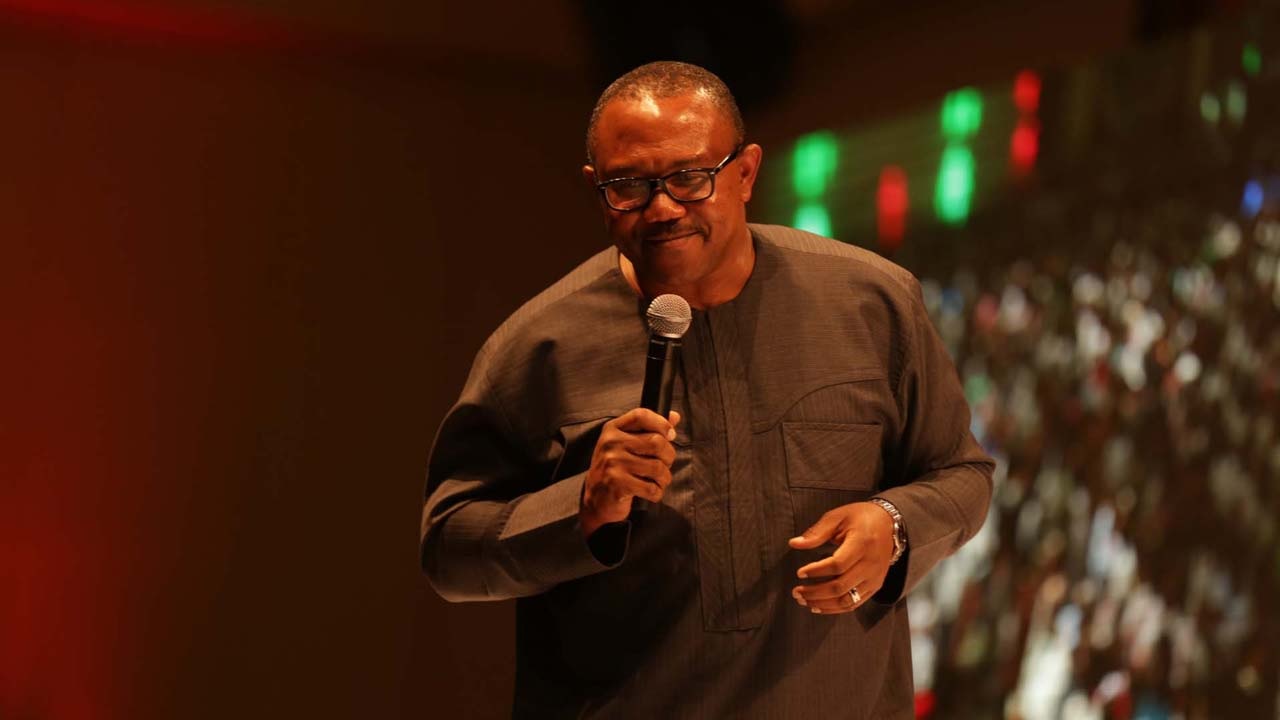

The Peter Obi’s Abeokuta Rally

0

Nigeria 2023 election will be the most open election in Nigerian history.  I have called it the year that information technology will disintermediate decades-old political structures in Nigeria as social media, SMS, etc remove (partly) information asymmetry, making it possible for citizens to have the right information and make the calls.

My thesis is that we will have a higher correlation between ideas & visions and electoral results. If that becomes statistically significant, Nigeria will begin to rise, henceforth, as higher quality managers will join Nigerian politics. For Abeokuta to respond this way for Peter Obi does imply that mobile internet is transforming Nigeria at a rapid pace.

Comment on Feed

Comment 1: The presidential election is between Obi and the rest, he remains the only candidate with a clearer route to Aso Rock. Anyone who pays attention knows who has the momentum, but of course – people who are not doing great will always find ways to be part of the conversation and create some hope for themselves. The man Obi has about 15 states within reach, if he picks just two in the southwest with Lagos obviously very competitive, he wins Aso Rock.

Something very interesting is happening in Nigeria, for those who really know how to read events, but again, if the result of a match is already known, what’s the essence of playing? So we have to keep the conversations going!

Comment 2: The truth be told the system of apc and pdp has really put nigeria backwards and its really affecting the youth badly,everyone is tired of this old system of ruling nigeria,we want a better nigeria,we want a nigeria that will be respected again,we want to take back our title of been the giant of Africa…#am obedient

Nigerian Presidency is Wide Open As Mobile Internet Could Disintermediate Old Political Structures

Jamb 140 Cut-Off Mark For University Admission – A Decline In Nigeria’s Educational System

0

Recall that in July 2022, the Joint Admissions And Matriculation Board, JAMB, and heads of tertiary institutions in the country, fixed the minimum cut-off mark for admissions at universities at 140, while polytechnics and colleges of education have 100 as the minimum.

The decisions on the cut-off marks were reached after a heated session at the 2022 policy meeting on admissions to Degree, Nigerian Certificate Of Education (NCE), and National Diploma (ND) ongoing at the International Conference center.

The meeting which was presided over by the minister of education, Adamu Adamu, advised tertiary institutions to adopt a more flexible posture in the admission process, provided all actions were in compliance with the guidelines.

See what he said;

”Just as in the previous admission exercise, the criteria still remain as approved and circulated. All institutions must therefore adhere strictly to them and all others prescribed by the regulatory bodies such as the National Universities Commission (NUC), National Board For Technical Education (NBTE), and the National Commission for colleges of education (NCCE), particularly with regards to approved quotas, ratios, and other specifications meant for improved quality, accountability, and equity”.

Check out some reactions on Twitter;

@theboyisgreat said, “Education becomes a joke when the president and APC President and APC Presidential candidate can’t even account properly for their certificate. We can’t continue like this”.

@officialfemii said, “All of this to favour the core northern states or what? I’m not sure though. But 140? This is madness o! A child could just go into an exam hall, sleep for 1 hour, and toy with the papers and still score 140. Is it not meager 140/400? Education in the mud”.

@Botoconsults said, “can you imagine? During my time I couldn’t get admission because I had 196 and cut off was 209 my generation eh”.

@doctorflowz said, “Jamb announcing 140 as cut off mark for university is a national embarrassment on our education system and an encouragement for students to be lazy with studies”.

@Onwudegupeters said, “This system is defective and ridiculous! It is a way of making money from parents. How can the cut-off mark for university be 140? Trust Nigerians, those who scored 140 and can pay the price will be admitted ahead of those who scored 259 without money! Rubbish”.

@braveyilk said, “The standard keeps going down like an aircraft that is bound for a crash. How did we fall for this law for God’s sake just to please those from a certain part of the country who have refused to upskill. They will drag everyone with them in no time. This union is not working”.

It is disheartening that the educational sector in Nigeria has lost its value, as regards the constant reduction of low cut-off mark for admission into tertiary institutions in the country. The immediate implication is that the educational system is not living up to expectations in the production of future leaders for the nation as garbage in equals garbage out.

If JAMB continued on this trajectory of lowering the cut-off marks, it is unfortunate that the country’s standard of education would continue to be eroded.

There is a popular saying that no society grows beyond its level of education. That is to say, no nation can properly develop, except with a well-developed quantitative and qualitative educational system.

G7’s planned cap price of Russian oil will devastate Nigerian economy

1

As we know,  G7 – a club of rich countries which include the US,  Britain, Canada, France, Germany, Italy, and Japan – plans to put a price cap on Russian oil: they will  “ban the insurance and financing of shipments of Russian oil and petroleum products unless they are sold under a set price cap.” While many may see this as a possible harm to Russia, I call on policy makers in Nigeria, Angola and other African countries to wake up. There is another alternative viewpoint which is like this:

If Russia does agree to keep pumping oil and be selling below market price which has been determined by G7, expect a massive shift in market equilibrium. In other words, if Russia has the cheapest oil, everyone will buy from  Russia because it is selling cheaper than other oil producers. If that becomes the case, what would Nigeria and Angola do? Under this scenario, we do assume that Russia can pump more to its highest capacity.

So, we need to understand that it is not Russia that would be harmed; Russian oil will be cheaper and global markets will stop buying from Nigeria. And if that happens, it would be like a covid-19 moment when no one was ready to take delivery of oil.

Nigeria and other oil producers must demand that G7 puts a volume maximum which Russia can sell under this price cap. If not, there would be surprises in many economies.

(Russia had noted that it would not sell below market price. Do not bank on that. It can technically sell at lower price and make up via higher volume.)

The world’s major industrial powers are going forward with a plan to cap the price of Russian oil. As Russia’s war against Ukraine drags on, the Group of Seven — Britain, Canada, France, Germany, Italy, Japan and the U.S.— says it will “ban the insurance and financing of shipments of Russian oil and petroleum products unless they are sold under a set price cap,” The Wall Street Journal reports. The G-7 hopes the yet-to-be-determined cap will reduce Russia’s oil revenue without hampering global supply or raising prices.

The plan comes with several risks, analysts say. Russia has said it may simply refuse to sell oil under a price cap. There’s also no guarantee that major buyers of Russian oil, most notably India and China, will go along with the plan. (LinkedIn)

Comment on Feed

Comment: You can bet on that.
Russia will not sell at a lower price and go for volume.
It’s not just a bad move economically, it’s a sign of weakness.
Not only will Russia not accept lower prices but also neither will MBS.

My Response: Sure- they will not sell at a lower price. That is the default state. Yet, that does not mean other oil producers should  relax since I do not see how a British buyer will see Russian oil going for $60 and yet paying $100 for Nigeria. What stops him from buying Russian oil by opening a Turkey subsidiary. This price cap makes no sense.

Comment 2: Inasmuch as the world cannot be in self-denial or delusional about the degree of aching effects of the Putin’s Order on the West and Europe —and by extension, the escalation effect on Africa —the politics of national interests cannot be side-chicked as well. Hence the G7 response to Putin’s energy cut!

Again, such a response must be well guarded and guided with a view to CAPing the envisaged, negative impacts on other economies, especially the petrodollar economies like Nigeria and Co!

My Response: In geopolitics, it is self-preservation. I am not sure G7 has to think for Nigeria.  It is Nigeria that needs to make itself heard.  Putin will not likely sell at a lower price. But nothing is 100%.

Comment 3: For Nigeria, does movement in the price of oil make a difference to our lives anymore? Our policies have been so badly designed and implemented that we can’t take advantage of price movements. The new definition of problem is when the government of an oil producing country would claim that upward movement in oil prices hurts their economy.

My Response: Great words indeed. Oil does not move sideways. For Nigeria, up or down is pain. High oil price, more problems with import of fuel. Low price, drained foreign reserves.

Comment 4: Not so fast. Even if Russia doubled its oil production capacity which is impossible to do even in the next 10 years. Production increases in oil don’t happen overnight. Russia under sanctions doesn’t have the wherewithal to achieve such a feat; not even the USA with her advanced fracking technology can quickly double its production in so short a period. There are several factors such as Rigs, spare parts, shipping and storage logistics that will make the scenario unlikely.

My Response: What is Russia’s production capacity and how much is it pumping today? My point is that we do not need to look at this new “sanction” from one angle when other countries could be imperiled.  If Russia decides not to pump, Europe will outbid most African countries in the global oil market. So, in the end, in trying to punish Russia, pains come to many others. While capacity cannot be added overnight, cheaper oil will drive demand at scale. That will distort the market until we can re-attain equilibrium again.

Comment 4R: Ndubuisi Ekekwe Russia crude oil production capacity is about 10.9m barrels, it currently produces about 9.9milion barrels leaving room for additional one million barrels. Russia under the current sanctions cannot easily ramp up to the 10.9m capacity. If Russia is able to ramp up production quickly as you posit in your scenario it wouldn’t hurt the world. Honestly lower oil prices are very good for the world economy especially Africa. It would reduce earnings for the few African producers but help the larger African economies .Perspectives may differ on what the outcome of the G7 price cap on Russian crude will be but I don’t think Russia can afford to stop pumping crude to protest any price caps. If on the other hand it leads to lower oil prices across the world , the world economy will be better for it. I strongly don’t think a barrel of crude oil should exceed $70. A price of $65-$75 is good for the world economy. On the flip side, higher oil prices will accelerate the deployment of climate smart energy alternatives and technologies for which the world will be better off. Russian oil is already sold at a discount of about 30% ( $60 per Barrel). A further price cap of say $30 per barrel won’t be bad for the world economy.

My Response to 4R: Good point but Putin is a moving target. Visit some Russian websites, they are sharing that some American and EU companies are opening Turkey subsidiaries to buy the cheap capped oil and then resell them at the free market price. Europe and US will be fine in this game. My concern is Africa.  I posit that EU/US buyers will buy the cheap Russian oil and then resell to Africans under the guise that only companies with capacity to vet oil source can trade. So, under that, Africans will not have access to the cheap as the insurers will like to deal with “trusted” buyers who can validate the capped prices. Those licenses of trusted partners will be given exclusively to EU/US traders.

Nigerian Miners Urge Government To Stop Chinese From Illegally Grabbing Nigeria’s Lithium

0

Given its global role in exploiting critical mineral resources, the scavenging activities of China seem unending. Recently, it was reported that Chinese nationals are burrowing in Nigeria’s mines, grabbing whatever deposits of Lithium they could find to sneak back to their country, to fuel their industries.

Provoked by this act, Miners under the umbrella of the Miners Association Of Nigeria, sent a passionate plea to the federal government to check the activities of Chinese miners scavenging for Lithium in the country, stating that their activities will threaten the economy down the line.

This was disclosed by Mr. Dele Ayanleke, the National Secretary of the association in an interview.

See what he said;

“Chinese are moving from one mining site to the other, scavenging and mopping our raw Lithium mineral at a cheap rate to develop their industries and economy. This is not good for the future of our economy, what this means is that Nigeria will end up buying electric batteries from them.

“The government should safeguard our Lithium and revive all the moribund companies producing batteries in Nigeria to start using the Lithium to produce electric batteries. Allowing the Chinese to enter into every mining site is one of the reasons kidnapping is on the increase in Nigeria because they are the major target for kidnappers”.

Mr. Ayanleke also urged the federal government to withdraw 100% ownership of minerals mined by foreign miners operating in Nigeria, stating that allowing the Chinese to have 100% mining assets is not good enough for the indigenous mining investors.

Also, in June 2022, the Nigerian Geological Survey Agency, NGSA, disclosed the discovery of high Lithium grade in Nigeria, which is one of the world’s most important solid minerals.

The agency further disclosed that the occurrences of Lithium are of high grade, which serves as a point of attraction to investors, as they eagerly want to pay huge sums of money for some of the datasets generated by the agency.

Nigeria seems not to be the only country that Chinese officials are scavenging for its Lithium mineral resource. Last month, it was reported that speculations were mounting that China will take advantage of the power vacuum created by the 2021 U.S withdrawal from Afghanistan, and seek dominance over the country’s mineral resources, particularly its Lithium deposits.

Western investors are reported to be unlikely to invest in Afghanistan’s Lithium sector, given sanctions risk. However, the leading candidate to step in is China, which has long pursued strategic dominance in the Lithium-dependent battery storage segment of the green energy revolution.

Last year, representatives of several Chinese companies reportedly conducted on-site inspections of potential Lithium projects in Afghanistan.

As of 2018, it was reported that Chinese entities now control nearly half of global Lithium production and 60 percent of electric battery production capacity.

Lithium is reportedly a hot cake mineral resource currently, and has witnessed a price rally over the last few years, due to rising electronic vehicle demand which needs Lithium to make its most expensive parts-the car batteries. The prices of Lithium have also soared in recent months due to the growing demand for clean energy.