DD
MM
YYYY

PAGES

DD
MM
YYYY

spot_img

PAGES

Home Blog Page 4933

India’s Reliance Jio Announces $25bn Deal with Google to Build “Ultra Affordable” 5G Smartphones

0

India’s telecom giant Reliance is working with Google on a $25 billion plan to develop affordable 5G smartphones and services, the company said on Monday.

Reliance Chairman Mukesh Ambani said during the company’s annual general meeting that Jio’s 5G network, which will be launched starting with New Delhi and Mumbai before being expanded across the rest of the country by next year December, will be the world’s largest.

The plan, which is the latest in the company’s efforts to disrupt India’s telecom market, is expected to be executed in two months. It has a promise of crashing the cost 5G devices in India, making it “ultra-affordable”.

“To take the 5G mass market, a sub-$100 phone is imperative and Jio is rightly positioned to bring 5G to the masses,” Reuters quoted Neil Shah, vice president of research at Counterpoint, as saying.

Reliance Jio, which owns the largest share of India’s telecom market with more than 420 million subscribers, beat competitors to clinch airwaves worth $11 billion in a $19 billion 5G spectrum auction earlier this month.

Jio has deployed ‘price-crashing’ as a playbook to win market shares since 2016, when it launched cheap 4G data plans and free voice services. The playbook was also used by the company when it partnered with Google to introduce an $81 4G smartphone.

India has the second largest telecom market in the world, but about 700 million people still don’t own smartphones due to cost. Thus, the key to putting more smartphones in people’s hands lies largely in making it affordable.

Nigeria’s similar situation

In Africa where Nigeria has the largest telecom market, the cost of 5G devices poses a threat to successful rollout of the fifth-generation services.

In an interview with Punch last month, Vice President, Global Telecommunications Industry, IBM, Craig Wilson, pointed at the affordability of 5G devices as the biggest threat to successful rollout of 5G services in Africa.

He said that although some device manufacturers have committed to bringing costs down to around $150, the cost of a 5G device currently runs around $350, making them unaffordable for many.

“Still, many industry analysts believe that 5G devices need to be at about $50 to support mass adoption across Africa. The high cost of 5G phones is a major impediment, and it impacts the launch the fifth generation network on a commercial scale when there are not enough mobile devices capable of receiving it,” he said.

MTN Nigeria, the leading telecom company in the country that has just kicked off its 5G rollout, is caught in the challenge of unaffordable 5G devices.

MTN and Mafab won the 3.5 gigahertz (GHz) spectrum auction for the deployment of Fifth Generation technology in December 2021.

Nigeria has a population of more than 200 million people with only about 40 million estimated to own smartphones. To fill this huge gap through 5G rollout requires availability of affordable 5G devices.

With the success of the rollout in Nigeria depending much on making low-cost 5G smartphones available, MTN may need to copy Jio’s “ultra-affordable” plan.


Winning in Markets – Join Us Today at Tekedia Mini-MBA

0

Markets are vector quantities with magnitude (market size) and direction (customer preferences). Unless your products evolve and adapt, you will remain a scalar quantity (only magnitude with no antenna to pick the directional patterns from customers). Today at Tekedia Institute Mini-MBA Live, we will have a conversation on Winning in Markets, in this last week of edition 8.

Every business model begins with an assumption on knowing and understanding the customer frictions with capabilities to provide products and services to fix them.

But most of the time, those assumptions must evolve. And that means, the greatest companies are those that have mastered the art of adaptability because the needs of customers change. Understand. Adapt. Win.

At Tekedia Institute, we are understanding the physics of business and how to drive momentum in company growth. Join us for the next edition which begins Sept 12 here. 

Cost remains N90,000 or $170 for the 12-week program which has both pre-recorded and online, all remotely executed. Rated “E” for everyone with secondary school education.

How Avalanche, Uniswap and Big Eyes are Leading Their Niches in the Cryptocurrency Market Today

0

How Avalanche, Uniswap and Big Eyes are Leading Their Niches in the Cryptocurrency Market Today

From the meme subsector to decentralized exchanges, liquid staking, play-to-earn and so on, the cryptocurrency market can be easily broken into niches. Today, Avalanche (AVAX), Uniswap (UNI) and Big Eyes (BIG) are leading their niche in the cryptocurrency market, offering buyers, investors and software developers a shot at luxury if they jump on them.

Let’s dive into these coins and what they offer.

Avalanche (AVAX)

Avalanche (AVAX) is one of the top cryptocurrencies in the market, and it is famed as the fastest smart contract technology. Using Avalanche has a massive advantage over other blockchains due to its incredibly quick throughput when making transactions. For Ethereum (ETH), it takes about 6 minutes to complete a transaction, while for Avalanche (AVAX), it takes just two seconds to complete that same transaction.

AVAX token offers software developers and programmers the opportunity to create decentralized applications (dAPPs). They can utilize the platform’s protocol to create different blockchain applications. Avalanche (AVAX) also opens a market that fosters the sale and transfer of DApps and self-executing smart contracts that automate various design objectives and product offerings. However, it would appear that Avalanche’s most attractive feature is how it enables businesses to scale using only a few pieces of hardware.

According to CoinGecko, at the time of writing, the current price of Avalanche (AVAX) is $22.56. AVAX has been marked out for its relative stability after the crypto collapse.

Uniswap (UNI)

Uniswap (UNI) is a foremost decentralized exchange platform in the cryptocurrency market today. Uniswap became the first DEX with a trading volume to exceed $800 billion. An astounding feat especially when compared to other exchange platforms.

Uniswap (UNI) became center stage around 2020 due to the increasing amount of discussion surrounding decentralised finance, otherwise known as DeFi. Uniswap (UNI) was launched in September 2020, and shortly after, the token price boomed. Days later, UNI was already trading among the top 40 cryptocurrencies by market capitalization.

On Uniswap (UNI), the users are the liquidity providers contributing assets to the decentralized liquidity pools. This is how the network drives user loyalty and engagement, as it imbues a lasting sense of ownership for more efficient collaborations. These liquidity providers enjoy a fraction of the fees in their pool, earning passive income with every fee.

From its launch in November 2018, Uniswap (UNI) has undergone three upgrades, with the third version featuring improved capital efficiency, better oracles, and flexible fees. According to CoinGecko, at the time of writing, a UNI sells at $6.81.

Big Eyes (BIG)

Big Eyes (BIG) is a full-on community token aimed at shifting wealth into the defi ecosystem and protecting the world’s ecosystem. Big Eyes’ community is its most fantastic attribute, as more users and events will help build momentum for the token and its operations. Big Eyes understands that every cryptocurrency has its heart and soul in the community. As such, it aims to always prioritise the demands of its community and reward its dedication to the project.

Big Eyes Coin (BIG) is hosted on Ethereum (ETH) protocols but is already planning to switch to a Proof-of-Stake consensus system for quick throughput and high scalability. It is the most anticipated meme coin the cryptocurrency market has seen this year. This is mainly because it departs from the dog fanfare that has permeated the meme coin ecosystem, creating a befitting alternative that offers cat lovers and the aquatic community a project to call their own, helping them earn passive income from its high cryptocurrency prices.

As the Big Eyes (BIG) presale goes live,  90% of the tokens will be available at launch to give control of the platform to the community. 10% of total BIG tokens will be equally split between a marketing wallet and charity.

The Big Eyes Coin (BIG) mascot has an Anime design that catches the attention of the youth population, who are the biggest demographic in the cryptoverse. It ranks among some of the top ten NFT initiatives in the cryptocurrency market. For the NFT holders in the community, Big Eyes is working on an exclusive NFT Sushi Crew club such that holders can take advantage of exceptional rewards and purchase the best NFTs available.

https://bigeyes.space/#signup

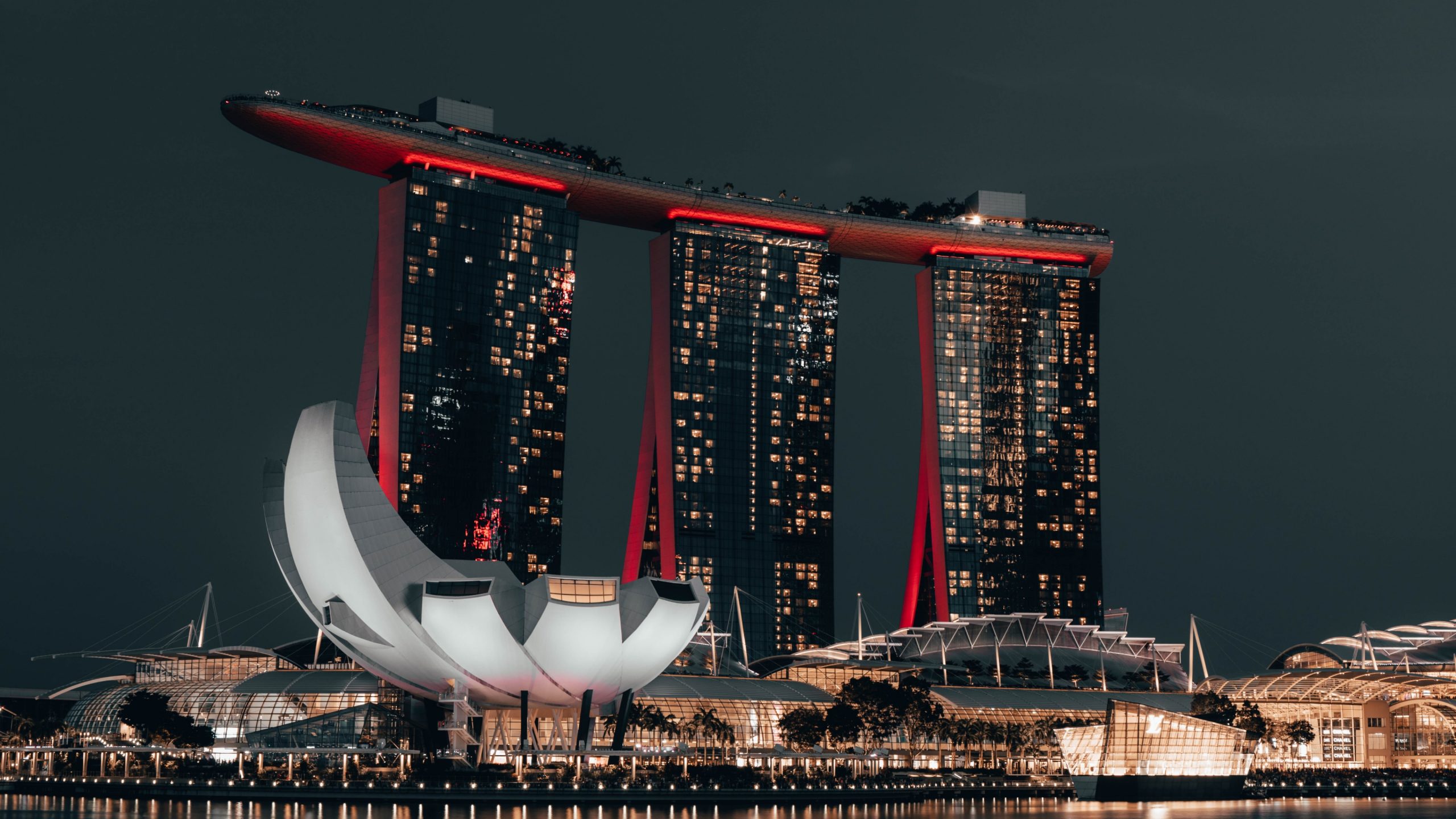
Singapore Introduces New Work Visa Rules Designed to Entice Foreign Talent

0

As the global economy gradually shifts focus to technology, many countries are beginning to pave the way for the future economic boom. A major line of action being taken by these countries is harvesting tech talents from across the globe.

On Monday, Singapore announced new work visa rules designed to woo foreign talent as part of the country’s efforts to steer economic growth, accelerating recovery from covid-19-induced economic shortfalls.

Under the new visa rules which will be available from January, there is a new five-year visa for people earning at least S$30,000 ($21,445.42) a month. In addition, holders are allowed to work for multiple companies at one time and their spouses are granted work permits, according to the Ministry of Manpower.

“We cannot leave any room for investors to doubt or have questions as to whether Singapore remains open,” Tan See Leng, the city-state’s Manpower Minister, told a news conference.

“As a country with little or no resources, talent is our only resource and talent acquisition is an offensive strategy for us,” he added.

Also, the rules created the Overseas Networks and Expertise (ONE) pass, allowing exceptional candidates in sports, arts, science and academia who don’t meet the salary criteria to hold a long-term visa. Other measures include allowing some tech professionals, whose skills are in short supply; to be eligible for five-year visas, up from two- to three-years currently, from September 2023.

The new rules also reduced the processing time for employment passes, typically granted to high-paid professionals, to 10 days.

“Both businesses and talent are searching for safe and stable places to invest, live and work in. Singapore is such a place,” Tan See Leng said on Monday. “It is therefore timely to leverage on this opportunity to cement Singapore’s position as a global hub for talent.”

Under the new visa rules, Singapore plans to exempt jobs from the need to be advertised locally before hiring foreigners under a system called Fair Consideration Framework. The measure, which will take effect from Sept. 1 next year, is a shift from the old rule which made only the top 10% of Employment Pass holders eligible.

Under a system called Fair Consideration Framework (FCF), jobs are advertised mainly for locals before they could be offered to foreigners.  The duration of FCF advertisements, where applicable, will be halved to 14 days, the ministry said, adding that processing time for all EP applications will be cut to 10 business days from the current maximum three weeks.

Singapore has remained a popular choice for foreign companies seeking to establish their base abroad. But the South Asian country introduced tight safety measures to curb the pandemic, resulting in population drop as many expatriates left the country.

But as the world increasingly wins the fight against the pandemic, Singapore is seeking to replenish its economic losses and to create an investment destination that will compete with other places like Hong Kong, the UK, Australia and the UAE.

“This is a much-needed progressive step that fills the gap. It feels like Singapore is really addressing the gap at the top end of talent, not just in terms of salary, but capabilities. Talent, globally, is quite mobile and there’s a number of competitive hubs that are trying to get access to that global talent,” said Amit Gupta, president of TiE Singapore, the Singapore chapter of the Silicon Valley-founded global non-profit organization that aims to build an entrepreneur ecosystem.

However, there is concern that the new visa rules will further harm the African tech economy. The continent’s aim to develop a tech-based economy is increasingly being undermined by talent poaching. With many of Africa’s top tech talent hoping to move abroad for a better life or work remotely for foreign companies that offer better pay, Nigeria for instance, will likely feel the impact of the new Singapore visa rules starting next year.

Young People Need This Ladder Into The Future on Merit

1

It takes a man who has risen to the highest of mountains to appreciate the lowest of valleys. Nigeria built ladders, got many to climb up, on merit, but we are losing that process daily now. A young lady told me here that they refused to give her graduate assistantship position she merited as the best in her class because the position, in a federal university, was reserved for the host university ethnic group. According to her, the HOD (head of department) substituted her name with the person who came 3rd!

She was evidently bitter for her nation. Who will not be? But looking at her case, the experience is the new Nigeria. At UNN, the indigenes want an indigenous professor to become the vice chancellor. In OAU Ile Ife, the same. Go to ABU, that repeats. Across the nation, we do not compete nationally but now ethnically. You just have to be the best in your ethnic group – and that is it.

Looking back I can see that things have changed badly – that ladder has been burnt, not even taken down. My greatest professional accomplishment was my HOD telling me that “Ekekwe, your job is waiting. We want you to stay back in FUTO and teach”. Sure, I declined but I was happy the offer was there. If FUTO had cut me out on any pretense of Ndubuisi being an Abian instead of an Imolite, forgiveness would be removed from my dictionary.

Nigeria – you are destroying dreams as you burn ladders for young people. Why should we be scaling bad habits? 

Nigeria – why are you leaving behind what made you great in the past? Why must you poison the minds of your future with shocks? When a nation does not believe in #merit in recruiting for those who teach, run its central bank, fix its roads, manage its water board, etc, everything will fade.

Comment on LinkedIn Feed

Comment 1: There should be a place for merit and a place for quota also called affirmative action in the US. This is how countries ensure everyone is given a chance.

My Response: What the US does is not the same as what Nigeria does. The US is fixing injustice against minorities through this affirmative action calibration. Nigeria is not using its system to fix any injustice but to shock citizens. Obama possibly got into Harvard through affirmative action but became  104th president of the Harvard Law Review.

That made him among the top 1% of his class in many ways. The US system was rigged against minorities since data has shown that even though minorities may need affirmative action to ENTER, they are never the last in most of the cases. The implication is that the “merit” system is questionable since it did not pick that Obama was well qualified ahead of his white peers.

Do not put what US does to what Nigeria does because there was no tribe that was discriminated against at scale over centuries in Nigeria like the way African Americans were.

Comment 2: It has always been the underlying and undertone factor in our country in every single aspect of living. This is said with emphasis: the. factor. affecting. every. single. aspect. of. living. in. our. Country.

Quite unfortunate, if you look at it from all angles.

The solution: we need to look inward as a people, and also as a country and question ourselves truly what do we want to achieve collectively? Ask ourselves those very uncomfortable questions , come up with solutions and back it up with actions which have immediate positive or negative consequences that must be followed through by law.

Again, emphasis here on: back it up with positive or negative consequences by law which must be followed through to the letter.

We know what to do as a country, we just don’t want to do it, yet.

Comment 3: Prof this is Nigeria reality and it’s so bad that every federal and state recruitment is done based on first, ethnicity and then your religion. You can hardly get anything on merit. A look at all revenue generating agencies will buttress this. Will Nigeria ever return to those past when merit is first?