

Watch the recorded video of my live presentation today at Tekedia Capital OPEN titled “The Abundance is Here”. Also included is the Q/A session with participants. To learn more about Tekedia Capital, go here capital.fasmicro.com
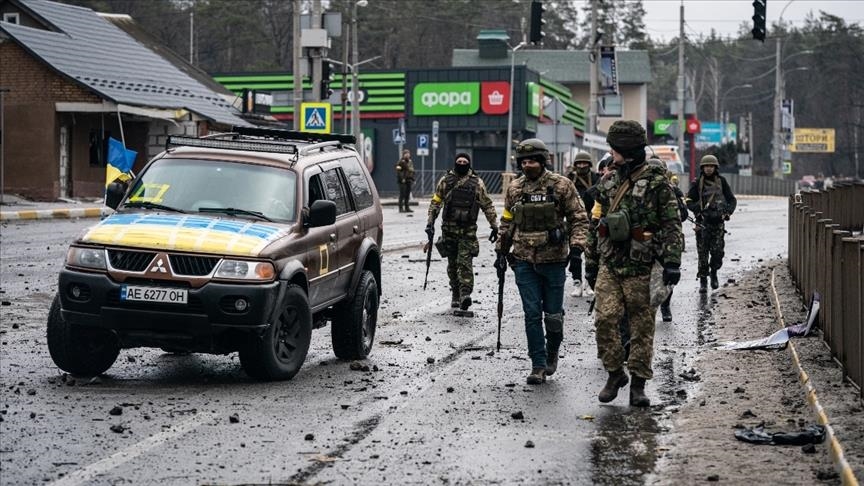
The War in Ukraine and Africa’s Food Security
The Question: Good morning and happy weekend to you.
Am calling on our economic “gurus” in the house to please explain to me how the war between Russia and Ukraine is affecting prices of energy and commodities world wide.
From the news we here on TVs and what we hear offline, a lot of countries are in a serious economic crisis and all these have been attributed to the conflict going on in Ukraine.
I read somewhere that Sri Lanka are turning off street lights due to high cost of energy and some countries are rolling out austerity measures to help curtail the effect of the crisis.
I understand that Russia is a top gas exporter in the world, and as a result of its sanctions from the west, gas supply worldwide have reduced. But a country like Nigeria that has large gas reserve, how come we are also experiencing high gas price.
Its also good to add that, in the last 5 to 10 years, a lot of the Middle Eastern countries where in conflict that lasted for a long time. The Middle East as a region exports a significant amount of energy that the world needs, but during their crises, the rest of the world didn’t experience high cost of commodities and energy(I stand to be corrected) as we are experiencing now… So how come the conflict between RUSSIA and UKRAINE is affecting everyone.
Can someone help me with a more professional explanation of this issue.
My Response: I think the problem is that most of the books we read in secondary schools contained fake data. In my economics and social science subjects, I did not see Ukraine anywhere as contributing to Africa’s good security. Russia was also muted. The dominant countries were the USA, UK and the other regulars. But with this war, we are learning the real players who did not have the right media power or influence to insert statistics in books. Magically, a war in Ukraine is making Africans hungry.
Saudi Arabia has never had a war that disrupted oil supplies. The Middle East countries are marginal with Saudi Arabia and Russia running at full capacity. What is happening now is that a big producer (Russia) is off and that is significant. With most of Europe not buying from Russia and many others afraid to send money to Russia due to sanctions, supply becomes limited even when demand is increasing, post-pandemic. Recent data has that Russia is burning $10m worth of gas/day due to inability to export most! When supply is low and demand is high, price increases. In a global village, it affects everyone.
Yet, the biggest issue is perception. When the world thinks of scarcity, bad things happen. The other day, lawyers in Nigeria went on a rampage because they thought the registration materials were not enough for a conference. If people have the spirit of scarcity, it can affect the market. There could be a lot of oil but with Russia involved, many model that this thing is not enough and everyone panics.
Nigeria’s Real GDP Recorded 3.54% Growth in Q2 2022
After months of abysmal performance, the Nigerian economy is showing a comeback sign. Latest data released by the Nigerian Bureau of Statistics (NBS), shows a 3.54% Gross Domestic Product (GDP) growth.
The growth was recorded year-on-year in real terms in the second quarter of the year, indicating improvement compared to the 3.11% growth recorded in the same period the previous year.
Per the NBS, the aggregate real GDP recorded was N17.29 trillion in the Q2, 2022, indicating a marginal decline of -0.37 compared to N17.35 trillion recorded in Q1 2022.
Details of the data show Services leading other sectors, followed by the agricultural sector.
The services’ sector accounted for 57.35% of the GDP, followed by the agricultural sector with 23.24% contribution, about 1% increase compared to Q1 2022. Also, the industrial sector contributed 19.4%.
The significant increases which contributed to growth marks the seventh consecutive quarter of GDP growth, since the recession recorded in Q3 2020.
The oil sector dipped by 11.77% year-on-year in Q2 2022, compared to a contraction of 26.04% recorded in Q1 2022. The contraction in the sector’s GDP is following the decline in crude oil production capacity.
Nigeria recorded an average daily oil production of 1.43 million barrels per day (mbpd), lower than the daily average production of 1.61mbpd recorded in the same quarter of 2021 by 0.18 mbpd and lower than the first quarter 2022 production volume of 1.49 mbpd by 0.06mbpd.
The Oil sector contributed 6.33% to the total real GDP in Q2 2022, down from the figures recorded in the corresponding period of 2021 and the preceding quarter, where it contributed 7.42% and 6.63% respectively.
Non-oil sector
The non-oil sector grew by 4.77% in real terms during the reference quarter (Q2 2022). This rate was lower by 1.97% points compared to the rate recorded same quarter of 2021 and 1.31% points lower than the first quarter of 2022.
This sector was driven in the second quarter of 2022 mainly by Information and Communication (Telecommunication); Trade; Financial and Insurance (Financial Institutions); Transportation (Road Transport); Agriculture (Crop Production) and Manufacturing (Food, Beverage & Tobacco), accounting for positive GDP growth.
In real terms, the non-oil sector contributed 93.67% to the nation’s GDP in the second quarter of 2022, higher than the share recorded in the second quarter of 2021 which was 92.58% and higher than the first quarter of 2022 recorded as 93.37%.
Nigeria’s economy has been grappling with persistent headwinds buoyed mainly by shortfalls in oil revenue. This has resulted in inflation as forex scarcity took toll on the cost of goods and services, igniting concern that the country could relapse into another recession.
The GDP growth, though not high enough to erase the economic dips previously recorded, signifies progress that at least, always concern about another recession.
Judge Rejects Musk’s Further Demands for Twitter Data, Calling it “Absurdly Broad.”
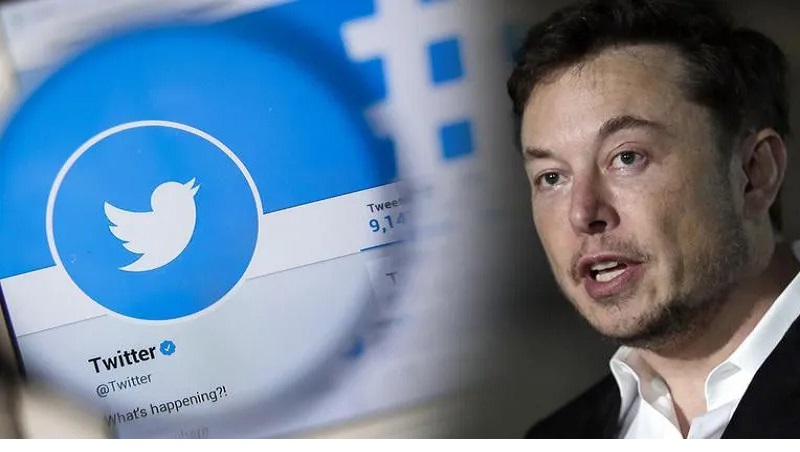
Elon Musk’s drama-filled bid to acquire Twitter keeps taking turns even as it has come under litigation.
On Thursday, a judge rejected Musk’s demands for more user details, describing it as “absurdly broad.” The demand is part of the entrepreneur’s efforts to ascertain the actual number of users on Twitter, an assurance he said he needs to close the $44 billion acquisition deal.
The Tesla CEO has maintained that Twitter is not being honest about the number of bots on its platform, even though the company has provided him with data it said would answer his questions about fake accounts.
Further push by Musk for additional data was rejected. Having described it as “absurdly broad,” Chancellor Kathaleen McCormick of Delaware’s Court of Chancery said many of Musk’s data demands amount to trillions of data points that “no one in their right mind has ever tried to undertake such an effort.”
According to the judge, Musk has had data and documents needed to pursue his case, with much provided by Twitter before he said he was calling off the deal in July, accusing Twitter of not being truthful.
“My overall impression is that plaintiff has agreed to produce a tremendous amount of information to defendants, and that the information plaintiff has agreed to produce is sufficiently broad to satisfy most of plaintiff’s obligations,” wrote Chancellor Kathaleen McCormick of Delaware’s Court of Chancery.
In June, Twitter agreed to provide the full firehose of internal data to Musk, as part of its efforts to satisfy the world’s richest man’s demand for additional data on the number of spam accounts the platform holds.
However, court ordered Twitter to turn over data from 9,000 accounts sampled in a fourth-quarter audit, which was carried out to estimate the number of spam or bot users on its platform. McCormick gave the social media company two weeks to produce the data, although it argued that the data is lost and recreating will be difficult.
“We look forward to reviewing the data Twitter has been hiding for many months,” said Musk’s attorney, Alex Spiro, in an emailed statement to Reuters.
Musk was enthusiastic about purchasing Twitter, making a swift $44 billion acquisition bid for the microblogging app in April. However, the SpaceX CEO made a U-turn in what is believed to be a ploy to secure a cheaper deal.
Musk has said he wants to test that audit’s accuracy because he believes the company fraudulently misrepresented that only 5% of its accounts were spam. He wants McCormick to rule he can walk away from the deal. The deal was agreed at the price of $54.20 per share, below Twitter share price at the time.
Twitter said the spam-based controversy, which has lingered for months, is hurting the company. It has sued Musk to force him to close the deal. Musk on the other hand wants the court to rule that he can walk away from the deal without having to pay the $1 billion breakup feed enshrined in the agreement.
Musk’ attempt to have the trial pushed further into the future was denied by the court. A five-day trial has been scheduled for Oct. 17.
His argument has been that Twitter lied when it said in regulatory filing that spam accounts for only about 5% of the platform’s users.
“Mr. Musk is terminating the Merger Agreement because Twitter is in material breach of multiple provisions of that Agreement, appears to have made false and misleading representations upon which Mr. Musk relied when entering into the Merger Agreement, and is likely to suffer a Company Material Adverse Effect,” Musk’s lawyers wrote in a letter to Twitter’s Chief Legal Officer Vijaya Gadde.
But Twitter on Wednesday, described Musk’s argument as “legally irrelevant.” The company said it has described the spam count in regulatory filings as an estimate, not a representation, adding that the real level of spam could be higher.
Where the Opportunities Are Right Now in Nigeria
Question: where do we have the most opportunity in Nigeria in the near future?
Response: ICT and broad technology sector. ICT contributed just 1% to Nigeria’s GDP in 2001. Today, the number is 18.4%. What that means is that about 17% has been “eaten” by ICT in other sectors. As ICT grows, so are the opportunities in that domain. Read more here
- Event: Tekedia Capital Open
- Topic: The Abundance Is Here
- Date: Saturday, Aug 27, 2022
- Time: 4pm – 5pm WAT
- Zoom link (free and open) here
Interestingly, I will have a presentation titled “Abundance Is Here” as part of Tekedia Capital OPEN as we begin a new investment cycle next month. It begins at 4pm WAT today and it is free. The Zoom link is here
The sector’s growth has been reported to be largely driven by activities in the telecommunications sub-sector which contributed 9.49% to the nation’s GDP. Its contribution to nominal GDP for the second quarter of 2021 stopped at 12.12% which was lower than the rate of 12.22% recorded in the same quarter of 2021, but higher than the 10.55% it contributed in the preceding quarter.
In nominal terms, in the second quarter of 2022, the sector growth was recorded at 14.11% year-on-year, 14.18% points increase from the rate of -0.07% recorded in the same quarter of 2021, and 6.43% points lower than the rate recorded in the preceding quarter.
The quarter-on-quarter growth rate recorded in the second quarter of 2022 was 14.13%. The ICT sector in the period under review, recorded a growth rate of 6.55% in real terms, year-on-year. From the rate recorded in the corresponding period of 2021, there was an increase of 0.99% points.
https://www.tekedia.com/youre-invited-to-tekedia-capital-open-the-abundance-is-here-aug-27-at-4pm-wat-free/