DD
MM
YYYY

PAGES

DD
MM
YYYY

spot_img

PAGES

Home Blog Page 4937

An Open Letter To Rishi Sunak In Reference To His Manifesto To Crack Down On Degrees That Don’t Make Students Lots Of Money

0

Dear Mr. Sunak. R (Former Chancellor of the Exchequer),

To begin with, I have so many of my readers who do not know you and/or know very little about you. Kindly permit me to introduce you to them.

Rishi was the British Chancellor of the Exchequer from February 2020 to July 2022 and resigned following the Chris Pincher scandal, according to Metro.

He is an intelligent Economist and a smart Politician. These qualities could be attributed to his private schooling at the £45,934-a-year Winchester College and graduating from Politics, Philosophy and Economics (PPE) at the University of Oxford.

He is currently campaigning for the role of the next British Prime Minister. And part of his manifesto in reference to education is to do the following:

  1. Crackdown on university degrees that do not improve students ‘earning potential’ if he becomes the next prime minister.
  2. Introduce a new British Baccalaureate, which would require pupils to continue studying core subjects such as mathematics and English Language until they complete school at 18.
  3. Pledged to improve professional development for teachers, and give school trusts an ‘accountability holiday’ for two years after taking on underperforming schools.
  4. Work to expand the use of artificial intelligence and digital technology in classrooms so as to reduce teachers’ workloads and improve the quality of teaching in underperforming areas.

Do not misunderstand me, I love and very much support all the ideas of the manifesto, my only problem is with number one.

Although no examples were given, which I suppose careful consideration would be put before cracking down on even the assumed least degrees.

To go ahead with my suggestions on what to do instead. I want to first critically present some highlights that I believe completely fault this idea.

1. The True Importance of Education to the Society

There has been a long present century argument on not only the importance of a university degree but also the importance of universities at large to an individual.

Turn in between two, more of the older generation would argue positively in support of getting a university degree, while most millennials and gen-z (like myself ) that have seen how money and a good life are achievable with or without a university degree may question the need or argue negatively.

My personal reservation is always the fact that education was never designed to make us rich but to make us civil.

However, just like you mentioned ‘A good education is the closest thing we have to a silver bullet when it comes to making people’s lives better.’

So, why then do we have to determine which and which not degree is important and less?

2. Sustainability of Education to the Human Race

When I studied Forestry Engineering in Spain, My Geobotany professor explained the importance of all living species by making reference to an aeroplane and how important even the smallest piece of nut is for the plane to safely fly.

While scientists are coming up with new lists of species in danger of extinction and how to preserve them, why then are humans endangering some of our human knowledge species?

Also, I argue that this crackdown will be detrimental to our human civilisation. Especially, when you relate it to Great Britain which has thrived through colonialism, cultural, and language richness.

3. Respect for Historical Academics in those fields of study

Though no examples were given, students with a degree in languages, linguistics, and classics have the least employable degrees, according to the latest figures.

When I read this, I thought about the likes of William Shakespeare and other great contributors to this field, globally. And I felt how they would be less and less represented until finally, they vanish.

As we humans genetically have the ability to keep and discard.

Not only that, even now, I know the state of devastation some academics and students are going through in various universities in the UK (including mine) because universities are closing down departments and courses that are not fetching them so much money.

Now, here are my suggestions…

1. Adopt United States of America’s Major and Minor System

While I know some of my mates that studied for example BSc Business Management and Marketing, BSc Adult Nursing and Mental health, etc., the difference with what Americans are doing is that ultimately, majors are primary concentrations that make up the bulk of the classes, and minors are secondary focuses that can complement the major but don’t always need to.

I have an American friend who studied BSc in Computer Science (Major) and Entrepreneurship (Minor). This has equipped him to be very employable and to even start his own business.

I strongly believe that introducing this idea and implementing it constructively shall help save some departments and the academics there. And, also motivate more students to consider a university degree.

2. Generalise University Modules

When I started my university education in Nigeria with BSc in Agricultural Extension, I remember that I was introduced to varieties of modules that were not necessarily related to my course.

For instance, I completed general studies modules which are mostly English Language courses, I also studied two different Mathematical modules, practical, physical, and organic Chemistry, two Biology modules, and two Agricultural Economics modules. And all these were just in my 1st academic year.

Whereas, in the UK, there seems to be a focus to train experts more than generalists.

The world is changing and the world of work is following suit. Employers need employees who know little about a lot.

I recently graduated with a degree in BSc Business Management. Although, I tried as much as possible to take advantage of the electives to tailor my degree according to my interest. There were still courses outside my reach that I wished I had, like modules in Business Law, Venture Capital, Taxation, Property, etc.

Some students because of their degrees offered them though.

3. Create a Russell Group of colleges for those degrees

I find it difficult sometimes that some critical laws are left in the hands of very few, which most times are not even directly affected.

I mean, why are men predominately involved in abortion rights; why are scientists the only ones that have the right to determine what happens to our DNA sharing with celestial bodies, etc?

Why can’t the academics and experts in these fields of study be left to prove their relevance to society?

I was left in awe when a friend that studied dance was explaining the science of dancing and body movements to me. I also have another friend that is interested in using the knowledge of his sociology and anthropology degree to create video games that will educate kids intentionally about other cultures and also a way to preserve our human civilisation and trends.

And even if harsh policies are mandatory, why not practically create exclusive colleges of learning for the people that a passionately interested in this subject to attend?

In Summary

In all honesty, Mr. Sunak, as a business graduate I probably understand the concerns and motivation behind this aspect of your manifesto. I understand the financial strain on the government to fund some degrees via student loans and not being able to recover those. I also can imagine the pressure on the government on rising unemployment and growing inflation.

But, I also come with this point of argument — if humans should start eliminating courses based on relevance, then perhaps, in the next 50 to 100 years mankind will only be left to study computer-related courses. And that is if artificial intelligence has not taken even that away from us.


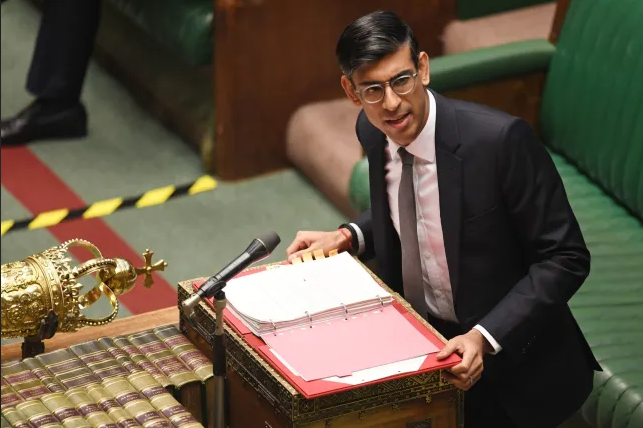
Photo / A picture of Former British Chancellor of the Exchequer Rishi Sunak (Picture source: Metro)

Disclaimer: I am not a political person. In fact, although I often time find myself studying leadership styles and qualities, I still consider myself as someone that knows near to nothing about politics.

Thus, this open letter is not politically induced in any form! The motivation behind it is because it concerns ‘Education’. And that is a value I am very passionate about.
Finally, Twitter Is Rolling Out Edit Button

0

In April, Twitter announced that it’s working on an edit button, a feature that will allow its users to edit their tweets after they have posted it. On Thursday, the microblogging app announced that it is trialing the edit feature.

The social media company said the feature will allow users to change tweets up to 30 minutes after they are published, and that tweets can be edited a few times within the 30 minutes window.

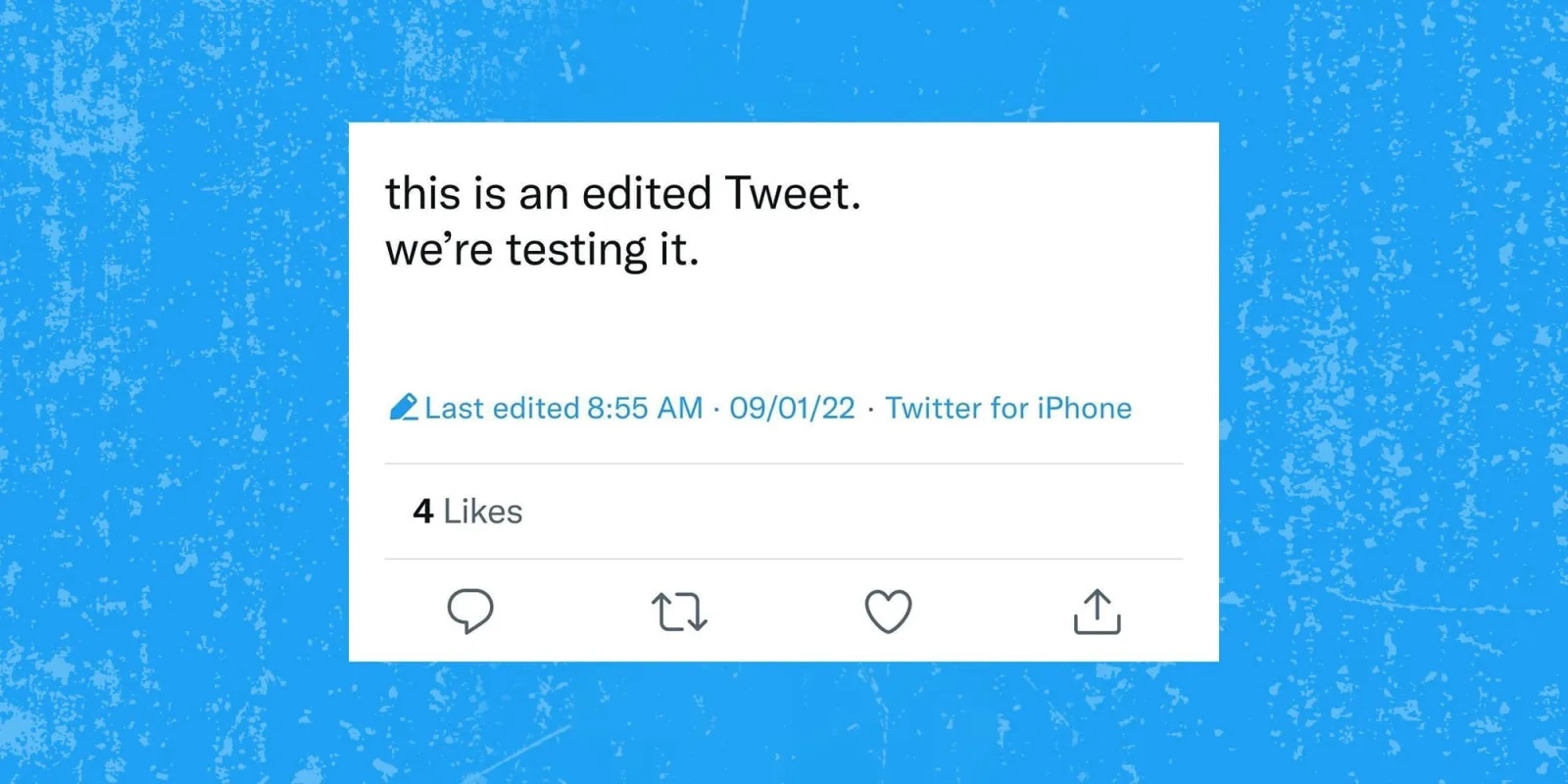
The tweets will appear with an icon, timestamp and label to make it clear that the original post has been modified. Viewers can click on the label to view edit history, which will include past versions of the tweet.

“It’s true: Edit Tweet is being tested by our team internally. The test will then be initially expanded to Twitter Blue subscribers in the coming weeks. Given that this is our most requested feature to date, we wanted to both update you on our progress and give you and a heads up that, even if you’re not in a test group, everyone will still be able to see if a Tweet has been edited.” – Twitter said.

https://twitter.com/Twitter/status/1565318587736285184?s=20&t=godXv6MT4-lJsluDNgfD7Q

The feature, which will be rolled out in the next few weeks, is now being tested among a small group of users to address any possible issues. Twitter said the feature will be limited to one country first. The company added that it will be expanded to subscribers of Twitter’s Blue Service, the $4.99 per month class, later this month.

The Twitter Blue, which is only available in the US, Canada, Australia and New Zealand, has features such as an “undo” button, which gives users a 60-second window to amend a sent tweet before it goes public.

The half an hour window period edit button, which was created as a result of growing demand by Twitter users, though longer than the one minute function of Twitter Blue, is considered not enough.

As recent as two years ago, Twitter founder and former CEO Jack Dorsey had ruled out the possibility of an edit button. So the edit function was never in plan as it was a way to make everyone own up to their errors.

Twitter said the 30 minutes window is to keep conversations on the platform upright.

“The time limit and version history play an important role here. They help protect the integrity of the conversation and create a publicly accessible record of what was said,” the company said.

Twitter users overwhelmingly voted yes earlier this year after Tesla’s CEO Elon Musk, who became the company’s highest shareholder at that time, conducted a poll asking his followers if they would want an edit button.

But Twitter said it has been silently working on the feature before Musk conducted his poll. In a blog post, the company described an edit button as the platform’s “most requested feature” from its nearly 238 million users. However, Twitter said users should view the trial feature as “a short period of time to do things like fix typos, add missed tags and more”.

“We’re hoping that, with the availability of edit tweets, tweeting will feel more approachable and less stressful. You should be able to participate in the conversation in a way that makes sense to you, and we’ll keep working on ways that make it feel effortless to do just that,” said the company.

Nigeria’s financial sector digitization will be decades-long

0

Like in the banking sector, the fintech sector is evolving into the next phase where dominant species will emerge. Yet, if you are just starting, do not lose hope because no one has unveiled a high-scaled fintech solution in Oriendu Market, Ovim, Abia State. Yes, my kins-men and -women are still paying with cash. The implication is that this digitization and transformation of the financial sector will be decades-long.

Also, it will also be categorized with kings evolving per category, not per sector. Nigerians push close to $354 billion on consumer payments to companies; in rural Nigeria, more than 90% of the rural transactions are done in cash! Flutterwave is releasing waves, but there are many flanks by the side for opportunities. #begin2build

The switching and processing license will allow Flutterwave to enable transactions between banks, Fintechs, and other financial institutions. The company will also be able to process card transactions, participate in agency banking and offer various payment services without any intermediary.

Before this license, Flutterwave operated with its Payment Solution Service Provider (PSSP) and International Money Transfer Operator (IMTO) licenses.

Commenting on this, the CEO and founder of Flutterwave, Olugbenga Agboola disclosed that Flutterwave securing its switching and processing license is big news for the company, its partners, customers, investors, and other stakeholders as Flutterwave has always sought to develop a world-class and secure payment infrastructure.

Central Bank Of Nigeria Grants Flutterwave Switching And Processing License

Central Bank Of Nigeria Grants Flutterwave Switching And Processing License

0

Nigerian and African-focused fintech company, Flutterwave has been granted a switching and processing license by the Central Bank Of Nigeria, which is regarded as CBN’s most valuable payments processing license.

Recall that the CBN last two years, in line with its commitment to promote a strong and credible payment system, approved new license categorizations for payment service providers, Banks, and other financial institutions in the country.

This license allows Flutterwave to offer transaction switching and card processing services to customers. Others include non-bank acquiring, agency banking, and payment gateway services.

The switching and processing license will allow Flutterwave to enable transactions between banks, Fintechs, and other financial institutions. The company will also be able to process card transactions, participate in agency banking and offer various payment services without any intermediary.

Before this license, Flutterwave operated with its Payment Solution Service Provider (PSSP) and International Money Transfer Operator (IMTO) licenses.

Commenting on this, the CEO and founder of Flutterwave, Olugbenga Agboola disclosed that Flutterwave securing its switching and processing license is big news for the company, its partners, customers, investors, and other stakeholders as Flutterwave has always sought to develop a world-class and secure payment infrastructure.

In his words;

”This is big news for our customers, partners, investors, and other stakeholders. It is an important milestone in our growth story. Building a thriving payments ecosystem in Nigeria, Africa’s largest economy, is in line with our goals of developing a world-class and secure payment infrastructure for global merchants and payment service providers across the continent”.

Flutterwave’s Chief Regulatory And Government Affairs Officer, Oluwabankole Falade disclosed that going through the application process in order to secure a switching and processing license for the company was a rigorous process, however, the company and the whole team are thrilled that they have finally been granted the license by Nigeria’s apex bank.

See what he said;

”We’re thrilled to have been issued this license after fulfilling all of the regulatory requirements. The application process was very rigorous and included a detailed review of our operations as a business. As a switch, we have more responsibilities and will continue to work with regulators to ensure we meet and exceed their expectations”.

Also reacting to this news, is Flutterwave’s Head of Product Marketing, Onyedikachim Nwankwo, who disclosed that the license will enable the company to offer more value to its customers.

In his words;

”The License will allow us to offer more services and explore more payment use cases for our ecosystem. With this license, we can offer more value to our customers while taking more control of our value chain to enable an improved payments experience for our enterprise medium scale and retail customers”.

Lately, this period has no doubt been an interesting time for Flutterwave, even as it deals with regulatory hurdles in its key markets. The company seem unperturbed by such a challenge, as it has continued to forge ahead by making significant giant strides in the Fintech sector.

A recent publication on Tekedia disclosed that Flutterwave is preparing for an Initial Public Offering (IPO) on the Nasdaq Stock Exchange in the United States, as it intends to use the proceeds from its listing to grow its expansion into new African opportunities. And now, the company has secured a switching and processing license from the Central Bank Of Nigeria. Indeed, Flutterwave has positioned itself for exponential growth.

At $3 billion, the company is currently the highest valued African startup. Following its recent achievements, the company will definitely witness an increase in valuation as the company is visibly hitting on all cylinders.

POS Transactions In Nigeria See 29.3% Growth, Hits N4.6 Trillion In 7 Months

1

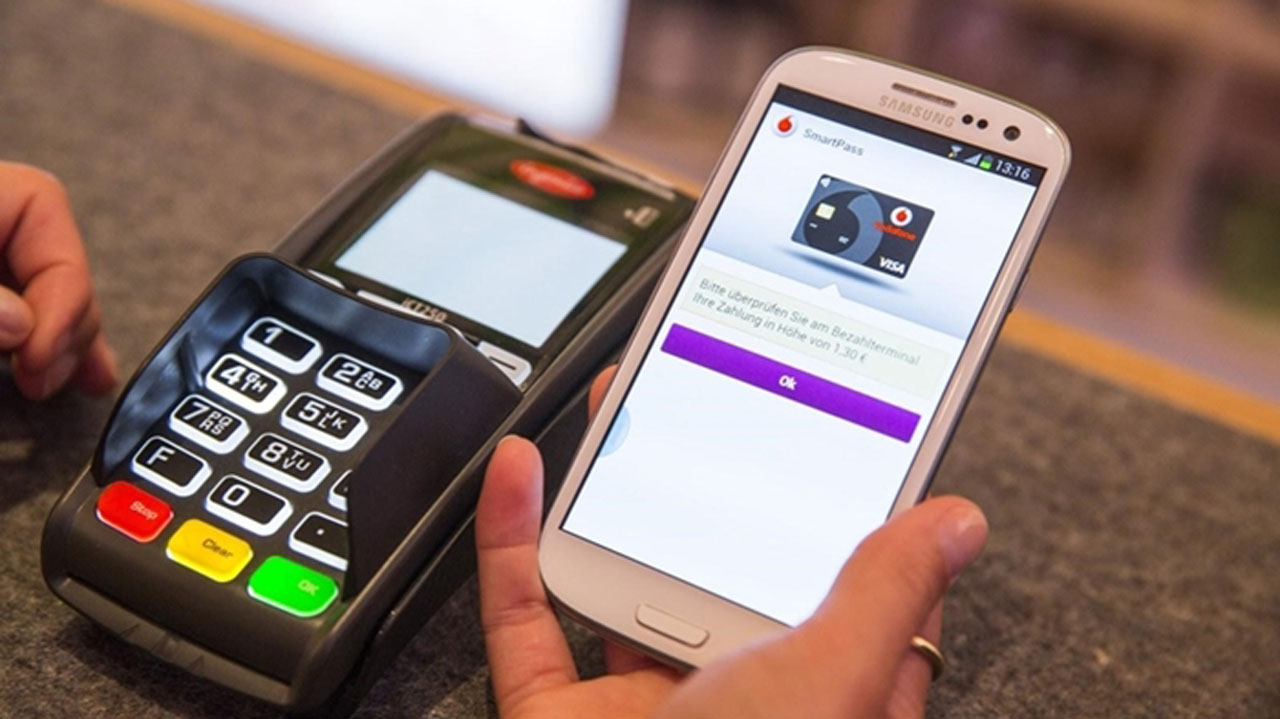
In the last five years, point of sale (POS) transactions have become the most preferred option for a lot of Nigerian Bank customers. These customers would rather prefer to visit POS outlets to carry out transactions, because it saves them time and energy that they would have spent in the bank, either to withdraw or deposit cash.

Due to the preference of POS to carry out transactions among Nigerians, it has witnessed a huge leap in transactions, as the figures have jumped to N4.6 trillion in the first seven months of 2022.

This growth recorded a 29.3% increase, compared to N3.56 trillion recorded in the corresponding period of 2021, and a staggering 90.3% increase when compared to the same period of 2020.

Also, the volume of transactions rose by 25% year-on-year from N543.7 million to N679.8 million in the same period. Notably, the volume and value of cheque transactions dropped in the same period.

A total of N1.83 trillion was recorded through cheques in the first 7 months across 2.4 million transactions, a decline compared to 2021.

Between 2017 and 2022, the number of POS terminals in Nigeria grew significantly, with around 155 thousand terminals, while as of April 2022, the figure reached roughly 1.1 million.

With all these statistics in POS transactions above-mentioned, there is no disputing the fact that the payment system has come to stay. POS dominance in the country has grown in leaps and bounds, as their outlets are littered around almost every nook and cranny in the country, catering to customers’ needs in areas of withdrawals, transfers, and cash deposits.

It is also interesting to note that the growth of the alternative payment system has spurred banks to leverage the opportunities in the digital banking space amid rising competition from fintech companies.

However, there are several factors that have contributed to the growth of POS transactions in Nigeria.

Factors That Have Contributed To The Growth Of POS Transactions in Nigeria

1.) Convenience

Using POS transactions no doubt offers customers convenience, as it saves time and energy that would have been spent in banks. These days, there is hardly any day that passes without the presence of long queues at different banking halls across the country.

This often discourages customers who would rather prefer to visit POS outlets despite their charges, than visit banks even with zero charges. It has also helped in bringing services closer to rural areas that do not have as many banks accessible to them, saving customers the stress of embarking on long distances to carry out transactions.

2.) Security

Recall that the CBN established POS systems to drive a cashless policy in Nigeria. This cashless policy has no doubt helped to curb the rate of theft, as people are now more security conscious as they no longer carry huge money around.

Most especially when it comes to huge transfer of money, customers will prefer to visit a POS outlet to transfer such amount of the money mostly through their atm cards.

3.) Job Unemployment

Nigeria is currently ravaged by a high unemployment rate, which currently stands at 33.3 percent . Due to this, a lot of citizens, especially youths are taking up the POS business, which has become a lifesaver for them where they are able to sustain themselves.

No doubt the surge in POS transactions will continue to increase as it is evident that most Nigerians are shifting away from traditional payment method like cheques which have been on a decline since the cashless policy in 2012.