DD
MM
YYYY

PAGES

DD
MM
YYYY

spot_img

PAGES

Home Blog Page 494

Tesla Stock Turns Positive for 2025 After Tumultuous Ride Fueled by Musk-Trump Rift, Rate-Cut Hopes, and Billionaire’s Own Buying Spree

0

Tesla’s shares have finally clawed their way back into positive territory for the year after a turbulent 2025 that saw dizzying losses, political controversies, and dramatic reversals.

The company’s stock rallied as much as 8% on Monday, leaving Tesla with a 5% year-to-date gain and marking the first time since January that its performance turned green. The rebound caps an extraordinary roller-coaster year for Elon Musk’s automaker, which at its lowest point in April had plunged 45% year-to-date on a closing basis.

Timeline of Tesla’s 2025 Stock Swings, Per BI

Tesla’s volatility has been fueled by a mix of Musk’s personal decisions, U.S. politics, monetary policy shifts, and market sentiment.

The latest catalyst for the surge has been Musk himself. The billionaire purchased 2.57 million Tesla shares — worth roughly $1 billion — according to an SEC filing, boosting his personal stake in the company to about 13%. Musk has openly declared he wants to raise his stake to 25%. Analysts at William Blair called the move “a strong signal of confidence in the most important part of Tesla’s future business, robotaxi,” noting that this was Musk’s first buyback of Tesla stock since 2020.

Investors have also been buoyed by expectations that the Federal Reserve is ready to resume interest rate cuts. At the Fed’s annual Jackson Hole symposium in August, Chair Jerome Powell signaled the central bank was poised to lower rates in September — a signal that risk assets, especially growth stocks like Tesla, immediately priced in. Tesla shares spiked 6% that day, outpacing the S&P 500’s 1.5% climb. Markets are now nearly certain that the Fed will trim its benchmark rate by 25 basis points this week.

The Musk-Trump Rift That Roiled Tesla

But the most destabilizing factor for Tesla this year was Musk’s dramatic falling-out with President Donald Trump, a rupture that wiped billions off Tesla’s market value in June.

Musk, who had been one of Trump’s most visible billionaire allies during the 2024 campaign — appearing at rallies, amplifying his message on social media, and publicly endorsing Republican economic policies — stunned investors when he began feuding with the president over his “Big Beautiful Bill.” The legislation led to the scrapping of the $7,500 federal EV tax credit, a move that reportedly didn’t augur well with Musk.

The fallout escalated quickly, with Trump threatening on Truth Social to cancel federal contracts tied to Musk’s companies. The dispute escalated into a bitter public spat, sending Tesla stock plunging 14% on June 5, the day the feud erupted.

The sell-off only began to ease when Musk publicly expressed regret over his combative remarks. On June 11, he softened his tone, saying he had gone “too far” in criticizing Trump. Tesla’s stock rebounded 6% through the end of that week, offering some relief to nervous investors.

Political Entanglements and Investor Anxiety

The episode underscored the broader anxiety surrounding Musk’s deepening entanglement with politics. His appointment as a “special government employee” at Trump’s Department of Government Efficiency earlier this year heightened fears that his focus was being spread too thin between government duties, Tesla, and his other ventures.

Those concerns proved justified. Tesla’s stock shed 37% from Trump’s January inauguration through the end of March, with another 9% decline in early April during a broader market downturn. The tide turned when Musk announced he would step back from his government role, allowing him to refocus on Tesla. By the end of April, the company’s shares had rebounded 9%.

Musk’s Fortune Rebounds

For Musk personally, the recovery in Tesla’s share price has restored much of the wealth he lost in the first half of the year. As of Monday’s market close, his net worth stood at $429 billion, according to the Bloomberg Billionaires Index, just shy of the $432 billion he held at the start of 2025.

Overall, Tesla’s rebound reflects both investor faith in Musk’s long-term vision — particularly the push toward robotaxis and AI-driven mobility — and the broader optimism tied to easier financial conditions if the Fed follows through on rate cuts.

Yet, the year has made clear how exposed Tesla remains to Musk’s political entanglements and how closely its stock price tracks not just its earnings or technology roadmap but also his relationships with powerful figures in Washington.

However, Musk’s billion-dollar show of confidence, paired with a likely friendlier interest-rate environment, has put Tesla back in the green, at least for now. But the shadow of his turbulent relationship with Trump lingers, suggesting that Tesla’s ride through 2025 may not yet be over.


Zoom CEO Sees AI-Powered Three-Day Workweek Ahead, but Warns Jobs Will Vanish

0
Zoom

Zoom CEO Eric Yuan has joined the chorus of tech leaders predicting that artificial intelligence will reshape the way people work—so much so that he envisions a future where employees only clock in three or four days a week.

But in the same breath, he admitted that not all workers will share in this utopia. Many may find themselves out of a job altogether, according to Fortune.

“I feel like if A.I. can make all of our lives better, why do we need to work for five days a week?” Yuan told The New York Times in a recent interview. “Every company will support three days, four days a week. I think this ultimately frees up everyone’s time.”

His forecast echoes Microsoft cofounder Bill Gates, Nvidia CEO Jensen Huang, and JPMorgan Chase’s Jamie Dimon—power players who all believe that AI will ultimately compress the workweek. Yet, as Yuan cautioned, it will also erase some jobs in the process, particularly entry-level engineering roles that AI systems are already capable of performing.

The Split Among Tech Leaders

The future of work under AI remains deeply divisive.

Anthropic CEO Dario Amodei has warned of a looming white-collar jobs “armageddon,” arguing that automation will hollow out professional ranks. By contrast, Google DeepMind’s Demis Hassabis has been more optimistic, predicting a “golden era” of abundance where AI augments human capability rather than replacing it.

Yuan, however, threads the middle ground. He admits that job losses are inevitable but argues that history shows new roles will emerge.

“Whenever there’s a technology paradigm shift, some job opportunities are gone, but it will create some new opportunities,” he said.

Ford CEO Jim Farley and Klarna chief Sebastian Siemiatkowski share this more pragmatic view, acknowledging the disruption while highlighting potential new work managing AI systems themselves. Huang, for his part, even contends that AI could expand employment rather than shrink it. “Not only did productivity go up, employment also went up” in past industrial revolutions, he told CNN.

The Case for a Shorter Workweek

Yuan’s vision may sound radical in the U.S., where hustle culture dominates, but it mirrors experiments already underway in Europe. Countries like the U.K. and Iceland have trialed four-day workweeks with major success, reporting lower burnout and higher productivity.

American companies are testing the waters too. When performance coaching firm Exos cut one workday from its schedule, employee burnout halved while productivity jumped 24%. The results have strengthened calls that AI-powered efficiency gains could be redirected toward work-life balance rather than endless output.

Gates, in a February appearance on The Tonight Show with Jimmy Fallon, echoed the sentiment. “What will jobs be like? Should we just work like 2 or 3 days a week? If you zoom out, the purpose of life is not just to do jobs,” he said.

Dimon has suggested that future generations will reap both health and lifestyle dividends. “Your children are going to live to 100 and not have cancer because of technology,” he told Bloomberg TV in 2023. “And literally they’ll probably be working 3 and a half days a week.”

Even Huang, who foresees compressed schedules, predicts busier workloads overall. “We’re just at the beginning of the AI revolution,” he told interviewers. “If industries continue to adopt at the current rapid rate, it could probably bring about a four-day workweek—but we’re going to be busier in the future than now.”

Potential Implications

Looking ahead, if AI adoption continues at its current breakneck pace, its potential implications diverge, with analysts pointing to a few possible outcomes.

Productivity Gains Lead to Shorter Workweeks

Companies could redirect automation-driven efficiency into work-life balance, with three or four-day workweeks becoming a corporate norm. The model tested in Europe and by companies like Exos could gain traction in the U.S., transforming work culture.

Productivity Gains Fuel Higher Output, Not Leisure

Executives like Huang warn that businesses may instead use AI to demand more from fewer employees. In this world, a four-day work week could mean cramming five days of output into four, exacerbating stress rather than relieving it.

Job Polarization and Market Upheaval

As AI takes over tasks from coding to administrative work, entry-level and routine jobs may disappear fastest. This could widen inequality, with displaced workers struggling to reskill while high-skilled professionals leverage AI tools to multiply productivity.

The Optimistic “Golden Era”

If AI unlocks new industries the way electricity and the internet once did, employment could expand. Jobs managing digital agents, overseeing AI systems, and building AI-enhanced services may offset the losses, fueling an era of economic abundance.

The Balancing Act

However, what’s clear is that the rise of AI assistants and chatbots has already begun reshaping expectations. Whether this shift results in shorter workweeks, mass job losses, or both will depend not just on the technology itself, but on the policies, corporate strategies, and cultural choices that follow.

Yuan noted that the trade-off is unavoidable: “For some jobs, like entry-level engineers, we can use A.I. to write code. However, you still need to manage that code. You also create a lot of digital agents, and you need someone to manage those agents.”

The question now is whether society leans into the “golden era” of abundance or braces for a white-collar shakeout. Either way, the five-day workweek is expected by many not to survive the AI revolution.

Top Crypto Coins in 2025: BlockDAG, Dogecoin, PEPE, & BONK Leading In 2025

0

In 2025, the best crypto investments are no longer limited by technical knowledge or expensive hardware. The top crypto coins in 2025 are being driven by one powerful idea: accessibility. These projects are removing the roadblocks that once kept everyday users on the sidelines.

Whether it’s mining from a smartphone or buying a coin before it hits exchanges, the most promising tokens are the ones anyone can participate in. Here’s a breakdown of the top crypto coins in 2025, starting with the one that has turned simplicity into a movement.

1. BlockDAG (BDAG): Mining Without Barriers

BlockDAG leads the list of top crypto coins in 2025 for one reason: anyone with a phone can mine it. The X1 App eliminates the traditional complexity of mining. There’s no need to purchase a rig, no software to configure, and no technical hurdles. Instead, users simply open the app and tap once a day. That one tap adds 20 BDAG to their account. With over 3 million people now doing this daily, BlockDAG has shown that simplicity drives real adoption.

This focus on ease of access is the foundation of BlockDAG’s explosive growth. The project has already raised nearly $407 million in presale funding, selling over 26.2 billion coins. While the current batch price is $0.03, users still have the chance to grab BDAG at a limited-time entry price of $0.0013 until October 1st. This move replaces the confusing bonus tiers of earlier stages. The ROI since Batch 1 now stands at a massive 2,900%, and that number could grow further once the coin is listed publicly.

BlockDAG’s success isn’t just about the app. Its hardware line – X10, X30, X100 miners- is being shipped worldwide, with thousands of users already confirming delivery. This real-world traction, combined with the simplicity of the X1 App, makes BlockDAG the most accessible and active project of 2025.

2. Dogecoin (DOGE): Familiar Face with Fresh Momentum

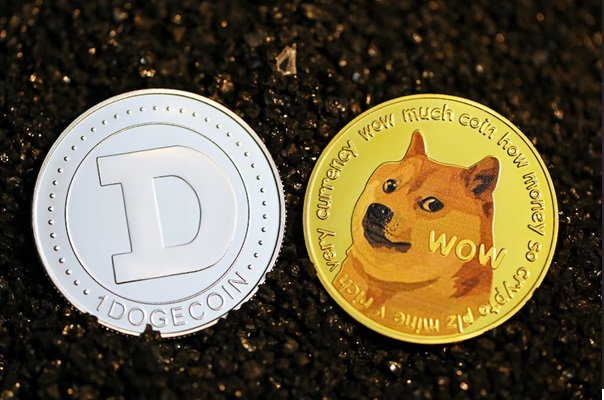
Dogecoin continues to hold a spot among the top crypto coins in 2025 thanks to its community-driven energy and unexpected support from influential backers. After hovering between $0.06 and $0.08 for much of early 2025, Dogecoin saw a modest rally in September following Elon Musk’s subtle re-engagement with DOGE-based payments through his social platforms.

There has also been renewed discussion about integrating Dogecoin into Tesla’s payment system, although no formal announcement has been made. This kind of speculative buzz is what has always kept Dogecoin relevant. It doesn’t rely on advanced technology or elaborate roadmaps. Instead, it thrives on familiarity, humour, and the occasional surprise endorsement. While it may not be the most advanced project, its brand power and name recognition keep it near the top.

3. Pepe (PEPE): Still Meme, But With Market Weight

Pepe, originally written off as another meme coin, has managed to secure a real seat at the table in 2025. After reaching a peak earlier in the year, PEPE has stabilised and built a stronger base. In September, it traded between $0.0000008 and $0.0000012, depending on exchange liquidity and meme coin cycles.

What sets Pepe apart is its ability to generate consistent buzz while also introducing minor utility within its community ecosystem. While not a utility token in the traditional sense, Pepe’s creators have hinted at upcoming NFTs and gamified applications to keep users engaged. This keeps it from being just another pump-and-dump. It may still be a meme at its core, but in 2025, even jokes can move markets.

4. BONK: Solana’s Community Coin Gets Serious

BONK gained serious traction as Solana’s flagship meme coin in late 2023, and it hasn’t faded since. By September 2025, BONK will be integrated into more Solana-based DeFi platforms, including tipping, microtransactions, and NFTs. Priced at roughly $0.000024, BONK saw a 17% uptick in early September following a viral campaign among Solana users.

What’s working in BONK’s favour is its combination of meme energy and real technical backing. Solana’s low fees and fast transaction times make BONK a practical token for experiments in small payments and gamification. That blend of function and fun keeps BONK relevant as one of the top crypto coins in 2025 for users looking beyond Ethereum-heavy options.

Closing Thoughts

The top crypto coins in 2025 are no longer defined by just market cap or complex use cases. The winners are the projects that make it easy for anyone to join. BlockDAG tops this list by turning crypto mining into something as easy as checking your phone. Dogecoin remains strong thanks to its loyal following, while PEPE and BONK prove that memes, when paired with market activity, can turn into lasting digital assets.

The common thread? Accessibility. Whether it’s through one-tap mining, meme coin engagement, or low-cost transactions, the future of crypto isn’t locked behind complexity. It’s open to anyone ready to tap in.

Why Everyone Says Spartans Is the Best Crypto Casino and What You Might Miss If You Don’t Try It

0

The online casino world is full of promises about quick payouts, big bonuses, and endless games. But with so many platforms claiming the same, it becomes hard to see who truly delivers. Spartans has built its place as a trusted betting site, blending fast crypto payments with the reach of a licensed sportsbook. To find out if Spartans deserves the title of best crypto casino, we signed up and explored everything it offers.

One of the main checks for serious players is legitimacy, and Spartans clears it right away. It operates under an Anjouan license, with all disputes handled under Anjouan law. The signup process includes KYC checks, which adds more trust and secures Spartans’ name as a safe platform backed by sports fans.

Once logged in, the site feels smooth and quick. The casino and sportsbook share one wallet, removing friction when moving between slots, crash games, or live NBA betting. The platform works well on all devices, showing that Spartans fits the modern demand for responsive gaming.

Inside the Casino: 5,963 Games and More

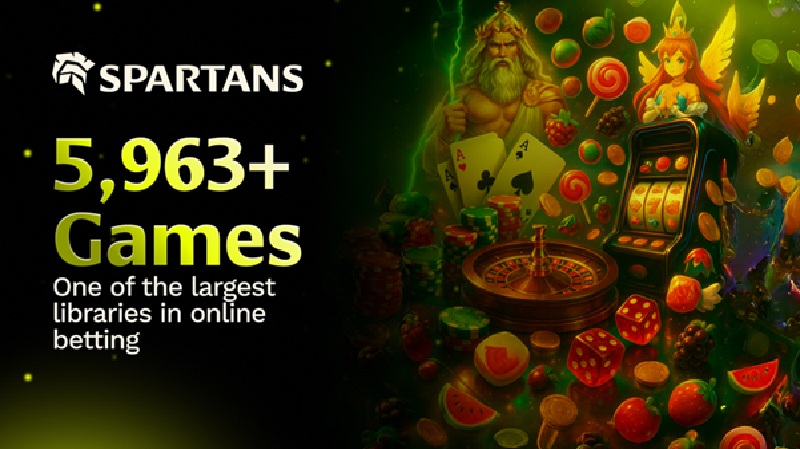
Spartans Games goes beyond offering a few games. It has a full catalog of more than 5,963 titles from 43 providers. The range covers high-volatility slots, live dealer roulette, blackjack, baccarat, poker, crash titles, and live game-show style options. Each game connects directly with Spartans’ instant payout setup, so winnings land right into the balance.

Unlike many older sites, Spartans adds more than just welcome bonuses. Along with its 300% casino welcome bonus, players get a 25% daily reload on deposits. This proves the site is a trusted platform that values constant rewards. The outcome is more playtime, more freedom, and steady value every day.

Sportsbook Options with Stronger Delivery

Spartans provides the familiar sportsbook choices found at global operators: football, cricket, NBA, UFC, tennis, and even real-money volleyball. What sets it apart is how these are delivered. Spartans includes detailed props, competitive odds, early future markets, and the framework of a licensed sportsbook that ensures fair play.

The betting process is smooth. The betslip adjusts instantly, live odds update in real time, and building parlays is simple. Together with the 300% sports welcome bonus and 25% daily reload, Spartans offers more than just basic tools for serious fans of sports betting.

The key promise Spartans highlights is speed, and it delivers on it. Both deposits and withdrawals are processed instantly across crypto payments such as BTC, ETH, USDT, AVAX, and more, along with safe FIAT methods in LATAM regions like Colombia, Peru, and Chile.

Competitors often take hours or even days to handle payouts, but Spartans shows its liquidity instantly. Added to this are 24/7 customer service and strict responsible gambling practices, proving that performance and trust are built into the platform.

CASHRAKE™ and Its Impact

The feature that separates Spartans from others is CASHRAKE™, the first of its kind in the market. With rakeback on every wager and cashback on each loss, players receive guaranteed returns regardless of the outcome. These credits appear instantly, setting a new standard of fairness in the industry.

This shift changes the nature of betting. Each action holds built-in value, boosting retention and making Spartans one of the most reliable platforms today. While other sites rely on promos, none have changed the basic economics of gambling in this way.

Positioning as a Global Contender

Spartans is not just another site following trends. It is a licensed sportsbook, a regulated betting platform, and a trusted casino site that combines wide betting options, instant payments, and disruptive features. With thousands of games, structured bonuses, crypto payouts, and CASHRAKE™, Spartans presents a strong case as the best crypto casino.

Large operators still hold greater scale, but Spartans has shown it can compete with speed, fairness, and trust. For players, the point is clear: every spin, every bet, and every match comes with value, showing that Spartans is already shaping the future of online betting.


Find Out More About Spartans:


Website: https://Spartans/

Instagram: https://www.instagram.com/spartans/

Twitter/X: https://x.com/SpartansBet

YouTube: https://www.youtube.com/@SpartansBet

CBO Chief Says Trump’s Tariffs Fuel Inflation, but Long-Term Deficit Gains Projected

0

Congressional Budget Office (CBO) Director Phillip Swagel said Monday that President Donald Trump’s tariffs have likely pushed inflation higher than CBO analysts had initially expected, adding a new layer of complexity to the debate over their economic impact.

Speaking on CNBC’s Squawk Box, Swagel explained that while Wall Street analysts have been bracing for tariff-driven price hikes for months without seeing them clearly reflected in consumer markets, CBO data suggests otherwise.

“Our analysis shows the economy has weakened since January, and normally that should be exerting downward pressure on inflation,” Swagel said. “Instead, we’re seeing upward pressure from tariffs.”

Despite near-term inflationary pressures, Swagel highlighted the CBO’s long-term assessment, which points to a surprising fiscal benefit. According to him, the tariffs are expected to reduce the U.S. budget deficit by $4 trillion over the next decade by generating new revenue for federal accounts.

“So $3.3 trillion of revenue and then $700 billion of averted debt costs,” he said. “That would be a big reversal in terms of the deficit.”

Still, the future of Trump’s tariffs remains uncertain. The Supreme Court is scheduled to hear oral arguments in early November, after the Trump administration appealed lower court rulings that found the president had exceeded his authority in imposing the levies.

Swagel described the outcome of that case as “one of the key uncertainties in the economy.” However, he pointed to the CBO’s latest September report, which suggests that the cloud of uncertainty will fade over time.

“The effects of policy uncertainty dissipate over time and disappear by the end of 2027, returning investment to what it would have been without the uncertainty in trade policy,” the report stated.

The debate over Trump’s tariffs evokes memories of earlier U.S. trade battles, but the current round differs sharply from his first wave of duties between 2018 and 2020. Then, Trump’s administration launched a tariff offensive aimed primarily at China, imposing levies on more than $360 billion worth of Chinese imports. Beijing responded with retaliatory tariffs on U.S. agricultural exports, forcing Washington into a costly subsidy program to bail out American farmers. At the same time, the EU hit back against U.S. steel and aluminum tariffs by slapping duties on iconic American products such as bourbon, motorcycles, and Levi’s jeans.

That earlier round of tariffs centered on specific trade grievances—such as China’s alleged intellectual property theft, state subsidies to strategic industries, and what Trump described as “unfair” auto tariffs from Europe. The disputes culminated in a “phase one” U.S.-China trade deal in 2020, but many duties remained in place, continuing to distort supply chains even as global markets sought relief from escalating tensions.

By contrast, the current tariffs extend well beyond targeted trade fights. They function as a broad revenue-generating mechanism designed not only to pressure foreign competitors but also to pour money into U.S. government coffers. That is the context in which the CBO’s $4 trillion deficit reduction projection stands out: unlike the earlier wave of tariffs, which raised questions about consumer costs and farmer bailouts, today’s tariff structure is being justified partly as a fiscal stabilizer in an era of mounting federal debt.

The legal backdrop is also different. In 2018–2020, most challenges came from affected industries and trade partners through the World Trade Organization, resulting in drawn-out arbitration. Now, the fight is moving into the U.S. judicial system itself, with the Supreme Court poised to rule on whether Trump overstepped his authority—a decision that could redefine presidential control over trade policy for decades to come.

Together, these contrasts highlight why today’s tariffs are viewed both as an inflationary headwind and a fiscal lifeline, a duality that separates them from Trump’s first wave of duties that were primarily about geopolitical leverage and industrial retaliation.