DD
MM
YYYY

PAGES

DD
MM
YYYY

spot_img

PAGES

Home Blog Page 4944

Roboape, Loopring, and Pancekeswap – Three Tokens Breaking Boundaries in the Crypto Space

0

The crypto space is still in its infancy. As a result, it is still an excellent moment for anyone considering joining the market. There is no question that Bitcoin and Ethereum are extremely popular nowadays, and everyone familiar with the crypto business has undoubtedly heard of them since they have made many billionaires.

Despite this, web3 and blockchain technologies are attempting to reimagine the possibilities for consumers and businesses all around the world. Connecting the links between digital and fiat cash, on the other hand, remains a major hurdle for anybody aiming to build a commercial world in web3. Nonetheless, there is still hope since cryptocurrencies such as RoboApe (RBA), Loopring (LRC), and PancakeSwap (CAKE) have come to the rescue.

RoboApe (RBA)

RoboApe is built on the Ethereum (ETH) blockchain, and it aims to overcome the economic constraints that have delayed cryptocurrency growth and use. RoboApe aspires for long-term growth rather than depending on excitement as many meme tokens did at the height of the crypto craze sometime in 2021. Moreso, it provides RoboApe Swap, which will serve as a bridge between several segregated blockchain networks allowing people to simply and cheaply exchange and swap tokens via this network.

RoboApe (RBA) is the token that will serve as a medium of exchange on the RoboApe network. RoboApe (RBA) will also function as the governing token, allowing validators to vote on proposed modifications or network enhancements. While the overall number of RoboApe (RBA) tokens will decrease over time, the total supply will remain at 900 million. Members will be able to mint and exchange NFTs using the RoboApe (RBA) token.

Loopring (LRC)

Loopring is an Ethereum-based blockchain software provider that attempts to reward a worldwide network of users, allowing them to operate a platform that permits the establishment of new forms of crypto asset transactions.

Loopring was established by Daniel Wang, a Chinese software developer who formerly worked at Google and JD.com.

The Loopring (LRC) is the governing cryptocurrency for Loopring and is necessary for key operations on the protocol. For example, anybody wishing to establish a decentralized exchange on Loopring must first secure at least 250,000 LRC. Eventually, 10% of the fees are burnt. This suggests that the overall supply of Loopring (LRC) will reduce over time, placing downward pressure on the price. The total quantity of Loopring (LRC) tokens is limited to 1.375 billion tokens.

Pancakeswap (CAKE)

PancakeSwap is a Binance Smart Chain token. On September 1, 2020, the Binance Smart Chain (BSC) debuted in the market. Pancakeswap appears to be the most frequented decentralized exchange on the BNB chain and it depends on its native token, PancakeSwap (CAKE), to provide a stable environment for the complicated DeFi tools and capabilities. PancakeSwap (CAKE) is a BEP-20 token on the BNB Smart Chain, and it serves as the foundation for the majority of the platform’s staking and liquidity pools.

The native PancakeSwap (CAKE) token incorporates a complicated minting and burning system, allowing it to function as both an incentive token and the platform’s primary currency. Aside from its primary role, PancakeSwap (CAKE) allows customers to benefit from a variety of use cases, including platform governance.

RoboApe (RBA) is a well-known initiative that is changing the game in the crypto arena. With innovations like RoboApe, the industry has high aspirations for the future.

https://ape.roboapetoken.io/login

Carlossy Caterpillar: A Meme Platform Utilising Proof-Of-Stake Networks Like Avalanche To Provide Rewarding Opportunities In The Coin Market

0

Memes are quite popular among young social media users. Thanks to social media platforms, meme content can spread across the internet in seconds. Like online memes, meme coins also enjoy a strong following in the coin market.

Meme coins, such as Dogecoin and Shiba Inu, have recently taken over the crypto market. Carlossy Caterpillar follows the path of its predecessors by launching a fully decentralised token of its own.

The history of Carlossy Caterpillar can be traced to the trendy disputes on the internet between Mark & Spencer and a German company known as Aldi. The conflict began due to the piracy of Mark & Spencer’s product, the Caterpillar Cake, made by the German company. Internet users took this dispute up by creating different memes about it, leading to more popularity for the caterpillar cake.

Taking advantage of the virality of this dispute, Carlossy Caterpillar is luring more people into adopting its cryptocurrency. This broad adoption of Carlossy Caterpillar will increase the value of the Carlossy Caterpillar token.

Also, people interested in the caterpillar cake created by Mark and Spencer will find the Carlossy Caterpillar project more interesting. Carlossy Caterpillar is more than a meme coin but a project focusing on all its users’ social interests.

Carlossy Caterpillar (CARL)

Carlossy Caterpillar’s utility token is called CARL. The CARL token is built on the Binance Smart Chain. This network supports the Carlossy Caterpillar token’s protocol for fast, cheap, and secure transactions. CARL has use cases like other cryptos, which include; trading, staking, and purchasing on the Carlossy Caterpillar ecosystem.

During the launch, a unit of the Carlossy Caterpillar token (CARL) will sell for $0.06. Also, there is a total supply of 1 billion CARL tokens distributed for different purposes like marketing, investment, and partnership.

Anyone who purchases Carlossy Caterpillar (CARL) with Binance Coin (BNB) during its presale will receive a 20% bonus for using BNB. There is also a referral bonus of $50 for you and your referral on every $100 spent by your referrals.

Avalanche (AVAX)

Avalanche was built in 2020 by Ava labs as a smart contract-capable blockchain network. Avalanche’s mission was to offer a highly scalable blockchain without jeopardising security. The Avalanche network was known for its high speed and inexpensive transactions. Mining on Avalanche consensus protocol is environmentally friendly.

The architecture of Avalanche is composed of three dedicated blockchains. Each blockchain is vested with special tasks crucial to the Avalanche ecosystem. This brilliant innovation contributes to the agility of Avalanche in achieving decentralisation, scalability, and security.

The three blockchains include:

  1. Exchange Blockchain: This chain oversees creating, selling, and trading all Avalanche assets at cheaper gas fees.
  2. Contract Blockchain: This chain allows project developers to create decentralised application DApps on Avalanche’s network. Also, the C-chain runs a smart contract compatible with Ethereum Virtual Machine EVM.
  3. Platform Blockchain: This chain allows users to build level 1 or level 2 blockchains, which are called subnets on the Avalanche ecosystem. This chain is also responsible for keeping records of validators on Avalanche’s network.

Another intriguing feature of Avalanche is its compatibility with the Ethereum network. This compliance allows Avalanche to serve as a bridge for easily swapping any ERC-20 tokens. This bridging will expose Avalanche to billions worth of token liquidity.

The native token of Avalanche is AVAX which serves as a medium of exchange on the platform. Holders can stake their AVAX to earn more AVAX in rewards. AVAX accumulated from the payment of the gas fee is permanently burned to maintain the value of the token.

Final Thoughts

Carlossy Caterpillar exploits a general trend on the internet to gain more adoption of its token and provide its users with excellent income opportunities. Join now to benefit from this opportunity.

https://carl.carlossy.io/register

Nigeria Enters Partnerships with Japan, Israel to Develop Electric Vehicles by 2023

0

On Thursday, the National Agency for Science and Engineering Infrastructure (NASENI) entered into partnership with the Israeli, Japanese and Nigerian companies to develop electric vehicles.

The partnership came as part of the memorandum of Understanding (MoU) the Federal Government of Nigeria signed with Israeli and Japanese companies to commence assembling and manufacturing of environmentally friendly vehicles by 2023.

The event, which took place in Abuja, marks the boldest step the Nigerian government has taken to create a path for the building of smart and green energy-based automobiles.

Isreali Ambassador to Nigeria, Michael Freeman, said that the partnership, which combines Israeli, Japanese and Nigerian technologies, would help address the many challenges affecting the transport and environmental sectors in Nigeria. He added that the partnership would provide cheap and safe transport system to Nigeria and eventually, the rest of Africa.

“It is a project that is a partnership with Israeli, Japanese and Nigerian companies taking place in Nigeria. What is special about this project is that it is a timely project that combines Israeli technologies, Japanese technologies, Nigerian entrepreneurship and innovation together to create a project that is going to work fabulously.

“We are talking about bringing electronic Motorcycles into Nigeria which will be a programme that is green, environmentally friendly.

“It offers people a cheap way and safe way of transport and even has a technology to ensure that the motorcycles are only used for legal and appropriate purposes.

“When we look at what the problems are in the world and in also in Africa and in Nigeria, we are talking about issues of fuel scarcity, we are talking about green technology, we are talking about the need to provide cleaner, cheaper, easier transport.

“And here we are, having Israeli and Japanese companies coming together with Nigerian partners to provide cleaner, greener, newer, exciting technology that is expected to move people, population across the country.

“I believe that a programme that is going to start in Nigeria will be successful and will go across Africa,” Freeman said.

The partnership was unveiled at the same time Nigeria’s Energy Transition Plan, which has been lauded as investors’ choice, was launched. Michael Bloomberg, the billionaire founder of Bloomberg, said the Plan sends the right signals to investors and hopefully, it will inspire more countries to join the fight against climate change ahead of COP 2027.

The Nigeria Energy Transition Plan is designed to help the country to achieve net-zero emissions by 2060. Part of its objectives is to achieve carbon neutrality, end poverty through economic growth, and bring modern energy services to the entire population. The Plan also seeks to mobilize new partners by showcasing existing support for data-driven energy transition planning from international partners, including Sustainable Energy for All, The World Bank, The Rockefeller Foundation, and the Global Energy Alliance for People and Planet.

While both the MoU between Nigeria, Israel and Japan and the Nigeria Energy Transition Plan have been lauded as key steps in achieving the net-zero goal, concern remains over the dilapidated state of the needed infrastructure in the country. For instance, Nigeria is still grappling with epileptic electricity supply. Stable electricity supply is a prerequisite for successful transition to environmentally friendly automobiles.

The partnership is billed to go into effect by 2023, which is not farfetched, while Nigeria is not yet close to achieving the 40,000 megawatts needed to enable uninterrupted power supply in the country. With its current 5,000MW of electricity supply, Nigeria’s hope of achieving net-zero emission goal by 2060 is very much in doubt.

The London Meetings for Nigerian Politicians

0

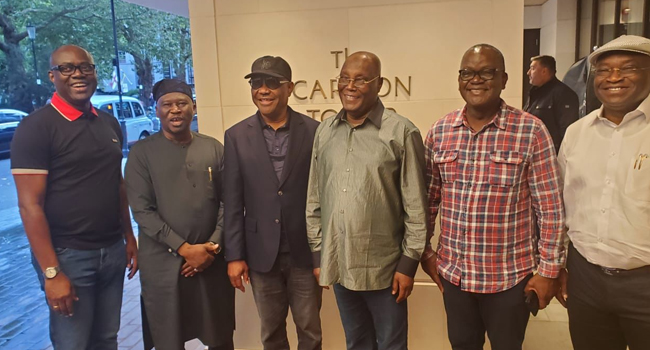
Good People, why are ALL Nigerian politicians meeting these days outside Nigeria? From APC to PDP to LP to all, every weekend, all the important rumours now emanate from London. In other words, these men coordinate in Abuja to travel to London and have meetings. Fellow citizens, these meetings diminish Nigeria. Yes, they could be discussing extremely important national issues in hotel rooms bugged by spy networks.

Statistically, Nigeria has 3 key men with one to become a president next year, and three of them were meeting in London hotels this week. Do not bet that London has not created a database for them, chronicling their playbooks ahead of 2023.

Nigeria does not value “information” and ”knowledge” in an age where both drive competitiveness of nations.

Comment on Feed:

Comment 1: They swept the room for bugs before saying the opening prayer….lol.
But seriously, do we take espionage seriously? Wasn’t there some talk about data from the gifted AU building been transmitted to some location in Asia? It didn’t seem to bother anyone, so why should politicians care about “walls that hear”?

Comment 2: The trend is really worrisome.

I’m just wondering when politicians from the UK, US or other countries will come to Nigeria for their private meetings.

More annoying for me is the fact that in 2022, discussions about Africa development are still consistently being held outside the continent. We certainly need collaborations and strategic partnerships but not handouts. We have to look inward for homegrown solutions to our problems.

Comment 3: I would say they are not technologically conscious neither are their team members or advisors tech savvy enough to know the risks involved in holding important meetings in unsecured locations. If anyone successfully eavesdrop on that meeting, he is a rich man because he can sell that information to opposition.

The toughest enemy to fight is the one that has information on you. The know your strengths and weaknesses, the know your offence strategies and will put up a good defence because they know your playbook. Talk about having the questions before the exams.
Comment 4: Many thanks for sharing Prof. Ndubuisi Ekekwe! That’s the unfortunate situation we find ourselves as a nation today. Even Niger or say Chad can never think of coming to Abuja for their key national interest meeting. What we have in Nigeria are no leaders but bunch of title holders occupying various positions of influence. Like I always said, these guys are carrying us to where we no know! They never mean well for this nation. Stomach infrastructures everywhere…

How To Obtain a Super Agent Banking License in Nigeria

0

The introduction of the Central Bank of Nigeria Guidelines For The Regulation of Agent Banking & Agent Banking Relationships in Nigeria was designed as a very effective method of position disruption in Nigeria’s Banking & Finance sector aimed at :-

– the provision of minimum standards and operation requirements for agency banking operations as a simplistic but effective tool of extending the reach of banking services in Nigeria;

– the enhancement of Financial inclusion in Nigeria;

– the proper provision of agency banking as a cost-effective banking platform.

Agency Banking as a concept has successfully led to very high levels of financial inclusion & financial literacy as well as an overwhelming level of convenient banking services leveraging on the nature of communal living in Nigeria and Financial technology, giving rise to another type of value stakeholder in the Finance Industry – the Super-Agent, a rather new Fintech offering that will be the focus of this article which will be looking at:-

– The definition of Agency Banking as a concept & the categories of Banking agents in Nigeria.

– The Regulatory Framework governing Agency Banking in Nigeria.

– The licensing requirements for Super Agents in Nigeria.

– The permissible and non-permissible activities for Super-Agents in Nigeria.

– A basic idea of the operational guidelines for Super Agents in Nigeria.

What is Agent Banking?

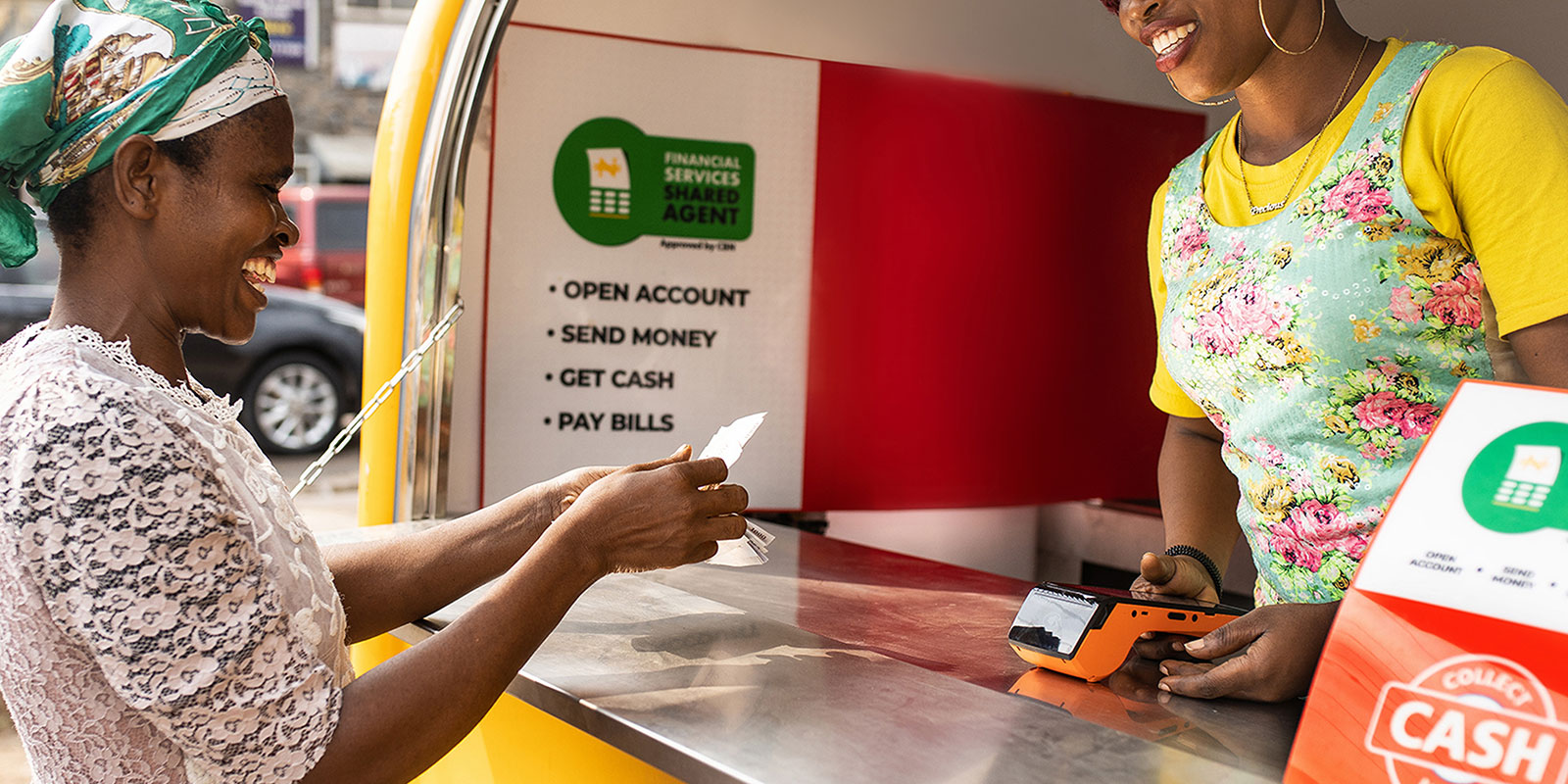
Agency Banking involves the provision mainly via Financial Technology of banking services to customers on behalf of a licensed deposit taking Financial Institution or Mobile Money Operator(known as “The Principal”) by a 3rd party known as “The Agent”.

What is the Regulatory Framework governing Agency Banking in Nigeria?

Agent Banking is regulated mainly by the Central Bank of Nigeria (CBN) through Banks and Other Financial Institutions Act (BOFIA) and The Guidelines For The Regulation of Agent Banking & Agent Banking Relationships in Nigeria (or ‘The Guidelines’).

What are the categories of Banking Agents allowed under the Guidelines?

The categories of Banking agents allowed under the Guidelines are :-

  1. The Super Agent :- This is an agent contracted by an MMO or Financial Institution (Principal) who may subcontract other agents in a network over a wide geographical area and retaining overall responsibility for the operation of the agency relationship.
  1. The SubAgent :- A person to whom some or all aspects of the agent banking service delivery have been delegated by a Super-Agent.
  1. The Sole Agent :- An agent who does not delegate agency operation powers to other agents but assumes agency by himself.

Who is in charge of licensing Super Agents?

Super Agent licensing falls under the jurisdiction of the Central Bank of Nigeria through the Regulatory Framework for licensing Super Agents in Nigeria even though it is set in motion by an Agency agreement with either a Financial Institution or Mobile Money Operator.

What are the requirements for  Super Agent licensing in Nigeria?

The requirements for a Super Agent license in Nigeria are :-

– Being a registered company with a minimum shareholders fund of 50 Million Naira unimpaired by losses.

– Sending an application as a registered company through your lawyer for a Super Agent license to the Central Bank of Nigeria through the Director, Banking & Payments System Department.

– Evidence that the company has been a company with an existing business operational for at least 12 months before the application.

– A Certificate of Incorporation of the applicant company along with its Memorandum & Articles of Association.

– A documented referral from a Financial Institution/Mobile Money Operator.

– Proof of having at least 50 agents.

– A copy of the company’s board resolution approving its Super Agent application.

– The company’s profile and functional contact emails, telephone numbers, office and postal addresses.

– A documented shareholding structure of the company.

– A Feasibility report.

– An organogram of the company.

– The IT policy of the company. 

– An Enterprise Risk Management Framework.

– A Contingency & Disaster Recovery Plan.

– A documented outline or the company’s shared agent network including current and potential engagements, geographical spread and benefits to be derived.

– Qualifying criteria for engaging agents.

– Draft SLAs (Service Level Agreements) with sub-agents and Financial Institution/Mobile Money Operator Agent Banking contract.

– An Anti-Money Laundering/Combating the Financing of Terrorism/Know-Your-Customer (AML/CFT/KYC) Compliance Policy.

– Fraud detection plan.

– Risk Management policy.

– Consumer Protection Policy & Policy.

Can a Super-Agent have agency contracts with more than 1 Financial Institution or Mobile Money Operator?

Yes, the Guidelines prohibit exclusivity of agent banking relationships, putting Super Agents at the liberty to have agency Agreements with several Financial Institutions and Mobile Money Operators.

What are some of the post-operating Compliance requirements/ permissible and non-permissible activities for Super Agents?

Permissible Activities

– Super Agents can accept Monetary deposits and withdrawals from customers.

– Utility Bills payment services.

– Salary payment services.

– Local money value transfer services.

– Balance Enquiry services.

– Mini-statement generation & issuance services.

– Collection and submission of account opening & other related documentations.

– Agent Mobile payments / Banking services.

– Cash disbursement & Cash repayment of loans

– Collection of Bank mail/Correspondence for customers.

– Any other activity as the Central Bank of Nigeria may from time to time prescribe.

Non-Permissible Activities

– Charging the customer any fee.

– Giving any guarantees.

– Carrying out transactions where a receipt or acknowledgement cannot be generated.

– Offering Banking services of its own accord.

– Carrying out a transaction when there’s communication failure with the Financial Institution ( The Principal).

– Continuing with the agency business when it has a proven criminal record involving fraud, dishonesty, integrity or any Financial impropriety.

– Rendering Banking services not specifically mentioned in its Agency Banking contract.

– Undertaking cheque deposits & encashment of cheques.

– Providing cash advances.

– Being run or managed by a Financial Institution’s employee or associate.

– Transacting in Foreign currency.

– Subcontracting another agent to operate on its behalf without being a licensed Super Agent.

Conclusion :- While the above write-up is definitely not exhaustive, it can be seen regardless that Agency Banking is a potentially very lucrative Fintech offering that can be leveraged on to provide positively disruptive Financial Inclusion services despite its rather strict Regulatory Framework. It is thus advised that anyone seeking to go into Agency Banking should further consult with his Solicitor going forward.