DD
MM
YYYY

PAGES

DD
MM
YYYY

spot_img

PAGES

Home Blog Page 4945

Fintech Startup Palmpay Launches New Payment Security Campaign

0
FILE PHOTO: (L-R) Solomon Islands Prime Minister Manasseh Sogavare, Solomon Islands Foreign Minister Jeremiah Manele, Chinese Premier Li Keqiang and Chinese State Councillor and Foreign Minister Wang Yi attend a signing ceremony at the Great Hall of the People in Beijing, China October 9, 2019. REUTERS/Thomas Peter/File Photo

There is no disputing the fact that the exponential growth of digital financial platforms (Fintechs), renders them susceptible to security network breaches due to the vital data they possess, which also makes them a potential target for cybercriminals.

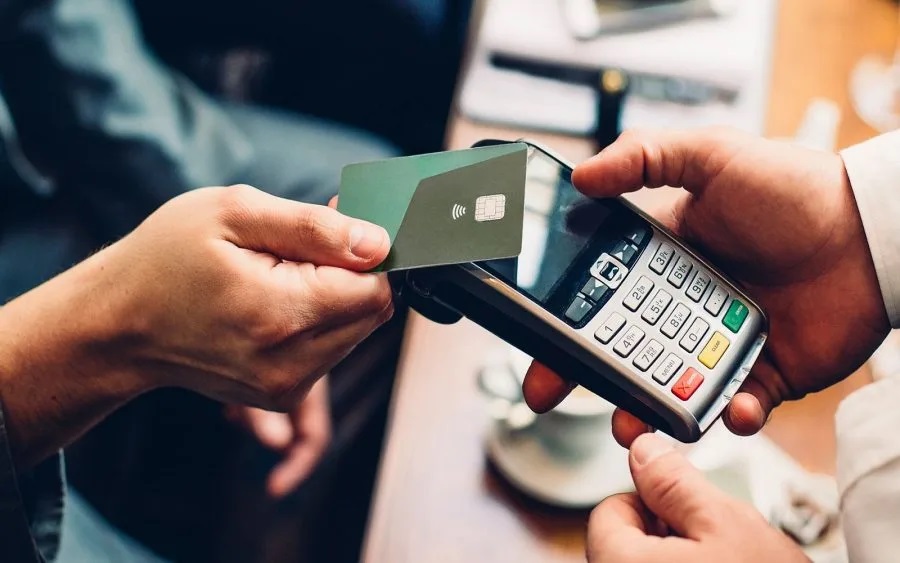
In a bid to accelerate payment and cybersecurity awareness among customers, Nigerian Fintech startup, Palmpay which promotes financial inclusion and enhances consumer experiences, has launched a new payment campaign.

This campaign will help to raise payment security awareness in a desperate attempt to help customers improve their overall security knowledge, and learn about how to spot and avoid e-scammers. The campaign comes as internet penetration and digital payment in Africa have significantly increased in recent years.

A number of potential issues, including fake news, leakage of personal information, and financial scams have emerged as a result of this rapid expansion in connectivity.

With the launch of its wallet-safe workshop, Palmpay will use both online and offline channels, including the app, social media, official websites, and printed materials to publicize and expose examples of social media and telecom fraud, as well as how to spot fraudulent behavior.

The company will also improve anti-fraud warning education for vulnerable groups such as students and senior citizens, and as well promote legal provisions related to the proper use of mobile wallet accounts to effectively raise people’s awareness of combating and managing telecom fraud and cybersecurity.

The managing director of Palmpay, Chika Nwosu disclosed that the fintech startup is also looking forward to collaborating with law enforcement agencies to prevent fraud on its platform and as well ensure payment security.

In his words;

“The expanding use of digital payments brings new risk and security concerns. Palmpay is committed to delivering users with a secure and trustworthy digital payment experience. We will continue to optimize our risk control procedures, and look forward to collaborating with law enforcement and cybersecurity partners to prevent fraud and secure payment security”.

Chika Nwosu also disclosed that the right fraud monitoring and know your customer (KYC) approaches are key to the current rise in fraud attempts. With robust anti-fraud and KYC systems, PalmPay protects its users from fraud and unauthorized use with various protective measures, including real-time risk control and abnormal behavior detection, which automatically monitors, flags, and freezes high-risk transactions and accounts.

If a person suspects that they or someone else has been a victim of fraudulent activities, they can contact PalmPay customer service via in-app chat, email, social media, or call center. PalmPay will investigate and freeze accounts to avoid additional loss due to fraudulent activities and to maximize the chances of tracing and retrieving funds.

According to a Nigeria Inter-Bank Settlement System report, the total number of fraud attempts in Nigeria has grown by 186% from 2019 to 2020. Mobile fraud attempts jumped 330% year over year, while web and POS fraud attempts rose 173% and 215% respectively.

The digital world is no doubt ruled by fintech applications and software, from online banking to mobile wallets, which makes it easy for people to send and receive funds, as well as save money.

However, despite the positive impact of Fintech today, the chances of security breaches and data theft have also increased which often result in the loss of sensitive personal and financial information. It has therefore become a top priority for financial institutions to guarantee the security of users’ transactions.
China Opens the Vault for Africa

0

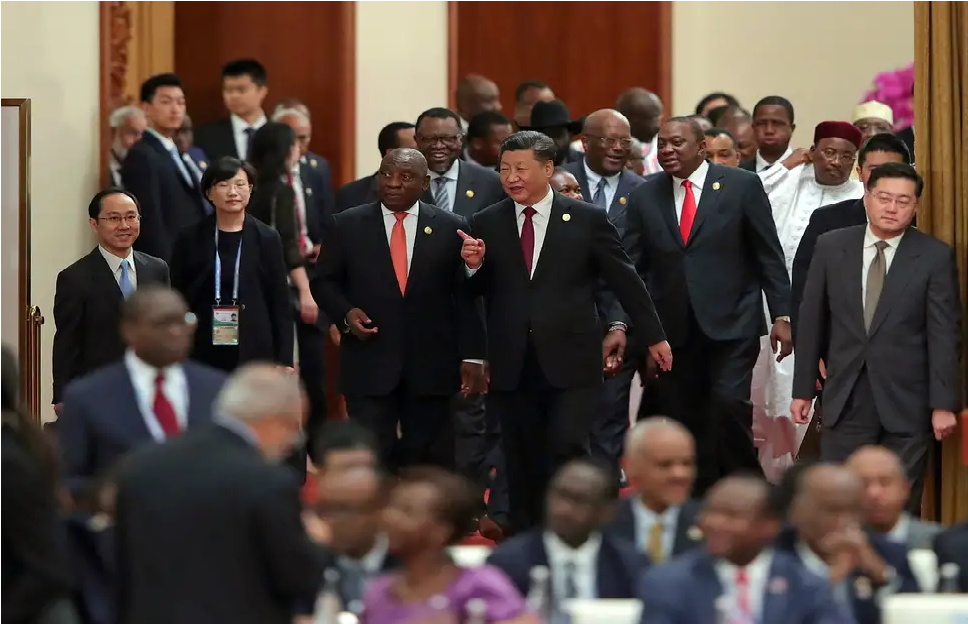
“China will waive the 23 interest-free loans for 17 African countries that had matured by the end of 2021. We will also continue to increase imports from Africa, support the greater development of Africa’s agricultural and manufacturing sectors, and expand cooperation in emerging industries such as the digital economy, and health, green and low-carbon sectors….

“So far this year, China has signed an exchange of letters with 12 African countries on zero tariffs for 98% of their export items to China. We have provided emergency food assistance to Djibouti, Ethiopia, Somalia, and Eritrea. More African agricultural produce has reached the Chinese market through the green lanes”,  Wang Yi for Chinese government. (read more here)

Now, over to US, Russia, EU, etc. Can we get some waivers? Hahaha. Africa surprised the EU/USA by staying largely neutral on the Russia-Ukraine conflict – and that call has made it clear that economic diplomacy works. China wants to take it to another level because you never know when you need some votes in the United Nations. We’re entering a multi-polar world at scale.

Comment on Feedback

Comment 1: Well played China. The only way China can counter western initiatives on the continent is using economic incentives like this. The west is doing alot that are very subtle as well but not on the grand level like China. All the VC pouring into Africa, where do you think the money is coming from? The battle is real for Africa. The west has used education and security and slacked off on the economy and China has dominated that space since. Now to the real issue, this will counter the effort of Africa Continental Free Trade Agreement and slow down the implementation.

For AfCTA to achieve its goals every African state has to believe in it and work its salvation out with fear and trembling for that $3.4T GDP to be achieved. If I am in China’s shoes, I will probably do the same, the new US Sub Sahara Africa Strategy is bold and it needs African nation to work for its dependence through investments. China play is to secure its interest on the continent for resources shipping out of the continent to serve its people. Until China allows Africans to gain the same prominence in China, like Chinese have done in Africa, then there might be a different view of China… The geopolitical game is not for the weak or faith hearted.

Comment 2; Sir, this to me appears as a very big Trojan horse, this offer from China, while on the surface appears to be altruistic comes from a carefully crafted cost-benefit analysis. China must have asked and confirmed that they have far more to gain in directing much needed raw materials to its factories that drag for loan repayment.

Comment 3: It is saddening —or should I say unbelievable —to a country like Angola as one of the most indebted countries, not to talk of Nigeria, to China despite being regarded as one of the world’s fastest-growing economies, and projected to be a developed economy in the nearest future.

What (has) happened along the line? Is it the same problem(curse) of the petrodollar economy heavily bedeviling Nigeria?

Or the menace of maniac corruption by public officials with the help of private businesses?

Comment 4: Yes sir.

This era will equally require the abandonment or total overhaul of the purported Non-Alignment foreign policy.
I don’t think those African countries can continue to sit idly after carousing the Chinese gift without recompense.
Nevertheless, my utmost concern is whether china with their current own goal style (case of Alibaba and co) will favour a global order of stakeholder-capitalism capable of transmitting desired prosperity which includes human rights protections.
We wait to see!

My Response 4: “Nevertheless, my utmost concern is whether china with their current own goal style ” – China does not see that as an own-goal. They believe that you cannot allow some people to aggregate all the wealth to themselves. Provided that wealth is not aggregated, it remains spread/available to everyone. Would you prefer one Alibaba to support 500 million savers or 10,000 microfinance to do the same? Would you prefer 10 apps to teach 20 million kids or 10,000 schools to do so? They have different ways they see capitalism and wealth.

China To Waive Matured 23 Interest-Free Loans For 17 African Nations

China To Waive Matured 23 Interest-Free Loans For 17 African Nations

8

Over the years, China has established itself as Africa’s largest bilateral lender whereby the country helps to bankroll key infrastructure projects on the continent as well as giving out loans.

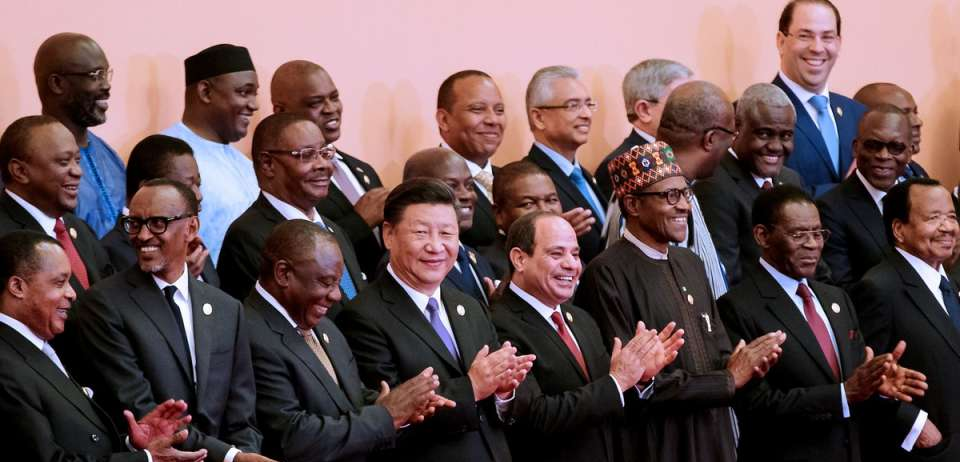
Just recently, the Chinese government has planned to waive 23 matured interest-free loans for 17 African countries, as well as provide food assistance to struggling nations in the region.

China has also promised to redirect $10 billion of its International Monetary Fund reserves to these nations on the continent. This statement was made by the state councilor Wang Yi at the coordinator’s meeting on the implementation of the follow-up actions of the Eighth Ministerial Conference of the forum on China-Africa cooperation. (FOCAC).

Here is what the minister said;

“China will waive the 23 interest-free loans for 17 African countries that had matured by the end of 2021. We will also continue to increase imports from Africa, support the greater development of Africa’s agricultural and manufacturing sectors, and expand cooperation in emerging industries such as the digital economy, and health, green and low-carbon sectors.

What Africa wishes for is a favorable and amicable cooperation environment, not the zero-sum cold war mentality. So far this year, China has signed an exchange of letters with 12 African countries on zero tariffs for 98% of their export items to China. We have provided emergency food assistance to Djibouti, Ethiopia, Somalia, and Eritrea. More African agricultural produce has reached the Chinese market through the green lanes”.

Although the 17 African countries were not disclosed by the minister, however, checks show that South Africa, Angola, The Democratic Republic of Congo, Uganda, Kenya, and Djibouti are among African countries with high debt exposures to China.

As of 2020, the African nations with the highest external debt to China as a percentage of gross national income are Djibouti (43%), Angola (41%), and The Democratic Republic of Congo (29%). Kenya, South Africa, and Uganda have been disclosed as the numerous African states that have borrowed heavily from China.

It is interesting to note that since the year 2000, Beijing has announced multiple rounds of debt forgiveness of interest-free loans to African countries, canceling at least $3.4 billion of debt through 2019. The canceled debt was limited to mature, interest-free foreign aid loans, with Zambia receiving the most cancellations over the period.

Beijing’s lending practices to poorer nations, most especially countries in the African region, account for almost 40% of the bilateral and private credit or debt that the world’s poorest countries need to service this year.

With its continuous lending, Chinese banks now make up about one-fifth of all lending to Africa, concentrated in a few strategic and resource-rich African countries. However, China’s lending to African nations have over the years come under severe criticism, as experts and analysts describe such lending as debt traps.

They disclosed that China is deliberately investing in African countries to gain control over key assets, which they described as debt-trap diplomacy. This implies that Chinese loans are collateralized by strategically important assets, from mineral resources to port projects, as the debts are used to deliberately leverage or extract strategic advantages from poor indebted countries including asset seizures when they are unable to meet debt obligations.

In March 2022, Bloomberg reported that despite claims that China was making countries in Africa uncomfortable with its large infrastructure projects and lendings, a deeper look into the evidence showed that the accusations towards China on doing debt-trap diplomacy in the continent, was “unfounded”.

Building AI Startups – Case Study of Edekee | Tekedia Mini-MBA

0

oin us at Tekedia Mini-MBA Live as we host one of the finest AI startups in Africa. Its US patent pending technology has opened a new basis on how we shop on videos. This is a fusion of computational vision, AI/ML and quantitative psychology. Yes, we will host the amazing Edekee. CEO Paul Onaodowan will lead the session at 7pm WAT.

If you are watching a video and you like Davido’s sneakers, you can pause that video, and buy that item right there – and then continue your video. Ecommerce website built on a video channel.  Ecommerce built on a smart TV. … And this AI is cooked in Lagos even as we guide the innovators to find global patents.

Tekedia Institute >> learn from the best. The next Tekedia Mini-MBA begins Sept 12. Join us here 


Trump Files Lawsuit Seeking to Stop DOJ from Unsealing Files Recovered in the FBI Mar-a-Lago Raid

0
Trump

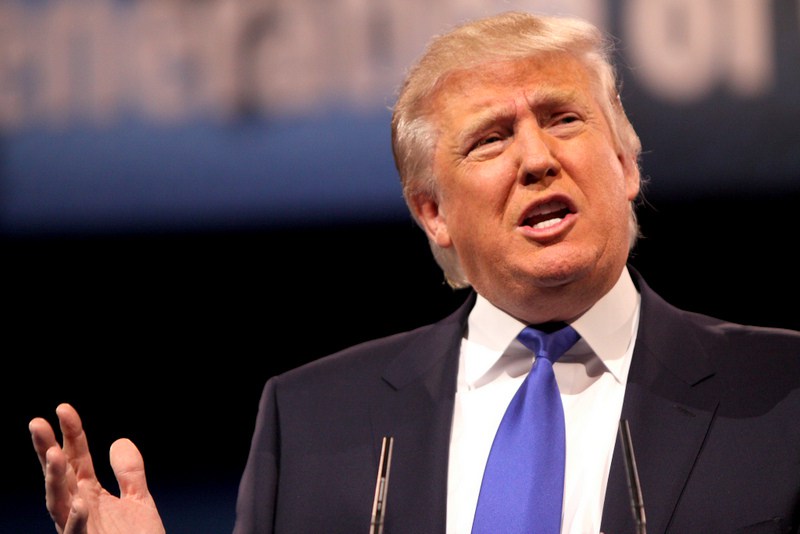
In an unprecedented move, former US President Donald Trump has filed a lawsuit seeking to stop the justice department from unsealing files seized from his Mar-a-Lago home earlier this month.

The FBI, while executing a search warrant, had carried off eleven sets of files believed to contain classified information belonging to the National Archive.

In the lawsuit, Trump’s legal team asked that an independent lawyer be appointed to oversee documents.

According to court papers filed on Monday in a federal court in West Palm Beach, Florida, Trump’s lawyers are asking that a third-party attorney – known as a special master – be appointed to determine whether the files are shielded under presidential privileges.

“It is unreasonable to allow the prosecutorial team to review them without meaningful safeguards,” the 27-page document argues.

“Short of returning the seized items… only a neutral review by a special master can protect the ‘great public interest’ in preserving ‘the confidentiality of conversations that take place in the president’s performance of his official duties.'”

Special masters are usually appointed in criminal cases where there are concerns that some evidence may be protected under attorney-client privilege or other protections that could make it inadmissible in court.

Trump, facing series of investigations tied to his private businesses and his activities while in the Oval office, has described the FBI search as part of the political “witch hunt” that started during his time as president. Trump asked investigators to note how many items that were taken from his home and return any items outside the scope of the search warrant.

“Politics cannot be allowed to impact the administration of justice,” the filing says. “Law enforcement is a shield that protects Americans. It cannot be used as a weapon for political purposes,” it added.

In response to Trump’s lawsuit, Anthony Coley, spokesperson to the Department of Justice said prosecutors would respond in court.

The “search warrant at Mar-a-Lago was authorized by a federal court upon the required finding of probable cause”, he said.

Trump’s request was assigned in West Palm Beach to US District Judge Aileen M. Cannon, whom he appointed to the bench in 2020.

Trump is being investigated for taking classified documents belonging to the National Archive home. Times reported on Monday that more than 300 classified files in 26 boxes, including those labeled “top secret”, have been recovered from the former president since January, according to sources familiar with them. They said the initial batch of archives retrieved by the National Archives from the former president was 150, which triggered suspicion and consequently, the investigation.

However, Trump has continued to play victim. In his court filing, the 45th president of the United States repeated his claim that the FBI raid was a politically motivated effort to block his potential presidential ambitions in 2024, and the election prospects of other Republican candidates for November’s midterm congressional races.

The “shockingly aggressive move” on Mar-a-Lago by about two dozen FBI agents took place “with no understanding of the distress that it would cause most Americans”, said Trump’s lawyers.

The filing added that the justice department “simply wanted the camel’s nose under the tent so they could rummage for either politically helpful documents or support efforts to thwart president Trump from running again”.

Trump lawyers are arguing, according to court documents, that the search violated the Fourth Amendment to the US Constitution, which protects Americans against unreasonable search and seizure.

Under the Presidential Records Act, all official material remains government property and has to be provided to the archives at the end of a president’s term.

In June, after the visit of the Justice Department to Mar-a-Lago, Trump aides turned in dozens of other sets of classified documents. Now the DOJ is concerned that they could be more.