DD
MM
YYYY

PAGES

DD
MM
YYYY

spot_img

PAGES

Home Blog Page 4946

H2 2022- ICT Sector Contributes 18.44% To Nigeria’s GDP

0

The ICT sector has no doubt contributed immensely to the sustainability of the Nigerian economy. The sector contributed 17.92 percent in the last quarter of 2020, and also in the first quarter of 2021, and has so far continued on an impressive trajectory.

Recently, the sector contributed 18.44% to Nigeria’s real Gross Domestic Product (GDP) in the second quarter of 2022, surpassing the contribution of the previous year. The sector is composed of four activities, which are; Telecommunications and Information Services, Publishing; Motion and Picture, Sound Recording and Music Production; and Broadcasting.

The sector’s growth has been reported to be largely driven by activities in the telecommunications sub-sector which contributed 9.49% to the nation’s GDP. Its contribution to nominal GDP for the second quarter of 2021 stopped at 12.12% which was lower than the rate of 12.22% recorded in the same quarter of 2021, but higher than the 10.55% it contributed in the preceding quarter.

In nominal terms, in the second quarter of 2022, the sector growth was recorded at 14.11% year-on-year, 14.18% points increase from the rate of -0.07% recorded in the same quarter of 2021, and 6.43% points lower than the rate recorded in the preceding quarter.

The quarter-on-quarter growth rate recorded in the second quarter of 2022 was 14.13%. The ICT sector in the period under review, recorded a growth rate of 6.55% in real terms, year-on-year. From the rate recorded in the corresponding period of 2021, there was an increase of 0.99% points.

Nigeria’s Minister of communications and Digital Economy, Prof. Isa Pantami, while speaking at the 2022 International Telecommunication Union’s World Telecommunications Development Conference (ITU-WTDC) in Kigali, Rwanda earlier this year, disclosed that Nigeria’s ICT industry has recorded incredible growth, leading to socio-economic development not just in the country but also across Africa.

In his words;

Nigeria has utilized ICT as a driver of socio-economic development not just for herself, but also for the benefit of the sub-region and continent, given its role as a founding member and strategic sponsor of the West Africa Telecommunications Regulators Assembly (WATRA).

“As a country, we have grown from the second generation (2G) to 3G, 4G and now the 5G is about to come on board after conducting a globally-acclaimed transparent auction and awards of two 5G licenses. Also, the country has implemented vigorous financial inclusion initiatives riding on robust digital infrastructure.

“Many achievements of Nigeria in the area of ICT development have been possible through the successful launch and implementation of policies that foster use of ICTs across all sectors to enhance a digital economy.”

The impressive contributions of information and communication technology (ICT) to Nigeria’s GDP, is gradually transforming the country from a traditional economy, into one of Africa’s leading digital economies.

Due to exponential growth of the sector, it has made Nigeria one of Africa’s largest ICT markets in terms of its share of telecom subscribers and internet users. The ICT sector has no doubt continued to remain a critical driver of non-oil growth and a significant contributor to Nigeria’s GDP.

The sector has also been an enabler for digitalization and the development of other key sectors such as Agriculture, Education, Manufacturing, and Healthcare.

The federal government continued played an active role in prioritizing the expansion of the ICT sector in the country through dedicated policies, infrastructure development, and investment promotion, which effectively helped to boost the sector’s contribution to Nigeria’s GDP from less than 1% in 2001 to 18.4% in 2022.

As the digital stage is upon us, given the role the ICT is playing by facilitating businesses, transforming the Educational sector, and the likes, the sector will no doubt continue to remain a priority in the years ahead.
MTN Kicks Off 5G Rollout Amidst the Challenge of Unaffordable Devices

1

On Friday, MTN Nigeria Communications Plc unveiled an open 5G pilot, announcing its plan to roll out 5G services in seven Nigerian cities – Lagos, Abuja, Port Harcourt, Ibadan, Kano, Owerri, and Maiduguri soon.

The Nigerian Communication Commission (NCC), had in December 2021, announced MTN and Mafab as the two successful winners of the 3.5 gigahertz (GHz) spectrum auction for the deployment of Fifth Generation technology. The telecom regulator thus set August 24, 2022 as timeline for the licensees to begin the rollout.

However, only MTN has commenced its rollout. This is because Mafab experienced delay in its issuance of Unified Access Service Licence and Numbering plan by the NCC. The telco was granted a five-month extension to roll out 5G services.

MTN said the redeployed 5-Generation infrastructure will be tested in anticipation of its launch by allowing customers with 5G-enabled devices to connect and try out the service where there is coverage.

The Chief Marketing Officer, MTN Nigeria, Adia Sowho, said during the pilot test that “Every major technological evolution redefines what is possible – changing the way we live and the way we connect.

“MTN Nigeria has been at the forefront of every leap in telecommunications: from GSM to 2G, 3G, and 4G. 5G has the potential to change everything. It will allow us to connect, create, collaborate, and compete in ways we’ve not even begun to imagine.”

She added on Friday, during a chat on Arise TV’s Global Business Report, that 5G technology has come with a lot of benefits that Nigerians can’t afford to miss out on.

“By the end of this year, we will cover 80-90 per cent of the population from MTN NIGERIA. These things take time but a lot is required in educating the users to understand why technology is being deployed, how it is useful and what benefits it offers.

“At the end of 2021, there were only 85 countries in the world that had launched 5G. For Nigeria to be at the forefront of the launch of such a revolutionary technology is amazing and could not have been done without the government’s support,” she said.

However, the affordability of 5G devices may hinder the service adoption in Nigeria, even though there has been significant increase in the number of 5G devices available globally since 2020.

According to ‘Ericsson Mobility Report, more than 615 million units of 5G devices were shipped in 2021, more than double the number shipped in 2020. The report added that over 650 5G smartphone models have now been launched,  accounting for 50% of all 5G devices by form factor.

However, their costs have come very high for most Nigerians earning below $50 dollars monthly.

In an interview with Punch last month, Vice President, Global Telecommunications Industry, IBM, Craig Wilson, pointed at the affordability of 5G devices as the biggest threat to successful rollout of 5G services in Africa.

He said that although some device manufacturers have committed to bringing costs down to around $150, the cost of a 5G device currently runs around $350, making them unaffordable for many.

“Still, many industry analysts believe that 5G devices need to be at about $50 to support mass adoption across Africa. The high cost of 5G phones is a major impediment, and it impacts the launch the fifth generation network on a commercial scale when there are not enough mobile devices capable of receiving it.

“We can see the effects on 5G rollout when we compare Africa to other continents. Globally, the rollout of 5G has been in process since 2019. Yet deployment across Africa has been much slower, with only 6 African countries having launched the network,” he said.

The Challenge for Nigeria’s eNaira

1

The Central Bank of Nigeria (CBN) continues to innovate on the eNaira, Nigeria’s digital currency. The new evolution is the addition of USSD capabilities: “The newly unveiled USSD code according to the CBN will avail Nigerians opportunities to endless possibilities through financial services. The eNaira has been reported to have recorded 840,000 downloads since its launch in 2021, and has recorded N4 billion transactions across the 270,000 active wallets comprising 252,000 consumer wallets and 17,000 merchant wallets.

”Those numbers are really poor when you look at the resources they have put in this project. A GTV of N4 billion is sub-optimal. The biggest problem for eNaira is that Nigerians are more concerned on how to make Naira in any form and not whether it is paper Naira, mobile money Naira, eNaira or the type in a fintech wallet. Provided it is Naira, they are fine.

While there is a marginal saving of say N26 per N50,000  when you use eNaira, that is not the real headache for most people! I challenge the apex bank to think deeper on how using eNaira will help people make more Nairas as businesses or citizens.

Until that is figured out, this product will underperform. The lack of value acceleration or compounding is the challenge for eNaira.

Central Bank of Nigeria Unveils USSD Code For eNaira

Comment on LinkedIn Feed

Comment 1: You’re right Prof Ndubuisi Ekekwe .

Will eNaira improves Naira exchange rate? If not, it won’t fly. Think we should focus on the fundamentals that’ll improve our economy.

Make a productive economy of our nation, reduce foreign consumption in any form or guise, eat what we produce and produce what we eat!

Start up firms that’ll will become foreign exchange earners and encourage individuals and companies with same intent. These for me are the fundamentals to turn our nation around.

And it is a No Brainer Prof Ndubuisi Ekekwe , you have said same things in different ways many times and over. Thanks again.

Comment 2; Very insightful. Thinking down the value chain is one thing few businesses or government in this case understands. We want to help our customer, so that we won’t have to advertise to them. I am with you on this Prof Ndubuisi Ekekwe

Central Bank of Nigeria Unveils USSD Code For eNaira

1

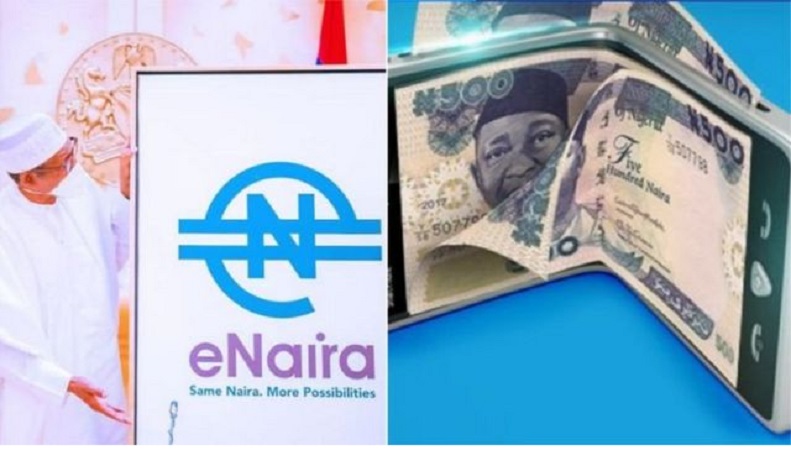
Ten  months after the launch of the eNaira by the CBN, the apex bank has proceeded to unveil the USSD code for the country’s digital currency. The new USSD code which is *997#, was introduced by the CBN to deepen financial inclusion, and also to ensure that all transactions can be accessed through the channel.

The newly unveiled USSD code according to the CBN will avail Nigerians, opportunities to endless possibilities through financial services. The eNaira has been reported to have recorded 840,000 downloads since its launch in 2021, and has recorded N4 billion transactions across the 270,000 active wallets comprising 252,000 consumer wallets and 17,000 merchant wallets.

The CBN is betting on the 81 million Nigerian adults who use mobile phones, and 150 million mobile subscribers, for the successful adoption of the eNaira. The unveiling of the eNaira USSD Code took place in Kano State on Thursday, where the CBN governor of operations, Folashade Adenisi Shenubi represented the Central Bank Governor, Mr. Godwin Emefiele where he said the eNaira is expected to enhance inclusion, support poverty reduction, and enable direct welfare disbursement to citizens.

In his words;

“It captures the slogan ‘same naira, more possibilities, and designed to positively impact lives of Nigerians, and transform the economy.”

“The eNaira is expected to enhance inclusion, support poverty reduction, enable direct welfare disbursement to citizens, support a resilient payments ecosystem, improve availability and usability of central bank money,”

”Since its inauguration, the eNaira had reached 840,000 downloads, with about 270,000 active wallets comprising more than 252,000 consumer wallets and 17,000 merchant wallets. In addition, the volume and value of transactions have been remarkable above 200,000 and N4 billion naira respectively.

“The eNaira will make a significant positive difference to Nigeria and Nigerians. It was also developed to provide Nigerians with a cheap, safe, and trusted means of payment. It is unlike the offline payment channels like agent network, USSD, Wearables, Cards, and near field communication technology”.

The CBN via its Twitter handle disclosed that the eNaira is expected to improve availability and usability of money, facilitate diaspora remittances, reduce the cost of processing cash and improve the efficiency of cross-border payments.

The decision by the CBN to unveil the eNaira’s USSD code indicates that Nigerians without internet-enabled phones, can also make use of the eNaira for transactions. It has been reported that 35.9% of Nigerians do not have access to formal financial services, and about 45% do not own bank accounts.

This USSD code will no doubt deepen financial inclusion by giving a large percentage of Nigerians access to unlimited opportunities, through financial services. This decision by the CBN is no doubt based on an understanding of the financial inclusion in Nigeria, and the unique features of the Nigerian economy.

I earlier published an article on Tekedia, where I wrote on the need for Fintechs in Nigeria to develop offline transaction features, such as the introduction of USSD code, which I used Safaricom’s M-Pesa as a case study. It is however interesting that the CBN has adopted a similar initiative through the launch of the eNaira’s USSD code.

This feature will no doubt deepen financial inclusion, as Nigerians who do not own smartphones, can still be able to make transactions using the eNaira code. Through this, it is obvious that the CBN aims to financially include a lot of Nigerians who are unbanked, which is a major yardstick for economic development thereby creating capital accumulation.

STEPN, Avalanche, and Big Eyes: Survive the Crypto Winter With These Three Crypto Tokens

0

When the Luna stable coin project crashed, it led to a series of liquidations which resulted in the crypto winter. Due to over leveraging and undercollateralized crypto loans, many protocols and investors were affected in liquidations. As the crypto winter continues to sweep over the market, investors are implementing strategies to preserve their capital and rebalance their portfolios to prevent any further damage. The crypto winter provides a unique opportunity for investors to purchase decent crypto projects that are currently trading below their worth. Therefore, investors can purchase tokens that will rebound at dirt cheap prices and benefit from the upside when the prices rise. A word of caution is necessary as market prices are currently volatile.

Three crypto tokens you should observe this crypto winter are STEPN (GMT), Avalanche (AVAX), and Big Eyes (BIG EYES). These projects tick all the boxes investors want, including solid fundamentals, trading below their value, use cases, and a strong user community. All these factors come together to offer investors great incentives to purchase their tokens. Here is more information on these three projects.

STEPN (GMT)

STEPN (GMT) is a fitness tech that uses crypto and the blockchain to incentivize users to exercise. The project calls itself a Web3 lifestyle app. STEPN incorporates GameFi elements to reward its users for various physical activities. In addition, it uses Play-to-earn (which it has renamed “move to earn”) to reward its users. Users purchase various NFT sneakers using GST on the platform. Once these sneakers are activated, they earn rewards for various physical activities, including walking, running, or jogging.

GMT is the platform’s governance token, allowing users to propose and vote on proposals by other members. The project uses GPS technology powered by the blockchain to ensure that its users do not cheat or game the system. Finally, the STEPN project uses GST as its native token, and users can use GST to perform transactions on the platform. In addition, users earn GST  depending on the type of sneakers they purchase.

Avalanche (AVAX)

Avalanche (AVAX) is a low-fee, environmentally friendly, and fast blockchain designed to deploy smart contracts. The project is the fastest smart contracts blockchain and the best platform for deploying smart contracts and dApps. Its speed helps developers to create better projects that outperform the competition. Furthermore, the Avalanche mainnet launched in September of 2020 and currently has more than 450 crypto projects on its blockchain.

AVAX is the utility token of the Avalanche network, and it performs various functions within the ecosystem. Some of the uses of the AVAX token include staking, securing the network, paying fees, and connecting multiple subnets within the blockchain. The Avalanche token supply is hard-capped, and the supply is strictly controlled. The blockchain creates an ecosystem where developers can create fast, cheap, and seamless smart contract projects.


Big Eyes (BIG EYES)

Big Eyes (BIG EYES) is a community token that takes the same path as other popular tokens. The project aims to improve the crypto ecosystem by improving liquidity in the DEFI and NFT ecosystems. Big Eyes will give more value to the ecosystems by funnelling more liquidity into these crypto sectors. Additionally, Big Eyes is a fully community-driven project and would be owned entirely by its community. At launch, 90% of the token would be available for users. Additionally, it would have NFT events where community members could participate and purchase various NFTs, including the top 10 NFTs in its ecosystem. The Big Eyes project is emersed in Japanese culture and draws inspiration from the country.

The BIG EYES tokens will be at the project’s centre, enabling users to participate in the NFT and DEFI ecosystems. Purchase tokens at the ongoing pre-sale to become an early member and pioneer user. Finally, you will enjoy various bonuses when you purchase BIG EYES tokens and refer your friends.

https://bigeyes.space/#signup