DD
MM
YYYY

PAGES

DD
MM
YYYY

spot_img

PAGES

Home Blog Page 4948

Join Tekedia Capital As It Presents To Members of Club EFI

0

I am very excited to be invited by CLUB EFI to speak on Tekedia Capital Syndicate, especially now that we have scheduled our next investment cycle for  next month, with amazing startups coming. Club EFI is a global Financial club that is open to anyone interested in growing their Wealth through E (Entrepreneurship), F (Financial Literacy) and I (Investment Opportunities).

During this presentation, I will share how Tekedia Capital discovers, funds, and supports Africa’s category-king startups.  Club EFI opened a WhatsApp Group for this presentation, connect here 

Tekedia Capital has many investment clubs, cooperatives, and groups of friends who have joined individuals, families and companies to co-invest with us. We welcome you; learn more here and ask to speak with us.

Ponzi Schemes, Cancer To Nigeria’s Capital Market – SEC

0

In the past few years, millions of Nigerians have fallen prey to Ponzi schemes, also known as pyramid investment, that lures investors with high promise of returns, but often end up giving no returns at all, leading to the loss of investor’s total capital.

Financial experts have disclosed that these schemes continue to pose a big threat to investment in the country’s capital market. The Securities and Exchange Commission (SEC), have described Ponzi schemes as “cancer” bedeviling effective operations of the capital market.

The director-general of SEC, Mr. Lamido Yuguda, while speaking at a post capital market committee (CMC) meeting press conference in Abuja, disclosed that the commission had been fighting tooth and nail against Ponzi schemes, where people without licenses extort money from unsuspected victims.

He disclosed that the Securities and Exchange Commission has partnered with other agencies towards the reduction of access of Ponzi schemes to advertising platforms.

In his words;

“We have been saying that people should only deal with registered operators that have the registration of the commission. You must confirm that an operator is licensed with the commission before you patronize them. We have done a lot of sensitization to discourage people from patronizing Ponzi schemes, but unfortunately, a lot of people still patronize them.

“We have cases reported to us and our enforcement and police until now, have been working on many of these cases trying to resolve issues of investment that have been lost. It is not difficult to recognize a Ponzi scheme. When a return is too good to be true, desist from it”.

In a bid to strengthen the fight against Ponzi schemes in the country, Mr. Yuguda disclosed that the commission is collaborating with the Economic and Financial crimes commission (EFCC) to fight these schemes, as well as tackling money laundering.

Almost every year in Nigeria, there is usually the presence of one Ponzi scheme or the other operating under the guise of a legitimate business, thereby luring investors by promising them huge returns on their investment. These Ponzi schemes run in a cyclic fashion where old investors are paid with the deposits of new investors.

The scheme becomes unsustainable when the backing of old investors eligible for payment exceeds the investments coming into the system, which leaves them with no option but to abscond with investors’ money.

One surprising thing is that a lot of Nigerians seem not to ever learn a lesson from their previous experiences. They seem to have a short memory to forget their ordeals and that of others with these so-called schemes, as they do not hesitate to always try out new ones with the hope that they won’t be like the previous ones.

Today, Nigerians have reportedly lost over N300 billion in Ponzi schemes. The continuous operation of these schemes in the country dampens foreign investors’ confidence, undermines the reputation of the capital market, and also limits the circulation of money which often affects the nation’s economy.

Poverty, lack of financial literacy, and greed have been identified as the major reasons why a lot of Nigerians fall for the growing number of Ponzi scheme operators in the country.

However, the government should work relentlessly to clamp down on these Ponzi scheme operators due to the negative impact it poses on the country’s economy, considering the fact that funds that are meant to support productive activities in the country are taken away fraudulently.

Urbanization and Culture Lag in Nigeria’s Food System: A Call for More Rural-Intensive Agricultural Programmes

0

Urbanization is the movement of people and the transition of major economic activities from rural areas to urban centers. By 2050, the global urban population is projected to increase to 68% from 55% estimated in 2018 and a significant contribution (90percent) of this increment will be from Asia and Africa.

Urbanization in Africa has been very rapid. Over 75 cities have developed within the continent and almost half of sub-Saharan Africa’s population now live in the urban areas. By 2050, the number is expected to reach 60 percent. Also, in the coming years Africa will be home to almost 1billion new urban dwellers which is about what Europe, the US and Japan combined have managed over the last 265 years.

Nigeria is tipped to lead Africa’s urban growth with the country expected to produce an estimated 189million new urban dwellers by 2050. Lagos will significantly drive the numbers, expanding by 77 people per hour between 2020 and 2050.

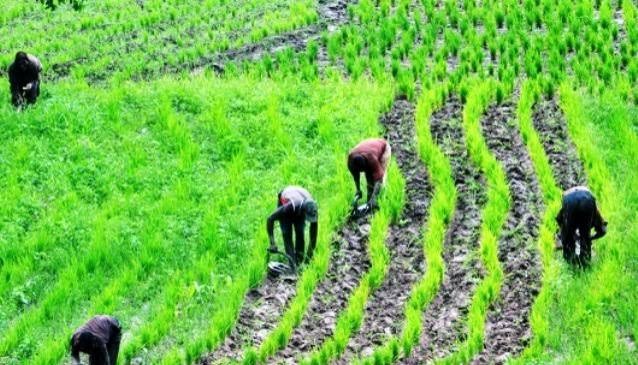
Among the factors impacting agriculture and food production in Nigeria, urbanization stands strong with its footprints felt in the economic, social, political, cultural and psychological lives of the people. One of the impacts of urbanization is the dwindling agrarian culture of the country. The massive exodus of people from rural to urban areas in search of better living conditions has caused many young individuals to develop apathy towards farming, a profession which hitherto has been the ancestral pride of most ethnic groups in the country.

Over the years, the failure of the Government to reach a lasting solution to the rural-urban development gap has led to more food crises in the country. More than 40 million smallholder farmers in the rural communities are increasingly marginalized and incapacitated to produce optimally due to rural-urban drift. According to a Statista report, in 2022, the extreme poverty rate in Africa stood at around 50 percent among the rural population compared to 10 percent in urban areas.

Despite its huge agricultural potential, Nigeria has one of the highest poverty index (more than 40 percent) and undernourished people in the world. In 2021, nearly 13 percent of the world’s population in extreme poverty, with the poverty threshold at 1.90 US Dollars a day lived in Nigeria and more than 80 percent of rural dwellers live within the poverty line.

According to the World Bank’s forecast in January 2021, an additional 10.9 million Nigerians is estimated to enter into the poverty line by 2022 due to the effect of the covid-19 pandemic. The vast opportunities in the agricultural landscape have remained largely untapped due to the underdevelopment of the rural regions where most farmers and farm settlements are concentrated.

One of the attendant effects of the scarcity of agricultural and social infrastructure in rural communities has been an increase in skill and technical deficiency among the local farmers which also culminates in culture lag in the agriculture and food sector. Culture lag is a situation where local farmers are unable to keep up with global agricultural practices at a pace needed to compete globally and address the local food needs. Thus, it should not come as a surprise that Nigeria loses about 7 billion US Dollars worth of agricultural produce yearly and spends 10 billion US Dollars annually on import to meet the local food shortfalls.

In order to position Nigeria to achieve sustainable development and drive continuous innovation for its food system, farmers and young agricultural entrepreneurs in the rural regions of the country need to be strengthened, integrated and transformed into highly skilled and competent individuals capable of producing optimally and competing favourably in the global agricultural ecosystem. This calls for more rural-intensive and inclusive agricultural programmes in the country.

Nigeria Inches Towards International Monetary Fund (IMF) For Debt Bailout

0

There is no disputing the fact that Nigeria’s debt crisis has risen the most under President Buhari’s administration when compared to previous governments since 1999.

As of June 2021, Nigeria’s debt stock tripled to N35 trillion and further rose to N39.5 trillion as of December 2021. In the first quarter of 2022, debt continued to rise exponentially as Nigeria’s total debt stock rose to N41.6 trillion in the first quarter of 2022, which saw a N2.05 trillion increase compared to N39.56 trillion recorded last year.

With the continuous rise in debt, Nigeria’s deplorable financial crisis means it is inching closer to opening talks with the International Monetary Fund (IMF) to pave the way for the rescheduling of the country’s huge foreign debt.

Recall that the IMF in 2018, issued a warning to Nigeria to check its rising levels of debts, also to diversify its revenue bases or face a crisis. The IMF also stated that strengthening fiscal positions was necessary to reduce debt vulnerabilities.

Fast forward to 2020, President Bihari became the first Nigerian leader to take an IMF loan due to the severity of the damage inflicted by the Covid-19 pandemic which induced a slump in crude oil prices in Nigeria’s economy. The IMF approved a loan of US $3.4 billion for Nigeria to meet the urgent balance of payment needs of the country stemming not only from the crash in crude oil prices but also from the outbreak of the Covid-19 pandemic.

The country’s economic crisis continues to worsen as its oil production has fallen to 1.2 million barrels per day. In March this year, Nigeria issued a $2.2 billion Eurobond to enable the NNPC to pay for the importation of petrol, which analysts disclose that the country is increasingly finding it difficult to find a foreign exchange to finance fuel imports.

According to Nigeria’s finance minister, Zainab Ahmed, she disclosed that the country is spending so much money on just debt servicing which is making it difficult to fund its massive petrol imports on the back of collapsing oil exports.

Speaking on Nigeria’s need for a loan for debt bailout, a frontline economist and member of the government’s economic advisory council, Bismarck Rewane disclosed that Nigeria seeking an IMF loan for debt bailout is a sure bet toward economic stability and growth.

In his words, “There is the old saying that the path to Paris is via London and Washington. To get debt forbearance from the Paris club, a country must first get Washington institutions to accept your plan is visible. That’s the way it is for all nations like Nigeria facing severe fiscal imbalance. The rescheduling of debt and all maturing obligations is a necessary path towards economic stability and growth for Nigeria”.

Some other analysts have stated that the government of Nigeria should currently be contemplating approaching the IMF to securitize the debt obligations that are falling due. They disclosed that the longer the government hides in denial of its debt crisis, the situation will continue to worsen for the country, also making it unbearable for the citizens.

Economic experts and past leaders have all expressed their worries concerning President Buhari’s insatiable desire for loans. They have disclosed that a country like Nigeria that does not produce anything tangible for the international market other than crude oil, should be prudent, as the country presently spends 90 percent of its revenue on debt servicing.

It is imperative that the Buhari administration looks inwardly and explores other avenues for boosting the country’s revenue, rather than resorting to endless borrowing that puts the economy in jeopardy.

Welcome Reliance Infosystems To Tekedia Institute, Again

0

Tekedia Institute is very excited to be welcoming innovators and transformers from one of Africa’s finest technology companies: Reliance Infosystems. Reliance “creates enduring partnerships with customers to provide suitable technology inputs to support their business goals”. It does this by helping organizations to build and implement technology systems that do not just Run them but also TRANSFORM them.

Yes, technology that transforms. And it has laurels – it is the reigning king as Microsoft Country Partner, consolidating its position as Nigeria’s #1 Microsoft technology partner and integrator.

As always, I am waiting for CEO Olayemi Popoola to write a book soon; many of us will read. His mindset provides a window on how to build companies of the future. For instance, he is sending 10 of his team members to attend programs we have designed for startup founders & CEOs. Yes, even in a company with operations in many African countries, UAE, Canada, Pakistan, etc, the team has to think like entrepreneurs.

Reliance, Tekedia Institute is honoured to welcome ~100 innovators, again. Thank you again for choosing us.