DD
MM
YYYY

PAGES

DD
MM
YYYY

spot_img

PAGES

Home Blog Page 4948

Can These 2 Cryptocurrencies Help You Become a Millionaire: Pugglit Inu and Polygon

0

High risks are often associated with cryptocurrencies. The primary reason is that neither these transaction modes are regulated, nor does any governing body deems itself responsible if there is loss incurred in any case. Many countries are on track to add this channel officially into their governmental finance scheme. This step possibly will minimize the fear among the masses. However, even if it’s regularized, it only eradicates any likelihood of a scam; the volatility is still there. This, too, is a significant cause of repulsion for traders because the coin is dependent on external stimuli to increase/decrease in price.

No notice, no accountability, and everything is gone. No doubt about that. But there’s a solution: to delve in and determine which coins are worth trying. A decision backed by straight facts and a topping of logic does the job. You’re not supposed to worry about this component because we’ve researched and presented a viable opportunity. The first one we’ve here with us is Pugglit Inu (PUGT).

Pugglit Inu (PUGT)

Pugglit Inu (PUGT) is built on Binance Smart Chain – an exchange known for its security in the internet world. Pugglit Inu (PUGT) is a meme coin set to make a difference in the community. The name has come out of combining the characteristics of a dog and pig (Puggle and Piglet).

Meme coins have had a history of disrupting industries. Remember the overnight transformation Dogecoin brought? And then, Shiba followed the same trend aiding many to realize their goals of holding a million dollars. The competitive advantage of meme coins over traditional cryptocurrencies is that a conventional currency has got to build its reputation down the road. It sometimes takes years for the traders to experience an increase in value. On the other hand, Meme coins are birthed out of already circulating memes across social media. The hype around that meme is channelized to bring traffic for these coins.

Pugglit Inu (PUGT) is seen multiple times endorsing its cryptographic security. However, there have been many instances where the exchanges were scammed or hacked. This platform aims to avert such events in the future with a built-in secure infrastructure.

A swapping feature allows you to trade any Cryptocurrency token with Pugglit Inu (PUGT). You can either hold this currency to sell it later, with added rewards or utilize it.

Pugglit Inu (PUGT) plans to extend its services and create an application that’ll enable the pet community with the pet walker/sitters so the pet won’t have to suffer from the busy schedule of the owner. It’s a service-based offer, and a means to be a helping hand to the community.

The platform runs on a Reserve Currency protocol and depends on the stakeholders to make decisions. Each member onboard has a right to register their vote or propose a feature. It’s voted, utilizing the Decentralized Autonomous Organization principle.

Polygon (MATIC)

In multiple ways, Polygon (MATIC) resembles the Ethereum protocol. The only thing that creates the difference is that Polygon is a layer-2 scaling solution. Ethereum has always had issues with transaction processing times and gas fees. Polygon (MATIC) offers a solution in this regard. Moreover, it’s EVM compatible, which means applications that run over Ethereum can be deployed over Polygon (MATIC); Aave is one example.

The platform uses the Proof of Stake consensus model, enabling the platform to run millions of transactions a second in the future. Currently, it accounts for around 65,000 transactions. As of now, it’s traded at approximately 0.8 USD and ranks at 13 on coinmarketcap.

Pugglit Inu (PUGT) could achieve the same as Polygon (MATIC) as it’s not a conventional meme coin. Instead, it integrates the meme with the utility part, which is why we find it more feasible. You’ll get a whopping 18% more by buying it with Bitcoin in your wallet. You can also get an additional 10% for purchase in presale stage 1.

https://pug.pugglitinu.com/register

First Bank’s Firstmonie Agents Record Over 1 Billion Transactions worth Over N22 Trillion in Value

0

Nigeria’s push for financial inclusion, which aims to bridge the wide gap between the banked and unbanked, has seen significant growth buoyed by increased activities of both commercial banks and telecom companies, through mobile money among others.

The value of mobile money transactions in Nigeria increased by 3,454.46% (N4.86tn) in the first four months of 2022 from (N136.85bn) in the corresponding period of 2019 – playing a big part in this huge progress is money agents. In this arena, both banks and telcos are recording high figures in transaction value

One of the big players in the money agents arena, First Bank of Nigeria (FBN), has announced that its agent banking network – Firstmonie Agents has collectively processed transaction volume of over 1 billion, amounting to over 22 trillion Naira.

This follows a nearly 100,000 increase between 2021 and 2022 in the company’s money agents base.

First Bank said that the number of its Firstmonie agents grew from 86,000 in 2021 to 180,000, covering a total of 772 Local Government Areas in Nigeria presently.

According to the bank, Firstmonie Agents are empowered to reduce the reliance on over-the-counter transactions while providing convenient personalized services. Amongst the services carried out by the Agents include; Account Opening, Cash Deposit, Airtime Purchase, Bills Payment, Withdrawals and Money Transfer

The bank said that Firstmonie Agents have helped to drive financial inclusion in Nigeria bringing financial services closer to the underbanked and unbanked segment of the society, providing convenient banking services that are easily accessible, thereby saving time and travel costs for individuals in the suburbs and remote environments with no access to financial services.

Through various empowerment and reward schemes implemented to put its Firstmonie Agents at an advantage to economically impact their immediate communities whilst importantly having their business sustained, the Bank’s Agent Banking scheme has remained a toast to Nigerians, irrespective of where they are in the country. Amongst these schemes is the Agent Credit – launched in 2020 – which has had the Bank provide credit facilities to the tune of 238 billion naira to its teeming Firstmonie Agents.

Expressing his appreciation to the Firstmonie Agents, Dr. Adesola Adeduntan, CEO, FirstBank said the scheme recorded this stride while saving people the trouble of going long distances to carry out financial transactions.

“since the relaunch of our Agent Banking scheme in 2018, our Firstmonie Agents have played a vital role in bridging the financial inclusion gap in the country, as many more people have been able to undertake various financial and business transactions in cost-effective ways, thereby saving a lot of time and money in traveling over long distances for basic banking services.

“We are delighted by the giant strides of our Firstmonie Agents in promoting financial inclusion and commend them for their efforts in taking banking to the doorsteps of Nigerians – irrespective of where they are – in a very effective way”, he concluded.

More than 42 million Nigerian adults live in rural areas that lack basic banking services, leaving them out of access to basic financial services. This opens a huge gap that financial service providers and mobile network operators are trying to fill using schemes that include money agents.

The Regulatory Framework Governing Financial Holding Companies in Nigeria

0

The Central Bank of Nigeria in 2010 for the purpose of creating a streamlined and tidy corporate structure for banking groups that also engaged in non-core banking services.

This gave rise to the Financial Holding Company (FHC) structure which will be the focus of this article by treating the following topics of:-

– The definition of Financial Holding Companies.

– The Regulatory Framework governing Financial Holding Companies in Nigeria.

– The licensing requirements for Financial Holding Companies in Nigeria.

– The permissible and non-permissible activities for Financial Holding Companies in Nigeria.

– The permissible ownership, operating and control structures of Financial Holding Companies in Nigeria.

What is a Financial Holding Company?

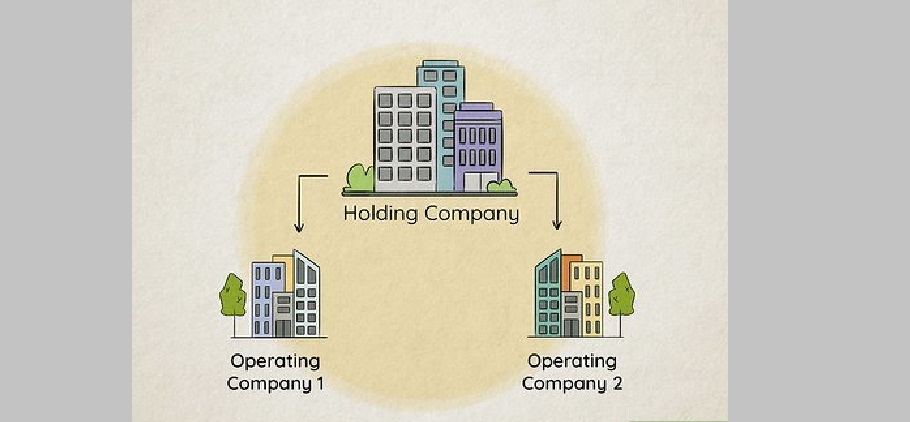
FHCs are defined (pursuant to the extraordinary gazette No.38 December 29 2011) as a company whose principal objects include the business of a Holding company set up for the purpose of making and managing fit its own account equity investments in 2 or more companies being its subsidiaries engaged in the provision of financial services, one of which must be a bank.

What is the Regulatory Framework governing Financial Holding Companies in Nigeria?

Financial Holding Companies are licensed, supervised and regulated by the Central Bank of Nigeria (CBN) through the Banks and Other Financial Institutions Act BOFIA and the CBN Guidelines for the Licensing and Regulation of Financial Holding Companies in Nigeria(‘The Guidelines’)

What is the operating structure of a FHC?

Financial Holding Companies are non-operating in structure, existing to carry out investments in a subsidiary company without engaging in the day to day management of same and are required to be registered with the Corporate Affairs Commission and have a board size of 7-12 directors.

Also, the Guidelines require that a FHC shall have at least 2 subsidiaries & the focus of the conglomerate shall be in the financial services sector with not more than 2 hierarchies (an intermediate company structure where a subsidiary of the FHC also has a subsidiary of its own).

Where a subsidiary is locally based, the relevant regulator shall have responsibility for its supervision. Where the subsidiary is based overseas, the relevant regulator shall seek a Memorandum of Understanding (MOU)  with the host regulator for its joint supervision.

A Financial Holding Company can also acquire a controlling interest in any permissible financial institution subject to the prior approval of the CBN along with the approval of any other relevant regulator. Where the subsidiary of a FHC outside the jurisdiction of the CBN acquires another company also outside the jurisdiction of the CBN, it(the FHC) shall notify the CBN in writing before the acquisition is completed, this notification to be accompanied by evidence of the relevant regulator’s prior approval.

Does a Financial Holding Company seeking to change to a single financial service package offering need CBN approval?

Yes, it does. A FHC seeking to revert to a mono-line commercial or merchant banking structure shall seek the prior approval of the CBN via a written request and the following:-

– a divestment plan from its subsidiaries;

– annual audited financial statements of the FHC for the immediate past 3 years under the structure it seeks to discontinue;

– any other requirement of the CBN as determined from time to time.

It should however be noted that a Financial Holding Company structure shall not be reversible for a minimum period of 3 years

Can the CBN order a FHC to carry out a divestment?

Yes it can. The CBN can direct a Financial Holding Company to divest from its Banking subsidiary where in its(the CBN’s) opinion the FHC is being run in a manner that is detrimental to the interests of its depositors and/or stakeholders of the banking subsidiary.

What are the Licensing requirements for a Financial Holding Company in Nigeria?

An application for a FHC License is basically in 2 stages :-

– The Approval-In-Principle (AIP) Stage.

– The Final License Stage.

The AIP stage.

The promoters of a FHC structure should first through their lawyer send an application addressed to the Governor of the Central Bank of Nigeria and accompany this application with:-

– a non-refundable application fee of 2 Million Naira payable to the CBN via bank draft or electronic transfer;

– evidence of meeting the prescribed minimum paid-up capital of more than the minimum paid-up capital of all its subsidiaries combined;

– a detailed Business plan/Feasibility report (consult your lawyer on what a business plan must contain under the CBN Guidelines);

– a written and duly signed undertaking by the promoters of the FHC that the company will be adequately capitalized for the volume and character of its business at all times and that it shall always submit itself to the supervisory authority of the CBN as an Other Financial Institution (OFI);

– for foreign regulated institutional investors, the CBN shall require a “no objection” letter from the regulatory body of the home country;

– a shareholder’s agreement;

– a statement of intent to invest in the financial holding company;

– a technical services agreement in the financial holding company;

– a draft copy of the company’s MEMART (Memorandum &Articles of Association);

– where the FHC’s promoter/investor is a registered company, the CBN shall require :-

a). Certificate of Incorporation.

b). A Board Resolution supporting the company’s decision to invest in the equity shares of the proposed Financial Holding Company.

c). Names and addresses (business and residential) of the company’s owners & directors as well as their related company’s if any.

d). Audited Financial statements & a Tax Clearance Certificate of the company for the past 3 years.

e). Certified True Copies (CTCs) of the its Statutory forms for returns on share allotments and the particulars of directors of the company.

Upon the satisfaction of the CBN after vetting the above requirements, an Approval-In-Principle will be granted.

The Final License Stage

The promoters of a FHC shall within the period of not more than 6 months after the AIP grant, submit through their lawyer an application to the Central Bank of Nigeria for the grant of a final license along with the following:-

– A non-refundable license fee of 10 Million Naira payable to the CBN via bank draft or electronic transfer.

– Evidence of payment of capital contributions by each shareholder.

– Certified True Copies (CTCs) of the FHC’s Certificate of Incorporation and MEMART (Memorandum & Articles of Association).

– Certified True Copies of its CAC Statutory forms for the allotment of shares and the particulars of its directors.

– Evidence of location of the FHC’s Head Office location ( rented or owned) for the takeoff of business.

– A schedule of changes in the board, management and significant shareholding of the FHC since the grant of the AIP.

– Evidence of ability to meet technical requirements and modern infrastructural facilities such as offices, computers, telecommunications, etc. to perform Financial Holding Company operations and meet the Regulatory requirements of the CBN & other Regulatory agencies

– Copies of letters of offer & acceptance of employment in respect of the FHC’s top management team.

– Organizational structure, showing functional units, responsibilities, reporting relationships (?) and grades of heads of departments/units.

– Board & Staff training programmes.

What are the permissible and non-permissible activities allowed for Financial Holding Companies under the CBN Guidelines?

Permissible Activities

– The holding of equities in its subsidiaries.

– The provision of broad policy decisions in the following areas:-

  1. Human Resource policy
  2. Risk Management policy
  3. Internal Control policy
  4. Compliance policy
  5. Any other service we may be approved by the Central Bank of Nigeria from time to time

– With the prior written approval of the CBN, provision of shared services to its subsidiaries in respect of :-

  1. Information and Communication Technology (ICT)
  1. Facilities
  1. Legal services
  1. Any other service as may be approved by the Central Bank of Nigeria from time to time

Shared services shall be provided on an arm’s-length basis and transactions in respect of such services shall require the consent of the board of directors of the subsidiary.

Non-Permissible Activities

– Investment in Non-Financial firms.

– The establishment, divestment & closure of subsidiaries without the prior written approval of the CBN and/or any other relevant Regulatory or supervisory authority as the case may be.

– Deriving or receiving income from sources other than as listed below:-

  1. Dividend income from subsidiaries/associates.
  1. Income from shared services where applicable.
  1. Interest earned from idle funds invested in government securities or placement with banks/discount houses.
  1. Profit on divestments from subsidiaries.
  1. Any other source as may be approved by the CBN.

Conclusion :- The Financial Holding Company structure has proved very effective in creating a streamlined supervisory framework over the activities of Banking groups in Nigeria. Further guidance on the licensing and operational compliance requirements of FHC’s will require consulting your lawyer.

Naira Inches Closer To N700/$1 On Black Market Despite EFCC’s Raids

0
Naira USD

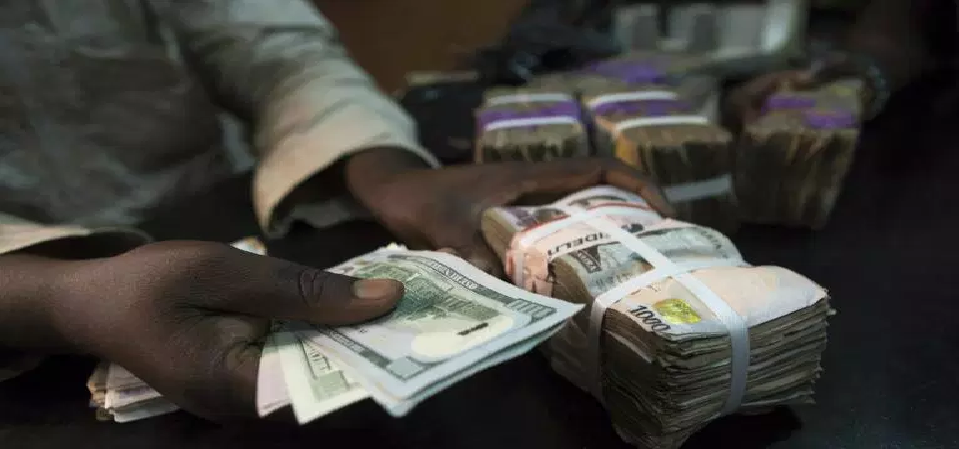
Recall that the Economic And Financial Crimes Commission (EFCC) late last month, and in August, stormed some hubs of Bureau De Change (BDC) operators in Abuja, Lagos, and Kano, in what sources disclosed was a convert operation to dislodge currency speculators who are alleged to be massively mopping up available foreign currencies.

Some operatives of the commission have also been spotted at major airports in the country, all in a bid to ensure that the naira regains its strength and also puts an end to FX scarcity in the country.

Well, such operations carried out by the commission, have so far not yielded positive results, as the naira inches towards N700/$1 barely three weeks after the EFCC stormed Bureau De Change hubs across several locations in the country.

The EFCC Chairman Abdulrasheed Bawa disclosed that through the commission’s intervention, they are working relentlessly to ensure that the naira remained relatively stable.

In his words;

“From well over N710 to the dollar, following the commission’s intervention, the naira has appreciated significantly against the dollar in the parallel market, and we are not relenting in our efforts to check harmful speculative activities in the sector”. 

Reacting to the raid by the EFCC on Bureau De Change hubs, a member of the Association Of Bureau De Change Operations of Nigeria (ABCON), who pleaded anonymity during an interview, disclosed that ABCON was surprised that the EFCC could attempt to force members of the association to trade FX at a particular rate.

He further revealed that such a move by the EFCC was flawed, due to the fact that the FX rate is determined by market forces, also considering the fact that there is current scarcity of FX, it is only normal for the naira to fall.

See what he said;

“We do not print dollars in Nigeria. Everyone knows that there is a scarcity of dollars at the moment, so the demand will push up the rate. I really don’t know why the EFCC believes we are the ones that determine the exchange rate. Dollar would continue to rise, since there is a fresh demand for FX by summer travelers, including students and tourists”.

Few analysts have also described the EFCC’s move as a weird approach, stating that it is not the duty of the commission to stabilize the naira.

The continuous depreciation of the naira to dollar, has generated lots of talking points from financial analysts, economists, and individuals from all works of life, forecasting that the naira could fall to N1,000 before the end of the year if care is not taken.

The CBN on the other hand has disclosed that it is working hard to solve the issue of FX. Recall that the Apex bank last year banned Aboki FX, an online platform that publishes the unofficial rate of the naira to other currencies. However, despite this ban, FX scarcity persists.

Nigeria is reportedly experiencing one of its worst FX crises in history due to increasing demand for FX amidst low supply.

Despite the high oil price, caused by the Russia-Ukraine war, Nigeria ironically failed to benefit from it, due to limited production, and the maintenance of a subsidy regime, which is estimated to cost the country at least N4trn this year, despite being Africa’s largest producer of crude oil.

These high oil prices imply an increased cost of refined products and Nigeria continues to spend a huge part of its FX earnings on the importation of Petroleum Motor Spirit (PMS) and other refined products due to the complete absence of local refining capacity.

Visionaries in markets as Facebook shuts down its standalone Gaming

3

Facebook is shutting down its standalone gaming app. Yes, as we praise these entrepreneurs as being visionaries, we need to understand that their strike rates are not 100%. From Jeff Bezos (Amazon Fire) to Mark Zuckerberg to Aliko Dangote, there are many misses even as they build their empires. 

I was doing an internship in Port Harcourt when Dangote launched Liberty Merchant Bank. The company I was doing it sent me as a representative to the Presidential Hotel, PHC the day it was launched. Within years, that bank failed, just as Dangote Capital failed.

Many years later, Dangote joked with Oba Otudeko, saying “I tried banking but was not as lucky as Oba Otudeko”; I was in the same place with them and I documented that conversation here.

Here is the summary: when we praise innovators as being visionaries,  it does not mean that they do not have setbacks. The difference is that they keep fighting ,and sooner rather than later, they come up with what markets want. Indeed, success is not an absence of failure, because success includes failure as part of its components!

Twitch is the category-king and Facebook Gaming has no chance – and the market has validated that, just as Google Plus failed because Facebook was better. Never be intimidated by the #big; the best will always win.

Meta, Facebook’s parent company, is shuttering its Facebook Gaming app launched two years ago, due to its failure to catch up in an industry dominated by Twitch.

The game, which lets users watch and play video games on-demand, will no longer work or be available to download starting on October 28th, 2022, Facebook said in a notice sent to users.

“We want to extend our heartfelt thanks to all of you for everything that you’ve done to build a thriving community for gamers and fans since this app first launched,” the company said in an update on the Facebook Gaming app.