DD
MM
YYYY

PAGES

DD
MM
YYYY

spot_img

PAGES

Home Blog Page 495

Kaspa Climbs on zkEVM Excitement, Solana Defends $200, While BlockDAG’s $405M+ Fundraise Dominates Attention

0

Crypto markets often move in cycles shaped by innovation. Every few months, new updates push narratives into fresh phases. This September, two projects, Kaspa (KAS) and Solana (SOL), are in focus with strong headlines. Kaspa is gaining momentum with its zkEVM smart contract upgrade, while Solana continues to trade firmly above $200. Both stories highlight opportunities for traders watching short-term market moves.

Looking at the broader picture, another story dominates the market: BlockDAG (BDAG) and its record-setting presale. With more than $405 million raised, 26.2B coins sold, and more than 3M mobile miners already onboarded, BlockDAG is scaling adoption ahead of its mainnet.

Kaspa: zkEVM Upgrade Fuels Market Optimism

Kaspa remains one of the strongest technical performers of 2025. Its Directed Acyclic Graph (DAG)-based consensus has already placed it among the fastest Proof-of-Work assets. The upcoming zkEVM launch has created excitement, as it could expand Kaspa’s role into DeFi, staking, and dApps, moving it beyond payments and transaction speed.

The market has responded quickly. Kaspa’s price climbed more than 14% in 24 hours, pushing toward resistance near $0.165. If momentum continues, KAS could test $0.18 or higher. This setup points to short-term bullish potential and keeps Kaspa among the notable mid-cap assets for those tracking growth.

Yet, Kaspa is still in transition. It is shifting from a speed-focused network into a broader ecosystem. For those who prefer exposure to DAG-based growth at earlier valuations, the opportunity may be found elsewhere.

Solana: Consistency Around $200

Solana, a long-standing competitor to Ethereum in high-performance Layer-1 solutions, continues to show strength this September. Trading near $209, SOL has stayed firm despite volatility and remains one of the most active networks in the space. Its speed, developer adoption, and DeFi integration give it a leading role in scaling beyond Ethereum.

The Solana community has also worked to improve uptime and network reliability, addressing earlier concerns. With a strong position in NFTs and DeFi, Solana has established itself as one of the “big four” smart contract ecosystems alongside Ethereum, Avalanche, and BNB.

Still, its size limits its growth potential. With a market cap already in the tens of billions, Solana is unlikely to deliver the same exponential returns it once offered. For those seeking steady growth, SOL remains a core option, but for asymmetric ROI, smaller projects may provide more opportunity.

BlockDAG: Strength in the Presale Phase

BlockDAG is where the story changes. Unlike Kaspa and Solana, which are already well into their growth cycles, BlockDAG is still in presale, yet its progress surpasses what is usually seen in early projects.

  • Over $405M raised toward its $600M target.
  • 2B BDAG coins sold across 45 presale rounds.
  • 3M users mining through the X1 Mobile Miner app.
  • 19,800 miners shipped, with another 13K scheduled for delivery by mid-October.
  • 312K holders with the community growing by about 1,000 wallets every day.

At the Deployment Event price of $0.0013, BDAG gives the kind of entry point that early buyers of Bitcoin and Ethereum once wished for. With a confirmed $0.05 listing target, the expected return at launch sits at 3,740%. Longer-term goals of $1 per coin expand that window to an extraordinary 76,815% upside.
More than numbers drive this growth. BlockDAG’s hybrid DAG and Proof-of-Work design blends scalability similar to Kaspa with the trusted security model of Bitcoin. Alongside this, EVM compatibility, planned WASM smart contract support, and a developer community of 4,500+ already building more than 300 dApps make BlockDAG appear more like a serious Layer-1 network than a presale concept.

Examining the Three Projects

  • Kaspa is shifting from speed into utility with zkEVM. It shows potential as a mid-cap with room for short-term upside but remains in the process of building out its ecosystem.
  • Solana stands as a proven leader, supported by wide adoption and consistent demand, but its potential growth is steady rather than explosive.
  • BlockDAG combines DAG scalability with Proof-of-Work strength, and unlike its peers, it is still in the early phase. With over $405M already raised, millions of users participating, and whales committing over $10M in single allocations, BDAG reflects the same type of early-stage growth opportunity that BTC and ETH once delivered but at a much lower entry cost.

Why BlockDAG Leads the Conversation

Kaspa’s zkEVM adds momentum. Solana’s performance above $200 reinforces its strength. Yet BlockDAG’s over $405M presale, 26.2B coins sold, and adoption before mainnet make it stand out as the most asymmetric option of the three.

In a 2025 market increasingly shaped by regulation, institutional involvement, and broader acceptance, BlockDAG is not relying on headlines. It is showing progress through adoption and numbers that carry weight on their own.

For those exploring the market, the comparison is clear. Kaspa and Solana remain solid choices to hold, but BlockDAG stands as the best crypto to buy now because it still holds the exponential potential that the others can no longer provide.


Presale: https://purchase.blockdag.network

Website: https://blockdag.network

Telegram: https://t.me/blockDAGnetworkOfficial

Discord: https://discord.gg/Q7BxghMVyu
Rulebase Raises $2.1M, Unveils Agentic AI Named Coworker for Financial Services

0

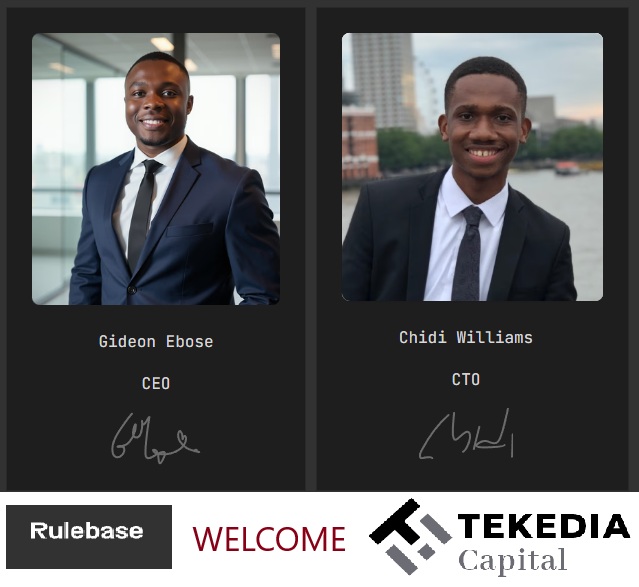
Join me to congratulate Gideon Ebose and Chidi Williams, co-founders of Rulebase as they release an agentic AI named Coworker. Coworker works alongside your team to:

? Review 100% of interactions for compliance and quality

? File and track fraud and dispute cases end to end with networks and providers

? Proactively follow up to keep SLAs on track

? Flag compliance risks in real time and generate audit-ready reports.

Good People, Coworker bridges CX and back-office operations, automating the most manual tasks so nothing slips through the cracks and every issue is resolved faster. Today, they also announce the raise of $2.1 million. Tekedia Capital joined that fundraise.

Gideon left Microsoft and Chidi left Goldman Sachs, and when they pitched to us, there was no reason not to support them because unless you are sure of the future, those decisions cannot be made easily. So far, they have demonstrated excellence by winning accounts, scaling the mission and generating value. Gideon and Chidi discover more markets, and good luck with Coworker and other products in Rulebase.

Polymarket’s Valuation Surges From $1B to Potentially $10B

0

Polymarket, the leading decentralized prediction market platform built on blockchain, is currently in advanced talks for a new funding round that could significantly boost its valuation.

Recent reports indicate the company is aiming to at least triple its most recent $1 billion valuation from a June 2025 round led by Peter Thiel’s Founders Fund, targeting around $3 billion.

However, discussions have escalated, with some investors proposing terms as high as $10 billion, reflecting intense investor interest amid regulatory breakthroughs and explosive growth in trading volumes.

Key Drivers Behind the Valuation Jump

Polymarket, which was barred from the US market in 2021 following a settlement with the Commodity Futures Trading Commission (CFTC), has received clearance to relaunch domestically. CEO Shayne Coplan announced on X (formerly Twitter) that regulators have given the “green light to go live in the USA,” opening access to a massive new user base.

This follows Polymarket’s acquisition of Florida-based derivatives exchange QCX in July 2025 and a CFTC no-action letter easing requirements for event contracts. The platform has seen unprecedented volumes, with $7.5 billion traded in 2025 alone—surpassing sports betting giants like FanDuel and DraftKings in online traffic during the 2024 US election cycle, where it accurately predicted Donald Trump’s victory with over $8 billion in wagers.

Bets now span politics, crypto prices, geopolitics, and more, fueling mainstream adoption. Total funding to date stands at $255 million. High-profile supporters include Donald Trump Jr., who joined the board and stated, “Polymarket is the largest prediction market in the world, and the US needs access to this important platform.”

The sector is heating up, with rival Kalshi recently valued at $5 billion after a $185 million raise. As of September 16, 2025, the funding round is ongoing, with valuation figures still in flux—sources describe it as “at least” a triple from $1 billion, but one investor has floated a $10 billion term sheet.

While the US relaunch is a major catalyst, the platform continues to face scrutiny from regulators and operates in permitted jurisdictions globally. Despite past hurdles, this positions Polymarket for dominance in decentralized finance and prediction markets.

A $3B–$10B valuation cements Polymarket as the dominant player in the prediction market space, outpacing competitors like Kalshi valued at $5B. This signals growing investor confidence in decentralized platforms for forecasting real-world events, from elections to economic indicators.

With $7.5B in 2025 trading volume and surpassing traditional betting giants like FanDuel, Polymarket’s growth legitimizes prediction markets as a mainstream financial tool, potentially attracting institutional investors and broader retail participation.

Polymarket’s accurate prediction of the 2024 US election outcome $8B in wagers reinforces the reliability of decentralized markets for aggregating collective intelligence, potentially disrupting traditional polling and forecasting industries.

The CFTC’s no-action letter and Polymarket’s US relaunch via QCX acquisition signal a softening regulatory stance on prediction markets. This could pave the way for other blockchain-based platforms to enter the US, one of the world’s largest markets.

Impact on Blockchain and DeFi Ecosystems

Polymarket’s success underscores the scalability and utility of blockchain technology (built on Polygon) for transparent, trustless markets. This could drive further investment in DeFi infrastructure and related protocols.

A $10B valuation would rank Polymarket among top crypto projects, potentially lifting sentiment across the sector and attracting capital to other DeFi and Web3 startups. Polymarket’s ability to aggregate bets on diverse topics positions it as a valuable real-time data source for investors, policymakers, and researchers, potentially rivaling traditional financial indicators.

With figures like Donald Trump Jr. on the board, Polymarket’s growing influence in political betting could shape public discourse or perceptions of electoral outcomes, raising ethical questions about market-driven narratives.

The jump from $1B to $3B–$10B reflects intense investor interest, driven by Polymarket’s unique position at the intersection of DeFi, betting, and data markets. This could trigger a funding race among competitors, inflating valuations across the sector.

A high valuation could make Polymarket an acquisition target for traditional finance or tech giants seeking to enter the prediction market space, though its decentralized nature may complicate such deals. Rapid user growth and US expansion will strain Polymarket’s infrastructure, requiring robust technical and compliance systems to maintain trust and uptime.

Polymarket’s valuation surge to $3B–$10B reflects its pivotal role in redefining prediction markets as a powerful, blockchain-driven tool for forecasting and financial innovation. The US market reentry and regulatory progress amplify its growth potential, but challenges like regulatory scrutiny, speculative risks, and operational scaling loom large.

This milestone could reshape DeFi, influence global forecasting, and spark broader adoption of decentralized platforms, provided Polymarket balances growth with stability and ethical considerations.

London Stock Exchange Group Launches Blockchain Platform for Private Funds

0

The London Stock Exchange Group (LSEG) announced the launch of its blockchain-based Digital Markets Infrastructure (DMI) platform, marking the first time a major global stock exchange has implemented such a system specifically tailored for private funds.

This initiative represents a significant step in integrating blockchain technology into traditional finance (TradFi), aiming to streamline processes like issuance, tokenization, distribution, settlement, and servicing of digital assets.

Digital Markets Infrastructure (DMI) is designed to handle the full lifecycle of digital assets, enabling the tokenization of real-world assets such as private funds on a blockchain while ensuring interoperability between blockchain networks and existing financial systems. It runs on Microsoft Azure, leveraging a strategic partnership with Microsoft to enhance scalability and security.

The initial rollout targets private markets, allowing general partners and professional investors to discover and interact with fund opportunities via LSEG’s Workspace platform. This addresses inefficiencies in private fund management, such as slow settlements and manual processes, by using blockchain for faster, more transparent transactions.

The platform went live with its inaugural deal involving Bermuda-regulated investment manager MembersCap, which raised capital for its tokenized MCM Fund 1. London-based digital asset exchange Archax, regulated by the Financial Conduct Authority, served as the nominee in this primary fundraise. This transaction demonstrates DMI’s practical application in a regulated environment.

LSEG officials have indicated that this is just the first phase, with plans to expand to other asset classes in the future, potentially including bonds, equities, and more.

The move aligns with a growing trend among financial institutions to adopt blockchain for tokenization, which could unlock trillions in value—Standard Chartered estimates real-world assets on blockchains could reach $30 trillion by 2034. By bridging TradFi and decentralized finance, DMI could accelerate convergence between the two worlds, reducing costs and improving efficiency in asset management.

DMI enables the tokenization of private funds, converting real-world assets like private equity or debt into digital tokens on a blockchain. This simplifies the issuance process by digitizing asset creation, reducing paperwork, and automating workflows.

The platform supports the entire lifecycle of tokenized assets—issuance, distribution, settlement, and servicing—making it easier for issuers to manage RWAs efficiently. For instance, the inaugural deal with MembersCap’s MCM Fund 1 showcased how DMI handles primary fundraises seamlessly.

By integrating with LSEG’s Workspace platform, DMI allows general partners and professional investors to discover and engage with tokenized private funds. This democratizes access to asset classes traditionally reserved for institutional investors, potentially attracting more capital.

Tokenization fractionalizes high-value assets, enabling smaller investment sizes and secondary market trading. DMI’s interoperability with existing financial systems could facilitate the creation of liquid markets for previously illiquid assets like private funds.

DMI’s design ensures compatibility between blockchain networks and traditional financial infrastructure, reducing friction for institutions adopting tokenized RWAs. This interoperability is critical for scaling adoption across diverse market participants.

Blockchain eliminates the need for multiple intermediaries in asset management and settlement, lowering costs for issuers and investors. DMI’s use of Microsoft Azure ensures robust, scalable infrastructure to handle these processes.

By leveraging blockchain’s near-instant settlement capabilities, DMI reduces the time and cost associated with traditional private fund transactions, which often involve lengthy manual processes. LSEG has indicated that DMI will expand beyond private funds to include assets like bonds and equities.

This scalability positions the platform to catalyze RWA tokenization across a broader range of asset classes, potentially unlocking trillions in value (e.g., Standard Chartered’s $30 trillion estimate for tokenized assets by 2034). Beyond LSEG’s DMI, the tokenization of RWAs is catalyzed by several industry-wide factors, which DMI leverages or complements:

Major financial institutions like BlackRock, JPMorgan, and Goldman Sachs are already tokenizing assets (e.g., BlackRock’s BUIDL fund). LSEG’s entry as a major global exchange adds credibility and encourages other institutions to follow suit.

Investors are increasingly seeking diversified, yield-generating assets. Tokenized RWAs offer exposure to real estate, private equity, or commodities with lower entry barriers and enhanced liquidity.

Global harmonization of digital asset regulations is incomplete, which could slow cross-border adoption. Traditional financial institutions may resist transitioning to blockchain due to legacy systems or skepticism about new technology.

Cybersecurity and smart contract vulnerabilities must be addressed to maintain trust in tokenized RWAs. LSEG’s DMI catalyzes RWA tokenization by providing a regulated, scalable, and interoperable platform that streamlines the issuance, management, and trading of private funds.

Its integration with traditional finance infrastructure, focus on efficiency, and potential for expansion to other asset classes position it as a transformative force in the $10–$30 trillion RWA market projected by 2034. By bridging TradFi and DeFi, DMI could accelerate mainstream adoption of tokenized assets, unlocking new opportunities for investors and issuers alike.

Tesla Stock Turns Positive for 2025 After Tumultuous Ride Fueled by Musk-Trump Rift, Rate-Cut Hopes, and Billionaire’s Own Buying Spree

0

Tesla’s shares have finally clawed their way back into positive territory for the year after a turbulent 2025 that saw dizzying losses, political controversies, and dramatic reversals.

The company’s stock rallied as much as 8% on Monday, leaving Tesla with a 5% year-to-date gain and marking the first time since January that its performance turned green. The rebound caps an extraordinary roller-coaster year for Elon Musk’s automaker, which at its lowest point in April had plunged 45% year-to-date on a closing basis.

Timeline of Tesla’s 2025 Stock Swings, Per BI

Tesla’s volatility has been fueled by a mix of Musk’s personal decisions, U.S. politics, monetary policy shifts, and market sentiment.

The latest catalyst for the surge has been Musk himself. The billionaire purchased 2.57 million Tesla shares — worth roughly $1 billion — according to an SEC filing, boosting his personal stake in the company to about 13%. Musk has openly declared he wants to raise his stake to 25%. Analysts at William Blair called the move “a strong signal of confidence in the most important part of Tesla’s future business, robotaxi,” noting that this was Musk’s first buyback of Tesla stock since 2020.

Investors have also been buoyed by expectations that the Federal Reserve is ready to resume interest rate cuts. At the Fed’s annual Jackson Hole symposium in August, Chair Jerome Powell signaled the central bank was poised to lower rates in September — a signal that risk assets, especially growth stocks like Tesla, immediately priced in. Tesla shares spiked 6% that day, outpacing the S&P 500’s 1.5% climb. Markets are now nearly certain that the Fed will trim its benchmark rate by 25 basis points this week.

The Musk-Trump Rift That Roiled Tesla

But the most destabilizing factor for Tesla this year was Musk’s dramatic falling-out with President Donald Trump, a rupture that wiped billions off Tesla’s market value in June.

Musk, who had been one of Trump’s most visible billionaire allies during the 2024 campaign — appearing at rallies, amplifying his message on social media, and publicly endorsing Republican economic policies — stunned investors when he began feuding with the president over his “Big Beautiful Bill.” The legislation led to the scrapping of the $7,500 federal EV tax credit, a move that reportedly didn’t augur well with Musk.

The fallout escalated quickly, with Trump threatening on Truth Social to cancel federal contracts tied to Musk’s companies. The dispute escalated into a bitter public spat, sending Tesla stock plunging 14% on June 5, the day the feud erupted.

The sell-off only began to ease when Musk publicly expressed regret over his combative remarks. On June 11, he softened his tone, saying he had gone “too far” in criticizing Trump. Tesla’s stock rebounded 6% through the end of that week, offering some relief to nervous investors.

Political Entanglements and Investor Anxiety

The episode underscored the broader anxiety surrounding Musk’s deepening entanglement with politics. His appointment as a “special government employee” at Trump’s Department of Government Efficiency earlier this year heightened fears that his focus was being spread too thin between government duties, Tesla, and his other ventures.

Those concerns proved justified. Tesla’s stock shed 37% from Trump’s January inauguration through the end of March, with another 9% decline in early April during a broader market downturn. The tide turned when Musk announced he would step back from his government role, allowing him to refocus on Tesla. By the end of April, the company’s shares had rebounded 9%.

Musk’s Fortune Rebounds

For Musk personally, the recovery in Tesla’s share price has restored much of the wealth he lost in the first half of the year. As of Monday’s market close, his net worth stood at $429 billion, according to the Bloomberg Billionaires Index, just shy of the $432 billion he held at the start of 2025.

Overall, Tesla’s rebound reflects both investor faith in Musk’s long-term vision — particularly the push toward robotaxis and AI-driven mobility — and the broader optimism tied to easier financial conditions if the Fed follows through on rate cuts.

Yet, the year has made clear how exposed Tesla remains to Musk’s political entanglements and how closely its stock price tracks not just its earnings or technology roadmap but also his relationships with powerful figures in Washington.

However, Musk’s billion-dollar show of confidence, paired with a likely friendlier interest-rate environment, has put Tesla back in the green, at least for now. But the shadow of his turbulent relationship with Trump lingers, suggesting that Tesla’s ride through 2025 may not yet be over.