DD
MM
YYYY

PAGES

DD
MM
YYYY

spot_img

PAGES

Home Blog Page 4953

Nigeria Sets June 2023 for Total Removal of Fuel Subsidy

1
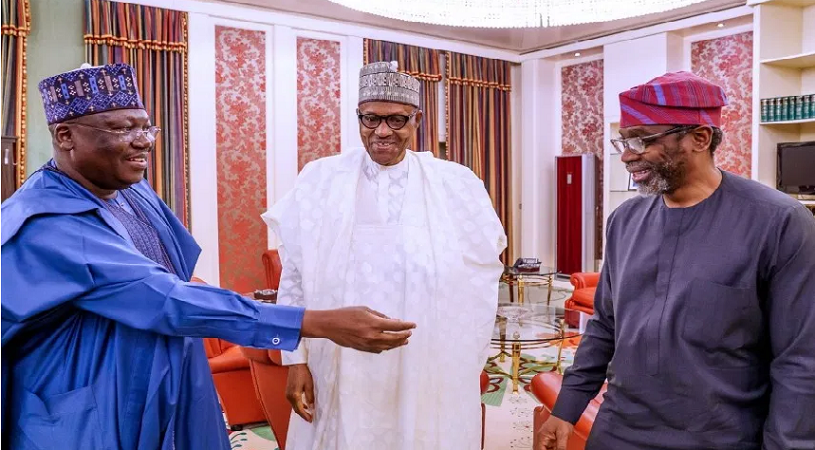
Nigeria leaders

The federal government of Nigeria has fixed a new date to end the controversial fuel subsidy, after it failed in its past attempts.

The new date was disclosed on Thursday by the Minister of Finance, Budget and National Planning, Zainab Ahmed, who appeared before the House of Representatives’ Ad Hoc Committee investigating the Petroleum Products Subsidy Regime from 2013 to 2022.

The Minister said according to the new plan, which is contained in the 2023-2025 Medium Term Expenditure Framework and Fiscal Strategy Paper, the subsidy removal will be implemented by the first half of 2023. Ahmed said the MTEF/FSP, which was approved by the National Economic Council and the Federal Executive Council, respectively, has been transmitted to the President of the Senate, Ahmad Lawan, and Speaker of the House of Representatives, Femi Gbajabiamila.

She said in a statement that not ending the subsidy means that the federal government will have to borrow more than N6 trillion to offset the budget deficit that will result from it.

“One thing that stands out in the Medium Term Expenditure Framework was that if the nation holds on to fuel subsidy as it is designed now, we will be incurring from January to December, a subsidy cost of N6.4tn. But we suggested to the Federal Executive Council, and the council approved that, maybe, we could look at the option of exiting the subsidy (regime) half year. So, if we did that, then the cost would be N3.35tn, which is half of the N6.7tn.

“The Federal Executive Council approved the second option. That is the option that was conveyed by His Excellency, the President, to the National Assembly. But Let me also say that even though this is a reduced option, it would mean that we are borrowing more than we would have borrowed if we did not have fuel subsidies.  In 2022 we are carrying the cost of subsidy throughout the whole year.

“Recall that the initial MTEF and approval by the parliament was for us to exit the subsidy by June of this year. But during the course of the year, making assessment of the difficult fiscal challenges in the economy and the hardship that our citizens are bearing due to high inflation and other challenges, we were asked to re-submit our plans and review them to include provision for fuel subsidy throughout the year 2022. That was how we came back to parliament with an incremental expense from N443bn which we had planned to up to N4tn subsidy expense in 2022,” she said.

Ahmed further stated that the subsidy payment is consuming a huge amount of funds that could have been channeled to other vital sectors of the economy.

“This situation is not desirable and it is not sustainable. It is putting the country in a very serious, dire financial situation and we do hope that we will be able to exit this subsidy regime in the shortest possible time.

“The N3.35tn in the approved MTEF that is now before the National Assembly for consideration could have been funds that would apply to other vital sectors of the economy such as health, education and social protection. So, we are carrying a burden and we must sit back as citizens and really assess whether it is beneficial for us to continue to do so,” she said.

However, the Minister did not say how the government plans to ameliorate the economic hardship that will emanate from the subsidy removal, which has been the major reason for conflict between labor unions and the federal government.

Nigeria is paying a subsidy on petroleum products because it does not have a functioning refinery, and has been importing refined products at international rates. Removing the subsidy while there is no refinery means that the Nigerian people, who are largely living beyond the poverty line, will have to buy petroleum products at unaffordable rates.

In addition, Nigerian businesses rely on power generators to function due to the country’s epileptic electricity supply. There is concern that removing the subsidy whilst the nation is still grappling with unstable electricity supply will compound Nigeria’s economic situation as it will shoot the cost of living further up.

However, experts have raised concern about the timeline for the subsidy removal. The removal is slated to take effect by June 2023, a month after President Muhammadu Buhari has left office.

Tech African Woman (TAW) Provides Support To Women-Owned African Tech Startups

0

There is no disputing the fact funding of women-led startups in Africa is extremely low when compared to that of men-led startups. In 2021, the share of investments invested in female-owned startups stood at about 6.5%, which means that just $1 in every $15 raised in the African startup ecosystem went to women-owned tech startups.

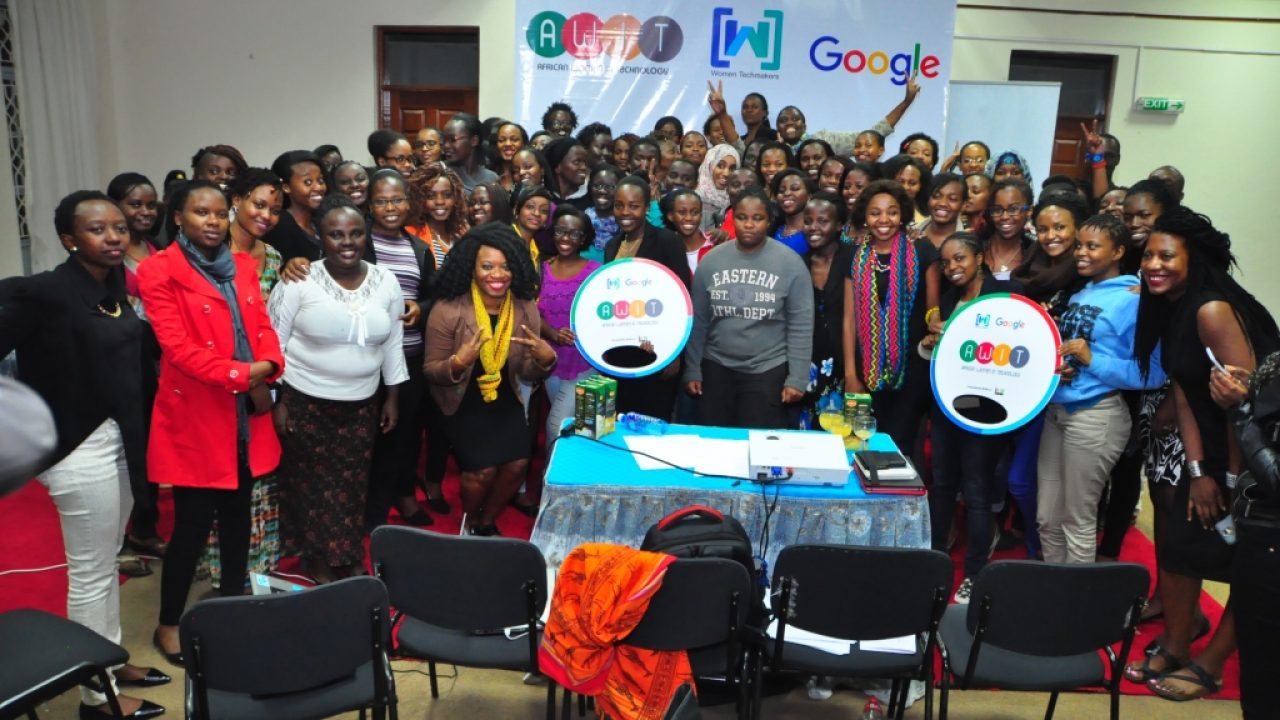
In a bid to close this wide gap between male-owned and female-owned tech startups in Africa, Ethiopia-based tech African women (TAW), recently launched a program that seeks to take startups from the idea stage to operational.

The program, which is spearheaded by the United Nations Economic Commission for Africa (ECA), in partnership with Betacube, has invited all idea stage women-owned startups from Ethiopia, Tunisia, Senegal, and Tanzania to submit their applications to join.

The program’s main objective is to empower Tech startup female founders to leverage their skills in order for them to build strong tech startups, accelerate project ideas into validated business models, and develop alliances between different African ecosystems.

The program will offer entrants access to a pool of tech developers and designers who will work to support and mentor their teams, as well as experts in marketing and finance. The program will last for a period of five (5) months, which runs from August to December, and will include training boot camps and pitching competitions, coupled with a two-month online incubation program for the best two startups from each country.

In Africa, Kenyan women tech startup founders have been reported to attract the most funding on the continent. After a careful observation as to why women-owned startups receive less funding, experts disclose that most of the female-owned startups in Africa are concentrated in non-contact sectors, as they are usually inclined towards sectors such as Health tech and edtech which has been attributed to be one of the major reasons why they do not attracting high funding.

Also, there are underlying biases and beliefs that women-driven ventures represent a riskier bet, and few women incubation programs were among other factors that make it difficult for female founders to attract investments.

Few experts disclosed that female-led startups are also less likely to be pitched for equity financing due to low confidence in their ability to pitch to investors on the growth prospects of their ventures. Instead, most of them have been reported to follow different financing paths, with a preference for bank loans retained earnings.

Although male-owned tech startups continue to receive the most funding in Africa, women founders have been disclosed to perform better, as technology firms led by women experienced a 35% higher return on investment than those led by men.

Experts disclose that investors and other venture capitalists who hold strong biases against female-owned startups, lose out by not providing financial support for women-led startups.

However, It is interesting to note that against the backdrop of a funding boom for African startups, women-led startups have witnessed a dramatic increase in investment and financing in 2022. Investments made into African female-led startups have reportedly grown nearly seven-fold over the last three years.

The August Meeting, Igbo Women Leadership And Igbos’ Centuries-Old Democracy

0

August meeting is an annual congress held by the Igbo women in August. It is a massive homecoming whereby Igbo women in the diaspora and the cities travel back to their matrimonial villages to meet with their local counterparts to discuss matters about community development, conflict management, human development, and other socio-economic and cultural initiatives. The meeting is a three-day ritual, and it is divided into three parts, the first is held at the village level, the second within the community, and the third is held in churches where thanksgivings are held to mark the end of the meeting” – Wikipedia

Growing up in an Igbo home, one of the things we looked forward to was village meetings, which parents had to attend at least once a month. It afforded us relaxing Sundays free of our bickering parents. With time, we noticed that the women’s wing of the meeting was a lot more serious than the menfolk — they had uniforms which were diligently followed, fines for latecomers and absentees, and most important to us, post-meeting debates that usually kept my mother busy on the phone. But all these monthly meetings could not compare to the August meeting which held once a year. It was a time when select members of the branches abroad travelled home to make decisions with the women in the village on issues concerning the growth of the women’s community. (Source: from the Guardian)

Igbos have practiced democracy for centuries. I can say that because kingships and thrones are rarely inherited. In Ovim, Abia State, the Eze (the king) is not inherited and that means it can move to any family, based on the decisions of the elders and councils.

Igbos empowered women well before the Western world picked the memo. Nneka – “mother is supreme”- is more than a word in the Igbo Nation. In Ovim, the Ojengwa women are like police officers in enforcing the ordinance of the local community. They can excommunicate and punish by seizing and confiscating assets as punishment. 

Umu-ada [daughters, usually married, of a clan] have enormous influence in their fatherlands. When they visit, everyone takes notice. That Uwu-ada was captured well when Chinua Achebe  in Things Fall Fall, wrote: “The following day, Uchendu gathers together his entire family, including Okonkwo. He points out that one of the most common names they give is Nneka, meaning “Mother is Supreme”—a man belongs to his fatherland and stays there when life is good, but he seeks refuge in his motherland when life is bitter and harsh.”

I can go on. The issue of gender equity built on the Western thesis is not the whole story. Most African cultures enthroned women even though men are usually more visible. In short, colonialism weakened the positions of women in Igbo Nation and other African societies as the Europeans exclusively recruited men who imposed many things through district officers. In the Aba Women riots of the late 1920s, women pushed back to the British because the new tax was affecting them more, atypical of the local ordinance.. Yes, unlike in the old culture, they were not being consulted and carried along.

When a young boy arrives at his mother’s birthplace, he automatically assumes rights over most. If you check, as elders break kola nuts and drink palm wine, they first ask “do we have nwaada here?” If there happens to be nwaada, they will acknowledge him, and once after taking the palm wine, they will give him, over the sons of the soil. The idea is this: no matter what brought you to your mother’s birthplace, you are welcome! We will feed you before we eat. You are protected from any harm.

As mothers, wives, daughters, etc return to Igbo Nation for the August Meeting, I want to wish everyone safe journeys. Deliberate in peace and continue to improve your lands. IJE OMA.

Nneka – “Mother is Supreme”

How Youniverze Can Become The Next Gen Swapping Protocol As Dogecoin and Ethereum Continue To Perform

0

A Dive Into Yuniverze

Yuniverze (YUNI) aims to become the next-generation swapping protocol that prioritises the user rather than the exchange. The platform has identified key issues within DeFi swapping that currently need addressing, especially for newer users who often find it problematic to navigate hot wallets and DEXs.

For this reason, Yuniverze is creating a swapping protocol that is easy to use through a simple UI and taking away much of the jargon and complexities with the swapping service. The barrier for new users to DeFi is currently quite high, especially as there is a distinct lack of education available for new users to find. Whilst education around crypto is growing, often this education can still be too complex for the average new user.

However, whilst prioritising user experience, Yuniverze will also offer the best prices for trading in the ecosystem by scanning the market for the best liquidity and lowest slippages. This will not only make the overall exchange and swapping market more competitive, as Yuniverze will show the cheapest price, but it will also promote the usage for even experienced traders who now will have a consolidated service.

To use the platform simply connect your wallet to Yuniverze and you have access to its swapping mechanism. For those who are interested in the project, Yuniverze is currently in its presale stages for its native coin YUNI, and will reward early investors through schemes and reward programs at a later date.

Dogecoin Remains Green

After many coins hit a 10% gain on the day yesterday it was expected that a slight downturn would persist the following day as many tokens were oversold and the RSI over-burned. However, Dogecoin (DOGE) has maintained an upward trend, debunking the wider market.

The community behind Dogecoin must be accredited for this, as they are some of the most reliable HODLers across crypto markets and arguably even stock markets. The belief that they are looking out for each other and holding for each other to present the opportunity for financial freedom down the line is stoic and empowering.

For this reason, Dogecoin has been able to see a slightly closer trading pattern than even some utility coins amidst the volatility in the markets since the fall of LUNA and high levels of inflation. With this in mind confidence for many has never been stronger within the DOGE community and many retail investors are adding to their position continuously.

It will be interesting to see how Dogecoin plays out as the market rebounds and if whales, institutions, or even celebrities decide to enter the protocol.

Ethereum Continues To Impress

Ethereum (ETH) has continued to perform well in the market since the start of July. The Layer-1 behemoth has entered its final stages of testing before the Merge occurs and while it is controversial for some ETH lovers, it has been well received across the wider community due to the benefits Proof-Of-Stake (POS) brings.

Notable, the environmental benefits are most apparent as POS is historically greener and more efficient from energy usage, helping lower the overall carbon footprint of the project. Nevertheless, ETH miners have lamented the Merge and have actively campaigned against it as they will lose a significant revenue stream when the switch occurs.

Still, Ethereum is the most influential project for the development of Web3 in the blockchain ecosystem to date and the Merge can propel ETH forward, particularly if regulation comes in to ensure certain environmental standards are met.

With the Merge approaching, expect to see much speculation around the price of ETH as a smooth merger may see strong gains for the protocol, while one that has speed bumps could cause volatility in the short run.

Royal Bank of Canada’s Evolve Summit 2022 in Toronto, Canada – Ndubuisi Ekekwe Presentation [Video]

2

My submitted presentation for Royal Bank of Canada’s Evolve Summit 2022 in Toronto, Canada today.  Due to scheduling conflicts, I spoke remotely. My topic was “Technology and Fixing the Frictions of Nations.” Watch the 30-minute presentation.

Comments on FB Feeds

Comment 1: Thank you so much my Prof. Very insightful and interesting. Let’s begin the journey of making Africa a continent of Numbers. Let’s take advantage of cloud computing technology to enhance our computational capabilities. Let us rise to fix the market frictions, ramp up our GDP and make Africa the continent of Abundance. Thank you once again Prof.

Comment 2: Great insight….well done Prof. “When you are in Canada you don’t pray for food because they are in abundant, but in Nigeria they prayed for food because they don’t even know where the next meal will come from” this got me thinking. Most of the things we tagged miracle in African, are failure of infrastructures and innovations.