DD
MM
YYYY

PAGES

DD
MM
YYYY

spot_img

PAGES

Home Blog Page 4965

How to set up a Licensed Payment Service Bank (PSB) in Nigeria

0

In a previous article of mine (Available Fintech licenses in Nigeria) i briefly spoke about a unique Fintech category known as Payment Service Banks(or PSBs) being one of the most recent entrants into the Nigerian Banking & Finance sector. The concept of PSBs is still relatively very new and there’s still a scarcity of knowledge on this potentially very lucrative Fintech business. 

What this article basically aims to do is to deal with the topics of :- 

– What Payment Service Banks are. 

– The Regulatory Framework governing Payment Service Banks in Nigeria. 

– The licensing requirements for Payment Service Banks. 

– A clear understanding of what PSBs are allowed to do and what they are barred from doing. 

What exactly is a Payment Service Bank? 

A Payment Service Bank is basically a company licensed to apply technology and Agency banking (please consult your lawyer further on the Agency Banking concept, another Fintech category on its own) to render Financial services revolving around the mobilization of deposits and the enabling of Monetary transfers from “unbanked” customers in rural regions or other locations in the country where they exist. 

What is the Regulatory Framework governing Payment Service Banks in Nigeria? 

Payment Service Banks in Nigeria are licensed and governed by the Central Bank of Nigeria(CBN) through the Banks and Other Financial Institutions Act (BOFIA) and more specifically the  CBN Guidelines For Payment Service Banks in Nigeria 2020(or ‘The Guidelines’) 

What exactly are the permissible and non-permissible activities for Payment Service Banks as stated in the Guidelines? 

The following activities are permitted for PSBs under the CBN Guidelines:- 

– Rendering Banking services revolving around savings, accepting deposits covered by the deposit insurance scheme and Monetary withdrawals. 

– Deploying ATMs and Point of Sale (POS) devices. 

– Carrying out payments and remittances through various channels within Nigeria including inbound cross-border personal remittances. 

– Selling Foreign Exchange/Forex realized from inbound cross-border personal remittances to authorized foreign exchange dealers. 

– The issuance of Debit & Prepaid cards in its name. 

– The operation of electronic wallets. 

– The rendering of Financial advisory services. 

– Investing in FGN & CBN securities. 

However, the following activities are deemed non-permissible for PSBs by the Central Bank of Nigeria:- 

– The rendering of loan, advance and guarantee services. 

– Accepting Forex deposits. 

– Dealing in the Forex market except as prescribed under the Guidelines. 

– Insurance undertaking. 

– Undertaking in any other transaction not prescribed as permissible under the Guidelines. 

– Accepting any closed scheme electronic value (such as airtime) as payments or deposits. 

– Establishing any subsidiary except as prescribed in the CBN Regulations on the scope of Banking & Ancillary matters. 

Who can promote or apply to set up a Payment Service Bank? 

The following can promote (check my previous article “How to secure Investment funding in Nigeria” for the definition of a promoter) a Payment Service Bank as stated under the CBN Guidelines :- 

– Banking Agents (licensed agents). 

– Telecommunication companies through a subsidiary. 

– Supermarkets. 

– Downstream Petroleum marketing companies. 

– Financial technology companies. 

– Postal service providers and Courier companies (check my previous article “How to set up a licensed Courier/Logistics Company in Nigeria” ). 

– Mobile Money Operators. 

– Switching companies. 

– Financial technology (Fintech) companies. 

– Financial holding companies. 

– Any other entity on the merit of its application subject to the approval of the Central Bank of Nigeria. 

What is the procedure for obtaining a Payment Service Bank license in Nigeria? 

Getting a PSB License in Nigeria is in 2 stages which are:- 

a). The Approval-In-Principle (AIP) stage. 

b). The Final License grant stage. 

The Approval-In-Principle Stage. 

To get an AIP requires submitting through your lawyer a formal application for the grant of a PSB License to the Governor of the Central Bank of Nigeria through the Director, Financial Policy & Regulation Department (FPRD) with a proposal containing the business case, vision, strategy, corporate governance arrangement/policy, risk management and Financial viability statement attached. 

This proposal is to be backed up with –  

a). a non-refundable application fee of 500 Thousand Naira in a Bank draft payable to the Central Bank of Nigeria; 

b). evidence of capital contributions made by each shareholder; 

c). evidence of name reservation with the Corporate Affairs Commission (CAC); 

d). a detailed Feasibility report/business plan; 

e). a draft copy of the company’s MEMART Memorandum & Articles of Association; 

f). a written & duly executed undertaking by the promoters that the bank will be adequately capitalized for the volume & nature of its business at all times & that the CBN shall have powers to supervise and regulate its operations; 

g). a shareholder’s agreement providing for disposal and transfer of shares as well as authorizations, amendments, waivers & reimbursement of expenses; 

h). a Technical Services Agreement; 

i). a Statement of Intent to invest in the Bank by each investor. 

Where the Bank is sought to be promoted by corporate investors, the following will be required: 

– a Certificate of Incorporation & Certified True Copies (CTCs) of other incorporation documents of the corporate investors; 

– a copy of the Corporate Investor’s Board Resolution confirming its decision to invest in the equity shares of the proposed bank; 

– the names and addresses (business and residential) of owners and directors of the corporate investors as well as their related companies if any; 

– audited financial statements & reports of the company and Tax clearance certificates of the immediate past 3 years (this may not apply for newly formed companies); 

Upon the receipt and consideration of the above requirements, the CBN will send a notification to the applicant communicating its decision then followed by the grant of the AIP.  

It should be noted that applicants for a PSB license are not allowed to register a PSB with the Corporate Affairs Commission expect upon the presentation of an AIP obtained from the CAC. 

Final License Grant Stage 

An application by your lawyer for a Final license grant should be made within 6 months after the grant of an AIP  to the CBN along with:- 

– a non-refundable license fee of 2 Million Naira in Bank draft payable to the Central Bank of Nigeria; 

– a Certified True Copy (CTC) of the Certificate of Incorporation of the PSB; 

– a Certified True Copy of the PSBs MEMART (Memorandum &  Articles of Association) and its CAC  Form1.1; 

– evidence of the location of the PSB Head Office (including information on whether the building is owned or rented) for its takeoff; 

– a schedule of changes in the board of directors and shareholding structure of the PSB after the AIP grant; 

– evidence of ability to meet technical requirements and modern infrastructural facilities such as office equipment, computers, and Telecommunication capabilities needed to carry out PSB operations and meet all its Regulatory Compliance requirements; 

– copies of letters of employment offer & acceptance regarding its management team ; 

– detailed resumes of its top management staff; 

– completed fitness & propriety questionnaires and sworn declarations of net worth executed by the PSB’s top management staff; 

– information on the BVN and Tax clearance certificates of each top management staff of the PSB; 

– a comprehensive plan on the commencement of the bank’s operations with milestones and timelines for the rollout of crucial payment channels; 

– board and staff training programs; 

– other inspections like capital contribution verifications; 

– physical inspections of the PSB office structure and meeting with its board of directors and management team whose resumes had earlier been submitted to the Central Bank of Nigeria alone with the presentation of original copies of documents submitted for the purpose of the final license grant. 

How long does it take for an AIP/Approval-In-Principle application to be processed? 

Treating an AIP application takes 90 days. 

What is the required minimum share capital for Payment Service Banks? 

The stated minimum share capital for Payment Service Banks is 5 Billion Naira. 

What are some of the most notable operation requirements for Payment Service Banks under the CBN Guidelines? 

Some of the most notable operational requirements of the CBN Guidelines For PSBs include:- 

– The overall requirement that PSBs are to be strictly Tech-driven and are required to comply with best practices and Regulatory requirements on Data storage,security and integrity. 

– The name of a Payment Service Bank shall not include any word that links it to its parent company e.g. MTN Nigeria and its PSB subsidiary,MoMo or Airtel Nigeria and its PSB subsidiary, Smartcash PSB. 

– PSBs are at liberty to operate through Banking agents in line with the CBN Guidelines For the Regulation of Agency Banking & Agent Banking Relationships in Nigeria. 

– PSBs can roll out agent networks with the prior approval of the CBN (this is where smaller Fintech companies can come in). 

– PSBs are to rely on electronic platforms to reach out to its customers. 

– PSBs are required to establish coordinating centers in clusters of outlets to superintend and control the activities of the various financial service touch points & banking agents as well as set up consumer help desks (physical & online) at its main office & coordinating centers. 

Conclusion :- Payment Service Banks have come to stay and remain one of the most innovative disruptions in the Nigerian Fintech space, leading to unprecedented levels of Financial Inclusion, low operating costs, and astonishing profits for some of the early investors in this business. The consequently vast Regulatory requirements governing PSBs, unable to be captured by this article, are a major reason why intending participants in this Fintech subsector need to further consult trained professionals to be properly guided going forward.

Fintech Startup Palmpay Launches New Payment Security Campaign

0
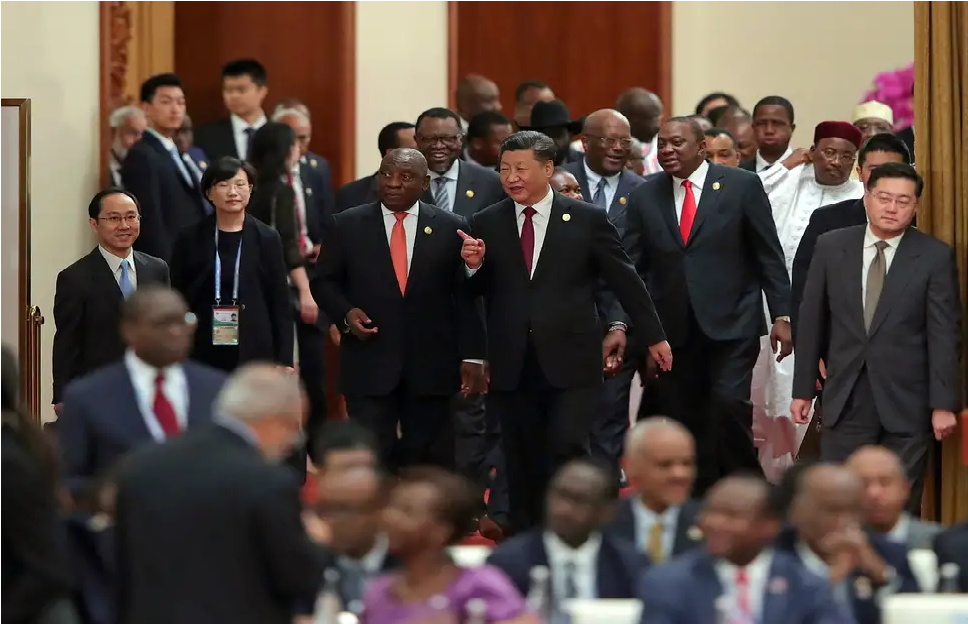
FILE PHOTO: (L-R) Solomon Islands Prime Minister Manasseh Sogavare, Solomon Islands Foreign Minister Jeremiah Manele, Chinese Premier Li Keqiang and Chinese State Councillor and Foreign Minister Wang Yi attend a signing ceremony at the Great Hall of the People in Beijing, China October 9, 2019. REUTERS/Thomas Peter/File Photo

There is no disputing the fact that the exponential growth of digital financial platforms (Fintechs), renders them susceptible to security network breaches due to the vital data they possess, which also makes them a potential target for cybercriminals.

In a bid to accelerate payment and cybersecurity awareness among customers, Nigerian Fintech startup, Palmpay which promotes financial inclusion and enhances consumer experiences, has launched a new payment campaign.

This campaign will help to raise payment security awareness in a desperate attempt to help customers improve their overall security knowledge, and learn about how to spot and avoid e-scammers. The campaign comes as internet penetration and digital payment in Africa have significantly increased in recent years.

A number of potential issues, including fake news, leakage of personal information, and financial scams have emerged as a result of this rapid expansion in connectivity.

With the launch of its wallet-safe workshop, Palmpay will use both online and offline channels, including the app, social media, official websites, and printed materials to publicize and expose examples of social media and telecom fraud, as well as how to spot fraudulent behavior.

The company will also improve anti-fraud warning education for vulnerable groups such as students and senior citizens, and as well promote legal provisions related to the proper use of mobile wallet accounts to effectively raise people’s awareness of combating and managing telecom fraud and cybersecurity.

The managing director of Palmpay, Chika Nwosu disclosed that the fintech startup is also looking forward to collaborating with law enforcement agencies to prevent fraud on its platform and as well ensure payment security.

In his words;

“The expanding use of digital payments brings new risk and security concerns. Palmpay is committed to delivering users with a secure and trustworthy digital payment experience. We will continue to optimize our risk control procedures, and look forward to collaborating with law enforcement and cybersecurity partners to prevent fraud and secure payment security”.

Chika Nwosu also disclosed that the right fraud monitoring and know your customer (KYC) approaches are key to the current rise in fraud attempts. With robust anti-fraud and KYC systems, PalmPay protects its users from fraud and unauthorized use with various protective measures, including real-time risk control and abnormal behavior detection, which automatically monitors, flags, and freezes high-risk transactions and accounts.

If a person suspects that they or someone else has been a victim of fraudulent activities, they can contact PalmPay customer service via in-app chat, email, social media, or call center. PalmPay will investigate and freeze accounts to avoid additional loss due to fraudulent activities and to maximize the chances of tracing and retrieving funds.

According to a Nigeria Inter-Bank Settlement System report, the total number of fraud attempts in Nigeria has grown by 186% from 2019 to 2020. Mobile fraud attempts jumped 330% year over year, while web and POS fraud attempts rose 173% and 215% respectively.

The digital world is no doubt ruled by fintech applications and software, from online banking to mobile wallets, which makes it easy for people to send and receive funds, as well as save money.

However, despite the positive impact of Fintech today, the chances of security breaches and data theft have also increased which often result in the loss of sensitive personal and financial information. It has therefore become a top priority for financial institutions to guarantee the security of users’ transactions.

China Opens the Vault for Africa

0

“China will waive the 23 interest-free loans for 17 African countries that had matured by the end of 2021. We will also continue to increase imports from Africa, support the greater development of Africa’s agricultural and manufacturing sectors, and expand cooperation in emerging industries such as the digital economy, and health, green and low-carbon sectors….

“So far this year, China has signed an exchange of letters with 12 African countries on zero tariffs for 98% of their export items to China. We have provided emergency food assistance to Djibouti, Ethiopia, Somalia, and Eritrea. More African agricultural produce has reached the Chinese market through the green lanes”,  Wang Yi for Chinese government. (read more here)

Now, over to US, Russia, EU, etc. Can we get some waivers? Hahaha. Africa surprised the EU/USA by staying largely neutral on the Russia-Ukraine conflict – and that call has made it clear that economic diplomacy works. China wants to take it to another level because you never know when you need some votes in the United Nations. We’re entering a multi-polar world at scale.

Comment on Feedback

Comment 1: Well played China. The only way China can counter western initiatives on the continent is using economic incentives like this. The west is doing alot that are very subtle as well but not on the grand level like China. All the VC pouring into Africa, where do you think the money is coming from? The battle is real for Africa. The west has used education and security and slacked off on the economy and China has dominated that space since. Now to the real issue, this will counter the effort of Africa Continental Free Trade Agreement and slow down the implementation.

For AfCTA to achieve its goals every African state has to believe in it and work its salvation out with fear and trembling for that $3.4T GDP to be achieved. If I am in China’s shoes, I will probably do the same, the new US Sub Sahara Africa Strategy is bold and it needs African nation to work for its dependence through investments. China play is to secure its interest on the continent for resources shipping out of the continent to serve its people. Until China allows Africans to gain the same prominence in China, like Chinese have done in Africa, then there might be a different view of China… The geopolitical game is not for the weak or faith hearted.

Comment 2; Sir, this to me appears as a very big Trojan horse, this offer from China, while on the surface appears to be altruistic comes from a carefully crafted cost-benefit analysis. China must have asked and confirmed that they have far more to gain in directing much needed raw materials to its factories that drag for loan repayment.

Comment 3: It is saddening —or should I say unbelievable —to a country like Angola as one of the most indebted countries, not to talk of Nigeria, to China despite being regarded as one of the world’s fastest-growing economies, and projected to be a developed economy in the nearest future.

What (has) happened along the line? Is it the same problem(curse) of the petrodollar economy heavily bedeviling Nigeria?

Or the menace of maniac corruption by public officials with the help of private businesses?

Comment 4: Yes sir.

This era will equally require the abandonment or total overhaul of the purported Non-Alignment foreign policy.
I don’t think those African countries can continue to sit idly after carousing the Chinese gift without recompense.
Nevertheless, my utmost concern is whether china with their current own goal style (case of Alibaba and co) will favour a global order of stakeholder-capitalism capable of transmitting desired prosperity which includes human rights protections.
We wait to see!

My Response 4: “Nevertheless, my utmost concern is whether china with their current own goal style ” – China does not see that as an own-goal. They believe that you cannot allow some people to aggregate all the wealth to themselves. Provided that wealth is not aggregated, it remains spread/available to everyone. Would you prefer one Alibaba to support 500 million savers or 10,000 microfinance to do the same? Would you prefer 10 apps to teach 20 million kids or 10,000 schools to do so? They have different ways they see capitalism and wealth.

China To Waive Matured 23 Interest-Free Loans For 17 African Nations

China To Waive Matured 23 Interest-Free Loans For 17 African Nations

8

Over the years, China has established itself as Africa’s largest bilateral lender whereby the country helps to bankroll key infrastructure projects on the continent as well as giving out loans.

Just recently, the Chinese government has planned to waive 23 matured interest-free loans for 17 African countries, as well as provide food assistance to struggling nations in the region.

China has also promised to redirect $10 billion of its International Monetary Fund reserves to these nations on the continent. This statement was made by the state councilor Wang Yi at the coordinator’s meeting on the implementation of the follow-up actions of the Eighth Ministerial Conference of the forum on China-Africa cooperation. (FOCAC).

Here is what the minister said;

“China will waive the 23 interest-free loans for 17 African countries that had matured by the end of 2021. We will also continue to increase imports from Africa, support the greater development of Africa’s agricultural and manufacturing sectors, and expand cooperation in emerging industries such as the digital economy, and health, green and low-carbon sectors.

What Africa wishes for is a favorable and amicable cooperation environment, not the zero-sum cold war mentality. So far this year, China has signed an exchange of letters with 12 African countries on zero tariffs for 98% of their export items to China. We have provided emergency food assistance to Djibouti, Ethiopia, Somalia, and Eritrea. More African agricultural produce has reached the Chinese market through the green lanes”.

Although the 17 African countries were not disclosed by the minister, however, checks show that South Africa, Angola, The Democratic Republic of Congo, Uganda, Kenya, and Djibouti are among African countries with high debt exposures to China.

As of 2020, the African nations with the highest external debt to China as a percentage of gross national income are Djibouti (43%), Angola (41%), and The Democratic Republic of Congo (29%). Kenya, South Africa, and Uganda have been disclosed as the numerous African states that have borrowed heavily from China.

It is interesting to note that since the year 2000, Beijing has announced multiple rounds of debt forgiveness of interest-free loans to African countries, canceling at least $3.4 billion of debt through 2019. The canceled debt was limited to mature, interest-free foreign aid loans, with Zambia receiving the most cancellations over the period.

Beijing’s lending practices to poorer nations, most especially countries in the African region, account for almost 40% of the bilateral and private credit or debt that the world’s poorest countries need to service this year.

With its continuous lending, Chinese banks now make up about one-fifth of all lending to Africa, concentrated in a few strategic and resource-rich African countries. However, China’s lending to African nations have over the years come under severe criticism, as experts and analysts describe such lending as debt traps.

They disclosed that China is deliberately investing in African countries to gain control over key assets, which they described as debt-trap diplomacy. This implies that Chinese loans are collateralized by strategically important assets, from mineral resources to port projects, as the debts are used to deliberately leverage or extract strategic advantages from poor indebted countries including asset seizures when they are unable to meet debt obligations.

In March 2022, Bloomberg reported that despite claims that China was making countries in Africa uncomfortable with its large infrastructure projects and lendings, a deeper look into the evidence showed that the accusations towards China on doing debt-trap diplomacy in the continent, was “unfounded”.

Building AI Startups – Case Study of Edekee | Tekedia Mini-MBA

0

oin us at Tekedia Mini-MBA Live as we host one of the finest AI startups in Africa. Its US patent pending technology has opened a new basis on how we shop on videos. This is a fusion of computational vision, AI/ML and quantitative psychology. Yes, we will host the amazing Edekee. CEO Paul Onaodowan will lead the session at 7pm WAT.

If you are watching a video and you like Davido’s sneakers, you can pause that video, and buy that item right there – and then continue your video. Ecommerce website built on a video channel.  Ecommerce built on a smart TV. … And this AI is cooked in Lagos even as we guide the innovators to find global patents.

Tekedia Institute >> learn from the best. The next Tekedia Mini-MBA begins Sept 12. Join us here