DD
MM
YYYY

PAGES

DD
MM
YYYY

spot_img

PAGES

Home Blog Page 497

Bitcoin Price Retraces as Fed Delivers 25bps Rate Cut Amid Sluggish Market Reaction

0
CREATOR: gd-jpeg v1.0 (using IJG JPEG v80), quality = 82

Bitcoin’s price pulled back following the U.S. Federal Reserve’s announcement of a 25-basis-point interest rate cut, as markets reacted tepidly to the widely anticipated move.

The cryptocurrency, often viewed as a hedge against monetary policy shifts, faced volatility amid broader economic uncertainty, with investors weighing the implications of the Fed’s cautious approach to easing.

BTC’s price briefly dipped to a session low of $114,940 before rebounding slightly to trade near $116,198 at the time of writing.

The immediate reaction across the cryptocurrency market was muted, with the total crypto market cap slipping 1% to hover around $4.1 trillion during the mid-North American session.

Bitcoin’s Price Action and Market Sentiment

Bitcoin had fueled a bullish run across the broader crypto market over the past few weeks, but momentum has started to fade. Traders remain cautious, balancing optimism from the Fed’s dovish stance with lingering uncertainty in global macroeconomic conditions.

Market analyst Nic Puckrin previously warned that the rate cut may have already been priced in, raising the possibility of a short-term “sell-the-news” reaction. While lower borrowing costs typically favor risk assets such as cryptocurrencies, the initial excitement could wane quickly, potentially leading to near-term volatility.

The Federal Open Market Committee (FOMC) statement on Wednesday revealed signs of a cooling U.S. economy, noting: Job gains have slowed, Unemployment has edged higher and Inflation remains elevated, though gradually declining.

The Fed acknowledged that downside risks to employment are increasing, signaling a shift toward a more dovish policy stance. New projections also point to an additional 50 basis points in rate cuts expected through 2025, reflecting the central bank’s growing focus on supporting growth and employment over aggressive inflation control.

Despite this, Bitcoin’s response has been sluggish. BTC is currently consolidating rather than showing strong directional momentum, with traders waiting for clearer market signals.

Market Reactions and Investor Behavior

According to CryptoQuant, investor sentiment remains cautiously optimistic. Large holders, or “whales,” are holding onto Bitcoin and Ethereum, suggesting they expect prices to rise following the rate cut. “In general, a Fed cut is a positive catalyst for risk assets such as cryptocurrencies,”said Julio Moreno, Head of Research at CryptoQuant.

This trend indicates that the recent drop in prices may represent accumulation opportunities, as traders position for potential upside once market uncertainty clears.

Former Ark Invest crypto lead Chris Burniske believes a major structural shift is coming to the crypto market.

Historically, narratives have been the driving force behind price movements — for instance, September is traditionally viewed as a weak month for crypto. However, research from Coinbase now suggests these seasonality trends may no longer reliably predict market performance, especially for Bitcoin.

Burniske predicts that in the years ahead, “price (via flows) will drive narratives” rather than the other way around, signaling a maturing market dynamic.

Looking Ahead

While the Fed’s rate cut could ultimately act as a tailwind for cryptocurrencies, the short-term outlook for Bitcoin remains uncertain.

With BTC consolidating near the $115,000 mark, traders will be watching closely for a decisive breakout above $117,000, which could signal renewed bullish momentum.

For now, Bitcoin’s fate remains tied to global macroeconomic trends, Fed policy shifts, and investor sentiment — factors that will continue to shape the trajectory of the crypto market in the weeks ahead.


WTO Warns AI Could Boost Global Trade by 40% by 2040 — But Risks Widening Economic Divides

0

Artificial intelligence could transform the global trading system, boosting the value of goods and services trade by nearly 40% by 2040, but without adequate safeguards, it also risks deepening inequality, the World Trade Organization (WTO) warned on Wednesday.

In its latest World Trade Report, the WTO projected that global trade could rise between 34% and 37% under various scenarios as AI reduces costs and enhances productivity. Global GDP, the report added, could expand by 12-13% in the same period, underlining AI’s disruptive potential for the world economy.

“AI could be a bright spot for trade in an increasingly complex trading environment,” said WTO Deputy Director General Johanna Hill, presenting the findings.

She acknowledged the turbulence facing the multilateral trading system, including this year’s wave of tariffs imposed by U.S. President Donald Trump’s administration, but noted that AI was fundamentally reshaping how economies connect.

According to the report, businesses could achieve significant savings in logistics, regulatory compliance, and communications, while AI-driven translation tools would lower barriers for small producers and retailers seeking entry into international markets. The WTO estimated that such technologies could help raise export growth in low-income countries by as much as 11% — provided these nations invest in strengthening their digital infrastructure.

However, the organization cautioned that the gains from AI will not be automatic. Without targeted investments and inclusive policies, the report said, AI could exacerbate the divides between advanced and developing economies.

“The effects of the development and deployment of AI are raising concerns that many workers, and even entire economies, could be left behind,” the WTO warned.

Director General Ngozi Okonjo-Iweala, speaking at the launch event in Geneva, stressed the importance of proactive policymaking to mitigate the risks.

“AI could upend labor markets, transforming some jobs whilst displacing others. Managing these shifts demands investment in domestic policies to enhance education, skills, retraining and social safety nets,” she said.

To ensure the benefits of AI are distributed more equitably, the WTO recommended predictable trade policies under its rules framework, as well as lowering tariffs on raw materials critical to AI technologies, such as semiconductors.

Divergent Futures

The WTO report also opens the door to several possible futures for global trade as AI adoption accelerates.

In the first possible outcome, advanced economies integrate AI rapidly, streamlining supply chains and cutting costs while boosting exports. This could reinforce existing trade imbalances if developing nations cannot match the same pace, widening the gap between wealthy and poorer regions. Under this pathway, low-income countries risk losing competitiveness in sectors like textiles, agriculture, and light manufacturing, where AI-enabled logistics and compliance systems will favor countries with robust digital infrastructure.

In a more inclusive future, however, international cooperation and targeted investments help bridge the gap. If low-income nations succeed in building out digital infrastructure and skills training, AI-driven translation and communication tools could enable even micro and small businesses to plug into global supply chains. The WTO estimates that such a trajectory could lift exports in low-income economies by up to 11%, giving them a foothold in higher-value global markets.

There is also a risk scenario where fragmented AI policies and trade restrictions — such as tariffs on semiconductors or competing governance frameworks in the U.S., Europe, and China — slow the adoption of AI across borders. This would blunt the projected gains in global trade and GDP, while reinforcing geopolitical divides.

The findings place the WTO at the heart of an emerging debate on how artificial intelligence could reshape globalization itself. Proponents see the potential for AI to make cross-border commerce cheaper and faster, improving supply chain efficiency and enabling even small firms to compete globally. But labor groups and development economists warn that countries lacking strong digital infrastructure or retraining systems risk being left behind as AI accelerates change.

The WTO’s analysis makes clear that AI’s impact on trade and growth will be profound but uneven, leaving policy choices in the next decade as the deciding factor between shared prosperity and deepening global divides.

What Crypto to Buy Now? Why BlockDAG, XRP, Pi Network & PEPE Are Surging in September

0

The search for what crypto to buy now is no longer about who can shout the loudest. It is about who can deliver real progress you can see and measure. Traders are turning away from lofty promises and looking for projects that already have traction, live systems, and meaningful communities.

From robust testnets to reliable payment use cases and viral popularity, four projects stand out in September 2025: BlockDAG (BDAG), XRP, Pi Network, and PEPE. Each one tells a different story, but one project is clearly rewriting the rules before launch.

1. BlockDAG (BDAG): Awakening Testnet Proves More Than Hype

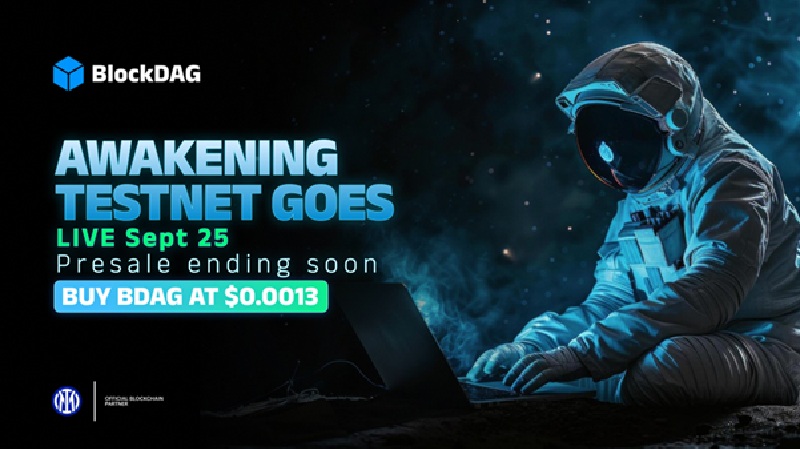
Most projects delay infrastructure until after launch. BlockDAG is taking the opposite approach. Its Awakening Testnet, set for September 25, is not a simulation. It is a functioning system designed to operate under real-world pressure. Account abstraction, UTXO removal, EIP-4337 groundwork, and a full explorer stack are not in the planning phase; they are already live.

That makes BlockDAG unusual in a market full of paper promises. It is offering a working chain with training wheels, where early users are treated as pioneers rather than just test subjects. The results are clear: nearly $410 million raised, more than 26.2 billion BDAG sold, and early buyers sitting on a 2,900% Gain since Batch 1.

While Batch 30 has priced BlockDAG (BDAG) at $0.03, the presale still allows purchases at $0.0013 until October 1. With nearly 20K miners shipped and millions using its X1 mobile mining app daily, the infrastructure is not a dream. It is operating right now. For anyone asking what crypto to buy now, BlockDAG leads by showing proof before its mainnet even arrives.

2. XRP: Stability in the Middle of Uncertainty

XRP continues to hold steady despite the long legal saga surrounding Ripple’s regulatory battles. As of September 2025, XRP trades around $0.51, moving within a tight range between $0.47 and $0.54. That resilience has made it attractive for those who value consistency over wild speculation.

Ripple’s continued partnerships with institutions and pilots for cross-border CBDCs reinforce XRP’s role as a practical payment coin. Market watchers follow XRP price prediction after lawsuit outcomes closely, but the coin has already shown it can endure uncertainty and remain useful.

For buyers searching for what crypto to buy now with established credibility and strong use cases, XRP offers security in a space that often swings wildly. It may not deliver quick spikes, but its balance between regulation and adoption keeps it firmly in play.

3. Pi Network: Could the Waiting Finally Pay Off?

Pi Network has grown into one of the most downloaded crypto apps in the world, and anticipation around its mainnet launch is still building. By September 2025, it has yet to release a fully tradable coin, leaving early miners and community participants waiting.

Still, internal updates and an expanding developer base hint that Q4 2025 may finally bring the long-promised mainnet. OTC activity and community estimates place Pi’s value anywhere from $5 to $25, though the lack of listings makes these figures speculative.

For those who can tolerate risk and uncertainty, Pi Network could turn into a powerful early-mover story. It remains unproven, but with an enormous base of users ready to transition. If you are considering what crypto to buy now for high potential entry, Pi sits as a gamble that could pay out big if the team delivers.

4. Pepe (PEPE): Meme Energy Still Holding On

Pepe has cooled from its explosive early rallies, but as of September 2025, it trades near $0.00000092, holding after a rocky August. While other meme coins have appeared, Pepe remains among the top in market cap thanks to early traction and strong brand awareness.

Volume has shown signs of recovery, with larger wallets accumulating again. That suggests confidence that PEPE could bounce if another meme-driven cycle takes hold. It is no longer an early-entry play, but for those seeking speculative bets tied to social sentiment, it remains compelling.

Meme coins carry risk, but they can deliver sudden and oversized gains. Pepe may not be the safest choice, but it is still one of the coins people track when looking at what crypto to buy now for short-term, high-volatility plays.

Final Thoughts: Why BlockDAG Stands Out

Choosing what crypto to buy now in September 2025 requires more than chasing noise. XRP offers credibility and payment utility. Pi Network is building toward a mainnet that could unlock value for millions. Pepe taps into the cultural energy of meme trading.

But BlockDAG is the one rewriting expectations. With nearly $410 million raised, over 26.2 billion coins sold, and a full-featured testnet already proving its claims, it is showing real execution. Add in the $0.0013 price lock until October 1 against the $0.03 batch price, and the urgency becomes obvious.

For anyone searching for real delivery matched with undervalued entry, BlockDAG is the clear answer to the question of what crypto to buy now.

Waymo Teams Up with Lyft to Launch Robo Taxi in Nashville, Tennessee

0

Waymo has deepened its push into the U.S. robo taxi market with a new partnership, this time teaming up with Lyft to launch in Nashville, Tennessee, next year.

The move marks the first commercial deal between the Alphabet-owned autonomous driving company and Lyft, signaling another major step in scaling driverless ride-hailing across the country.

The announcement sent Lyft shares surging 10% on Wednesday, as investors interpreted the deal as a strategic lifeline for the smaller ride-hailing player in its battle with Uber.

Under the agreement, Nashville riders will be able to hail a Waymo robotaxi through the dedicated Waymo One app, while Lyft will also integrate Waymo vehicles into its platform gradually. In exchange, Lyft will provide end-to-end fleet management services, covering vehicle readiness, maintenance, infrastructure, and depot operations in the city, according to a joint statement from both companies.

The collaboration extends Waymo’s already significant lead in the robotaxi sector. The company has established commercial operations in Phoenix, San Francisco, Los Angeles, Austin, and Atlanta, surpassing 10 million paid trips as of May. Its roadmap includes planned rollouts in Miami, Washington, D.C., Dallas, Denver, and now Nashville in 2025.

Lyft CEO David Risher framed the moment as “formative” for the autonomous mobility industry. Speaking on CNBC’s Squawk on the Street, Risher said: “What we see in markets where there are autonomous cars … we actually see those markets growing faster, faster than a lot of the other markets we operate in.”

The deal underscores how the rapid growth of the robotaxi market is stirring fierce competition in the United States. With the potential to reshape urban transport economics, ride-hailing giants are striking partnerships with autonomous vehicle makers in a bid to secure their share of the future.

Uber has been aggressive in positioning itself for the driverless era. Although it sold its self-driving unit in 2020, it has leaned on partnerships, teaming up with Aurora for long-haul trucking and working with Motional to test robotaxis in select markets. The company’s global scale gives it leverage, and with a market capitalization now above $200 billion—roughly 25 times larger than Lyft—it has the financial muscle to push its advantage.

Lyft, by contrast, has faced tighter margins and a smaller market presence, making the Waymo partnership a critical move. While it previously collaborated with Waymo in Phoenix in 2019 and recently launched a pilot with May Mobility in Atlanta, the Nashville rollout marks its most ambitious foray yet into commercial autonomy. Lyft is carving out a niche role in the ecosystem beyond simply matching riders and drivers by providing fleet management for Waymo vehicles.

Tesla, which has long promoted its Full Self-Driving (FSD) software as a stepping stone to autonomy, continues to run limited tests but has yet to field a true commercial robotaxi service. Analysts say its vertically integrated model—selling cars equipped with FSD directly to consumers—could allow it to bypass traditional ride-hailing if its technology proves reliable.

Amazon’s Zoox, meanwhile, is developing purpose-built autonomous vehicles designed specifically for shared rides, though its deployment remains in the testing phase. Smaller startups like Wayve, Nuro, and May Mobility are also competing, focusing on niche markets such as last-mile delivery or shuttle services.

Internationally, Waymo’s most formidable competitor is China’s Baidu, whose Apollo Go service has scaled rapidly. Baidu is also looking outward, announcing partnerships with Lyft to launch in Europe and with Uber to expand into Asia and the Middle East. This global chessboard highlights the urgency for U.S. players to expand quickly or risk losing ground to Chinese rivals.

For now, Waymo’s advantage lies in its proven scale and technology, but the race is far from settled. Each player is pursuing a different strategy: Uber with global reach and partnerships, Lyft with fleet operations and niche alliances, Tesla with a hardware-plus-software consumer model, and Zoox with specialized vehicles.

Analysts believe Nashville is not just another rollout city for Waymo and Lyft—it represents a testbed for how robotaxis will be integrated into mainstream ride-hailing at scale. As the competition intensifies, the winners will likely be those able to balance cutting-edge technology with sustainable business models and consumer trust.

300+ dApps in the Making: How Soon Will BlockDAG Beat Ethereum’s Dominance and Tron’s $0.40 Push

0

Ethereum has reclaimed the spotlight, breaking past $4,500 and setting its sights on the elusive $5,000 level. Analysts tracking Ethereum (ETH) bullish analysis see structural tailwinds: ETF inflows, 6.7M ETH in fund holdings, and heavy wallet accumulation.

Tron, meanwhile, has triggered adoption waves by slashing fees by 60%, with its network clearing over $21B in daily USDT transfers. Tron (TRX) price prediction suggests a breakout to $0.40 if $0.36 resistance falls, backed by treasury expansion moves that mirror MicroStrategy’s Bitcoin strategy.

Yet while ETH and TRX fight technical battles, BlockDAG is quietly rewriting the presale playbook. With nearly $410 million raised, 26.2B coins sold, 312K holders, and 3M X1 users, its ecosystem is alive even before the launch of Awakening Testnet. At $0.0013, BDAG offers asymmetry that ETH and TRX can’t match, making it the best long term cryptos today.

Ethereum Breaks $4,500: Is $5,000 the Next Big Level?

Ethereum has broken through the $4,500 mark, setting sights on resistance at $4,635 and $4,665 before testing the key $5,000 barrier. Analysts say holding above $4,500 is critical, as a drop below $4,500 or $4,000 could revive bearish pressure.

On-chain data adds weight to the bullish case. Fund holdings have climbed to 6.7 million ETH, while large wallets now control 20.6 million ETH — signs of strong institutional demand. Liquidity above $4,500 has been cleared, with new support forming around $4,210–$4,275.

Experts highlight $5,000 as the next major trigger: a breakout could spark FOMO-driven buying, potentially pushing ETH toward $5,780. With ETF inflows, staking growth, and long-term wallet accumulation in play, Ethereum’s momentum appears more structural than speculative.

If it sustains above $4,500, the setup points to a test of $5,000, making it one of the strongest large-cap crypto plays heading into Q4.

TRON Slashes Fees as TRX Price Eyes Breakout Toward $0.40

TRON (TRX) surged to $0.3447 after a governance vote cut transaction fees by 60%, reducing average TRC20 transfer costs from 4.4 TRX to 2.1 TRX. The move sharply lowered weekly fees, making the network more affordable for regular users and potentially boosting adoption.

The network continues to dominate stablecoin activity, processing more than $21 billion in daily USDT transfers, which ensures steady demand for TRX as gas. At the same time, TRON Inc. expanded its treasury by $110 million and set plans to raise $1 billion for further TRX accumulation, a strategy similar to MicroStrategy’s Bitcoin play.

Currently trading between $0.32 and $0.36, TRX is about 20% below its all-time high of $0.4313. Analysts suggest a breakout above $0.36 could push prices toward $0.38–$0.40, supported by lower fees, rising USDT flows, and long-term institutional backing.

Nearly $410M Raised, 3M+ Mobile Miners: BlockDAG Is Exploding!

BlockDAG is not just another presale coin; it’s already proving itself as both a crypto goldmine and a developer’s playground. With over 4,500 developers building 300+ decentralized apps (dApps), BlockDAG is showing that it has more than hype: it has real builders betting on its future. This makes BDAG unique: holders can see rising ROI potential while developers see the foundation for long-term success. That combination rarely comes together this early in a project.

The presale price is temporarily reduced to just $0.0013, but time is running out. Nearly $410M has already been raised, with 26.2B+ coins sold, and whales are buying in millions. Add to that a global community of 312,000+ holders, nearly 20,000 ASIC miners sold, and 3 million users mining on the X1 mobile app, the ecosystem is alive before the Mainnet even launches.

The countdown is real: the Awakening Testnet goes live on Sept 25, and once it proves scalability, adoption, and miner integration, the entry price will never be this low again. Analysts predict a climb from $0.0013 to $0.05 at listing and even $1 by 2025, making BlockDAG one of the most profitable crypto coins right now.

BlockDAG’s Edge Over Ethereum and Tron

The market cases for Ethereum and Tron remain strong. Ethereum (ETH) bullish analysis points to a climb toward $5,000 and beyond, provided it holds key supports. Tron (TRX) price prediction highlights its role as the backbone of stablecoin settlement, with fee cuts adding fuel for retail adoption. But both ETH and TRX share one limitation: their upside is capped by already-mature valuations.

BlockDAG, on the other hand, is in a different phase of growth entirely. Its $0.0013 presale entry, nearly $410M raised, almost 20K miners sold, and 3M mobile miners create a living ecosystem before listings. Analysts projecting $0.05 at launch and $1 longer-term peg BDAG as the rare presale where ROI is verifiable, not hypothetical. For holders hunting the best long term crypto, BlockDAG is not just another option; it’s the asymmetric opportunity ETH and TRX no longer offer.

Presale: https://purchase.blockdag.network

Website: https://blockdag.network

Telegram: https://t.me/blockDAGnetworkOfficial

Discord: https://discord.gg/Q7BxghMVyu