DD
MM
YYYY

PAGES

DD
MM
YYYY

spot_img

PAGES

Home Blog Page 498

Apple’s $600bn U.S. Manufacturing Push, Cook Says, Will Spark ‘Domino Effect’ in Communities

0
An Apple logo is seen at the entrance of an Apple Store in downtown Brussels, Belgium March 10, 2016. REUTERS/Yves Herman/File Photo

Apple CEO Tim Cook says the iPhone maker is preparing to transform America’s manufacturing landscape with a multiyear, multibillion-dollar bet on factories across the country.

In an interview with CNBC’s Jim Cramer, Cook outlined a sweeping $600 billion commitment over the next four years, a scale of investment he argued could reshape not just Apple’s operations, but local economies nationwide.

“We can’t be everywhere. I wish we could, but we are putting $600 billion to work in the next four years,” Cook told Cramer. “And so it is an extraordinary commitment. And there’s 79 factories across the U.S. that will benefit from this.”

Cook suggested the initiative would spark a “domino effect,” encouraging other corporations to follow Apple’s lead and build out facilities in communities where Apple sets up shop. He added that there will be “some surprises” in towns that have yet to learn Apple will be bringing business their way.

Big bets on glass and chips

Among the flagship projects is Apple’s $2.5 billion investment to expand its partnership with Corning and its glass factory in Kentucky. The facility will provide glass for all iPhones and Apple Watches, Cook said, describing the move as “a great start, and a very important one, because the glass is something you interface with all the time.”

Beyond glass, Apple’s plan stretches deep into semiconductors. The company has said it will partner with Taiwan Semiconductor, Texas Instruments, and Applied Materials to boost domestic chip production. Those efforts dovetail with broader U.S. ambitions to reassert leadership in semiconductor manufacturing, an area where Apple has become one of the world’s largest buyers.

Cook emphasized that Apple’s ambitions extend beyond bricks and mortar. The company is also investing in workforce development through its new “Manufacturing Academy” in Detroit. Apple intends to help train employees for the new roles and share its curriculum with community colleges, with a focus on preparing small and mid-sized businesses to thrive alongside Apple in these supply chains.

Apple’s massive domestic spending plan has not drawn pushback from investors, according to Cook. “I think most of our shareholders believe that we’re in the best position to, to make these type of decisions,” he said. “I haven’t gotten a single complaint about the $600 billion.”

Cook framed the move as not just corporate strategy but civic duty. He argued Apple’s scale gives it the ability—and the responsibility—to play a pivotal role in revitalizing American industry.

Tied to Trump’s tariff war

Behind Apple’s public narrative of community investment lies another critical driver: political pressure from Washington. President Donald Trump has made domestic manufacturing a central pillar of his economic agenda, repeatedly using tariffs as leverage against foreign-made goods, including electronics. During the height of Trump’s tariff battles with China, Apple was often singled out as a symbol of American dependence on Chinese supply chains.

Trump publicly pressed Cook to shift more Apple production to the U.S., warning that tariffs could hit iPhones and other devices assembled in China. While Apple managed to secure some temporary exemptions, the company knew it could not fully escape Washington’s crosshairs. Cook’s announcement of a $600 billion domestic investment plan is therefore widely seen as Apple’s effort to hedge against tariff risks, appease Trump’s administration, and demonstrate alignment with the “Made in America” agenda.

Apple’s push into semiconductors and factory buildouts also responds directly to Trump’s warnings that U.S. reliance on overseas production for critical technology—especially chips—was a national security vulnerability. Apple is thus seen as placing itself not only as a corporate innovator but also as a strategic partner in Washington’s bid to reclaim control over high-tech supply chains.

The $600 billion commitment is as much about optics as operations for the Cupertino giant. Cook’s comments about sparking a “domino effect” suggest the company wants to be seen as a catalyst for broader industrial revival, aligning with Trump’s rhetoric about rebuilding American manufacturing towns hollowed out by globalization.

The “Manufacturing Academy” in Detroit and workforce training efforts reinforce this narrative, showing Apple is not only building factories but also creating pathways for American workers to step into high-tech jobs.

While the company seeks to satisfy Trump’s calls for reshoring, it remains deeply reliant on Chinese manufacturing and global supply chains. Apple signals goodwill in Washington while ensuring its core overseas networks remain intact by pledging hundreds of billions to U.S. factories.

For Cook, this dual approach allows Apple to project patriotism at home, avoid punitive tariffs, and maintain the shareholder-friendly margins that come from globalized production. The strategy shows Apple responding not only to market forces but also to political ones.
Best ICOs for Early Investors in 2025: Nexchain Among Top Picks

0

Crypto markets pushed past $4 trillion in total capitalization last week before cooling over the weekend. U.S. equities climbed to record levels at the same time, with traders expecting the Federal Reserve to trim interest rates. Weekly jobless claims increased sharply, strengthening forecasts for a 0.25% cut.

Amid these broader shifts, presale cryptocurrency projects continue to capture early-stage investor interest. Presales allow participants to secure allocations at discounted prices before exchange listings. The year 2025 is already showing a competitive mix of new infrastructure platforms, meme tokens, and payment solutions. Nexchain is emerging as one of the strongest names on the list.

Nexchain: AI Blockchain in Stage 27

Nexchain has positioned itself at the front of the pre sale cryptocurrency market. The project combines Proof-of-Stake with its NEX AI framework to create a hybrid consensus model. This approach is designed to deliver speed, security, and interoperability across blockchain networks.

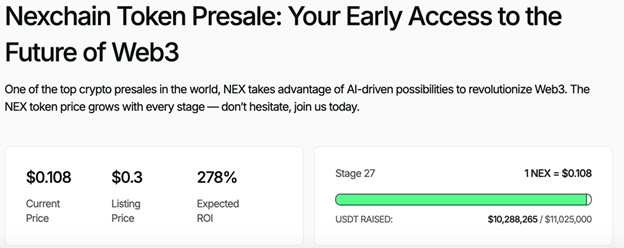
At Stage 27 of its presale, the token is priced at $0.108 with a confirmed listing price of $0.30. The project has raised over $10.26 million out of a $11.02 million target. The expected return for early participants is calculated at 278%.

Key benefits of the NEX token include: 

  • Low transaction fees near $0.001
  • Daily revenue share from network gas fees
  • On-chain governance and voting rights
  • Access to AI-powered smart contracts and dApps
  • Cross-chain functionality with major ecosystems

With Whitepaper 2.0 set for release in mid-September, Nexchain is updating tokenomics and staking programs. Its combination of scalability, low fees, and transparent milestones makes it one of the top presale crypto opportunities in 2025.

Bitcoin Hyper: Scaling Bitcoin With Layer 2

Bitcoin Hyper ($HYPER) is building a Layer 2 designed to address Bitcoin’s scalability. Using an SVM rollup, transactions are batched and then settled back on the Bitcoin chain. This method allows faster and cheaper transfers without sacrificing security.

Its design is supported by the Bitcoin Relay Program, which verifies Bitcoin block headers and pairs this with Solana’s high throughput. This enables near-instant transaction finality.

HYPER tokens are priced at $0.012925 during presale, with staking returns reaching up to 79% APY. Early buyers gain governance rights as well as exposure to a developing Bitcoin DeFi ecosystem. The model makes HYPER one of the more ambitious pre sale crypto coins in circulation this year.

Maxi Doge: Community-Driven Meme Token

Maxi Doge ($MAXI) takes a more aggressive branding approach than traditional meme coins. It borrows from the Dogecoin legacy but adds a high-energy, profit-oriented identity.

The presale has raised over $2.22 million, showing strong uptake. The trend of dog-themed meme tokens remains intact, with Dogecoin itself recently rising more than 70%. This positions MAXI well within a market that values community engagement and cultural recognition.

Wall Street Pepe: Private Trading Network

Wall Street Pepe ($WEPE) blends meme branding with trading access. Token holders are connected to a private group offering market insights, alpha calls, and weekly competitions.

The group has already predicted sharp moves in smaller tokens, earning credibility. The project is also preparing a 5,000-NFT collection to reward early supporters. While not a classic ICO, WEPE has become one of the more visible crypto pre sales due to its trading utility.

Snorter Bot: Alerts and Copy Trading

Snorter Bot ($SNORT) provides early alerts on new project launches. Built into Telegram, it allows users to swap tokens, set limit orders, and copy trades.

Within hours of launch, the presale raised over $100,000. By combining community with trading tools, SNORT is drawing attention from investors seeking practical presale token crypto opportunities.

SUBBD: Entertainment Meets Crypto

SUBBD is entering the presale cryptocurrency market with a focus on the $85 billion pay-per-view sector. The project enables holders to create AI-assisted photos and videos linked to influencer engagement.

By connecting entertainment content with token rewards, SUBBD offers a hybrid approach that merges lifestyle with crypto presales. It is among the more unconventional entries in the 2025 cycle.

SpacePay: Retail Payment Integration

SpacePay ($SPY) aims to simplify crypto payments at checkout. Its SDK integrates with more than 325 wallets and automatically converts crypto to fiat for merchants.

SPY tokens reduce transaction fees, provide cashback, and include governance rights. At presale, tokens are priced at $0.003181, with more than $1.1 million already raised. Twenty percent of the supply is set aside for the public, with allocations for loyalty programs and reserves ensuring long-term support.

This mix of retail utility and presale traction keeps SpacePay on the radar of investors scanning top presale crypto projects.

Why Nexchain Remains the Top Pick

Despite competition, Nexchain holds a lead for several reasons. Its blockchain is designed for 400,000 transactions per second with minimal fees. The architecture supports interoperability, AI-powered contracts, and decentralized governance, giving it more functionality than typical presale tokens.

Investor participation confirms this strength. With over $10.26 million raised, a confirmed listing price of $0.30, and clear tokenomics, Nexchain offers both transparency and growth potential. The combination of speed, utility, and consistent delivery ensures it stays at the top of the crypto pre sales list for 2025.

Outlook for 2025

The presale market continues to grow as investors seek early entry into new projects. Nexchain leads with its AI-driven infrastructure, while Bitcoin Hyper extends Bitcoin through Layer 2 scaling. Meme projects like Maxi Doge and Wall Street Pepe capture community attention, while Snorter Bot and SUBBD bring unique applications. SpacePay adds a payments angle with practical use cases.

For investors, 2025 offers a broad mix of pre sale crypto coins. Nexchain’s strong fundraising, innovative technology, and clear roadmap put it ahead of peers, making it one of the best ICOs for early investors this year.


Learn more about the Nexchain presale here:

Website: nexchain.ai/

X: x.com/nexchain_ai

Telegram: t.me/nexchain_ai

LinkedIn: www.linkedin.com/company/nexchainai/

CoreWeave Secures $6.3bn Nvidia Deal, Solidifying Role as Key AI Cloud Partner

0

CoreWeave has signed a $6.3 billion initial order with backer Nvidia, the data center operator said on Monday, in a deal that guarantees the AI chipmaker will purchase any cloud capacity not sold to customers.

Shares of CoreWeave rose 8% following the announcement, as the agreement cements the company’s position as a critical Nvidia cloud partner and cushions it against any potential decline in demand for AI computing capacity.

CoreWeave, which operates AI data centers across the U.S. and Europe, specializes in providing access to Nvidia’s highly sought-after GPUs — the engines driving the training and deployment of large artificial intelligence models.

The latest order extends through April 13, 2032, and builds on a prior April 2023 agreement between the two companies. Under the amended deal, Nvidia is obligated to purchase any unsold CoreWeave capacity, effectively serving as a financial backstop.

Analysts at Barclays called the arrangement a major stabilizer for CoreWeave. “We see this as a positive for CoreWeave given concerns from investors around the company’s ability to fill data center capacity beyond its two largest customers (Microsoft and OpenAI),” the analysts noted. They added that the incremental spending by Nvidia represents “healthy diversification” away from its heaviest cloud buyers.

The deal comes on the heels of CoreWeave’s expanding ties with OpenAI. In March, the company signed a five-year, $11.9 billion contract to provide cloud capacity to the ChatGPT maker. OpenAI also committed to pay as much as $4 billion through April 2029 under an additional agreement.

Demand for CoreWeave’s services has surged in step with the rapid adoption of artificial intelligence tools. In August, the company reported strong second-quarter growth, but the expansion has come at a cost. Operating expenses soared nearly fourfold to $1.19 billion, underscoring the financial strain that accompanies rapid scaling in one of the world’s most capital-intensive industries.

The deal reflects how Nvidia — the world’s most valuable chipmaker — is deepening its ecosystem strategy. Nvidia is making sure of reliable distribution channels for its GPUs while also hedging against the risk of oversupply in AI infrastructure by backing CoreWeave. For CoreWeave, the arrangement eases investor concerns about customer concentration, as Microsoft and OpenAI had previously accounted for the majority of its revenues.

Cloud partnerships of this nature are not unprecedented, but the magnitude of Nvidia’s financial commitment through 2032 stands out. The arrangement resembles strategic “take-or-pay” contracts used in energy markets, where buyers agree to purchase capacity whether they use it or not — a mechanism designed to de-risk suppliers’ long-term investments.

What It Could Mean for Both Entities

If AI adoption continues at its current pace, CoreWeave’s partnership with Nvidia is expected to place it as one of the most influential players in the AI cloud market, competing against hyperscalers like Amazon Web Services, Microsoft Azure, and Google Cloud. In this scenario, CoreWeave could parlay its Nvidia-backed security into broader industry trust, attracting startups and enterprises seeking reliable GPU access at scale.

Alternatively, if AI demand moderates or funding tightens, CoreWeave’s financials could come under strain. While Nvidia’s backstop shields the company from unsold capacity, the fourfold jump in operating expenses highlights the vulnerability of rapid expansion. Prolonged cost pressures might force CoreWeave into further partnerships or equity raises, even with Nvidia’s backing.

For Nvidia, the deal is a hedge: if end-market demand weakens, it can absorb unused capacity without leaving CoreWeave exposed. But some analysts warn that such guarantees could distort market signals, encouraging overbuilding of data centers and heightening systemic risks if AI investment slows.

In the broader AI infrastructure race, the CoreWeave-Nvidia pact underscores a deeper trend — the alignment of chipmakers and cloud operators in strategic partnerships designed to secure dominance in the next wave of computing. But how sustainable these alliances are will depend on whether AI-driven workloads continue to grow at their current breakneck speed, or whether the market enters a cooling phase as cost and energy concerns mount.

HexyDog (HEXY): The Best Crypto Presale and Possibly the Best Crypto to Buy Now

0

The crypto world never stops moving, and investors are always on the lookout for opportunities that combine strong potential with real-world value. Fortunes are usually made in presales and this is an opportunity to have a first mover before tokens can enter significant exchanges. Among the many new projects in 2025, HexyDog (HEXY) has emerged as a standout. With its mix of community-driven energy, practical use cases, and a social mission, HEXY is being talked about as not only one of the best crypto presales but also possibly the best crypto to buy now.

What Is HexyDog (HEXY)?

HexyDog is a new crypto project that aims to integrate blockchain technology and the pet care sector. The project is associated with such features as the staking rewards token burns, the intention to include NFTs, as well as a payment system designed to serve the purposes of pet shops and services.One thing that sets HEXY apart from other projects is its social mission. It plans to donate part of its presale money to support animal welfare groups.

Why HexyDog Is Gaining Attention

Community Strength

Another critical success factor in the crypto market is the support of the community, and HexyDog already has a group of interested followers. The team promotes the project through steady progress and genuine interest instead of flashy ad campaigns. This natural growth gives a solid foundation to support progress and lasting adoption.

Tokenomics and Utility

HexyDog has tokenomics that is designed to reward long-term holders. Staking opportunities, deflationary mechanics, and fair token allocation encourage investors to remain engaged. Top of that, there is the practical implementation in the pet care industry that gives HEXY an added credibility factor over those projects which are purely based on guesses.

Accessibility

One of the reasons new presales attract attention is their affordability. HEXY has an entry point unlike other major cryptocurrencies that need substantial amounts of money to have a significant exposure. The reduced entry barrier attracts both new entrants who are trying the waters and experienced investors who want to diversify.

Roadmap for Growth

The project is not built for short-term hype. The plans also involve the introduction of HexyPay to cover payments related to pets, an NFTs marketplace associated with community interaction, and the decentralized governance capabilities. This roadmap demonstrates that it has plans to build an ecosystem that can maintain value long after it has reached a presale phase.

How HEXY Fits the “Best Crypto to Buy Now” Conversation

The debate around the best crypto to buy now often comes down to balancing safety and growth potential. Established coins like Bitcoin and Ethereum remain reliable, but they are unlikely to deliver the exponential growth many investors seek. Presales like HexyDog offer a different kind of opportunity. With its unique mix of cultural appeal and practical use cases, HEXY positions itself as a token that could deliver significant upside while building something meaningful in the process.

Risks to Keep in Mind

As with any presale, HEXY comes with risk. The project is still new and will face volatility as it grows. Key features in its roadmap are under development, which means execution will be critical. Liquidity may also be limited in the early stages before broader listings. Investors should always approach presales with caution, conduct their own research, and only invest what they can afford to lose.

Conclusion

HexyDog (HEXY) is rapidly becoming one of the best crypto presales in 2025. It has the backing of the community, novel tokenomics, a well-defined roadmap, and a mission that is not purely focused on the bottom line, making it a topic of discussion that is not merely another meme coin. For investors exploring the best crypto presale opportunities and wondering about the best crypto to buy now, HexyDog presents a compelling case. While risks are part of any early-stage investment, HEXY stands out as a project with both heart and potential.


Join the best crypto presale in 2025: Hexydog(HEXY):

Website   : https://hexydog.com

Twitter     : https://x.com/hexydog

Telegram : https://t.me/hexydog

Elon Musk’s $1Billion Tesla Investment Signals Confidence as a Market Catalyst

0

Elon Musk did not just pioneer the electric vehicle sector; he re-engineered how markets perceive value. By architecting a pricing model that blended aspiration with accessibility, he unlocked alpha where others only saw risk. Tesla was not merely about batteries on wheels—it was about building a new pricing orthodoxy that created demand velocity. Without that clever calibration of numbers, Tesla’s remarkable trajectory would have been stunted.

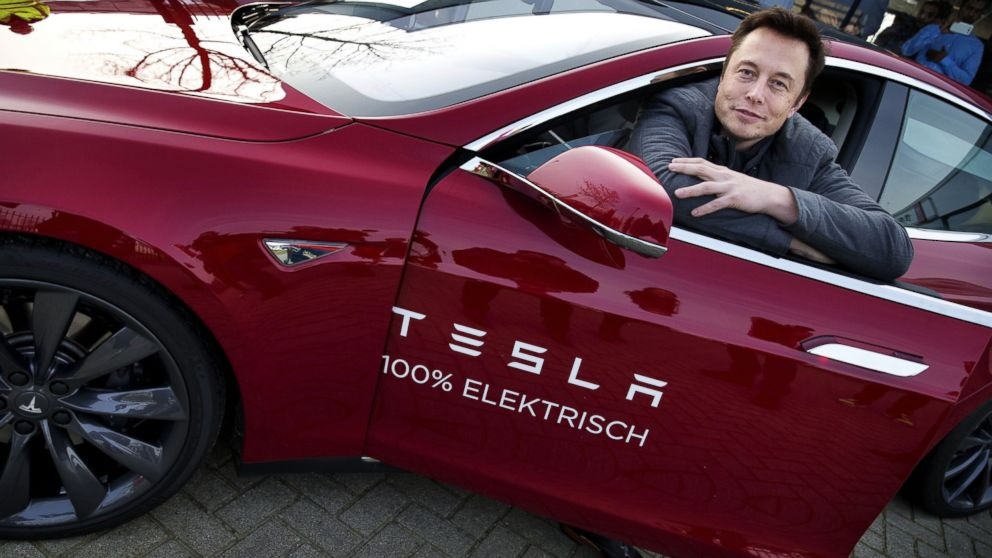
Now, Musk has raised the bar again. A regulatory filing shows he has poured $1 billion into Tesla shares—about 2.6 million units—nudging his stake from 12.7% to 12.8%. On paper, the 0.08% rise seems trivial, but in a $1.2 trillion company, that movement is titanic. It is his first open-market buy since 2020, and markets understand the signal: the captain is doubling down on his own ship.

Elon Musk has opened his wallet again, this time pouring $1 billion into Tesla shares, though the move barely shifts the needle toward his long-stated goal of tightening control over the electric vehicle maker.

A regulatory filing released Monday revealed Musk bought about 2.6 million shares on Friday, lifting his total holding to roughly 413 million shares. That raised his ownership stake only slightly, from 12.7% to 12.8%. The incremental increase, which underscores the scale of Tesla’s $1.2 trillion market value, marked Musk’s first open-market buy since 2020 and signals renewed confidence in Tesla’s trajectory. The new purchase Yet in percentage terms, the gain was small. The $1 billion outlay increased his stake by just 0.08%.

In the Igbo Nation, we say, “Ebe onye dara, ka chi ya kwaturu ya”—“Where a person falls is where his god has dropped him.” Musk’s cash confidence lifts Tesla’s spirit. By committing resting money in a bank into the stormy waters of market cycles, he whispers to investors: “I believe.” And the market, like disciples regathering around a trusted clergy, responded—Tesla rose.

Confidence in a company is not proclaimed on social media; it is etched in financial signatures. Musk’s billion-dollar cheque is a kinetic declaration: I trust this vision. Good People, when you believe in the future, you don’t just talk, you show action.