DD
MM
YYYY

PAGES

DD
MM
YYYY

spot_img

PAGES

Home Blog Page 498

Supreme Court Case on Trump’s Tariffs Could Cost U.S. Up to $1tn – Legal Experts

0

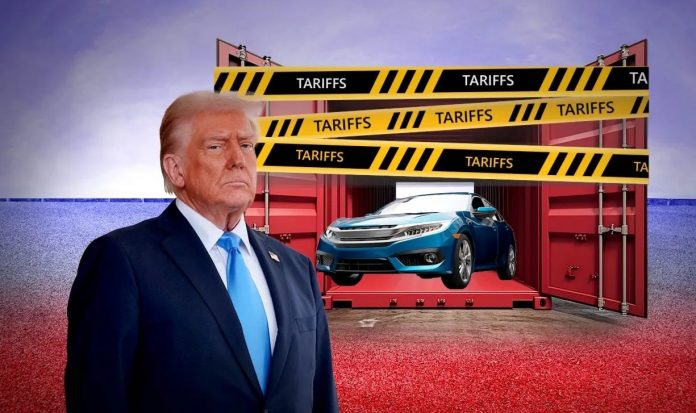
The United States may face an unprecedented financial reckoning if the Supreme Court overturns President Donald Trump’s sweeping emergency tariffs.

Legal experts who spoke to Business Insider said the government could be liable for refunds totaling between $750 billion and $1 trillion, making it one of the largest potential reversals of federal revenue collection in U.S. history.

Despite the staggering figure, trade lawyers stress that the Supreme Court’s decision should hinge on the Constitution, not fiscal consequences.

Two lower courts have already ruled the tariffs illegal, holding that the administration exceeded its authority under the International Emergency Economic Powers Act (IEEPA). But on Wednesday, the Supreme Court agreed to hear and expedite the case, setting up a showdown that could redefine the scope of presidential power over trade.

Trump’s legal team warned in its petition that unwinding the tariffs could be “ruinous” to the economy if refunds are ordered. Treasury Secretary Scott Bessent, in a filing to the Court earlier this month, cautioned that “delaying a ruling until June 2026 could result in a scenario in which $750 billion – $1 trillion in tariffs have already been collected, and unwinding them could cause significant disruption.”

Still, William Reinsch, Scholl Chair in International Business at the Center for Strategic and International Studies, said the Court is likely to deliver a decision by year’s end.

“My experience with the Supreme Court is that when it comes to an economic issue, they don’t always break along typical ideological lines. The economic stakes here are significant in addition to the foreign policy stakes,” he told Business Insider.

“I don’t think it’ll be unanimous,” he added, “but I wouldn’t rule out the possibility that this is the first big case where they go against the president.”

The Trillion-Dollar Problem

Since February, Trump’s administration has invoked the IEEPA—a 1970s law designed for national emergencies and economic sanctions—to impose wide-ranging tariffs. Aside from a few sector-specific duties, nearly all of the measures, from a cumulative 245% tariff on China (briefly in place) to sweeping April tariffs on more than 75 trading partners, fall under the emergency statute.

Small businesses have led the charge in challenging the tariffs, arguing that the Constitution gives Congress, not the president, the power to set duties. Both the Court of International Trade and a federal appeals court sided with challengers, striking down the tariffs as unconstitutional. Yet, the duties remain in place because lower courts declined to grant an injunction halting their enforcement.

Will Planert, a trade attorney at Morris, Manning & Martin LLP, said some conservative justices may balk at granting such broad economic power to the executive branch.

“In Biden’s attempt to modify the student loan program, for example, those justices have been very skeptical of the idea that Congress can confer very broad economic powers on the president or the federal agencies,” he explained.

Planert also questioned the government’s warning of economic ruin. “I doubt that the government losing the sum of money it did not have just half a year ago would be ‘ruinous.’ Any amount of fiscal disturbance should not be taken into consideration when the decision should rely on the Constitution,” he said.

The Tax Foundation estimates that Trump’s tariffs would raise $2.3 trillion in revenue over the next decade, though at the cost of reducing U.S. GDP by 0.9%—a drag that could worsen once foreign retaliation is factored in.

“If the tariffs are illegal, then they are illegal irrespective of fiscal impact,” Planert stressed. “In that case, the government would have collected a very large amount of money that it’s not entitled to, which would be all the more reason to have it returned.”

Refund Precedent

The U.S. has faced large-scale tariff refunds before, albeit on a far smaller scale. In 1998, the Supreme Court struck down the Harbor Maintenance Tax on exports, forcing the government to refund over $1 billion.

Robert Shapiro, chair of international trade practice at Thompson Coburn LLP, said the logistics this time would be daunting. Normally, companies must file a protest for each customs entry to receive a refund.

“Having customs do the work twice for everything just doesn’t make sense,” he said. “It may eventually be up to the Board of International Trade to decide how to do the refunds.”

And the fallout could ripple beyond importers. Shapiro noted that “since many companies were explicit that they had to raise prices due to tariffs, customers may want their money back, too, if importers are getting theirs.”

The case is shaping up as a constitutional stress test of presidential authority in economic policy.

If the Court rules against the administration, it would force the Treasury to undertake the largest tariff refund program in U.S. history, with consequences for both businesses and consumers. If it sides with Trump, the decision could cement a new precedent: giving future presidents sweeping unilateral powers to reshape global trade under the guise of emergency law.

Either way, the ruling could reverberate across decades of U.S. trade policy, setting a marker for how far executive power can extend into the nation’s economic life.
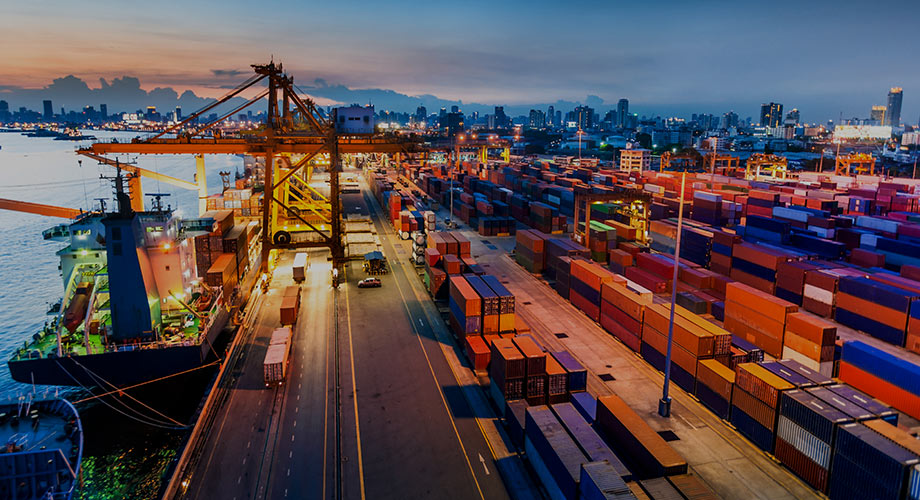

Nigeria’s Trade Map Reshaped as Togo Overtakes South Africa in Q2 2025 As Top Partner

0

Nigeria’s trade relations within Africa underwent a major shake-up in the second quarter of 2025, with Togo eclipsing South Africa to become the country’s top African trading partner, according to the latest Foreign Trade in Goods Statistics report by the National Bureau of Statistics (NBS).

The development highlights Togo’s growing importance as a regional re-export hub and raises questions about how Nigeria’s trade patterns may evolve in the coming quarters.

In Q1 2025, Togo ranked fourth among Nigeria’s African export destinations with N134.8 billion in trade, all of it non-crude oil goods.

By Q2, the story changed dramatically. Exports to Togo surged to N811.97 billion, representing 27.4% of Nigeria’s total exports to Africa. Of this, N113.3 billion came from crude oil, while N698.7 billion was from non-crude oil products.

The six-fold jump illustrates Nigeria’s growing reliance on Togo’s logistics capacity. With Lomé’s port serving as one of West Africa’s busiest transshipment hubs, analysts believe a significant share of Nigerian exports to Togo may be destined for redistribution across francophone West Africa.

On imports, Togo also dominated in Q2, supplying Nigeria with goods worth N211.99 billion, or 25.8% of total imports from Africa. That performance cemented Togo’s position as Nigeria’s largest African trade partner overall — not only on the export front but also as the top import origin.

South Africa’s Decline

South Africa, which led the list in Q1 with N708.7 billion worth of imports from Nigeria, fell to second place in Q2. Exports from Nigeria to South Africa shrank to N473.65 billion, a sharp drop of 33% compared with the previous quarter.

Crude oil remained the bulk of trade at N430.8 billion in Q2, but down significantly from N704.7 billion in Q1. Imports from South Africa into Nigeria also dipped, falling to N115.15 billion in Q2 from N125.38 billion in Q1. While it retained its second-place ranking as a supplier, the contraction underscores Nigeria’s shifting trade flows toward West Africa.

Other Movers in the Rankings

Ivory Coast maintained its third-place position in both quarters, though volumes fell slightly from N428.56 billion in Q1 to N408.97 billion in Q2, mostly crude oil at N354.1 billion.

Ghana climbed from fifth to fourth in Q2 with N307.47 billion in Nigerian exports, up from N122.07 billion in Q1. Its imports were nearly balanced between crude oil (N154.9 billion) and non-crude goods (N152.6 billion), highlighting a more diversified trade relationship than South Africa’s oil-heavy imports.

Mauritius entered the top five in Q2, recording N264.98 billion in Nigerian exports, entirely non-crude oil products — a sign of expanding trade with island economies.

Senegal, third in Q1 with N346.26 billion, slipped to sixth in Q2 with N222.31 billion. Cameroon rose to seventh at N106.18 billion, while Equatorial Guinea climbed to eighth at N96.93 billion, both absent from Q1’s top 10. Benin Republic (N37.58 billion) and Niger Republic (N26.19 billion) rounded out the list. Burkina Faso and Swaziland, present in Q1, dropped out entirely.

On the import side, Togo’s rise displaced Angola, which had been Nigeria’s largest African import source in Q1 with N224.39 billion, but disappeared from the top 10 in Q2. Equatorial Guinea emerged as a new entrant in fourth place, supplying N97.93 billion. Ghana also entered as a new source with N24.66 billion, or 3% of Nigeria’s imports from Africa. Egypt, Morocco, and Tanzania remained in the rankings but shifted down.

Nigeria’s Trade Surplus Widens

Overall, Nigeria’s trade position strengthened. The surplus widened by 44.3% to N7.46 trillion in Q2, up from N5.17 trillion in Q1.

Exports rose to N22.75 trillion — a 10.5% quarter-on-quarter increase and 28.4% higher than the same period in 2024. Imports, by contrast, slipped marginally by 0.9% to N15.29 trillion.

This dynamic created a stronger external account, with Togo’s rise central to that outcome.

Forward-Looking Perspectives

Economists believe Nigeria’s deepening ties with Togo could accelerate under the African Continental Free Trade Area (AfCFTA), embedding Lagos more firmly into West Africa’s re-export and logistics network. If Nigeria leverages Togo’s port infrastructure, exporters of both crude and non-crude goods could find new gateways into francophone markets, making trade more resilient to disruptions elsewhere. Diversification toward partners like Ghana and Mauritius suggests that non-oil exports may gain more prominence, reducing the country’s reliance on volatile crude flows.

However, some analysts warn that Nigeria’s growing dependence on Togo as a middleman raises concerns about overexposure. If Lomé’s re-export model faces policy shifts, capacity bottlenecks, or diplomatic strains, Nigeria’s trade volumes could suffer. Meanwhile, South Africa’s declining role points to weakening links with Africa’s most industrialized economy — a trend that could leave Nigeria less connected to southern Africa’s consumer and investment markets. The collapse of Angola from the top 10 import list in Q2 illustrates how quickly such ties can unravel.

For policymakers, the challenge is said to be tied to balancing Nigeria’s gains from regional re-export hubs with the need to maintain strong direct ties with large economies like South Africa, Ivory Coast, and Angola. The next few quarters are expected to determine whether Togo’s rise marks a structural realignment of Nigeria’s trade or a temporary shift driven by oil and logistics dynamics.

From $250 to $25,000—While Meme Coins Chase 20x, Ozak AI Presale Sparks 100x Investor FOMO  

0

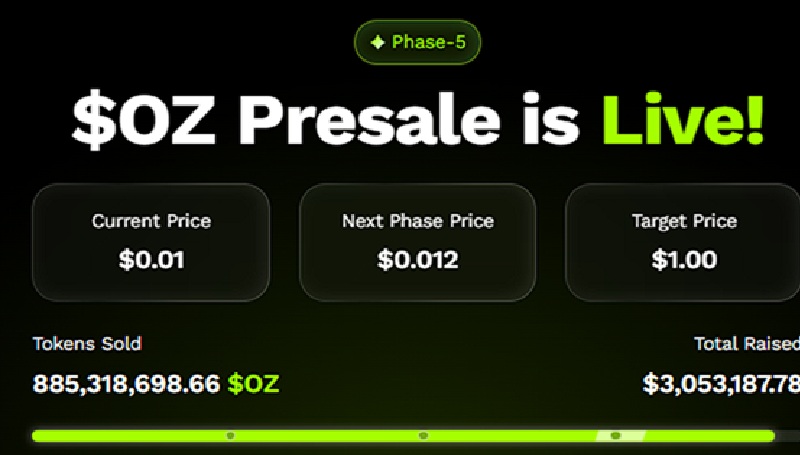
Crypto traders in 2025 are once again drawn to meme coins, with tokens like Dogecoin, Shiba Inu, and Pepe fueling speculation of 15× to 20× rallies in the next bull run. While those projections excite retail traders, the real buzz is around Ozak AI (OZ)—a presale project priced at just $0.01 that has already raised over $3 million. Unlike meme tokens that thrive on hype alone, Ozak AI combines artificial intelligence and blockchain, with bold forecasts of a 100× return, turning even modest allocations—like $250—into potentially $25,000.

Meme Coins Still Attract Traders

Meme tokens remain one of the most popular segments of the crypto market, thanks to their viral appeal and community-driven culture. Dogecoin, Shiba Inu, and Pepe have all delivered explosive gains in past bull runs, with some early investors seeing thousands of percent in returns. Analysts now predict these coins could deliver another 15× to 20× surge, pushing them to new highs if social sentiment heats up.

Yet, while meme coins can generate quick profits, their growth remains tied to hype cycles and market mood swings. For many investors, the question isn’t whether meme coins can run again—it’s whether there are better opportunities for sustainable exponential growth elsewhere.

Ozak AI Presale Momentum

This is where Ozak AI (OZ) is attracting serious attention. Currently in Stage 5 of its presale, OZ is priced at just $0.01 per token and has already raised over $3 million, a clear sign of investor demand. Positioned at the intersection of AI and blockchain, Ozak AI offers innovation-driven potential that meme coins often lack.

The presale hype is being fueled by comparisons to early-stage projects like Solana and Polygon, which started small before delivering life-changing returns to their early adopters. Investors are rushing to secure OZ at its ground-floor price before later stages drive it higher.

From $250 to $25,000—The 100× ROI Example

At just $0.01 per token, Ozak AI offers the kind of asymmetric upside investors dream of. A $250 allocation today secures 25,000 tokens. If Ozak AI climbs to $1 in the coming years, that same $250 could be worth $25,000.

This math highlights why investors are experiencing FOMO (fear of missing out). Unlike meme coins, where the upside might cap out at 20×, Ozak AI offers the possibility of 100× or more, making it one of the most talked-about presales of 2025.

Why Ozak AI Stands Out

The difference between Ozak AI and meme tokens comes down to vision and utility. By embedding AI into decentralized applications, OZ aims to create smarter, adaptive blockchain systems with real-world use cases. This innovation gives it staying power, while its low presale entry point makes it highly accessible. Whales accumulating alongside retail investors further validate the project’s credibility and potential.

While meme coins may chase 20× rallies in the next bull run, Ozak AI’s $0.01 presale price and $3 million raised offer investors the chance at 100× returns. The possibility of turning $250 into $25,000 is fueling massive interest and positioning Ozak AI as one of 2025’s breakout projects. For those chasing life-changing upside rather than short-term hype, Ozak AI is quickly becoming the presale to watch.

 About Ozak AI

 Ozak AI is a blockchain-based crypto project that provides an innovative platform that focuses on predictive AI and advanced data analytics for financial markets. Through machine learning algorithms and decentralized community technologies, Ozak AI enables real-time, accurate, and actionable insights to help crypto lovers and corporations make the perfect choices.


For more, visit

Website: https://ozak.ai/

Telegram: https://t.me/OzakAGI

Twitter: https://x.com/ozakagi

Judge Rules Trump Administration Illegally Fired Thousands of Federal Workers, but Stops Short of Reinstatement

0

A federal judge in San Francisco has ruled that President Donald Trump’s administration acted unlawfully when it directed federal agencies to fire tens of thousands of probationary employees earlier this year.

But in a decision underscoring the reach of recent U.S. Supreme Court interventions, the judge stopped short of ordering their reinstatement.

According to Reuters, U.S. District Judge William Alsup, an appointee of President Bill Clinton, reaffirmed his earlier finding that the Office of Personnel Management (OPM) overstepped in February when it ordered agencies to terminate roughly 25,000 probationary employees en masse. These workers—generally those with less than a year of service, though some were longtime federal employees in newly assigned roles—were dismissed under what unions described as a politically driven directive masquerading as performance-based termination.

Unions, nonprofits, and the state of Washington sued to block the action, calling it one of the most sweeping purges of federal personnel in recent memory.

Ordinarily, Alsup wrote, the remedy would be straightforward: “set aside OPM’s unlawful directive and unwind its consequences, returning the parties to the ex ante status quo, and as a consequence, probationers to their posts.”

But he noted that the Supreme Court’s recent moves effectively tied his hands. In April, the high court paused an earlier injunction from Alsup that had required six agencies to reinstate about 17,000 workers while litigation proceeded. That intervention sent a strong signal, Alsup wrote, that the Court would likely overrule lower court efforts to directly reinstate federal employees dismissed under executive authority.

“Too much had happened since the Supreme Court’s April decision,” he added, pointing out that many of the dismissed workers had since found new jobs while the administration continued to restructure the federal workforce.

Limited Relief

Instead, Alsup crafted a narrower remedy. He ordered 19 agencies—including the Departments of Defense, Veterans Affairs, Agriculture, Energy, Interior, and Treasury—to correct employees’ personnel files by November 14. The agencies must update records to show that the mass terminations were not due to legitimate performance failures and are prohibited from enforcing any similar OPM directives in the future.

That order, Alsup said, still addresses the harm caused by what he described as OPM’s “pretextual termination ‘for performance.’”

The ruling drew swift reaction from federal employee unions. Everett Kelley, national president of the American Federation of Government Employees, said the decision “makes clear that thousands of probationary workers were wrongfully fired, exposes the sham record the government relied upon, and requires the government to tell the wrongly terminated employees that OPM’s reasoning for firing them was false.”

Kelley emphasized, however, that the absence of reinstatement leaves many workers permanently displaced despite the finding of illegality.

The case underscores the ongoing tension between executive authority and judicial oversight in federal employment matters. Traditionally, probationary employees enjoy fewer protections than tenured federal staff, but mass terminations on this scale are unprecedented. Trump’s administration has argued that the firings were part of an efficiency push, while critics see them as an ideological reshaping of the civil service.

The Supreme Court’s intervention earlier this year reflects its broader trend of limiting judicial remedies that intrude on executive personnel decisions. The Court effectively constrained lower courts from undoing executive branch employment actions, even if deemed unlawful, by stepping in on the so-called “shadow docket” to halt reinstatements.

The litigation is not over, but Alsup’s ruling sets the terms going forward. Agencies must repair records to clear workers’ reputations, but absent a shift from the Supreme Court, reinstatement appears unlikely. The result leaves thousands of careers disrupted, with employees validated in principle but denied the practical relief of getting their jobs back.

For unions, the ruling provides vindication but also fuels frustration. For the Trump administration, it offers partial cover—its directive deemed unlawful, but its broader workforce restructuring largely preserved.

The November 14 deadline now looms as the key date when agencies must formally correct the files of those affected, a step that could help workers secure future employment but falls short of undoing the largest federal workforce shakeup in decades.

Trump Pushes NATO Oil Ban and Tariffs on China as New Strategy to End Russia-Ukraine War

0

President Donald Trump on Saturday proposed a new path to end the Russia-Ukraine war: a complete NATO ban on Russian oil purchases and tariffs of 50% to 100% on China for its imports of Moscow’s petroleum.

Trump said NATO’s current commitment to victory has been “far less than 100%,” and described alliance members’ continued oil trade with Russia as “shocking.”

“[Buying Russian oil] greatly weakens your negotiating position, and bargaining power, over Russia,” Trump posted on his social media platform, calling for energy sanctions paired with punitive tariffs that he said would “break [China’s] grip” over Moscow.

The suggestion arrives after Russian drones crossed into Polish airspace last week — a move U.S. Secretary of State Marco Rubio called “dangerous” and Britain answered with new sanctions on Russian shipping and suppliers. However, Trump’s hardline proposal is raising questions about whether another layer of restrictions would yield a breakthrough, or whether Moscow’s proven ability to evade sanctions would make the effort another symbolic gesture.

A Long Trail of Sanctions

Since Russia’s full-scale invasion of Ukraine in February 2022, the U.S. and its allies have imposed one of the most extensive sanctions regimes in modern history. Washington and Brussels targeted Russia’s central bank reserves, cut major lenders off from SWIFT, restricted technology exports, and capped the price of Russian crude at $60 per barrel.

The goal was to starve the Kremlin of revenue. Yet Russia’s economy has adapted. Moscow rerouted oil flows to Asia, with China and India emerging as lifelines. According to the International Energy Agency, the two countries now buy more than 70% of Russia’s seaborne crude. Turkey and other middlemen have also played roles, creating back channels that blunt Western measures.

As a result, Russia’s oil revenues remain resilient. The ruble has wavered but avoided collapse, and the Kremlin has continued to fund its war machine despite Western predictions that sanctions would bring it to its knees.

India, China, and the Limits of Tariffs

Trump highlighted China’s importance as Russia’s patron, suggesting tariffs of up to 100% could sever Moscow’s financial safety net. But Washington has already tried punishing India for its energy ties to Russia. The Trump administration earlier this year slapped a 50% tariff on Indian goods, citing New Delhi’s large-scale imports of Russian crude.

The move changed little. India continued buying, often at discounted rates, refining the crude and even re-exporting some products back to Europe. For New Delhi, Russian oil has proven too crucial to abandon — an economic reality that raises doubts about whether higher tariffs on China would truly alter Moscow’s fortunes.

Russia’s Defiance of Past Pressure

This pattern echoes earlier sanction campaigns. When the U.S. and its allies imposed restrictions on Russia after its 2014 annexation of Crimea, Moscow absorbed the shock and pivoted eastward. It deepened ties with Beijing, expanded trade in non-dollar currencies, and fortified domestic industries.

Even the unprecedented 2022-2023 sanctions package — broader and deeper than anything Russia had faced before — failed to cripple the Kremlin. Instead, Moscow adapted by exploiting gaps in enforcement, turning to countries outside the Western alliance, and leaning on its vast energy resources.

A Risk of Diminishing Returns

Trump’s proposal of banning Russian oil within NATO and doubling down on tariffs against China reflects a belief that only maximum pressure can change Putin’s calculus. But the record of the past two years suggests that every new measure carries diminishing returns.

Russia has shown an ability to reroute trade, build shadow fleets of tankers, and create alternative payment systems. China and India, driven by their own strategic and economic interests, have resisted U.S. pressure and kept buying. That resilience underscores a sobering reality: even if NATO bans Russian oil entirely, the barrels may still flow elsewhere, softening the intended blow.

Meanwhile, higher tariffs on China risk igniting another round of tit-for-tat trade wars that could hit U.S. and European economies harder than Russia’s. Earlier this year, Trump raised Chinese tariffs to 145%, prompting Beijing to retaliate with 125% duties on U.S. goods, effectively freezing trade until both sides negotiated a reduction. Another escalation could send shockwaves through global markets.

A Strategy in Question

At the U.N. Security Council last week, acting U.S. Ambassador Dorothy Shea pledged America “will defend every inch of NATO territory,” insisting Moscow must not mistake restraint for weakness. Britain tightened sanctions on vessels and suppliers. G7 ministers urged a “unified front” to cut off Putin’s war revenues.

However, Trump’s approach — punishing China, and indirectly India — faces the same obstacle that has haunted Western sanctions for years: Russia’s survival hinges on partners seemingly outside NATO’s reach. Unless Beijing or New Delhi reverse course, analysts warn, more tariffs and bans may tighten the noose only slightly, without achieving the knockout blow Trump envisions.

As the war drags on, geopolitical analysts believe that NATO faces a stark dilemma. Push harder on sanctions and risk collateral economic fallout — or accept that Russia’s oil leverage, and its allies in Asia, have blunted Western tools of economic warfare.