DD
MM
YYYY

PAGES

DD
MM
YYYY

spot_img

PAGES

Home Blog Page 4980

The Precious Ant Is Now Exceedingly Sick As China Continues To Spray Insecticides

1

China giveth and China taketh. Yes, the valuation of Ant Financial, which until recently was one of the world’s largest financial institutions, has been cut. Through an asymmetric attack from the Chinese government on Ant Financial after an own-goal comment by its founder, Jack Ma of Alibaba empire, the company has been decimated.

 A company that was valued more than Goldman Sachs has been taken out of the main league after the government dismantled its money-making operations. That dismantling was ferocious and unparalleled with license withdrawn and operations redesigned by fiat rules.

The company whose IPO was put at $300 billion in 2020 is now valued as low as $70 billion! Unfortunately for the American companies which heralded that aborted IPO are not even sure this floor is the lowest. In other words, this company can end up $0 as China continues to work on its magic.

Fintech giant Ant Group Co.’s valuation was trimmed again by global investors who bought private shares ahead of its suspended initial public offering.

Boston-based Fidelity Investments cut its estimate for Ant to $70 billion at the end of May, according to Bloomberg calculations based on filings. That’s down from $78 billion in June last year, and $235 billion just before Ant’s IPO was torpedoed by regulators in November 2020.

We all admire China but things like this make you feel better that you live in Nigeria where, at least, we have the “freedom” to own assets even though we may not be where we can be as a nation. China can wake up and suspend the license of edtech companies worth billions of dollars, and mandate them to become charities, after investors have put hundreds of millions of dollars in these firms. I do not admire such high voltage searchlights on personal properties as they can burn visions and energies.

There is nothing ant-like in these numbers. Yes, Alibaba’s affiliate fintech company, Ant Group (of Alipay), does generate more payment volume than Visa & Mastercard combined! Ant does $18 trillion while the American giants bring in $16 trillion. Ant operates primarily in China while Visa and Mastercard run around the world!

China, why must you spray insecticides on a $300 billion ant?

Comment on LinkedIn Feedback

Comment 1: #china has an alternate view on economics n wealth. We will falter if we try to apply western n capitalistic frameworks to assess China mkt opportunities and China state policies.
A simple point seems to be that China doesn’t see big value in serious concentration of wealth in private pools.

Response 1: “A simple point seems to be that China doesn’t see big value in serious concentration of wealth in private pools.” – that is the revelation indeed. But how do you help people if companies cannot become big and provide jobs, opportunities, etc? When companies become big, the owners are typically rewarded! I cannot see another way China will cut that off.

Comment 2:Jack Ma is nowhere to be seen. Jack Ma is not complaining.

Is the Chinese government spraying insecticides or the people breeding the insect that is harvesting it?

I am not insinuating anything. Just saying, this world where there is no technology for us to publicly listen to the conversation of these world leaders and CEOs is something else.

Respond 2: “Jack Ma is nowhere to be seen. Jack Ma is not complaining.” – how do you know that he is not complaining? When your university is renamed and taken from you. Your company cut into pieces, pushed you out of the Board, dismantled your operating licenses on your cash cow, etc, what do you mean by ” Jack Ma is not complaining”?

Alibaba’s Ant Group (Alipay) – There Is Nothing Ant-like In These Numbers

Pastel, A Nigerian-based Digital Bookkeeping Startup, Raises $5.5m in Seed Round

0

Nigerian businesses have strived for years without access to digital bookkeeping, exposing them to evitable loss of business transaction records. Recently, the situation opened a huge opportunity for startups trying to fill the gap.

Several startups across West Africa, including Kippa, Bumpa,OZÉ and Bamba, are creating platforms to offer digital bookkeeping services to businesses.

The startups, left with the job of digitizing the data of Small Medium Enterprises (SMEs), an industry reportedly worth more than $200 billion in Nigeria, have been attracting investors who see huge growth potential in the emerging market.

Pastel, a digital bookkeeping startup has announced a seed raise of $5.5 million led by pan-African venture capital firm TLcom Capital. Participating in the seed round are other VC firms such as Global Founders Capital (GFC), Golden Palm Investments, DFS Labs, Ulu Ventures, Plug and Play and Soma Cap.

The startup has been under the radar. It raised a $620,000 pre-seed last year from some of its existing investors.

Launched in 2020 as Sabi Cash by Abuzar Royesh, Olamide Oladeji and Izunna Okonkwo, Stanford graduate students, Pastel has grown into a multimillion dollar company within a short period.

The company’s ultimate goal is to help small businesses in Nigeria that have stayed offline for years – using non-digital means to store information and essential data, to get their data online. The absence of digital storage for Small Medium Businesses (SMBs) is said to be responsible for the failure of many businesses, many of them couldn’t last longer than five years.

Cofounder and chief growth officer (CGO) Okonkwo said the bookkeeping and customer relationship management Pastel launched last year recorded more than 100,000 merchant sign-ups by December 2021.

Pastel has tried to distinguish itself from other companies offering digital bookkeeping and credit services with a different strategy. Unlike other platforms operating a sort of super app, where all their services are held together, Pastel has made each of its products, Quick Receipt and Pastel Financing, standalone.

This is believed to have boosted the number of enrollments, which stands at over 45,000 active merchant users, in the platform.

“Our thought process was to get traction quickly by solving a merchant’s pain point with a free and easy solution. The next step was to capture value. So we added value capture features to the Sabi app that our customers love. Now we are building a lot more,” Okonkwo said. “The way we’ve thought about it is, as opposed to creating a super app that a lot of other fintechs have or are in pursuit of, we are taking a more platform approach, meaning that any Pastel user can create an account with any of our apps. With the same login they can access all the other solutions that we’re providing.”

Functioning separately, TechCrunch reported that the Quick Receipt app provides businesses with simple invoicing and receipts tools and over 60,000 active merchant users. On the other hand, the Swift Money app, which leverages local saving groups called ajo in Nigeria to provide financing for businesses, has been stealthily built for the last three months through Pastel Financing.

Onboarding ajo, a popular financial scheme in Nigeria where individuals or a group of people contributes money in the care of a leader, the report said the Swift Money app is designed to work with already established ajo leaders and their groups.

The leader assumes an oversight role with tools to look after the group’s activities and interest that involves financing. The leader’s role includes downloading the app to set up profiles for members and helping them to collect and deposit cash in a [Pastel] bank account for savings.

Members of the group are evaluated based on their credit history to ascertain their creditworthiness when they need a loan. Pastel, which runs on a free app, only started making revenue recently and does so by charging interest and a small fee on loans.

What is Russian Strategy for Media Convergence?

0

Many facts and activities since the devolution of the USSR have made and continue to make Russia unique in all aspects. Russia is a country that contributes significantly to the development of Europe and other continents around the world, from politics to the economy. Its capital (Moscow) has the most billionaires per capita in the world. Russians have invented tools and software that have assisted locals and other nationals in solving numerous problems or meeting needs.

However, the purpose of this piece is not to examine Russia’s economic and political prowess. Its purpose is to explain the ongoing media convergence strategy of private and public media organizations. Various policies and programs tailored to the media industry have assisted media owners and professionals in creating and capturing long-term value over the last decade. The industry’s liberalization has resulted in new forms of competition in the print and broadcast media spaces. It has also contributed to the development of locally produced technologies for print, broadcast, and digital journalism.

For example, some recent political decisions made by the Russian government resulted in the development of a few social networking sites. VK (Vkontakte) rose to prominence and saw a spike in usage during a political dispute with Meta, the company that owns Facebook. According to a recent study, it is the second most popular medium among Russian online users after WhatsApp. RuTube, which was established in 2006 and competes with YouTube, is similar to VK. The Russian developers also created Fiesta and Rossgram as Instagram alternatives. As a rival to TikTok, Yappy was created on November 29, 2022.

There is no doubt Russian developers are providing some locally owned new media to the media sector in preparation for the anticipated and required convergence with the foreign ones toward rapid content distribution to local and international audiences. We found that 28% of the phases are for VK and 25% are for OK after analyzing 53 phases of convergence with locally developed social networking sites. Telegram and Zen are in third and fourth place in the convergence with the locally developed social media, with 21% and 17% of the phases, respectively. The top two spots held by VK and OK confirmed the earlier observation that they are the most popular local social networking sites.

With 8% and 2% of the phases for RuTube and Yappy, respectively, it is clear that media organizations are employing foreign competitors. For example, 28% of 39 phases of convergence with foreign developed sites are for YouTube, RuTube’s competitor. In these orders, social media such as Twitter (23%), Facebook (18%), TikTok (10%), Instagram (10%), Flipboard (5%), and Viber (5%) are also used.

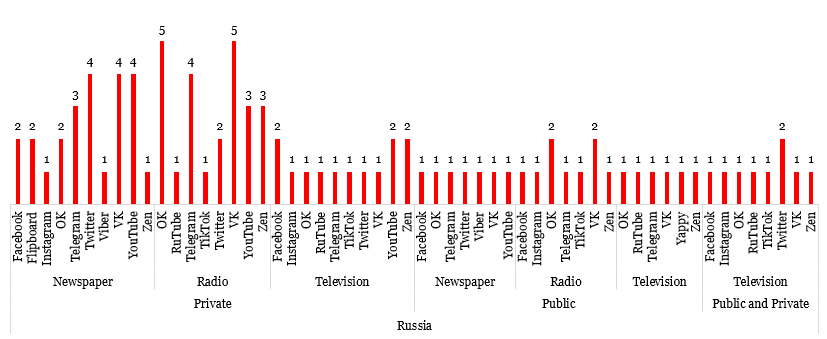
Understanding how the industry is integrating social media by ownership and media type reveals that privately owned media companies are integrating social networking sites more than publicly owned businesses. Newspapers and radio stations each had 24 of the 61 traces of convergence found for private organizations, while television had 13 traces. The 22 traces of convergence found for publicly-owned organizations were led by radio stations and newspapers. The full nine traces of convergence for media organizations with both public and private owners are for television stations.

Overall, an analysis of 275 convergence traces from 18 media organizations reveals that newspapers (39.80%) and radio stations (36.40%) are the dominant media types that are converging with both forms (local and foreign) of social networking sites. Television stations trailed newspapers and radio stations with 31.40% of the traces.

Exhibit 1: Social media convergence by media and ownership pattern

Source: Media Organisations, 2022; Infoprations Analysis, 2022

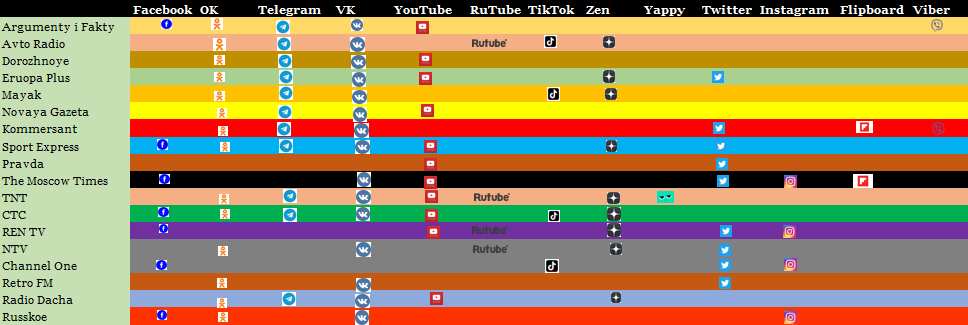
Exhibit 2: Russian media convergence with local and foreign-owned social networking sites

Source: Media Organisations, 2022; Infoprations Analysis, 2022

They mostly converged with locally developed and growing social media networking sites rather than those developed in other countries and growing globally (see Exhibit 2). In this regard, when Russian media consider social networking convergence, the selected media organizations have primarily connected with VK, OK, Zen, and Telegram. Russian technology developers created these social media platforms. Less media organizations are using RuTube, which was created as an alternative to YouTube. It is obvious that Russian media organizations must connect with platforms with a rapidly growing global user base among the foreign social media. Many of them are using Facebook and Twitter. This suggests that Russian media organizations want to gain access to a wider audience than the national and regional audiences that can be provided by locally created social networking sites.

Expanding the frontiers of distribution and reaching audience

Russian media organizations, like their counterparts in other countries, are expanding their content distribution and audience reach strategy by engaging in some activities that are thought to be beneficial in achieving the desired results. From print to broadcast media, authors and management inclusion, book, cartoons, castings, content integration, content promotion, feedback, guest profiling, live chat, live concert, management inclusion, music request, online mobile phone conversation, other stations interlinked, partners’ websites interlinked, partners project, presenters and management inclusion, programme schedule, partnership project, readers’ interview survey, special projects and thematic channels are being considered and prioritised for creating the needed visibility, disseminating content and dynamic audience capturing.

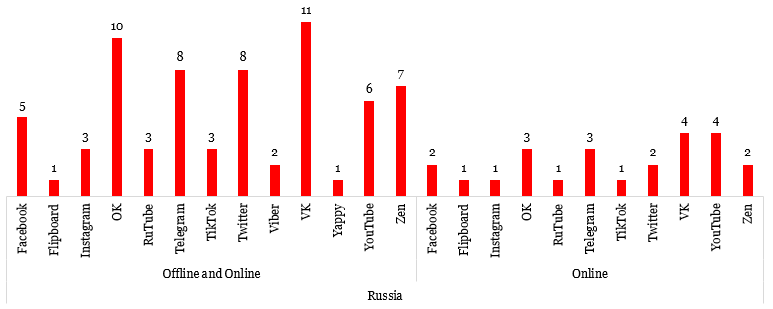
Exhibit 3: Social media convergence by pattern of content distribution

Source: Media Organisations, 2022; Infoprations Analysis, 2022

Significantly, media organizations that use both offline and online content distribution patterns are more likely to use the identified social media than those that only use online content distribution. This implies that organizations with an online content distribution pattern believe that simply being on the Internet is enough to deliver and capture value for a local and global audience. On the other hand, traditional offline media organizations believe that using this approach alone is insufficient to ensure adequate content dissemination and capturing value in terms of gaining new audiences around the world and obtaining favourable advertisement placement from advertisers. Exhibit 3 shows that Russian media with offline and online content distribution patterns prefer locally developed social networking sites to foreign ones. The same pattern has been discovered for media organizations that primarily use online content distribution.

Fit and Sustainability

What is Russia’s strategy for media convergence? This question cannot be answered without considering the fit and sustainability of the previously demonstrated converging patterns in the Russian media market. From all indications, it is easier to conclude that the market’s approach to social media convergence aligns with government actions in some cases, as well as the strategic steps that organizations must take in the face of global media convergence trends. Meanwhile, the approach’s long-term viability would be heavily reliant on Russian technology developers’ ongoing innovation. What is Russia’s media convergence strategy now? Though this article focuses on the social networking site aspect of new media and/or emerging technologies, it is clear that Russian media convergence strategy is appropriation of vertical integration of local and foreign-owned technologies for hybrid visibility, content dissemination, and value capture.

Nigeria’s Central Bank Increases Interest Rates Paid on Savings Accounts to 4.2%

0
Central Bank Governor, Nigeria

The Central Bank of Nigeria (CBN) has carried out an upward review on interest rates paid on savings accounts, directing banks to implement at least 4.2% interest payment on depositors’ funds.

The 4.2% rate represents 30% of the Monetary Policy Rate (MPR) and a significant increase from the previous 0.15%.

The directive was contained in a circular shared by the CBN, dated August 15, 2022, and was signed by Haruna B. Mustafa, Director of Banking Supervision. The directive which was titled “Review of Interest Rate on Savings Deposits,” said the implementation should take effect from August 1.

“It will be recalled that as part of the efforts to ameliorate the impact of the COVID 19 pandemic, the Central Bank of Nigeria reduced the minimum interest rates payable on local currency savings deposits from 30% to 10% of the Monetary Policy Rate (MPR). This was aimed at stimulating growth in the larger economy following the economic-slowdown occasioned by the Pandemic,” the circular said.

MPR is the rate at which the CBN lends money to banks and a benchmark rate for lending in the financial industry. Savings interest rates are the mounts banks pay customers for saving their money with them.

Interest rates on savings deposits were kept at the barest minimum due to economic headwinds affecting the financial service sector. In September 2020, the CBN reduced the minimum interest rate payable on savings deposits from 30% to 10% of MPR that was pegged at 12.5% then. The move was to curtail economic strains emanating from covid-19.

The CBN said the upward review has become necessary as things are beginning to return to normal.

“Following the return to full normalcy and considering the prevailing macroeconomic conditions, it has become necessary to effect an upward adjustment of the interest rate payable on local currency savings deposits.

“Accordingly, effective August 1, 2022, the negotiable minimum interest rate on local currency savings deposits shall be 30% of MPR. This supersedes our letter dated BSD/DIR/GEN/LAB/13/052 on the subject. September 1, 2020,” the CBN said.

Nigeria’s headline inflation rate rose to 19.64 percent in July 2022 on a year-on-year basis, the highest in 16 years and 10 months, according to data from the National Bureau of Statistics (NBS).

Nigerian depositors have decried the number of arbitrary charges on their savings accounts, which has resulted in apathy toward banking as monies kept with the banks depreciate over time.

The 4.2% increase in interest rate is hoped to revitalize depositors’ willingness to deposit their monies in the banks.

Tenancy Law – Recovery of Premises in Nigeria

0

The place of shelter as one of the most important necessities of human existence cannot be overemphasized, especially in a country like Nigeria and Lagos State in particular with a startling housing deficit and one of the largest urban populations in the world. 

This of course has prompted the intervention of government through a Regulatory Framework to control one of the most important value points in the Real Estate sector – Tenancies. 

Tenancies are basically Legal relationships between 2 parties known as a Landlord and Tenant whereby the Tenant obtains from the landlord a legal right of occupancy over a piece of Residential or Commercial property for a stated time period in exchange for consideration known as rent. 

Consequently, what this article will aim to do is :- 

– Provide a basic understanding of the Regulatory Framework governing Tenancies in Lagos State particularly. 

– Provide a basic understanding of types of tenancies and a comparison of Tenancies with other forms of property occupancy.  

– Outline the process of how to commence the Recovery of Premises in Lagos particularly. 

– Highlight the grounds for the Recovery of Premises in Lagos particularly. 

What is the Regulatory Framework governing Tenancies in Lagos State? 

Tenancies in Lagos State are governed by the Tenancy Law of Lagos State 2011 via the State High Court & Magistrate Court. 

What are the types of Tenancies in existence in Lagos State? 

The following types of Tenancies are obtainable in Lagos (and the rest of Nigeria generally):- 

  • Statutory Tenancies:- These are Tenancies that continue by the operation of law even after the expiration of a valid Tenancy agreement.
  • Fixed term Tenancies :- These are tenancies that are designed to last for a fixed term period by the agreement of parties .e.g. Agreements that last from Jan 11,2022- August 20, 2024.
  • Quarterly Tenancies – These are Tenancies that last 3 months.
  • Monthly Tenancies.
  • Weekly Tenancies.
  • Service Tenancies :- These are tenancies that exist as employment benefits where the tenant’s employment terms and work description make accommodation provisions very necessary e.g. Barracks.
  • Tenancies at will :- This involves the landlord allowing the Tenant continue to occupy the premises.

Does the Tenancy Law of Lagos State apply everywhere in the state? 

No, it doesn’t. Exceptions do exist such as :- 

– Premises used by educational institutions. 

– Residential premises provided for emergency shelters. 

– Residential premises in a care center, hospital or mental health facility. 

– Apapa, Ikeja, Ikoyi & Victoria Island. 

– Rehabilitation treatment centers. 

What is the difference between a Tenancy and a Lease? 

While used interchangeably in everyday practice, especially in Lagos, a Lease is actually a Tenancy Agreement for a term of at least 3 years requiring the documentation and signing of a Deed which should be registered. 

What is the difference between a Tenancy and a License? 

A license is simply a grant of occupancy to a Licensee which entitles him to an occupancy without a proprietary right in the property. Good examples of licenses include: 

– Children in the homes of their parents. 

– Lodgers. 

– Hostel occupants. 

– Hotel Room guests. 

– Squatters. 

What are the most important steps to take in the Recovery of Premises? 

Anyone wishing to recover his property from a tenant on the expiration of his tenancy must serve the tenant with 2 statutory notices being a Notice to quit & a Notice of the Owner’s intention to recover possession of the property. 

The Notice to Quit must be said in the following time frames :- 

– Yearly Tenancies – a 6-month notice. 

– Quarterly Tenancies – a 3-month notice. 

– Monthly Tenancies – a 1-month notice. 

– Weekly Tenancies – a 1-week notice. 

After the expiration of the notice, the landlord will then have to serve the 7-day notice to recover possession of the property on the tenant. 

After this the landlord can then proceed with filing a Court action for an eviction order and rent arrears payment and mesne profits payment (mesne profits are profits that are lost during the period of a Statutory Tenancy which the landlord would have made from renting to other tenants). 

Can i seek to revoke a tenancy or Recovery of Premises on other grounds apart from non-payment of rent ? 

Yes you can. Other grounds for the Recovery of Premises include :- 

– The immediate need for the property by an adult child of the landlord/overriding convenience of the landlords family. 

– The requirement of the premises on public interest grounds. 

– The Tenant being in breach of an express covenant in the Tenancy agreement. 

– The Tenant using the premises for immoral or criminal purposes. 

– The Tenant causing nuisance to other tenants in the premises (consult your lawyer on the legal meaning of Nuisance as a Civil wrong). 

– Where the property has been sold or put up for sale by the landlord. 

– There is need for huge repairs. 

– The tenant has caused by neglect or acts of waste major damage to the property. 

– An eviction notice issued by a public authority (the Lagos State Building Control Agency in most cases). 

What happens if i try to break my way into the premises occupied by the tenant instead of wasting time with going to court? 

This is risky as it can open you to a lot of liabilities in the form of either a court action for damages by the tenant or a Criminal allegation of trespass by the tenant. 

Conclusion : – It is hoped that a good understanding of Recovery of Premises and its procedure has been achieved by virtue of this write-up which will enable Property owners, tenants and Estate Managers make better decisions in the exercise of their rights going forward.