DD
MM
YYYY

PAGES

DD
MM
YYYY

spot_img

PAGES

Home Blog Page 4981

Musk Sells 7.92m Shares Worth $6.88bn to Finance Potential Twitter Deal

0
elon musk
elon musk

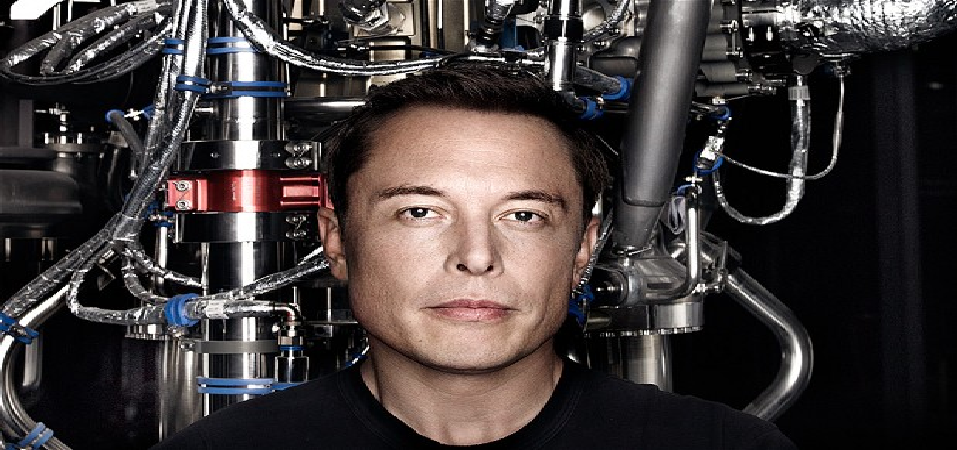
Elon Musk sold 7.92 million shares of Tesla worth around $6.88 billion between August 5 and 9, according to SEC filings, in a move believed to be geared towards funding his controversial Twitter deal.

The Tesla CEO has got himself entangled in a $44 billion Twitter acquisition deal that started in April. The deal became subject to litigation after Twitter sued Musk for attempting to back out of their purchase agreement over claims that a large section of Twitter is made up of bot accounts.

“Mr. Musk is terminating the Merger Agreement because Twitter is in material breach of multiple provisions of that Agreement, appears to have made false and misleading representations upon which Mr. Musk relied when entering into the Merger Agreement, and is likely to suffer a Company Material Adverse Effect,” Musk’s lawyers wrote in a letter to Twitter’s Chief Legal Officer Vijaya Gadde.

Twitter Chief Executive Parag Agrawal made some tweets in response to Musk’s criticisms, explaining that internal estimates of spam accounts on the social media platform for the last four quarters were “well under 5%.” The social media platform had provided Musk with “firehose”, a repository of raw data on hundreds of millions of daily tweets.

Musk was not satisfied with the answer provided by Twitter. But under the merger agreement, Musk must pay a $1 billion breakup fee, if he decides to back out of the deal, even though he claimed that Twitter’s unwillingness to provide him with the data gives him the right to walk away from the deal without having to pay the penalty.

Earlier this year, Musk said on social media that he had “no further TSLA sales planned” after April 28. The $6.88 billion shares sale suggests that the Twitter deal is likely to go through as Musk has seen that there is a high chance that the court will rule in Twitter’s favor.

Musk on Tuesday, after the latest stock sales were revealed, told Tesla fans and promoters who asked if he was done selling shares in the electric vehicle business, and if he might buy shares back in the future, yes.

“Yes. In the (hopefully unlikely) event that Twitter forces this deal to close and some equity partners don’t come through, it is important to avoid an emergency sale of Tesla stock.”

He said he would buy back the shares if the Twitter deal fails but did not specify which equity partners may likely back out of the plan to finance the deal.

As part of his efforts to rack up funding for the deal, Musk had in early May, listed up equity financing from 19 different partners including Saudi Arabia’s Prince Alwaleed Bin Talal Bin Abdulaziz Alsaud, Qatari Holding, venture firms Sequoia, DFJ growth fund, Vy Capital, and the cryptocurrency exchange Binance.

It is too early to know if the court will rule in favor of Twitter. However, Musk is preparing for a potential loss. He said if the Twitter deal doesn’t happen, he will consider creating his own social platform, X.com.
Honouring A Village Boy In Lagos and Nigeria

0

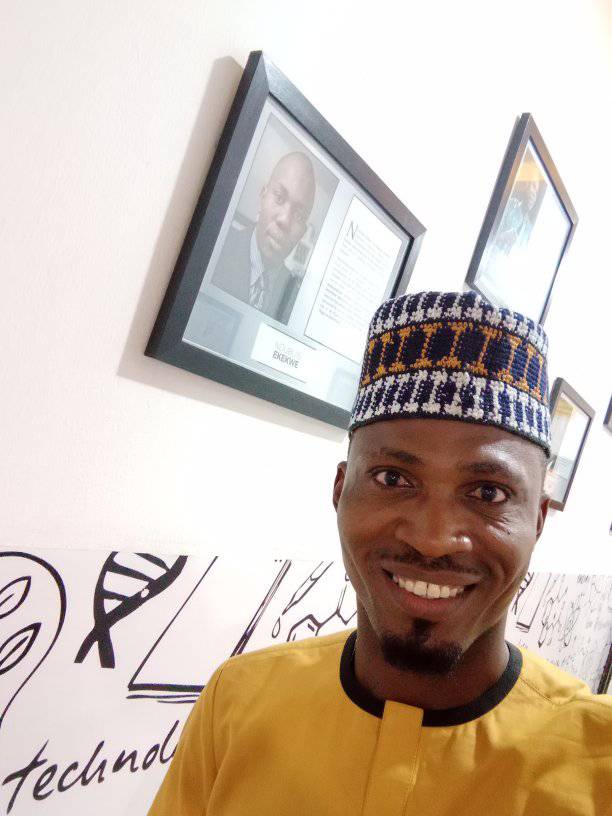
In company boardrooms; in government buildings; in universities and colleges; you like to showcase my photos and portraits. I want to thank everyone for honouring a village boy in this way. Thank you. And thank you, the Ministry of Science and Technology, Lagos State.

Note: if possible, take a photo and share with me whenever you see any of the portraits. To the startup founders, who put my portraits on their desks, let me un-scientifically assure you that you will hit a unicorn! Lol.

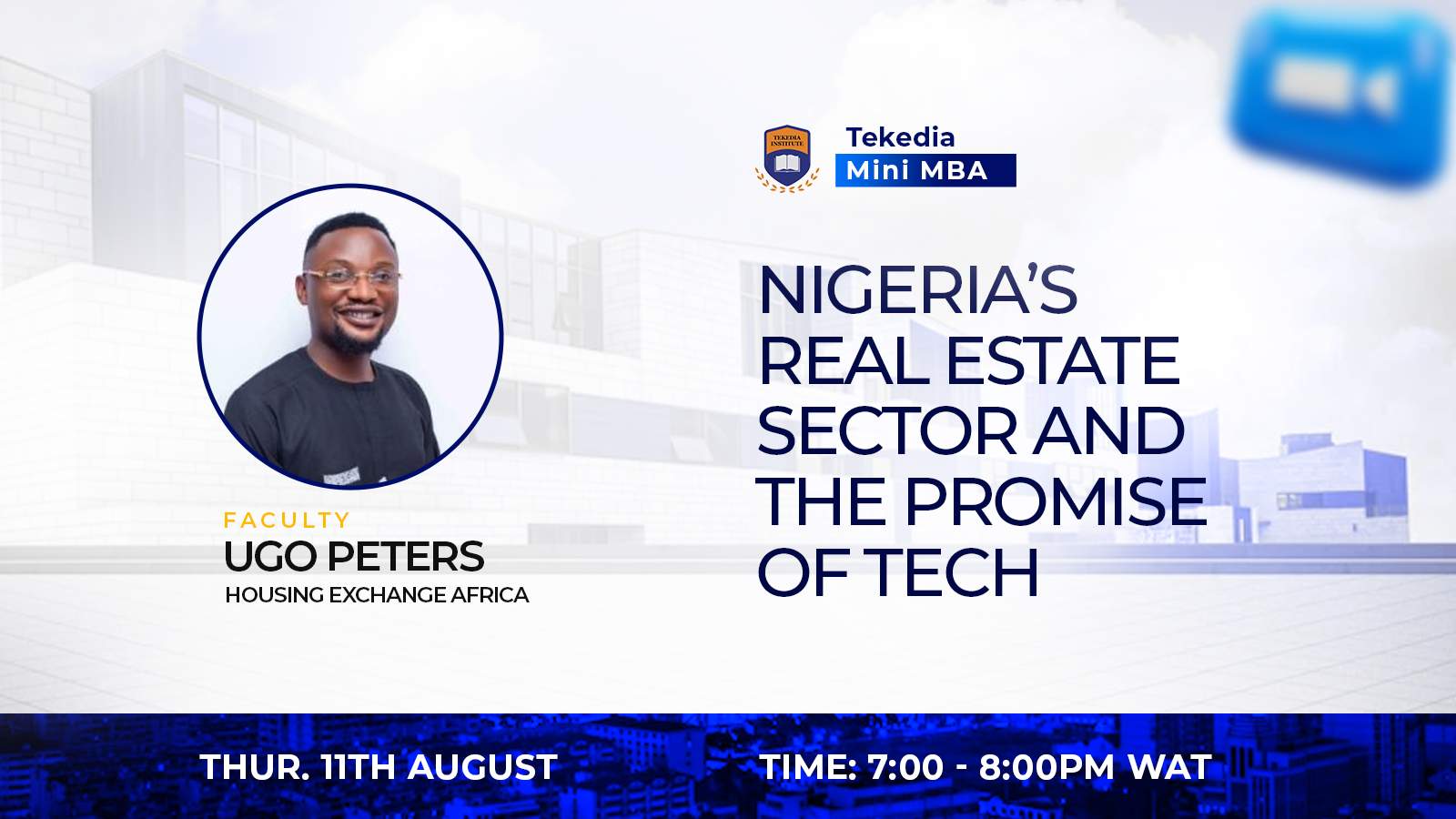
Nigeria’s Real Estate Sector and the Promise of Technology – Tekedia Live Today

0

He is Mr. Real Estate+ and he is building one of the most amazing startups in that space. That “+” is adding technology and many components upon the layers of real estate. Today, Tekedia Mini-MBA will host UGO PETERS of Housing Exchange, and he will take us on an excursion to real estate in Nigeria.

I like real estate but not just in the cities; happy to share that my village awarded my family with an Infrastructure Award in 2021 (thank you Ugwunta Ovim). That means we can do projects in rural areas and villages even as we do in big cities.

Come over at the best school and let us see how tech can unlock the promises of real estate in rural and urban Nigeria – and see what innovators are doing in this domain. Time is 7pm WAT and Zoom link in the Board.

Join us for the next edition here 

Politics and Economics of Concentrating Media in Osun

0

The development of the Osun media ecosystem would not be complete without mentioning that the first publicly-owned radio station began operations using transmission equipment inherited in 1991, the year the state was created from the old Oyo state by the administration of former military president, General Ibrahim Badamosi Babangida. Prior to the establishment of the state, the Broadcasting Corporation of Oyo State owned radio and television transmission equipment in Ile-Ife, Iwo, and Obokun. During the old Oyo state, the equipment assisted BCOS in relaying live and recorded broadcast services to the people of Osun region.

Citizens in the cities and towns where the transmission equipment were located expected the equipment to be transformed into full broadcasting stations as soon as Osun state was established, particularly those in Iwo, where the administration of Chief Bola Ige had previously constructed a mega broadcasting complex (Iwo). For years, this expectation was an afterthought because military and civilian administrations ignored the complex despite the large amounts spent on it.

Previous administrations considered Osogbo as the capital city for the location of the state broadcast media prior to the Prince Olagunsoye Oyinlola administration. Because of the inherited transmission equipment located in the city, Ile-Ife housed the first state-owned radio station. For years, the city was primarily used to relay FM radio broadcasting services to the public until 2001, when the Ife-Modakeke conflict erupted, resulting in vandalism of broadcasting equipment and the broadcasting house.

For months, indigenes and residents had no way of keeping up with what was going on in the government. This resulted in the revitalization of Iwo’s AM radio transmission. Chief Bisi Akande’s administration quickly commissioned the station for public broadcasting services. Then, public affairs analysts and indigenous peoples questioned the non-use of the broadcasting complex built during Chief Bola Ige’s administration in the same city. The government’s response was a lack of funds to build a mini-studio to provide the necessary broadcasting services. The government feared that continued government silence would lead to anarchy among the populace.

Chief Bisi Akande did not stop at revitalizing the state’s emerging media ecosystem, particularly in the broadcast sector. He awarded the construction of a modern broadcasting complex in Osogbo. The complex was designed with television and radio stations in mind. When the complex became operational, Obokun, which had the state’s first television station, lost its status.

The issue of ignoring the Iwo complex arose once more. During the 2007 governorship election campaign, the people of Iwo confronted Prince Olagunsoye Oyinlola with a series of questions about the neglect of the Iwo broadcasting complex. As previously stated, Prince Oyinlola promised to make the complex operational. Apparently, Prince Oyinlola made the pledge in order to garner the most votes from Iwoland. He kept his promise a few months after the election. Some Osun State Broadcasting Corporation employees from Osogbo and Ile-Ife were relocated to Iwo to ensure the proper launch of the Osun Reality Radio Vision Service.

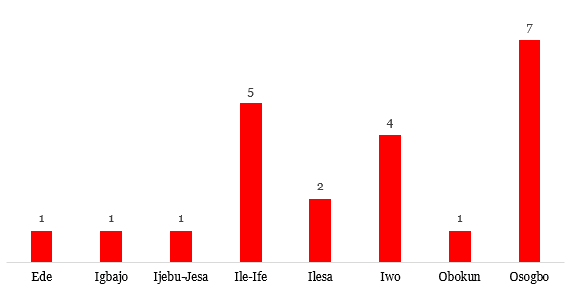
These narratives depict how political relationships and power have influenced the location of public media organizations in Osun state. A state with one radio and television station in 1991 has transformed into a state with 22 media organizations in 2022 (as of August 11, 2022), with private individuals and/or organizations owning 54.54% of the organizations. The location of some federal radio and television stations in Ile-Ife, Osogbo, and Ilesa has called into question the state government’s sole government broadcast media. According to our data, it is now 50% for both publicly-owned radio stations and publicly-owned television stations.

Exhibit 1: Number of media establishments per location

Source: Media Organisations, 2022; Infoprations Analysis, 2022

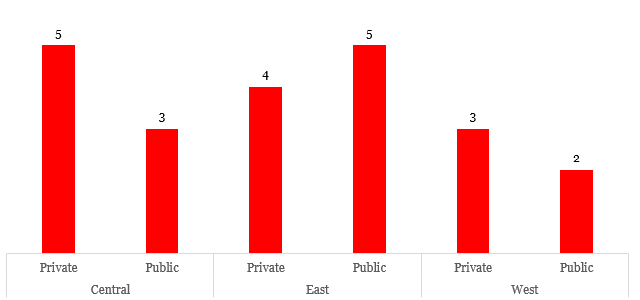
Furthermore, our data show that publicly-owned media are more concentrated or located in Osun East and Central than in Osun West. Osun East has also benefited from private individuals and/or organizations establishing media outlets in the region. In terms of locating private media organizations, Osun Central lags behind Osun East.

Exhibit 2: Ownership by political administrative district

Source: Media Organisations, 2022; Infoprations Analysis, 2022

Looking at the data, our analyst notes that it is reasonable to draw the conclusion that publicly-owned media are being located with a strict preference for political over economic considerations. For instance, the hybrid measures taken by the Chief Bisi Akande administration were in line with the need for government to interact with the populace in order to prevent potential disorder. The administration did, however, give some thought to the economy because there wasn’t enough money to rehabilitate the Iwo broadcasting complex. The locations of the federal radio and television stations in Ilesa, Osogbo, and Ile-Ife are also better understood in light of political factors. According to our observations, prominent sons and daughters as well as traditional rulers of these cities influenced the location of the stations.

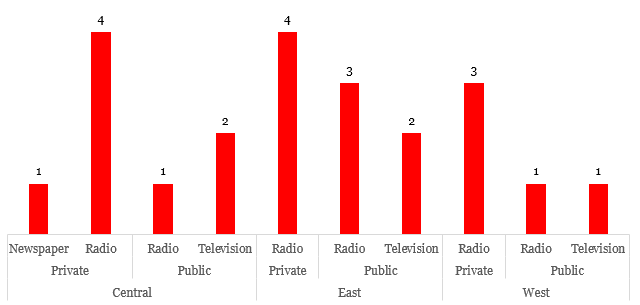
Exhibit 3: Media type by ownership pattern and political administrative district

Source: Media Organisations, 2022; Infoprations Analysis, 2022

Data in Exhibit 3 indicate that the concentration of private radio stations in Osun East and Osun West may be related to the lower cost of living in those areas than in the Central region, especially Osogbo. In other words, it could be said that private individuals and/or organizations that choose where to locate their facilities gave economic factors precedence over political ones. Our analyst notes that as the state media ecosystem continues to change, a number of unexpected indices will appear in the competitive landscape over the next three years. This is premised on the fact that broadcast media entrepreneurs are targeting states with low concentrations of radio and television stations. Nigeria’s Western states of Lagos and Oyo are already overrun with radio stations and other forms of media.

Join Us At Tekedia Capital – Let’s Breed New Unicorns in Africa

0

It is that time of the year. Tekedia Capital begins another quest to find and breed a new generation of special “animals” called unicorns. Africa* has about 9 of them at the moment – Chippers Cash, Andela, OPay, Wave, Flutterwave, TeamApt, Interswitch, Esusu and Fawry – and we expect the number to hit 15 by Dec 2023. If you want to join us in this farming process where the best outcomes would be farm animals (yes, startups) valued at least US$1 billion, click to join Tekedia Capital Syndicate. The investment next cycle begins next month

Membership fee of $1,000 or N550k required with minimum of $10k when investing.