DD
MM
YYYY

PAGES

DD
MM
YYYY

spot_img

PAGES

Home Blog Page 4987

Rufai Oseni: Lagos road usage laws you should know

0

The law is not a respecter of anybody, despite your social status or popularity. It was a welcomed development that a popular Arise news analyst was charged to court for breaking the Lagos law on road usage and appropriate punishment was duly melted on him. 

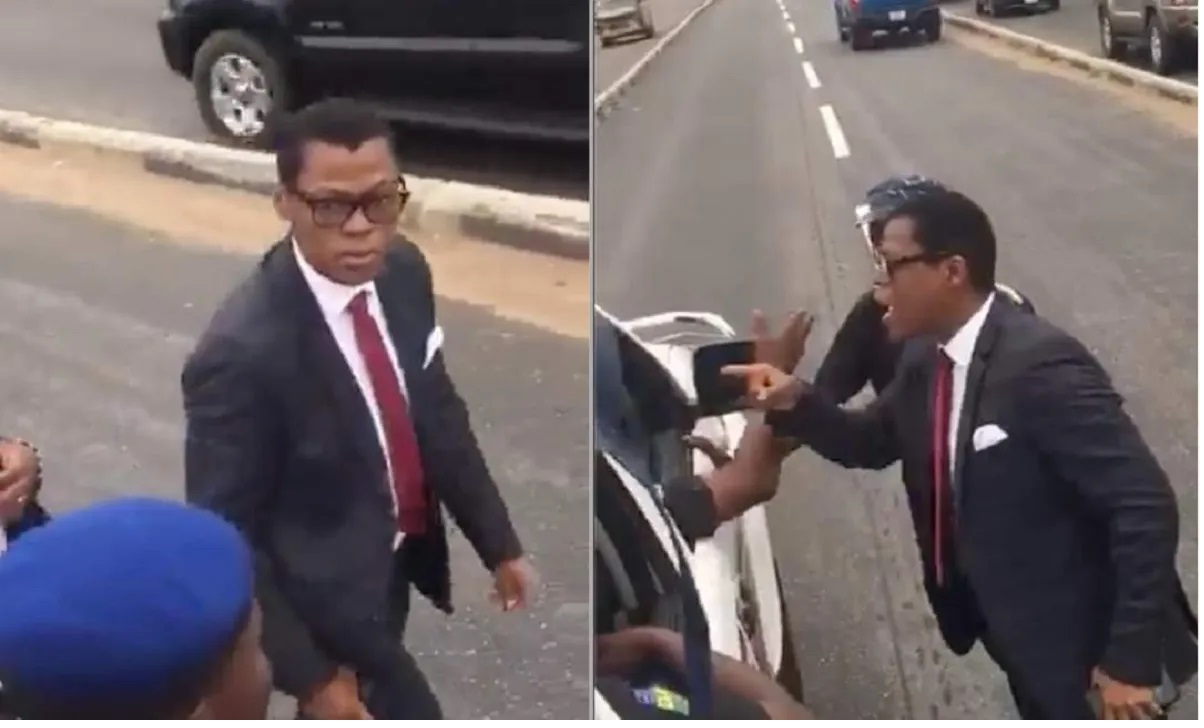
Mr. Rufai Oseni, a popular face on Nigerian tv was on the news on Monday for having a heated dance-off with some police officers and other traffic officers of Lagos state authority. He was double-crossed and his car seized for having driven on a BRT lane. BRT lane is a special lane on roads in Lagos state reserved specifically for BRT buses and other motorists are totally prohibited from using that lane despite the excuse or circumstances whatsoever.

The Lagos state transport (sector reform) law of 2018 is the extant law that prohibits motorists from driving on the BRT lane and it provides for the punishment of impounding the offender’s vehicle and a fine of N70,000 is to be paid by the offender before the vehicle will be released back to him. In some cases, the driver could be detained alongside the vehicle.

Mr. Rufai Oseni was charged to court for this offense and he was found guilty of contravening Lagos State Transport Law (2018) and was thereby fined Seventy Thousand Naira. 

Ignorance of the existence of these laws is not an excuse to prevent you from being prosecuted if you are found wanting. There are numerous traffic and road usage laws in Lagos state which were made with the intent of bringing some decorum to Lagos roads and minimizing the traffic gridlock to some greater extent. Some of these laws that readers, especially Lagos state residents should take to heart include; 

Driving without a roadworthiness certificate is an offense and the punishment is Impounding the vehicle.

Driving Kabu Kabu without a permit is an offense and the punishment is Impounding the vehicle.

The act of Disobeying a LASTMA Officer (despite the reason or excuse) is an offense and it attracts a fine of N30,000, in some cases, the vehicle may be Impounded and the offender detained.

Neglecting traffic direction light is a strict offense that carries the punishment of 3 months jail term.

Smoking, drinking, or eating while driving is an offense with the punishment of N30,000 fine. 

Physically assaulting a traffic officer/warden is a serious offense that carries both a fine of N50,000 and 6 months jail term and compensation to the assaulted officer.

Driving without full light attracts a fine of N50,000.

Driving with a worn-out tire or without a spare tire attracts a fine of N30,000.

Driving without a fire extinguisher attracts a fine of N30,000.

Driving One way attracts a 3 years jail term.  

Driving without a fastened seat belt attracts a fine of N30,000.

Driving on a pedestrian walkway attracts a fine and Impoundment of the vehicle. 

Reversing or making a U-turn on the highway & parking on walkways attracts a fine of N50,000.

Obstruction of free flow of traffic attracts a fine of N20,000.

While Picking/Dropping passengers at illegal Bus stops attracts a fine of N50,000.

These are some of the salient road usage violations and their punishments that motorists based in Lagos state or visiting Lagos state should take to heart.

It is important to state that this law is peculiar to Lagos state alone as other states have their different road usage laws governing their individual states.

A police officer or any other officer of authority can arrest and detain anybody found violating any of these laws without a warrant. The law has given officers the power to go ahead and arrest, detain, and impound the vehicles of offenders without warrants. 
Tekedia Capital’s AjoMoney and TAP Win Seedstars’ Migration Entrepreneurship Prize 2022

0

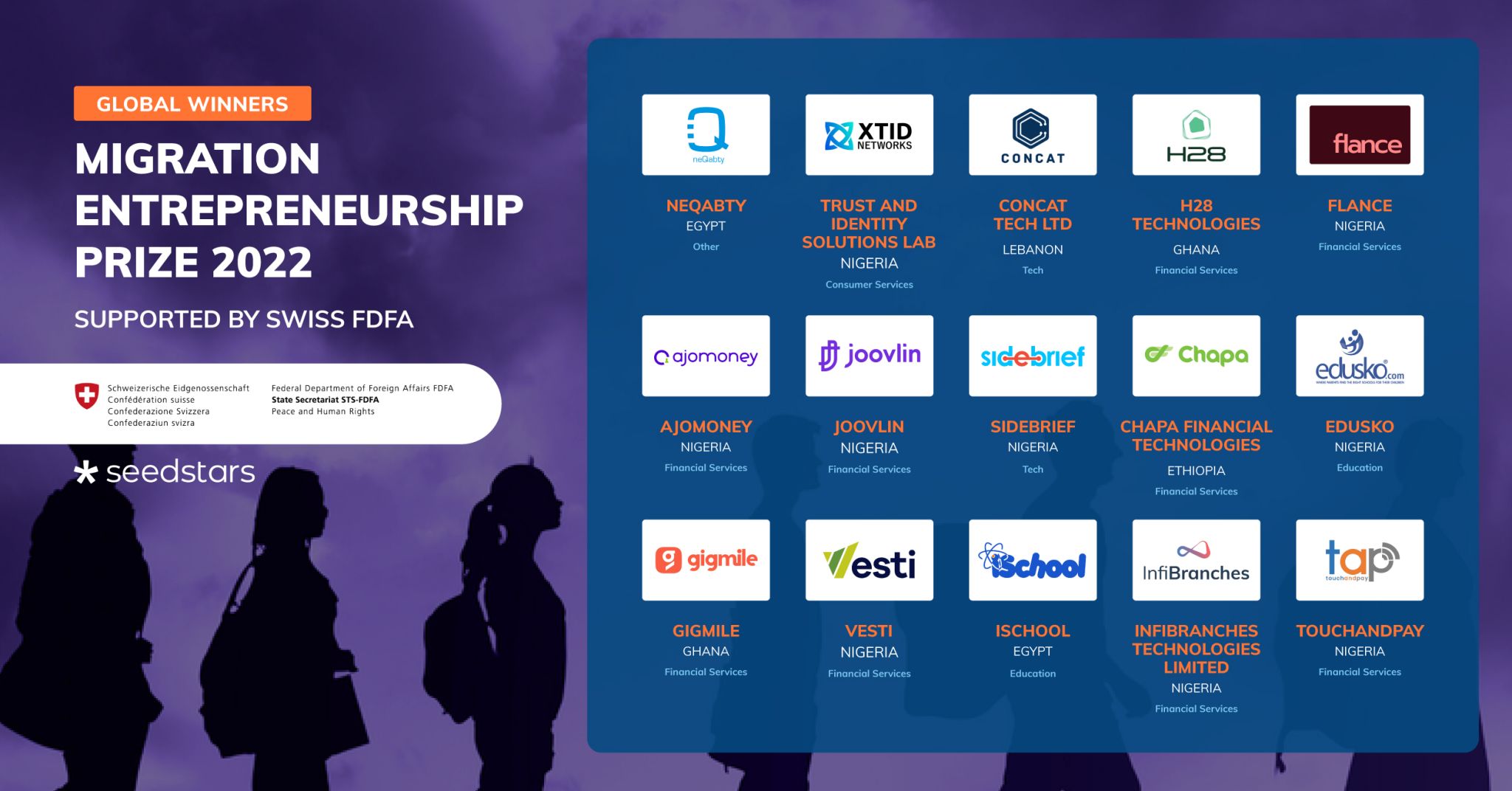
Tekedia Capital congratulates our portfolio companies – AjoMoney and Touch and Pay Technologies Ltd (YC W22) – for winning the Geneva-based Seedstars’ Migration Entrepreneurship Prize 2022.  The prizes are supported by the Federal Department of Foreign Affairs FDFA , Switzerland. At Tekedia Capital, we continue to discover and nurture category-king companies.

Since we began operations, we have been sending companies to Techstars, YCombinator, and now Seedstars, demonstrating and validating our abilities, to discover transformational companies even when they are young. The next #winners are here!

Learn more about Tekedia Capital here.

We Can Use FrieslandCampina’s Model to Fix Aba Shoe and Leather Industry in Nigeria

0

FrieslandCampina is a Dutch multinational dairy cooperative which is based in Amersfoort, Netherlands. Largely, it is “owned” by dairy farmers. What happens is this: you produce 2 trucks of milk, I produce 5, and another produces 8, etc. Because we are small in our capacities, no one pays attention. But if we all come together, we become BIG and can move global. Those farmers did just that and today, they have one of the largest companies in the world with annual revenue in excess of $11billion.

Can we run the same playbook in Aba? Use a brand name, and ask those small shoemakers to feed into the brand. As Naira continues to fade, many will buy “local”, and a business model that can feed that pipeline has a promise. I suggest a name – “Aba” or “Enyimba” leather products brand, to be owned and controlled by men and women in the leather industry, within a cooperative.

People, you can use aggregation to get scale and drive orchestration in markets. That name-brand provides one certainty: designer, we will buy whatever you produce provided it is within standards. Once that is there, those men and women will scale because the demand side has been fixed.

Comment on LinkedIn Post

Comment: This is old skool Ndubuisi Ekekwe… as I read the article, I thought, the old words worth is back, demanding big attention span from readers… until I looked at the date of the article and saw it was 2017 !

Well if an article 5 years old has been resurrected by this analyst with a penchant for business detail, it can mean only one thing… the content is just as valid today, and Aba has not changed.

Is that a good or a bad thing? It is bad because the artisans are not seeing just reward from their labour.

The problem however, that production is often by hand, or at least hand finished, and that imperfections exist, would be a selling point in other markets globally.

Top finds for numismatists and philatelists for instance are coins or postage stamps with minting or printing flaws. Where labour is at a premium, small imperfections can be seen as proof of handicraft rather than mass production. Indeed, specialist machine changes are now available to deliberately introduce small process flaws to give the hand made look.

It may not be that Aba has lost its way in being what Nigeria needs. It may be that Nigeria has failed to be what Aba needs.

No one is a prophet in their own land.

My Response: Aba is fading and that affected my village Ovim. Ovim train station was the largest train station in our area serving many communities. Typically, from Aba, every train is expected to stop at Umuahia, Uzuakoli and then Ovim, bypassing some small stations.

Ovim served Ohafia, Arochukwu, Ahaba, and many other communities. As that was happening, businessmen went and built houses around the station. But with the train station gone, everything has collapsed. The hub is gone and Ovim lost a strategic positioning which was used to supply garri to Enugu via rail!

Every kid rode a Raleigh bicycle which was used to move foodstuffs from Oriendu Market to the train station! It was great.

Fixing Aba Shoe And Leather Industry

Bonus Week [Video]

0

  Share this: Click to share on Facebook (Opens in new window) Facebook Click to share on X (Opens in new window) X Click to share on WhatsApp (Opens in new window) WhatsApp Click to share on LinkedIn (Opens in new window) LinkedIn Click to email a link to a friend (Opens in new window) […]

This post is only available to members.

The Playbooks for Winning in Africa

0

The history of money is deep; to the cowries and to the barter. Yes, humans have always figured out how to exchange goods and services for value. And across centuries and kingdoms, the quest for improving the efficiency of that exchange has remained. A moment came in 7th century China when the  Tang dynasty invented paper currency. Later on, the Song dynasty in the 11th century made it popular. The Mongol Empire and Yuan dynasty scaled it. The trajectory to frictionless exchange has never stopped.

Adam Smith postulated the  “invisible hand” in his thesis on improving the mechanics of firms. Isaac Newton in Mathematica Principia seeded the foundations of modern natural philosophy. That has morphed into the modern era of bytes, moving money via computing systems and including the Hodler Bitcon-nia!

William Shakespeare’s Lord Polonius: “What do you read, my lord?” Hamlet: “Words, words, words”. The Questioner: “What do you see  influencing intra-African trade?” The Answerer: “Currency, supply chain, products”. At Tekedia Institute Mini-MBA edition 9 which begins Sept 12, we will look at “The Playbooks for Winning in Africa”! See what we plan to do