DD
MM
YYYY

PAGES

DD
MM
YYYY

spot_img

PAGES

Home Blog Page 499

Avalanche Pushes Higher, Bitcoin Cash Holds Steady, and BlockDAG Miner Rollout Defines Long-Term Crypto Strength

0

The crypto market remains a mix of speculative surges and proven delivery. Avalanche (AVAX) continues to build momentum as technical setups support higher targets, while Bitcoin Cash (BCH) holds firm despite challenging market conditions. These developments highlight the short-term narratives around two established projects.

In contrast, BlockDAG (BDAG) is strengthening its case as the best long-term crypto by pairing measurable adoption with its ongoing miner rollout. With a $0.0013 limited-time price, $407 million already raised, and 19,900 mining units shipped, BlockDAG is emerging as the ecosystem that moves beyond promises into execution.

Avalanche (AVAX) Price Prediction Signals $10 Target

Avalanche has attracted buyers again, with analysts pointing to strong support and bullish setups. According to BlockNews, AVAX is positioned for a run toward $10, provided it can maintain accumulation patterns and defend near-term support levels. Trading activity has steadily increased, suggesting that capital rotation is favouring Avalanche as investors prepare for another wave of gains.

Beyond short-term price action, Avalanche benefits from ecosystem upgrades that continue to improve scalability and interoperability. This combination of network growth and bullish technicals makes AVAX one of the more compelling candidates for those scanning top crypto coins right now, though overhead resistance could still slow progress if volume weakens.

Bitcoin Cash (BCH) Analysis Highlights Resilience

Bitcoin Cash has been consolidating steadily, showing resilience after testing critical zones. Recent analysis from CCN notes that BCH is holding above key support, suggesting that bearish pressure has not yet overwhelmed buyers. If the coin maintains this footing, projections point to possible attempts at retesting higher levels over the medium term.

The Bitcoin Cash narrative remains tied to its use as a payments-focused asset. While it lacks the growth velocity of newer ecosystems, its stability has continued to attract users and merchants. That said, BCH remains heavily dependent on broader Bitcoin market cycles, leaving its trajectory contingent on favourable sentiment across the sector.

BlockDAG Miner Rollout Defines Long-Term Strength

Where AVAX and BCH reflect cyclical moves, BlockDAG is building an entirely different narrative. The project has already raised over $407 million, and as part of its deployment celebration, the coin is available at a special limited-time price of $0.0013, far below the original $0.03 batch price. This pricing structure offers unmatched affordability for investors looking at long-term growth.

What makes BlockDAG stand apart is its delivery of mining infrastructure before launch. Live demos have shown the X1 mobile miner integrating with X10 hardware units, capable of generating 200 BDAG daily. Meanwhile, shipments of 19,900 miners confirm adoption at scale, providing a tangible base for network activity.

At the same time, the ecosystem is expanding through its Dashboard V4, which simulates exchange functionality by offering real-time charts, wallet balances, referral tracking, and leaderboard metrics. This transparency allows buyers to interact with tools that will remain live post-launch, ensuring consistency and trust.

With over 2.5 million app users and confirmed listings on 20+ centralised exchanges, liquidity is also guaranteed. These achievements demonstrate why BlockDAG is recognised not just as another presale, but as the best long-term crypto option of 2025.
Final Outlook: Comparing AVAX, BCH, and BDAG

Avalanche shows technical promise, with a $10 target in sight if bullish momentum continues. Bitcoin Cash demonstrates resilience, maintaining stability even under market pressure, though its growth depends on sentiment tied to Bitcoin. Both highlight the potential and risks of cyclical crypto investments.

BlockDAG, however, redefines the landscape. With $407 million raised, a $0.0013 entry point, miner shipments already underway, and an exchange-ready dashboard, it proves that execution, not speculation, drives long-term value. For investors searching beyond short-term cycles, BDAG offers the clearest path as the best long-term crypto to buy now.

Join BlockDAG Presale Now:

Presale: https://purchase.blockdag.network

Website: https://blockdag.network

Telegram: https://t.me/blockDAGnetworkOfficial

Discord: https://discord.gg/Q7BxghMVyu

BlockDAG’s Awakening Testnet Gains Traction as Worldcoin Price Rally and Litecoin ETF Buzz Intensify

0

The crypto market is witnessing two distinct catalysts capturing traders’ attention simultaneously: the ongoing Worldcoin (WLD) price rally and speculation surrounding a potential Litecoin ETF. These developments are sparking new debates about where capital could flow next in the digital asset space.

While volatility drives short-term trading in both assets, institutional interest in Litecoin and retail-driven momentum around Worldcoin are reshaping sentiment.

Amid this activity, analysts are also flagging BlockDAG as the best crypto to buy right now. Its upcoming Awakening Testnet promises a tangible leap in blockchain infrastructure maturity, offering a fundamentally different value proposition from the hype cycles surrounding price-focused assets.

WLD Bulls Eye Breakout as Consolidation Ends

After delivering a triple-digit surge from $1.50 to $4 in early September, the Worldcoin (WLD) price rally has entered a cooling phase. Traders see this consolidation as a potential springboard for another upward breakout. Technical charts show WLD hovering above critical support near $1.68, suggesting strong buyer defence.

Analyst Spermix’s chart highlights a potential “double loading” setup, where the token could stage a second explosive move. He argues that sideways movement is forming a launchpad, not a ceiling, citing past momentum-driven rallies. If volume returns as expected, WLD could revisit the $3 zone and extend higher.

This technical optimism reinforces why some traders consider Worldcoin among the best cryptocurrencies to buy right now. However, its price-driven appeal contrasts with infrastructure-focused projects and the long-term fundamentals underpinning ventures like Litecoin ETF plays and BlockDAG.

Institutional Buzz Builds Around Litecoin ETF

Market interest in a possible Litecoin ETF surged after Grayscale filed with the U.S. Securities and Exchange Commission on September 9 to launch a spot product under the ticker LTCN. The filing named Bank of New York Mellon as transfer agent and Coinbase Trust as custodian, adding institutional weight.

The news coincided with a $100 million Litecoin purchase by Lite Strategy, which triggered a 3% price jump to $116 and fueled renewed whale accumulation. Wallets holding over 1,000 LTC added 181,000 coins in 24 hours, lifting total large-holder balances to nearly 60 million.

This accumulation underscores why investors see Litecoin as the best crypto to buy right now for conservative exposure. While the Worldcoin (WLD) price rally offers high-risk upside, the Litecoin ETF narrative caters to institutional capital seeking regulatory clarity and proof-of-work stability.

BlockDAG Awakening Testnet Redefines Utility

BlockDAG is carving out a distinct identity beyond price cycles by pushing toward infrastructure readiness. Its Awakening Testnet, set to launch on September 25, marks a pivotal milestone. Unlike conventional test phases, this will activate core blockchain components in a live environment to stress-test performance ahead of mainnet.

Key features include full core blockchain activation, a UTXO removal upgrade for streamlined ledger operations, and real-time explorer tools for monitoring. The testnet also brings account abstraction, laying the foundation for future smart contract support, and refined vesting contracts to ensure equitable coin distribution.

Crucially, the testnet integrates live miner syncing through the Stratum Protocol, confirming real-world hardware alignment. This operational readiness is reinforced by hundreds of shipped X10 miners and upcoming updates to the X1 mobile miner app, which will expand access to millions of users.

With a current price of $0.03, Batch 30 ongoing, over 26.2 billion coins sold, and $407 million raised, BlockDAG has already delivered 2900% ROI (Batch 1–30). These metrics underline long-term confidence as the project enters its final presale stretch, positioning it above price-centric projects like Worldcoin price rally plays or speculative Litecoin ETF trades. The Awakening Testnet showcases real infrastructure maturity, signalling why many analysts consider BlockDAG the best crypto to buy right now.

Final Verdict

The Worldcoin price rally shows how quickly sentiment can swing in crypto, while excitement around a potential Litecoin ETF highlights the appeal of regulatory pathways for institutional capital. Yet both stories are fundamentally price-driven and subject to market mood.

By contrast, BlockDAG is building core infrastructure with measurable progress. Its Awakening Testnet, combined with strong presale performance and live miner deployments, offers a clear case for durability over speculation. For investors seeking the best crypto to buy right now, BlockDAG’s long-term utility stands out as the more resilient alternative to momentum-driven rallies or ETF-fueled narratives.

Presale: https://purchase.blockdag.network

Website: https://blockdag.network

Telegram: https://t.me/blockDAGnetworkOfficial

Discord: https://discord.gg/Q7BxghMVyu
OpenAI Unveils Teen-Focused ChatGPT With Parental Controls as U.S. and Europe Diverge on AI Safety Rules

0

OpenAI on Tuesday announced it will launch a dedicated ChatGPT experience with parental controls for users under 18 years old, as the artificial intelligence company works to enhance safety protections for teenagers.

The new version will automatically redirect minors to an age-appropriate ChatGPT experience that blocks graphic and sexual content and, in rare cases of acute distress, can involve law enforcement, the company said. OpenAI is also building technology to better predict a user’s age. If the system is uncertain or lacks sufficient information, it will default to the under-18 experience.

The safety updates come after the Federal Trade Commission recently launched an inquiry into several tech companies, including OpenAI, over how AI chatbots like ChatGPT potentially affect children and teenagers. The agency said it wants to understand what steps companies have taken to “evaluate the safety of these chatbots when acting as companions,” according to a release.

OpenAI has faced mounting scrutiny over this issue, particularly after a lawsuit from a family blamed the chatbot for their teenage son’s death by suicide. In response, the company last month outlined how ChatGPT will handle “sensitive situations.”

“We prioritize safety ahead of privacy and freedom for teens; this is a new and powerful technology, and we believe minors need significant protection,” OpenAI CEO Sam Altman wrote in a blog post on Tuesday.

The company has been preparing these controls for months. In August, OpenAI said it would release parental tools to help guardians understand and shape how their teens use ChatGPT. On Tuesday, it shared more details, saying the parental controls will roll out at the end of the month.

Parents will be able to link their ChatGPT account with their teen’s via email, set blackout hours for when the teen cannot use the chatbot, manage which features are disabled, guide how the chatbot responds, and receive alerts if the teen is flagged to be in acute distress. ChatGPT remains intended for users ages 13 and up, OpenAI said.

“These are difficult decisions, but after talking with experts, this is what we think is best and want to be transparent in our intentions,” Altman wrote.

U.S. versus Europe: A growing Safety policy gap

The U.S. response to AI safety for minors has so far leaned on investigations and voluntary compliance. The FTC inquiry into OpenAI and other chatbot makers signals heightened oversight but stops short of binding rules. Much of the American approach mirrors broader debates about tech regulation, where agencies intervene after harms are alleged rather than imposing preemptive safeguards.

Europe, by contrast, is already advancing concrete legislation. The European Union’s landmark AI Act, agreed upon in principle earlier this year, classifies systems like chatbots as “high risk” when used by children and requires stricter obligations for companies. That includes mandatory transparency around training data, opt-out options, and strong age-verification protocols. Some EU countries, such as Italy, have even temporarily banned ChatGPT in the past over concerns about inadequate safeguards for minors.

This divergence could put OpenAI and its peers in a tricky position. Measures that satisfy U.S. regulators may fall short of Europe’s legally binding requirements, forcing AI firms to build dual compliance systems.

Looking forward, OpenAI’s rollout of parental controls is expected to set a precedent in the U.S., where safety features are often introduced after lawsuits or scandals. If regulators deem the new system sufficient, ChatGPT may continue to expand into classrooms and teen use cases with limited additional oversight.

But in Europe, OpenAI may face a stricter test. Regulators there are unlikely to accept company-designed safeguards alone; they want verifiable compliance with the AI Act’s standards. Analysts say this could lead to “regionalized ChatGPTs,” where the product available to teenagers in the EU differs meaningfully from what is offered in the U.S.

Meanwhile, privacy advocates warn that prioritizing safety “ahead of privacy,” as Altman described, may open new debates about surveillance and data collection on minors. They argue that embedding parental controls and distress alerts risks building an infrastructure that could be misused for broader monitoring.

However, OpenAI’s parental controls represent a major shift in how AI is being tailored for minors. Time and how it effectively prevents harm will tell whether the move becomes a genuine safeguard or a defensive measure against lawsuits and regulators.

MTN in Advanced Talks with US, European Firms to Build AI Data Centers Across Africa

0

Africa’s largest telecom operator, MTN Group, is in advanced negotiations with US and European partners to build a network of data centers across the continent, an ambitious plan aimed at powering artificial intelligence (AI) services and addressing Africa’s severe AI infrastructure gap.

The initiative is part of MTN’s broader effort to diversify revenue beyond traditional telecoms, monetize infrastructure, and position itself as the digital backbone of Africa’s fast-growing economies.

CEO Ralph Mupita confirmed in an interview with Bloomberg that MTN will fund part of the data center build-out directly while partnering with global co-investors, AI infrastructure specialists, and hyperscalers like Microsoft.

“We are now in the commercial negotiation phase and shortlisting partners who can help us scale. Our goal is to conclude these partnerships within the year,” Mupita said.

MTN’s AI data unit, Genova, is at the core of this plan. Genova is already operational, deploying AI across MTN’s 16 markets to optimize network traffic in Nigeria, manage fuel consumption in South Africa, balance energy systems in Benin, and detect fibre cuts in Côte d’Ivoire. Beyond internal use, the new data centers will lease computing power to businesses and governments hungry for AI-driven services.

MTN recently launched West Africa’s largest Tier III data center in Lagos, named the Sifiso Dabengwa Data Centre. With nine megawatts of capacity and cloud infrastructure that MTN claims rivals Amazon, Microsoft, and Google, the facility strengthens the continent’s ability to host advanced digital services.

Africa’s AI Gap

Despite its demographic edge—Africa is home to the world’s youngest population—the continent has less than 1% of global AI data center capacity. South Africa currently dominates what little exists, hosting facilities from Microsoft, Amazon, and Alibaba.

Competitors are also circling. Microsoft and Abu Dhabi’s G42 recently announced a geothermal-powered data center in Kenya, while Airtel Africa, led by billionaire Sunil Mittal, is building AI infrastructure in Nigeria under its Nxtra subsidiary. Airtel has also struck a deal with Xtelify to roll out AI-powered platforms across 14 markets, designed to give its 150,000 field agents real-time insights into customer behavior.

But Mupita acknowledged a core obstacle: reliable electricity. With power infrastructure fragile in many African countries, running large-scale data centers is expensive and complex. He said MTN is exploring renewable and alternative energy sources to ensure viability.

MTN’s Legacy: Leading Every Tech Leap

MTN’s AI ambitions are consistent with its history of taking the lead on transformative technologies in Africa. The company was among the earliest to deploy 4G networks at scale and again led the rollout of 5G services on the continent, launching commercial 5G in South Africa as early as 2020.

In Nigeria, MTN was the first operator to win a 5G spectrum license and turned on its network in 2022, well ahead of most competitors. The move cemented its reputation as the pacesetter for mobile broadband technology in Africa. Telecom industry analysts often note that MTN’s aggressive 5G deployment gave it an edge in offering high-speed services to businesses, governments, and consumers.

MTN is now attempting to repeat this playbook—being first to market with the infrastructure needed to power the next wave of digital innovation by pushing into AI data centers.

Unlike foreign hyperscalers who tend to concentrate capacity in single stable hubs, MTN is spreading its AI infrastructure across 16 diverse markets. This broader footprint, while riskier, could allow MTN to dominate markets overlooked by global players.

Airtel Africa, meanwhile, has opted for partnerships that focus more on software-driven AI solutions rather than heavy infrastructure, signaling a less capital-intensive approach. By contrast, MTN is doubling down on physical infrastructure and betting on long-term control of Africa’s digital backbone.

If MTN’s bet succeeds, it could trigger a domino effect similar to what happened with mobile connectivity. Its early leadership in mobile and 5G adoption forced rivals to catch up and expanded digital access across the continent. Now, with AI data centers, MTN is seeking to position itself as the gateway to Africa’s AI-powered future, one where local businesses and governments no longer rely solely on offshore servers.

Goldman Sachs, Morgan Stanley Win Appeals Over Investor Claims in Archegos Collapse

0
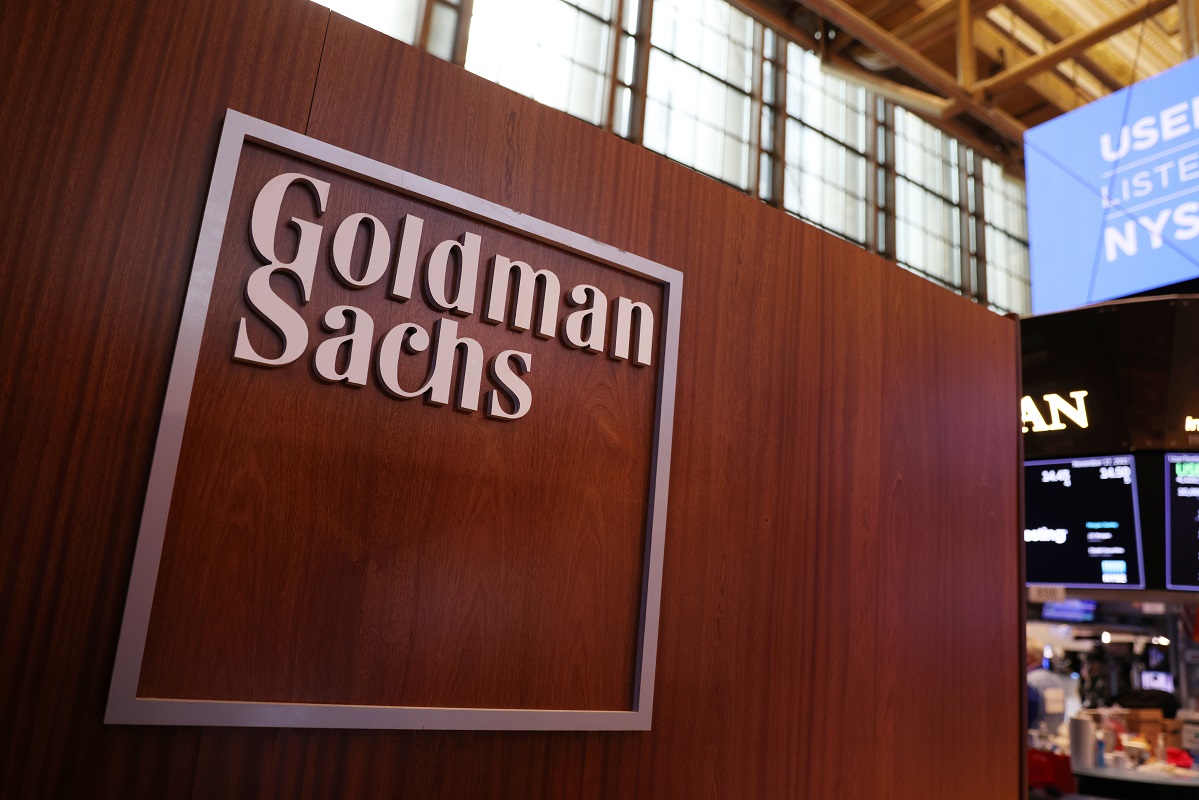
The logo for Goldman Sachs is seen on the trading floor at the New York Stock Exchange (NYSE) in New York City, New York, U.S., November 17, 2021. REUTERS/Andrew Kelly/Files

Goldman Sachs and Morgan Stanley scored a major legal victory Tuesday after a U.S. appeals court rejected investor lawsuits seeking to hold them liable for losses tied to the March 2021 collapse of Archegos Capital Management, the $36 billion family office run by Bill Hwang.

In a unanimous 3–0 decision, the 2nd U.S. Circuit Court of Appeals in Manhattan found that Archegos was not an insider that owed fiduciary duties to the companies whose stock positions it amassed. As a result, the court concluded the banks could not be held responsible for alleged market-timing or tipping before Archegos’ meltdown.

Circuit Judge Maria Araujo Kahn, writing for the panel, said there was no proof that Goldman and Morgan Stanley “agreed to act in Archegos’ best interest” or that they tipped preferred clients about Archegos’ travails — facts central to the investors’ claims. The ruling upholds a March 2024 dismissal by U.S. District Judge Jed Rakoff in Manhattan and resolves seven related appeals (In re Archegos 20A Litigation, Nos. 24-1159, 24-1161, 24-1162, 24-1166, 24-1173, 24-1177, and 24-1178).

Plaintiffs had accused Goldman, Morgan Stanley, and other prime brokers of using advance knowledge of Archegos’ inability to meet margin calls to dump billions of dollars of Hwang’s favored stocks — including ViacomCBS, Discovery, and five Chinese companies such as Baidu — thereby accelerating price declines and inflicting losses on other shareholders.

How Archegos imploded

Archegos built massive, concentrated positions using total return swaps and similar contracts, creating what regulators and market participants called highly leveraged, opaque exposure (estimates of related exposure at the time approached $160 billion). When prices of core holdings fell, Archegos could not meet margin calls, triggering a rapid unwind that produced billions in losses for counterparties.

Credit Suisse suffered some of the largest write-downs and was later acquired by UBS; Nomura and several other banks also reported heavy losses.

Bill Hwang and Archegos’ former CFO Patrick Halligan were convicted of fraud in July 2024. Hwang received an 18-year sentence; Halligan received eight years; both are appealing and remain free on bail.

While the appeals court shielding Goldman and Morgan Stanley from these investor suits narrows civil exposure, legal and regulatory consequences continue to ripple through the banking sector. In July, Goldman, Morgan Stanley and Wells Fargo agreed to pay a combined $120 million to settle a suit by former ViacomCBS shareholders who alleged conflicts of interest tied to prime broker relationships with Archegos.

Why Archegos changed the conversation about derivatives and hedge fund transparency

Beyond courtroom rounds and shareholder lawsuits, Archegos left an outsized imprint on policy debates in Washington and at U.S. financial regulators. The episode exposed how large exposures can accumulate off-balance-sheet via swap contracts and prime broker arrangements, and it triggered renewed scrutiny of disclosure, market structure, and risk controls.

Archegos was not a registered hedge fund; it operated as a family office and used derivatives to achieve large economic exposure without holding the equivalent equity positions on public records. That opacity — and the speed with which the unwind produced extreme losses for some global banks — prompted lawmakers, regulators, and market participants to press for reforms aimed at reducing systemic blind spots:

  • Policymakers and market observers focused on the role of total return swaps and other non-cleared derivatives in allowing private vehicles to magnify risk without public disclosure. Proposals discussed in the aftermath included expanded reporting requirements to regulators for large swap positions and enhanced transparency around prime broker flows.
  • Regulators and industry groups revisited how prime brokers monitor. counterparties’ aggregate exposures, the adequacy of intraday margin calls, risk-based concentration limits, and how quickly firms can and should act when clients approach distress. The speed of the Archegos unwind prompted calls for more conservative margining and earlier risk mitigation.
  • The crisis fed a debate over whether more types of economically significant swap exposure should be centrally cleared or otherwise standardized to reduce bilateral counterparty contagion.
  • Lawmakers questioned the regulatory blind spot that family offices occupied compared with registered investment advisors and funds. Some policymakers argued for tailored disclosure rules for very large private investment vehicles that wield systemic economic influence.

Regulatory activity and political attention

In the months after the collapse, congressional committees held hearings, asking bank CEOs and regulators to explain what happened and what steps had been taken to prevent a repeat. Regulators—including staff at the Securities and Exchange Commission and the Commodity Futures Trading Commission, as well as bank supervisors—said they were reviewing the episode to identify gaps in supervision and market safeguards.

Crucially, the Archegos fallout did not produce a single, sweeping legislative overhaul. Instead, it sharpened the agenda across multiple forums.

Thus, Tuesday’s 2nd Circuit ruling removes a major avenue of investor claims against Goldman Sachs and Morgan Stanley tied to the Archegos collapse and cements the legal finding that Archegos was not a corporate “insider” in the way the plaintiffs alleged.