DD
MM
YYYY

PAGES

DD
MM
YYYY

spot_img

PAGES

Home Blog Page 4992

Massive Tech Layoffs: More Than 30,000 Tech Workers Lost Their Jobs As Of July

0

As inflation continues to bite hard, ravaging the global economy, job cuts and hiring slowdowns were big talking points in the tech sector as of July last month. According to the latest data from the U.S department of labor, unemployment claims hit an unexpected 8-month high.

Big tech companies like Microsoft, Tesla, Twitter, and the likes, as well as several cryptocurrency exchanges and lending platforms, were not left out as there have been mass layoffs of employees, coupled with a freeze in hiring.

In India, more than 11,500 employees in the tech sector have been laid off this year. The layoffs were dominated by edtech platforms, ride-hailing platforms, and pre-owned car platforms.

As the economy slows down, a large percentage of tech companies have warned their employees of corporate downsizing and possible layoffs. Several executives have been reported to have sent memos to their employees warning of job cuts ahead.

On Wall Street, stocks from tech companies fell as there are still predictions of more falls as inflation worsens. Employers in the tech sector in the United States cut nearly nine times more jobs in May than in the first four months of the year.

The significant growth witnessed in these companies in 2020, is beginning to see a decrease in revenue due to a slowdown of users caused by inflation. In the mass layoff of workers in the tech sector, fintech companies announced 268% more job cuts in May than in the first four months.

Recall that earlier this year, there was a bloodbath in the crypto market as cryptocurrencies crashed in one of the coldest dips the asset class has experienced in years.

The crash triggered American cryptocurrency company Coinbase to lay off nearly 20% of its employers. Last month, multinational automobile and clean energy company, Tesla laid off more than 200 of its employees. Micro-blogging platform Twitter, also laid off 30% of its acquisition team.

With the mass layoffs and a hiring freeze, tech workers have reported huge drops in confidence in job security. According to a June survey from Blind, it disclosed that just 9% of tech workers are feeling confident in their job security.

Mass layoffs are making tech workers panic, especially those in e-commerce, real estate, and businesses tied closely to the stock market. This rise in inflation has brought about wage inflation in the tech sector, which is putting pressure on tech companies to boost compensation for key roles by 20% or more as they compete for a limited pool of workers.

Big Tech companies are poaching one another’s workers, allowing people with in-demand skills like programming and data science to offer their talent for a premium.

In fact, even laid-off workers from top companies are quickly snatched by rival firms. The number of technologists who feel more confident about job security is notably low.

Italy, Intel Near A $5 Billion Deal for Chips Factory

0
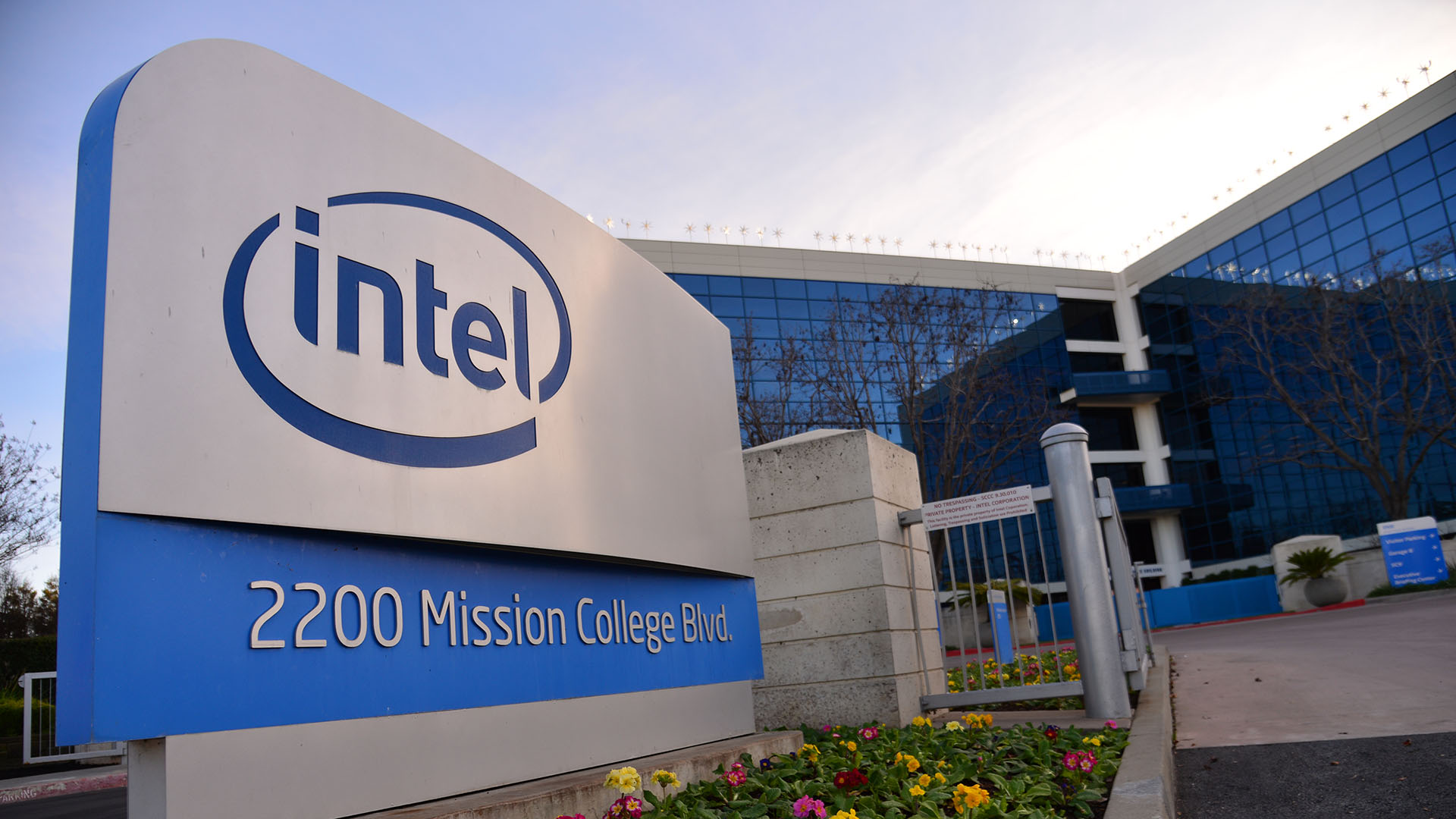
The Robert Noyce Building in Santa Clara, California, is the world headquarters for Intel Corporation. This photo is from Jan. 23, 2019. (Credit: Walden Kirsch/Intel Corporation)

Intel has continued its push to establish plants across Europe, in the face of declining revenue growth that has seen the chipmaker lose its market position to rival AMD. It has since recovered though.

Reuters reports, citing sources, that the company is close to clinching a $5 billion deal with Italy to build an advanced semiconductor packaging and assembly plant in the country.

Last year, Intel announced a plan to increase chip production by building more factories. It’s part of the CEO Pat Gelsinger’s strategy to revamp the company. The plan, which came with an $88 billion investment fund, has Europe as a top choice destination.

Having been heavily impacted by the global chip shortage, Europe is trying to cut reliance on Asian chips. The European Union had last year unveiled the European Chip Act, in a push for greater resilience and sovereignty in regional semiconductor supply chains.

Reuters reported that the two sources who spoke on anonymity, said the government of outgoing Prime Minister Mario Draghi was working to have an agreement with Intel in place by the end of August, ahead of a snap national election scheduled on Sept. 25.

Per the report, sources have previously told Reuters that Rome is ready to fund as much as 40% of Intel’s total investment in Italy, which is expected to rise over time from the initial $5 billion. It also noted that the factory would use new technologies to weave together full chips out of tiles.

The global chip shortage created a huge vacuum in production around the world and presented the need for more semiconductor companies. But for Intel, it also served as an opportunity to regain its market leadership position.

The Italian deal has the potential to give Intel its biggest production sites in Europe. The sources said the company and the government have shortlisted possible sites in two Italian regions with one of them adding they are located in the northern regions of Piedmont and Veneto.

A final decision on where to build the facility is yet to be made, both the sources said. The Lombardy, Apulia and Sicily regions had also been considered initially, the report said.

The total size of Intel’s investment and how Italy plans to fund its share of it is not yet clear, it added.

The deal will likely form a large part of Italy’s plan to build semiconductor facilities. Under the European Chips Act, the EU Commission said it had made 15 billion euros in additional public and private investment by 2030.

Besides the fund, members of the bloc are individually setting up funds to facilitate chip investments. Rome so far has set aside 4.15 billion euros until 2030 to attract chipmakers and invest in new industrial applications of innovative technologies.

Reuters noted that the government is also in talks with French-Italian STMicroelectronics, Taiwan chipmakers MEMC Electronic Materials Inc and TSMC, and Israeli Tower Semiconductor, which Intel bought earlier this year. Last month, STMicroelectronics signed a pact with GlobalFoundries to build a $5.7 billion chip factory in France.

This means that Intel will have to face familiar competitors in Europe.

Kenyan Insurtech Startup, Lami, Raises $3.7m Seed Extension

0

Kenya-based startup Lami Technologies has raised $ 3.7 million seed extension in its latest investment round to expand its insurtech product across Africa.

The extension was led by Harlem Capital, an early-stage venture firm that invests in seed-stage tech-enabled startups, focused on minority and women founders.

Participating in the round were early-stage venture capital firm, Newtown Partners; Peter Bruce-Clark, a partner at New York’s research-driven venture capital company Social Impact Capital; Caribou Honig and Jay Weintraub of InsureTech Connect, a networking platform for insurtech innovators, and senior members from Exotix Advisory, a corporate finance and M&A boutique focused on emerging and developing markets.

Lami launched its first product in 2020, and has been building and distributing an end-to-end digital insurance platform and API that allows businesses in different sectors to create tailored insurance solutions for their customers.

The extension follows the $1.8 million round it secured last year. The round was led by seed-stage investment firm Accion Venture Lab, and had the participation of AAIC, Consonance, P1 Ventures, Acuity Ventures, The Continent Venture Partners, and Future Africa.

Lami technologies was founded in 2018 by its CEO Jihan Abass to take on the challenge of low insurance uptake in Africa. The insurance sector in Africa has been held back due to poor innovation, which has resulted in the sector’s backward operation that depends mainly on the traditional paper-based systems.

Abass told TechCrunch that the newly raised fund will be used to offer additional insurance product lines, while also revealing that the startup has made an entry into Egypt and Nigeria. All this against the backdrop of a $3.7 million seed extension raised in a round led by Harlem Capital — which invests in minority and women founders.

“Lami is pioneering innovation in the insurance sector, and we are glad to have secured the right partners to help drive insurance uptake across Africa. We are looking to make insurance easily accessible to everyone on the continent, and we will continually be unveiling more products that confirm this resolve,” she said.

Speaking about using strategy to drive growth, Abass said that Lami plans to continuously innovate as they explore new ways of increasing insurance penetration across the continent — which currently stands at below 3%.

“On the technology side we want to cater to the entire insurance ecosystem. So, it’s not only the digital platforms that want to sell insurance products, but also to help existing players be more efficient in their distribution of products, allowing them to play a role in increasing the insurance penetration level. This includes agents and brokers — we are looking into how we can empower them to sell more policies,” she said.

The company said that the total insurance penetration in Africa stands at 2.78 percent, far below the global average of 7.23 percent, according to the African Insurance Organisation. This is despite research showing that expanding Africa’s lucrative insurance market could fast-track inclusive prosperity in the region.

As part of its efforts and strategy to bridge the gap, Lami seeks to use technologies that make insurance affordable through ‘bite-sized’ premiums. For example, the company’s partnership with logistics startup Sendy led to the development of a cover that insures goods per trip with premiums starting at US$ 0.21 for goods valued at US$85. The product covers goods worth up to US$ 7,600. Claims through Lami are also processed in record time — under one week — against the 90-day average across the industry.

Another move by Lami is to work with underwriters in different markets to create an all-risk cover for buy now pay later (BNPL) transactions. The cover, which was necessitated by the rising popularity of BNPL products in sub-Saharan Africa, insures against payment default through death, disability, job loss and many other circumstances.

In addition, the startup is making leadership changes that it believes will help to achieve its goals. It has appointed its current CFO, Roy Perlot, as a co-founder. Perlot has been with the company since 2020 and has contributed to its growth having brought extensive strategic leadership with his in-depth experience across Africa.

Also, Lami is investing in research for innovation development that will spur growth. By doing so, the firm has developed an insurance cover for consumer products like mobile phones, which can now be insured at the point of purchase through Lami’s e-commerce partners. This has been fast-tracked by the startup’s mission of developing efficient strategies for its partners to offer seamless and affordable insurance products to their people through its API platform.

The startup is also an onboarding partnership as a strategy for growth. Earlier this year, Lami integrated Bluewave’s micro-insurance partnerships into its portfolio further enhancing its B2B2C capabilities through diverse channels as it expanded into Malawi and the Democratic Republic of Congo. As a result, in the last three months, Lami has closed over 15 B2B2C partners split across human resource management, logistics and BNPL, with a combined reach of 3 million people.

Lami has a growing number of partners and clients across the African market. Sendy, which enables freight carriers in East Africa (Kenya, Uganda and Tanzania) to access transit insurance on a per-trip basis, and also Kwara, to make insurance products accessible to the over 60,000 SACCO (credit union) members. Other clients are e-commerce platform Jumia, retail B2B and end-to-end distribution platform MarketForce and Stanbic Bank Insurance — which uses Lami’s technology to power bancassurance products.

Harlem Capital said they were attracted to Lami by its use of innovation to solve modern day financial problems, thus driving growth.

“We believe the next wave of fintech will embed financial products and services like insurance into a customer’s purchase experience. Lami’s approach to serving people through strategic partners in eCommerce and finance is the best way to build trust with users and deliver insurance in a seamless, accessible way to Africans across the continent. Lami’s impressive growth to date shows that this resonates with customers and have a strong trajectory as they expand across the continent,” Harlem Capital Principal Gabby Cazeau said.

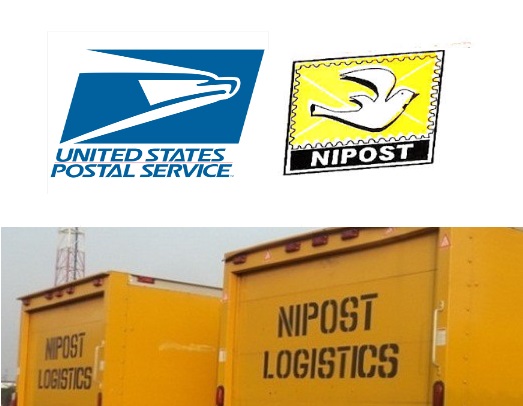
The Strategic Operating “Loss” in US Postal Service and What Nigeria’s NIPOST Must Learn

1

The United States Postal Service (USPS) knows how to “lose” money: “On a U.S. generally accepted accounting principles basis, the Postal Service had a net loss of $4.9 billion for 2021, compared to a net loss of $9.2 billion for 2020. The Postal Service’s operating revenue was $77.0 billion for 2021, an increase of $3.9 billion, or 5.3 percent, compared to the prior year.” But do not be deceived: that is an amazing strategic operating  loss (you can also call this loss-leading operations where you expect to capture value in other ways even as you record direct losses in one way). 

This is what happens: you can visit a post office in New York, buy a stamp for 50 cents, and send mail to the remote part of Alaska. That delivery may possibly cost the USPS more than $5 but it is happy to charge you 50 cents. But by charging the 50 cents, it ensures that rural America and urban America remain connected for commerce. It is evident: if you remove the postal service in a state, a big divide will happen. Simply, you have broken the supply chain, and the rural and urban parts will become further apart. Economically, the rural area will struggle.

By running those losses, USPS keeps the rural economy going. But as it does that, the United States government makes up via taxes, made possible by those better logistics and supply chain USPS powers. That is the reason why they continue to focus on improving operations, and not overly increment of prices to become profitable.

America does it but China is the best in the world when it comes to this. If you live in New York, you can buy an iPhone case from a Chinese vendor on ebay for $1.50 including shipping. Yes, less than $2, and someone will ship a case from China to New York. If you try to buy the same thing within the US, you must go down by at least $7 including shipping. 

How is that possible? China subsidizes shipping and supply chain, making China’s products competitive for global commerce. The marginal losses are taken care of by higher taxes, overall economic growth and new employment.

Come to Nigeria: we miss the memo as everyone wants to run a postal service that is NEVER loss-making. That is possible since the leaders do not understand that without logistics and supply chain, there is no commerce. A loss-making postal service may be necessary since emails and new digital communication systems have taken out the most profitable segments of the old postal service systems. But since the physical world remains, postal services remain vital for healthy economies.

You need to understand my pains when you realize that Ovim postal service (just like the train station) is no more. And when it collapsed as most postal services in Nigeria, the village became far distant to the major cities because the supply chain had been broken.

I am hoping that by 2023, Nigeria will have a GREAT Team and fix this nation once again.

Aba is fading and that affected my village Ovim. Ovim train station was the largest train station in our area serving many communities. Typically, from Aba, every train is expected to stop at Umuahia, Uzuakoli and then Ovim, bypassing some small stations.

Ovim served Ohafia, Arochukwu, Ahaba, and many other communities. As that was happening, businessmen went and built houses around the station. But with the train station gone, everything has collapsed. The hub is gone and Ovim lost a strategic positioning which was used to supply garri to Enugu via rail!

Every kid rode a Raleigh bicycle which was used to move foodstuffs from Oriendu Market to the train station! It was great.

Feedback on LinkedIn Feed

Comment: The Nigerian government might have tried to do this by subsidising petrol.

If petrol was sold at the openn market rate in Nigeria, we would not be able to afford garri and rice any more.

What is left of our national logistic systems would grind to a complete stop.

We would even have civil disorders.

I think every government has it’s own version of subsidy in place, however Nigeria’s version is obviously not working.

My Response: What the US does is not subsidy, it is a pure strategic operating loss-making. This operating loss comes out of utilizing factors of production (there is an economic activity which helps to create finished goods, expanding the GDP). Subsidy does not require any deployment of factors of production. How? If we have 10 trucks of petrol and I pay $200k as a subsidy at inception, I am distorting market equilibrium since someone can re-export those 10 trucks.

An equivalent strategic operating loss in Nigeria would have been reducing the cost to ride Edo Line, Abia transport, BRT Lagos, Kaduna transport line, etc so that those using transportations (within a production line) pay say 10% less with government covering. That government expenditure is within a clear economic activity pipeline and cannot be disintermediated.

Comment 2: Strongly disagree…A loss leading strategy is terrible for an institution such as NIPOST. They are already losing so much money and capacity. There are almost nothing like USPS. I’m not even sure how they exist currently.

My Response 2: “I’m not even sure how they exist currently.” – Not sure where to begin since you noted that you are not even sure. NIPOST was “diminished” when emails came at scale as it was no longer making money via stamps. Before emails, NIPOST was super-profitable and postmaster general was a big appointment. Today, no one cares!  Nigeria instead of absorbing the “losses” stopped investing in it and sold some assets. Today, NIPOST does not operationally exist, it exists because of NIPOST electronic stamp duties we pay for wiring money in Nigeria. If you remove it, they will close shops tomorrow.

Sure – they have the peripheral export service, microfinance, wallet, big city delivery etc. But let us not be confused – without the stamp duty, they have no mission now. They do not cover more than 99% of Nigeria.

Comment 3: Amazing and simple analysis tinged with wisdom. So we need our national corporations like the NNPC and the other essential ones to run being subsidized so they could provide essential services which in turn trigger economic growth. Unfortunately, the political boys don’t see it this far and clear.

My Response: Making NNPC a strategic loss-maker or loss-leading will not be correct. You benefit from strategic loss-making if that activity that generates that loss can enable you to tax the outputs to recover the losses. The loss USPS makes generates $billions in US tax that compensate for that loss.

An equivalent strategic operating loss in Nigeria (in the oil sector) would have been reducing the cost to ride Edo Line, Abia transport, BRT Lagos, Kaduna transport line, etc so that those using transportations (within a production line) pay say 10% less with government covering. That government expenditure is within a clear economic activity pipeline. When we tax that, we recover that “loss”.

How to acquire a Building or Construction permit/approval in Nigeria

1

Not many people are aware that Building projects require an approved Building plan, whether it’s for a residential or commercial piece of Real Estate.

Many people also have a faint idea of Building permits and Building control regulations but have no idea of how they are procured, the requirements for procuring them, and the applicable Regulatory Framework governing the grant of Building permits or approvals.

Building permits are essentially Regulatory approvals given by a government through its relevant agencies that enable the commencement and completion of a construction, renovation or remodelling project on a piece of landed property.

Following from this, what this write-up aims to do is to provide some insight into:

– The Regulatory Framework governing the grant of Building permits;

– The Procedure involved in applying for a Building permit;

– The requirements for applying for a Building permit;

– The time and cost implications of obtaining a Building permit.

It should be noted that Building control regulations within Nigeria are within the control of State and Local Governments and they vary from state to state as well, so this article will be focused on the process of applying for a Building permit in Lagos state.

What is the Regulatory Framework governing the grant of Building permits in Lagos State?

The grant of Building permits in Lagos State is governed specifically by the Lagos State Physical Planning Permit Regulations 2019 and is enforced by a number of Regulatory agencies that include the following:-

– The Lagos State Physical Planning Permit Authority (LASPPA) under the Ministry of Physical Planning &Urban Development;

– The Lagos State Lands Bureau;

– The Ministry of Environment.

– The Lagos State Building Control Agency (LASBCA)

For how long do building plan permits remain valid after being granted?

Building permits have a total validity period of 2 years within which a Building plan applicant must commence construction.

How long does it take to process an application for a Building permit?

Building permit applications usually take a minimum of 60 days.

What are the most important requirements for making a valid application for a Building permit in Lagos?

To make an application for a Building permit in Lagos State, you must have the following requirements included among others:-

– A photograph of the building/construction site;

– 2 passport photographs of the applicant/ a copy of its Certificate of Incorporation where the applicant is a company;

– A Certified True Copy of the Title Document proving ownership of the land on which the construction project is to take place. This Title Document has to be either an Allocation Letter, a Certificate of Occupancy, or a Registered Conveyance where applicable OR a clearance letter from the Lands Bureau where the Title Document is still being processed;

– Where applicable, a clearance letter from the Land Use Allocation Committee;

– An Survey plan(Sun-print copy)of the land to be built on;

– A copy of the applicant’s Tax clearance certificate or evidence of Personal Income Tax payment or where the applicant is a company, 2 directors will have to provide their Tax clearance certificates;

– Evidence of payment by the applicant of application assessment fees ;

– Evidence of payment of Tenement rates, Land Use charges or Ground rent;

– A soil test report where applicable;

– A Fire safety clearance from the Lagos State Fire Service;

– Where applicable, a confirmation letter from the New Town Development Authority;

– A signed letter of structural stability/integrity report by a COREN-accredited professional (especially where the project is a building renovation);

– 5 copies each of a). An Architectural plan duly stamped by a member of the Architects Regulation Council of Nigeria (ARCON); b). Structural drawings duly signed along with a supervision letter from a COREN(Council for the Regulation Of Engineering In Nigeria) accredited engineer affirming good construction standards;

– A COREN-accredited professional stamped calculation sheet for the materials to be used for the construction project;

– An Environmental Impact Assessment report from the Ministry of Environment where applicable.

Are there other fees or cost implications i should know of when applying for a Building permit?

Yes there are. You would most likely be required to pay for the following:-

– A Building plan approval application fee;

– A layout fee;

– A Fencing permit;

– A certificate of fitness levy;

– A Registration fee.

Will the requirements mentioned above still be needed if the building project is a simple renovation such as a Boy’s Quarters?

No, not all of them will be required except for mainly the Survey plan, Architectural plan, the structural drawings, a supervision letter/indemnity letter from a COREN-accredited engineer as well as the applicant’s Tax clearance certificate which must still be submitted before receiving a Building permit for a renovation.

In summary, what are the main steps i need to take in order to commence an application for a Building permit/approval?

To start a Building plan permit application(to be submitted in soft and hard copies), you need to do the following :-

– Get your lawyer to procure your Land Title Documents or to commence your Title registration application immediately as well as your Tax clearance certificate and payments receipts of all required Regulatory fees;

– Get architectural drawings from an ARCON-accredited architect;

– Get from a COREN-accredited engineer, structural drawings with detailed calculations along with a statement of structural stability;

– Instruct your lawyer to submit all these documents and required fee receipts and have the latter confirmed by the appropriate department of LASPPA;

– Wait for a physical inspection of your construction site by officials of the Ministry of Physical Planning & Urban Development.

– Commence your application for a main building permit within 5 days of the grant of your planning permit to the Lagos State Building Control Agency (LASBCA)

It should be noted that every approved Building plan must be kept on the Construction site for inspection at any time through the course of the construction/building project. Also, seeking a Building permit approval for specific types of structures like Filling stations would also require Pre-licensing inspections and approvals from other government agencies like the NMDPRA(Nigerian Midstream & Downstream Petroleum Regulatory Authority)

From the above, it can be seen that though the process of getting a Building permit seems tedious (and it sometimes is), you can avoid a lifetime of liabilities, including jail time for negligence-based manslaughter arising out of deaths from collapsed buildings, when you have the right professional guidance to help you with this extremely important aspect of Real Estate & Construction Regulatory Compliance. Consultation enquiries on this subject matter, including the procedure for Building permit applications in other states apart from Lagos, can be sent to ogbukalegal@outlook.com or 07011261897.