DD
MM
YYYY

PAGES

DD
MM
YYYY

spot_img

PAGES

Home Blog Page 4993

Addressing Systemic Frauds in Nigeria’s Oil and Gas Industry Using Fasmicro’s Fuel Control and Management Device

0

The continent of Africa is rich in resources. The continent is advancing in a number of industries thanks to the wise use of resources where systems are permitted to function. However, in countries like Nigeria, Algeria, Libya, and Angola, where large amounts of crude oil are produced daily, there are problems and obstacles that prohibit players from reaping the full benefits of the resource.

Over the years, the governments of African oil and gas producing countries have developed policies and launched programs aimed at minimizing and eliminating supply and demand risks. Knowing the volume of liters moved from the point of production is not difficult in nations such as Nigeria. However, establishing the real volume of liters delivered to ultimate intermediaries and consumers has proven difficult over the years.

The Nigerian government has struggled recently to implement a fuel subsidy programme that benefits the intended population. This has been based in large part on dishonest business practices throughout the supply chain. Nigeria has seen and is still seeing instances where firms licensed to import refined crude oil provided consumers in the downstream sector with less than what the government had requested after receiving payment that corresponded to the number of liters the government had required.

However, statistics on the number of liters diverted to other countries before entering Nigeria and within the country are erroneous. Various figures have been provided by professionals and public affairs analysts. According to a recent market research report, “Nigeria loses N2 billion daily due to the smuggling of petrol from Nigeria to the bordering countries, like Benin, Niger, and Cameroon.”

Players in the downstream sector have also developed a variety of approaches to completely eradicate financial impropriety among employees. Owners of thousands of filling stations in Nigeria lose a significant portion of their income due to various strategies utilized by their staff, from station attendants to managers. The practice of attendants tampering with meters and the Point of Sale (POS) to prevent customers from paying into the station’s account(s) is not new. It is also nothing unusual for employees to band together to defraud business owners of their profits.

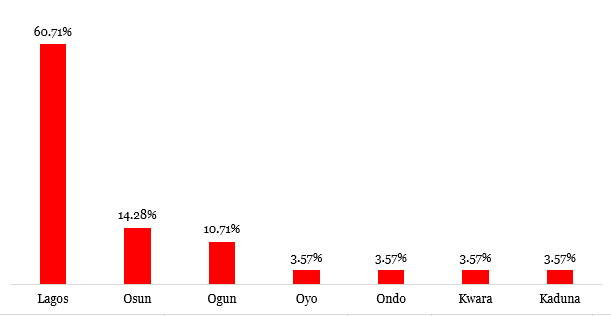
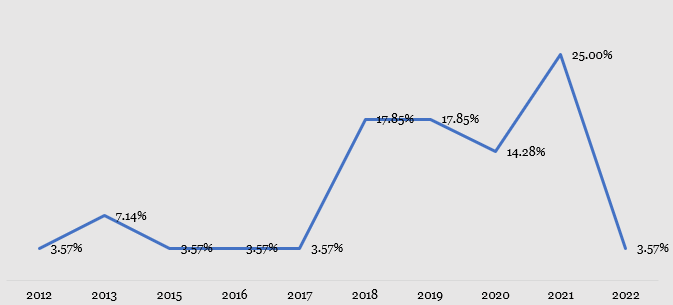
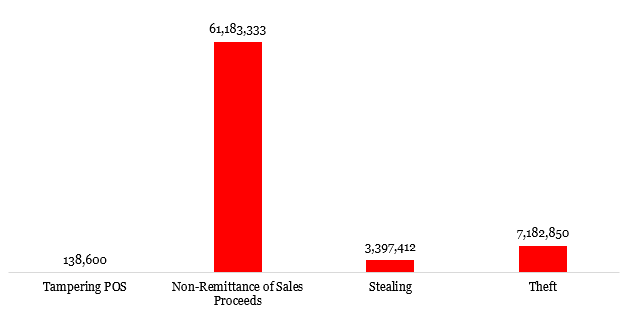
Our examination of 28 fraud incidents at various filling stations between 2012 and 2022 suggests that attendants and station managers were responsible for the majority of the fraudulent financial operations. On average, over N10 million was taken from sales revenues and/or no sales money was remitted to the stations’ accounts (s). Apart from stealing, some of the investigated cases also contained theft as the primary type of fraud at different filling stations. Theft was primarily committed in Lagos State, according to our data.

Exhibit 1: Fraud Trends at Nigerian Filling Stations
Source: Nigerian Newspapers, 2012-2022; Infoprations Analysis, 2022

Exhibit 2: Fraud Cases by State

Source: Nigerian Newspapers, 2012-2022; Infoprations Analysis, 2022

Exhibit 3: Average loss per fraud type between 2012 and 2022
Source: Nigerian Newspapers, 2012-2022; Infoprations Analysis, 2022

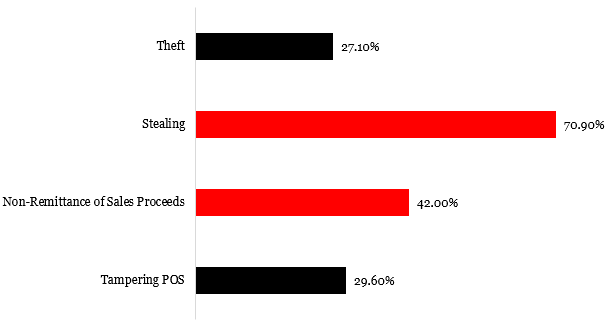
Exhibit 4: Sensitivity of fraud types to filling stations’ survival in the identified states
Source: Nigerian Newspapers, 2012-2022; Infoprations Analysis, 2022

Based on the emerging findings, our analyst believes that some of them must have been considered by First Atlantic Semiconductors and Microelectronics (FASMICRO) while building its tracking system device for the industry, particularly for downstream participants. In this sense, our analyst considers the product to be a game changer in the industry, not just in Nigeria but also in other African countries.

Our analyst notes that Fasmicro’s solution debuted at a time when industry participants and customers were eager to learn about real-world applications of artificial intelligence and the Internet of Things. The system is designed to make it possible to track fuel volume effectively, identify truck locations and compare volume sales to the actual amount remitted by station managers and operators.

“With our technology, when that truck loads in the depot, and moves across your locations, to drop petrol, via your smartphone, you can see the path, the volume, where the next stop is programmed to be, and more. We’re bringing uncommon transparency in Nigeria’s downstream oil and gas sector. We do not just track trucks; we also track the liquid content,” Professor Ndubuisi Ekekwe, founder of the company, said in his recent posts.

From the government to the downstream stakeholders, it is evident that the device is critical in combating numerous systemic frauds. The device is expected to cut the amount lost to smuggling and diversion of imported gasoline based on the subsidy program in half. Station owners stand to benefit tremendously from the technology’s real-time data via its dashboard. This, if implemented correctly, would decrease the issue of non-remittance of sales revenue immediately after the conclusion of business every day. In our experience, attendants and managers commit theft since sales revenue stays longer in their personal accounts than planned. As a result, many see it as an opportunity to spend money for personal objectives, particularly investing in businesses that promise quick profits.

Building the Operating System for Payment in Nigeria’s Downstream Sector

Richard Gele: Government authorized armed robbers

0

If I won collect money I Dey collect better money no be small change I Dey collect. IG sef know. My former commander even tell me say if I won collect bribe make I collect big money so that I fit share with am from inside. I no Dey hide am”. 

These words are from a police officer, Inspector Richard Gele (dismissed now) while he was extorting money from road users. 

Bribery and corruption in the Nigerian police force have gotten to the extent that a policeman can openly boast that he does not collect “change” or small amounts from motorists if he wants to extort them. He claims he always makes sure he collects a huge amount from motorists so that after splitting it with other officers on duty he will have some reasonable amount left for him.

Nigerians keep complaining about police brutality, police extortion, bribery, and corruption amongst other ill vices amongst the Nigerian police force but it seems like the Nigerian police force is rooted deep down in evil.

This as shocking as it appears is not even a fairy tale, it happened, it’s happening and it happens on daily bases. This policeman by the name; Inspector Richard Gele was just unfortunate that he was caught on camera making this boast with so much impunity and arrogance while extorting and harassing his victims. 

Every day we read stories and witness by ourselves how police officers manning different checkpoints end up extorting and harassing motorists at gunpoint for no just cause. Police officers are placed along highways and some strategic locations for the safety and security of motorists and road users but the police officers would rather abandon their duty of provision of security to be tasking and extorting road users.

For the record, a police officer or whomsoever has no authority to collect a dime from anybody or ask anybody for a dime. Any police officer that asks you for money is a criminal or better still, an armed robber. That money he collected is a bribe and you, the giver of the money, is also a party to bribery and you are an enabler of corruption.

Motorists should start standing their ground and learn to start saying no whenever a police officer asks for money from them. If you as a motorist wants to encourage a police officer by giving that officer a gift; a monetary gift or in kind, let it be that you are doing that out of your own free will and volition and not because that police officer held you at gunpoint that is you don’t “Roger” you won’t leave.

It is so pathetic that it has gotten to the level that if you are traveling by road you will see drivers splitting money into smaller currencies that they will be sharing along the road with police officers. I quizzed one of the drivers one time as to why they must share money amongst officers at every checkpoint along the road and he said if any driver dare not drop money for the police officers, the police officers won’t let that vehicle drive past that checkpoint or they will end up delaying you.

It’s more like a norm now in Nigeria that if you are traveling by road you must have money for police officers, if you don’t give them money they will detain you. The police service commission and the Inspector General of police really need to wake up and do a thorough work of purging the Nigeria police force of the crooks and the bad eggs before they drag the whole force into the gutter!

Emirates Airline Set Aug 15 to Cut its Operation in Nigeria Due to its Withheld $85m Revenue

0

Nigeria’s forex crisis is escalating, gradually impacting the nation’s bilateral ties in a way that could undermine the already troubled aviation sector.

In June, the International Air Transport Association (AITA), expressed concern over Nigeria’s inability to repatriate $450 million belonging to its members.

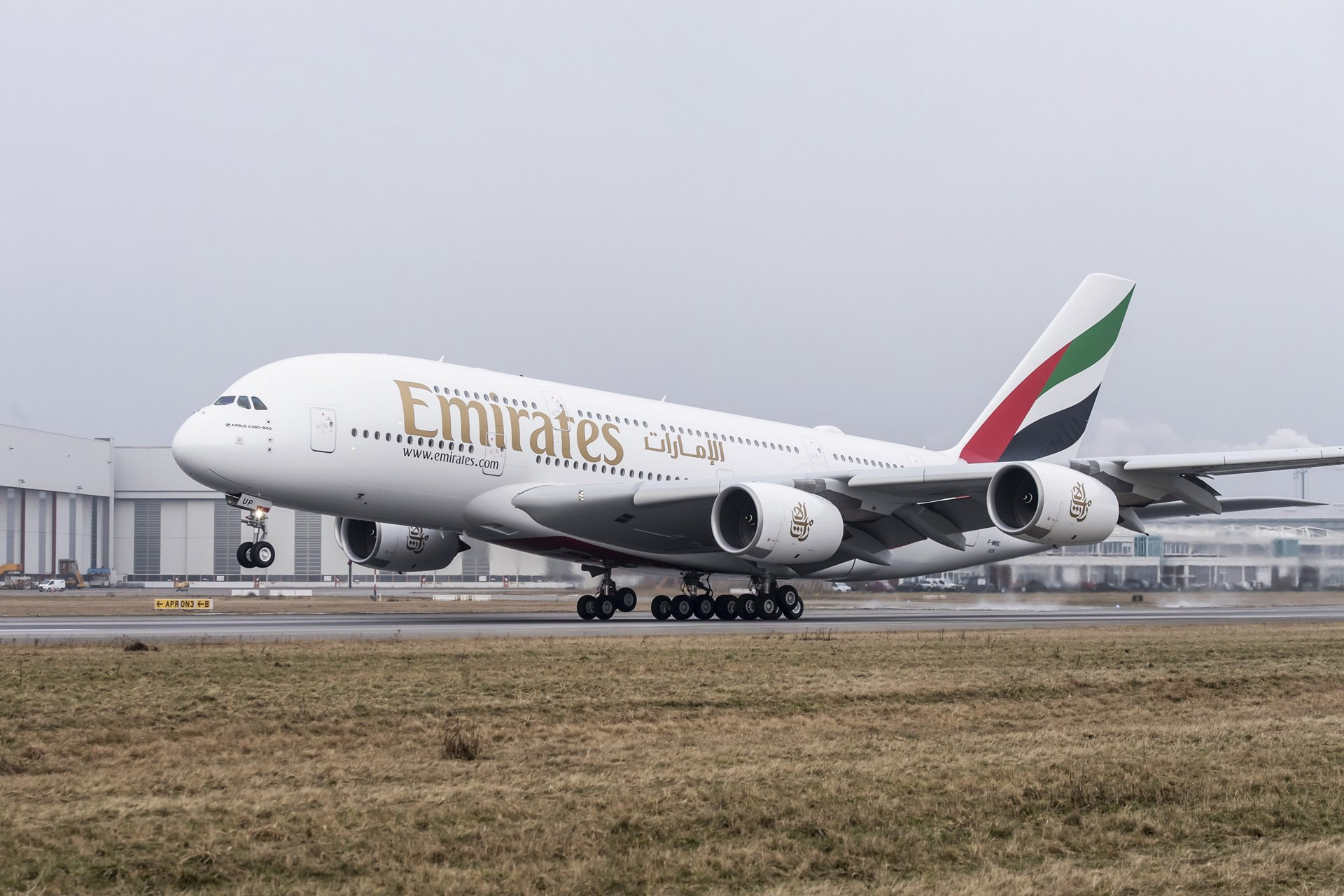
Now Emirates Airlines has announced it is reducing its flight operations to Nigeria from August 15, due to the Central Bank’s continued withholding of $85 million from its ticket sales in Nigeria

“As of July 2022, Emirates has US$ 85 million of funds awaiting repatriation from Nigeria. This figure has been rising by more than $US 10 million every month, as the ongoing operational costs of our 11 weekly flights to Lagos and 5 to Abuja continue to accumulate. With effect from 15 August 2022, Emirates will be forced to reduce flights from Dubai to Lagos from 11 per week to 7 per week,” the airline said in a letter dated July 22 2022 that was signed by Sheik Majid Al Mualla, the DSVP International Affairs, which was addressed to Nigeria’s aviation minister Senator Hadi Sirika.

The arising situation is as a result of the troubled Nigeria’s forex market that has seen the naira, the country’s currency, tumble to its lowest at N710 per dollar. The Central Bank of Nigeria (CBN) is helplessly trying to contain the situation but a lot of factors that include its policies and measures stand in the way.

Al Mualla said that Emirate’s attempts to work out a solution with the CBN have been futile as response from the apex bank has been negative. He also said that meetings had been held between Emirates’ own bank in Nigeria and IATA to discuss improving Forex allocation, but they did not yield positive results.

The bottom line is that Nigeria does not have enough dollar liquidity to fulfill the repatriation obligation. The situation has touched every sector of the nation’s economy, stoking inflation to 17.70%, according to the data last published by Nigerian Bureau of Statistics.

On Thursday, the CBN blamed the Nigerian National Petroleum Corporation (NNPC) for the country’s forex crisis. The apex bank said the naira is on free fall because the NNPC has not been remitting dollars to Nigeria’s foreign reserve.

The central bank said that domestically, there has been zero dollar remittance to the country’s foreign reserve by the NNPC, noting that the CBN does not print dollars.

The NNPC and its subsidiaries are the sole managers of crude oil which accounts for more than 80 percent of Nigeria’s Foreign Exchange (forex) earnings.

Though the CBN said it is working to address the forex crisis, there is nothing yet to show for its efforts as the situation bites harder.

The financial regulator’s initiatives such as the “RT200 FX’’ Programme and the “Naira4Dollar’’ rebate scheme have failed to ameliorate the raging crisis.

Major sources of Nigeria’s forex liquidity have been liquidated. Nigeria’s Excess Crude Account (ECA), has been depleted from over $2 billion where it stood in 2015 to $376,655 in July, 2022.

Against this backdrop, Emirates Airline’s decision to downsize its flight operations in Nigeria may be the beginning of a turmoil in the nation’s aviation sector. There is concern that many other airlines whose monies are also being trapped in Nigeria will soon follow the step of Emirates.

Kenya Threathens Facebook With Ban Over Hate Speech

0

Kenya’s ethnic watchdog, National Cohesion And Integration Commission (NCIC) has issued a warning to Facebook to stop the hate speech on its platform within seven days, or risk a ban, as the country is set to go into election next month.

The NCIC reacted to a report by advocacy group Global Witness, and Foxglove, a legal non-profit firm, which fingered Facebook’s inability to detect hate speech ads. A report which was a collaboration of the Global Witness report and that of NCIC findings, reveals that Facebook was slow to prevent hateful content on its platform, fanning an already volatile political environment.

The NCIC has therefore called on Meta, Facebook’s parent company, on moderation before, during, and after the elections, while giving it one week to comply or risk a ban in the country.

According to the NCIC commissioner, Danvas Makori, he disclosed that Facebook continuously violates the laws of the country as they have on several occasion allowed themselves to be a vector of hate speech, incitement, misinformation, and disinformation.

Facebook is said to have a penetration of 82% in Kenya, making it the second most widely used social network in the country, after Whatsapp.

In a response to Kenya’s threat, Facebook has issued a statement, stating that it has been preparing for the country’s 2022 election over the past year, with the help of a dedicated team that is working closely with election authorities and trusted partners in the country.

Facebook has always praised its super efficient AI models for being able to detect hate speech from being circulated on the platform. However, there have been complaints from different countries.

To test Facebook’s claims that its Al models can detect hate speech, Global witness submitted a total of 20 ads that called for violence and beheadings both in English and Swahili. All except one wasn’t approved. The algorithms Facebook currently uses to detect hate speech works only in certain languages.

What this implies is that, with this defect, it has become easy for Facebook to contain the spread of racial and religious hate speeches online in primarily developed countries and communities where global languages like English, Spanish, and Mandarin dominate. But in the rest of the world, it is as difficult as ever.

Unlike the algorithms that Facebook states that automatically detect 80% of hate speeches without the need of a user to report their first, these human moderators do not regularly scan the site for the hate speech themselves. Instead, their job is to decide whether posts that users have already reported should be removed.

MTN Nigeria Is Now “osisi na ami ego” As H1 2022 Profit Hits N181 Billion

1

Ego. Kudi. Owo. You take your language – MTN knows how to grow it: “Multinational mobile telecommunications company, MTN, has announced that the firm made a total profit of N181 billion for the first half of the year 2022. This profit with a 28% increase, was disclosed to be higher than the amount that was recorded in the same period of last year which was at N141.8 billion.”

As you grow that digital business and move more activities from the meatspace to the cyberspace, you create more opportunities for MTN, Airtel, etc, since they are the companies that will power that future. Indeed, when we hire and pay search engine experts to make it easier for Google to discover our websites (and in the process Google becomes more valuable), little do we argue that in the real sense, Google should pay for those experts, since they are working for it!

Of course, that is not the case because just like MTN, Google has a strategic positioning. In business, when a company has a strategic positioning in the market, it becomes “osisi na ami ego” [ a tree that produces money as the fruits]. MTN is setting new standards in Nigeria.

H1 2022 – MTN Nigeria Reports N181 Billion Profit In 6 Months