DD
MM
YYYY

PAGES

DD
MM
YYYY

spot_img

PAGES

Home Blog Page 4993

Leading and Managing Teams

0

Join us today at 7pm WAT as Dr. Chisom Ezeocha from Shell educates us on how to lead and manage teams. He will also introduce us to NICER model, a tool for stakeholder management. If you are running extremely complex projects like the types they run in oil and gas companies, make sure you attend to understand how they keep those factors of production aligned for success. Zoom link in Tekedia Mini-MBA Board.

Tekedia Mini-MBA >> learn from the best. Register for the next edition.

University of Ibadan College of Medicine Receives Donation of $1million from Dr Philip Ozuah

0

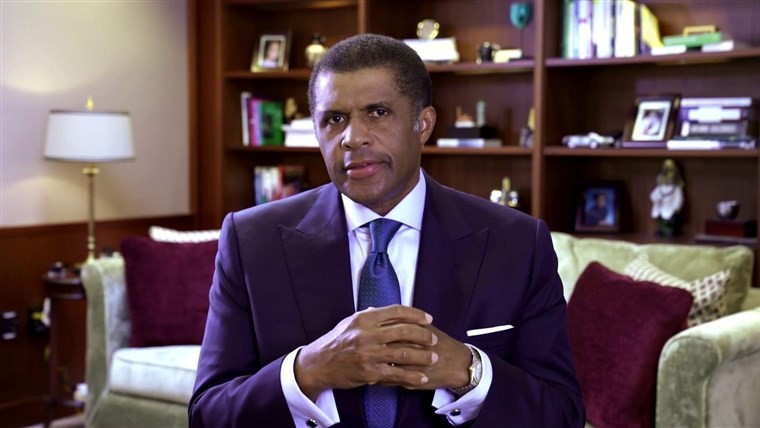
Amidst the Academic Staff Union of Universities strike which is running to its sixth month, the College of Medicine, University of Ibadan (CoMUI) celebrates a huge financial contribution by an alumnus of the college, Doctor Philip Ozuah, to boost provision of hostel facilities for students in the college.

Philip Ozuah who graduated from the University of Ibadan in 1985 is the President and Chief Executive Officer of Montefiore Medicine, Montefiore Health System (MHS) and the Albert Einstein College of Medicine in New York. Ozuah donated the sum of $US1million to the college of Medicine Ui on Monday, 1 August 2022 during the unveiling of the CoMUI’s new students hostel facility.

While keynoting and leading the fundraising session via zoom at the ceremony, Ozuah made the huge donations on behalf of his family. He said the CoMUI made him the man he is and the contribution is just a way of giving back to the college.

Ozuah was reported to be among the highest paid hospital executives in New York. According to a New York post article, he got $13million in compensation. He also got a $9million payout in early retirement money in 2018 when he was president of the Montefiore Health System, and received a $1.6million additional bonus to his $2.8million salary according to Montefiore tax filing.

The former Vice Chancellor of the University of Ibadan, Prof. Abel Idowu Olayinka remarked on his analysis published on his Facebook page on Tuesday that the hefty donation by Philip Ozuah will serve as a catalyst for the timely construction of an ultra modern student Hostel estimated to cost about 2.5billion naira. “Other Alumni and friends of the College of Medicine Should chip in the Window’s mite for the laudable project of the College’s Provost, Olayinka Omigbodun and the Ibadan College of Medicine Alumni Association World Wide (ICOMMA WW) president Otolorin” he said.

Prof. Olayinka Idowu also noted that the donation would serve as a morale booster to the partnership between CoMUI and ICOMMA WW. According to him, ICOMMA WW has been highly supportive of CoMUI.

Commenting on the issue of incessant strike in the public Universities due to financial constraint, Professor Idowu Olayina recalled a proposal by the 1949 alumnus of the then University College Ibadan, Professor Akin Mabogunje, that the Federal Government should hand over the University to the alumni to manage. According to the former vice Chancellor, it is perhaps the time the proposal is interrogated for the overall benefit of the country. Otherwise, if we are to learn from history the current national strike by ASUU may painfully not be the last.

Y Combinator Downgrades Accelerator Class Size by 40%

0

Y Combinator is feeling the pain: “Y Combinator Slashes Startup Accelerator Class Size by 40%”. . When limited partners feel like the economy is crashing or recession is on the way, they send limited funds to general partners who then make limited investments in startups. As the loop circles all the way, funding dries up. That is what is happening in YC. If you run a startup, check your burn-rate because it is going to become harder to raise money before the outlook changes.

Y Combinator has cut the number of startups it is funding and training this summer by about half compared to its winter program, a spokesperson confirmed. The famed Silicon Valley accelerator responded to a downturn in the economy and in venture capital funding in reducing its class size.

The move means as many as 250 companies will pitch themselves to potential investors in early September at Y Combinator’s virtual demo day, a biannual rite of passage that helped launch DoorDash and Coinbase. A smaller class could make it easier for graduates to raise money by lowering the competition for investor attention. The downsizing also follows mounting criticism that Y Combinator had grown too large, damaging its reputation for churning out Silicon Valley’s best startups.

YC needs to get back to the business; our Tekedia Capital needs it as part of our mission here.


11 Factors that Contributed to the Fall of Crowdfunding Platforms in Nigeria

11

Access to funds or financial resources constitutes a major challenge to Startups and Small and Medium Enterprises (SMEs). The inability of most Startups and SMEs to meet their financial needs through the traditional financial system such as the Banks, the Capital market and Personal savings necessitated an alternative financial system now known as Crowdfunding. Crowdfunding is an innovative social financing, mostly facilitated on the digital platform, whereby the entrepreneur raises funds for a project or venture through small contributions in the form of donation, pre-selling or pre-ordering, reward or sponsorship, debt or equity from a large number of people who may or may not have technical knowledge of the project or venture.

Though Crowdfunding is a relatively new concept in business and investment management, the practice of collecting contributions from the people towards a bigger social course dates back to history. A typical example often referenced is the platform for Sculpture of Liberty. In 1885, Joseph Pulitzer, publisher at the New York World championed a campaign requesting people to contribute financially to the erection of the great Statue in the New York City. He then chose to print the names of the contributors at the back of his newspaper. Within five months, the sum of US$102,000 was raised through the campaign, and 80 Percent of the donors were people that contributed less than $1 of the total amount. Also, the concept of Esusu in the traditional African societies provides a lofty background to the modern practice of Crowd funding.

The term Crowdfunding in the modern sense of it was introduced by Michael Sullivan, the founder of Fundavlog, an online social platform that involves simple blog funding features for projects. Sullivan defined funds from the crowd as the base on which everything else depends. Since 2007, Crowdfunding has begun to gain theoretical and technical relevance in Europe and America and has spread significantly to the developing countries. The concept became especially important after the 2008 financial crisis. In response to the challenges faced by the early-stage enterprises, business leaders began to look inward in search of an alternative means of generating funds to sustain their businesses. Thus, Crowdfunding developed as a viable option.

Crowdfunding has three major components, namely; the business enterprise, the crowd funders and the digital platform that connects funders to the enterprise. Since funds are raised mainly online, it allows entrepreneurs to circumvent the barriers of geographical location and promote the financial inclusion of all classes of people that can be reached on the internet.

Crowdfunding became popular in Nigeria in late 2015 and early 2016 when it was adopted by Startups and SMEs mostly in the agriculture and agribusiness sector. One of the early adopters of Crowdfunding in Nigeria is Farmcrowdy now Crowdyvest. Farmcrowdy and others raise funds from interested investors and use the funds to develop digital technologies that enhance the capacity of the smallholder farmers to operate optimally towards achieving increased food production and sustainable food security in the country and across the continent. Investors are rewarded with profits, interests and media mention etc.

The following are factors that impacted Crowdfunding in Nigeria:

1. Bandwagon: Since the introduction of Crowdfunding into the Nigerian corporate ecosystem, the model has been widely adopted by emerging Statups and existing SMEs. Thus, the practice became a big cash cow for most companies and the success rates of early adopters inspired the development of new businesses which focus solely on Crowdfunding as a means of finance. This led to oversaturation of the market, high likelihood of fraud and the need to regulate the market.

2. Oversubscribed Investment: Since Crowdfunding has very limited barriers to funders and mostly thrive on people’s emotions such as trust, greed and immediate gratification, many Crowdfunding platforms witnessed massive response rate of funders and therefore took in more money than they could naturally handle or manage.

3. Cash-flow Trap: The Cash flow trap entails a false consciousness that a business is doing well due to massive inflow of cash and availability of funds from increasing investment that are debt or equity-based. This kind of mindset is responsible for the lavish tendencies of most business leaders that operate the Crowdfunding model.

4. Covid-19: The Pandemic came with a great economic shock and financial crisis for most enterprises. The global supply chain downtime in the wake of the lockdown affected the operations of most of the Crowdfunding businesses, especially those in the agriculture and agribusiness sector. In the agriculture industry, much of the funds that were raised in the early Covid period could not be channelled into operation due to movement restriction. Thus, many of the affected businesses had to divert funds to other aspects of the business such as administration, adverts and PR etc. with the hope of recouping after the pandemic.

5. Crowdfunding Regulatory Policy: The Crowdfunding regulatory policy by the Security and Exchange Commission came at a very unfavourable period for most of the Crowdfunding businesses. It was a time that most businesses were barely coming out of the Covid19 shock and were expected to put up resilience and adapt to the new normal. Without proper transitioning, some of the platforms endeavoured to change their business models or move from investment to the capital market in order to circumvent the policy. But this resulted in further delays and constant defaulting by these platforms to meet investors’ expectations.

6. Poor Investment Management System: A lot of the Crowdfunding companies are self-sabotaged by poor investor relations and public communication in terms of constant engagement with investors when they have internal or external issues and the impacts of the external challenges on their process, people, technologies and products. Analysis of customers’ reviews on Google and social media reveals that some of the platforms experienced high rate of investment liquidation or investor turnover due to failure to effectively communicate challenges to investors and secure their empathy.

7. Overspending on Media: Since the digital platform is the primary medium through which funds are raised from the public, most Crowdfunding business focused too much attention and resources on the digital media, especially digital marketing and social events for social media engagement usually at the expense of the core operational activities of their businesses. Thus, it was not uncommon of Crowdfunding enterprises to sponsor shows and social media campaigns.

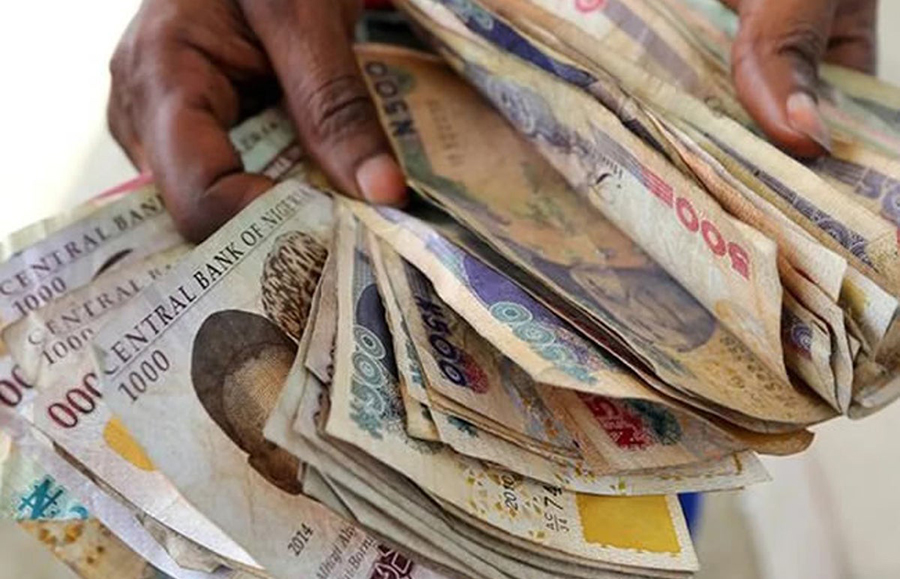
8. Unrealistic ROI: Due to oversaturation of the Crowdfunding ecosystem, it became expedient for Crowdfunding businesses to offer competitive returns on investments to win over potential investors or sponsors rather than considering the economics of production. Some offer as high as 50 percent returns to investors which culminated in a backlog of debts of these platforms.

9. Unspecific Investors: Crowdfunding does not have a specific investor in mind; rather it targets any individual that is willing and capable to fund a project for profits or interest as returns. However, high level of illiteracy and unfamiliarity of most of these investors with certain disruptions in the market are responsible for their lack of empathy and patience capital needed at the trying times.

10. Value-Strategy Misalignment: Studies find that there is a great gap in the value proposition of most of the Crowdfunding businesses and their strategies in achieving those values. For instance, while companies believe in positioning people to create value, they tend to pay less attention to how their people could generate profits through their portfolio. There is also an indication that companies are more interested in market, products and profits, while there is least concern for employees, public image and philosophy.

11. Ponzi/Pyramid Scheme: Many of the companies were already out of business due to unrealistic return on investment. Hence, they resorted to Ponzi scheme in settling investors which in any case only aggravated their debt backlog.

Shell To Protect Its Nigerian Pipelines With Drones

0

Nigeria for a long time has been experiencing some of the worst crude oil theft in its history, which is being perpetrated by some unscrupulous people. The country loses about 100,000 barrels per day at $100 per barrel, which is equivalent to $10 million per day.

This year, Nigeria lost a staggering $1 billion in revenue in the first quarter of 2022, jeopardizing the nation’s economy. Due to the incessant vandalization of pipelines without any proactive response from the federal government, Shell Petroleum Development Company (SPDC) took it upon themselves to put in measures to protect its pipelines in Nigeria.

The company revealed that it has signed a contract for drone acquisition to protect its pipelines in the Niger Delta from oil theft as Nigeria continues to tackle rising oil theft which has seen the country lose $1 billion in the first quarter of the year. This was disclosed by Shell’s General Manager, External Relations, Mr. Igo Weli in Portharcourt. He added that Shell Petroleum Development Company also builds cages and installs technology to protect its wellheads.

Mr. Weli revealed that this decision by the company to protect its pipeline with drones is due to the frequent attacks on its pipelines by oil thieves, leading to huge losses.

In his words, “Oil thieves punctured SPDC pipelines and wellheads, and thereafter, redirected crude oil to their illegal refining sites. To this end, we have signed a contract and soon we will start using drones to monitor our pipelines, wellheads, and other facilities. 

“Shell does so much to protect its assets in Nigeria, even when we see illegal refineries, we cannot do much other than draw the attention of the authorities to it. The SPDC builds cages and installs technology to protect its wellheads just like we put burglary proof in our homes to ward off robbers. 

This is worrisome and should be of concern to everyone, understanding that oil and gas are where the country generates huge forex and creates employment for millions”. 

Due to the frequent attacks on pipelines, Shell reveals that one of the extraordinary things the company does, is that they fly helicopters daily to check the pipelines which comes at a very huge cost to the company. The SPDC manager disclosed that the company is collaborating with security agencies through the sharing of data on the locations and activities of illegal bunkers and refining sites.

As the demands of these oil companies continue to fall on deaf ears of the federal government to put in place measures to curb oil theft, they have stopped being hesitant and waiting endlessly as they have set up strategies to ensure that the company’s pipelines are properly secured to curb vandalization.

As the incessant vandalization of pipelines has been a cause of concern, different experts continue to proffer solutions to brazen oil theft in the country. In a recent publication on Tekedia, erudite Professor Ndubisi Ekekwe posited a very interesting solution to the federal government whereby a technological product will be deployed to put a stop to leakage, zero diversion guaranteed on fuel subsidy and fuel distribution.

It might interest you to know that his solution is not just theoretical, as the technology has already been built which has been tested by filling stations and other players in the downstream oil and gas sector, as there has been an accomplishment of reconciling fuel volume/Naira from depots via trucks to pumps and shifts courtesy of the technology.

Hopefully, the federal government will be proactive in adopting this technological solution, to ensure that there is less or zero theft of oil in the country. This incessant oil theft has made the country produce lesser barrels of oil falling against the OPEC quota.

Given that Nigeria thrives on a monolithic economy with heavy reliance on the oil sector, it is ideal that the government addresses every problem ravaging the sector, as well as closing every loophole that poses a threat to the nation’s economy.