DD
MM
YYYY

PAGES

DD
MM
YYYY

spot_img

PAGES

Home Blog Page 5

Hyundai Moves to Take Full Control of Boston Dynamics from SoftBank in a $325m Robotics Push

0

Hyundai Motor Group is preparing to acquire the remaining 9.65% stake in robotics company Boston Dynamics from SoftBank Group for approximately $325 million, a move that would make the renowned U.S. robotics firm a wholly owned subsidiary and deepen Hyundai’s long-term bet on automation and intelligent machines.

According to South Korea’s Maeil Business Newspaper, Hyundai Motor is expected to convene a board meeting on June 22 to approve the transaction. The report said SoftBank informed Hyundai that it intends to exercise a put option negotiated when Hyundai acquired control of Boston Dynamics in 2021, allowing SoftBank to sell its remaining stake.

If completed, the deal would mark the final stage of Hyundai’s takeover of one of the world’s most recognized robotics companies and underscore the growing convergence between the automotive, artificial intelligence, and robotics industries.

The acquisition comes at a time when major industrial companies are racing to position themselves for what many see as the next wave of automation. While investors have focused heavily on generative AI and data centers, manufacturers are increasingly directing attention toward “physical AI” — the application of AI technologies in robots, autonomous systems, and industrial automation.

Boston Dynamics occupies a unique position in that landscape. The company gained global attention through robots such as Spot, the four-legged inspection robot, and Atlas, its humanoid robot platform. While Boston Dynamics spent years being viewed primarily as a cutting-edge research company, it has recently shifted toward commercial deployment in logistics, warehouse automation, industrial inspection, and manufacturing environments.

For Hyundai, full ownership could provide greater flexibility in integrating robotics technologies across its businesses. The group already controls more than 90% of Boston Dynamics through a consortium that includes Hyundai Motor Company, Kia Corporation, Hyundai Mobis, Hyundai Glovis, and Hyundai Motor Group Executive Chair Euisun Chung.

The strategic rationale extends beyond traditional automotive manufacturing. Hyundai has increasingly positioned itself as a broader mobility company, investing heavily in autonomous driving, smart factories, advanced logistics systems, and future transportation technologies.

Boston Dynamics could become a critical component of that vision.

Its warehouse automation systems could enhance Hyundai’s logistics operations, while humanoid robots may eventually play roles in manufacturing environments facing labor shortages. The technology could also support Hyundai’s ambitions in smart cities, mobility services, and autonomous industrial operations.

The timing is notable because robotics is attracting renewed investor attention as advances in AI dramatically improve robot capabilities. Companies such as NVIDIA, Tesla, and numerous startups are investing heavily in humanoid and industrial robots powered by AI models capable of understanding and interacting with the physical world.

Industry analysts now see robotics as a potential multi-trillion-dollar market over the coming decades, particularly as aging populations, labor shortages, and rising wage costs push businesses toward greater automation.

For SoftBank, the sale would continue its strategy of monetizing mature investments while recycling capital into new growth opportunities. The Japanese conglomerate originally acquired Boston Dynamics from Alphabet in 2017 before selling a controlling stake to Hyundai in 2021.

The reported $325 million transaction values the remaining stake at a level broadly consistent with Boston Dynamics’ strategic importance rather than its current earnings profile. Like many advanced robotics firms, Boston Dynamics remains in investment mode, prioritizing product development and commercialization over short-term profitability.

The acquisition would give Hyundai complete control over future decisions regarding product development, commercialization strategy, and integration with its broader mobility ecosystem.

As the automotive industry increasingly expands beyond vehicles into software, AI, and robotics, Hyundai’s move suggests it sees intelligent machines as a core pillar of its next phase of growth rather than a peripheral technology investment.

Dollar Rally as Iran Peace Deal Uncertainty Revives Safe-Haven Demand, Yen Nears Intervention Zone

0

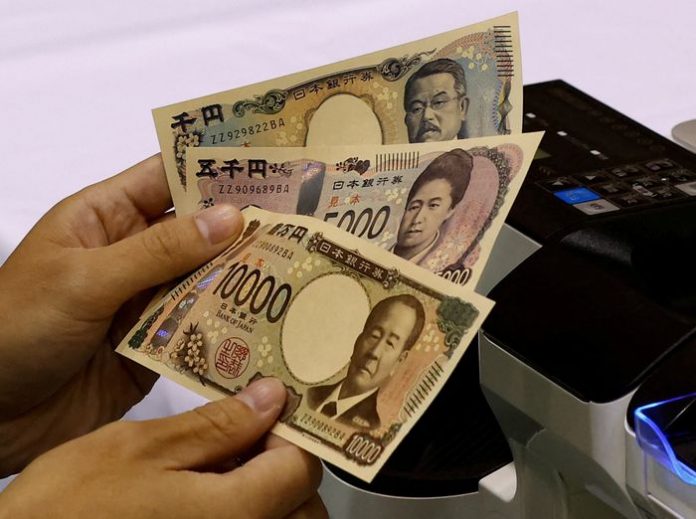
The U.S. dollar strengthened across Asian markets on Friday, climbing to a one-year high as growing doubts about the implementation of the tentative U.S.-Iran peace agreement pushed investors back toward the world’s dominant reserve currency, while the Japanese yen hovered near levels that could trigger another round of government intervention.

The development shows that while traders initially welcomed the breakthrough between Washington and Tehran, the path from a ceasefire framework to a durable peace agreement remains highly uncertain. That uncertainty is limiting appetite for risk-sensitive currencies and helping sustain demand for the dollar despite expectations that lower oil prices could eventually ease inflation pressures.

The dollar index, which measures the greenback against six major currencies, rose 0.3% to 101.07, its highest level in a year. The advance came after fresh doubts emerged over negotiations intended to formalize the agreement reached earlier this week between the United States and Iran.

A key source of concern was the abrupt postponement of talks that were expected to take place in Switzerland. U.S. Vice President JD Vance abandoned plans to travel to the country for negotiations with Iranian officials, raising questions about how quickly the agreement can be translated into concrete actions.

Swiss authorities confirmed that negotiations scheduled at the mountain resort of Burgenstock would not take place on Friday. The cancellation came even as Iranian officials had previously indicated readiness to begin technical discussions following the 14-point accord that extended the ceasefire by at least 60 days.

The White House attempted to downplay concerns, saying the logistics surrounding the negotiations had always been complex and unpredictable. However, financial markets interpreted the delay as a reminder that major obstacles remain.

Iran has signaled that it wants evidence that Washington is implementing the interim agreement before committing fully to the next phase of negotiations. Iranian media reports suggested there was still no confirmation that Tehran’s delegation would travel to Switzerland. Adding to the uncertainty, Iran’s foreign ministry cast doubt on a proposed signing ceremony that U.S. officials had discussed, arguing that such an event was unnecessary because both countries’ presidents had already signed the framework agreement.

These developments have bolstered concerns that the diplomatic breakthrough remains fragile. For currency markets, the issue extends well beyond the Middle East.

Investors had initially viewed the agreement as a catalyst that could reopen the Strait of Hormuz, restore stability to energy markets, and reduce inflationary pressures that have complicated central bank decision-making worldwide. A durable agreement could potentially support global growth, improve trade flows, and reduce demand for safe-haven assets such as the U.S. dollar.

But the latest setbacks suggest the process may be lengthy and vulnerable to political disagreements, implementation disputes, and regional tensions.

As a result, many investors are reluctant to abandon defensive positions.

The renewed dollar strength also reflects changing expectations surrounding U.S. monetary policy. Markets are increasingly reassessing the likelihood that the Federal Reserve could maintain a tougher stance on inflation following comments from Fed Chairman Kevin Warsh and several policymakers who have emphasized the need to restore price stability.

Fed funds futures now imply a sharply higher probability of a rate increase in the coming months compared with expectations only a week ago. Higher U.S. interest rates typically strengthen the dollar by attracting foreign capital into Treasury securities and other dollar-denominated assets.

The Japanese Yen Remains Under Intense Pressure

The currency traded around 161.46 per dollar, close to levels widely viewed as intervention territory by market participants. The weakness has persisted despite substantial efforts by Japanese authorities to stabilize the currency, including direct intervention and the Bank of Japan’s recent interest-rate increase to its highest level in more than three decades.

Yet the fundamental drivers remain largely unchanged.

Japan continues to face a significant interest-rate disadvantage relative to the United States, encouraging investors to move capital abroad in search of higher returns. Concerns over Japanese fiscal policy and government spending plans have also undermined confidence in the yen.

Analysts believe Tokyo may be forced to intervene again if the currency approaches the 162 level.

“Our view is that Japan’s Ministry of Finance will likely defend the 161.95 level the first couple of times it’s tested, deploying similar firepower to what we saw in ?April and May — around 11.7 trillion yen,” said Tony Sycamore, market analyst at IG in Sydney.

“That would mean they would have used ?roughly 11–12% of their ?total reserves in a relatively short period, with little noticeable impact,” he added. “At that stage, they would need to become far more selective with future interventions to preserve flexibility and credibility, keeping plenty of ammunition in reserve.”

Minutes from the central bank’s meeting in April released on Friday ?morning, and comments soon after from BOJ ?Deputy Governor Ryozo Himino also cautioned there ?could be more rate hikes tied to the inflationary effects of the Iran war.

The challenge for Japanese authorities is that previous interventions have delivered only temporary relief. Earlier operations consumed trillions of yen from foreign-exchange reserves without fundamentally reversing the currency’s direction. That raises questions about how much firepower policymakers are willing to deploy if speculative pressure intensifies.

Elsewhere, most major currencies weakened against the dollar. The euro slipped to $1.1419, sterling fell to $1.3174, while the Australian and New Zealand dollars also retreated.

The broader message from currency markets is that investors remain unconvinced that the geopolitical risks that drove volatility across global markets earlier this year have fully disappeared.

Even though oil prices have fallen and hopes for peace have improved sentiment compared with the height of the conflict, the suspension of key negotiations demonstrates that substantial hurdles remain. Questions surrounding sanctions relief, verification mechanisms, implementation timelines, nuclear restrictions, and regional security arrangements are still unresolved.

Until those issues are addressed and a comprehensive agreement is formally implemented, economists have warned that global currencies are likely to remain vulnerable to sudden swings in sentiment.

For now, the dollar continues to benefit from that uncertainty. While markets would normally expect easing geopolitical tensions and falling oil prices to weaken the greenback, the unresolved nature of the U.S.-Iran negotiations, combined with a more hawkish Federal Reserve, is creating a powerful counterweight.

That leaves currency markets caught between optimism over a potential peace dividend and caution over whether the agreement can survive the difficult negotiations that still lie ahead.

Bitcoin Price Risk Grows as ETF Outflows Reach 2,622 BTC in One Week

0

Recent on-chain tracking from Lookonchain highlights renewed pressure in spot Bitcoin exchange-traded funds, with net outflows intensifying on June 18 and extending a broader seven-day negative trend.

According to the data, Bitcoin ETFs recorded net outflows of 1,547 BTC on June 18 alone, equivalent to approximately $98.45 million at prevailing market prices. This single-day withdrawal adds to a sustained pattern of capital exit, pushing the seven-day cumulative net outflow to 2,622 BTC, or roughly $166.82 million.

Such flows signal a shift in short-term sentiment within institutional channels, where Bitcoin ETF products had previously acted as a primary gateway for regulated exposure to digital assets.

The persistence of outflows suggests that investors may be reassessing risk appetite amid macroeconomic uncertainty, tightening liquidity conditions, and evolving expectations around interest rate policy.

Bitcoin itself continues to exhibit sensitivity to ETF flow dynamics, as these instruments now represent a significant portion of spot market demand and liquidity formation. If sustained, the current trend of net redemptions could weigh on price stability, particularly if it coincides with reduced inflows from retail participants and other institutional vehicles.

ETF flows remain highly responsive to near-term market volatility, and reversals can occur quickly if sentiment improves or macro conditions stabilize in the broader financial system.

The recent wave of withdrawals also reflects a broader recalibration across risk assets, as investors rotate capital between equities, bonds, and digital asset products in response to shifting growth expectations.

Liquidity conditions in global markets have tightened intermittently, and this has historically amplified sensitivity in Bitcoin-linked investment vehicles, particularly ETFs that rely on continuous inflows to offset redemptions.

Market participants are also closely watching the divergence between ETF flows and spot exchange activity, which can sometimes signal whether price movements are driven by structural allocation changes or short-term trading behavior.

Institutional adoption of Bitcoin ETFs remains a critical long-term driver of demand, but the current outflow trend underscores how quickly sentiment can shift when macro uncertainty increases. Historical ETF flow cycles suggest that periods of sustained outflows are often followed by stabilization phases, where price discovery resumes once forced selling pressure dissipates.

Analysts emphasize that Bitcoin ETF flows should not be interpreted in isolation, as they interact with derivatives markets, mining supply dynamics, and broader liquidity cycles across financial systems. The market appears to be in a consolidation phase where institutional inflows are no longer sufficient to consistently absorb selling pressure, leading to episodic drawdowns.

Whether this pattern persists will depend on a combination of macroeconomic signals, regulatory clarity around digital assets, and the evolving role of ETFs as a dominant access point for Bitcoin exposure.

The current $166.82 million seven-day outflow streak reflects a cautious but not necessarily bearish structural adjustment within the ETF-driven Bitcoin market ecosystem, where capital allocation is becoming increasingly dynamic.

Short-term volatility in ETF flows does not eliminate the longer-term thesis of institutional adoption, but it does highlight the fragility of momentum-driven inflows in a market still heavily influenced by macro liquidity cycles and shifting risk sentiment.

As such, investors and analysts will continue to monitor daily ETF flow data as a leading indicator for potential directional moves in Bitcoin pricing and broader digital asset market behavior over the coming weeks with caution across evolving macroeconomic conditions globally.

Oil Futures Market Outlook After Supply Disruptions

0

Capital Economics’ projection that global crude flows will recover to roughly 80% of pre-war levels by September, with Iraq lagging by close to a year, points to a global oil market that is normalizing unevenly rather than snapping back in a clean V-shaped recovery.

The asymmetry in restoration timelines is not simply a matter of aggregate supply returning; it reflects the differentiated structural constraints across producing regions, particularly where infrastructure degradation, security risks, and logistical bottlenecks persist.

In this framework, Iraq remains the key lagging variable. Unlike many OPEC+ producers that can adjust output relatively quickly through spare capacity and flexible upstream operations, Iraq’s production system is more sensitive to long-cycle investment constraints and field-level operational fragility.

Pipeline integrity, export terminal throughput, and internal political coordination all play a role in slowing the pace of recovery. As a result, even as global flows edge toward normalization by late summer, Iraq’s delayed rebound effectively drags on the full restoration of marginal supply capacity.

This staggered recovery matters because oil pricing is fundamentally forward-looking.

Market participants do not wait for full normalization; they continuously reprice expectations based on marginal barrels. Capital Economics’ estimate implies that by September, the market will have largely absorbed the bulk of the post-conflict supply disruption shock, with remaining shortfalls increasingly concentrated in fewer jurisdictions.

That narrowing of disruption scope typically reduces volatility in outright price direction but can preserve a structural risk premium. That risk premium is the critical underpinning of current crude pricing dynamics. Even as physical flows improve, geopolitical uncertainty does not dissipate at the same rate.

Market participants tend to embed a probability-weighted buffer into prices reflecting the chance of renewed supply interruptions, shipping constraints, or escalation risks in key transit corridors. This insurance layer in pricing is what prevents crude from fully reverting to pre-shock equilibrium levels even when headline supply recovery metrics look strong.

From a futures market perspective, this often manifests as a persistent backwardation or a flatter contango structure than fundamentals alone would justify. Front-month contracts remain sensitive to short-term disruptions, while deferred contracts price in gradual normalization.

The result is a market that signals relative tightness in the near term despite improving medium-term supply expectations.

The idea that crude has a floor under it in this environment reflects precisely this mechanism. Even if demand growth moderates or speculative positioning cools, the existence of a geopolitical risk premium limits downside elasticity.

Prices are no longer driven purely by marginal consumption growth or inventory drawdowns; they are anchored by the cost of uncertainty. This creates an important policy feedback loop. For producing nations, elevated floors improve fiscal planning stability, especially in hydrocarbon-dependent economies.

For importers, however, it complicates inflation management, particularly where energy remains a significant input into transport and industrial production costs. Central banks monitoring inflation trajectories must therefore treat oil not as a cyclical commodity alone but as a geopolitically conditioned price input.

The Capital Economics outlook suggests a transition phase for crude markets: moving out of acute disruption pricing into a regime defined by partial normalization and persistent geopolitical discounting. Iraq’s delayed recovery becomes less about absolute volumes and more about marginal timing.

While the broader market continues to price in a residual probability of instability. The result is a structurally supported oil price environment, where downside moves are cushioned even in the absence of strong demand impulses.

Phoenix Trade’s $8.8M Open Interest Signals Growing On-Chain Derivatives Demand, as Rockstar Games Launches GTA 6 Pre-orders Ahead of Global Release

0

The Solana derivatives ecosystem has continued to deepen its liquidity profile, with Phoenix Trade recently reporting a new all-time high in open interest of approximately $8.8 million.

While this figure may appear modest compared to legacy centralized exchanges, it is structurally meaningful within the context of on-chain perpetual futures markets, where capital efficiency, risk appetite, and composability evolve in tighter feedback loops.

The milestone underscores a broader trend: speculative and hedging activity on-chain is steadily transitioning from experimental to semi-mature market structure.

Solana has become a preferred settlement layer for high-frequency decentralized trading due to its low latency, parallel execution model, and relatively low transaction costs.

These characteristics are particularly important for perpetual futures trading, where funding rate arbitrage, liquidation cascades, and leveraged positioning require rapid order execution and tight spreads. Phoenix Trade has emerged as one of the notable venues contributing to Solana’s derivatives expansion.

Phoenix Trade reaching $8.8 million in open interest signals a few structural dynamics at work. Open interest, which measures the total value of outstanding derivative contracts that have not been settled, is often interpreted as a proxy for market participation and conviction.

Rising open interest typically indicates that new capital is entering positions rather than merely rotating existing exposure. In decentralized perpetual markets, this also implies increasing willingness among traders to accept smart-contract risk in exchange for transparency and non-custodial execution.

The growth in Phoenix Trade’s open interest reflects a broader resurgence in on-chain derivatives trading, where users are seeking alternatives to centralized exchanges amid regulatory uncertainty and counterparty risk concerns. Perpetual DEXs on Solana benefit from a dual narrative.

The technological scalability of the underlying chain and the growing sophistication of native trading infrastructure.

As liquidity deepens, market makers can deploy tighter spreads, reducing slippage and improving capital efficiency, which in turn attracts additional volume—a reinforcing cycle. Another factor contributing to the milestone is the maturation of Solana-native liquidity incentives.

Many trading venues in this ecosystem rely on targeted liquidity mining, fee rebates, and structured incentive programs to bootstrap participation. While these mechanisms can temporarily inflate volumes, sustained increases in open interest—such as Phoenix Trade’s new peak—suggest that organic trading demand is beginning to play a larger role.

This transition from incentive-driven activity to market-driven participation is a key inflection point for any emerging derivatives platform. From a macro perspective, the rise in on-chain open interest also reflects evolving trader behavior in digital asset markets.

Participants are increasingly comfortable expressing directional views using leverage on decentralized platforms, particularly during periods of heightened volatility. The ability to maintain positions without custodial intermediaries aligns with broader decentralization principles and reduces reliance on centralized clearinghouses.

This growth is not without risks. Higher open interest can amplify liquidation cascades during sharp price movements, especially in relatively thin markets. It also introduces systemic sensitivity to oracle reliability, funding rate imbalances, and liquidity fragmentation across venues.

As such, continued scaling of platforms like Phoenix Trade will depend not only on user demand but also on improvements in risk management infrastructure and cross-market liquidity coordination. The $8.8 million open interest milestone marks an incremental but important step in the evolution of Solana-based derivatives markets.

It highlights increasing trader confidence, improving infrastructure depth, and the gradual convergence of decentralized and traditional trading mechanics. If sustained, this trajectory could position Solana as a meaningful hub for on-chain perpetual futures activity in the broader digital asset landscape.

Rockstar Games Launches GTA 6 Pre-orders Ahead of Global Release

The announcement that Rockstar Games has opened pre-orders for Grand Theft Auto VI on June 25 marks a pivotal moment in the modern video game industry, reflecting both the scale of anticipation surrounding the title and the evolving economics of AAA game releases.

Developed by Rockstar Games, the franchise has long been a benchmark for open-world design, narrative ambition, and commercial performance. With each installment, the Grand Theft Auto series has expanded the boundaries of interactive entertainment, and GTA 6 is widely expected to continue that trajectory with unprecedented production scale and market impact.

Pre-orders for major releases like GTA 6 are no longer simple early purchase mechanisms; they function as financial indicators and demand-validation tools for publishers and investors alike.

By opening pre-orders ahead of launch, Rockstar is effectively gauging consumer appetite while locking in early revenue streams.

In today’s digital-first distribution landscape, pre-orders also reduce uncertainty in forecasting launch performance, particularly for a franchise with global reach. The move suggests confidence in the game’s readiness cycle and its ability to sustain massive simultaneous demand across consoles and possibly PC releases in staged phases.

From a corporate perspective, the timing of pre-orders carries significant implications for Take-Two Interactive, Rockstar’s parent company. Early pre-order momentum can materially influence investor sentiment, often affecting stock performance and forward revenue projections.

For AAA titles with development budgets that can exceed hundreds of millions of dollars, pre-orders serve as an early de-risking mechanism. If GTA 6 follows the pattern of its predecessor, it could generate substantial upfront capital before launch, reinforcing Rockstar’s position as one of the most commercially powerful studios in the global gaming sector.

Market analysts also view GTA 6 pre-orders as a testing ground for evolving monetization strategies. Industry speculation suggests multiple editions, including premium digital bundles, collector’s physical editions, and possible early-access incentives.

The pricing structure will likely reflect inflationary pressures in game development and the increasing expectation of long-term live-service support.

If Rockstar introduces tiered pre-order bonuses, it could further normalize segmented pricing strategies across AAA gaming, where different user cohorts pay varying amounts for incremental content or access privileges.

The pre-order model is not without controversy. Critics argue that it can place consumer trust at risk, especially if marketing outpaces final product delivery. In the case of a franchise as influential as Grand Theft Auto, expectations are exceptionally high, and any perceived underperformance could generate disproportionate backlash.

Additionally, the extended gap between pre-order availability and actual release introduces uncertainty regarding development timelines and potential delays, which have historically affected major Rockstar projects.

The opening of pre-orders for GTA 6 represents more than a commercial milestone; it is a signal event for the global gaming economy. It reflects the maturation of blockbuster game launches into financial ecosystems that intersect with investment markets, digital distribution platforms, and consumer hype cycles.

As anticipation builds, GTA 6 stands not only as a continuation of one of gaming’s most iconic franchises but also as a defining case study in how modern entertainment products are marketed, financed, and consumed at scale.