DD
MM
YYYY

PAGES

DD
MM
YYYY

spot_img

PAGES

Home Blog Page 5

Sustainable Yield Strategies in Institutional Crypto Portfolios

0

Institutions are increasingly abandoning yield farming strategies that dominated decentralized finance during the 2020–2022 cycle in favor of what is now being called real yield, a shift that reflects the maturation of crypto markets and a growing demand for sustainable, risk adjusted returns.

Yield farming, once celebrated for its explosive incentives and high annual percentage yields, relied heavily on token emissions, liquidity mining programs, and short term speculation that often masked unsustainable economic structures beneath temporary returns.

For many institutional investors, these yields proved illusory because they were funded primarily through inflationary token issuance rather than genuine cash flow generated by productive on chain activity.

In response, capital allocators such as hedge funds, asset managers, and corporate treasuries have begun shifting toward protocols and strategies that generate real yield derived from transaction fees, lending spreads, staking rewards tied to network security, and fee generating decentralized applications.

This transition is driven by a combination of macroeconomic tightening, increased regulatory scrutiny, and the need for more predictable income streams that can be modeled using traditional financial risk frameworks.

Unlike yield farming, which often required continuous capital rotation and exposure to volatile governance tokens, real yield strategies emphasize sustainability, capital preservation, and alignment with underlying economic activity on blockchain networks.

Ethereum staking, tokenized treasury products, and on chain lending markets are increasingly seen as core examples of this new paradigm where yield is generated from real economic usage rather than speculative incentives.

For institutions, this model reduces exposure to reflexive token cycles, improves transparency of revenue sources, and allows better integration with existing portfolio construction and liability matching frameworks.

However, real yield is not without challenges, as it often depends on early stage infrastructure, variable on chain activity, and still evolving regulatory definitions around what constitutes sustainable yield in decentralized systems.

The migration from yield farming to real yield signals a broader institutionalization of decentralized finance, where capital markets increasingly demand verifiable cash flow rather than incentive driven emissions. This shift aligns crypto more closely with traditional finance principles, particularly discounted cash flow analysis, yield curve expectations, and portfolio risk diversification models used by institutional investors.

As infrastructure for staking, lending, and tokenized real world assets continues to mature, real yield mechanisms are expected to become more standardized, auditable, and integrated into regulated financial products.

We may also see convergence between DeFi protocols and traditional asset managers, where yield generation is increasingly sourced from hybrid structures combining on chain transparency with off chain revenue streams.

Risk management will remain central, as institutions demand stress testing, counterparty assessment, and liquidity modeling to ensure that real yield is not merely a rebranded form of hidden leverage or unsustainable incentives.

Over time, this evolution is likely to reduce the dominance of mercenary liquidity and replace it with long term capital commitments anchored in productive network activity.

Institutions are not abandoning crypto yield opportunities but refining their approach, favoring structures that resemble traditional income generation while still leveraging blockchain efficiencies and programmability.

At the same time, improved regulatory clarity, better oracle infrastructure, and growing participation from banks and asset managers will likely accelerate the transition toward real yield as the dominant framework for institutional participation in decentralized markets over the coming cycle and beyond as capital allocators reassess risk adjusted return profiles across digital assets.

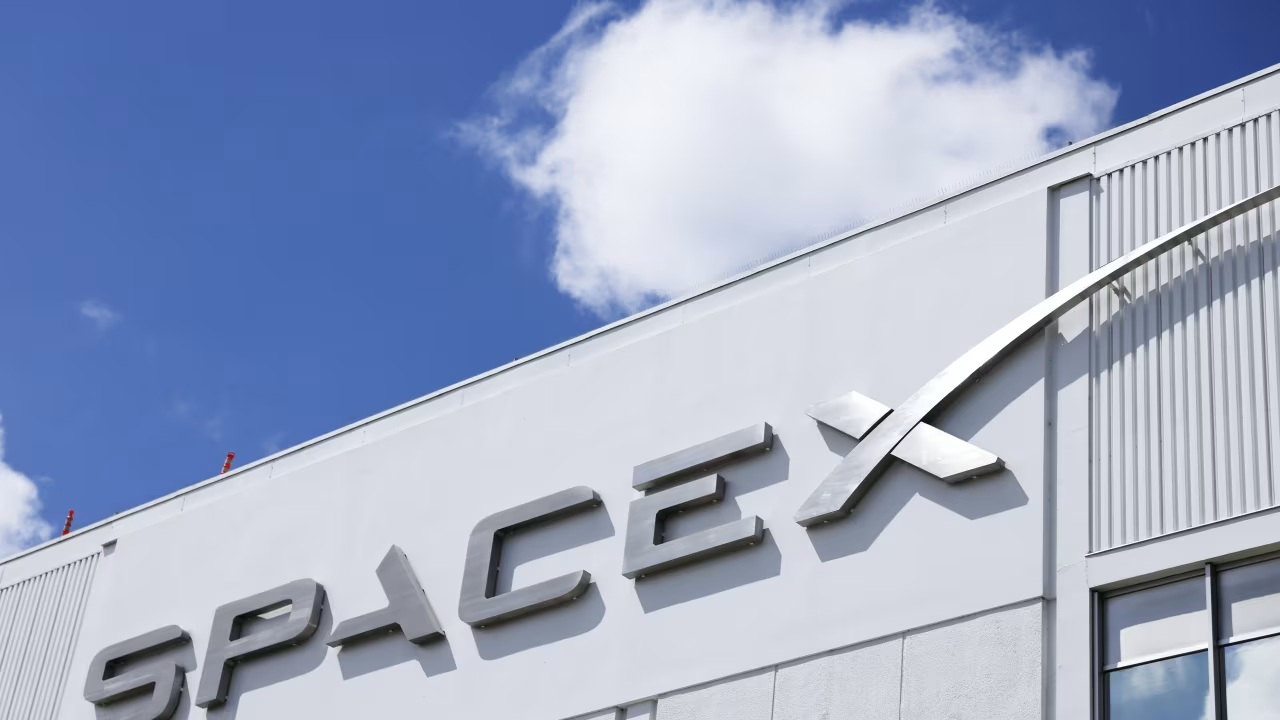
Elon Musk’s SpaceX Makes Stock Market History With $350B Surge, Surpassing Nvidia’s Record

0

Elon Musk’s SpaceX has shattered stock market records, adding more than $350 billion in market value in a single day following its highly anticipated IPO.

Priced at $135 per share in what became the largest IPO ever, raising approximately $75 billion the stock opened at $150, an 11% jump from the offering price. It climbed as high as $176.52 intraday before closing at approximately $160.95–$161.11.

Strong investor demand pushed the stock higher throughout its debut trading session, adding hundreds of billions in market value and cementing SpaceX’s position as one of the world’s most valuable publicly traded companies.

The historic surge surpasses Nvidia’s previous record, marking one of the most remarkable wealth-creation events in market history.

Recall that on February 22, 2024, Nvidia added approximately $277 billion in market value in a single trading day after reporting blockbuster earnings, which at the time was the largest one-day market capitalization gain in U.S. stock market history.

The unprecedented surge in SpaceX shares, underscores growing investor confidence in the private space giant as it continues to expand its dominance in satellite communications, launch services, and space exploration.

The achievement not only cements SpaceX’s position as one of the world’s most valuable companies but also highlights the increasing influence of the space economy in shaping the future of global technology and innovation.

Notably, the debut of SpaceX’s IPO, instantly made Elon Musk the world’s first trillionaire, as his stake in the company propelled his net worth past the $1 trillion mark. It also created thousands of new millionaires among SpaceX employees, from engineers to support staff.

A Landmark Moment for SpaceX

SpaceX’s IPO stands out not just for its size but for the company’s unique position at the intersection of space exploration, satellite internet (Starlink), and emerging AI infrastructure ambitions.

The offering valued the company at around $1.77 trillion at the IPO price, but strong investor demand quickly drove it well above $2 trillion, placing it among the top six most valuable U.S. public companies on day one.

Investors appeared enthusiastic about SpaceX’s dominant position in reusable rockets, its growing Starlink constellation, and Musk’s vision for future growth in space-based data centers and beyond.

While the first-day pop marks a historic milestone, SpaceX remains a company with significant operational ambitions and challenges ahead, including scaling production, expanding global broadband coverage, and advancing its Mars goals.

Founded in 2002, it has revolutionized space travel with reusable rockets, the Starlink satellite internet constellation, and ambitious goals like Mars colonization.

The company’s IPO comes as it continues to dominate commercial launches, secure major NASA contracts, and expand broadband access globally via Starlink.

Wall Street celebrated the addition of a new heavyweight to the Nasdaq, with some dubbing SpaceX a potential member of an expanded “Magnificent” tech cohort.

The listing is expected to provide SpaceX with substantial capital to accelerate development of Starship, expand Starlink, and pursue deeper space missions.

As trading continues, investors will watch closely for quarterly results, launch cadence, and regulatory developments affecting its satellite network and government contracts.

The company’s successful public debut not only validates Musk’s vision but also highlights growing confidence in the commercial space economy.

Porsche 911 Remains True to Its Roots Despite EV Pressure

0

For decades, the Porsche 911 has stood as one of the most recognizable and respected sports cars in automotive history. Known for its distinctive design, rear-engine layout, and thrilling driving dynamics, the 911 has become a symbol of performance and engineering excellence.

As the automotive industry rapidly transitions toward electrification, many enthusiasts have wondered whether Porsche would eventually introduce a fully electric version of its iconic sports car. However, Porsche’s leadership has made its position clear: the 911 will not become fully electric anytime soon.

The decision reflects Porsche’s commitment to preserving the unique character that has defined the 911 for more than sixty years. While the company has embraced electric mobility through successful models such as the Porsche Taycan and the upcoming electric versions of other vehicles in its lineup, executives believe the 911 occupies a special place that should remain powered by an internal combustion engine, at least for the foreseeable future.

One of the key reasons behind this stance is the driving experience. The 911’s appeal has always been closely tied to the sound, feel, and responsiveness of its engine.

Enthusiasts value the mechanical connection between driver and machine, from the roar of the flat-six engine to the precise handling characteristics that have evolved over generations. Porsche executives argue that a fully electric powertrain would fundamentally alter these qualities, potentially changing the essence of what makes a 911 a 911.

Another important factor is weight. Battery technology has improved significantly in recent years, but electric vehicles still require large battery packs that add substantial mass. For a high-performance sports car designed around agility, balance, and driver engagement, excess weight can present significant challenges.

Porsche engineers have repeatedly emphasized the importance of maintaining the lightweight characteristics that contribute to the 911’s legendary performance. Current battery technology may not yet provide the ideal solution for achieving these goals without compromise.

This does not mean Porsche is ignoring environmental concerns or regulatory pressures. The company continues to invest heavily in electrification across its broader portfolio. Models such as the Taycan have demonstrated that electric vehicles can deliver impressive performance while meeting sustainability objectives.

Porsche is also exploring synthetic fuels, often referred to as e-fuels, as a potential way to reduce carbon emissions while preserving internal combustion engines. These fuels could offer a pathway for iconic models like the 911 to remain relevant in a future shaped by stricter environmental regulations.

The decision also highlights Porsche’s strategy of balancing innovation with heritage. Rather than applying a one-size-fits-all approach to electrification, the company appears determined to adapt each model according to its unique identity and customer expectations.

While SUVs, sedans, and crossover vehicles may transition more easily to electric platforms, the 911 remains a product deeply connected to tradition and enthusiast culture. Industry analysts note that Porsche’s position may evolve as battery technology advances and consumer preferences change.

Future breakthroughs could eventually make an electric 911 more feasible without sacrificing performance or driving enjoyment. Nevertheless, Porsche’s leadership believes that today’s technology does not yet offer a solution that aligns with the vehicle’s core values.

In an era when many manufacturers are accelerating their shift toward electric mobility, Porsche’s decision to keep the 911 powered by combustion technology demonstrates the enduring importance of brand identity. For enthusiasts around the world, the announcement provides reassurance that one of the automotive world’s most beloved sports cars will continue to deliver the experience that has made it legendary for generations.

OG Anunoby, Folarin Balogun, and the Global Nigerian Story

0

Let me commend these two young men for what they have accomplished over the last few days. OG Anunoby, proudly of Nigerian heritage, has become an NBA Champion with the New York Knicks. Folarin Balogun, also proudly of Nigerian heritage, meanwhile, is leading the attack for the United States in the ongoing FIFA World Cup. These are remarkable achievements at the highest levels of global sports.

Their Nigerian connections may not always dominate headlines in Fox and CNN because an African axiom notes that success has relations, and excellence makes people citizens of the world. Yet, we should recognize and celebrate the roots that helped shape these journeys. Curiously, if the story were different and things had not gone well, many media outlets would be quick to emphasize “Nigeria.” Success, however, often causes “immigrant” identities to become more nuanced or muted in Western media.

But there is a larger lesson here. When a young person of African heritage excels in London, New York, Beijing, or anywhere else in the world, that success creates pathways for others. Excellence travels. It changes perceptions. It expands possibilities. It quietly tells another young Nigerian or African child that greatness is attainable.

Good People, never underestimate the power of representation. Every global victory by one of our own widens the road for many who follow. Nations rise not only through institutions and policies, but also through men and women whose excellence projects a positive image of their people.

To OG Anunoby and Folarin Balogun: congratulations. Your achievements inspire far beyond the courts and football pitches. You are reminding young Africans that the world is open to those who prepare, persevere, and perform.

Investors Are Repricing AI Growth Expectations in 2026

0

Markets are increasingly drawing a hard line between artificial intelligence ambition and artificial intelligence accountability. The narrative phase of AI investment—where capital flowed freely on the basis of long-term promise, strategic positioning, and competitive fear—is giving way to a more disciplined regime.

In this new environment, spending on AI infrastructure, talent, and model development is no longer being rewarded by default. Instead, it is being scrutinized through a traditional lens: does it translate into revenue growth, margin expansion, or durable earnings power? This shift reflects a broader repricing of technology risk.

During the early stages of the AI boom, markets were willing to underwrite substantial upfront costs. Hyperscalers expanded data center capacity, semiconductor demand surged, and enterprise software firms raced to integrate generative AI features.

Investors largely accepted the argument that AI was a general-purpose technology comparable to cloud computing or the internet itself—implying that near-term profitability would be secondary to strategic positioning.

That tolerance is now narrowing. As AI capital expenditures scale into tens of billions for major firms, investors are increasingly asking for a clearer line of sight to monetization. The key pressure point is not whether AI will eventually transform productivity, but whether current spending is efficient relative to near-term cash flows.

When incremental AI investment expands operating expenses faster than observable revenue uplift, markets tend to interpret the gap as dilution rather than optionality. This creates a tension between engineering reality and financial expectation. AI systems—particularly frontier models—are expensive to train, deploy, and serve at scale.

Compute costs remain structurally high, inference demand is growing faster than optimization in many use cases, and enterprise adoption, while real, is uneven in its willingness to pay. As a result, even companies with strong AI narratives can experience margin compression if monetization lags behind infrastructure buildout.

Public market reactions reflect this imbalance. Earnings reports that emphasize rising AI-related capital expenditure without commensurate revenue contribution are increasingly met with volatility or selloffs.

The market is effectively repricing the “option value” embedded in AI investments, demanding shorter payback periods and more explicit monetization pathways. In this sense, AI is being treated less like speculative R&D and more like capital investment that must justify itself within visible financial cycles.

Importantly, this does not signal skepticism about AI’s long-term impact. Rather, it signals a shift in the discount rate applied to that future. Investors are no longer willing to assume frictionless adoption curves or automatic pricing power.

Instead, they are stress-testing business models for evidence of real demand: enterprise contracts tied to measurable productivity gains, consumer products with sustainable subscription economics, or platforms that can extract margin from inference at scale. The result is a bifurcation in market behavior.

Companies that can convert AI capabilities into revenue streams—through copilots, APIs, automation tools, or vertical solutions—are being differentiated from those that primarily invest in infrastructure without immediate monetization. The latter group faces a higher hurdle: continued spending must be justified not by narrative alignment with AI trends, but by demonstrable future cash flow.

AI remains one of the most significant technological shifts in decades, but capital markets are insisting on a familiar principle: innovation is not exempt from accounting. Until AI spending reliably shows up in revenue growth and earnings expansion, the burden of proof remains with the balance sheet, not the story.