DD
MM
YYYY

PAGES

DD
MM
YYYY

spot_img

PAGES

Home Blog Page 5

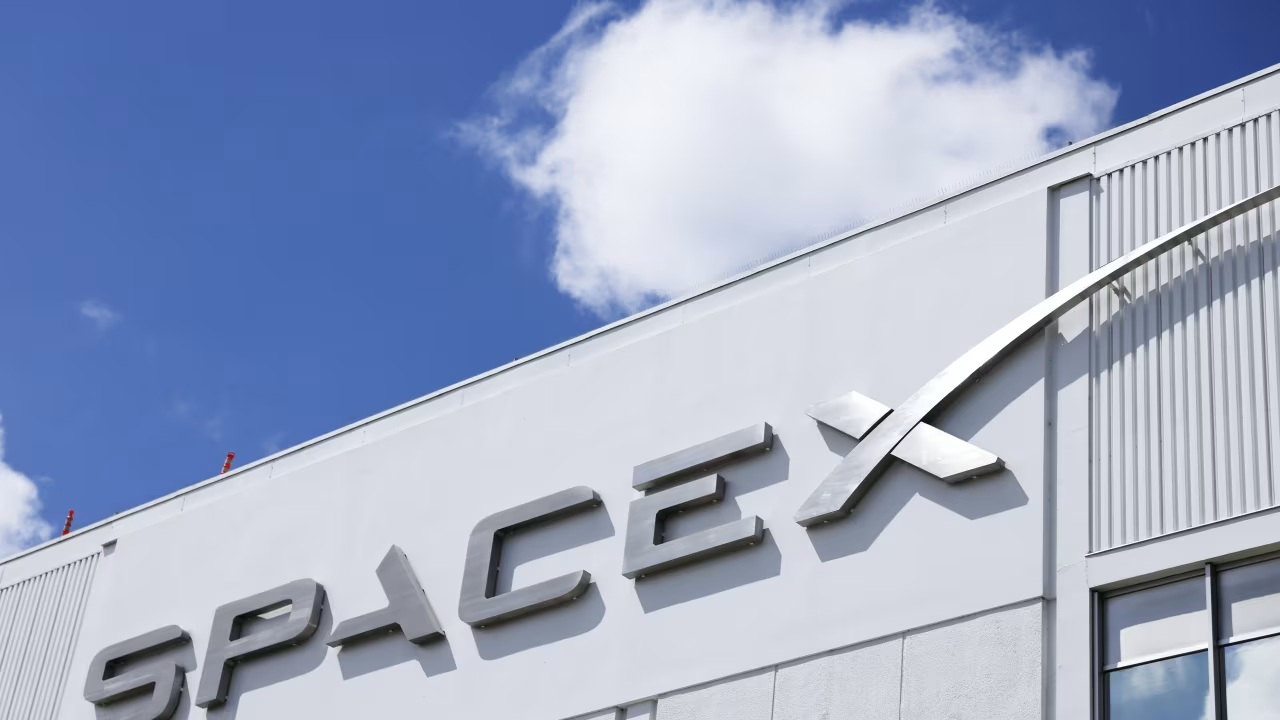
SpaceX Stock Surges Nearly 40% in Five Trading Days as Investor Optimism Builds

0

SpaceX is delivering another powerful performance in the financial markets, with the company’s shares gaining roughly 10% in a single trading session and pushing its five-day advance to almost 40%.

The sharp rally highlights the growing investor enthusiasm surrounding the private space and technology company as markets increasingly focus on its expanding business portfolio, artificial intelligence ambitions, satellite communications operations and potential future public-market opportunities.

The latest surge comes as investors continue to reassess SpaceX’s long-term growth prospects. While the company has traditionally been associated with rocket launches and space exploration, its business has expanded considerably.

Starlink, its satellite internet division, has become one of the most important components of the broader SpaceX story, creating a recurring-revenue business that operates across multiple international markets.

The strong move in SpaceX’s valuation also reflects growing expectations that the company could eventually unlock significant value through a public listing or other forms of liquidity for investors and employees.

Another major factor behind the renewed enthusiasm is SpaceX’s connection to the artificial intelligence economy. The company has increasingly positioned itself beyond traditional aerospace, with massive computing requirements and ambitious plans involving AI infrastructure.

Investors are beginning to view SpaceX as part of a broader technology ecosystem rather than simply a rocket manufacturer. Starlink provides another important source of optimism.

Demand for satellite connectivity continues to grow as consumers, businesses and governments seek alternatives to traditional terrestrial networks.

SpaceX’s ability to launch and maintain its own satellite constellation gives it a structural advantage, while improvements in launch efficiency can potentially reduce costs and support further expansion.

However, a rally of almost 40% in five trading days also raises questions about valuation and sustainability. Rapid gains can attract momentum traders and speculative capital, potentially pushing prices beyond levels justified by near-term fundamentals.

The surge demonstrates how investor perceptions of SpaceX are evolving. The company is increasingly being valued for a combination of businesses spanning launch services, satellite communications, AI infrastructure and advanced technology.

The momentum also comes as competition across the commercial space sector intensifies. Companies are investing heavily in reusable launch systems, satellite networks and space-based communications, making technological execution increasingly important.

SpaceX’s established launch cadence and vertically integrated model could give it an advantage, but maintaining that lead will require continued capital investment and successful execution.

For investors, the key question is whether SpaceX can convert its technological advantages into sustained financial growth. The recent market performance suggests that expectations are rising rapidly.

A 10% daily gain and an almost 40% increase over five trading days represent more than a short-term price movement; they signal a market increasingly willing to assign substantial value to SpaceX’s future.

If the company continues expanding Starlink, strengthening its launch operations and developing new technology businesses, investor interest could remain elevated. But after such a rapid rally, volatility is likely to remain high.

SpaceX’s next phase may therefore be defined not only by how quickly its valuation rises, but by whether its expanding ambitions can consistently translate into revenue, profitability and long-term shareholder value.

US Government Spending Pushes Budget Deficit to Five-Year High

0

The US federal budget deficit has surged to $432 billion, marking the largest monthly shortfall in five years and highlighting the growing pressure on the country’s finances.

The sharp increase underscores the widening gap between government spending and revenue at a time when policymakers are already facing difficult decisions over taxes, interest rates, debt management and economic growth.

A federal budget deficit occurs when the government spends more money than it collects through taxes and other revenues during a given period. While deficits are common in the United States.

The scale and persistence of the latest increase are drawing renewed attention to the sustainability of federal finances. A $432 billion monthly deficit represents a significant amount of borrowing and adds to the government’s already enormous outstanding debt.

Several factors can contribute to a rapidly expanding deficit. Government expenditures on programs such as Social Security, Medicare, Medicaid, defense, veterans’ benefits and interest payments consume substantial portions of the federal budget.

At the same time, tax revenues can fluctuate depending on employment, corporate profits, household incomes and broader economic conditions. When spending continues to rise while revenue growth fails to keep pace, the deficit expands.

One of the most concerning elements is the growing cost of servicing federal debt. Higher interest rates mean the government must pay more to investors holding US Treasury securities. As existing debt matures and is refinanced at higher yields, interest expenses can increase further.

This creates a difficult cycle in which a larger share of federal revenue is devoted not to public programs or infrastructure but to servicing previous borrowing. The latest deficit carries implications for financial markets.

Persistent fiscal deterioration can increase Treasury issuance as the government seeks to finance its operations. Greater supply of government debt can influence bond yields and potentially affect borrowing costs throughout the economy.

Higher yields can make mortgages, corporate loans and other forms of credit more expensive, placing additional pressure on consumers and businesses.

The deficit raises questions about inflation and the future direction of monetary policy. If government spending remains elevated, fiscal policy could continue supporting economic demand. Depending on economic conditions, that could make it more difficult for inflation to return sustainably to the Federal Reserve’s target.

Policymakers therefore face the challenge of balancing economic support with concerns about price stability and debt sustainability. The political consequences could be equally significant.

Addressing the deficit requires difficult choices, including reducing spending, increasing revenues, reforming entitlement programs or combining several approaches.

Each option carries economic and political costs, making fiscal reform one of Washington’s most contentious long-term challenges. The $432 billion deficit is therefore more than a single monthly statistic.

It represents a broader warning about the trajectory of US government finances. While the United States retains considerable borrowing capacity because of the dollar’s global role and the deep market for Treasury securities, continued deficits at elevated levels can gradually increase financial risks.

The latest figures reinforce the importance of a credible long-term fiscal strategy. Without meaningful efforts to narrow the gap between spending and revenue, rising debt and interest costs could increasingly constrain future governments.

The immediate deficit may fluctuate from month to month, but the underlying challenge remains structural: ensuring that the world’s largest economy can finance its obligations while maintaining sustainable economic growth.

Elon Musk Says SpaceX Must “Win on AI” as Artificial Intelligence Becomes Central to Its Future

0

Elon Musk is positioning artificial intelligence as the next major frontier for SpaceX, arguing that the company’s future success will depend heavily on its ability to lead in AI and robotics.

In a recent internal address, Musk told employees that SpaceX must “win on AI,” as he expects AI to eventually surpass the company’s traditional businesses, including rockets, spacecraft and Starlink, in both revenue and value.

The remarks came in a roughly 29-minute internal all-hands address that SpaceX posted on its X account this week.

Musk stated that AI revenue will exceed every other SpaceX business line, including rockets, spacecraft, and Starlink, “probably in September, like next month,” and will significantly outpace the rest of the company in the fourth quarter of 2026.

He said,

“Probably in four or five years, AI will be 99% of the value of SpaceX. I can say for sure that in five years, AI will definitely make up 99% of SpaceX’s value, and SpaceX’s value will be an astronomical figure. We must win on AI, because the future is overwhelmingly AI and robots.”

He described AI as an extremely important part of SpaceX’s future and projected that within four or five years it could account for 99 percent of the company’s total value, which he said would become “astronomical.”

Musk further framed AI success as vital to funding Starship, Mars efforts, and broader multiplanetary goals, and noted plans to train Grok on SpaceX’s internal knowledge including employees’ contributions, describing staff in effect as “parents” of that AI.

SpaceX currently operates 1.4 gigawatts of AI compute capacity, primarily at its Memphis and Southaven facilities, already among the most powerful training clusters in the world.

Musk set a target of reaching 10 gigawatts by the end of 2027. At an estimated value of $30 to $50 per watt, that scale could generate $300 billion to $500 billion in annual revenue. He emphasized the need for the company’s best engineers to focus on the AI effort to meet the ambitious timeline.

The AI push is framed as essential to funding SpaceX’s long-standing multiplanetary goals. Revenue from AI compute is expected to help accelerate Starship development and the broader Mars program.

Training of advanced models, including Grok, will incorporate the full body of SpaceX knowledge so that the resulting systems inherit the company’s values and focus on humanity’s expansion beyond Earth.

While large-scale training is expected to remain on the ground for now, everyday inference is planned to move into space through orbital compute systems.

Elon Musk’s view that artificial intelligence and robotics will be central to SpaceX’s future reflects a broader shift taking place across the global corporate landscape.

AI is increasingly moving beyond an experimental technology or standalone tool and becoming embedded in how companies develop products, manage operations, serve customers and make strategic decisions.

Across industries, businesses are integrating AI into areas ranging from software development and customer service to finance, supply chains, research and manufacturing.

Microsoft, for example, reported in July that companies across industries were moving from AI experimentation toward deploying the technology for real-world business outcomes, with some organizations embedding AI into their core operating models.

The scale of adoption is also becoming clearer. A 2026 Publicis Sapient survey found that 73% of enterprise decision-makers said AI was being used regularly or across most business processes, although only 10% considered it core to their operations.

This highlights the transition underway: companies are no longer asking whether AI has a place in the business, but how deeply it should be integrated.

Outlook

The growing integration of AI into businesses globally suggests that the technology is moving toward becoming a core component of corporate strategy rather than simply an additional digital tool.

As companies become more comfortable deploying AI across multiple functions, the focus is expected to shift from experimentation to scale, with greater emphasis on autonomous systems, AI agents, robotics and infrastructure capable of supporting increasingly complex workloads.

For SpaceX, this transition could be particularly significant. Musk’s ambition to make AI a dominant contributor to the company’s revenue and valuation represents a much broader bet on the convergence of software, computing and physical infrastructure.

Chinese AI Chip Designer Kiwimoore Targets $2bn Hong Kong IPO as Beijing Pushes Chip Self-Sufficiency

0

Chinese chip designer Kiwimoore has confidentially filed for a Hong Kong initial public offering that could value the company at about $2 billion, as the young semiconductor firm seeks to capitalize on China’s drive to build a domestic AI computing supply chain amid continuing U.S. technology restrictions.

The Shanghai-based company plans to list in Hong Kong in the first half of 2027, according to two people familiar with the matter. Kiwimoore has hired CITIC Securities and ABC International to lead the offering, the sources said.

The planned listing would give public-market investors exposure to a less visible but increasingly important segment of China’s AI infrastructure: the networking technology that connects AI accelerators inside large computing clusters.

Founded in early 2021, Kiwimoore develops networking technology that connects AI accelerators within computing clusters, according to the company’s website.

The technology is important because AI systems rely on large numbers of processors working together. As models become larger and AI workloads more computationally intensive, the ability to move data rapidly between accelerators becomes a critical part of overall system performance.

That puts companies such as Kiwimoore in a strategically important position within China’s effort to develop an indigenous AI computing ecosystem.

China’s access to advanced foreign semiconductors has been constrained by U.S. export controls, forcing Chinese technology companies and chip designers to find domestic alternatives across the AI hardware stack. The restrictions have affected not only processors but also the broader ecosystem required to deploy large-scale AI systems.

Kiwimoore raised about 700 million yuan ($103.79 million) in a funding round in July, one of the sources said.

The financing valued the company at about 8 billion yuan, or roughly $1.1 billion, according to the source.

A proposed IPO valuation of around $2 billion would therefore represent a substantial increase from the company’s latest private-market valuation. The gap highlights investor expectations that demand for domestic AI infrastructure will continue to expand as Chinese companies invest in computing capacity that is less dependent on U.S. technology.

The confidential filing also gives Kiwimoore additional time to prepare for changing market conditions before determining the final size and pricing of the offering.

Kiwimoore’s planned listing adds to a broader stream of Chinese technology and semiconductor companies seeking access to Hong Kong’s capital markets.

For companies operating in strategically important sectors such as AI and semiconductors, a Hong Kong listing can provide access to international and mainland Chinese investors while avoiding some of the challenges associated with overseas listings.

China’s semiconductor industry has received increased policy support as Beijing seeks greater technological independence and domestic alternatives to U.S.-controlled components.

The IPO is expected to provide Kiwimoore with capital to expand research and development, increase production and compete for a larger share of China’s rapidly developing AI infrastructure market.

The company’s business model is seen as another indication that U.S. export restrictions are influencing the structure of China’s AI industry.

Washington has imposed restrictions on China’s access to advanced AI chips and semiconductor technology, increasing pressure on Chinese companies to develop domestic alternatives. That has created opportunities not only for companies designing AI processors but also for firms developing networking, memory, packaging and other technologies needed to connect and operate those processors at scale.

Kiwimoore is targeting one of those supporting layers.

But analysts say that the long-term opportunity will depend on whether Chinese AI chipmakers can build sufficiently competitive systems around domestically developed processors. Networking technology becomes increasingly important as computing clusters expand because performance can be constrained by how quickly processors communicate with one another, rather than by processing power alone.

Kiwimoore’s proposed IPO therefore represents more than a conventional technology listing. It is part of a broader investment cycle around China’s attempt to build an AI computing stack that can operate with reduced reliance on U.S. technology.

If the listing proceeds as planned, Kiwimoore would enter Hong Kong’s market at a time when investors are increasingly looking for companies positioned to benefit from China’s AI expansion and semiconductor localization drive.

Lakers $12 billion acquisition as Neurosurgery Resident Uses ChatGPT to Work on Crouzeix’s Conjecture

0

The Los Angeles Lakers and the growing influence of artificial intelligence have emerged as two very different stories that illustrate the extraordinary scale of change taking place across sports, business and technology.

Reports that the Lakers franchise has been purchased for $12 billion by Jared Kushner and Bob Iger represent a landmark moment for professional sports.

While the story of a neurosurgery resident using ChatGPT to tackle Crouzeix’s conjecture highlights the expanding role of AI in advanced mathematical reasoning.

The reported $12 billion Lakers transaction would rank among the most significant valuations ever attached to a sports franchise. The Lakers are not simply a basketball team; they are a globally recognized entertainment brand with decades of championship history, iconic players and enormous commercial reach.

A purchase at such a valuation reflects the increasing realization that premier sports franchises can function as powerful global media and cultural assets. The reported involvement of Jared Kushner and Bob Iger creates an intriguing combination of investment, media and entertainment expertise.

Iger’s extensive experience at the Walt Disney Company gives him a deep understanding of global media, intellectual property and sports broadcasting, while Kushner brings experience across investment and business ventures.

The reported acquisition would potentially create a new ownership model centered not only on basketball but also on media, technology and global audience growth. The Lakers’ value has been driven by more than ticket sales.

Television rights, sponsorships, merchandise, digital platforms and international audiences have transformed elite sports into increasingly sophisticated entertainment businesses.

As media consumption shifts toward streaming and digital platforms, ownership of a franchise with the Lakers’ brand recognition could provide opportunities far beyond the traditional economics of professional basketball.

At the same time, another remarkable story is unfolding in academia and artificial intelligence. A neurosurgery resident reportedly used ChatGPT while working on Crouzeix’s conjecture, a longstanding problem in linear algebra and operator theory.

The episode demonstrates how AI systems are increasingly being used by people outside traditional mathematics research to engage with difficult theoretical problems. Crouzeix’s conjecture concerns the numerical range of matrices and operators and has challenged mathematicians for decades.

Its technical nature makes the reported use of ChatGPT particularly interesting because it shows AI being applied not merely to routine calculations, but to sophisticated mathematical reasoning.

However, such examples should not be interpreted as evidence that AI has replaced mathematicians. Large language models can generate useful approaches, manipulate mathematical expressions and suggest connections, but their output still requires rigorous verification.

In advanced mathematics, a plausible-looking argument can contain a subtle but fatal error. The two stories point toward a broader transformation. The Lakers acquisition illustrates how valuable intellectual property, entertainment and global attention have become.

While the Crouzeix’s conjecture story illustrates how computational intelligence is becoming accessible to professionals far outside computer science. From billion-dollar sports franchises to difficult mathematical conjectures.

Technology is changing who can participate in complex fields and how valuable ideas are developed. The next phase may depend less on whether humans or machines win, and more on how effectively they work together.