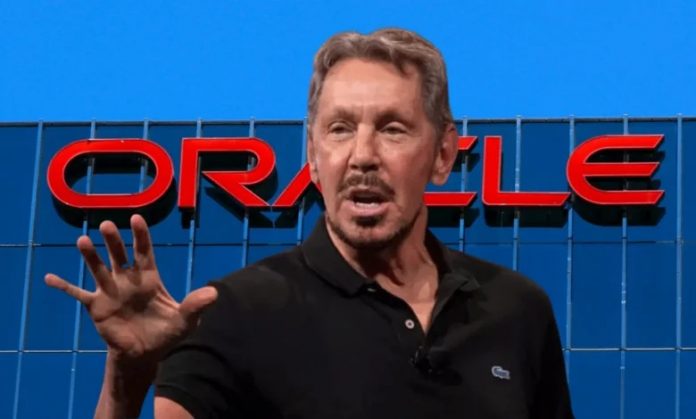
Oracle co-founder Larry Ellison has moved to personally shore up Paramount Skydance’s bid for Warner Bros Discovery, offering a $40.4 billion personal guarantee in an effort to revive confidence in the deal and pull the Hollywood studio away from a rival offer by Netflix.
The guarantee, disclosed in a filing on Monday, is aimed squarely at addressing concerns raised by the Warner Bros board over Paramount’s financing and the absence of full backing from the Ellison family. Those doubts had pushed Warner Bros closer to accepting a competing cash-and-stock proposal from Netflix for its prized film and television assets.
News of the revised terms lifted shares across the sector. Warner Bros stock rose about 3%, while Paramount climbed more than 7%.
Paramount said the amended structure does not alter its headline offer of $30 per share in cash, even as the contest for control of one of Hollywood’s most valuable content libraries intensifies. Control of Warner Bros’ film franchises, television catalogue, and production capabilities is widely seen as a decisive advantage in the increasingly crowded streaming market.
Under the revised terms, Ellison has also agreed not to revoke the family trust or transfer its assets while the transaction remains pending, a concession designed to further reassure shareholders about the durability of the funding package. Paramount also raised its regulatory reverse termination fee to $5.8 billion from $5 billion, matching the protection offered under the Netflix deal, and extended the expiration date of its tender offer to January 21, 2026.
Despite the added assurances, some analysts remain skeptical that the changes will materially shift shareholder sentiment.
“I doubt many Warner Bros shareholders that are on the fence or planning to vote no were holding out due to issues the revised bid addresses such as a guarantee from Larry Ellison on the funding front,” said Seth Shafer, a principal analyst at S&P Global.
The revised bid follows Warner Bros’ earlier move to urge shareholders to reject Paramount’s $108.4 billion proposal for the entire company, including its cable television assets. At the time, Warner Bros cited uncertainty around financing and the lack of a comprehensive Ellison family guarantee as key weaknesses in the offer.
Still, the door has not been fully closed. Some Warner Bros investors, including Harris Associates, the company’s fifth-largest shareholder, have said they would consider a revised Paramount bid if it offered superior terms and resolved concerns around deal structure and execution.
Under the Netflix agreement, Warner Bros would owe Netflix a $2.8 billion breakup fee if it were to abandon that deal in favor of Paramount. For Netflix, acquiring Warner Bros would significantly deepen its content library and extend its dominance in streaming, creating a combined platform with an estimated 428 million subscribers worldwide.
Paramount, for its part, is positioning the deal as a strategic counterweight to Netflix’s scale, arguing that a combined Paramount–Warner Bros studio would be better placed to compete with industry leaders and extract more value from theatrical releases, television distribution, and streaming.
Beyond shareholder approval, regulatory scrutiny looms as the most formidable obstacle. Any transaction would face close examination by antitrust authorities in the United States and Europe, amid growing political resistance to consolidation in the media industry.
Lawmakers from both major U.S. parties have already raised concerns, and President Donald Trump has said he plans to weigh in on the proposed deals. A merger between Paramount and Warner Bros would create a studio larger than Disney and unite two major television operators, prompting some Democratic senators to warn that such a combination could give a single company control over “almost everything Americans watch on TV.”
A Netflix–Warner Bros tie-up would raise a different set of alarms. While Netflix has argued that the deal would benefit consumers through bundled offerings and lower costs, critics say it would further entrench Netflix’s market power at a time when competition in streaming is already under strain. Netflix co-CEO Ted Sarandos has said he is confident regulators would approve the deal, adding that it would avoid job cuts in an industry grappling with uneven box-office performance.
As the battle plays out, Ellison’s personal guarantee has added a fresh twist to the deal. However, it remains unclear whether the move is enough to tilt shareholders and regulators away from Netflix.