DD
MM
YYYY

PAGES

DD
MM
YYYY

spot_img

PAGES

Home Blog Page 5

Beijing Cracks Down on Digital Humans with Tough New Draft Rules

0

China’s top cyberspace regulator has proposed strict new rules for the fast-growing world of digital humans, requiring every virtual character to carry a clear label and banning services that offer “virtual intimate relationships” to anyone under 18.

The Cyberspace Administration of China (CAC) released the draft regulations on Friday for public comment until May 6. The measures would also prohibit the use of anyone’s personal information to create digital humans without their consent and ban virtual characters from being used to dodge identity checks or spread content that threatens national security.

The rules mark the latest effort by Beijing to draw firm boundaries around powerful new artificial intelligence technologies, even as it pours resources into making the country a global leader in the field. Digital humans, realistic AI-generated avatars that can chat, perform, teach, sell products, or keep lonely users company, have exploded in popularity across Chinese social media and live-streaming platforms. Some have built followings in the millions and generate serious revenue through virtual gifts, endorsements, and companionship.

Under the draft, service providers must ensure prominent “digital human” labels appear on all virtual content. Digital humans would be barred from providing “virtual intimate relationships” to those under 18. They would also be prohibited from disseminating material that endangers national security, incites subversion of state power, promotes secession, or undermines national unity.

Platforms would have to block sexually suggestive content, depictions of horror or cruelty, and anything that incites discrimination based on ethnicity or region. The rules further encourage companies to monitor users for signs of suicidal or self-harming behavior and step in with professional assistance when needed.

“The governance of digital virtual humans is no longer merely an issue of industry norms; rather, it has become a strategic scientific problem that concerns the security of the cyberspace, public interests, and the high-quality development of the digital economy,” an official analysis published alongside the draft on the CAC’s website said about the issue.

Just last month, China’s latest five-year economic blueprint singled out artificial intelligence as a top national priority for aggressive adoption across the economy. At the same time, regulators have been tightening oversight of the sector to ensure it stays aligned with the Communist Party’s vision of “socialist values” and does not erode social stability or public trust.

The proposed rules aim to close a regulatory gap in a booming industry that has so far operated with relatively light supervision. Virtual idols, AI news anchors, digital tutors, and increasingly sophisticated companion avatars have become commonplace on platforms like Douyin, Kuaishou, and WeChat. Many users already spend hours interacting with these lifelike figures, raising official worries about addiction, emotional manipulation, and blurred lines between real and artificial relationships — especially among younger people.

By insisting on clear labeling, Beijing hopes to prevent users from mistaking AI creations for genuine human beings. The ban on virtual intimacy for minors directly addresses concerns that highly realistic digital companions could prey on emotional vulnerabilities or encourage unhealthy dependencies.

In recent years, China has moved quickly to govern deepfakes, generative AI tools, and algorithm-driven recommendation systems, always with an emphasis on content control, data security, and ideological alignment. The digital human rules continue that approach, treating the technology not just as an innovative new industry but as a potential vector for social and political risk.

For companies building or deploying digital humans, the new regulation denotes that innovation is encouraged, but only within tightly drawn red lines. Developers will now need robust systems for labeling, age verification, content moderation, and user monitoring to stay on the right side of the law. Those who fail to adapt could face heavy penalties once the rules are finalized.

Beijing is racing to contain the escalating evolution of artificial intelligence despite warnings that tight regulations will slow the sector’s explosive growth. The latest regulatory move shows that Beijing is determined to keep a firm hand on one of the most emotionally engaging and commercially promising frontiers of artificial intelligence.

The push to make digital humans more realistic and more deeply woven into daily online life now must be shaped by the government to make sure they serve its vision of a controlled, orderly digital future.

Wall Street Closes Mixed as Middle East Diplomacy Eases Oil Fears, Caps Strongest Week in Four Months

0
NASDAQ

U.S. stocks ended Thursday’s holiday-shortened session on a mixed note, recovering from sharper early losses as tentative diplomatic signals from the Middle East helped calm nerves over a possible prolonged disruption to global oil supplies. The late rebound allowed Wall Street to close out its strongest week in four months, even as investors remained on edge over the evolving U.S.-Iran conflict and the inflation risks posed by surging crude prices.

By the close, the Dow Jones Industrial Average slipped 0.13% to 46,504.67, while the S&P 500 added 0.11% to 6,582.69 and the Nasdaq Composite rose 0.18% to 21,879.18. The modest finish, however, belied the sharp intraday volatility that dominated trading for much of the session.

Markets had opened sharply lower after President Donald Trump signaled a tougher military posture toward Iran, reigniting fears that the conflict could intensify and keep the Strait of Hormuz effectively constrained for longer. That initially sent investors fleeing risk assets as oil prices surged.

Front-month U.S. crude climbed about 11% to around $111 a barrel, while Brent settled near $108, reinforcing concerns that higher energy costs could feed into inflation just as investors had begun to anticipate a more benign rate environment.

Sentiment improved materially in afternoon trade after Iran’s foreign ministry said it was working with Oman on a protocol to manage traffic through the Strait of Hormuz, while Britain disclosed that dozens of countries were engaged in discussions aimed at ending the crisis.

Those diplomatic signals were enough to ease immediate fears of a sustained chokehold on one of the world’s most critical oil transit routes. The market’s reaction suggested that investors are still treating the geopolitical shock as temporary rather than structural.

That view is most clearly reflected in the futures curve, where October crude was trading near $82 per barrel, far below prompt-month prices. The steep backwardation indicates that traders expect current supply dislocations to ease in the months ahead, even if near-term stress remains acute.

This divergence between spot and forward pricing has become a central theme in market positioning. Investors appear willing to look through the immediate oil spike, betting that the conflict will not derail economic activity into the second half of the year.

That optimism helped power the first weekly gain in six weeks. For the week, the S&P 500 rose 3.36%, the Nasdaq advanced 4.44%, and the Dow climbed 2.96%, marking the best weekly performance for the three major indexes since late 2025. Small caps also participated in the rebound, with the Russell 2000 up 3.19%.

Still, the recovery was selective and defensive in character as investors rotated into sectors traditionally seen as better insulated from macroeconomic turbulence.

Utilities gained 0.6%, benefiting from their reputation for stable earnings and dependable dividends, while real estate stocks rose 1.5% as investors sought predictable cash-flow businesses.

By contrast, economically sensitive consumer names remained under pressure. The consumer discretionary sector fell 1.5%, the weakest performer on the day, led by a sharp 5.4% drop in Tesla, Inc. after the electric-vehicle maker’s first-quarter delivery figures disappointed the market.

The session also carried signs of deeper stress beyond geopolitics. Private credit concerns resurfaced after Blue Owl Capital Inc. capped withdrawals from two retail-focused funds, reviving worries over liquidity and valuation pressures in alternative asset markets. That development added another layer of caution, particularly for institutional investors already assessing risks tied to higher oil prices and geopolitical volatility.

Meanwhile, the CBOE Volatility Index, Wall Street’s closely watched fear gauge, fell to 23.87, suggesting that while anxiety remains elevated, markets are not yet pricing outright panic.

Looking ahead, the focus now shifts to Friday’s nonfarm payrolls report, which will be released while U.S. equity markets remain closed for Good Friday.

That timing raises the prospect of pent-up volatility when trading resumes next week, especially as investors weigh the interaction between labor-market resilience, war-driven oil inflation, and the Federal Reserve’s policy path.

With crude back above $100, investors are increasingly alert to the possibility that headline consumer prices could reaccelerate, potentially complicating expectations for rate cuts later in the year.

Thursday’s session ultimately captured the market’s current dilemma: investors are willing to buy the dip, but conviction remains fragile and heavily dependent on diplomatic headlines. This means that Wall Street is currently betting that the geopolitical shock will fade before it morphs into a broader economic crisis.

Uber Drivers Are Already Using Tesla’s AI on the Road as Dara Khosrowshahi Signals Comfort With the Shift

0

Artificial intelligence is already reshaping the ride-hailing business in a way that would have seemed futuristic only a few years ago: some Uber drivers are now relying on Tesla’s Full Self-Driving system to handle part of the driving task, and Uber’s chief executive is openly acknowledging it.

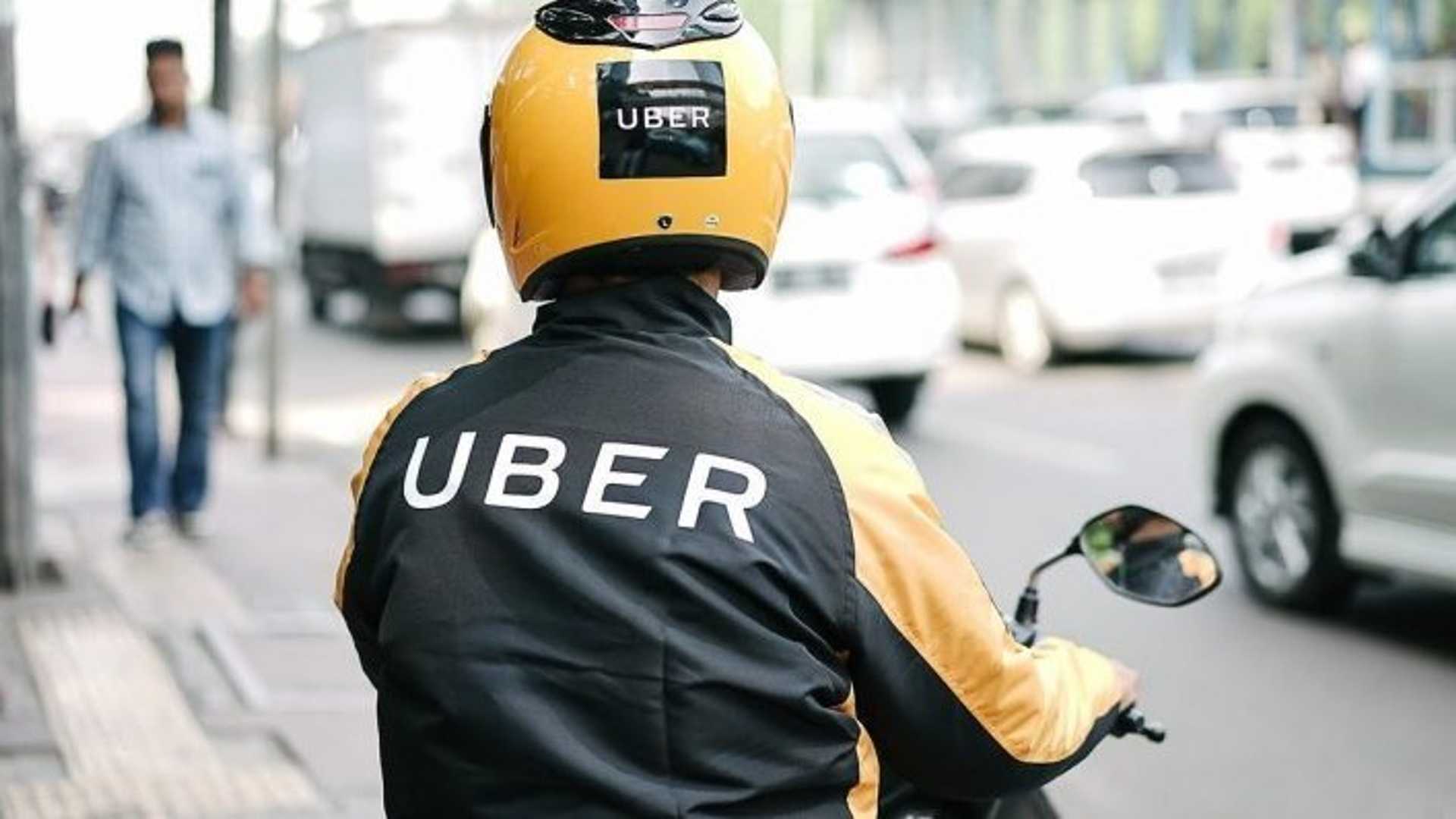
In remarks on Peter Diamandis’ Moonshots podcast, Uber CEO Dara Khosrowshahi said the company has “tens of thousands” of Teslas operating on its platform and confirmed that some drivers are using Tesla’s Full Self-Driving, or FSD, while transporting passengers.

“We’ve got tens of thousands of Teslas on our platform now,” Khosrowshahi said. “And some of our drivers use FSD. Sure. So we’ve got a lot of data. It’s a great car. It’s a safe car.”

The disclosure offers a striking glimpse into how AI-assisted driving is quietly entering the mainstream ride-hailing economy, long before fully autonomous robotaxis become widespread. While Tesla markets FSD as an advanced driver assistance system rather than a fully autonomous platform, its growing use by Uber drivers effectively means passengers are already experiencing AI-assisted rides in human-supervised settings.

This is not, strictly speaking, illegal.

At present, there are no US laws that explicitly prohibit ride-hail drivers from using advanced driver assistance systems during trips, provided they remain fully attentive and retain control of the vehicle. Tesla itself states that active safety and driver-assistance features are designed to assist, not replace, the driver, and that the human behind the wheel remains responsible for safe operation at all times.

Uber’s own policy aligns with that standard. The company requires drivers using such systems to keep at least one hand, and normally both hands, on the steering wheel while the technology is engaged.

However, the development raises fresh questions about liability, safety, and public trust. Tesla’s driver-assistance systems have long been under legal and regulatory scrutiny. Several incidents involving Autopilot and FSD have intensified debate over whether the branding and real-world use of the technology outpace its actual capabilities.

Tesla has come under the National Highway Traffic Safety Administration (NHTSA)’s investigation following the growing number of crashes involving the EV maker’s vehicles.

One notable case cited in earlier reporting involved an Uber driver using Tesla’s FSD who crashed into an SUV while the system was active. That case underscores a central tension in the emerging AI mobility market: these systems are sophisticated enough to take over large portions of the driving task, but not advanced enough to absolve the human driver of responsibility.

For Uber, however, the shift is expected to evolve into its broader robotaxi strategy. Khosrowshahi’s comments indicate that Uber is treating today’s human-supervised AI driving as a bridge to tomorrow’s autonomous network.

He went further, saying Uber would welcome Tesla’s future robotaxis onto its platform once the company’s camera-only autonomous system is proven sufficiently safe for fully driverless deployment.

“When the day comes when those Teslas are safe enough with a camera-only approach, we’d love to have those Teslas on our platform as well,” he said.

This is consistent with Uber’s broader strategy of rebuilding its position in autonomous mobility through partnerships rather than in-house development. After exiting its own self-driving programme years ago, Uber has increasingly aligned itself with external autonomous vehicle players, including Waymo, Zoox, Pony.ai, and WeRide. More recently, it has expanded its ambitions through fresh robotaxi rollout plans in multiple global cities.

The company appears to be positioning itself as the distribution layer for whatever form autonomy ultimately takes, whether human-supervised Teslas today or fully driverless fleets tomorrow. That approach is commercially pragmatic. Uber no longer needs to win the technology race itself if it can remain the platform through which autonomous mobility is monetized at scale.

For Tesla, meanwhile, the development offers a preview of how its FSD ecosystem may evolve commercially beyond private ownership. Even before the company’s dedicated Robotaxi service achieves broad regulatory clearance, Tesla vehicles are already functioning as what some analysts describe as “proto-robotaxis” on platforms like Uber, where AI handles parts of the trip under human oversight.

The broader implication is that the line between assisted driving and autonomous ride-hailing is becoming increasingly blurred. Passengers booking an Uber may still see a driver in the front seat, but in a growing number of cases, AI is already doing part of the work.

That may be the most consequential transition underway for the ride-hailing industry: not the sudden arrival of driverless cars, but the gradual normalization of shared control between human drivers and machine intelligence.

Chinese Chipmakers Post $9.3bn Record Revenues as U.S. Curbs Fuel Self-Reliance Drive

0

Chinese semiconductor companies posted blockbuster revenues in 2025, turning years of U.S. export restrictions into an unexpected tailwind that has accelerated Beijing’s push for homegrown technology and reshaped supply chains across the industry.

Semiconductor Manufacturing International Corp. (SMIC), the country’s flagship foundry, reported full-year sales of $9.3 billion — a 16 percent jump and the highest in its history. Analysts at LSEG expect the figure to climb above $11 billion this year.

Hua Hong Semiconductor notched a record fourth-quarter revenue of $659.9 million and guided for similar strength in the current period. Domestic GPU hopeful Moore Threads forecast 2025 sales between 1.45 billion and 1.52 billion yuan ($209–220 million), an eye-popping 231 percent to 247 percent increase from 2024. Even more striking was the performance in memory chips.

ChangXin Memory Technologies (CXMT) more than doubled revenue to over 55 billion yuan ($8 billion), according to people familiar with the numbers quoted by CNBC.

The surge reflects a perfect storm of exploding demand for AI infrastructure inside China, a persistent global shortage of memory, and Washington’s tightening export controls that have forced local tech giants to buy Chinese wherever possible.

Paul Triolo, a partner at Albright Stonebridge Group who has tracked the sector for years, called the restrictions “rocket fuel” for Chinese chip demand. What started as an attempt to slow Beijing’s technological rise has instead poured money and urgency into domestic fabs.

Mature-node chips used in electric vehicles and industrial equipment have provided a steady baseline, while advanced components for AI data centers are “through the roof,” Triolo told CNBC.

The memory segment offers the clearest example. High-bandwidth memory (HBM), the specialized DRAM that powers large AI models, remains tightly controlled by the United States. With Samsung, SK Hynix, and Micron largely blocked from selling their latest generations to China, CXMT has stepped into the breach. Its HBM2 and HBM2e products may trail the industry leaders by several generations, but Chinese buyers have embraced them with open arms simply because they are available and produced locally.

Morningstar senior equity analyst Phelix Lee noted that “even the technologically inferior HBM2 or HBM2e are met with enthusiasm” now that foreign supply is restricted. CXMT is on track to begin producing HBM3 this year, a significant step forward.

“After HBM is restricted into China, CXMT is picking up as the only homegrown alternative, so even the technologically inferior HBM2 or HBM2e are met with enthusiasm,” Lee told CNBC.

The skills being honed in memory manufacturing are already spilling over. Triolo pointed out that China’s memory fabs have become unexpected “incubators for advanced process technology” in ways that would have been unthinkable before the October 2022 export controls. The precision required for high-volume DRAM production is sharpening expertise that can eventually be applied to logic chips and GPUs.

Huawei has emerged as the most visible buyer, quietly building an entire domestic semiconductor ecosystem to keep its servers, smartphones, and AI systems running.

“While China does not yet lead in peak GPU performance, these homegrown solutions are filling the domestic ‘compute gap’ and driving record revenues,” Parv Sharma, senior analyst at Counterpoint Research, told CNBC.

However, the picture is far from uniformly rosy. Chinese foundries like SMIC and Hua Hong remain unable to produce the most advanced chips at the scale and yields achieved by Taiwan’s TSMC. They lack access to the latest extreme ultraviolet lithography machines from Dutch supplier ASML, and domestic alternatives are still years from matching that capability. The gap in cutting-edge technology persists even as revenues soar.

There is also the growing risk of overcapacity in older nodes. As Sharma noted, much of the current growth is driven by “import dependence replacement.” Once that wave crests, sustaining momentum will require Chinese firms to climb the value chain into advanced HBM and next-generation logic processes — a far harder task.

Still, the momentum is real and self-reinforcing. What began as a defensive scramble has evolved into a comprehensive, state-orchestrated effort to rebuild entire segments of the semiconductor supply chain from the ground up. Beijing has poured hundreds of billions of dollars into the sector through subsidies, talent programs, and national champions.

The record 2025 revenues show that, in the areas where policy and market forces align, Chinese chipmakers are no longer just catching up — they are scaling at a pace that is forcing the rest of the world to take notice.

Microsoft Copilot Finally Shows Real Traction in Enterprise Sales After Slow Start, Top Executive Says

0

Microsoft is starting to see meaningful pickup in paid subscriptions for its flagship AI assistant, Copilot for Microsoft 365, after months of Wall Street skepticism and internal hand-wringing over sluggish corporate adoption, according to an internal town hall meeting.

Judson Althoff, the company’s executive vice president and chief commercial officer, told employees on Thursday that the sales organization has made “greater inroads” with the $30-per-month add-on following a quiet but significant shift in strategy. The change came after early results disappointed analysts and customers alike, and after feedback made clear that simply pushing the full paid version while offering a stripped-down free chat tool wasn’t cutting it.

The remarks, from a transcript reviewed by CNBC, mark the most upbeat internal assessment yet of Copilot’s commercial progress. Launched to the general public in late 2023, the AI layer on top of Microsoft’s ubiquitous Office suite was supposed to be the clearest example of how generative AI could drive real revenue. Instead, for much of the past year, analysts described uptake as “nascent” at best.

In January, Microsoft disclosed it had reached 15 million paid Copilot seats — roughly 3 percent of total Microsoft 365 commercial seats. CEO Satya Nadella noted on the earnings call that the company had “multiples more” users on the limited-feature Copilot Chat. That disclosure landed with a thud. Analysts at UBS, who still recommend buying the stock, said at the time they had expected stronger numbers.

Althoff acknowledged the earlier missteps. Sales teams had been focused on landing full-fare seats while steering everyone else toward the free chat version. After pushback from both analysts and large customers, Microsoft reworked its playbook. The new approach appears to be working.

“Those were hit for Q3,” Althoff said, referring to the aggressive internal targets he and chief financial officer Amy Hood had set for the fiscal third quarter that ended Tuesday.

The company has already laid out even bolder goals for the current June quarter.

“I actually feel very confident in those numbers,” he added.

The comments land at a delicate moment for Microsoft. Its stock has dropped 23 percent in the first quarter amid growing investor anxiety that the enormous capital spending on AI data centers may not translate quickly enough into revenue and profit growth. With OpenAI and others also racing ahead, some on Wall Street have begun to wonder whether generative AI will intensify competition rather than hand Microsoft a lasting edge.

Copilot remains the most important test case. Enterprise buyers have been cautious, demanding clear proof that the AI assistant delivers measurable productivity gains before signing off on the extra monthly fee for hundreds or thousands of users. Many companies started with pilot programs, testing the tool on small teams before committing at scale. The revised sales strategy appears to have made it easier for customers to start small, see results, and then expand.

Microsoft has not yet released official March-quarter results, which are expected later this month. But Althoff’s tone inside the company suggests the commercial segment, its largest and most profitable business, is finally beginning to see the payoff from the heavy AI investments the company has been making for more than two years.

Copilot is central to Nadella’s vision of AI as the new computing platform, one that could lift usage across Azure cloud services as employees query the system more frequently and generate more data. If the momentum holds, it could help quiet some of the skepticism that has weighed on the stock and validate the billions Microsoft continues to pour into data centers.

Althoff’s message to employees was one of quiet relief mixed with ambition. After a slower-than-hoped rollout and plenty of second-guessing, Microsoft’s most visible AI product is showing the first clear signs of commercial traction.