DD
MM
YYYY

PAGES

DD
MM
YYYY

spot_img

PAGES

Home Blog Page 5

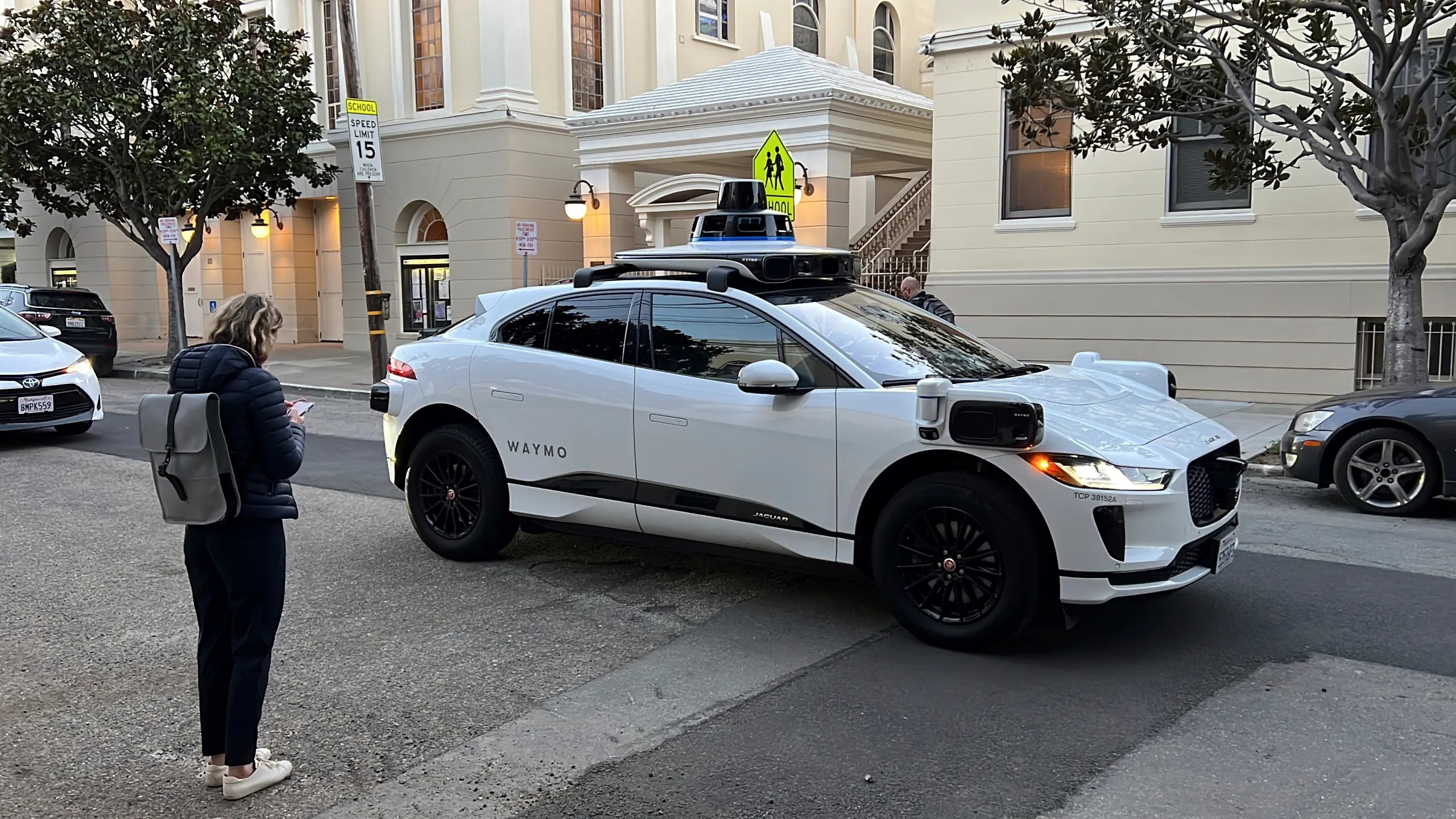
Waymo Hits the Brakes on U.S. Robotaxi Expansion Over Flooding, Construction Risks

0

Alphabet-owned Waymo has temporarily suspended its robotaxi freeway operations across major U.S. markets and paused services in Atlanta, a setback that reveals the growing operational and regulatory pressures facing autonomous vehicle companies as they push toward large-scale commercial deployment.

The company said Thursday it halted freeway rides in cities including San Francisco, Los Angeles, Phoenix, and Miami while it updates software designed to better navigate construction zones and flooded roadways. The move follows a recent recall affecting about 3,800 autonomous vehicles after Waymo identified scenarios in which some robotaxis could enter flooded roads with higher speed limits.

“We have temporarily paused freeway operations, as we work to integrate recent technical learnings into our software and expect to resume these routes soon,” a Waymo spokesperson said.

The decision comes at a delicate moment for the self-driving industry. After years of cautious testing, autonomous vehicle firms are accelerating commercial rollouts amid mounting investor expectations that robotaxis could become one of the defining transportation businesses of the AI era. But the latest suspension highlights how edge-case scenarios such as flash floods, temporary lane diversions, and unpredictable construction layouts remain among the hardest challenges for autonomous driving systems.

The Atlanta suspension appears to have been triggered by a high-profile incident on Wednesday in which an unoccupied Waymo vehicle stopped in floodwater during operations conducted through its partnership with Uber Technologies. While no injuries were reported, the episode lent credence to industry concerns about whether autonomous systems can consistently interpret rapidly changing environmental hazards that even human drivers sometimes misjudge.

The issue is particularly sensitive because Waymo has long positioned itself as the safety-first operator in a sector increasingly crowded by aggressive rivals. Unlike Tesla, which is pursuing a camera-heavy autonomous strategy tied closely to its consumer vehicle fleet, Waymo has relied on a more expensive sensor suite combining lidar, radar, and cameras. The company has argued that its approach provides greater redundancy and safety validation.

Yet the latest operational pause suggests that even the industry’s most mature robotaxi platform remains vulnerable to real-world unpredictability.

The suspension also lands as competition intensifies across the autonomous mobility market. Tesla is preparing broader autonomous ride-hailing ambitions tied to its Full Self-Driving software, while Amazon-owned Zoox continues expanding testing and vehicle development. Chinese autonomous driving firms are also rapidly scaling operations, increasing pressure on U.S. operators to commercialize faster without compromising safety.

For Waymo, freeway driving represents a particularly important frontier. Urban streets generally operate at lower speeds and in more controlled conditions. Still, freeway autonomy is viewed as critical to unlocking broader ride-hailing economics, airport routes, and long-distance urban mobility. Temporarily removing freeway operations could therefore affect rider convenience and commercial scaling plans, even if city street services remain active.

The company has spent years carefully building credibility after the broader autonomous vehicle sector suffered reputational damage from safety incidents involving competitors. General Motors’ Cruise unit, for example, sharply curtailed operations following regulatory scrutiny after a pedestrian accident in San Francisco in 2023. Since then, regulators and local governments have adopted a more cautious posture toward robotaxi expansion.

Waymo’s latest recall and operational adjustment may ultimately reinforce its reputation for taking a conservative approach to safety. Analysts have often contrasted Waymo’s measured deployment strategy with rivals that prioritize rapid expansion and looser operational constraints.

Still, the pause points to a larger technological challenge facing the autonomous driving industry: translating advances in artificial intelligence into reliable decision-making under chaotic real-world conditions. Construction sites, standing water, emergency road closures, and extreme weather remain among the most difficult variables for autonomous systems because they often involve temporary, irregular, and poorly mapped conditions.

The timing is also notable given growing investor enthusiasm around AI infrastructure and robotics. Autonomous driving has become increasingly intertwined with the broader AI investment boom, with companies pitching self-driving systems as one of the clearest real-world commercial applications of advanced machine learning.

Waymo, backed by Alphabet, is widely considered one of the strongest contenders in the race to commercialize autonomous transportation profitably. But Thursday’s announcement is another reminder that scaling robotaxis nationally may take longer and require more operational caution than many investors initially anticipated.

The company says the freeway pause is temporary. The industry, however, is watching closely to see whether autonomous driving companies can maintain expansion momentum while addressing mounting safety, regulatory, and infrastructure challenges that continue to test the limits of current AI systems.
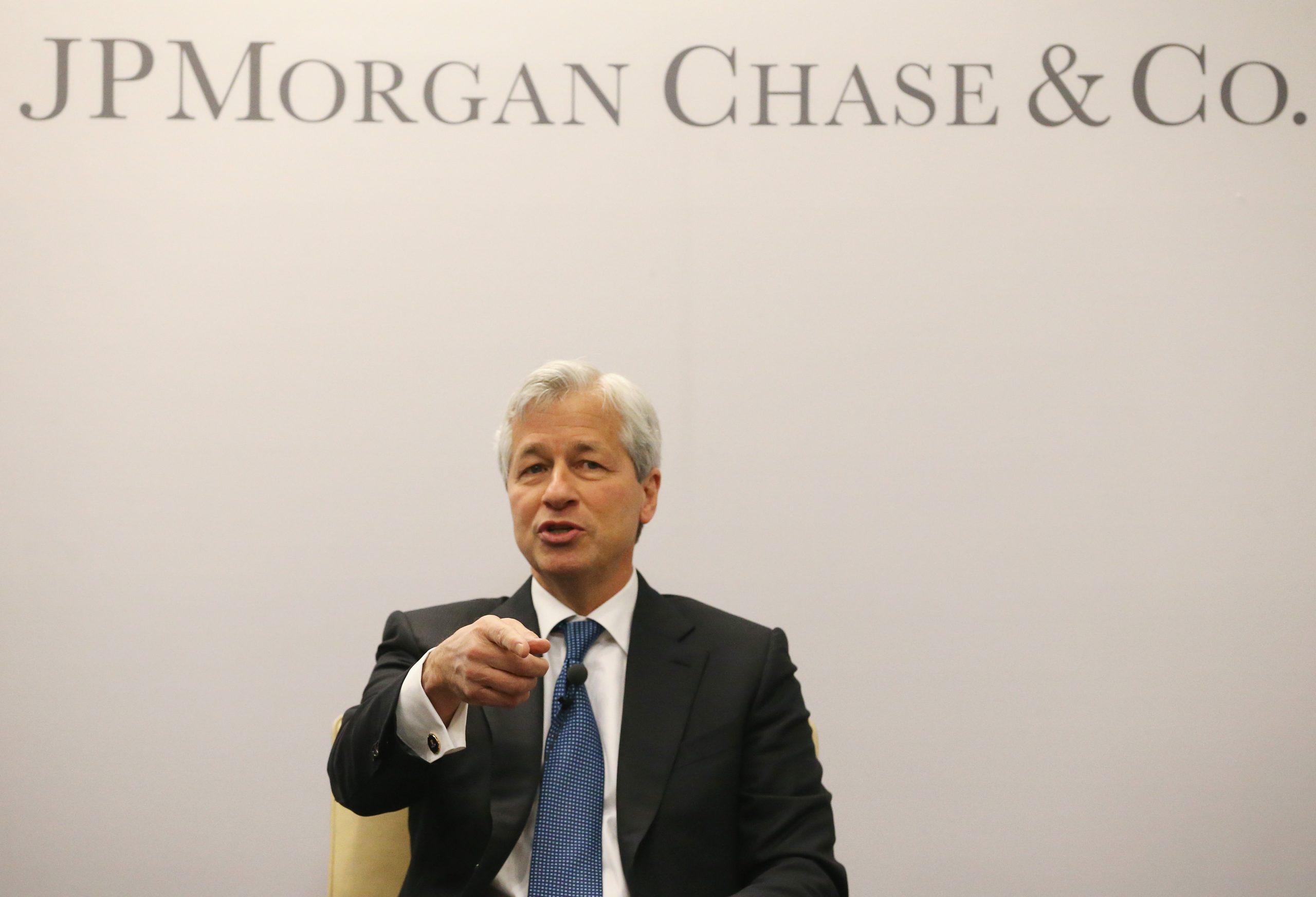

JPMorgan Moves to Shed $4bn in Private Equity Loan Risk as AI Fears and Exit Drought Pressure Industry

0
JP Morgan Chase puts contents through its CEO account, it goes viral. But the same content via JPMC account, no one cares (WSJ)

JPMorgan Chase is seeking to transfer risk tied to more than $4 billion in loans linked to private equity funds, revealing mounting concern inside major banks over growing strains in the buyout industry as deal exits remain weak and artificial intelligence threatens parts of corporate valuations.

According to people familiar with the matter cited by the Financial Times, the largest U.S. lender is discussing a transaction that would allow it to offload exposure connected to so-called net asset value, or NAV, loans while keeping the loans themselves on its balance sheet.

The proposed structure would shift losses tied to roughly 12.5% of a loan pool exceeding $4 billion to outside investors in exchange for low-teens returns, reflecting the rising premium investors now demand to absorb private-market risk tied to leveraged buyout portfolios.

The discussions highlight how rapidly sentiment is changing around one of private equity’s fastest-growing financing tools.

NAV loans, once marketed as relatively safe because they are backed by diversified fund portfolios rather than a single company, have exploded in popularity as private equity firms searched for liquidity during a prolonged slowdown in dealmaking and IPO activity. The loans allow firms to borrow against the value of existing investments inside a fund, often to return cash to investors, extend the life of struggling portfolio companies, finance acquisitions, or amplify returns in secondary-market transactions.

But what had been viewed as an innovative liquidity solution is increasingly drawing scrutiny from regulators, investors, and banks themselves as the private equity industry grapples with a worsening exit bottleneck.

AI Disruption Fears Deepen Pressure On Private Equity Portfolios

JPMorgan’s move comes at a particularly sensitive moment for the buyout sector. Private equity firms have struggled for nearly three years to sell portfolio companies amid high interest rates, weaker IPO markets, and valuation uncertainty. That pressure has been especially acute in technology and software holdings, historically among private equity’s most lucrative sectors.

Now, the rise of artificial intelligence is introducing a fresh layer of uncertainty. Investors and analysts are expressing fear that AI could rapidly erode the value of certain software businesses by commoditizing products, automating services, or compressing pricing power. Those concerns are beginning to ripple through leveraged private equity portfolios where debt levels were structured around assumptions of stable long-term cash flows.

The risk is notable because software companies represent a major concentration within many private equity funds. Banks that aggressively expanded financing relationships with large buyout firms during the era of cheap money are now reassessing exposures tied to those portfolios.

JPMorgan’s transaction is seen as part of a trend that has seen global lenders increasingly using “significant risk transfer” structures to reduce capital exposure without fully exiting assets. Such deals became more common after post-2008 banking regulations increased pressure on banks to manage concentrated risks more actively.

Under the proposed arrangement, JPMorgan would still hold the NAV loans but transfer a portion of first-loss exposure to investors, effectively insulating itself against early-stage deterioration in portfolio values. The structure also allows the bank to reduce regulatory capital requirements tied to the assets while maintaining client relationships with private equity firms.

Regulators Uneasy Over “Leverage On Leverage”

The growing dependence on NAV financing has become a major focus for regulators in both the United States and Europe. Supervisors have warned that the structures can create what they describe as “leverage over leverage,” since many underlying portfolio companies already carry substantial debt burdens from leveraged buyouts.

Critics believe that NAV borrowing can artificially support fund performance by injecting additional liquidity into aging portfolios rather than forcing firms to realize losses or sell assets at lower valuations. Some market participants also worry that widespread use of NAV loans may obscure stress building within private equity by delaying the recognition of weaker asset values.

The market, however, continues to expand rapidly despite those concerns. According to a May report from AllianceBernstein, the global NAV loan market currently stands near $100 billion and could grow to $350 billion by 2030 as private markets continue expanding.

That growth has attracted banks, private credit funds, and institutional investors seeking higher yields in an environment where traditional lending margins have tightened. Japan’s largest lender, Mitsubishi UFJ Financial Group, has also explored similar risk-transfer transactions tied to private-credit exposures, highlighting how concerns are spreading across global banking institutions.

The broader issue confronting lenders is whether private equity’s long boom period, fueled by cheap borrowing costs and steadily rising asset prices, can withstand a more volatile era shaped by higher rates, slower exits, and technological disruption from AI.

For banks such as JPMorgan, reducing exposure now may represent less a retreat from private equity than an acknowledgment that risks across the sector are becoming harder to model with confidence.

Alphractal’s Liquidation Heatmap Highlights Structurally Asymmetric Derivatives Market

0

Alphractal’s liquidation heatmap highlights a structurally asymmetric derivatives market, where positioning pressure is increasingly concentrated above and below spot price in a way that can amplify short-term volatility. The data shows approximately $9.35 billion in potential short liquidations stacked above current levels, compared to $12.73 billion in long liquidations positioned below.

This imbalance is not neutral; it implies that downside moves have slightly more absolute liquidation fuel, but upside moves may be mechanically more reflexive due to leverage compression on the short side. In practice, liquidation maps like this function as a proxy for forced order flow. When price moves into dense liquidation clusters, margin calls trigger automatic buy or sell execution, effectively converting leverage into directional momentum.

In this case, the short side on Binance is particularly exposed. With cumulative short leverage running approximately 1.7 times the long side, the market is structurally tilted toward a short squeeze regime if upward price momentum is sustained. On Binance, the world’s largest centralized derivatives venue operated by Binance, this imbalance matters because it concentrates liquidity in a venue that already dominates perpetual futures volume.

When short positioning is heavily skewed, even moderate upward ticks can initiate cascading buybacks as shorts are forced to cover. That covering flow does not merely reduce selling pressure—it becomes incremental demand, effectively adding fuel to the trend rather than just removing resistance. From a technical perspective, the immediate battleground is $80,889.

This level sits roughly 4% above current pricing and acts as a near-term liquidity trigger zone.

If price pushes through it decisively, the liquidation map suggests a vacuum-like move could extend toward $83,914, where another dense pocket of forced positioning is likely concentrated. These levels are less about traditional support and resistance and more about engineered liquidity thresholds—points where leverage unwinds rather than where buyers or sellers voluntarily step in. Conversely, the downside structure is heavier in notional terms.

The $12.73 billion long liquidation cluster below current price introduces a sharper tail risk if support fails. In that scenario, declines can accelerate quickly as long positions are forced out, compounding sell pressure. However, the presence of heavier long liquidation below also means downside moves may be more violent but shorter in duration, as liquidation cascades tend to exhaust themselves once the bulk of forced selling clears.

The underlying asset driving this dynamic is Bitcoin, which remains highly sensitive to derivatives-driven flow during periods of elevated leverage. In such environments, spot price discovery is often secondary to futures positioning. The market effectively becomes a feedback loop: price moves trigger liquidations, liquidations generate flow, and flow further pushes price into the next cluster.

What emerges from Alphractal’s dataset is not a directional prediction, but a structural map of fragility. The market is balanced on leverage rather than conviction. Upside continuation above $80,889 could accelerate into a short squeeze regime toward $83,914, while failure to hold current ranges risks a sharper, liquidation-driven flush into lower long-heavy zones.

In both cases, the dominant variable is not sentiment but positioning density. The path of least resistance will likely be determined less by macro narrative and more by which side of the leverage stack gets forced to unwind first.

Investment Banking and Trading Are Being Reshaped by AI

0

Artificial intelligence is no longer a distant concept in the banking industry. It has become a transformative force reshaping how financial institutions operate, compete, and interact with customers. From automated customer service to algorithmic lending and fraud detection, AI is rapidly becoming the backbone of modern banking.

While banks have historically relied on human expertise, paperwork, and centralized decision-making, the rise of intelligent systems signals a future where machines perform many of the functions once handled exclusively by people. The phrase AI is coming for banking is no longer a warning; it is a reality unfolding in real time. One of the most visible impacts of AI in banking is customer service automation.

Chatbots and virtual assistants powered by natural language processing now handle millions of customer interactions daily. These systems can answer questions, process transactions, resolve complaints, and even provide financial advice within seconds. Unlike traditional call centers, AI operates 24/7 without fatigue, reducing operational costs while improving response times. Major financial institutions are increasingly investing in AI-driven customer experience platforms because consumers now expect faster, personalized, and always-available services.

AI is also transforming risk management and fraud prevention. Banks process enormous volumes of transactions every second, making manual monitoring nearly impossible. Machine learning systems can analyze patterns across millions of data points and instantly identify suspicious behavior.

Whether detecting unusual card activity, money laundering schemes, or cybersecurity threats, AI can respond faster and more accurately than traditional systems. As cybercrime becomes more sophisticated, AI is evolving into an essential defense mechanism for the global financial system. Lending and credit assessment are undergoing a similar revolution. Traditionally, banks relied heavily on credit scores, financial history, and human judgment to determine loan eligibility.

AI expands this process by analyzing alternative data such as spending habits, online behavior, and transaction patterns. This allows banks to make more precise lending decisions and potentially extend credit access to underserved populations. However, it also raises concerns about transparency and algorithmic bias. If AI models are trained on flawed or discriminatory data, they could reinforce existing inequalities within the financial system.

Investment banking and trading are also being reshaped by AI. Hedge funds, banks, and trading firms increasingly deploy machine learning models to predict market trends, optimize portfolios, and execute trades at speeds impossible for human traders. AI-driven trading systems can analyze news, market sentiment, macroeconomic indicators, and blockchain data simultaneously. This technological advantage has intensified competition among financial institutions, pushing firms to invest heavily in data infrastructure and AI talent.

The rise of generative AI introduces another layer of disruption. Advanced AI systems can draft financial reports, summarize market research, generate investment insights, and automate compliance documentation. Tasks that once required teams of analysts may soon be completed in minutes. This could dramatically improve efficiency, but it also threatens white-collar banking jobs. Analysts, customer support staff, compliance officers, and even junior investment bankers may face increasing automation pressure as AI capabilities expand.

Despite its advantages, AI in banking carries serious risks. Data privacy, regulatory compliance, cybersecurity vulnerabilities, and ethical concerns remain significant challenges. Governments and regulators worldwide are now debating how to supervise AI-driven financial systems without stifling innovation.

Trust remains central to banking, and financial institutions must ensure AI systems are transparent, secure, and accountable. AI is not simply enhancing banking; it is redefining it.

Banks that adapt quickly may gain unprecedented efficiency and competitive advantages, while those resistant to technological change risk becoming obsolete. The future of banking will likely be a hybrid ecosystem where humans and intelligent machines work together, but the balance of power is clearly shifting toward automation. AI is not knocking at the door of banking anymore—it is already inside.

Football Obsession and Celebrity Star Power Fuels Nigerian Sports Betting Boom

0

Nigeria’s sports betting industry has exploded over the last decade, becoming one of the fastest-growing gambling markets in Africa, worth N5.6 trillion a year. Sports wagering has become deeply woven into youth culture and entertainment thanks in large part from Nollywood, prominent national athletes and brand ambasadors.

At the center of this growth are popular Nigerian athletes like Victor Osimhen and celebrities whose influence extends far beyond the football pitch or athletic track. Their fame, endorsements, and social media presence are helping betting companies reach millions of young Nigerians every day, especially as more than 70% of wagers on the growing list of betting sites in Nigeria come from football.

The Meteoric Rise of Nigerian Football Betting

Sports betting in Nigeria is one of Africa’s largest and fastest-growing entertainment industries. Over the past decade, betting is almost a way of life for Nigerian youth, and football obsession. Today, millions of Nigerians place bets weekly using mobile apps, online platforms.

How Sports Betting Became Popular in Nigeria

Nigerians are among the most passionate football fans in the world. Nigerians also live, breathe, and sleep everything Super Eagles. With sports betting sites and social media, there is 24/7 access to their favorite football players and local celebrities hyping sports betting. Beyond regional football, Nigerian sports betting platforms also offer access to these other International leagues:

  1. The English Premier League
  2. UEFA Champions League
  3. FIFA World Cup
  4. La Liga
  5. Serie A

European football clubs such as Manchester United, Arsenal F.C., Chelsea F.C., and Liverpool F.C. enjoy massive fan bases across Nigeria. It makes sense because many Nigerian players, like Nwankwo Kanu, Taribo West, and Obafemi Martins, are big stars in these International leagues as well as local celebrities and heroes throughout Nigeria.

Betting companies recognized this opportunity early and built platforms that allowed fans to wager on matches conveniently through:

  1. Mobile apps
  2. USSD codes
  3. Betting websites

As internet access improved and smartphone prices dropped, betting became more accessible to millions of Nigerians. Also, the youth are really geared for technology, social media, and texting, which makes them the perfect demographic and target market for the lucrative Nigerian sports betting market.

Today, users can bet instantly from their smartphones without getting off the couch. This is especially key for live betting. Nigerians live on every kick, goal, and penalty in real time, while updating their bet slips.

The rapid advances in statistics and instant payouts also fuel the nonstop obsession and passion for Nigerian sports. With so many bookies available at the palm of your hand, it’s no surprise that the fever continues to build.

The Unmistakable Power of Celebrity Power and Social Media on Nigerian Sports Betting

Celebrity culture in Nigeria has grown rapidly alongside the expansion of social media and digital entertainment. Athletes, musicians like Burna Boy, Nollywood actors like Genevieve Nnaji, reality TV stars, and influencers now command enormous audiences online.

Many Nigerian celebrities are viewed as symbols of:

  • Success
  • Wealth
  • Luxury lifestyles
  • Social influence
  • Financial aspiration

Because of this influence, brands increasingly rely on celebrities to market products and services — especially betting platforms with the hope of winning it big with one big bet. Sports betting companies understand that fans trust and admire celebrities. When a famous personality promotes a betting app, followers often associate the brand with excitement, success, and opportunity.

Football remains the biggest driver of sports betting in Nigeria, making up over 70% of all bets. More than players, these athletes are brands in their own right, further fueling the top sportsbooks:

  • Victor Osimhen
  • Ahmed Musa
  • Wilfred Ndidi
  • Samuel Chukwueze

have massive fan bases among young Nigerians who closely follow European football.

With massive fan bases, the top Nigerian athletes also serve as brand ambassadors for well-known brands and International sports leagues, including Champions League games and Premier League matches.

Social media influencers use platforms like TikTok and Instagram to further promote sportsbooks on their platforms. Many are brand ambassadors who encourage people to join these sites and even download the apps using special promo codes.