DD
MM
YYYY

PAGES

DD
MM
YYYY

spot_img

PAGES

Home Blog Page 5

SpaceX Seeks Approval for One Million-Satellite Orbital Data Center Powered By Solar

0

SpaceX has taken an extraordinary step toward redefining both space infrastructure and global computing, seeking approval from the U.S. Federal Communications Commission for a satellite constellation of unprecedented scale that would function as an orbital data center powered largely by the sun.

In a filing submitted late on January 30, the company proposed deploying up to one million satellites in low Earth orbit, a figure that dwarfs any constellation previously contemplated. The satellites would operate at altitudes ranging from 500 to 2,000 kilometers, spread across 30-degree and sun-synchronous inclinations designed to maximize exposure to sunlight and, by extension, solar power generation.

SpaceX framed the project as a response to the mounting constraints facing terrestrial data centers, where energy costs, grid limitations, and environmental concerns are increasingly colliding with explosive demand for computing power driven by artificial intelligence.

“By directly harnessing near-constant solar power with little operating or maintenance cost, these satellites will achieve transformative cost and energy efficiency while significantly reducing the environmental impact associated with terrestrial data centers,” the company said in the filing.

The language of the application goes well beyond near-term commercial logic. SpaceX described the constellation as “a first step toward becoming a Kardashev Type II civilization,” a reference to a theoretical stage of technological development in which a civilization can harness the full energy output of its star. In more practical terms, the company argues that space-based computing could support AI-driven applications for billions of people while advancing its long-term vision of humanity as a multiplanetary species.

Even by the standards of an industry accustomed to bold plans, the scale is enormous. For comparison, China filed plans with the International Telecommunication Union in December for two constellations totaling nearly 200,000 satellites. Rwanda, in 2021, submitted ITU filings for constellations exceeding 300,000 satellites, linked to proposals by startup E-Space, which no longer appears to be pursuing systems of that magnitude. SpaceX’s proposal would exceed both by a wide margin.

Despite the headline number, the filing offers relatively few technical specifics. Details such as satellite size, mass, and precise orbital configurations were largely absent. SpaceX said it intends to place the spacecraft in “largely unused orbital altitudes” within the proposed range, an assertion likely to draw scrutiny as congestion, debris risk, and space traffic management become central regulatory concerns.

The operational concept relies heavily on intersatellite optical links, allowing the satellites to communicate with one another and with SpaceX’s existing Starlink broadband constellation. Data would be routed through space before being relayed to the ground, reducing dependence on continuous ground station connectivity. Ka-band communications would serve primarily as a backup for telemetry, tracking, and command, operating on what SpaceX described as a “non-interference, unprotected basis,” which underpins its request for regulatory flexibility.

One notable omission is any clear deployment timeline or cost estimate. SpaceX asked the FCC to waive standard milestone requirements that typically mandate deployment of half a licensed constellation within six years and full deployment within nine. The company argued that those rules are meant to prevent spectrum warehousing and should not apply because the Ka-band spectrum would be used on a non-interference basis.

The proposal arrives as SpaceX and its founder, Elon Musk, increasingly emphasize space-based computing as a solution to the AI industry’s surging appetite for power and processing capacity. That narrative has also been tied to SpaceX’s long-anticipated initial public offering, which could come as early as this summer and potentially raise tens of billions of dollars. Analysts see AI infrastructure, alongside Starlink, as a key pillar of the company’s long-term valuation story.

Speculation has also intensified around Musk’s broader corporate ecosystem. Recent reports suggest he has explored merging SpaceX with xAI, his artificial intelligence and social media venture, or even combining SpaceX with Tesla, which has invested heavily in AI for autonomous driving and robotics. An orbital data center network would fit neatly into such a vertically integrated vision, spanning energy generation, launch, connectivity, and compute.

In its filing, SpaceX leaned heavily on the economics of falling launch costs and rising terrestrial constraints. The company argued that as demand for AI accelerates, Earth-based data centers are becoming more expensive and politically contentious, particularly where they strain power grids and water resources. In contrast, SpaceX claimed that space-based computing could soon undercut terrestrial alternatives.

“Freed from the constraints of terrestrial deployment, within a few years the lowest cost to generate AI compute will be in space,” the company said, predicting advances in AI models at “unprecedented speeds and scales.”

Central to that claim is Starship, SpaceX’s next-generation launch vehicle, which the company plans to use to deploy both future Starlink satellites and the proposed orbital data center constellation. SpaceX said Starship’s ability to deliver massive payloads to orbit could allow space-based computing capacity to exceed the electricity consumption of the entire U.S. economy, without the need to overhaul Earth’s already strained power infrastructure.

Still, the proposal raises profound questions. A constellation of one million satellites would intensify debates over orbital congestion, collision risk, astronomical interference, and regulatory oversight at a time when governments are already struggling to adapt rules to far smaller systems. It also challenges assumptions about where the future of computing should reside, shifting it from land-based facilities to a permanently orbiting infrastructure.
Register for Tekedia AI Lab, Next Edition Begins March 14

0

We are excited to announce that Tekedia Institute has opened registration for the next edition of Tekedia AI Lab: from Technical Design to Deployment. In this program, you will learn how to build AI agents such as WinSupport, WinJob, WinLearn, etc. You will also master how to deploy such in your personal domain like mywebsite.com. 

Tekedia AI Lab: From Technical Design to Deploymentis a hands-on program designed to empower learners with the practical skills needed to design, develop, and deploy AI systems and agents. Moving beyond theoretical concepts, the AI Lab focuses squarely on tangible implementation, ensuring participants gain real-world experience in bringing AI innovations to life. It has four-Saturday practical Zoom sessions and an 8-week business component running simultaneously.

Program Date: Next edition begins March 14, 2026 

It has four-Saturday practical Zoom sessions and an 8-week business component running simultaneously. The Live Zoom sessions are held on Saturdays at 3-6pm WAT, on four Saturdays from March 14, 2026 to April 4, 2026.

How To Register and Pay

The cost is $500 or N350,000 and you can pay at the program website here. We support Naira bank transfer, PayPal, Stripe, Zelle, etc. 

In this program, we will teach how you can deploy agents on your local computer; such will include:

  • AI chatbot
  • Web SEO keyword & title page analyzer
  • Structured data classifier
  • Web content summarizer
  • Essay writer and story planner

More so, Tekedia will educate you on how you can create a personal AI chatbot on your computer, and how to deploy agents in virtual private servers. Every knowledge you need to connect AI foundation models like Google Gemma 3, DeepSeek, etc to power codes your local machine and VPS environments, you will learn. No coding or programming experience is required and this is not a coding program. The full program syllabus is here.

While the AI Lab focuses on code-based, open source model framework, Tekedia AI in Business Masterclass which comes at no additional cost for registration has case studies on how to use no-code, natural language prompting to create AI agents.  With our two programs, you will have the knowledge needed to thrive in this AI era.

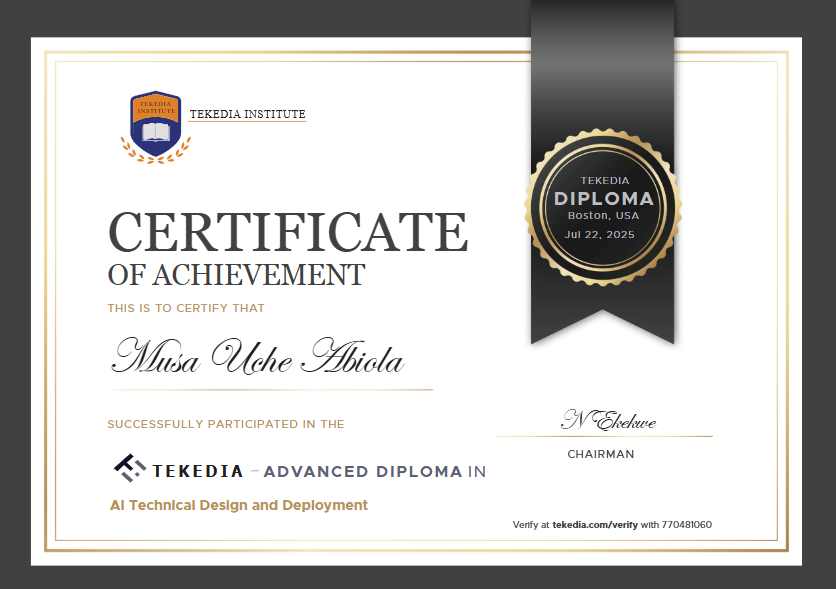
Upon completion, we award Advanced Diploma in AI Technical Design and Deployment, and Advanced Diploma in Artificial Intelligence (AI) in Business certificates.

Business Lesson from Elisha’s Double Portion and Radical Commitment to Mission

1

In corporate leadership, the most challenging moment is not the rise of power; it is the transfer of it. Many organizations fail not because the founder was weak, but because the successor was unprepared, or worse, uncommitted. The Bible offers a timeless business case in the relationship between Elijah and Elisha, a masterclass in mentoring, succession planning, and leadership seriousness.

When Elisha asked Elijah for a “double portion,” he was not asking for comfort, title, or ceremonial inheritance. In the Hebrew context, the double portion is the share of the firstborn, the one expected to carry continuity, responsibility, and growth. Elisha was effectively saying: I do not want to merely maintain what you built; I want the capacity to exceed it. That is ambition with accountability.

Elijah did not resist that request. He prepared Elisha. He walked with him, exposed him to the work, and allowed him to observe leadership in motion. This is active succession, not accidental handover. Great leaders do not disappear; they deliberately develop successors.

Before leaving, Elijah gave Elisha the mantle, a visible symbol that authority had been transferred. In modern organizations, this looks like a departing CEO staying on as an advisor, signaling continuity, confidence boosting, and institutional memory. The leader may be stepping aside, but the system is not abandoned.

Yet symbols alone do not solve problems. Elisha proved readiness when he used the mantle to part the River Jordan. He did not frame it, announce it, or debate its meaning. He deployed it. Leadership authority is validated not by possession, but by problem-solving. Power that cannot be used is not power; it is decoration.

But note this, long before that moment, Elisha had already demonstrated something rarer: absolute commitment to the mission. When Elijah first called him, Elisha burned his plowing equipment and slaughtered his oxen. This was not emotion; it was strategy. He eliminated the option of retreating. No side hustle. No fallback plan. No divided attention. He severed his past to fully enter his future. That act alone explains why he could carry the double portion because he had the capacity to carry weight.

Good People, most of the CEOs we hail make uncommon personal sacrifices, as they hold the mantle in the firm. They sign up for things we cannot commit to with adical dedication to the Firm.

In our world, people ask for authority, campaign for power, negotiate titles, but when authority arrives, they become distracted. Elected to the Senate but treating it as a part-time role. Appointed CEO but mentally invested in the side hustle. Power is requested, but mission is optional. Nations fade because of that. And it destroys companies.

Elisha teaches a lesson: if you want authority, you must be ready to deploy it, and deploy it on the assignment for which it was given

Jensen Huang Rejects OpenAI Rift Claims as Nvidia Reaffirms Central Role in a $100bn AI Funding Push

0

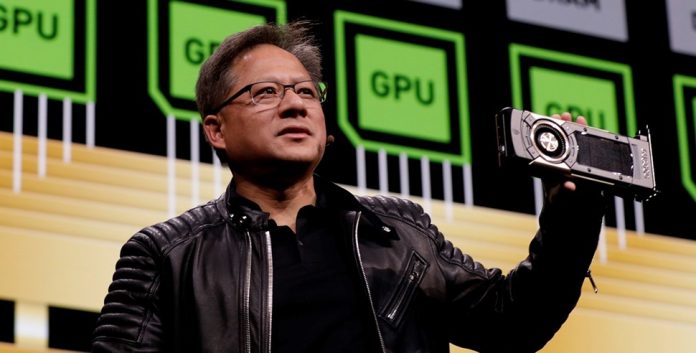
Nvidia Chief Executive Jensen Huang has moved decisively to quash suggestions of strain between the world’s most powerful AI chipmaker and OpenAI, pushing back against reports that Nvidia is reconsidering the scale of its financial and strategic commitment to the ChatGPT creator at a critical moment for the artificial-intelligence industry.

Huang’s remarks came after The Wall Street Journal reported that Nvidia was stepping back from a previously announced plan to invest as much as $100 billion in OpenAI and to help build 10 gigawatts of AI computing infrastructure. The report suggested Huang had privately emphasized that the agreement was nonbinding, raised concerns about OpenAI’s business model, and pointed to growing competition from rivals such as Anthropic and Google. It also said discussions had shifted toward a smaller equity investment, potentially still in the tens of billions of dollars, rather than the full headline figure.

Speaking to reporters in Taipei on Saturday, Huang dismissed the notion outright. He described the idea of friction with OpenAI as “nonsense” and stressed that Nvidia would “definitely participate” in OpenAI’s next funding round, according to Bloomberg. He framed the investment not as a defensive move, but as a conviction bet on what he called one of the most important companies of the modern era.

“We will invest a great deal of money,” Huang said. “I believe in OpenAI. The work that they do is incredible. They’re one of the most consequential companies of our time.”

Huang declined to specify how much Nvidia would ultimately commit, deferring instead to OpenAI CEO Sam Altman on the size and structure of the fundraising. That reticence underscores a central tension now facing the AI sector: capital needs are exploding, but even the largest technology firms are wary of locking themselves into rigid, long-term commitments as the competitive landscape shifts rapidly.

OpenAI, meanwhile, has sought to project stability. A spokesperson told the Journal that Nvidia and OpenAI are “actively working through the details of our partnership,” adding that Nvidia “has underpinned our breakthroughs from the start, powers our systems today, and will remain central as we scale what comes next.” The statement reinforces the reality that, whatever the precise equity arrangements, OpenAI remains deeply dependent on Nvidia’s hardware to train and run its most advanced models.

The backdrop to the dispute is OpenAI’s extraordinary funding ambitions. In December, the Wall Street Journal reported that the company was seeking to raise up to $100 billion, a sum that would eclipse any previous private funding round in Silicon Valley. The New York Times reported this week that Nvidia, Microsoft, Amazon, and SoftBank are all in discussions about participating, highlighting how OpenAI has become a focal point for capital across the tech and finance worlds.

Each of those relationships carries its own strategic complexity. Microsoft remains OpenAI’s largest shareholder, holding roughly 27 percent following a restructuring last year, and continues to supply much of its cloud infrastructure. Amazon has signed a $38 billion, seven-year deal to provide AWS capacity and is reportedly weighing a further multibillion-dollar equity investment. SoftBank founder Masayoshi Son is said to be close to committing as much as $30 billion, extending his long-standing bet on transformative technologies.

However, the calculus is different for Nvidia. Unlike cloud providers that are both investors and customers, Nvidia’s dominance rests on selling chips and systems to everyone building large-scale AI. That position gives it immense leverage but also exposes it to accusations of favoritism if it appears too closely aligned with a single model developer. The Journal report’s suggestion that Huang has been vocal about competition from Anthropic and Google fits with Nvidia’s public stance that the AI ecosystem will remain plural, not winner-take-all.

Analysts say this helps explain why Nvidia has emphasized flexibility. Even if the original $100 billion figure was aspirational rather than contractual, the scale of OpenAI’s infrastructure plans is real. Training frontier models now requires tens of billions of dollars in compute, power, and data-center build-out, costs that are rising as models grow more complex and inference demand surges globally.

Huang’s comments in Taipei also come as Nvidia faces intensifying scrutiny from governments and regulators over its central role in AI supply chains. U.S. export controls, particularly on advanced chips destined for China, have already reshaped Nvidia’s product strategy. Any perception that Nvidia is wavering on its biggest AI customer could ripple through markets that view OpenAI as a bellwether for the sector’s growth trajectory.

Instead, Huang chose to send a message of confidence and continuity. He signaled both belief in the company’s mission and caution about the form that support will take by publicly backing OpenAI while declining to lock in a number. That balancing act reflects the broader state of the AI boom: enormous opportunity, unprecedented capital requirements, and strategic relationships that remain fluid rather than fixed.

Best AI Crypto Coins: DeepSnitch AI Eyes For 1000x Gains as Perplexity Signs $750M Microsoft Deal While KAITO and VANA Chase

0

Perplexity locked in a massive $750 million AI cloud deal with Microsoft, which basically confirms tech giants are dumping billions into AI infrastructure and expect artificial intelligence to absolutely crush the next decade of technology innovation.

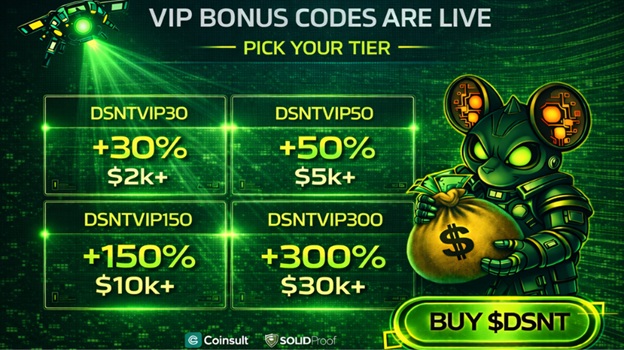
DeepSnitch AI, currently at a discount price, is screaming the best AI crypto coins opportunity with four live AI security agents already protecting traders, while 300% bonus codes turn your $30K into $120K tokens that explode to $32M when Microsoft’s endorsement sends AI crypto parabolic.

Microsoft drops $750M on AI: Blockchain AI tokens about to print

Perplexity securing a $750 million AI cloud infrastructure deal with Microsoft shows tech giants view artificial intelligence as the most critical technology investment for the next decade of digital transformation.

The deal provides Perplexity with massive computing resources from Microsoft Azure to scale AI operations, which signals that AI infrastructure demand is exploding faster than existing capacity can handle and creates opportunities for blockchain AI projects offering decentralized alternatives.

Top high-growth AI tokens for February 2026

1.     DeepSnitch AI destroys competition as best AI crypto coin with AI trading tools and 300% multipliers

DeepSnitch AI leads the best AI crypto coins list because it gives traders four operational AI weapons that create asymmetric advantages while your competition trades blind and loses money to scams.

AuditSnitch saves you from losing everything to rug pulls. Scan any contract in seconds before you ape in and watch it catch the honeypot functions, hidden mint capabilities, and malicious code that would have drained your wallet. This tool alone has saved early users millions by flagging scam projects during presale FOMO when emotions override logic

SnitchScan turns you into the whale. Track institutional wallet movements 24/7 across Ethereum, BSC, Solana, Polygon, and every major chain. Get instant alerts when smart money starts accumulating low-cap gems before CT catches on. Copy their entries, ride the momentum pump, exit into their buying pressure.

SnitchFeed makes you the first to know. Breaking news hits your feed in real time before it trends on Twitter. Partnership announcements, exchange listings, regulatory developments. Front-run the narrative, enter before the pump, take profits while retail is still reading the announcement.

SnitchGPT is your personal trading analyst working 24/7. Ask any security question and get instant answers using live blockchain data. “Is this contract safe?” “What’s the holder distribution?” “Are there any suspicious transactions?” Stop wasting hours researching and start making faster, more informed decisions that compound your edge.

The team extended presale after demand crushed projections, giving you exclusive access other traders won’t get. These live AI tools run exclusively for presale participants while everyone else waits. You’re building pattern recognition on whale accumulation zones and contract red flags that becomes your unfair advantage once public launch happens and you’re trading against people without these tools.

DeepSnitch bonus codes turn good entries into generational wealth. When DSNT runs to $10 during the AI security explosion Microsoft just validated with $750M, your $10K position hits $6.65 million.

2.     KAITO targets 10x returns through AI search infrastructure

KAITO trades at $0.39 on January 31 as AI-powered search infrastructure gains attention from Microsoft’s $750M deal validating that AI analytics tools represent critical infrastructure for information discovery.

The protocol gives traders AI search and analytics for crypto markets. KAITO could 10x if the AI analytics vs blockchain ecosystem narrative explodes throughout 2026 when institutional capital flows in.

3.     VANA builds toward 5x gains through data ownership infrastructure

VANA trades at $2 on January 31, riding the data ownership wave as users realize they’re getting farmed by Microsoft and every AI company for zero compensation on their personal data.

The protocol gives you ownership and monetization of your AI training data contributions. Positioned for 5x when privacy narrative explodes in 2026 and everyone demands control over their data.

VANA’s a safe AI analytics vs blockchain ecosystem bet with working products, but for best AI crypto coins that actually print millionaires, DeepSnitch AI at $0.03755 delivers four live AI security agents today plus 300% presale multipliers instantly quadrupling your stack.

Extended presale lets you master whale tracking and contract analysis before launch, edge that evaporates when public buying starts.

Conclusion: DeepSnitch AI leads AI crypto sector

Microsoft’s $750 million AI infrastructure deal validates unprecedented capital flows toward AI technology, benefiting blockchain projects offering working products at presale pricing.

KAITO and VANA deliver decent 5x to 10x returns as AI infrastructure plays, but the best AI crypto coins printing millionaires is DeepSnitch AI at $0.03755 with working AI security agents today plus 300% presale bonuses that 4x your bag instantly before launch sends prices parabolic and early advantages vanish.

Load $DSNT tokens at the official website before presale closes. Join Telegram and follow X for updates.

Frequently asked questions

What are the best AI crypto coins after Microsoft Perplexity deal?

Best AI crypto coins combine Microsoft validation with working products. KAITO and VANA offer 5x to 10x through AI infrastructure. DeepSnitch AI at $0.03755 delivers 1000x potential with 300% bonuses and live security tools.

Why does AI analytics vs blockchain ecosystem matter?

AI analytics vs blockchain ecosystem represents the intersection where decentralized AI tools solve problems that centralized tech giants cannot address effectively. DeepSnitch AI offers security tools that Microsoft’s centralized approach lacks.

Are KAITO and VANA the best AI crypto coins?

KAITO and VANA represent strong best AI crypto coins for slow gains. However, DeepSnitch AI offers explosive multiplication through working security agents, presale pricing, and 300% bonuses before public launch.