DD
MM
YYYY

PAGES

DD
MM
YYYY

spot_img

PAGES

Home Blog Page 5

Nigerian Entrepreneurs Increasingly Like Hardware after Terra Industries Success

0

By 2029, Nigeria could emerge as a critical hardware ecosystem.  Yes, over the last few years, I have watched more young Nigerians move into hardware and other domains where atoms, not only bytes, matter. This shift has profound implications because, without hardware, many of software’s promises will remain muted. Software may provide intelligence, but hardware gives that intelligence a physical expression in the world.

At Tekedia Capital, we are seeing a growing number of entrepreneurs who aspire to design, manufacture and build tangible products. Perhaps the success of Terra Industries is inspiring more founders to pursue this path.

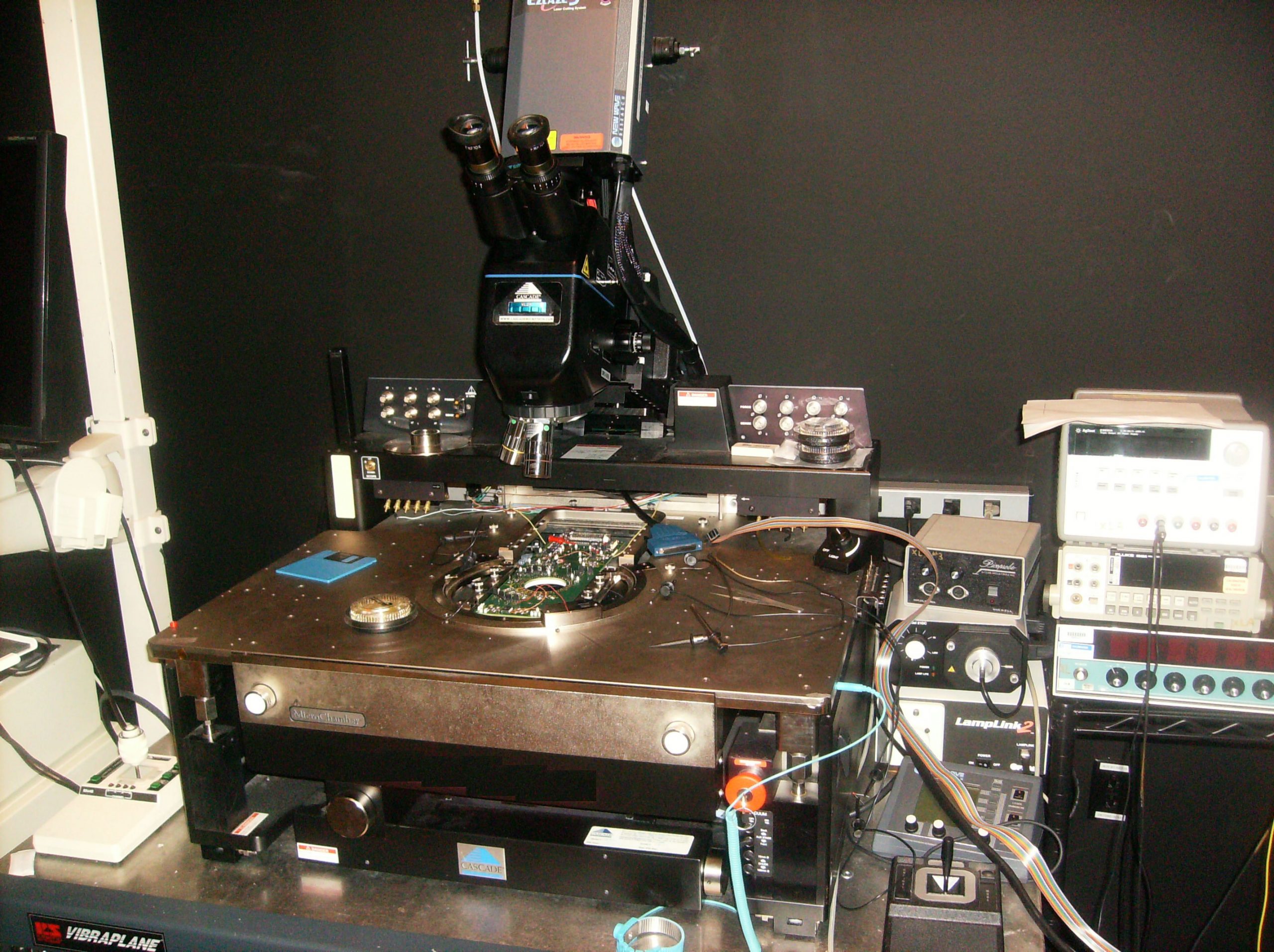
I am an engineer, and this is what my workbench used to look like. I understand the excitement of turning ideas, components and circuits into functional systems. That is why I remain committed to supporting those who want to build.

One of our most successful investments in Nigeria remains Egoras, a company that designs and builds physical products and operates its own showrooms. It demonstrates what becomes possible when engineering, manufacturing, software and distribution are brought together.

As you plan your hardware venture, consider building within a cluster. Hardware innovation thrives when people with complementary capabilities work together, share infrastructure and exchange knowledge. Unlike many purely digital products, world-class hardware increasingly requires mastery of both physical engineering and software.

The age of Nigerian hardware is emerging. It is time to build. And if you have an exciting idea, remember that Tekedia Capital partners with great founders. In the last three months, we have made more than 20 investments, and ready for more.  We will like to partner with you.

iPhone Duo in Nigeria: How Apple Could Expand Global Distribution and Make Premium iPhones More Accessible

0

Apple’s unveiling of the $1,999 iPhone Duo alongside the iPhone 18 Pro lineup represents more than another annual hardware upgrade. It signals a new chapter in the smartphone industry, where foldable design, artificial intelligence, privacy and professional creativity are beginning to converge.

The Duo opens into a 7.6-inch display while retaining a compact outer screen, powered by Apple’s A20 Pro chip and supporting Apple Pencil functionality.

The most interesting dimension may not be the hinge or screen. It is what the larger form factor could mean for privacy.

Apple is positioning its latest AI features around processing that minimizes unnecessary exposure of personal information, with on-device intelligence and Private Cloud Compute forming part of its privacy architecture.

For journalists, lawyers, business executives and creators, this could make the smartphone increasingly resemble a private workstation rather than simply a communication device.

The iPhone 18 Pro adds another important layer: Apple Reference Image, designed to provide verifiable information about the authenticity of photographs.

In an era of generative AI, deepfakes and synthetic media, tools that help establish whether an image has been altered could become valuable to journalists, investigators and ordinary users.

Privacy, therefore, is evolving from simply protecting data to also protecting the integrity of information. The artistic possibilities are equally significant. The Duo’s expansive internal screen can create a canvas for photographers, filmmakers, illustrators, musicians and designers.

Apple Pencil support could transform the unfolded device into a portable sketchbook or editing surface, while the iPhone 18 Pro’s 48MP Fusion Main camera with variable aperture gives creators greater control over lighting, depth of field and visual composition.

For Africa, and particularly Nigeria, the bigger question is distribution. A $1,999 starting price already places the Duo firmly in the premium segment. But accessibility is not simply about lowering prices.

Apple can build a stronger global distribution strategy through more official retail partnerships, authorized resellers, local financing, trade-in programmes, carrier relationships and reliable after-sales service.

Nigeria deserves particular attention because it is one of Africa’s largest technology markets and has a substantial population of young, digitally active consumers.

Apple could establish more direct relationships with Nigerian retailers and telecommunications operators, create transparent official pricing in naira, expand installment-payment options and strengthen access to genuine accessories, repairs and warranties.

This would reduce dependence on fragmented import channels where consumers can face uncertain pricing and limited support. Apple could also consider regional distribution hubs serving West Africa.

Allowing Nigeria to become a major logistics and service centre rather than merely an endpoint for imported devices. Authorized stores and certified service centres in Lagos, Abuja and other major commercial cities could create an ecosystem around the hardware, including demonstrations, creative workshops and professional support.

The iPhone Duo is not merely Apple’s entry into foldables. It is a statement about where personal computing is heading: larger creative surfaces, more intelligent software, stronger privacy protections and increasingly powerful cameras inside devices that remain portable.

If Apple can match that technological ambition with equally ambitious global distribution, Nigeria and other emerging markets could become central to the next chapter of the iPhone story.

Oracle Raises 2027 Outlook, Shares Jump 7% as AI Cloud Boom Drives Record Backlog and Spending

0

Oracle shares jumped about 7% in after-hours trading Thursday after the cloud services provider reported stronger-than-expected first-quarter results, powered by triple-digit growth in its cloud infrastructure business as demand for artificial intelligence computing drives a major expansion of the company’s data center footprint.

For the quarter ended in August, Oracle reported adjusted earnings of $1.92 per share, beating the $1.74 expected by analysts, according to Fiscal.ai. Revenue rose 30% from a year earlier to $19.35 billion, topping Wall Street estimates of $19.14 billion.

The results underline the important role AI infrastructure is playing in Oracle’s growth strategy. The company is investing heavily in data centers, networking and graphics processing units to supply computing capacity to some of the world’s largest technology companies, including OpenAI, Nvidia, Uber, Amazon Web Services and Microsoft Azure.

Oracle’s cloud business was the strongest part of the quarter. Cloud revenue increased 62% year over year to $11.6 billion, slightly ahead of the $11.51 billion expected by analysts.

Cloud infrastructure was even stronger. Revenue more than doubled to $7.4 billion, representing growth of 121% and exceeding analyst forecasts ranging from $7.09 billion to $7.19 billion.

The scale of Oracle’s infrastructure expansion is growing enormously. The company added 850 megawatts of data center capacity during the quarter and delivered more than 300,000 GPUs to customers. Oracle also completed its planned Azure and AWS regional expansion, bringing its footprint to 70 multi-cloud database regions and 119 availability zones, Chief Executive Officer Clay Magouyrk said during the earnings call.

The figures show how Oracle is positioning itself differently from its traditional image as a database and enterprise software company. AI companies need enormous quantities of computing power, and Oracle is attempting to capture that spending by becoming an important infrastructure supplier rather than competing only at the software layer.

The opportunity is potentially enormous, but it also requires Oracle to commit unprecedented amounts of capital before the resulting revenue and cash flows are fully realized. That tension was evident in the company’s remaining performance obligations, or RPO. Oracle booked more than $30 billion in additional AI cloud contracts during the quarter, lifting its total backlog to $664 billion.

Maxson said Oracle now expects about half of its RPO to convert into sales over the next 36 months. If that conversion occurs as planned, the backlog provides substantial visibility into future revenue and reinforces the argument that the company’s massive infrastructure investments are being supported by contracted customer demand.

The structure of the new contracts is also important because Oracle said the additional $30 billion in AI cloud commitments would not require it to change its existing capital-raising plans. But that does not eliminate the company’s financing challenge, however. It means the latest contracts are not expected to create additional capital requirements beyond what Oracle has already incorporated into its plans.

$28.5 Billion Quarterly Capex Highlights AI Infrastructure Cost

Oracle spent $28.5 billion on capital expenditures during the quarter as it accelerated construction and deployment of AI infrastructure. The company maintained its forecast for $70 billion in capital spending for the full fiscal year, while planning an additional $20 billion to $25 billion in prepayments for essential components.

That spending illustrates the unusual economics of the current AI infrastructure cycle. Oracle can secure enormous cloud contracts before all of the associated infrastructure is operational, but it must spend heavily on data centers, power, networking equipment and GPUs to fulfill those commitments.

The result is a widening gap between reported earnings and cash generation.

Oracle completed a previously announced $20 billion at-the-market equity offering during the quarter, while total debt stood at $125 billion. Heavy investment also kept free cash flow negative.

The financing requirements will therefore remain a key issue for investors. Oracle has demonstrated that it can attract customers and secure long-term AI contracts, but investors must also determine whether those contracts will ultimately generate returns that justify the cost of building the infrastructure needed to serve them.

The company’s $664 billion RPO provides considerable revenue visibility, but backlog should not be treated as equivalent to cash flow. The timing of customer deployments, infrastructure costs, financing expenses and the economics of individual contracts are expected to determine how much of that contracted revenue translates into shareholder returns.

Oracle’s traditional software business also showed why the AI transition carries risks. Software revenue declined 3% to $5.5 billion, slightly below the $5.61 billion consensus estimate.

That decline suggests that Oracle’s growth is increasingly being driven by infrastructure rather than its mature software operations. The shift could produce a substantially larger addressable market, but it also moves the company toward a more capital-intensive business model.

Oracle Raises Fiscal 2027 Outlook

Oracle nevertheless delivered a strong outlook for the second quarter. The company expects total revenue to grow between 30% and 34%, compared with analysts’ expectation of about 32%. Adjusted earnings are projected at $1.85 to $1.93 per share, against a consensus of $1.89.

Cloud revenue is expected to increase between 65% and 71%.

For the full fiscal year 2027, Oracle raised its revenue target to at least $90 billion, above the $89.76 billion analyst consensus.

The guidance indicates that management expects AI infrastructure demand to remain strong enough to sustain rapid growth beyond the current quarter. That is important because Oracle’s current valuation depends on expectations that AI-related cloud revenue will become a much larger contributor to the business.

The market’s after-hours reaction suggests investors were encouraged by the combination of strong cloud growth, massive new contracts and higher revenue expectations. Yet the 7% gain needs to be viewed against a much weaker year-to-date performance. Oracle shares remain down 21.2% this year, reflecting investor concerns about the scale of its capital spending, financing needs and the amount of future growth already embedded in expectations.

Retail sentiment on Stocktwits was nevertheless “extremely bullish,” accompanied by “extremely high” message volumes.

The divergence between the stock’s year-to-date decline and the latest retail enthusiasm captures the debate surrounding Oracle. Investors now agree that AI infrastructure is creating a major growth opportunity for the company.

Oracle is effectively making a leveraged bet on the continued expansion of AI computing. Its $664 billion backlog and accelerating cloud revenue provide evidence of strong demand, while its $28.5 billion quarterly capital expenditure and $125 billion debt load demonstrate the financial cost of meeting that demand.

China’s AI Chipmakers Reportedly Raise Prices as HBM Shortage Drives Up Costs

0

Chinese AI chipmakers, including Huawei Technologies and Cambricon, have sharply raised prices for current and next-generation processors as soaring costs for high-bandwidth memory squeeze Beijing’s drive to build a domestic alternative to Nvidia’s advanced AI accelerators.

Huawei has raised the indicated price of its Ascend 950DT accelerator card to more than 250,000 yuan ($37,255), two people familiar with the matter told Reuters. Depending on contract terms, the new price is 20% to 50% higher than levels quoted to customers just two months ago.

The increase underpins an emerging problem for China’s semiconductor industry: developing a domestic AI-chip supply chain is becoming more expensive just as Beijing is pushing technology companies to reduce their reliance on U.S. suppliers.

Huawei has publicly said its Ascend 950DT, its most advanced AI chip, will become available in the fourth quarter of 2026.

Beijing-based Cambricon has also raised the indicated price of its next-generation processor, tentatively known as the 690, by 20% to 30% from levels discussed with customers two months ago, according to two sources. Smaller Chinese chipmakers MetaX and Iluvatar CoreX have made similar increases, the sources said.

HBM, a specialized type of memory critical to modern AI accelerators, remains at the center of the price increases. HBM stacks memory chips vertically and allows processors to move very large volumes of data at high speeds, making it essential for training and running complex AI models.

The market for advanced HBM is dominated by South Korea’s SK Hynix and Samsung Electronics and U.S.-based Micron Technology. China’s access to some advanced HBM products has been restricted by U.S. export controls, forcing domestic chipmakers to seek alternative supplies.

Since Washington tightened controls on exports of certain advanced HBM products to China in December 2024, Chinese companies have relied on grey-market channels to obtain supplies, according to the sources.

However, that route comes at a premium. HBM procured through such channels can cost several times more than prices paid by buyers outside China, the sources said. Because memory represents a substantial portion of the manufacturing cost of an AI accelerator, the higher component prices are being passed directly to customers.

The problem reveals the difficulty of creating a fully domestic AI-computing ecosystem. China can design processors to replace Nvidia products, but advanced AI systems require more than the accelerator itself. High-performance memory, packaging, manufacturing capacity and supporting software all form part of the supply chain.

Huawei has said its Ascend 950 series will use two proprietary HBM technologies, HiBL 1.0 for the 950PR and HiZQ 2.0 for the 950DT, although the company has not disclosed where or how the underlying memory is manufactured.

The 950DT is designed primarily for developing AI models and generating responses, while the 950PR is intended to process user requests before they are passed to the model. Prices for Huawei’s existing chips have also increased, suggesting the pressure is not limited to the company’s newest products.

The Ascend 950PR, which sold for roughly 60,000 yuan per card at the beginning of the year, now costs more than 80,000 yuan, representing an increase of about 30%, according to two sources.

The older Ascend 910C board has risen to more than 110,000 yuan from about 90,000 yuan at the beginning of the year, they said.

The increases raise the cost of deploying AI computing capacity at a time when demand from Chinese technology companies is accelerating. They also expose a contradiction at the heart of China’s effort to replace Nvidia.

U.S. restrictions have created a large domestic market for Chinese accelerator manufacturers by limiting Chinese companies’ access to Nvidia’s most advanced processors. But the resulting demand is now colliding with shortages of critical components, potentially limiting how quickly domestic suppliers can scale.

China’s AI-chip market is estimated at about $50 billion, making the opportunity substantial. The restrictions have effectively created space for Huawei, Cambricon, MetaX and other domestic suppliers to expand, but capturing that market requires them to compete not only on chip performance but also on price and availability.

The pressure is already affecting the allocation of computing hardware.

Iluvatar CoreX has doubled its shipments of graphics processing units, or GPUs, to ByteDance, the owner of TikTok, to 100,000 units this year as computing constraints have intensified, according to one source.

The company has also diverted GPUs originally intended for its own internal use to meet ByteDance’s requirements, the source said.

ByteDance is a major buyer of domestic AI computing capacity, and Huawei is its largest domestic supplier, followed by Cambricon and Iluvatar CoreX, according to the three sources.

The competition for supply suggests that Chinese AI companies could face a difficult trade-off between expanding computing capacity and controlling costs. Higher accelerator prices could ultimately raise the cost of training and operating AI models, potentially slowing the pace at which companies can deploy them or increasing the cost of AI services.

For chipmakers, meanwhile, higher prices may help offset expensive memory procurement and constrained component supply. But sustained price increases could undermine one of the principal advantages of domestic alternatives: their ability to offer Chinese customers a viable and potentially more economical substitute for restricted Nvidia products. That makes HBM more than a component-level bottleneck. It has become a strategic constraint on China’s broader AI ambitions.

The situation also shows why U.S. semiconductor restrictions can have effects beyond simply preventing Chinese companies from buying particular chips. Restricting access to advanced processors and memory can force Chinese companies to rebuild entire portions of the AI hardware supply chain, increasing costs and creating bottlenecks in areas where domestic alternatives remain limited.

10-Year Treasury Yield Nears 5% as Markets Brace for a September Fed Rate Hike

0

The U.S. Treasury is discovering that even a larger intervention cannot easily overpower a bond market increasingly focused on inflation, fiscal risk and the possibility of tighter monetary policy.

The Treasury has tripled the size of its planned long-term bond buyback to as much as $6 billion, targeting 10- to 20-year securities, yet the benchmark 10-year yield climbed to roughly 4.85%, its highest level since November 2023.

The paradox is important. Treasury buybacks are designed to improve liquidity in older, less-traded securities and reduce some of the supply pressure weighing on longer maturities.

But $6 billion remains tiny compared with the roughly $32 trillion Treasury market and the government’s enormous financing requirements. Investors therefore appear to be looking beyond the mechanics of the operation toward the deeper forces shaping the cost of U.S. borrowing.

The bond market is confronting several pressures simultaneously. Persistent inflation remains a concern, while rising oil prices are threatening to push energy costs higher and complicate the Federal Reserve’s policy decisions.

At the same time, strong employment data have challenged expectations that economic weakness would automatically justify easier monetary policy. The result is a market demanding greater compensation for holding long-duration government debt.

That tension becomes even more significant as markets increasingly price the possibility of a Federal Reserve rate hike at the September 16 meeting. Futures-based expectations recently moved close to 60% for a 25-basis-point increase after August employment data showed stronger-than-expected job creation.

A rate hike would normally put upward pressure on shorter-term yields, but its implications can travel across the yield curve. If investors believe inflation is becoming more persistent, they may demand higher long-term yields even as the Fed adjusts short-term rates.

In other words, the Treasury can buy bonds, but it cannot buy away the inflation premium embedded in investor expectations. This is why the 4.85% 10-year yield matters. It represents more than a number on a trading screen.

Treasury yields influence mortgage rates, corporate borrowing costs, equity valuations and the discount rate applied to future investment. Higher yields make government debt more attractive relative to risk assets while increasing the financing burden for businesses and households.

Financial markets therefore have little room to ignore a sustained move toward 5%. For Washington, the development exposes the limits of liquidity management.

Treasury buybacks can improve market functioning, but they cannot solve structural concerns surrounding federal deficits, debt issuance and inflation.

Investors may require evidence that fiscal pressures are stabilizing before they accept materially lower long-term yields. The September 16 Fed meeting consequently becomes a crucial test.

If policymakers raise rates, the decision could reinforce the bond market’s inflation concerns. If they hold rates steady, investors will scrutinize the accompanying guidance for signs that another hike remains possible.

The deeper message is that America’s bond market is demanding answers that a $6 billion buyback cannot provide. The Treasury can influence liquidity; the Federal Reserve can influence short-term money; but neither institution can permanently suppress the market’s judgment on inflation, debt and fiscal credibility.

For now, the bond market is speaking clearly: the price of money remains high, and investors are not yet convinced that it is coming down.