DD
MM
YYYY

PAGES

DD
MM
YYYY

spot_img

PAGES

Home Blog Page 5013

Nigeria Needs Modern High Priests As Mediators

1

Silence at war is the loudest noise possible. In ancestral Igbo, enormous respects were reserved for kindreds and kingdoms who were known for resolving disputes among communities and warring clans. Those respects were possible because the mediators were credible people. When they spoke, everyone listened, including opponents.

In those communities, the high (chief) priests were seers and exceedingly respected men, as communities believed they heard from the gods. Even the Eze (the king), most of the time, will defer to the opinion of the high priest, even though the Eze on the hierarchy, runs the kingdom. The Eze’s job is to preside over the people; the chief priest is to connect the deities and humans. Chief priests are the Ezemmuo (the king of the spirits before humans and the messenger of the deities) and they transcend humanity in the ancestral Igbo mythology. 

Whenever the elders seek directions from the gods on if they would thrive in a battle, they expect the high priest to deliver nothing but the absolute message from the gods. If the gods say ‘Go”, the ikoro will beat and young men will be ready for battle. But if the gods say “No”, mediators would be engaged to find a way out. 

Today, Nigeria needs high priests who can speak to the citizens and the political leaders on the economy and other important matters. Yes, many things are broken – and we need credible messengers. 

Why? The gap has widened; Aso Rock does not hear ASUU and ASUU operates in another frequency from Aso Rock’s. Also, the citizens are out of the game – how can you be “broke” as a nation, and yet you are building railtracks, buying expensive cars for another country, etc? Someone must step forward to explain.

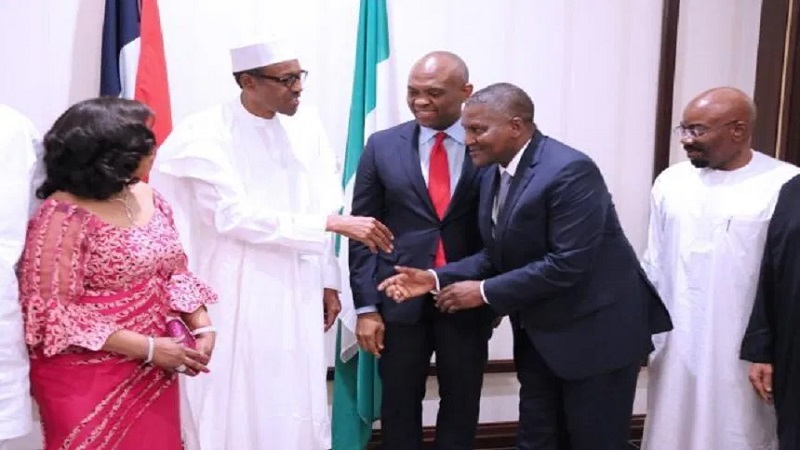
Who can those be? I think Nigeria’s organized private sector has a moment with leaders like Dangote, Elumelu, Innoson Motors founder, BUA Cement founder, Jim Ovia, etc. I hope the citizens see these people as credible to bring sanity in the land.

Comment on LinkedIn Feed

Comment: “…..how can you be so broke as a nation, and yet you are building rail tracks, buying expensive cars for another country……” The alleged Railtrack if completed will serve the interest of Nigeria more than anyone because 97% of the will be within Nigeria. Of the about 400km distance, only 25km will connect Nigeria to Niger. I don’t know why the wailing. I am waiting to see who will do better than what is being done now. Unless our present reality changes, I don’t see any positive change coming our way.

My Response: we can of course build to Libya, Morocco, etc all the way to France. It does not change anything. My point is simple: do not say you are “broke” when you can do those things. You are spending $3 billion to connect a country with GDP of $14 billion when you have many states worth more than $20b will no connection. Delta state GDP is bigger than Niger Republic’s GDP but it has zero useful rail track.

I mean, this nonsense where citizens are made to think that Niger Republic will magically provide HUGE opportunities is part of our problems. The addressable and accessible value this train will capture is less than $2 billion in Niger Rep.

The economy of Eti Osa local government which has no train connection to anywhere is bigger than all of Niger Republic. Why was that not a priority? But if you found money to build it, do not complain you are “broke” to teachers and pensioners.
Nigerian Students’ Interests in Foreign Postgraduate Studies Increase by 83% Amidst ASUU Strike

0

Students will continue to look for better places to begin or complete their studies as long as Nigeria’s university education system has unresolved concerns year after year. The fact that members of the Academic Staff Union of Universities have been on strike since February 14, 2022, is no longer news. According to various sources, the strike is still one of the union’s strikes based on the Federal Government’s inability to honor agreed agreements during prior industrial actions.

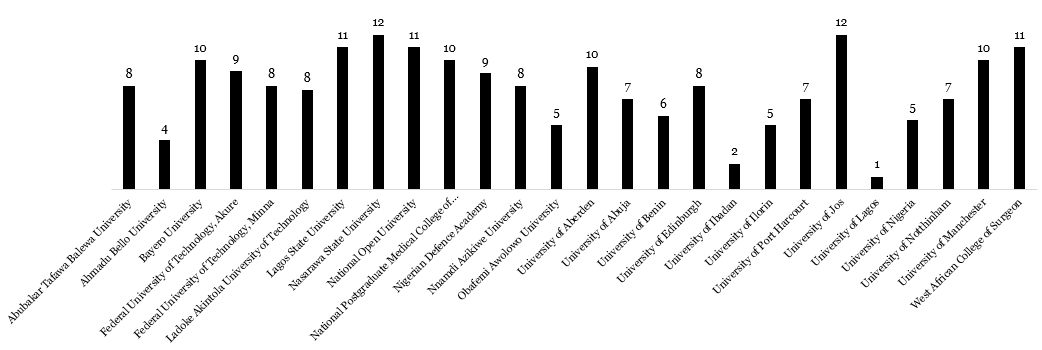
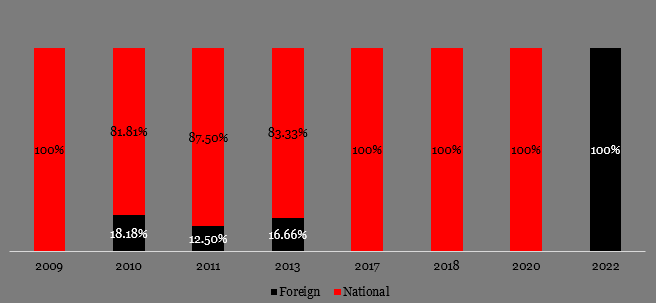
Our analyst examines the internet search interest of Nigerian students and/or potential postgraduate students during previous and ongoing strikes in this piece. According to analysis, Nigerian students did not seek information on postgraduate studies at overseas universities in 2008, 2009, 2017, 2018, and 2020. Instead, despite ASUU strikes throughout the years, they sought information on the studies through Nigerian universities. In 2008, the University of Ibadan was the only university where students became interested in postgraduate courses after researching numerous sources on the Internet. Interest in national universities climbed from one in 2018 to three in 2009, another year when students observed one of the union’s lengthy strikes.

However, an analysis conducted in 2010 showed that students began to show a strong interest in getting postgraduate certifications from overseas universities. Throughout the year, the students researched postgraduate studies at 11 different universities, including the University of Aberdeen and the University of Edinburgh. During the year, the preferred national universities were the University of Lagos and the University of Ibadan.

The number of institutions fell to eight in 2011, before rising to twelve in 2013 and thirteen in 2018. In 2011, all eight universities in which students expressed interest were national. The University of Nottingham was the sole foreign university on the students’ minds during the year. In 2013, the foreign university that arose in students’ exploration of international postgraduate courses was the University of Manchester, as it was in 2011. Again, this year, the University of Lagos and the University of Ibadan were first and second, respectively. In 2017 and 2018, 13 and 12 universities dominated students’ information seeking behavior, respectively.

According to our analysis, none of the international universities emerged as suitable locations for acquiring postgraduate certificate in either year. The same tendency was identified in 2020, when students sought information about postgraduate studies through 12 national universities during the union strike.

The University of Lagos and University of Ibadan consistently held the top two spots between 2008 and 2020, according to further analysis using the Average Position Technique (APT). According to our data, students’ interest in postgraduate programmes at foreign institutions increased by 83.34% between 2013 and 2022 (data end point is July 31), from 16.66% (representing 2 universities) to 100% (representing 9 universities). Our analyst notes that the strike might push Nigerian students into the most sought-after international universities by September 2022 and throughout 2023 if interested parties are unable to find long-term solutions to the strike.

Exhibit 1: Pattern of Eyeing Postgraduate Studies

Source: Google Trends, 2009-2022; Infoprations Analysis, 2022

2022: The Most Eye National, Foreign Universities for Postgraduate Studies Amidst ASUU Strike

Since January 2022, students’ consideration of exclusively foreign universities in their quest is a crucial indicator of their impending mass exodus for academic reasons. We expect Nigerian students to be in Gloucestershire University, University of South Wales, University of Lincoln, Cardiff Metropolitan University, University of Derby, Salford University, Teesside University, University of Birmingham and Hull University this year and next year because they have been the schools that have been searched the most since January.

Exhibit 2: Average Position Per Year for National and Foreign Universities Between 2008 and 2020

Source: Google Trends, 2009-2022; Infoprations Analysis, 2022

How African Tech Startups Raised Funds In 2022

0

The African tech sector has continued to witness exponential growth in the past five years. The tech startups in the region took center stage in 2021 when they reached an inflection point as companies raised over $4 billion, more than what they raised in 2019.

The fintech sector dominated last year’s total funding, accounting for 63% ($3 billion) of the funding that went to African startups. Amidst the global inflation, in the first half of 2022, African tech start-ups jointly raised $3.1 billion.

The “big four” in the African region, with countries such as Nigeria, Kenya, South Africa, and Egypt still maintained dominance, as the African tech ecosystem is significantly shaped by activities in these countries. Since the year 2019, startups operating in these countries have raised 83 percent of all funding and signed 78 percent of all $1 million-plus deals, as they show no indications of slowing down.

Top Four (4) H1 2022 Funding In Africa According to Countries

1.) Nigeria: Nigeria represents the vast majority of the funding raised in Western Africa since 2019. Tech startups in the country raised 32.8% of the funds raised.

2.) Egypt: With at least 562 tech startups in operation across the country as of September 2021, Egypt has been disclosed to have the fourth largest startup ecosystem on the African continent by the number of companies. It accounts for 19.8 percent of the active tech startups across Africa. Tech startups in the country raised 20.1% of the funds.

3.) Kenya: The startup ecosystem in the country has been described as a robust one with entrepreneurs building solutions for their communities that they want to scale across the globe. The country’s capital Nairobi is home to more than 200 startups. Tech startups in the country raised 14.4% of the funds.

4.) South Africa: Fintech is disclosed as a major driver of activity within the country’s startup space, with 30 percent of companies in the country active in that space. Tech startups in South Africa raised 12.7% of the funds raised.

Now let’s take a look at the sector in the African startup ecosystem that received the highest funding;

H1 2022 Funding Raised Based On Sector

It is nothing new that the Fintech Startups in the African region continues to receive the highest amount of funding. The sector took the largest chunk of funding, raising 28.8% ($845 million).

This was followed by the logistics and mobility sector. It was disclosed that this sector is gradually set to overtake the fintech sector in the Nigerian startup ecosystem. There is no disputing the fact that the logistics and mobility sector is doing exceptionally well in the African region as it raised 11.4% of the funds making it the second highest sector.

Coming in the third position is the health tech sector, as there is a booming increase of health-tech startups on the African continent. The number of startups active in the health-tech space on the continent grew to 56.5% in 2020. The sector raised 7.9% of funds.

Sitting in the fourth position is the E-Commerce sector. The value of early-stage funding for the e-commerce technology enterprises in Africa amounted to $26.7 million in 2021. The sector raised 7.0% of the funding followed by the Edtech sector occupying the fifth position. The sector raised 6.6% of funds, with over 200 Edtech startups spread across the African continent, using diverse models to bridge the quality of education in Africa.

Conclusion

H2 2022 is already looking good in the African region, as startups have already raised nearly $150 million. There have been predictions that startups in the region will likely be affected by rising inflation, Food prices, Fuel prices, and the likes. However, tech founders of these startups are hopeful that the H1 growth of 2022 will flow into the H2.

Nigeria’s Forex Crisis: EFCC Threatens to Arrest Nigerians Who Keep Dollars

2

The Central Bank of Nigeria (CBN) last month intensified efforts to stop the naira from spiraling further downward, by moving to curtail what it describes as activities undermining the country’s forex market.

The CBN believed the recent crash of the naira to N710/$1 was orchestrated by market speculations and vowed to take drastic steps to tame it. Shifting focus on the parallel market and the general public, the apex bank who believed Bureau de Change operators and members of the public to be responsible, has involved the Economic and Financial Crimes Commission (EFCC) in the fight.

The EFCC has raided Bureau de Change offices in Lagos and Abuja, the nation’s capital, in a move believed to have yielded appreciation for the naira, which exchanged for N680 per dollar in the parallel market and retained a N428 per dollar position in the Investor and Export window on Saturday.

The anti-graft agency now warns that it will arrest anyone stockpiling and hoarding forex.

The chairman of the anti-graft agency, Abdulrasheed Bawa, issued the warning during a meeting with representatives of Bureau De Change operators in Abuja on Friday. He said based on the intelligence the agency has gathered, Nigerians are stockpiling foreign currency as the naira dwindles.

“The Commission has intelligence linking some persons and organizations to hoarding foreign currencies, especially the United States dollars, in key commercial cities of Kano, Lagos, Port Harcourt, Enugu and Calabar. We warn those involved to desist or risk arrest as a major offensive against the speculators is underway,” he said in a statement.

Last month, the CBN attributed the naira’s downfall to illegal forex activities and warned that it would penalize banks, arrest and prosecute Nigerians who use the naira to buy dollar.

Although the BDCs, media outlets and the general public have largely taken the blame for the naira’s ordeal, the CBN recently claimed that the Nigerian National Petroleum Corporation (NNPC) has not been remitting any fund to the country’s foreign reserve for months.

The claim, though it was denied by the NNPC, which solely exports and imports petroleum products for the country, supports experts’ assertion that the forex crisis is being fueled by insufficient dollar liquidity in the country. The NNPC claimed it remitted over $2 billion dollars in the account in the past few months.

While the two agencies trade words, the EFCC is embarking on a rescue mission. A statement issued by the anti-graft agency after the meeting with parallel market stakeholders said the ‘save the naira’ message, which is to be taken to BDC operators nationwide, is already yielding a positive result.

“The operators, who thanked the EFCC for the invitation, expressed optimism that the Naira’s rebound, which began after the EFCC’s intervention a few days ago, may eventually see the currency return to its pre-speculation value,” the statement signed by EFCC spokesperson, Wilson Uwujaren said.

“Similar meetings are planned for other Bureau de Change operators in the major commercial cities across Nigeria as well as with key players, regulators, and operators of the Nigerian Financial Sector,” it added.

However, there is skepticism that the EFCC’s involvement will cause any significant change in the current forex market as long as dollar-yielding businesses (export) in Nigeria remain as poor as they are.

The Blitzscaling Pursuit of Growth – How to grow a business and keep groWING

0

Chris Yeh, the man who co-wrote with LinkedIn founder (Reid Hoffman) the award winning book -”Blitzscaling: The Lightning-Fast Path to Building Massively Valuable Companies” – dropped a line last week: “Professor, thanks for your efforts spreading Blitzscaling in Africa.” Indeed, Tekedia Institute has become a temple where entrepreneurs and professionals are mastering how to grow and keep groWING companies.

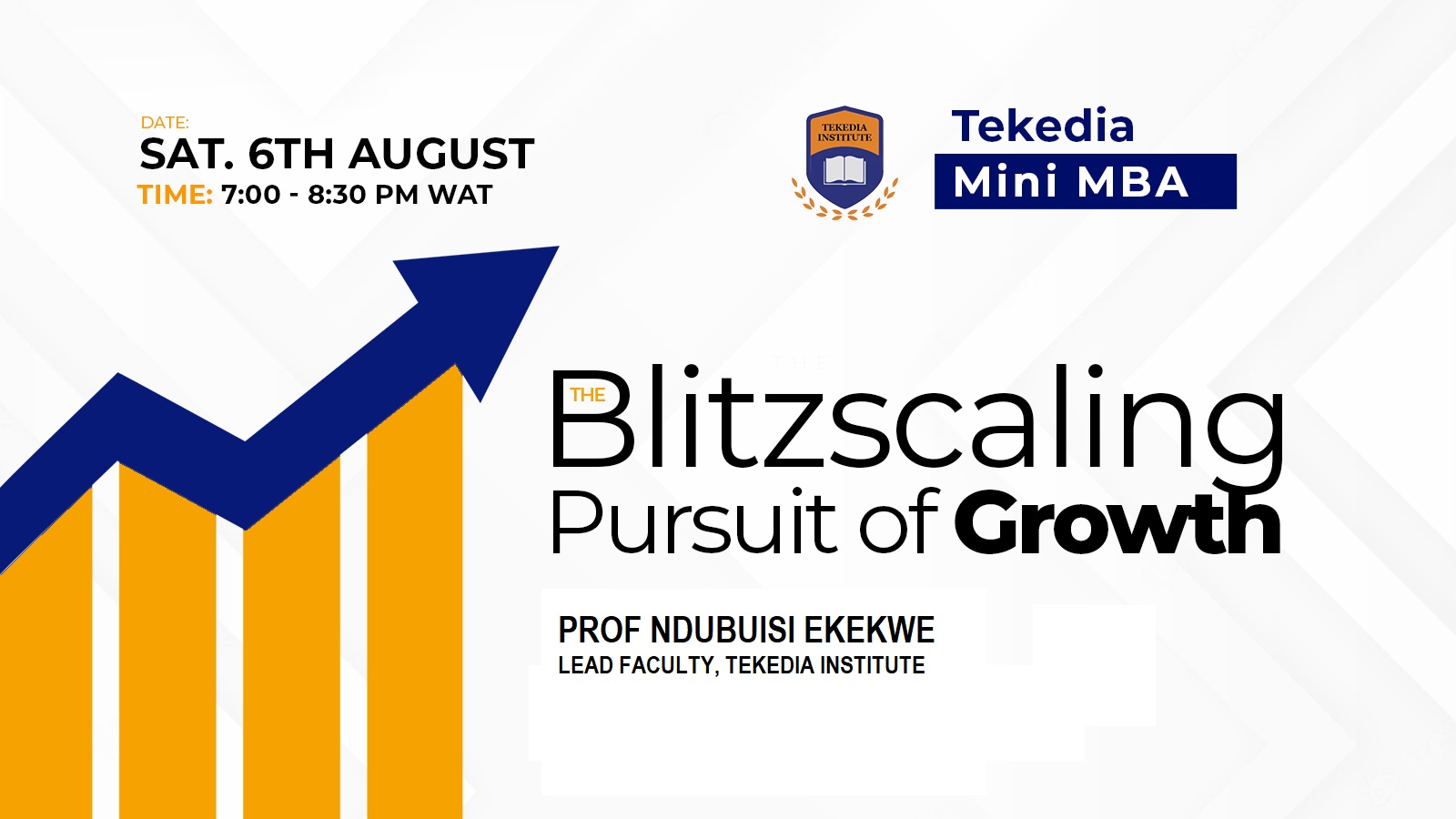
Today, at Tekedia Mini-MBA, I will lead a session on Growth. It is always a moment when we run this session because for most of our learners, at the end of everything, the question which must be answered remains “how do I grow this company”? Interestingly, it is becoming physics because we know what works.

Register for the next edition here . It is the most affordable business school right now. We have people from 41 countries and will graduate more learners this year than any university in Nigeria!