DD
MM
YYYY

PAGES

DD
MM
YYYY

spot_img

PAGES

Home Blog Page 5016

Stabilizing Nigeria’s Economy – PDP Presidential Candidate Atiku Abubakar Proposes $10 billion Economic Stimulus

0

Nigeria’s economic growth has no doubt been constrained by so many factors ranging from insecurity, obstacles to investment, lack of confidence in currency valuation barriers to trade, etc.

The Economist Intelligence Unit earlier disclosed that it expects Nigeria’s economic growth to slow more than expected in 2022, as power-supply issues, high inflation, and expected monetary tightening output.

They posited that the slow economic growth will stem from continued erosion of household purchasing power by inflation, monetary tightening by the CBN and power supply issues, with low water levels and inadequate gas supply constraining production.

Also looking at Nigeria’s agricultural sector, it has been ravaged by Sporadic flooding, Insurgency crisis, and Conflicts between local farmers and herdsmen. This has put a strain on food production in the country as food inflation rose to 22.95% in Q1, 2021.

Recently on Twitter, a user with the username @AbuammarUp threw a question at the People’s democratic party presidential candidate, Atiku Abubakar asking him what he will do differently in the Agricultural sector to attract exports, raise the country’s GDP and stabilize the Naira if elected as President.

In his words, “If I had the chance to ask Atiku one question during his ARISEtv interview, I will have asked him, ‘What will you do differently in the Agric sector that you didn’t do as head of NEC when you were VP, to attract exports, raise our GDP and stabilize the naira?”.

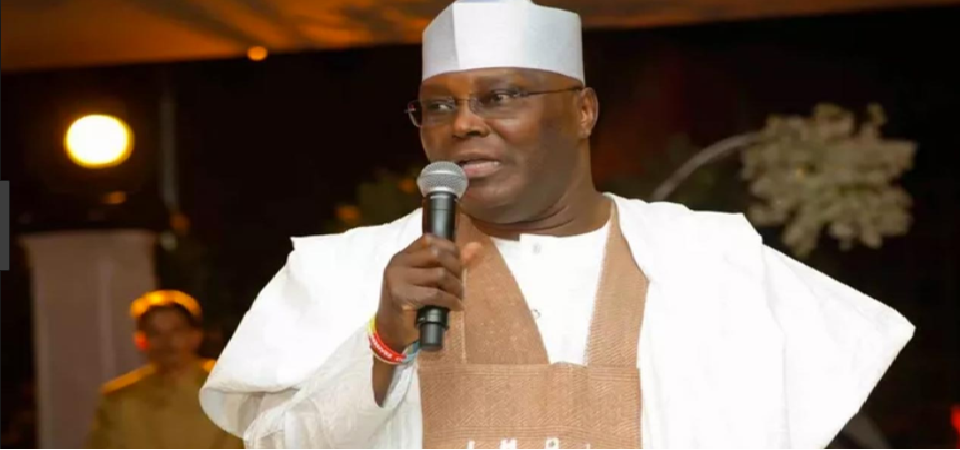
In a response to the tweet, Atiku Abubakar proposed a handful of solutions which he created via a Twitter thread.

See what he said;

“Dear @AbuammarUp, to grow the economy (raise GDP), export more, and stabilize the naira are all interrelated stimulating exports requires a coherent and investor-friendly foreign exchange policy that improves the global competitiveness of domestic enterprises.

“Larger volume of non-oil exports will earn more foreign exchange for Nigeria, improve our foreign reserves, and help in stabilizing the Naira. All of these will contribute to growth in GDP. What will I do?

“First, we will restore investor confidence in our economy so that they take the risk and invest capital, especially in the non-oil sector. This we can achieve by being more consistent and coherent in our economic policies (policy flip-flops send investors away). Also, by fighting insecurity, investment is a cowardly animal and fears conflict and insecurity.

“Secondly, within the first 100 days in office, we shall unveil an Economic stimulus fund with an initial investment capacity of approximately US $10 billion. This is to support private sector investments in infrastructure and to prioritize support to agriculture, manufacturing, and the MSMEs across all the economic sectors, as they offer the greatest opportunities for achieving inclusive growth.

“In the agricultural sector, we shall elevate irrigation to a top policy priority and support both the smallholder and commercial farmers to cultivate at least 10% of the potential irrigable land. (Currently, only 2% is under cultivation)- AA”.

Atiku Abubakar has continued to show his preparedness for the position as the president of Nigeria, as he has on several occasions proffered solutions to the nation’s myriad problems. However, some citizens have faulted these solutions being proffered by political leaders stating that they are more used to offering theoretical solutions than being practical.
Twitter Reveals That Uncertainty With Elon Musk Is Affecting Its Business

0

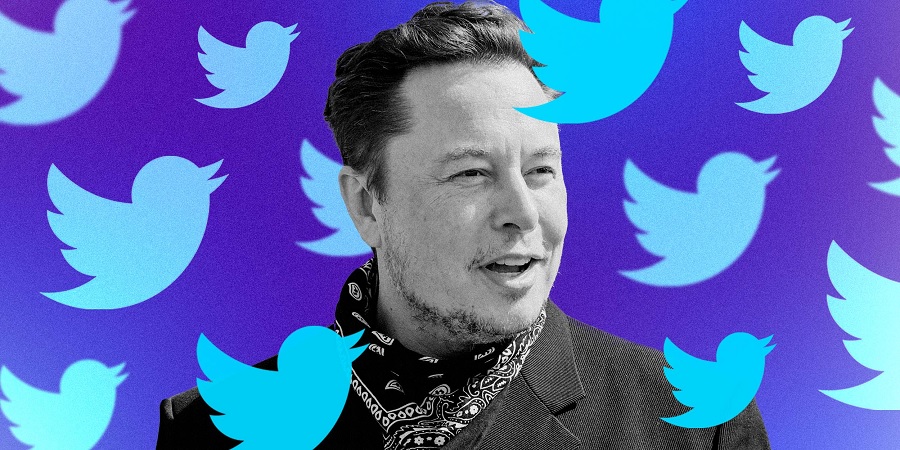
Recall earlier this month when Tesla CEO Elon Musk announced his termination of the $44 billion Twitter takeover bid, due to a breach of multiple provisions of the merger agreement.

Displeased with Musk’s termination of the contract, Twitter announced its plan to pursue legal action to enforce the merger agreement as it demands that Musk is expected to pay $1 billion since he has decided to walk away from the deal.

Recently, the microblogging platform revealed that its advertising revenue rose to just 2% to $1.08 billion, missing wall street expectations of $1.22 billion. Total second-quarter revenue, which also included revenue from subscriptions, was $1.18 billion, compared with $1.19 billion a year earlier. Analysts were expecting $1.32 billion.

Twitter disclosed that the decline reflects the advertising industry headwinds associated with the macro-environment that all businesses are currently feeling, as every social media platform is expected to report similar impacts over the year.

However, the microblogging platform has attributed most of its issues to Elon Musk, following the uncertainty related to the pending acquisition of Twitter which has greatly affected the company’s revenue.

The pullback shrank the company’s sales as well as its advertising business. Even though its revenue declined, Twitter continued to experience an increase in its user base. The number of daily active users grew more than 16% on a yearly basis to 237.8 million during the first quarter.

Twitter had a net loss of $270 million during the quarter, up from a profit of $66 million during the same quarter in the previous year. The termination of the deal by Musk has also left investors panicking, as a large percentage of them engaged in a sell-off of their shares, out of fear that it would crash as a result of the ripple effect of the termination deal.

Twitter disclosed on Tuesday that it would hold a shareholder meeting on the 13th of September to vote on the social media company’s proposed $44 billion takeover offer by Tesla CEO.

The company’s plan, which was disclosed in a filing, comes as Elon Musk prepares for a legal showdown with Twitter in October Opting out from the deal to purchase the micro-blogging platform.

At the meeting, shareholders will be asked to vote on a proposal to approve the compensation that may be payable by Twitter to certain executive officers in connection with the buyout, Twitter said in a filing.

If the buyout deal is completed, Twitter shareholders will be entitled to receive $54.20 in cash for each common share they own, the company said, adding that its board was strongly in favor of the takeover.

ASUU Calls for Bill to Stop Public Officers’ Children from Schooling Abroad

0
Nigeria needs stronger education systems

The lingering strike action that has kept university students at home for over four months now has prompted the Academic Staff Union of Universities (ASUU) to call for a bill to regulate how children of public officers enroll in schools outside the shores of Nigeria.

The infamous ASUU strike that has crippled academic activities in tertiary institutions around the country inspired a two-day warning protest led by the Nigerian Labour Congress (NLC) on Monday and Tuesday.

NAN reports that the call was made by Kingdom Tombra, Chairman of the Niger Delta University, Wilberforce Island chapter of the union, during the solidarity protest on Tuesday in Yenagoa.

“If this is done, it will build a better society by developing formidable educational institutions and improve funding of the university system in Nigeria.

“This struggle is not against government, but about the working class and against the ruling class and we are very committed to it.

“If the rich and poor go to the same university or institution, I don’t think the strike will occur again.

“If they school here and their children are here they will show total support for the university system and the tertiary institutions in Nigeria,” he said.

Lecturers in government-owned universities commenced a nationwide strike on February 14, over the adoption of University Transparency and Accountability Solution (UTAS) as a payment system in the university sector.

Adding his voice, John Ndiomu, the NLC Chairman in Bayelsa, urged the federal government to sign the renegotiated draft agreement between it and ASUU.

“Adopt University Transparency Accountability Solution (UTAS) in place IPPIS, Pay Earned Academic Allowances (EAA).

“Release of Revitalization Fund, Release white paper on visitation to Federal Universities. Amend NUC law to control proliferation of state universities without funding,” the labour leader said.

The bill has been touted as a possible solution to incessant ASUU strikes. There is belief that stopping public office holders from sending their children to study abroad will force them to prioritize education in Nigeria.

However, this is not the first time the bill is being considered. In March, a member of the House of Representatives, Sergius Ogun, introduced a bill seeking to bar public officers from sending their children abroad for education unless they prove they can afford it without using public fund. The bill was vehemently rejected with some members of the House arguing that it would infringe on the fundamental human rights of Nigerians.

Thus, ASUU’s attempt to push for the bill once again will only end in futility as many of the representatives expected to pass the bill have their kids in different schools overseas.

Some of the demands of ASUU that the federal government is yet to meet are: revitalization of public universities, earned academic allowances and the deployment of the University Transparency and Accountability Solution for payment of university lecturers.

The Naira Crashes to Its Biggest Fall – Exchanges N710 Per Dollar

1
Naira USD

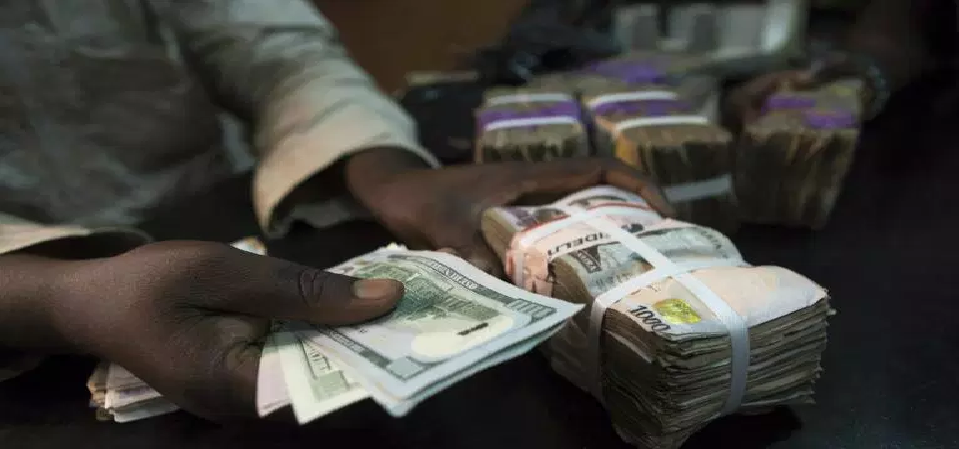
The naira has crashed further to its deepest fall, hitting N710/$1 on Wednesday at the parallel market, according to the rates published by exchange rate aggregator Aboki Forex.

The N710/$1 rate is a 6.7% crash from the naira’s N670/$1 position on Monday, worsening Nigeria’s inflation that was last pegged at 17.71 by the Nigerian Bureau of Statistics (NBS).

The Central Bank of Nigeria (CBN)’s policies and measures geared towards protecting the naira from hitting the bottom at the foreign exchange market have failed. There also appears to be no plan by the apex bank, which has taken to blame, to wedge the embattled currency from falling further.

Last week, the CBN warned Nigerians using naira to purchase dollar to desist or be prosecuted. Nigerians opting to save their funds in dollar indicates the loss of faith in Nigeria’s economy and the CBN’s ability to save the naira.

In addition to apportioning blame, the central bank had gone after some players in the parallel market. Last year, it had prohibited the sale of foreign currency to bureau de change operators, accusing them of sabotaging the naira by selling foreign currencies above the approved price.

The decision brought further burden on the naira as it compounded the liquidity challenge that has spurred dollar scarcity in the country.

The BDCs, Nigeria’s major operators of the parallel market, were major sources of foreign currency supply to those who don’t have access to the CBN.

Since then, the exchange rate has fallen from around N501/$1 to over N700/$1.

Experts have repeatedly issued timely warning that measures being taken by the CBN governor, Godwin Emefiele, to protect the naira will breed disaster.

The naira’s ordeal has been partly attributed to the central bank’s excess printing of new notes since 2015. The apex bank has been accused of minting money in excess to lend to the federal government.

The Ways and Means Advance, an arrangement through which the federal government can borrow from the CBN, has illegally yielded about N20 trillion converted to long term (30-year) loans to the government.

The CBN Act prohibits it from giving more than 5% of the federal government’s previous year’s revenue.

Another factor that has been fingered in the naira’s downfall is fuel importation. The oil windfall is supposed to serve as a panacea to Nigeria’s liquidity crisis, but it has greatly been undermined by lack of functioning refineries in the country, which forces the government to import refined petroleum products – spending earned foreign currencies that should have boosted the country’s foreign reserve and dollar liquidity.

The naira has greatly lost its value in both the parallel market and the Investor and Export window. In March 2014 when Emefiele became the CBN governor, the naira stood at N164 at the I&E window, but has depreciated through devaluations to N430.

The mission of Egoras – Refurbishing Africa and Import Substitution

0

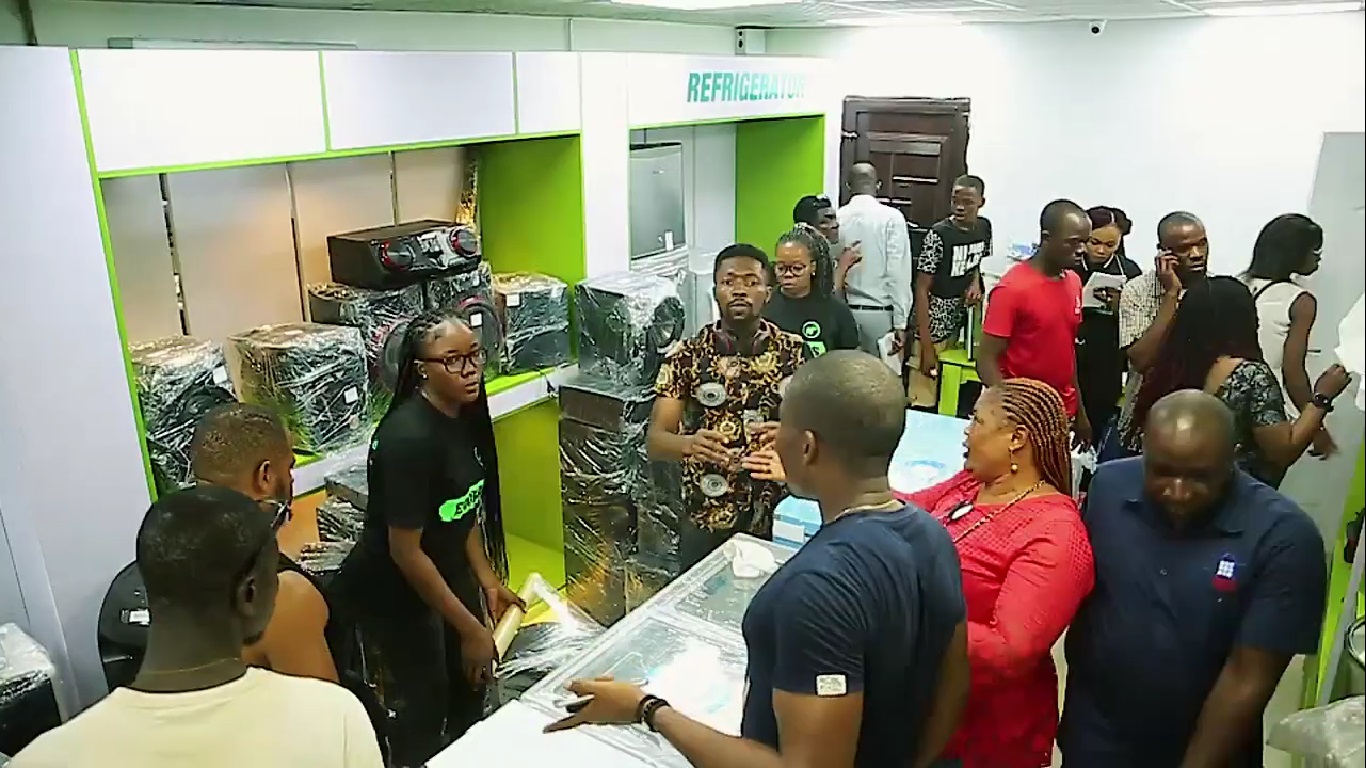
Simple: we buy your old or broken household items (electronics, furniture, phones, dishwashers, etc) and take them to the largest refurbishment factory in Nigeria. Our young engineers, trained by the best in the game, transform those items. In our Egoras supermarkets, we sell those items at close to 75% lower than what you could have bought a new import. We provide up to a 6-month warranty (some items, 12 months).

We create jobs (will hit more than 2,000 by Dec 2022), we clean the earth preventing wastes in the landfills, we train future makers and builders on practical engineering, we empower families by saving them money – and we HELP Naira by substituting imports. That is the mission of Egoras.

See locations of our stores here ; more are coming across Nigeria. (If you are a technical person, we’re hiring REAL engineers and technicians; you will work with CEO Ugoji Harry and also get to attend leadership developments events I will anchor)


Meaning of Egoras: Ras is a family of genes that undergo mutation to oncogenes.  “Ego” expresses self-esteem. When a product passes through our processes, it undergoes a transformation, making it better at the other end. We think your used items will become better with Egoras because in Egoras, our engineers do what biological RAS do in the positive aspect of transmutation of household items!