DD
MM
YYYY

PAGES

DD
MM
YYYY

spot_img

PAGES

Home Blog Page 5024

The Africa We Want: Reflections on e-government services in Rwanda

0

When I first ventured into this unfamiliar territory of e-governance, I must admit that I hadn’t really heard about Rwanda. This adventure into the public administration space as a marketing Professor with research interests in African Entrepreneurship and its intersections with Marketing is thanks to two colleagues at the now AACSB accredited university of Sharjah in the United Arab Emirates.

That debut article is entitled “An initial assessment of e-governance and public sector marketing in the UAE” published about 15 years ago in 2013, and yours truly, it was just that – an initial assessment! Looking back to a decade and a half, it is my intention to provide not just my readers, but also myself, some key highlights from that article prior to going into the business of the day, which is all about “e-governance in Rwanda” – excerpted below:

The 2010 UN e-Government survey described [the process] as a “citizen centric practice” – analogous to’ e-commerce’, which allows businesses to transact with each other more efficiently (B2B) and brings customers closer to businesses (B2C) [with the view to making] interactions more friendly, convenient, transparent, and inexpensive at three distinct levels, between government and citizens (G2C); government and business enterprises (G2B); and government and government (G2G) (e.g., inter-agency relationships).

“… [the key message for] public administration [is on becoming more] transparent, faster and accountable [meeting] societal needs and expectations through efficient public services and effective interaction between the people, businesses and government [i.e., through what is now generally accepted as] public sector marketing.”

The snippets from that non-African context carry on thus:

“…We can quite easily notice three key benefits [of e-government] – accessibility, convenience and cost-saving […] a ‘one-stop’ gateway, opening up government websites to the public in order to facilitate the provision of a variety of services to its citizens.”

Come in Rwanda – what’s the story?

The Irembo e-government services cover key areas from family, through identity, land administration, policing, health and education, to museums, governance, transport and museums.
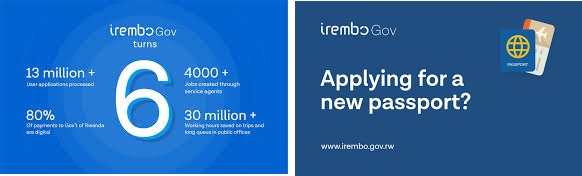
In all these, however, and obviously nothing to do with rankings, but health, identity, and museums, stand out for obvious reasons. In terms of health, that sector has been acknowledged as one of the best in Africa. For identity, post the 1994 genocide and the kwibuka, no Rwandan is identified based on ethnicity.

Building on this de-ethnicisation, the Genocide Memorials dotted across the country, demonstrate the coming of age of museums management in the country. Drilling down further, the following summary might be useful those unfamiliar with what Rwanda has on offer as the acclaimed “first world” of the “developing world”.

In no particular order, the e-government services cut across:

  • Family – notably certificate of residence; certificate of genocide survivors; certificate of “being single”; and certificate of “cohabitation”.
  • Health – notably the Community Based Health Insurance (Mutuelle de Sante).
  • Education – notably the application for equating foreign qualifications.
  • Governance – notably NGO registrations.
  • Land – notably e-payment services.
  • Police – notably motor vehicle inspection, driving license exam results, and renewal of driving licenses.
  • Immigration/Emigration – notably e-passport application processes.
  • Identification – notably certificate of “full identity”, nationality, and “being alive”.
  • Transport – notably transport authorisation – something that was especially demonstrated at the recent CHOGM event.

So, there you go, Irembo.Gov to the world! As we aspire to bringing the narrative of the “Africa we Want” narrative to fruition, it is my sincere hope that Africa (academics, policy-makers and other key stakeholders) are actually watching, and learning, from a well-established and articulated sibling, which also currently holds the revered office of the Commonwealth Chair-in-Office.

All said and done, it is my heartfelt hope that my peers in the “academe” begin to see the value of, not only “tasking”, but also challenging and nurturing students to “take on” this discourse to the next level through research.


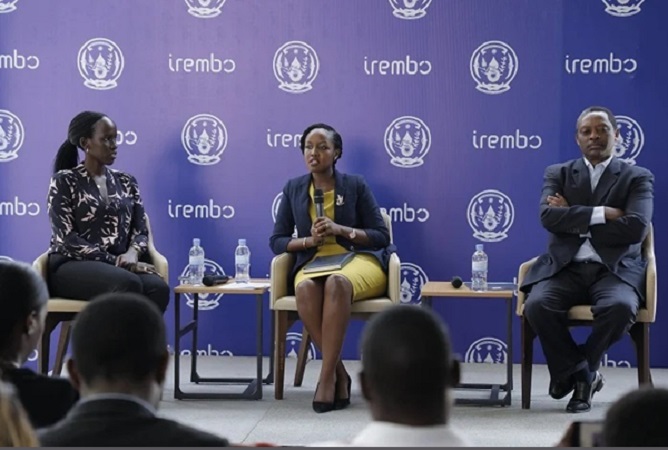
Featured photo: The Direct General of Irembo on the left, Minister of ICT and Innovation, and the Minister of Local Government on the right, during the talk show with journalists at the launch programme of Irembo.


Nnamdi O. Madichie is a Professor of Marketing & Entrepreneurship, University of Kigali, Rwanda
Human-Centered Product Design At Tekedia Institute

0

From Google California, Dr. Obinna Anya, on Aug 2, will be live on Tekedia Mini-MBA to teach “human-centered product design”; please take note. Come and learn #design which is centered around humans. Design wins markets because every great company has a great product.  To join the next edition of Tekedia Mini-MBA which begins Sept 12, go here .

Between Strategy, Popularity and Aggressiveness: How the Electioneering toward the 2023 Presidential Race is Unfolding

0

The Nigerian political terrain is being enlivened with motley episodes of theatrics and rhetoric that unearth and bolster on a quotidian basis toward the 2023 presidential election. From Osibanjo’s Judas-like genuflection to Obi’s dastardly party-defection and from the  Jagaban’s haughty acclamation of “emi lo kan”, to  Lawan’s disillusionment with the consensus candidate theory, the Nigerian electorates have been observing the political atmosphere with a normative faculty that predates the extant dispensation.

Furthermore, there is a bourgeoning force from the current political awakening in the youth faction that is curiously spicing up the whole scenery – it is a fine social awareness brewed from many years of untold hardship. In a previous article, I dissect the current political wave from a dialectic and critical sociology point of view and I observe that in connection with the defunct #endsars movement, the ongoing #get-your-pvc campaign across the social media platforms is snowballing like the Hermes winged feet. Never before in the history of Nigerian politics have the Nigerian youth characterize this much political consciousness. But still much thanks to the digital technology, a compelling force in modern democracy that the youth have largely enculturated themselves with.

From the updated statistics of the Nigerian registered voters by the Independent National Electoral Commission (INEC) published at Nairametrics, it is evident and interesting to note how the young population is aggressively positioning itself as a force to reckon with in the nation’s politics. About 9 million Nigerians have been newly registered and certified eligible voters adding to the voters list which stood at 84 Million in 2019. From the data, 6 million out of the new 8.6 million registrations were done by the youth; the youth currently accounts for 74 percent of the voters list with ages between 18 and 34 years. The figures are still adding up since the indefinite extension of the Continuous Voters Registration’s deadline on June 27. ‘’it’s the election of the youth’’ the INEC chairman, Mahmood Yakub declares.

The sentiment of the Nigerian youth is palpable and intelligible too. For many of the young electorates, the problem with Nigeria is a leadership paralysis invariably recycled by the same old political characters that have been ruling the nation since independence in 1960. Thus, the youth want direly the breaking of the gerontocracy jinx; they want a fresh perspective, a youthful and vibrant leadership that will reignite the good fate of the nation and bring hope to the common man with the required agility.

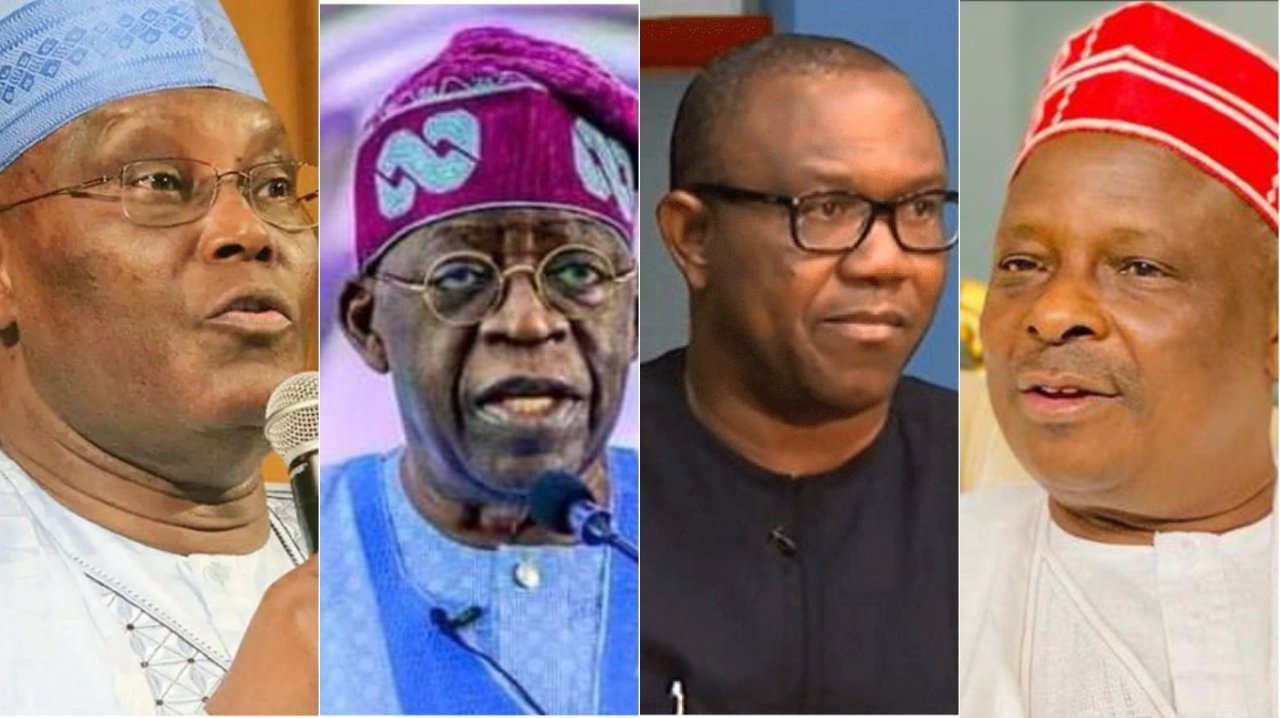
Peter Obi, the flag bearer of the labour party and youngest of the three major presidential candidates is highly favoured among the Nigerian youth partly because of his relative youthfulness and partly because of his apparent enthusiasm in articulating his political ideas. Data from Google trends analyzed by Ripples Nigeria reveals Obi is one of the most searched and talked about politicians on the social media with most of the searches coming from the south.

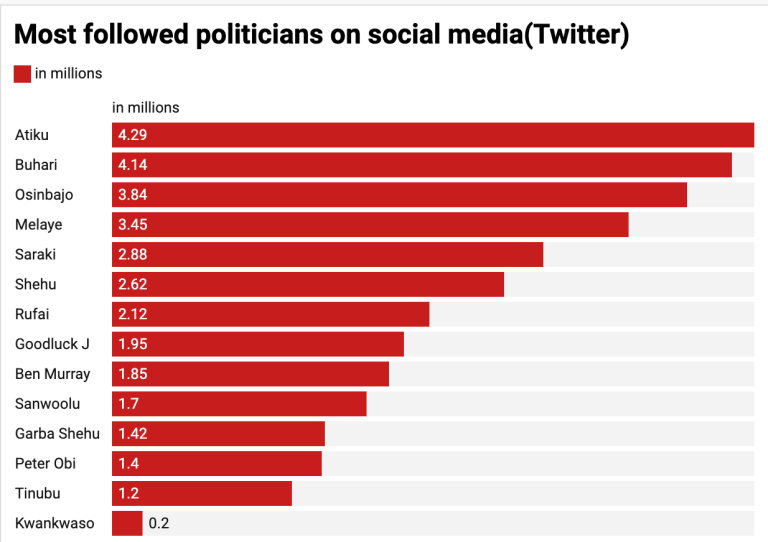
Statistics based on followership on Twitter, the most widely used medium for campaign, puts Obi followership strength at 1.4 Million, though considerably below Atiku’s 4.2 Million and a little above Tinubu’s 1.2 Million. However, Obi’s social media presence is said to be growing rapidly and it’s added 357 thousand new followers in June with the #i-am-obidient campaign gathering momentum daily on the internet.

The popularity of Peter Obi among the Nigerian youth and on the social media also recalls the Machiavellian golden rule of how civil principalities are established through the popular platform of the people. According to Niccolo Machiavelli, ‘’the people only wants to not be oppressed, hence they tend to favour passionately the prince that appeal to that sentiment. Furthermore, the prince who gets the favour of the people has much less difficulty maintaining his position since the people’s demand is simple and righteous’’. Since the fear of many Nigerian youths is simply not to allow the same old politicians to continue to govern the affairs of the nation, Obi’s candidacy stands striking among this demography, and he seems to be the least agitated among the three major contenders in the presidential race.

However, it must be stated, the alternative platform to power which is the elitist route. This is a platform where Obi seems to be the least strong compared to Bola Ahmed Tinubu and former vice president, Atiku Abubarka. Tinubu’s membership of the ruling party and his self-built political network provides his candidacy with a great leverage. Among the elite, fortune is determined not by popular ideology or by public sentiment but by one’s ability to reconcile vested interests which is a difficult affair in real politics. Thus, according to Machiavelli, seeking power through the assistance of the nobles create a much too difficult terrain to make quick decisions since “one cannot by fair dealing and without causing injuries to others satisfy the elites”.

The dilemma of the elitist platform played out twice during the All Progressives Congress’ electioneering. The first great indecision was in the party’s pre-primaries which agitated Tinubu and almost thwarted his long-term political ambition with the debate over south zoning and the consensus candidate theory. Hence, his “emi lo kan” coinage. Following Tinubu’s trojan-horse victory within the party, the second indecision appears in the post-primaries with a new debate on the selection rule for a running mate. After series of consultation and sending of tentative name to the INEC, the party flag bearer eventually selected his running mate, former Governor Kasim Shettima of Bornu state, which arrived at a much less desired muslim-muslim ticket for the party.

Chief Wale Owu, a member of the APC described the muslim-muslim candidacy as ‘’bold, strategic and politically expedient’’ while speaking in voices with Edmund Obilo last Saturday on splash fm 105.5. According to the progressives’ apologist, the muslim-muslim ticket may not be politically correct to some Nigerians, but it is politically expedient to the current realities of the APC.

The great indecision is not restricted to the progressives. There are also conspiracy theories about how some elite members of the opposition party, Peoples Democratic Party, at the regional level in the southwest have demonstrated indifference or half-hearted support to party members in the presidential campaigns due to a fear of being overhauled or shortchanged in their states by the ruling party, especially after witnessing the APC’s clean sweep in Ekiti. However, the recent victory of the PDP in Osun State should allay this fear.

Whether taking the elite way or the popular route in the quest for power, the rational politician seek a thorough understanding of the key stakeholders involved and how he could best appeal to their sentiments. When he reaches such awakening, he swings into action with bold moves.

Acquisition, and How to Fund a Big Deal: Insights from Zimbabwe Billionaire, Strive Misiyawa

0
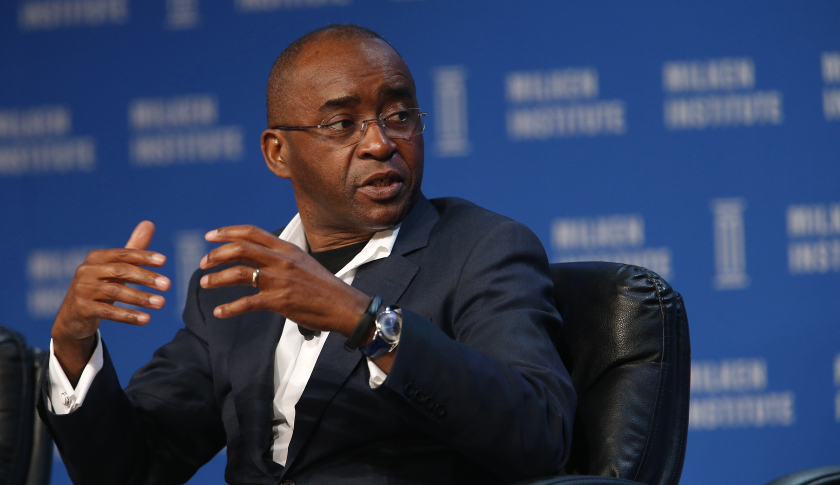
Strive Masiyiwa, founder and chairman of Econet Wireless Global Ltd., speaks during the annual Milken Institute Global Conference in Beverly Hills , California, U.S., on Monday, May 2, 2016. The conference gathers attendees to explore solutions to today's most pressing challenges in financial markets, industry sectors, health, government and education. Photographer: Patrick T. Fallon/Bloomberg via Getty Images

Like human beings sometimes decide to increase or cut down on weight with respect to their health conditions or in preparation for a physical contest, businesses too sometimes consider options about shedding or increasing weight in order to adapt to their current economic realities. Acquisition and divestiture are concepts in business management that describe how companies endeavour to remain in business and maintain a reasonable level of economic profit by increasing or shedding of weight respectively.

Technically, acquisition is when a company takes up or absorb another company or a part of another company into itself to improve its production capacity, whereas divestiture is when a company disposes of a part or a whole of its business unit or asset through sale, exchange, closure or bankruptcy. Both concepts are intertwined and are often used simultaneously.

Strategic moves in acquisition help a business to develop a consolidated force to weather its supply chain hassles or expand its production line or market niche and thereby have a competitive edge in its industry. My previous article which observes the Nigeria’s agritech investment climate in the post covid-19 reveals how some agritech start-ups fared well in the heat of the pandemic through integration or acquisition of e-commerce platforms that enabled them to circumvent the global supply chain downtime during the lockdown. Further analysis also shows the ability to make a bold move with divestiture or acquisition or as the case may be is characteristic of high performance CEOs that soon push their brands to the top quintile of economic profit.

However, it has been observed that many of the erring CEOs are invariably disoriented by a lack of funding, the legal and technical rigor involved or a fear of losing out in the acquisition process. Strive Misiyawa, Founder and Chairman of Econet and Zimbabwean richest business magnet addressed the issue, providing insight on how to strategically finance a big acquisition.

Mr Misiyawa’s account of the big acquisition of Noetel South Africa by Liquid Telecom got featured in The Entrepreneur Africa in September 2020. According to Misiyawa, the biggest acquisition done by Liquid Telecom, a company he represents, was to buy Neotel South Africa from Tata communications of India about 4 years ago. That’s four year to the time the deal was reported. The deal cost more than $US500million or about ZAR 6.5 billion.

In Mr Misiyawa words, here is how the funding went:

  1. We sold shares to one strategic Institutional Investor to raise 30% (US$150m). Banks will always insist on a deal like this that you put up equity.
  2.  We borrowed 70% from a consortium of South African banks. This was a “bridge facility,” which means we had to replace it within one year.
  3. After the deal closed (“Deal Closure”), we reorganized the business quickly, and integrated it into a wholly-owned subsidiary of Liquid Telecom. Then we went to the “Bond Market” to borrow five-year money to replace “The Bridge”. (This is how Entrepreneurs talk).

We published an international prospectus similar to an IPO (Initial Public Offering) prospectus, but it was only to Bond Investors. We did pitches to more than 100 Bond Investors in South Africa, Europe, USA, and Asia in just three weeks! Yes, it was just like Shark Tank with very, very serious global investors!

It was issued by the Irish Stock Exchange. We managed to raise US$750m in the “Bond Issuance,” which was “Oversubscribed”.

4.We then repaid the “Bridge Facility Banks” their money from the Bond Money.

Strive Misiyawa’s analysis bespeaks agility, a deliberate, controlled acceleration that inspires the needed force to win.

How Do I Choose the Best SEO Company in My Local Area?

0

Did you know that only 30% of small businesses in the United States utilize SEO strategies?

Search engine optimization helps businesses increase traffic to their websites. This results in increased revenue. 

If you are a small business owner and want to improve your marketing efforts, you should find an SEO company. 

Continue reading to discover the essential factors to consider when finding the best SEO company! 

Company Reviews

One of the most critical factors in finding the best SEO company is their reviews. 

Online reviews can give you specific examples of how well or poorly the company has done. Anyone can leave a review, which makes it easy to gather information. With the help of previous customers, you can decide if their services will benefit your company. 

If you come across negative reviews, don’t be afraid to address them with their customer service team. Management and policies evolve and a previous issue might have been resolved.  

Price of Services 

The best SEO firm will include a breakdown of their fees online.

If a company doesn’t provide its prices online, you can consult with them for a pricing sheet. Be wary of companies that don’t have consistent prices or written contracts. 

Some of the prices you’ll want to ask about include linking and the length of the content. By reading this blog post, you can discover the importance of using internal and external links. It’s important to understand your needs before looking at prices. 

Customer Service 

If you want innovative marketing, but don’t want a headache, you should look into a company’s customer service.

Online reviews can provide insight into the business’s customer service. Another way that you can learn more is by calling and talking to the employees. As you come up with questions for the business, write them down and place a call when you have a few things to talk about. 

Not only will you learn more about prices and services, but you will also see how helpful and friendly the team is. 

Location of Business 

Working with a company in another state might help save you a few bucks, but most people discover that local is better.

When you find a local SEO company, you have access to people with knowledge of the area. The chances of the content team knowing of your business or community increase when you stick within a few miles. 

Pay attention to the location of the SEO company you are considering. It can also influence the language and trends seen throughout their work. 

Work With the Best SEO Company 

There are many businesses to choose from, but finding the best SEO company will take time and research. 

Reviews are a great way to gain insight into how the company functions and if its customers are happy. Although a company might have some struggles, if they don’t have a terrible reputation, it’s worth a try. Talking to the team and noticing the quality of service will also give you a better idea. 

Make sure you read our blog for more information about killer content and improving your business!