DD
MM
YYYY

PAGES

DD
MM
YYYY

spot_img

PAGES

Home Blog Page 5027

Nigeria Fails World Bank’s Debt Disclosure Rating

1

The World Bank said Monday that Nigeria has failed to meet full disclosure rating conditions on debt reporting for three consecutive years, adding an ugly remark to the nation’s unpleasant debt story.

Nigeria’s public debt stock has risen significantly in the last five years as the country battles economic headwinds emanating from covid-19 and poor fiscal policies. Nigeria’s total public debt stock stood at N41.60 trillion or $100.07 billion as at March 31, 2022, according to data from Debt Management Office (DMO).

The report said the World Bank has in the last three years been monitoring how transparent Nigeria is in its debt reporting practices and found that it did not meet “full disclosure” policy it set for International Development Association (IDA) countries.

“Global studies indicate that debt transparency directly contributes to higher credit ratings, lower borrowing costs, and foreign direct investment (FDI) inflows. Hence, the debt management office took the strategic stance to focus on debt transparency efforts and took several actions to improve public debt reporting and disclosure,” it said.

The Washington-based financial body said that Nigeria failed to publish Annual Borrowing Plans (ABP), adding that guaranteed and non-guaranteed debts were not reported while information on recently contracted loans was also not provided.

The World Bank said these are indicators that Nigeria did not meet the “full disclosure” rating for every single one of the nine categories on the debt transparency Heat Map.

According to the financial organization, debt transparency Heat Map involves data accessibility; instrument coverage, sectoral coverage, information on the contracted loans, periodicity, time range, debt management strategy, annual borrowing plan and other debt statistics/ contingent liabilities (CLs).

Nigeria has been borrowing internally to meet its budget shortfalls. Domestic borrowing accounts for more than 70% of the country’s total debt, including the central bank’s Ways and Means Advances that has topped N19 trillion, according to data from the DMO.

Ways and Means Advances is a loan facility through which the Central Bank of Nigeria finances the government’s budget’s shortfalls.

While there is growing concern over Nigeria’s rising public debt, whose servicing is currently taking about 95% of the country’s revenue, the Ways and Means Advances has become another cause for alarm.

The CBN admitted that the Federal Government’s borrowing from it through the Ways and Means Advances could have adverse effects on the bank’s monetary policy to the detriment of domestic prices and exchange rates.

“The direct consequence of central banks’ financing of deficits are distortions or surges in monetary base leading to adverse effect on domestic prices and exchange rates i.e. macroeconomic instability because of excess liquidity that has been injected into the economy,” it said on its website.

Last November, the World Bank also warned the Nigerian government against borrowing from the CBN to finance budget deficits, saying it puts fiscal pressures on the country’s expenditures. In addition, borrowing from the CBN through the Ways and Means Advances will increase the cost of debt in Nigeria, the World Bank said.

Tekedia Institute Adds/Expands Courses in Selected Programs

0

We won the US$60,000 Mhagic Velocity Prize as the best Business School for Entrepreneurs in Africa; excited to use that moment on this piece. It reminds us of the power of vision and innovation. Good People,  Tekedia Institute is excited to announce that we’re adding more topics or expanding existing courseware in the following programs:

  1. Tekedia Startup Masterclass: from Startup to Unicorn
  2. Tekedia Practice with Internship (agribusiness, digital tech, new energy tracks)
  3. Tekedia Industries (agribusiness, digital tech, new energy tracks)

The topics are as follows:

  1. Starting a business: key legal components (Nigeria, USA): examines critical legal issues including founders agreement, NDA,  etc.
  2. Fundraising for Startups and new businesses: explains pitch deck, fundraising narratives, cap table, term sheet, etc.
  3. Building the first version of your product
  4. How to listen to customers
  5. Go-to-market and influencer marketing strategies
  6. How to hire your startup initial technical staff

The courseware will go live on Monday, July 18, 2022 in the Board. We continue to welcome feedback on areas members want the Institute to deepen materials.  Many sample documents like founders agreement, SAFE agreement, etc are already in the Board. You can learn more about Tekedia programs here; we are the best business school for the mastery of entrepreneurial capitalism in Africa.

Africa Ready For Crypto Adoption, Says A Crypto Exchange CEO

0
Bitcoin is soaring

The Chief Executive Officer of Binance, Changpeng Zhao, during his recent trip to Africa, Ivory Coast precisely, disclosed that Africa is ready for crypto adoption. According to him, Blockchain provides a level of financial accessibility.

During his trip to the francophone country, he announced Binance’s partnership with Jokkolabs, which he disclosed to be Africa’s first social impact hub. He revealed that with this partnership, Binance will launch a blockchain awareness and education program across Francophone Africa.

Such partnership will further reinforce the region as a hub of blockchain innovation and entrepreneurship. No doubt there is a growing rate of crypto adoption in the African region with a 1,200% increase in received crypto volume between 2020 and 2021, which accelerated the adoption of digital assets in Africa, making it the fastest adoption rate in the world.

A UN research disclosed Kenya as the leading country in the African region in crypto adoption. About 8.5% of Kenya’s population own digital assets, which makes up around 4.25 million people.

Africa is said to amass a whopping $105.6bn worth of cryptocurrencies in forecasts for the year ending in June 2021, which was driven by peer-to-peer (P2P) transactions in key growth markets.

The African region is disclosed to be the region with the highest user rate of P2P platforms as they account for 1.2% of all African transaction volume. The continent recorded a transaction volume of $17 million in May 2021.

The growth of cryptocurrency in the African region is growing significantly as some countries on the continent are even making plans to launch their own virtual money backed by the central bank. A case study in the Central African Republic (CAR) that has approved Bitcoin as a legal tender.

Also, countries like Morocco, Tunisia, Kenya, Madagascar, etc are still in the research stages. Africa’s massive adoption for crypto doesn’t come as a surprise at all, because locals in these African countries have always been on the lookout for alternatives to the weak financial infrastructure in the region.

Peer-to-peer payments, remittances and savings are said to be the major drivers of adoption by residents. A lot of people in the African region see cryptocurrencies as an escape from devalued currencies, government policies, and inflation.

Also, the high cost of sending cash home from overseas is a major motivator for the growing adoption of virtual currencies in the African continent.

Few Other Factors Influencing The Adoption Of Cryptocurrencies in Africa

  • Devaluation Of Fiat Currencies: Due to the instability of fiat currencies and a lack of faith in the economic systems, most Africans take financial refuge in cryptocurrencies to preserve their savings.
  • International Trade: As cryptocurrencies have become widely accepted globally, it has become easier to use in international trades. Most African importers and exporters have affirmed the benefits of cryptocurrencies in international trade. The use of crypto in international trade has helped to reduce the time lag as transactions can now be made instantly.
  • User Education: According to  Wikipedia, young people make up 60% of the African population. African youths are keen on finding new avenues to improve their standard of living as well as make money. 

Cryptocurrency adoption in Africa continues to increase at a high rate, tackling so many challenges as there is an expected boom of crypto adoption in the next few years.

MTN Collaborates With Mobility Tech Firm ETAP, To Reward Nigerian Drivers For Good Driving

0

Multinational mobile telecommunications company, MTN has partnered with ETAP a mobility technology company to reward Nigerian drivers for keeping up with good driving behavior.

Leveraging ETAP’s app which makes use of advanced telematics to monitor driving such as braking, speed, acceleration, concerning, and focus, MTN customers across Nigeria will be able to earn safe driving points that can be converted into vouchers for fuel, shopping vouchers for the most in-demand retail outlets, cinema and concert tickets, as well as vouchers for other exciting experiences.

ETAP which is known to operate in Africa with its headquarters in Irvine California, through its partnership with MTN, which is one of Africa’s telecommunications giants, the app will no doubt be accessible to millions of Nigerians who will now begin to enjoy safe driving points with other benefits when the ETAP app captures their good driving habits.

This service is not for all drivers in Nigeria, as it is exclusively for only those who are MTN subscribers. One amazing thing about this service is that drivers using this app do not need to pay for internet access, as all that has been covered by ETAP through the partnership deal, which means that even without mobile data, drivers can still earn safe driving points.

MTN users of the ETAP app will also get a free 35-point car inspection at Autofast locations in any Total filling stations across Nigeria. The app also presents these drivers with a leaderboard, where they can monitor it and get actionable insights and tips on how to improve their driving.

Speaking on this initiative, the chief marketing officer of MTN Nigeria, Adia Sowho disclosed that the company ensures to always connect its customers with exciting products and experiences, as this partnership with ETAP perfectly aligns with the company’s mission.

ETAP which recently raised a $1.5 million pre-seed to push its business of providing car insurance, is adopting this model to i people with rewards that reduce the risk associated with car insurance.

ETAP’s partnership with MTN is very strategic because MTN is the largest mobile telecom operator in Nigeria, with roughly over 65 million internet subscribers, which means that such partnership will definitely cover a lot of drivers in the country.

This partnership will hopefully drive real change among a large percentage of drivers in Nigeria, as it will ultimately improve the day-to-day driving of millions of people in the country. It will also lead to behavioral change among these drivers, making the road safer for motorists and pedestrians.

The rewards attached to this initiative is indeed a brilliant technique that will spur these drivers to be intentional with safe driving.

One of the rewards is the opportunity for drivers to buy insurance in 90 seconds and complete claims in three minutes or less, with flexible coverage options such as daily, weekly, monthly, quarterly, and annually plans depending on their preferred plan.

Aside from the bad roads which also contribute to accidents, most drivers continue to ignore traffic rules and road signs which are the factors that have caused many accidents on Nigerian roads. Hopefully, with this partnership, road crashes will be reduced, as it has been identified as one of the leading causes of death in Nigeria.

As Euro Falls, Africa Must learn from Russia’s Resilience And Utilization of Natural Resources

1

A few years ago, Ghana pegged 1 cedi to 1 US Dollars. Today, many things have gone bad; you need at least 8 cedi to get 1 USD now. It did not take long.

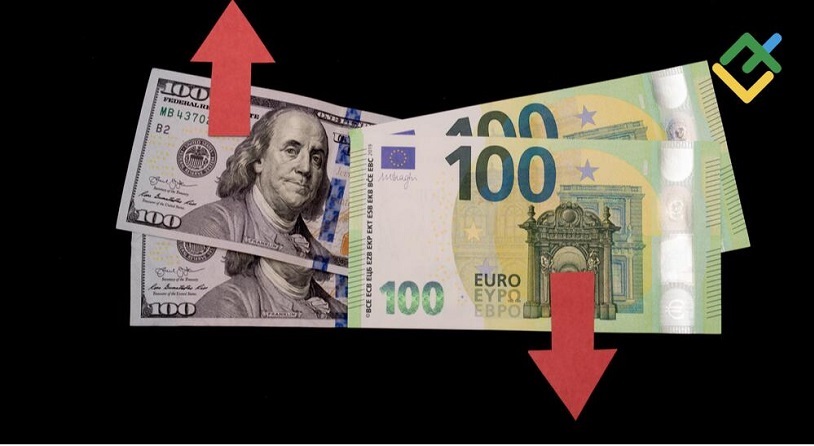
But for the Euro, that one is intriguing. For the first time in 20 years, 1 USD = 1 Euro and the USD is already pulling ahead in some exchanges. If Russia does go ahead and pause gas supply to Germany, the EU may be rattled.

There are many lessons here: Africa has no reason to be looking for loans and begging the world for help. Look at Russia, they have the same natural resources that we have – and as Europe sanctions it,  both follow the same trajectory: equal opportunity pains. Indeed, they have built a fairly decent economy that can withstand a high voltage sanction. And that voltage is burning kingdoms, empires and nations, with Russia marginally affected, at least in the short-term.

Sure, not here to praise Russia, but I must note that I am impressed by their economic defense and they did it purely from their natural resource wealth. Africa has no reason not to do better. Simply, Russia’s natural resources have worked for it!

In the Igbo Nation, the elders will say “ochu nwa okuko nwe ada, nwa okuko nwe nwenwe oso” [he who chases a chicken will fall and the chicken will get away]. That can only happen when you have economic resilience. I call on the leaders of Nigeria and Africa to architect a future where we build systems that will lift a generation out of poverty and hopelessness.

Comment on LinkedIn Feed

Comment: Context is also important here. Russia has been an established empire for centuries, so straight comparison with fragmented African economies is probably inaccurate. That said, I think I understand the message.

My Response: “Russia has been an established empire for centuries” – that is not relevant here. The USSR collapsed because they failed to build a resilient economy. With oil mess, etc, the empire broke down. Before the birth of the new Russia Federation (RF), many African countries have been around. That messed up USSR, out of it, Russia has risen. If they had not done that, what happened to the old USSR would have happened to RF last quarter.

Africa’s key economies are older than the new RF (yes, post USSR Russia) which withstood the sanctions. That is my message. So, the imperial Russia is not relevant; what is relevant is that the post-USSR Russia did not go down on what killed the old communist empire.

Comment 2: For knowledge sake, how does fiat redenomination help a people’s currency? Does it have any positive impact or value adding? Sierra Leone recently did and I would really want to learn how it benefits a country. Thank you in advance Prof.

Another member Responds to Comment 2: There is absolutely little to no economic value for currency redomination. It is mostly done for accounting or record keeping convenience, or other purposes of cosmetic value. Imagine if you had to be accounting for business using too many digits. It’s also to avoid the Venezuela situation where you would now need to weigh currency notes as opposed to counting them on face value to pay for goods or services. To understand the Ghana situation properly, replace 8 cedi to 1 USD with 80,000 Cedi to 1 USD.

I add that this is only to reflect the actual pre-redomination nominal exchange rate cedi versus the usd. To get the equivalent real value of the usd in Ghana of today, you would have to adjust for purchasing power parity.