DD
MM
YYYY

PAGES

DD
MM
YYYY

spot_img

PAGES

Home Blog Page 5039

Nigeria Listed Among Top 10 Countries With Worst Inflation Rate By World Bank

0

Inflation in economic terms refers to the rate at which the general prices of goods and services rise incessantly in a given country. As inflation continues to dominate the global economy, global inflationary pressures have increased in Q2 2022, following the impact of the Russian-Ukraine war.

The world bank recently published a list of the top 10 countries with the worst inflation rate, with Nigeria occupying the 8th position with an annual inflation rate of 16.95%. The list was topped by the Republic of Sudan, having an inflation rate of 382.82%.

Check out the list of Top 10 countries with the worst inflation rate published by the World Bank

1.) Sudan – 382.82%

  • The Republic of Sudan recorded the worst inflation rate in the world in 2021 with 382.82%, a multiple of the 150.32% recorded in the previous year.
  • Sudan’s inflation rate has decreased to 220.7% in April 2022 from 263.2% recorded in March 2022.

2.) Lebanon – 154.76%

  • Lebanon’s inflation rate almost doubled to 154.8% in 2021 from 84.86% recorded in 2020.
  • Lebanon’s annual inflation rate increased to a three-month high of 211.43% in May 2022 from April’s five-month low of 206.24%, pointing to the highest level since February,

3.) Zimbabwe – 98.55%

  • Zimbabwe’s inflation rate trickled down to 98.55% from 557.2% recorded in the previous year.
  • It is worth noting that Zimbabwe’s inflation rate increased to 191.6% in June 2020, to its highest rate in over one year.

4.)Suriname – 59.11%

  • Suriname, a small country on the north-eastern coast of South America, had Its inflation rate jump significantly to 59.11% in 2021 from 34.89% recorded in 2020.
  • On a positive note, the inflation rate in Suriname decreased to 59.8% in April 2022 from 62.2%recorded in the previous month.

5.) Ethiopia – 26.83%

  • Ethiopia’s annual inflation rate rose to 26.84% in 2021 from 20.36% recorded in the preceding year.
  • According to AfDB, the GDP growth of Ethiopia is projected to fall to 4.8% in 2022 but pick up to 5.7% in 2023, driven by industry and by private consumption and investment.
  • The annual inflation rate in Ethiopia eased for the first time in four months to 34% in June of 2022, from 37.7% recorded in the previous month.

6.) Zambia – 22.02%

  • Zambia recorded an inflation rate of 22.02% in 2021, a significant increase compared to 15.73% recorded in the previous year.
  • Meanwhile, Zambia’s annual inflation rate decelerated for the 11th straight month to 9.7% in June of 2022, from 10.2% in the previous month.

7.) Turkey – 19.59%

  • Turkey saw its inflation rate climb to 19.59% in 2021 from 12.28% recorded in 2020.
  • Meanwhile, the inflation rate of Turkey accelerated for the 13th consecutive month to 78.62% in June of 2022, the highest since September 1998.

8.) Nigeria – 16.95%

  • Nigeria’s inflation rate increased to 16.95% in 2021, from 13.25% recorded in the previous year. Nigeria is the most populous country on the African continent and the largest economy on the continent.
  • Nigeria’s inflation rate accelerated to 17.71% in May 2022 from 16.82% recorded in the previous month. The National Bureau of Statistics (NBS) is set to release the inflation figures for June 2022 on Friday, 15th July 2022.

9.) Haiti – 16.84%

  • Its annual inflation rate stood at 16.84% in 2021, a significant decline compared to 22.79% recorded in the previous year.
  • Although Haiti’s economy was contracting and facing significant fiscal imbalances before the COVID-19 pandemic, its impacts triggered an even greater economic downturn. In 2020, GDP contracted 3.3% and is estimated to have contracted by 1.8% in 2021.
  • Haiti’s inflation rate climbed further in February 2022 to 25.17%, from 23.95% recorded in January.

10.)  Guinea – 12.59%

  • The inflation rate of Guinea rose to 12.59% in 2021, from 10.6% recorded in the previous year. This is also the highest inflation rate recorded by the country since 2012 when its inflation rate topped 15.2%.
  • Meanwhile, recent data shows that Guinea’s inflation rate dropped to 10.99% in April 2022.

From the list above, it is obvious that the African region remains the worst hit, with six of them occupying the world bank list of countries with the worst inflation rate. According to the world bank, the global inflation rate, measured by the consumer price index rose to 3.42% in 2021 from 1.92% recorded in the previous year, hitting the highest level in nine years.

Recall that earlier this month, the world bank stated that the federal government of Nigeria’s response to inflation is inadequate as the country continues to suffers double-digit inflation.

It disclosed that Nigeria’s inflation rate is pushing 7 million Nigerians into poverty, food insecurity, and fueling criminality in the country. The World Bank added that the number of poor Nigerians is projected to hit 95.1 million in 2022, warning that many non-poor Nigerians were only one small shock away from falling into poverty.

It also cited negligence on the part of the Nigerian government, stating that despite the inflation shock pushing millions of Nigerians into poverty, the government continues to put a lackluster attitude without any concerted action towards curbing the inflation.

Although the Central Bank of Nigeria has taken a step to unify the official exchange rate, unfortunately, the exchange rate is not yet reflective of the market forces. The world bank, therefore, urged the CBN to aim for greater flexibility by re-establishing a dollar inter-bank market, also allowing banks to trade currency on their behalf to increase liquidity and move towards a single rate.

It warned that if serious measures are not put in place to curb the inflation rate, Nigeria might have one of the highest inflation rates globally. As inflation continues to ravage the global economy, global inflation has been forecasted to reach 7.9% in 2022, and 5.0% in 2023.

Countries with greater dependency have been predicted to feel higher inflationary effects in 2022. Russia’s invasion of Ukraine has been attributed as the main factor contributing to higher inflammatory pressures.

Higher volatility in commodities, Transportation problems, and supply disruptions have no doubt disrupted global supply chains which also inflated input prices.

N22bn Investment Scam: Court Orders Couple Ajetunmobi to Pay Investors N18.8bn

0

The class action suit brought against Nigerian couple, Bamise and Elizabeth Ajetunmobi, over N18.8 billion investment fraud has ended in favor of the plaintiffs.

The Lagos High Court Sitting in Osborne, Ikoyi delivered the judgment in favor of 27 aggrieved Nigerian investors who were scammed by the couple, ordering them to refund the money with interest.

The couple had allegedly fled the country after the investors raised an alarm that they have been scammed of N22 billion, prompting the lawsuit.

In his ruling, Justice Toyin Oyekan-Abdullahi, dismissed all the preliminary objections filed by the defendants and exited the CBN from the proceedings.

The defendants in the suit are Imagine Global Holding Company Ltd, Imagine Global Solutions Ltd, and the Nigerian couple, Bamise and Elizabeth Ajetunmobi.

Imagine Global Solutions Ltd claimed to be running a micro lending service to small and medium businesses, offering 22 per cent as interest on loans received and 10 per cent returns to investors.

The court granted the reliefs sought by the 1st to 17th claimants’ counsel- Adetunji Adedoyin-Adeniyi in the sum of N15.5 Billion and the rest of the Claimants’ represented by the law firm of Banwo and Ighodalo in the sum of N3.3 Billion totaling the sum of 18.8 Billion.

The court had earlier frozen funds and assets of the defendants worldwide as well as all monies standing to their credit.

According to the claimants, the sum is the outstanding investments and return on investments accruing to them from the defendants.

The notorious case is one of many. Earlier in the year, over 4,500 investors called out Chinmark Investment Group for fraudulently collecting billions of naira from Nigerians, offering high ROI that never materialized – the case is still pending.

Nigerians are said to be falling victims to such investment schemes mainly due to greed and desperation to put their idle fund into use.

However, there is belief that the court’s judgment against Bamise and Elizabeth Ajetunmobi will serve as a deterrent to others.

The reliefs granted by the court are as follows:

  1. A DECLARATION that this Honourable Court is clothed with jurisdictional competence to enforce the written contracts executed between the parties herein vide this Originating Summons, on the ground that the underlying issues borders on interpretation of written contracts, that arose out of the Claimants’ respective investment agreements and the failure of the Defendants to comply with the terms of the said agreements.
  2. A DECLARATION that the Defendants’ failure to comply with the terms of the Investment Agreements executed between the Claimants and the 2nd Defendant, vis-à-vis, the failure of the Defendants to pay the Claimants their investment sums as agreed in the confirmation of investment, constitute a breach of the contract validly entered between the Claimants and the 2nd Defendant.
  3. AN ORDER of this Honourable Court mandating, compelling and directing the Defendants to forthwith pay the 1st – 17th Claimants jointly and severally pay the total sum of N15,541,350,000.00{Fifteen Billion, Five Hundred and Forty-One Million, Three Hundred and Fifty Thousand Naira} at 10.0% interest per annum being the outstanding investment sums accruing to the 1st – 17th Claimants who are investors; together with all other listed investors, in the 2nd Defendant’s company to wit; OLABODE OLANIPEKUN {N79,000,000.00}, SEGUN ANIMASHAUN {N200,000,000.00}, ABIOYE IDRIS {N1,954,000,000.00}, ERHI OJOBOH {N2,073,000,000.00}, LAUREL ONUMONU {N52,750,000.00}, OLARENWAJU ADEROUNMU{N1,500,000,000.00}, EDET UDO {N1,220,000,000.00}, CHIKEZIE NWOKOCHA {N1,760,740,000.00}, ONYEKACHI ONUBOGU {N412,500,000.00}, ADERONKE SALAMI {N30,000,000.00}, KOLADE STEPHEN HAMBOLU {N910,000,000.00}, MORAN MARIO MALIK {N200,000,000.00}, GRANTIFF INVESTMENT LIMITED {N1,338,100,000.00}, AFRINVEST ASSET MANAGEMENT LIMITED {N1,000,000,000.00}, GLOBAL STONECREST BUREAU DE CHANGE {N30,000,000.00}, HOLLANDPARK BUREAU DE CHANGE {N25,000,000.00}, ALSTOM MATRIX LIMITED {N50,000,000.00}, MAINSTREET CAPITAL LIMITED {N610,000,000.00}, SUREBIDS LIMITED {N430,000,000.00}, BLUECRAFT GLOBAL STANDARD {N200,000,000.00}, OLUWAKEMI ADENAIKE {N122,500,000.00}, TITI AGBAJE {N118,800,000.00}, JAPHETH UDOM {N138,000,000.00}, SHADE KELEKO {N111,000,000.00}, MOSUNMOLA AKINYANJU {N94,160,000.00}, TEMITOPE OGUNJOBI {N91,500,000.00}, IKECHUKWU ILOGHALU {N88,000,000.00}, URITUS CONSULT CAPITAL LIMITED {N60,000,000.00}, JUDITH IJEOMA ORONSAYE {N55,000,000.00}, EMMANUEL STEPHEN AYEGBA {N42,000,000.00}, OLUDARE OLADOYE {N24,000,000.00}, OMOTAYO LAWAL {N20,000,000.00}, BOSOLA MARTINS {N10,000,000.00}, OLUGBENGA ORESANYA {N8,000,000.00}, OYEBODE OSHOBI {N7,000,000.00}, SEGUN IYANDA {N5,000,000.00}, DIPO ILUYOMADE {N2,700,000.00}, KEMI MORAKINYO {N1,000,000.00}, BUNMI OSHOBI {N500,000.00}, HENRIETTA KADIRI {N540,000,000.00}, OMAMIKE EYENIKE {N6,500,000.00}, CAXTON OLUMIDE OHIOMOBA {N40,000,000.00}, TENNYSON EMUOBONUVIE {N100,000,000.00}, ADESINA OLAIDE ADEDEJI {N172,000,000.00}, PRISTINE DEVELOPMENT COMPANY {N50,000,000.00}, SANDRA ONYEDIKA YOROH {N76,000,000.00}, CAROLINE OSEROGHENE EDEH {N200,000,000.00}, RITA UCHE-NNOKA {N10,000,000.00}, ONYEDIKACHI KELLY-KANU {N14.000,000.00}, OBISESAN IFEDOLAPO {N56,600,000.00} upon the maturity of the respective investments and the accrued return on investments thereon.
  4. AN ORDER of this Honourable Court mandating, compelling and directing the Defendants to forthwith pay the 18th – 27th Claimants jointly and severally pay the total sum of N3,387,450,000.00 (Three Billion, Three Hundred and Eight-Seven Million, Four Hundred and Fifty Thousand Naira Only) at 10.0% interest per annum being the outstanding investment sums accruing to the 18th – 27th Claimants who are investors; together with all other listed investors, in the 2nd Defendant’s company.

Dealing with Scarcity Mentality in the Workplace

0

It is 2:05PM West African Time, five minutes past the deadline of his one-hour lunch break and he’s still never stepped out of his small-sized personal office since he resumed work today. Behind his desk and his personal computer, he bemoans the sudden stiffness of things. He has a wedding to do in a couple of weeks, and the bills are already coming in fusillades. The expectation is high and the remuneration is low. Yet he can only hope to reconcile the difference within the shortest possible time.

The customer service line has rung for the sixth time and he’s neglected the caller on the same frequency. He’d promised himself to be undutiful today and hopefully for the next couple of days. It’s deliberate. It’s a protest against the air of inequality and the politics in the office. Some folks take so much of the pie while he goes home every month with something closest to a zilch. ‘’The system is skewed,’’ he says to himself.

The telephone rings for the thirteenth time now, but this minute he receives the caller hesitantly. After hurling invectives, the caller who identifies herself as an investor wants to withdraw all her funds effectively immediately. For all he cares, the customer can breakneck.

Economic-Social Misalignment; Psychological imbalance

Scarcity mentality is a mental and attitudinal predisposition to immediate self-gratification that often emanates from an unbridled sense of wants. Human wants are limitless, and the resources to satisfy them are limited. Yet with this economic reality, the individual is expected to characterize psychological and emotional maturity including cognitive thoroughness, empathy and self-discipline in their day-to-day social relations. Scarcity mentality is the psychological imbalance that is activated by a misalignment of the individual’s economic reality and social awareness or cultural expectation.

The psychological imbalance can be analyzed as a function of the relationship between the three elements of the unconscious mind (i.e id, ego and superego) as explained in Sigmund Freud’s Psychoanalytic theory. The id is the innate or biological drive that propels the individuals to compete for scarce resources for economic survival, the superego entails the learned cultural values that promote a healthy social relations among individuals, and the ego aims to effect the equilibrium of the id and the superego. Scarcity mentality develops when the Id is stronger than the superego.

The zero-sum paradigm

Since scarcity mentality is highly likely in social relations, knowing how to deal with it is a sine qua non in people’s management. In his seven habits of highly effective people, Stephen R Covey identifies scarcity mentality as one of the great barriers of organisation performance. Covey defines scarcity mentality as the zero-sum paradigm whereby people see life as a finite pie, such that if one person takes a big piece that would leave less for everyone else. According to Covey, with a scarcity mentality, we operate from our lizard brain or in fight-or-flight mode, and this leads to conflict and behavioural issues in social relations.

Invariably, scarcity mentality in the workplace emanates from resource allocation. People suffer from a scarcity mentality in the workplace due to skewed allocation of resources or an awareness of the possibility of such happening. “When funds, promotions and pay raise are limited, managers hoard information, micromanagement abounds and generally short term thinking is the norm” argues Forbes‘ contributor, Coroline Castrillion.

According to Covey, managers or employees with a scarcity mentality have a very difficult time sharing recognition and credit, power or profit – even with those who help in production.

The HR-management Paradox

From the traditional management perspective that great businesses develop from efficient use of scarce resources, business managers are inclined to be parsimonious and minimize cost in all aspects of their businesses including people’s management. However, the HR-management Paradox raises a perspective that suggests managers can only hope to minimize operational cost and achieve economies of scale when they improve on human resource spending. The paradox emphasises the overarching influence of the employees’ psychological, social and economic wellbeing on the finance and the general wellbeing of the business.

Keeping the cost down and as manageable as possible is a desirable skill in business management. However, what is undesirable is a tendency of the employer and manager to trade off the best staff strength attainable while rationing. Many employers therefore tend to promote a scarcity mentality in their organisation by deliberately remaining miserly about their human resource spending. Meanwhile, attempting to attain organisational efficiency with the least labour cost possible can be counterproductive, and usually it is, however desirable this may be to managers and business owners.

‘’Managing labour costs isn’t a crazy idea of course. But stingy pay and benefits don’t necessarily translate into lower costs in the long-run’’ — Wayne F. Cascio.

‘’Our system has fallen into a self-reinforcing command loop constructs as follows; increase shareholder value at all costs without regard for the human factor. Sadly if you do not cure the cancer in the root of the tree, not only will the branches and leaves die; but so will the tree’’—Richard Branson.

The Price of Cheap Labour: What the data says

Case1

Wayne F. Cascio, a renowned American Economist and professor of management and organisational psychology at the University of Colorado Denver Business School, published his article, The High cost of Low wages on the Harvard Business Review in 2006. The article provides compelling data which challenge the assumption that labour rates equals labour cost. Using a cross-cultural comparative analysis of Costco and Wal-Mart Sam’s club, two leading brands in America’s warehouse retailing, the study enunciates the effects of labour cost containment on organisational efficiency.

Costco was reported to have 338 stores and 67,600 full-time employees, and was number one in the United States, accounting for about 50% of the market share, whereas, Sam’s Club with 551 stores and 110,200 employees came as number two, with about 40% of the market share. The average wage at Costco was $17 per hour, whereas, a full-time worker at Wal-Mart was making $10.11 an hour on average. On the benefits side, 82% of Costco employees had health-insurance coverage, compared with less than half at Wal-Mart. And Costco workers were paying just 8% of their health premiums, whereas Wal-Mart workers were paying 33% of theirs. 91% of Costco’s employees were covered by retirement plans, with the company contributing an annual average of $1,330 per employee, while 64 percent of employees at Sam’s Club Wal-Mart were covered, with the company contributing an annual average of $747 per employee.

Apparently, Costco’s culture was more expensive but its turnover was unusually low, at 17% overall and just 6% after one year’s employment. In contrast, turnover at Wal-Mart was 44% a year, close to the industry average. In return for Costco’s generous wages and benefits structure, the company had one of the most loyal and productive workforces in all of America’s retailing and probably the lowest shrinkage figures in the industry. While Sam’s Club and Costco generated $37 billion and $43 billion respectively in 2005, Costo raised its revenue with 38% fewer employees and selling to higher income shoppers and offering more high-end goods. Consequently, Costco generated over $21000 in US operating profits per hourly employee, compared with $11,500 at Sam’s club Walmart. ‘’Costco’s stable productive workforce more than offsets its higher cost’’ Cascio said.

Case2

A startup company in the financial service industry in Nigeria reported to have experienced its worst shock since the inception of the business. In addition to the impact of Covid-19, there were complaints about incessant turnover, employee disloyalty, leakage and shrinkage which compound an overwhelming overhead. However, a closer observation of the company reveals more people have been taken in than the subsisting structure is actually capable of positioning to create value. Then rationing became evident.

Majority of the employees complain about being underpaid and undervalued; some complain about not seeing any substantial improvement in their careers despite their loyalty, and about 27 percent of the observed employees say they are open to seeking opportunities for improvement elsewhere, suggesting more turnover in the future. Many of the employees at the firm demonstrate a loss of morale and lack of confidence in the system, and a few high flyers had to be checked out of the system on the grounds of financial and emotional misconduct despite impressive track records.

Thinking forward

Employees react differently to job dissatisfaction. However, when employee dissatisfaction becomes commonplace, a high sense of scarcity manifests in the organization, motivating the employees to leave or cheat the system.

To prevent the scarcity mentality, managers must adequately match talents with value, and ensure the psychological, social and economic wellbeing of their staff even though this may mean having few people on the payroll. When employees feel they are getting the best they could from their jobs, chances that they would work against the system are low.

Employers or business owners can encourage an abundance mentality in their organization by treating employees as their number one brand ambassadors. People assess the capacity and potential of a brand through the quality of the lives of the employees.

Rwanda Coffee Cooperatives: A Case Study of Beautiful Coffee Rwanda

0

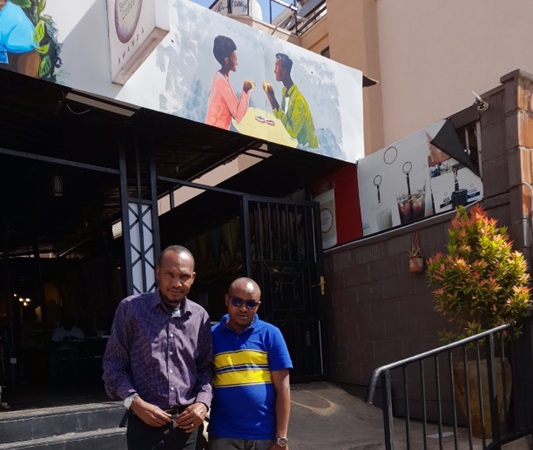
It was a great privilege finally catching up with Josias Harerimana, the founder and CEO of Beautiful Coffee Rwanda (BCR henceforth).

Before delving into why this expose on BCR, it is appropriate, I think, to first provide some background on the man behind the enterprise. Born in 1982, and married with a kid, Josias Harerimana holds a bachelor’s degree with honours in Biomedical laboratory sciences, as well as a Master’s degree in Public health and Food studies. He has also worked for over 13 years in the health sector, as well as nearly a decade working with coffee cooperatives and companies.

About Beautiful Coffee Rwanda (BCR)

Beautiful Coffee Rwanda (BCR) is a “fair trade” social enterprise supporting farmers’ partnership to build a sustainable business model together. As a fair-trade company, BCR is helping, and has helped, farmers to build sustainable business models by introducing fair trade certification, and other certificates to cooperatives, as well as exposing these entities to international buyers. Broadly speaking, BCR partners with a host of coffee cooperatives such as Coocamu, Bwishaza coffee, Gishyita coffee, Karora coffee – all of which are profiled below. 

The COOCAMU coffee cooperative (Rutsiro District)

Headquartered in the Rutsiro District, Musasa Sector (Western Province) on the shores of Lake Kivu, COOCAMU was founded April 2010 Producers: 368 smallholders (82 members are women). The COOCAMU coffee cooperative is located on Kivu belt region, where the rich soil, high altitudes and abundant rainfall give the bourbon coffee trees dotting the slopes above Lake Kivu the best environment to yield the best Arabica beans. It contributes to the community development through taxes payment and supporting Gabiro Cell in different ways and train farmers on Best Agricultural Practices or BAP. Cooperatives were trained about Fair Trade and on getting this certificate, cooperatives will be able to sell their specialty coffee to international buyers while accessing fair price, environmental and health protection, fair labour conditions and community development. Cooperatives will become self-reliance and recognize on international level BC Korea buy fair trade certified coffee from COOCAMU since 2017 COOCAMU got 2 new buyers (Olam & DR Weakfield) due to BCR. Cooperative capacity building through different trainings, coaching & follow up certification coaching (FLO/WFTO, RA etc.) Quality improvement training World coffee fair exhibition preparation & participation export promotion training. COOCAMU has been Fair Trade certified and currently COOCAMU specialty coffee is distributed in Rwanda, in the Republic of Korea and Europe. Coffee is marketed in Republic of Korea by Fair trade company (Beautiful Coffee Korea).

Bwishaza Coffee Cooperative (Rutsiro Western Province)

Located in Gihango Sector on the Eastern shore of Lake Kivu, the Bwishaza coffee cooperative was founded in February 2010 Producers: 593 smallholder farmers (203 women; 390 men). The Bwishaza Cooperative cultivates its high-quality coffee near a Peak Congo Nile Mountain near Kivu Belt.  By producing high-end coffee and employing a majority female workforce, the cooperative ensures maximum benefits to local families.  In 2010, the Cooperative built a washing station with funds provided by the Investor KCC with Project Techno Serve. To pay this support, the Bwishaza cooperative supplied parchment coffee to KCC and pay back the loan, and the net profit were calculated after deduction of loan annually.

Karora coffee cooperative (Karongi, Western Province)

Located in Mubuga (Karongi) on the Eastern shore of Lake Kivu, Karora was also founded in 2010. The cooperative has 16 smallholders in its membership. Due to the low number of members who have many coffee trees the management of coffee quality from farms to the washing station is easier than other cooperatives and to maintain their farms in organic conditions for getting organic certificate was much easier than the other cooperatives discussed in this article.

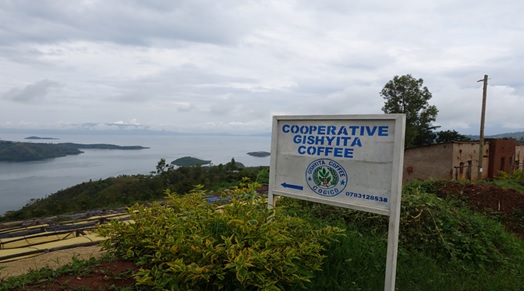
Gishyita coffee cooperative (Gishyita Sector)

Headquartered in the Gishyita Sector Region, also on the Eastern shore of Lake Kivu, KARONGI, Western Rwanda, the Gishyita cooperative was founded in March 2010 and has about 89 smallholder farmers (26 women; 63 men) as members. All women members and men’s members wives are trained about Best Agricultural Practices, and the women are motivated in coffee processing techniques – from Seed to Cup.

How does it all work – from seed to cup?

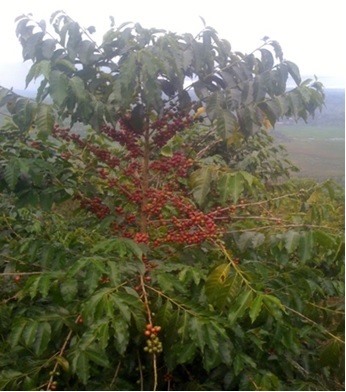
Processing – The coffee is grown organically using compost manure and the cherries are carefully handpicked and washed with fresh clean water then sun dried on raised screens above the shores of the Lake Kivu. A light orange-blossom aroma with soft acidity and delightful body this Rwanda Kivu coffee displays sweet mandarin and caramel flavours “

Production capacity – COOCAMU produces 4 containers, Bwishaza coffee produces 4 containers, Both Gishyita coffee and Karora coffee produce 2 containers each.

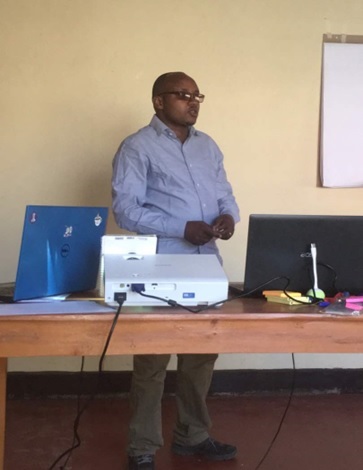
In his presentation in Korea in 2018, Josias was optimistic about the future of BCR and its partners. As he pointed out, “All the cooperatives are cultivating across Kivu belt region which is high altitude zone with volcanic soil and favourable climate for producing quality coffee.

As he further points out, all the coffee produced score above 85%, all buyers who visited the cooperatives liked this coffee as it’s a specialty one.” He went on to state that, “by buying this coffee, you will support financially the farmers who spend their time in coffee plantation and processing to make sure they’re producing quality coffee from seed to cup. It’s very important to continuously support these small cooperatives due to their effort in taking care of coffee but also by producing specialty one.” Where does the money go? To this, Josias was clear, “the money you buy their coffee return to farmers as an investment to their plantations and their family welfare.”

Ultimately, there’s a context to all of this. It was only recently in June 2022, on Africa Science Focus, that the first G25 African Coffee Summit took place in Nairobi, Kenya, to find out what the continent’s coffee future looks like. We hear from Elijah Gichuru, the director of the Coffee Research Institute at the Kenya Agricultural and Livestock Research Organization, about climate impacts on coffee production and consumption. And, coffee farmer Prudence Jackie tells us how a local collaboration is supporting small-scale female farmers, who provide the majority of the labour in the coffee industry. 

A final note for the curious reader about Rwanda

Here’s what the Government of Rwanda: Administrative structure (www.gov.rw) says about the administrative structure of the country: Rwanda is currently composed of two layers of government (central and local) and of six administrative entities: These structures, which were reorganised under the 2005 reform, are complementary. The country is divided into four Provinces and the City of Kigali which are also further divided into 30 districts. Moreover, the districts are further divided into 416 Sectors. Additionally, the sectors are further divided into 2148 cells and lastly, these cells are divided into 14837 villages. All these subdivisions are headed by different people at every level and they all have different roles though directing towards the same cause. The “Province” serves as a coordinating organ to ensure the efficiency and effectiveness of Central Government planning, execution, and supervision of the decentralized services. It serves mainly as an advisor to the decentralized entities and coordinates development activities. There are four provinces and the City of Kigali – they consist of the Northern Province, Southern Province, Eastern Province and Western Province.

Ndubuisi Ekekwe To Speak in Pastor W.F. Kumuyi’s Impact Academy

0

Yes, I accepted Pastor W.F. Kumuyi’s personal invitation to speak at the Impact Academy. As a kid growing up in Ovim, Abia State, his teachings shaped my life. In the Scripture Union, he influenced us immensely in secondary school. In the Chapel in the University, he educated us. After college, he continues to minister to us. Today, whenever I am in Lagos, going to the temple, Deeper Life Gbagada, is always a great experience. I invite all to attend. More details later.

I will speak on the topic – Against All Odds.

The event schedule is here.