DD
MM
YYYY

PAGES

DD
MM
YYYY

spot_img

PAGES

Home Blog Page 5045

El Salvador Buys Bitcoin on Dip, Again

0

Despite the ongoing bearish market in the crypto world, El Salvador has once again bought the Bitcoin dip with an addition of 80 BTC.

The president, Nayib Bukele announced this via his Twitter handle where he stated “El Salvador bought today 80 BTC at $19,000 each. Bitcoin is the future. Thank you for selling cheap”.

This brings the total amount invested in Bitcoin to $1.52  million. Recall that this is not the first time that El Salvador is buying the dip, as it earlier bought the Bitcoin dip in May, adding 500 Bitcoin for a total of $15.3 million, $30,744 each to the government coffers.

After El Salvador’s adoption of Bitcoin as its legal tender, the economic growth has plummeted with its deficit remaining high. The country’s debt-to-Gdp ratio is set to hit close to 87% this year, raising concerns that the country isn’t well equipped to settle its billion-dollar loan obligations.

The Bitcoin adoption has not favored them in any way, as the country needs a lot of cash to settle its debts of more than $ 1 billion. Since the time Nayib Bukele announced his plan to adopt Bitcoin, the price has fallen more than 70% from the time of adoption.

The country has an unrealized paper loss on Bitcoin of around $50 million, which according to the country’s finance minister, is less than 0.5% of the national budget.

El Salvador is still struggling with distressed debt, as the country is seeking a $1.3 billion loan from the International Monetary Fund (IMF). The country has in the past received loans from the IMF, but currently, IMF has expressed concerns over El Salvador’s growing exposure to Bitcoin’s volatility and urged greater transparency.

International money lenders have also stalled negotiations with El Salvador because they are unwilling to lend money to a nation that is lavishing millions of taxpayers’ money on Bitcoin whose price is prone to extreme volatility.

With the adoption of Bitcoin, it has become even more difficult for El Salvador to borrow money. It is obvious that the government of the country has adopted a “buy the dip” strategy, because they always purchase Bitcoin any time there is a fall in the price. This country is teaching us and answering the question: what is Bitcoin? For it, it is an investment asset class.

Ever since the adoption of Bitcoin in the country, businesses have disclosed that they reverted to accepting cash as they were losing money because of the way the cryptocurrency loses its value.

It’s obvious that President Nayib Bukele’s adoption of Bitcoin is for a selfish purpose, because there are major constraints that have ravaged the country due to its adoption, but he seems unconcerned.

Critics disclosed that the country’s Bitcoin transition leaves behind those who don’t have a smartphone, which is mainly older Salvadorans, and those without internet access. Yet, we cannot count out a nation which baptized Bitcoin when it made it a legal tender.

The government of El Salvador has economically baptized Bitcoin, making it a legal tender in the nation.  That brought some cheers to the world of coins because hedge funds, investors and market makers can safely domicile their “wallets” in El Salvador knowing that if anything bad happens in other places, they can recover by exchanging for El Salvador currency.

Lawyers dressing in “juju worshippers’ attire” to Nigerian courts: The reason.

0

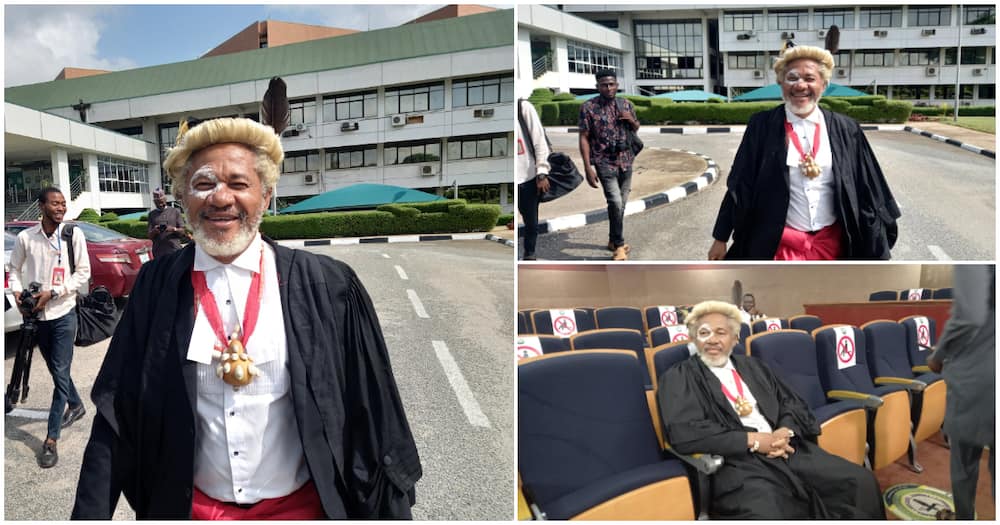
You might have seen the videos of a lawyer appearing in court in a “juju worshipper’ attire, also, the other day, a lawyer appeared in court in a pastoral robe and you may also be wondering what is causing this or giving the lawyers the nerve to embark on this kind of religious activism in courtrooms. 

People who are not conversant with the background story and the development that led to this will be wondering what is going on amongst lawyers because on regular days if a lawyer appears in court in a costume that is not the approved lawyers’ attire that lawyer will be denied the right of audience in court for not being fit and proper to appear in the court and he will also be held for contempt of court with disciplinary actions melted on him. 

                     **************

It all started in 2012 when two-12 years old girls under the aegis of the Muslim Students Society of Nigeria, Lagos State Area Unit approached the court praying the court to hold that the policy of the Lagos state government restricting and banning the use of hijab by Muslim students in schools, especially public primary and secondary school offends their constitutionally provided fundamental human right as provided in S. 38 and that the court should mandate Lagos state government to permit Muslim girls to exercise their freedom of worship as constitutionally provided by allowing them to wear their hijab on their school uniform which is what their religion required of them.

The High Court of Lagos state in 2014 delivered the judgment upholding the ban of the hijab by the Lagos state government in schools. 

Displeased by the judgment of the High Court, delivered by her Lordship, Grace Onyeabo, the plaintiffs went on appeal. They approached the court of appeal to set aside the judgment of the High Court maintaining that ban on the use of Hijabs in schools by the Lagos State government offends the provisions of the Constitution, specifically, S.38 of the Constitution of the federal republic of Nigeria. 

The court of appeal gave judgment in favor of the plaintiff/appellant, taking the stand of the Muslim students, that ban on the use of Hijab by the Lagos state government is in breach of their constitutional rights thereby upturning the judgment of the Lagos state high court. 

The Lagos State government did not accept this judgment of the Court of appeal upturning the judgment of the High Court, so they decided to approach the apex court; the supreme court of Nigeria to appeal against the judgment of the court of Appeal. 

The Supreme Court in a 6:1 justice ratio affirmed the decision of the Court of Appeal, which removed the ban on the use of Hijab in public schools in Lagos State. The Supreme Court held that the ban on the use of Hijab was discriminatory, unconstitutional, and offends the freedom of worship of a particular sect hence the need to set aside the judgment of the High Court that upheld the ban. 

Lawyers and activists have openly and secretly expressed their displeasure with this judgment. This is what led to some lawyers dressing in their “juju worshippers’ attires” and pastoral robes to appear in court, standing on the judicial precedent of the supreme court in the above case that every Nigeria has freedom of religion and on no instance should anyone be denied of that right, not even by the government or the court.

Why I and millions of lawyers support the wearing of juju worshipper’s attire to appear in court

“What is good for the goose is good for the gander”.

If a Muslim faithful’s fundamental right to worship as recognized by the Constitution has been adopted by the supreme court, then juju worshippers’ right to worship should also be recognized and everyone should be allowed and permitted to adorn themselves in whatsoever their spirituality permits in the exercise of that same right.

What seems like a protest amongst the legal practitioners has been going on in the courtrooms in recent times. Lawyers were seen appearing in courtrooms in robes which is not the approved attire for legal practitioners.

This move was started by Chief Malcolm Omirhobo, Esq, a Warri-based lawyer who started attending court hearings in traditional worshippers’ attires in protest of the Supreme Court judgment of upholding the right of Muslim faithfuls to adorn themselves in their Hijabs in public schools and these movements have been joined by other lawyers, some lawyers chose to appear in court in priestly robes and other miscellaneous adornments lately.

It is succinct to point out that what goes for the goose goes for the gander. The Supreme court cannot uphold the rights of Muslim students to adorn their religious apparel on their school uniforms and will want to restrict the rights of any other Nigerian from practicing his or her religion.

It’s either the Supreme subject the judgment to judicial review, and review that judgment or allow every Nigerian to practice his or her religion without any form of limitation or restriction.

In accordance with this judicial precedent, a Nigerian should be able to practice his religion and appear the way the believers that identify themselves with that religion are expected by that religion to appear, be it in public places, courtrooms, schools, or any other place whatsoever and anybody who dare to restrict the right to worship of such individuals can be said to intentionally unlawfully restricting the fundamental human rights of a Nigerian citizen.

Suffice it to say that I am not in any way against the judgment of the Supreme Court of Nigeria upholding the fundamental human rights, specifically the right to worship of Muslim students as provided in S 38 of the constitution of the federal republic of Nigeria thereby removing any restriction or limitations to this right. I am of the view that what is good for Islamic religion faithfuls is also good for Traditional religion faithfuls and also Christians religion faithfuls and any other religion a Nigerian practices.

RE: Europe Returns to Coal and Lessons for Africa

1

Ndubuisi, in your write-up of June 28, titled: Europe Returns to Coal and Lessons for Africa, you said: “I have written here that Africa must not allow Europe to write our energy policy. When Europe says that you should discard coal, watch very carefully, it is very convenient for Europe to do away with coal. Simply, its policy framework which it exports to the whole world is based on the thesis of its comparative advantages.”

This is a good one. It tells us in the Third World, especially, the African countries that the so-called Energy Transition is an imperialism designed to keep Africa and the rest of the poor countries in perpetual economic slavery. Your write-up points out the duplicity of the so-called Advanced World. But it contrasts with your year analyses of Dangote Refinery. Perhaps, because of your unflinching belief on Energy Transition , you did not  believe that the first private refinery in Nigeria has a future.

Below are  some of the points you made about  Dangote Refinery in one of your analyses:

“Dangote Group is building a refinery. But I do think it is off by at least ten years to extract the maximum value on that investment. Though Nigeria continues to import petroleum products, distorting our balance of payments, and crushing the Naira, my model is that the refinery business will do well, marginally. Yes, the refinery will fix market friction but it would be distorted in years. As I drive across America, a popular scene now is closed gas stations, picking up where malls stopped…”

“Looking at all trajectories Aliko Dangote is getting poorer despite doing more! It is a paradox because technically Dangote has improved his asset quality over the last seven years, as Dangote Group evolves to become an industrialized conglomerate.”

‘Simply, once Ford, GM, Toyota etc stop making fossil-powered cars, Nigerians cannot get special treatments. Because we do not make cars, we have to adjust! The refineries of the future are charging stations and not crude oil refining. In the U.S., most refineries are going bankrupt because in the next few years, the cost of buying an electric car would be at parity with fossil-fueled cars.”

“Do not put so much power in refinery business as a business for decades. The useful life of that sector is in years, not decades. We expect Tesla to produce EV cars that would be as affordable as Toyota, Honda, etc in the coming years. But Ford, GM and Toyota may get there before it.”

In conclusion , you  wrote : “So, my thesis is this: the best refinery business of the future in Nigeria, starting 2030 is charging stations because the world will not walk back on the march to EV because Nigeria likes their hydrocarbonated cars.”

This write-up is outright de-marketing of Dangote Refinery.  Whether you know it or  not , Dangote Refinery is the best  thing that has happened in Nigeria and Africa in general.

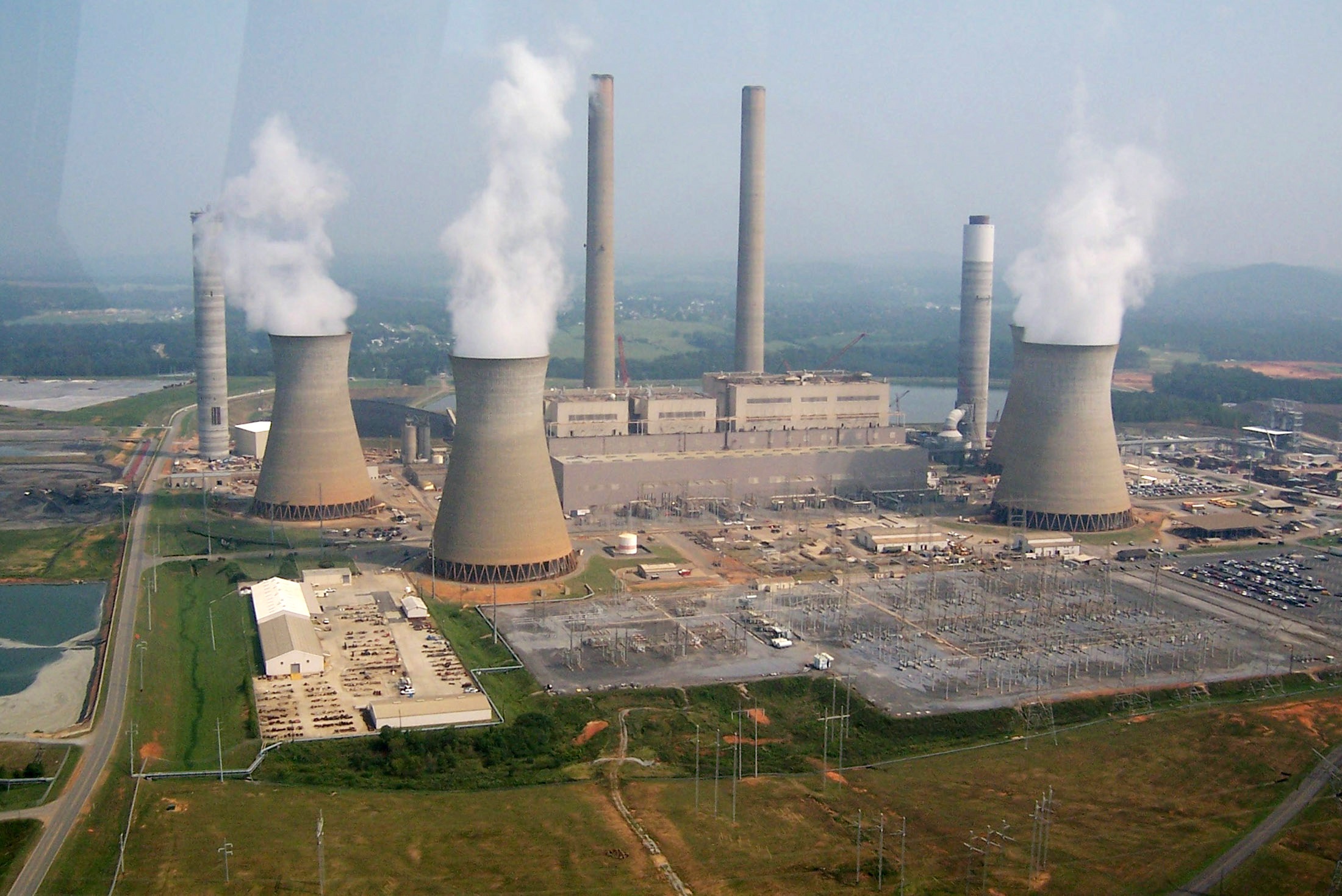
Dangote Oil Refinery is a 650,000 barrels per day (BPD) integrated refinery project under construction in the Lekki Free Zone near Lagos, Nigeria. It is expected to be Africa’s biggest oil refinery and the world’s biggest single-train facility.

The Pipeline Infrastructure at the Dangote Petroleum Refinery is the largest anywhere in the world, with 1,100 kilometers to handle 3 Billion Standard Cubic Foot of gas per day. The Refinery alone has a 435MW Power Plant that is able to meet the total power requirement of Ibadan DisCo.

The Refinery will meet 100% of the Nigerian requirement of all refined products and also have a surplus of each of these products for export. Dangote Petroleum Refinery is a multi-billion dollar project that will create a market for $21 Billion per annum of Nigerian Crude. It is designed to process Nigerian crude with the ability to also process other crudes.

This is what the advanced  countries want to scuttle with their so-called Energy transition, which can be seen as imperialism. As Hamza Hamouchene points out  “Any talk about green transition and sustainability must not become a façade for neocolonial schemes of plunder and domination.”

Energy transitions are never just about economics, engineering, or science. Rather, the question is why the use of specific scientific or engineering techniques makes sense at a particular time and leads to specific energy outcomes. The transitions could be related to imperialist projects such as the partition of Africa or the Nazi expansion into Eastern Europe; to a specific political party coming to power riding on a popular wave of megadevelopmentalism; or the belief that certain energy forms have detrimental effects on the environment and should not be pursued.

Please read : NOVEMBER 3, 2021, 5:56 PM  FP : oreignpolicy.com/2021/11/03/cop26-climate-colonialism-africa-norway-world-bank-oil-gas/

With natural gas prices at record highs in Europe, Norway is raking it in. The country is Europe’s second-largest gas supplier after Russia—and has just agreed to increase natural gas exports by 2 billion cubic meters to alleviate the continent’s acute energy shortage. Its neighbors, such as Britain, are grateful for every dollop of gas as winter approaches.

Yet even as wealthy Norwegians count their kroners thanks to rising prices and booming exports, their government is working hard to stop some of the world’s poorest countries from producing their own natural gas. Along with seven other Nordic and Baltic countries, Norway has been lobbying the World Bank to stop all financing of natural gas projects in Africa and elsewhere as soon as 2025—and until then only in “exceptional circumstances,” as an unpublished statement by the group, seen by Foreign Policy, details. At COP26, 20 countries went even further, pledging to stop all funding for overseas fossil fuel projects beginning next year. Instead, the Nordic and Baltic countries suggest, the World Bank should finance clean energy solutions in the developing world “such as green hydrogen and smart micro-grid networks.”

The idea that some of the poorest people on Earth will be using green hydrogen—possibly the most complex and expensive energy technology that exists—and building out “smart micro-grid networks” in just a few years at anywhere near the scale required is absurd. Not even solar energy or wind power—if it could be built out quickly enough—could fuel development in the global south without backup power using fossil fuels, of which gas is the cleanest by far. In sub-Saharan Africa, which has large gas fields offshore and includes many of the world’s poorest countries, a ban on financing gas projects would practically end support for the critical energy infrastructure necessary to support economic development and raise living standards—including electricity for homes, schools, and factories; industrial heat for producing cement and steel; the carbon dioxide that is an essential component of synthetic fertilizer; and liquefied gas for transportation and cooking fuel.

That last example makes perfectly clear what Norway’s fight against natural gas means for the world’s poor. About 3.8 million people die prematurely each year from the effects of indoor air pollution, according to the World Health Organization. The vast majority of these deaths occur among the 2.6 billion people in poor countries who still burn wood, coal, charcoal, or animal dung indoors for cooking. Women and children doing household chores are particularly exposed to this toxic smoke, which penetrates deep into the lungs. The switch to bottled cooking gas—promoted on a large scale by India, China, and the United Nations—is saving countless lives in the developing world. That’s one reason why the U.N.—where developing countries have a stronger voice than in Oslo, Washington, or Berlin—lists natural gas among clean energy sources and is promoting the switch to cooking gas in the context of the Sustainable Development Goals, which call for global access to affordable clean energy.

In the conclusion of your analysis on coal you stated:” This is the deal: Africa must define its future based on its positioning and improve itself so that these countries and regions do not toss it around. Across Africa, many factories which were powered by coals were encouraged to shut down to save the world from burning. But here instead of Europe following through, they ignored their books and are making coals friends again.”

This is exactly what African countries  are doing. The climatic problems witnessed by the world today is not from Africa, hence the continent should not be made bear the brunt.  A recent  declaration  by EU-AU Summit calls for an energy transition that is “fair, just and equitable”, taking into account “specific and diverse orientations of the African countries with regards to access to electricity”.

Tekedia Institute Congratulates Our Faculty, Onyinye Ikenna-Emeka, as GM Fixed Broadband Business, MTN Nigeria

0

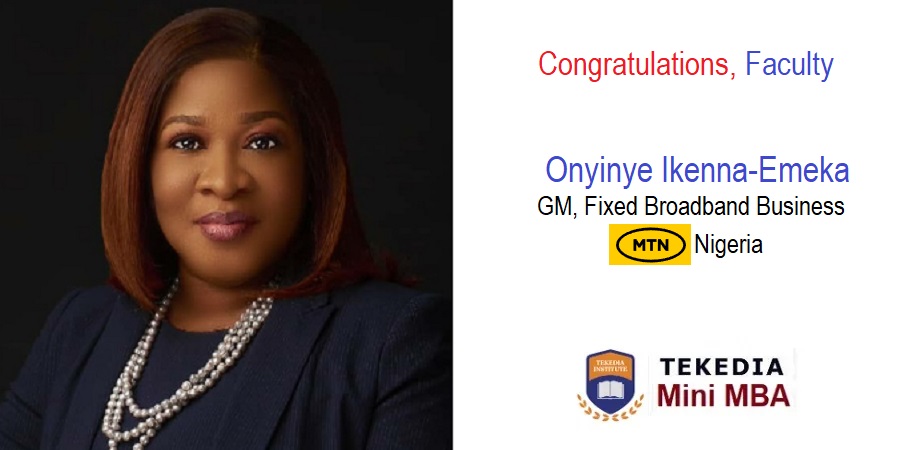
Good People, join us at Tekedia Institute to congratulate one of our Faculty members for her new elevation. The home of y’ello and the powerhouse of Africa’s telecommunication sector, MTN Nigeria, has appointed Onyinye Ikenna-Emeka as the General Manager for its Fixed Broadband Business: “We are delighted to have Onyinye at the forefront of our broadband business and are confident that MTN will benefit immensely from her vast experience and deep understanding of the technology sector,”Karl Toriola, MTN Nigeria CEO.

We congratulate Onyinye for her excellence and promotion, not just at MTN, but also in helping a generation of young people acquire business capabilities via Tekedia Institute Mini-MBA. We get the feedbacks – “the faculty from MTN is just amazing”, “we’re winning because of Onyinye’s course”, etc.

Faculty, win more markets and territories in this new role. And thank you for elevating the future of our young people.

  • Ndubuisi Ekekwe, PhD
  • Professor and Lead Faculty
  • Tekedia Institute

Nigeria Signs Agreement With Tech Giants, Huawei And Cisco, To Train Nigerian Youth In Advanced ICT

0
Most parts of the world have been pushing to cage Huwaei

The federal government of Nigeria recently signed an agreement with two tech giants, CISCO and Huawei to establish a minimum of 300 academies in Nigeria to train 30,000 citizens in advanced ICT.

Recall that earlier this year, the federal government also signed an agreement with Microsoft to train 5 million Nigerians, in the area of Artificial Intelligence (AI).

Minister of communications and digital economy, Prof. Isa Pantami disclosed that all these agreements signed by the government are efforts towards achieving the target of attaining 95% digital literacy in the country by 2030.

While delivering a keynote address, the minister of communications and digital economy disclosed that digital skills and the 4th industrial revolution have been highlighted in the country’s national digital economy policy and strategy, as key pillars in diversifying the country’s economy.

In his words, “Of recent, we have had an agreement with Huawei and CISCO to establish a minimum of 300 academies in Nigeria and to train a minimum of 30,000 citizens on advanced training. In addition to this, we have another agreement with Microsoft in which 5 million citizens are going to be trained in ICT, particularly in the area of Artificial Intelligence. 

If you look at our national digital economy policy and strategy for a digital Nigeria 2020-2030 which was unveiled by his excellency, President Muhammadu Buhari, you will discover that those two components have been effectively mentioned and captured in the policy under pillars number 2 and 7. Pillar number 2 is digital skills and literacy, while pillar number 7 is digital society and emerging technologies”. 

No doubt the government has been pushing hard to actualize a digital economy through its partnership with different global tech companies which is commendable. In today’s world, a digital economy is one of the most important drivers of innovation, growth, and job creation.

It has led to the creation of new business models, new products and services, etc. Looking at the partnership of the federal government with CISCO and Huawei to train about 30,000 youths in advanced ICT, is a good step taken toward developing Nigeria’s economy.

Despite the fact that Nigeria serves as a key business hub, thriving and attracting foreign trade to the African continent, unfortunately, the country falls under the category of nations that are lagging in ICT development on a global scale.

It has been estimated that ICT has contributed to one-quarter of GDP in most developing countries. For example, ICT was responsible for 25% of Kenya’s economic growth, 20% of China’s, and 34% of Japan’s economic growth.

ICT without a doubt is a key catalyst to a nation’s economic growth, which drives productivity and efficiency in all sectors of a nation’s economy. Currently in Nigeria, almost every sector leverages ICT to increase efficiency and productivity.

ICT allows for an easier interchange of international innovators and the dissemination of new technologies, which therefore leads to the acceleration of invention and circulation of new ideas that trigger technological change.

In Nigeria, ICT has impacted Agriculture, healthcare, financial services, tourism, etc as it has created more opportunities for diverse forms of investment through the digital market.

Unfortunately, despite the great impacts of ICT on the economy of nations, many developing countries are still far from having fully exploited the benefits of ICT.